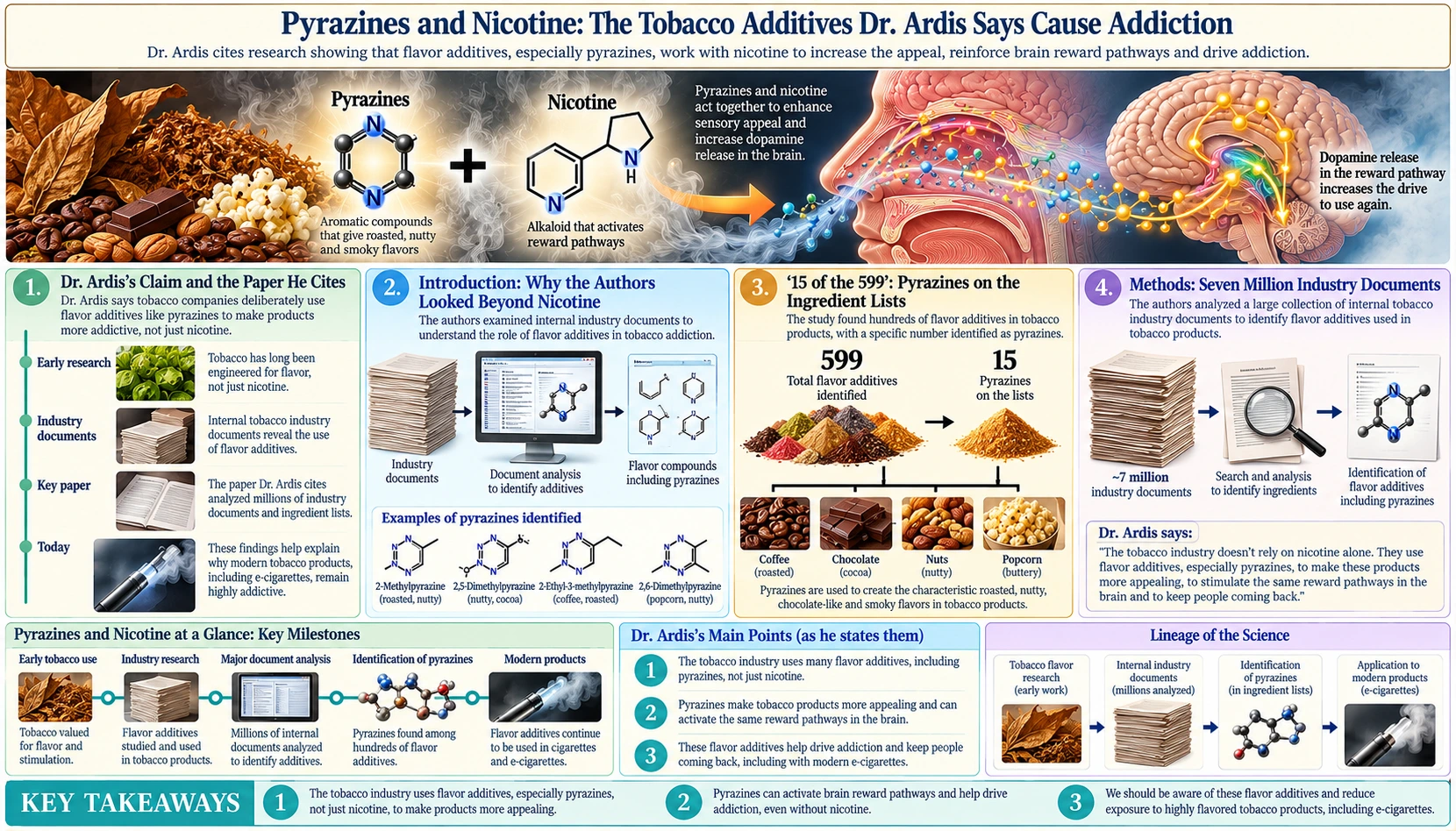
Pyrazines and Nicotine: The Tobacco Additives Dr. Ardis Says Cause Addiction

Deep-Dive Articles
This page is the complete overview of the paper. Three deep dives go further into its main threads.
How Pyrazines Entered ‘Light’ Cigarettes: The 1976 Flavour Formula
After the 1964 Surgeon General’s report, low-tar cigarettes tasted weak. One manufacturer screened about 100 smoke flavourants and built the “Super Juice” formula, three pyrazines among its ingredients, for the first “light” cigarette. By the late 1970s similar compounds were in the light version of the market’s leading brand.
Read the deep dive →What Pyrazines Are: Maillard Chemistry, ‘Brown Notes’ and the Senses of Smoking
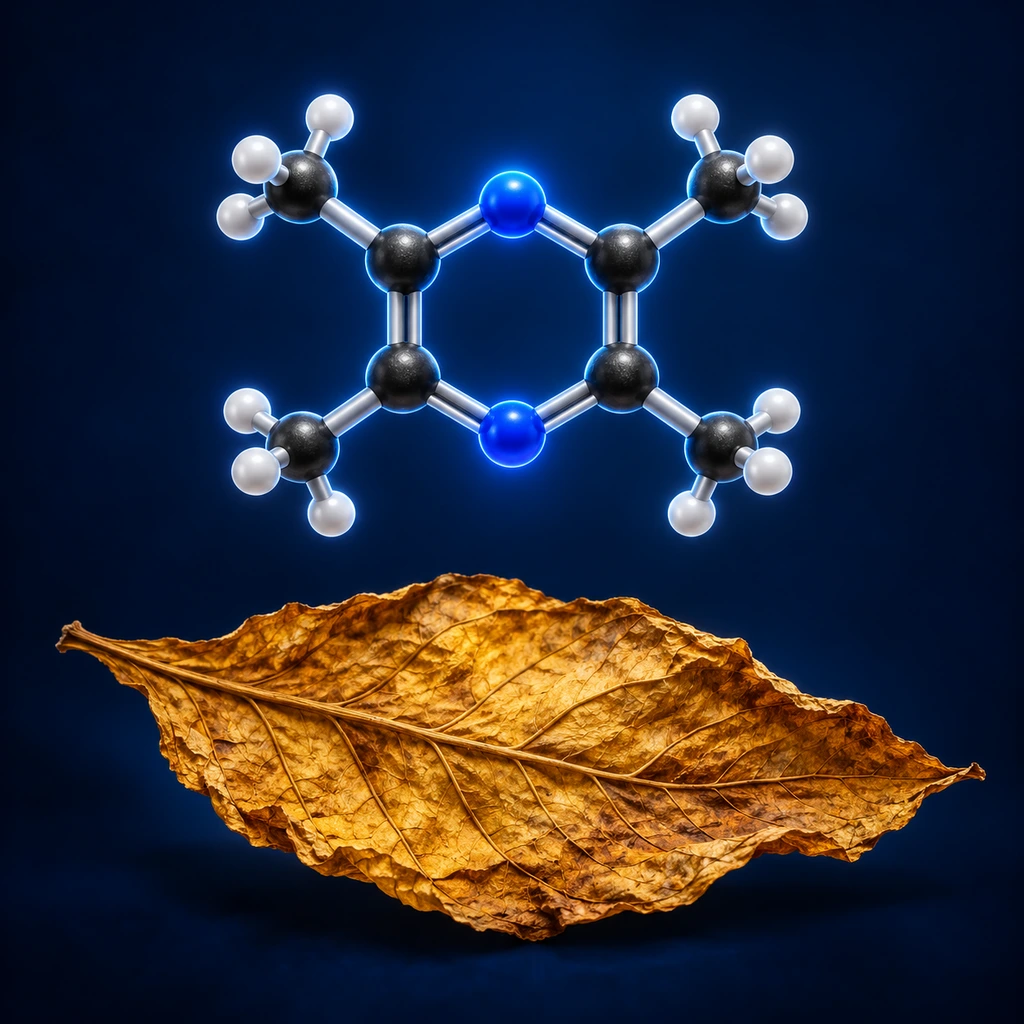
Pyrazines are ring-shaped compounds containing nitrogen, formed by the Maillard browning reaction when tobacco is cured or smoked and when food is cooked. They give smoke its “brown notes” and act on the nerve endings of the mouth, nose and airways that make smoke feel smooth.
Read the deep dive →Pyrazines, Craving Cues, Dopamine and E-Cigarettes
How a smell becomes a craving cue through the brain’s limbic system, and why the authors say some pyrazine derivatives raise dopamine release “independently of nicotine.” Plus the pyrazines the paper reports in e-cigarette liquids, and why Dr. Ardis is wary of vaping’s flavouring chemicals.
Read the deep dive →Table of Contents
- Deep-Dive Articles
- Dr. Ardis’s Claim and the Paper He Cites
- Introduction: Why the Authors Looked Beyond Nicotine
- “15 of the 599”: Pyrazines on the Ingredient Lists
- Methods: Seven Million Industry Documents
- Results: Flavour for the First “Light” Cigarette
- Results: What Pyrazines Are and How They Act
- Discussion: Smoothness, Secondhand Smoke and the Flavour Ban
- E-Cigarettes and the News Coverage
- Conclusions, Limitations and What the Paper Adds
- What Dr. Ardis Recommends, and Reading a Label
- Dr. Ardis’s Own Work
- Key Research Papers
- Connections
- Featured Videos
1. Dr. Ardis’s Claim and the Paper He Cites
Dr. Ardis separates nicotine from the additives in tobacco products. In his words:
“There’s one nutrient called nicotine in tobacco products. There are 15 man-made additive chemicals called pyrazines in every single one of them.”
- Nicotine on its own is not addictive, he says. He calls it a nutrient: “Nicotine is not a chemical. It’s actually a nutrient found in foods like nightshade vegetables, like potatoes and tomatoes.”
- The pyrazines, he says, have been added to tobacco since the 1970s.
- His source is what he calls “the 2015 Harvard study”: the paper this page walks through. It first appeared online on 10 June 2015 and in print in 2016.
Read the full paper
- Download the full paper (PDF, 7 pages)
- Free full text on PubMed Central
- The publisher’s page (DOI 10.1136/tobaccocontrol-2014-051943)
Alpert HR, Agaku IT, Connolly GN. Tob Control 2016;25:444–450. Open Access, reproduced under the Creative Commons Attribution Non-Commercial licence (CC BY-NC 4.0).
The original paper names the manufacturers and brands it studied; this page does not.
The paper at a glance
| Item | Detail |
|---|---|
| Title | A study of pyrazines in cigarettes and how additives might be used to enhance tobacco addiction |
| Authors | Hillel R. Alpert, Israel T. Agaku and Gregory N. Connolly |
| Where | Harvard School of Public Health (Gregory Connolly later moved to Northeastern University) |
| Journal | Tobacco Control, volume 25, issue 4, pages 444–450 |
| Published | Online 10 June 2015; in print 2016 |
| Funding | National Cancer Institute grants 3R01 CA125224-03s1 and 2R01 CA087477-09A2 |
| Review | Externally peer reviewed |
| Method | The tobacco industry’s own internal documents, read alongside the published scientific literature |
2. Introduction: Why the Authors Looked Beyond Nicotine
The paper opens with the standard account. Nicotine activates nicotinic acetylcholine receptors in the brain, which releases the messenger chemical dopamine, and that release brings rewards — in the paper’s words, “pleasure, arousal, mental acuity and modulation of mood.” The receptor is explained on our nicotinic receptor page.
Then comes the passage closest to Dr. Ardis’s argument. A substance’s “reinforcing effect” is how strongly it makes a person, or a laboratory animal, want to take it again. The authors write that “substantial evidence exists to suggest that nicotine’s reinforcing effects alone are not sufficient to account for the intense addictive properties of tobacco smoking and the high relapse rates among smokers after quitting even when provided nicotine in forms other than tobacco.”
The evidence they list:
- nicotine’s “limited ability to induce self-administration in animals” — animals given access do not readily dose themselves with it;
- a “lack of positive mood effects of pure nicotine in abstinent smokers”;
- a “lack of findings that nicotine in any other form than tobacco was preferred to placebo in normal smokers”, a placebo being a dummy with no nicotine;
- and that “de-nicotinised cigarettes were as effective as regular cigarettes, and more than nicotine in any other delivery mode, in relieving withdrawal and craving.”
For completeness, the paper also describes the field’s current models: they treat nicotine as the primary drug of addiction, with non-nicotine constituents and sensory cues also contributing.
3. “15 of the 599”: Pyrazines on the Ingredient Lists
The number Dr. Ardis quotes comes from the paper’s introduction: “Pyrazines, a class of chemosensory agents, comprise 15 of the 599 compounds on the list of cigarette ingredients provided by manufacturers to the US Department of Health and Human Services in 1994”. Chemosensory means sensed by the chemical senses: smell, taste, and the burning, cooling or tingling felt in the mouth, nose and airways.
The same family turns up on later lists too: 8 compounds on the list manufacturers gave the FDA in 2011, and 10 on manufacturers’ websites. Box 1 of the paper names the pyrazine compounds found in manufacturers’ reports of cigarette ingredients:
| Pyrazine compound (Box 1) | Also named in the paper |
|---|---|
| 2-acetyl-3-ethylpyrazine | — |
| acetylpyrazine | in e-cigarette liquids |
| 2,3-diethylpyrazine | — |
| 2,3-dimethylpyrazine | — |
| 2,5-dimethylpyrazine | — |
| 2,6-dimethylpyrazine | in the “Super Juice” flavour formula |
| 2-ethyl(or methyl)-(3,5 and 6)-methoxypyrazine | — |
| 2-ethyl-3,(5 or 6)-dimethylpyrazine | — |
| 2-ethyl-3-methylpyrazine | — |
| 2-isobutyl-3-methoxypyrazine | — |
| methoxypyrazine | — |
| 2-methylpyrazine | — |
| (methylthio)methylpyrazine | — |
| 2,3,5,6-tetramethylpyrazine | in e-cigarette liquids |
| 2,3,5-trimethylpyrazine | in e-cigarette liquids |
| methoxymethylpyrazine | — |
4. Methods: Seven Million Industry Documents
The authors worked from the industry’s own paperwork. More than 7,000,000 internal tobacco-industry documents were made public through the Minnesota tobacco trial and the 1998 Master Settlement Agreement, and the team searched them in three online archives. All are linked below; the third now lives on as the UCSF Industry Documents Library.
- Tobacco Documents Online
- An industry document archive hosted by UCSF (bat.library.ucsf.edu)
- The Legacy Tobacco Documents Library
- The UCSF Industry Documents Library, the Legacy library’s current home
They searched PubMed and Web of Science for the published literature as well. The search “snowballed”: it began with keywords such as pyrazines, flavorant, chemosensory, low-tar and smoothness, and the documents it found suggested further search terms.
The authors spell out their own cautions about this kind of source. Industry research “was not generally subjected to careful peer review”, and the available documents are incomplete and sometimes inconsistent.
5. Results: Flavour for the First “Light” Cigarette
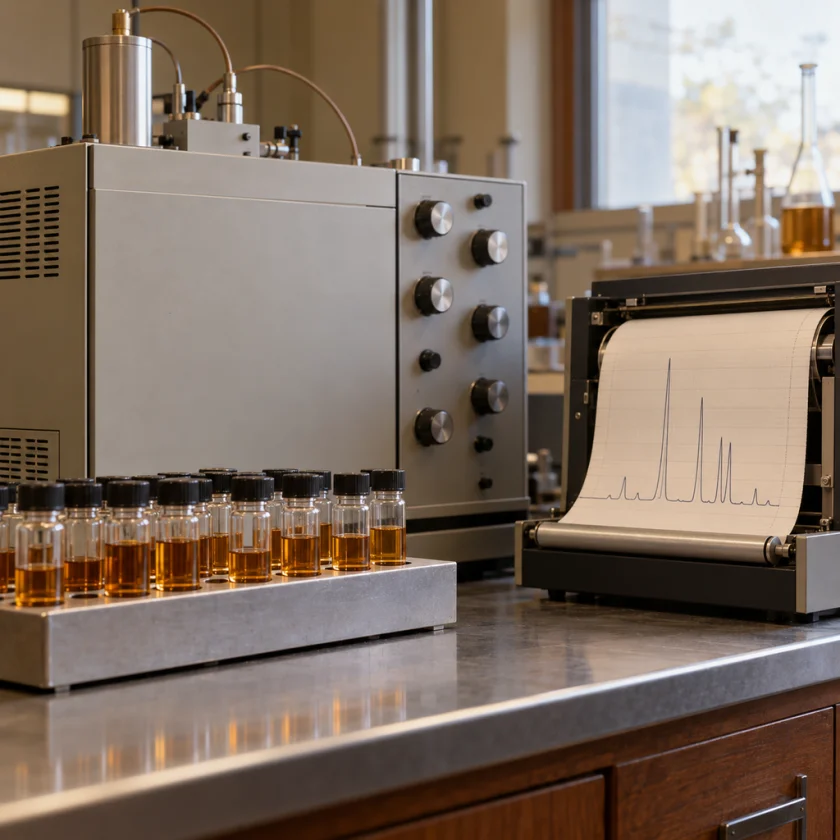
The story begins with the 1964 Surgeon General’s report. With sales falling, manufacturers brought out filter-ventilated “low-tar” cigarettes, which let air into the smoke through the filter — and tasted weaker. One manufacturer set out to put the taste back:
- It screened about 100 tobacco-smoke flavourants for the highest odour intensity, rating smell strength by vapour-dilution olfactometry and identifying the compounds by mass spectrometry.
- It added the strongest of them to reconstituted tobacco sheet.
- The result was the first “full-flavour, low-tar” (“light”) cigarette, at under 9 mg of tar, launched nationally in 1976.
- Nearly 3,000 smoker panellists tested it, and most rated it equal or superior in taste to brands delivering 60% more tar. Its advertising promised “enriched flavor.”
The company called the flavour formulation “Super Juice”. It combined three pyrazines — 2,6-dimethylpyrazine, tetramethylpyrazine and trimethylpyrazine — with acetic acid, cyclotene, maltol, isobutyric acid and 1-methylindole.
A competitor’s reverse-engineering of the manufacturer’s cigarettes found at least six pyrazines. In the late 1970s similar compounds went into the light version of the market’s leading brand, which went on to become the leading-selling cigarette.
Deep dive: How Pyrazines Entered ‘Light’ Cigarettes: The 1976 Flavour Formula
6. Results: What Pyrazines Are and How They Act
The chemistry
- What they are: heterocyclic aromatic compounds — ring-shaped molecules with nitrogen in the ring — with the formula C4H4N2.
- How they form: at 100 °C or more, by the Maillard browning reaction between amines and sugars. That happens when tobacco leaf is cured, when it is smoked, and when food is cooked.
- Their place in tobacco: one of 18 chemical classes of tobacco flavouring materials.
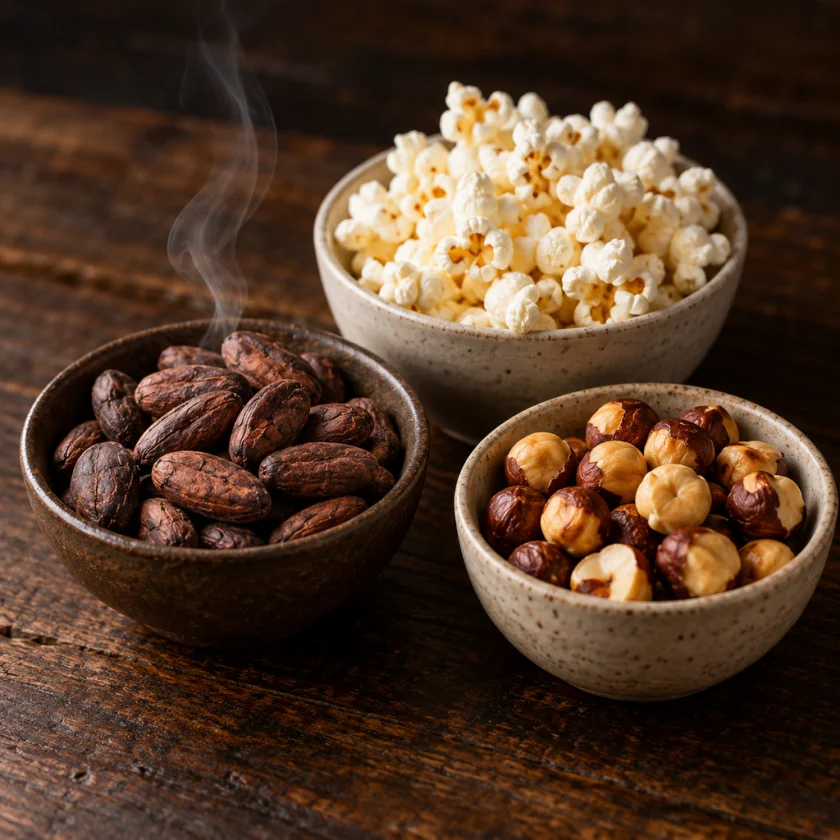
- What they add: the “brown notes” of tobacco smoke — cocoa, nutty and popcorn-type flavours.
Acting on the senses
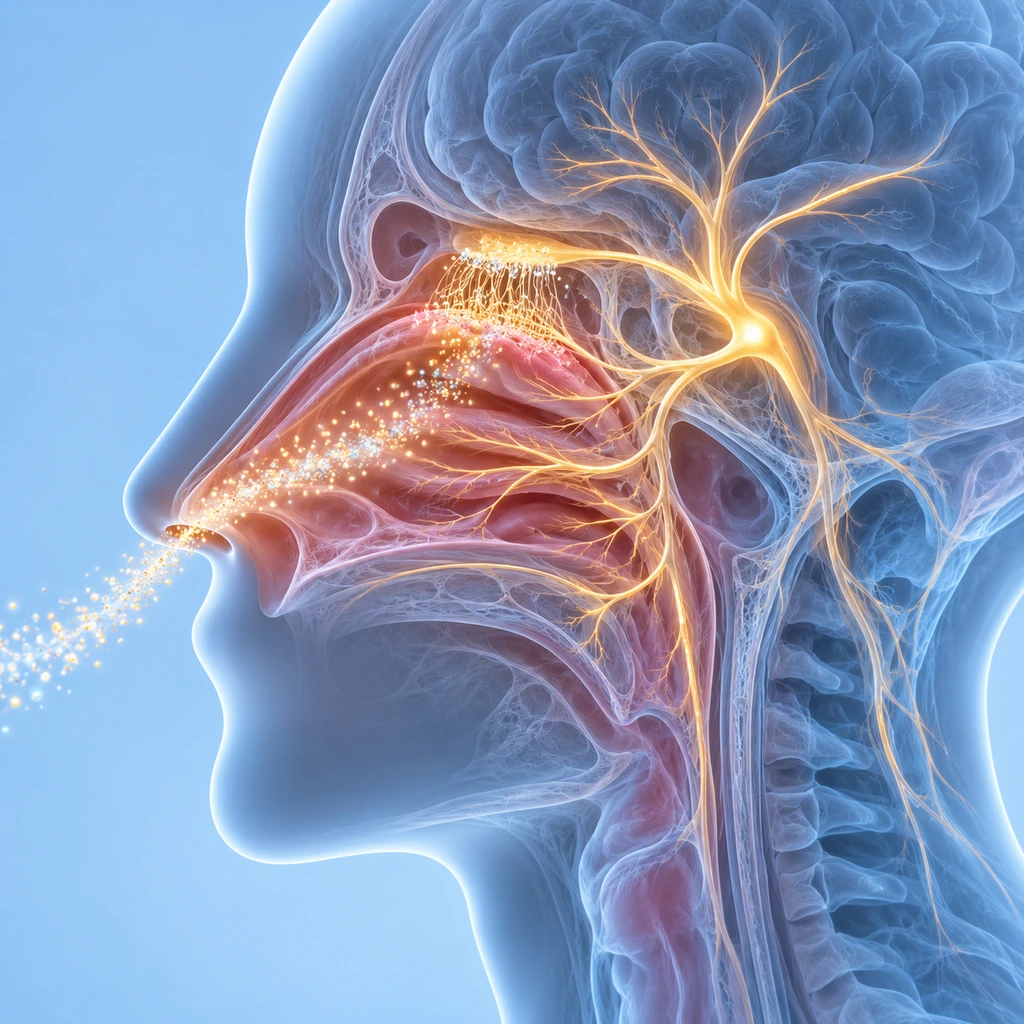
Pyrazines act on chemoreceptors, including the trigeminal nerve endings in the mouth, nose and airways that sense burning, cooling and tingling. Among the effects the industry identified was “smoothing”: by reducing harshness, it may ease inhalation and the deposition of nicotine.
Internal industry research from 1990 described how a “chain of events from stimulation in the mouth, the throat and at the olfactory level leads to transmembrane electrical signals which are integrated in the brain.” Olfactory means smell.
Learned cues
Smell signals run to the limbic system, the brain’s emotion and memory network. Through associative learning — the same smell met again and again alongside smoking — they become cues that raise wanting.
A route that does not need nicotine
In the Discussion, the authors add a finding that bears directly on Dr. Ardis’s argument:
“Several pyrazine derivatives have also been found to potentiate 5-HT binding to receptors in the central nervous system, which results in enhanced dopamine release independently of nicotine.”
5-HT is serotonin, and to potentiate is to strengthen. Put plainly: some compounds derived from pyrazines strengthen serotonin’s binding in the brain, and that raises dopamine release without nicotine’s help.
The routes side by side
| Mechanism | What it means |
|---|---|
| Nicotine on its receptors | The standard route to dopamine release; the abstract notes that nicotine “has poor reinforcing effects when administered alone”. |
| Optimising nicotine delivery and dosing | Additives help tune how the nicotine dose is delivered and how much of it arrives. |
| Smoothing | Less harshness, so the smoke is easier to inhale and more nicotine may be deposited. |
| Sensory cues: aroma, touch and sight | The smell, feel and look of smoking become signals the brain links with the dose. |
| Cueing and learned behaviour | Repetition turns those signals into cues that raise wanting. |
| Direct effects | Through 5-HT, some pyrazine derivatives raise dopamine release independently of nicotine. |
One puff, four routes to the brain: nicotine’s own, and the three the paper describes for pyrazines.
Deep dives: What Pyrazines Are: Maillard Chemistry, ‘Brown Notes’ and the Senses of Smoking · Pyrazines, Craving Cues, Dopamine and E-Cigarettes
7. Discussion: Smoothness, Secondhand Smoke and the Flavour Ban
The authors open their discussion with what is new: “This is the first report to document the tobacco industry’s incorporation of pyrazine compounds into cigarettes since the early 1970s” — the decade Dr. Ardis names.
- First cigarettes. Smoothness reduces novice smokers’ aversion to harsh smoke. A 1986 company brand report described targeting males aged 18–24 by increasing smoothness.
- Secondhand smoke. Pyrazines were also used to make secondhand smoke less irritating to non-smokers. The authors suggest they could count as “potentially hazardous constituents” under Section 904 of the 2009 Family Smoking Prevention and Tobacco Control Act.
- A gap in the flavour ban. The ban on characterising flavours covers taste — sweet, salt, sour and bitter — but pyrazines act mainly on smell and touch. Cocoa, licorice and vanilla, the paper notes, remain in major brands.
Their summary:
“Taken together, pyrazines appear to increase product appeal and make it easier for non-smokers to initiate smoking, more difficult for current smokers to quit, much easier for former smokers to relapse into smoking, and may mask the risks of both active and passive smoking.”
8. E-Cigarettes and the News Coverage
The paper notes that the liquid flavour formulations of e-cigarettes include pyrazines that also appear on the cigarette-additive lists:
| Pyrazine in e-cigarette liquids | Level reported |
|---|---|
| 2,3,5,6-tetramethylpyrazine | 0.9–1.5% |
| 2,3,5-trimethylpyrazine | 0.3–4.5% |
| acetylpyrazine | 0.4–1.6% |
The study reached the news on the day it went online. On 10 June 2015, Medical Daily ran it under the headline “Nicotine Alone Does Not Lead To Addiction: Additives Found In Both Light Cigarettes And E-cigs Harmful”. The article reported the Harvard findings and pointed out that some of the same additives appear in e-cigarettes, along with extra flavourings.
Flavouring chemicals are the reason Dr. Ardis gives for not recommending vaping (section 10).
Deep dive: Pyrazines, Craving Cues, Dopamine and E-Cigarettes
9. Conclusions, Limitations and What the Paper Adds
The abstract compresses the argument into a few lines:
- “Nicotine is known as the drug that is responsible for the addicted behaviour of tobacco users, but it has poor reinforcing effects when administered alone.”
- Product design raises abuse liability — the pull towards compulsive use — by “optimising the dynamic delivery of nicotine” and by “conditioned learning, through sensory cues, including aroma, touch and visual stimulation”.
- “Tobacco manufacturers developed the use of a range of compounds, including pyrazines, in order to enhance ‘light’ cigarette products’ acceptance and sales.”
- “Such additives may enhance dependence by helping to optimise nicotine delivery and dosing and through cueing and learned behaviour.”
What this paper adds
The paper’s summary box, in full:
“Nicotine is known as the drug that is responsible for the addicted behaviour of tobacco users, but it has been argued that non-nicotine factors are also essential to account for the intense addictive properties of tobacco smoking and high relapse rates among smokers after quitting.”
“This study reveals how some tobacco manufacturers innovated with the use of pyrazines as additives. Pyrazines have been reported to have chemosensory and pharmacological properties and appear to be widely used now in cigarette brands.”
“Pyrazines may help to optimise nicotine delivery and dosing, and promote addiction through cueing, learned behaviour and/or direct effects.”
The authors’ recommendation
The paper concludes that such additives “should be regulated by the US Food and Drug Administration.”
Limits and next steps
The authors note that recent industry documents were not available to them and that industry research was not peer reviewed. They suggest functional MRI and EEG studies of how pyrazine stimulation registers in the brain, and name the FDA, Health Canada, the European Union and the WHO as regulators the findings could help.
10. What Dr. Ardis Recommends, and Reading a Label
Because he holds that the additives, not the nicotine, drive addiction, Dr. Ardis points people to nicotine without them.
- Patches. Nicotine through the skin, with no leaf and nothing burned. His doses and schedule are on the Nicotine Patch Protocol page. Used and unused patches are poisonous to children and pets.
- Organic, additive-free tobacco — the leaf without the additives.
- Not vaping. He does not recommend it because of the flavouring chemicals: “I would be very leery that you’re all becoming addicts to something.”
- A foot soak. He also recommends an organic tobacco-leaf foot soak. Liquid made from tobacco leaves is concentrated; skin contact with wet tobacco is the cause of green-tobacco sickness in harvesters, so keep any such liquid away from children and pets.
Reading a label
For nicotine products such as patches and gum, a few general label checks follow his additive-free principle. Some products are cleaner than others, so compare the boxes rather than assuming they are all alike.
- Active ingredient: nicotine and nothing else, stated in milligrams.
- Inactive ingredients: the shorter the list, the better.
- Skip the extras: added sweeteners, flavourings, and preservatives such as BHT (butylated hydroxytoluene).
- No leaf, no smoke: tobacco-free and combustion-free.
Dr. Ardis’s Own Work
- The Dr. Ardis Show — official site
- The Dr. Ardis Show, 28 August 2023 — “Venom Industrial Complex: Weaponizing Venoms”
- The Dr. Ardis Show podcast archive, April 2024 (his nicotine presentation “The Other ‘N’ Word”)
- Myers Detox Podcast #607, “Nicotine Can Reverse Brain Fog, Inflammation, Dementia, and Chronic Illness” with Dr. Bryan Ardis — transcript
- Cosmic Reality Podcast, May 2024 — “Dr. Ardis on Nicotine, Snake Venom & Bible Messaging”
- Book: Bryan Ardis, Moving Beyond the COVID-19 Lies: Restoring Health & Hope for Humanity (Harvest Creek Publishing, 2024; ISBN 978-1-961641-22-8) — library record
- His nicotine protocols as documented by a reader site
Key Research Papers
- Alpert HR, Agaku IT, Connolly GN (2016). A study of pyrazines in cigarettes and how additives might be used to enhance tobacco addiction. Tob Control. 25(4):444-450. — PubMed PMID: 26063608
Full paper (PDF, hosted on this site): https://
News coverage
- Medical Daily (10 June 2015). “Nicotine Alone Does Not Lead To Addiction: Additives Found In Both Light Cigarettes And E-cigs Harmful.” — https://
www.medicaldaily.com/ nicotine-alone-does-not-lead-addiction-additives-found-both-light-cigarettes-and-e-337470
PubMed Topic Searches
Connections
- Deep Dives: How Pyrazines Entered ‘Light’ Cigarettes · What Pyrazines Are · Craving Cues, Dopamine and E-Cigarettes
- Addiction and Withdrawal: the PubMed research — the published papers on nicotine and this subject, summarised and linked, kept separate from Dr. Ardis’s claims
- Dr. Bryan Ardis Hub
- The Nicotine Hypothesis
- Tobacco Suppression History
- Nicotine Patch Protocol
- Dietary Nicotine and Parkinson’s
- Dopamine, Reward & How Habits Hijack You
- How Drug Tolerance & Dependence Develop
Featured Videos