Nicotine and Parasites: Dr. Ardis on Tobacco Against Worms
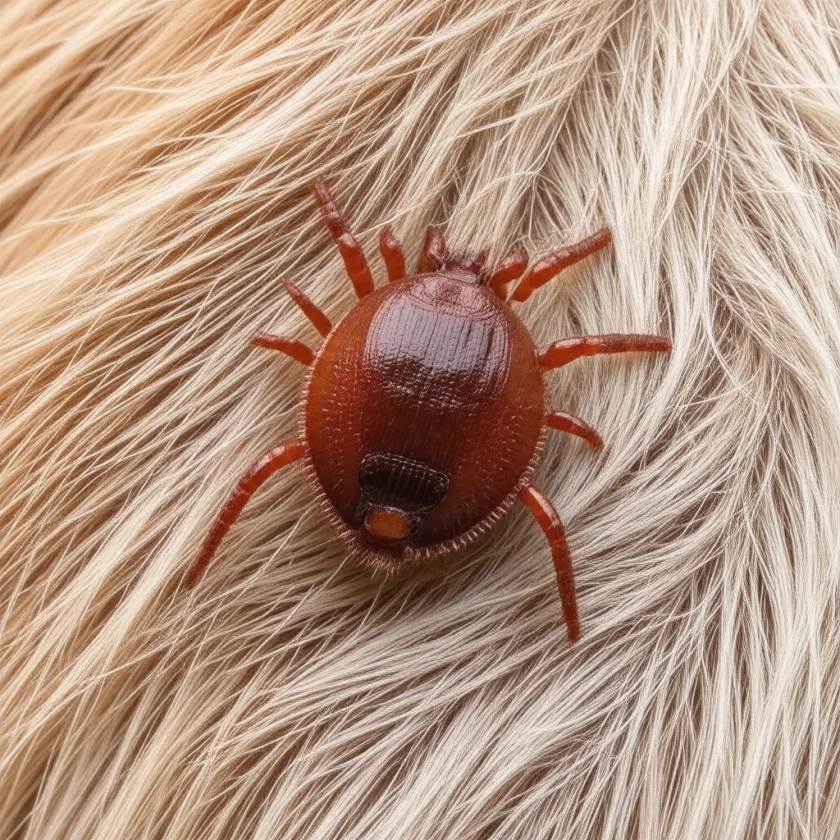
Dr. Bryan Ardis states that nicotine and tobacco are proven to kill all parasites, and that nicotine, a substance made by plants, can “cure the body of all kinds of problems.” He ties this to a question he asks throughout his nicotine work — who benefits from people fearing nicotine? — and answers that the U.S. Food and Drug Administration (FDA) and the pharmaceutical industry do, because of the drugs sold for the conditions he believes nicotine helps.
The subject has a long paper trail. Tobacco makes nicotine to poison the insects that eat it, and for most of the twentieth century farmers sprayed nicotine on crops and drenched sheep with it against stomach worms. Today’s most widely used insecticides, the neonicotinoids, were modelled on it, and several of the worm medicines given to people and animals — levamisole, pyrantel and morantel — work on the very receptor nicotine acts on, in the muscle of the worm. This page sets out Dr. Ardis’s position first, then that history and the laboratory and animal studies of tobacco against worms and ticks.
Table of Contents
- What Dr. Ardis Says
- Nicotine: A Plant’s Own Insecticide
- The Neonicotinoids, Modelled on Nicotine
- Tobacco Against Worms and Mites in Farm Animals
- Tobacco Enemas and Old Human Worm Remedies
- The Worm’s Nicotinic Receptor and Modern Wormers
- Tobacco Extracts Tested Against Worms
- Tobacco Extracts Tested Against Ticks and Fleas
- Who Benefits: The Conditions Dr. Ardis Names
- Safety Notes
- Dr. Ardis’s Own Work
- Key Research Papers
- Connections
- Featured Videos
1. What Dr. Ardis Says
Dr. Ardis set this out in a 2025 podcast appearance (Culture Apothecary) and in his book Moving Beyond the COVID-19 Lies: Restoring Health and Hope for Humanity. The parasite passage comes straight after his description of how he would start nicotine patches in someone who is sick or has an infection. In his words:
Did you know nicotine and tobacco are proven to kill all parasites? … Nicotine has this amazing ability, found in plants, to cure the body of all kinds of problems.
He then turns to the question of who benefits from the public’s fear of nicotine. Dr. Ardis states that the U.S. Food and Drug Administration and “Big Pharma” do, and lists the conditions he has discussed elsewhere — Parkinson’s, Alzheimer’s, multiple sclerosis, ulcerative colitis, “all arthritis,” myocarditis, autism and glioblastoma tumors. He says that billions of dollars’ worth of drugs approved by the U.S. Food and Drug Administration are prescribed every year for these conditions, that “lobbying money and bribes” keep those drugs in use, and that this continues “when there is a curative agent known for all of them, or at least an agent that would improve their symptoms mightily.” He adds:
It’s already been proven for decades. Why did the U.S. Food and Drug Administration have to scare the crap out of all of us about nicotine? Because it’s an antidote to so many problems Big Pharma wants to get you hooked on drugs for, for the rest of your life.
His position, in short:
- Nicotine and tobacco kill all parasites, and this has been proven.
- Nicotine, a plant substance, corrects “all kinds of problems” in the body.
- The fear of nicotine benefits the U.S. Food and Drug Administration and the pharmaceutical industry, because nicotine is an antidote to conditions for which drugs worth billions of dollars a year are sold.
Dr. Ardis does not name a particular study in this passage. The specific study is not identified here; related published work is listed below.
2. Nicotine: A Plant’s Own Insecticide
Nicotine is made in the roots of the tobacco plant and carried up into the leaves, where it acts as a chemical defence: an insect that chews the leaf takes in a nerve poison. It works because insects, like people, use the messenger chemical acetylcholine to pass signals from nerve to nerve and from nerve to muscle, and nicotine switches on the receptor that acetylcholine normally switches on — the nicotinic acetylcholine receptor, which is named after it. Switched on too hard and too long, the receptor first over-excites the nerve and then jams it, and the insect is paralysed.
Gardeners in Europe were steeping tobacco in water and sprinkling the “tobacco water” on plants against aphids by the late 1600s. In the early twentieth century nicotine was purified and sold as nicotine sulfate, a concentrated solution diluted for spraying fruit trees and vegetables, and it remained one of the main farm insecticides until synthetic organic insecticides displaced it after the Second World War. In the United States the last nicotine pesticide registrations were withdrawn in the 2010s.
The reason it fell out of use matters for this subject: nicotine is just as active on the receptors of mammals, birds and fish as on those of insects. Spray workers and farm families were poisoned by it, and concentrated nicotine-sulfate solutions remained a cause of accidental and deliberate poisoning for decades (see Safety Notes).
3. The Neonicotinoids, Modelled on Nicotine
Chemists looking for a nicotine-like insecticide that would spare mammals produced the neonicotinoids (“new nicotine-like” compounds). Masahiro Tomizawa and John Casida of the University of California, Berkeley, reviewed how they work in 2005. The class — acetamiprid, clothianidin, dinotefuran, imidacloprid, nitenpyram, thiacloprid and thiamethoxam — was then the newest major class of insecticides, used on crops against sap-sucking pests and, in the review’s words, “highly effective for flea control on cats and dogs.”
The review explains the difference from nicotine in one chemical detail. At the body’s normal acidity, nicotine carries a positive charge, which suits the receptor in mammals. Neonicotinoids carry no charge and instead have an electron-rich nitro or cyano group, which suits a site found in the insect receptor. The low attraction of neonicotinoids for vertebrate receptors compared with insect receptors is, the authors write, a major reason for their low toxicity to mammals, birds and fish.
So the most widely used insecticides of recent decades, including some of the flea treatments put on household pets, are direct descendants of nicotine and work on the same receptor family.
4. Tobacco Against Worms and Mites in Farm Animals
Before modern worming drugs, nicotine was part of the farm medicine chest. In the 1920s to 1940s American and British agricultural advisers recommended dosing (“drenching”) sheep and goats by mouth with nicotine sulfate, often mixed with copper sulfate, against the stomach worms and tapeworms that stunted and killed lambs. The same manuals warned that the margin between a worming dose and a poisonous one was narrow, and that the dose had to be measured carefully by the animal’s size.
Nicotine was also used on the outside of the animal. A 1999 history of sheep scab — an itchy, wool-destroying skin disease caused by the mite Psoroptes ovis — by D. J. O’Brien of Ireland’s Central Veterinary Research Laboratory lists nicotine among the substances, with sulphur, mercury, hellebore and arsenic, used to treat scab in the nineteenth century, before plunge dips arrived in 1843 and long before the organochlorine dips of 1947 and the ivermectin injections of the 1990s replaced them.
The nicotine drench disappeared from sheep farming when phenothiazine (from the late 1930s), the benzimidazoles (from 1961) and then levamisole and its relatives (from the late 1960s) arrived — and, as section 6 describes, levamisole works on the same receptor nicotine does.
5. Tobacco Enemas and Old Human Worm Remedies
Tobacco reached European medicine in the 1500s as a cure-all, and one of the ways it was given was as an enema — either an infusion of tobacco leaves in water, or tobacco smoke blown into the rectum through a pipe and bellows. A 2005 history of the enema by D. Doyle in the Journal of the Royal College of Physicians of Edinburgh lists tobacco beside laxatives, herbs, opium and turpentine among the substances given this way, and notes that “the potentially lethal dangers are today well recognised.”
Old medical texts recommended tobacco enemas for intestinal worms (particularly threadworms, now called pinworms), for colic, and for strangulated hernia, where the nicotine was expected to relax the gut. The best-documented use was in reviving the apparently drowned: Alessandro Bamji’s 2020 study in the Bulletin of the History of Medicine follows eighteenth-century Venice, where public-health authorities promoted resuscitation kits that included equipment for tobacco-smoke enemas. Writers of the same era also recorded collapse and death after tobacco-infusion enemas, and the practice was abandoned through the nineteenth century as the poisonous strength of nicotine came to be understood.
No controlled study of tobacco enemas against worms in people has been found for this page; the sources are historical.
6. The Worm’s Nicotinic Receptor and Modern Wormers
Roundworms (nematodes) — the group that includes Ascaris, hookworm, pinworm and the sheep stomach worm Haemonchus — move by rippling the muscles along their body wall, and those muscles are switched on by acetylcholine acting on nicotinic receptors. Block or jam that signal and the worm cannot hold its place in the gut and is swept out.
That receptor is the target of a whole family of worm medicines, the cholinergic anthelmintics. Richard Martin of the University of Edinburgh summarised it in a 1997 review in The Veterinary Journal: “Levamisole, pyrantel and morantel are agonists at nicotinic acetylcholine receptors of nematode muscle and cause spastic paralysis.” An agonist is a substance that switches a receptor on, as nicotine does; spastic paralysis means the muscle is locked in contraction rather than going limp.
- The early experiment. In 1970 J. Aceves and colleagues reported in the British Journal of Pharmacology that tetramisole (the mixture from which levamisole was purified) paralysed live Ascaris worms in 3 minutes at 100 micrograms per millilitre, caused a sustained contraction of isolated worm muscle, and lowered the muscle’s resting electrical charge from about 34 to about 10 millivolts.
- The genes. In 1997 J. T. Fleming and colleagues, working with the laboratory roundworm Caenorhabditis elegans, showed in the Journal of Neuroscience that three of the genes which, when broken, make worms resistant to levamisole (unc-38, unc-29 and lev-1) code for parts of a nicotinic acetylcholine receptor, and that these worm receptors share many features with mammalian ones — a sign of a very old common origin.
- Three receptor types. In 2006 H. Qian, Richard Martin and Alan Robertson of Iowa State University recorded single receptor channels in Ascaris suum muscle and resolved three subtypes — N, L and B — with different preferences: levamisole favoured the L-subtype and bephenium the B-subtype. They wrote that these differences should be considered when dealing with drug-resistant infections.
- Resistance. Martin and Robertson’s 2007 review in Parasitology sets out how worms become resistant to these drugs: the receptors are built from several genes and tuned by other proteins, so resistance may arise from changes in any of them and may involve several genes at once.
Pyrantel is the medicine sold without prescription in many countries for pinworm in people, and levamisole and morantel are used in farm animals. Nicotine itself acts on the same receptor family; the medicines differ in being chosen for a stronger effect on the worm’s receptors than on the host’s.
7. Tobacco Extracts Tested Against Worms
Tobacco leaf is still used as a worm remedy for livestock in parts of South Asia and Africa, and several groups have tested it.
- Sheep in Pakistan, 2006. Zafar Iqbal and colleagues at the University of Agriculture, Faisalabad, tested water and methanol extracts of Nicotiana tabacum leaves (Phytotherapy Research). In the dish, both extracts paralysed or killed live Haemonchus contortus worms within 6 hours. In sheep naturally infected with mixed stomach and intestinal worms, doses of 1.0 to 3.0 grams per kilogram of body weight lowered the number of worm eggs in the dung in a dose-dependent way: the largest drop was 73.6% on day 5 with the methanol extract at 3.0 g/kg, against 49.4% for the same dose of the water extract. Levamisole at 7.5 mg/kg, given for comparison, lowered the egg count by 99.6%.
- Goats with drug-resistant worms, 2025. M. S. Yasin and colleagues at the University of Veterinary and Animal Sciences, Lahore, purified alkaloid-rich fractions of tobacco leaf and tested them against a Haemonchus contortus strain resistant to the benzimidazole wormers (Veterinary World). The most active fraction (ethyl acetate) killed all adult worms in the dish at 3 to 5 mg/mL and stopped all eggs hatching at 4 to 5 mg/mL. Given by mouth for 14 days to 25 naturally infected goats, the high dose (1.6 mg/kg) lowered faecal egg counts by 76.2%, against 69.7% for the comparison drug oxfendazole. The authors reported no significant change in two liver enzymes, and improved blood counts and serum proteins.
- The laboratory roundworm, 2019. A team working in a tobacco manufacturer’s research laboratory in Switzerland, led by S. Schorderet Weber, tested leaf extracts of four Nicotiana species and several tobacco varieties against Caenorhabditis elegans (Food and Chemical Toxicology). Only two extracts (one tobacco variety and N. glutinosa) showed moderate anti-worm activity.
All three are animal or laboratory studies. No trial of tobacco or nicotine as a worm treatment in people has been found for this page, and studies of tobacco extracts against single-celled parasites (protozoa such as Giardia or the malaria parasite) were not identified here.
8. Tobacco Extracts Tested Against Ticks and Fleas
- The brown dog tick, 2019. T. O. Oyagbemi and colleagues at the University of Ibadan, Nigeria, exposed larvae and adults of Rhipicephalus sanguineus, the brown dog tick, to methanol and hexane extracts of tobacco leaf (Veterinary World). Ticks died in proportion to the concentration, the hexane extract more strongly than the methanol extract. Chemical analysis found nicotine among the leaf’s compounds, alongside a large amount of terpenoids.
- Ticks, fleas and blowfly larvae, 2019. In the Schorderet Weber study above, none of the extracts effectively killed adult cat fleas or blowfly larvae at the concentrations tested. All of them repelled brown dog ticks (but not the European sheep tick Ixodes ricinus), and the nicotine-rich extracts quickly knocked down every tick species and life stage at high concentrations. Pure nicotine at the concentrations found in the extracts did the same, which tied the knock-down effect to nicotine; the repellent effect could not be traced to nicotine or to any single tobacco alkaloid tested.
9. Who Benefits: The Conditions Dr. Ardis Names
The second half of the passage returns to the conditions Dr. Ardis has discussed in his wider nicotine work. Each has its own page in this wing, setting out his statements and the research on that condition:
- Parkinson’s disease — Nicotine in Nightshade Vegetables and Parkinson’s Disease
- Multiple sclerosis — Snus and Multiple Sclerosis
- Ulcerative colitis — Nicotine and Ulcerative Colitis
- Arthritis — Nicotine Patches for Arthritis and Inflammation
- Myocarditis — Nicotine, Myocarditis and Heart Rhythm
- Autism — Nicotine and Autism
- Glioblastoma — Nicotine and Glioblastoma
His account of how nicotine came to be feared, and of tobacco’s older place in Indigenous medicine, is on Tobacco, Indigenous Medicine and the Suppression of Therapeutic Nicotine, and the receptor behind all of it on Nicotinic Acetylcholine Receptors.
10. Safety Notes
- Nicotine-sulfate and other concentrated nicotine products are poisons. Old garden and farm nicotine insecticides were concentrated solutions, and swallowing them can kill. A 2004 case report in the Journal of Emergency Medicine (Rogers, Denk and Wax) describes a 15-year-old boy who swallowed a nicotine sulfate solution and suffered lack of oxygen and permanent brain injury. The authors note that the diagnosis can be delayed because nicotine and cotinine on drug screens are so common they are treated as “normal variants.” Never make, store or use homemade tobacco or nicotine insecticides, washes or worm doses.
- Tobacco enemas and drenches poisoned people and animals. The historical record documents collapse and death after tobacco enemas, and veterinary manuals warned of fatal overdoses from nicotine drenches in sheep. Tobacco or nicotine should never be given by enema or by mouth as a worm remedy.
- Children and pets. Nicotine poisoning in small children and in dogs and cats comes mostly from swallowed patches, gum, pouches, cigarette ends and e-liquid. Used patches still hold a large share of their nicotine: fold them sticky sides together and dispose of them out of reach. If a child or pet may have swallowed nicotine, call a poison control centre or vet at once.
- Who should not use nicotine. Pregnancy and breastfeeding; recent heart attack, unstable angina or serious heart-rhythm problems; uncontrolled high blood pressure; and other conditions listed on the protocol page. Nicotine can also change how some medicines work.
- Worm infections are treatable. Pinworm, roundworm and hookworm infections in people have well-studied medicines, including pyrantel, which acts on the same worm receptor described in section 6.
The full list of contraindications and cautions is on the Nicotine Patch Protocol page.
Dr. Ardis’s Own Work
- Moving Beyond the COVID-19 Lies: Restoring Health and Hope for Humanity — his 2024 book, where the nicotine argument is set out at length.
- Dr. Bryan Ardis Hub — the wing’s main page, linking every page on his nicotine and snake-venom work.
- The Dr. Ardis Show — official site
Key Research Papers
- Tomizawa M, Casida JE (2005). Neonicotinoid insecticide toxicology: mechanisms of selective action. Annu Rev Pharmacol Toxicol. — PubMed PMID: 15822177
- O'Brien DJ (1999). Treatment of psoroptic mange with reference to epidemiology and history. Vet Parasitol. — PubMed PMID: 10423001
- Doyle D (2005). Per rectum: a history of enemata. J R Coll Physicians Edinb. — PubMed PMID: 16447347
- Bamji A (2020). Blowing Smoke Up Your Arse: Drowning, Resuscitation, and Public Health in Eighteenth-Century Venice. Bull Hist Med. — PubMed PMID: 32362593
- Martin RJ (1997). Modes of action of anthelmintic drugs. Vet J. — PubMed PMID: 9265850
- Aceves J, Erlij D, Martínez-Marañón R (1970). The mechanism of the paralysing action of tetramisole on Ascaris somatic muscle. Br J Pharmacol. — PubMed PMID: 5445688
- Fleming JT, Squire MD, Barnes TM, et al. (1997). Caenorhabditis elegans levamisole resistance genes lev-1, unc-29, and unc-38 encode functional nicotinic acetylcholine receptor subunits. J Neurosci. — PubMed PMID: 9221782
- Qian H, Martin RJ, Robertson AP (2006). Pharmacology of N-, L-, and B-subtypes of nematode nAChR resolved at the single-channel level in Ascaris suum. FASEB J. — PubMed PMID: 17056760
- Martin RJ, Robertson AP (2007). Mode of action of levamisole and pyrantel, anthelmintic resistance, E153 and Q57. Parasitology. — PubMed PMID: 17608969
- Iqbal Z, Lateef M, Jabbar A, et al. (2006). In vitro and In vivo anthelmintic activity of Nicotiana tabacum L. leaves against gastrointestinal nematodes of sheep. Phytother Res. — PubMed PMID: 16397920
- Yasin MS, Shehzad W, Ashraf K, et al. (2025). Anthelmintic efficacy and safety of alkaloid-rich fractions of Nicotiana tabacum against benzimidazole-resistant Haemonchus contortus in goats. Vet World. — PubMed PMID: 41472767
- Schorderet Weber S, Kaminski KP, Perret JL, et al. (2019). Antiparasitic properties of leaf extracts derived from selected Nicotiana species and Nicotiana tabacum varieties. Food Chem Toxicol. — PubMed PMID: 31276744
- Oyagbemi TO, Ashafa A, Adejinmi JO, et al. (2019). Preliminary investigation of acaricidal activity of leaf extract of Nicotiana tabacum on dog tick Rhipicephalus sanguineus. Vet World. — PubMed PMID: 31849425
- Rogers AJ, Denk LD, Wax PM (2004). Catastrophic brain injury after nicotine insecticide ingestion. J Emerg Med. — PubMed PMID: 14980338
PubMed Topic Searches
Connections
- Dr. Bryan Ardis Hub — the wing’s main page: his nicotine hypothesis and snake-venom theory
- Nicotinic Acetylcholine Receptors — the receptor family nicotine, neonicotinoids and the cholinergic wormers all act on
- Tobacco, Indigenous Medicine and the Suppression of Therapeutic Nicotine — his account of how nicotine came to be feared
- The Nicotine Hypothesis — the wider argument this passage belongs to
- Nicotine Patch Protocol — dosing, placement, contraindications and safety
- Nicotine in Nightshade Vegetables and Parkinson’s Disease — nicotine as a plant compound in food
- Moving Beyond the COVID-19 Lies — Dr. Ardis’s 2024 book
- Parasites: History and Origins — the longer history of worm remedies
- Pinworm Treatment: Pyrantel, Mebendazole, and Albendazole — pyrantel, the nicotinic-receptor wormer used in people
- Ascaris — The Giant Roundworm — the worm whose muscle revealed how levamisole works
- Hookworm — The Blood-Feeding Worm — a cousin of the sheep stomach worm Haemonchus