Vitamins and Minerals Tests
The Tests (13)
Vitamin D Test
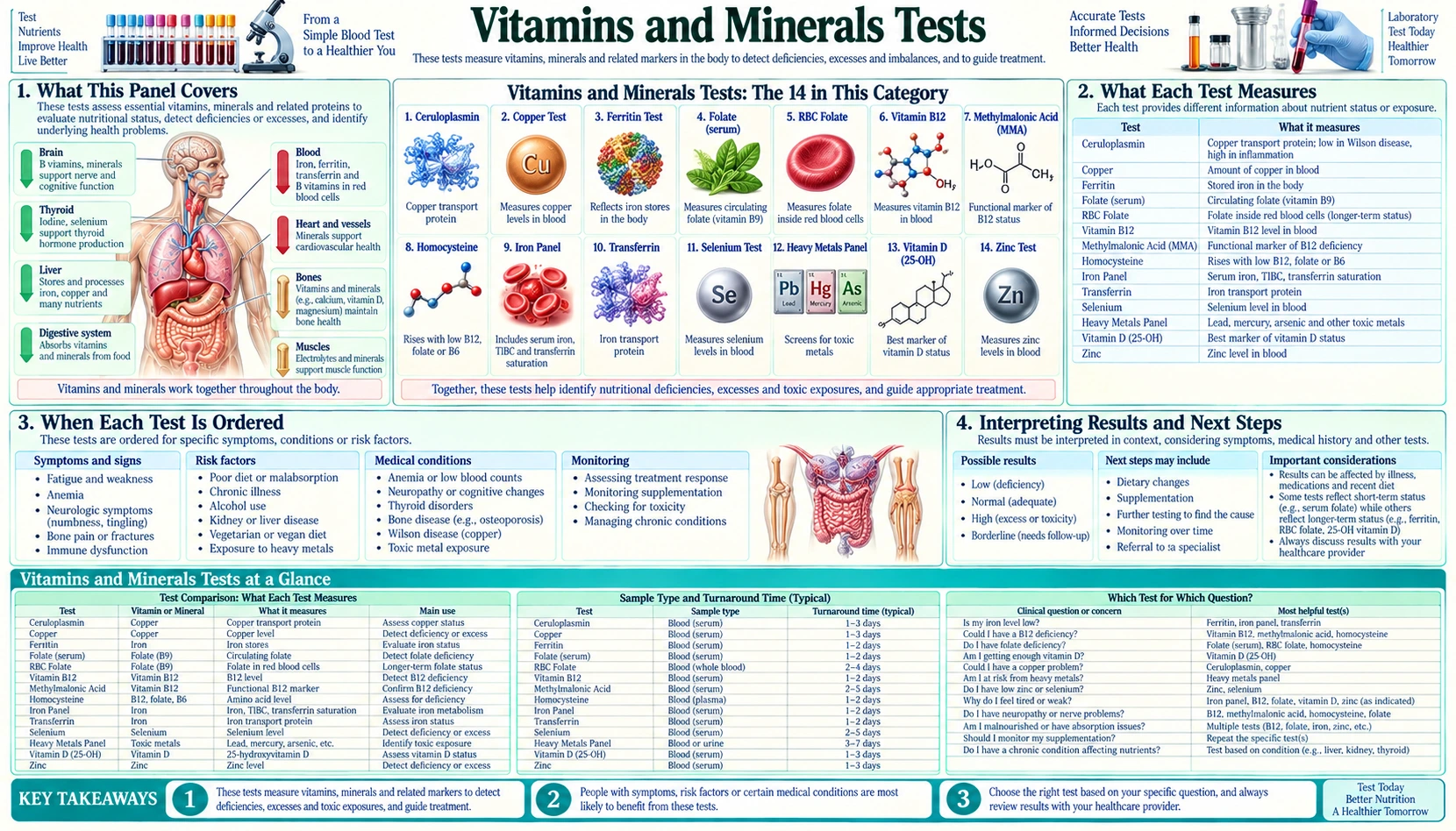
Measures 25-hydroxyvitamin D, the storage form in blood, reflecting sun, food and supplement intake over the previous two to three months.
Read the deep dive →Ferritin Test
Measures the iron-storage protein in blood, the most sensitive marker of iron stores; it falls early in deficiency but rises with inflammation.
Read the deep dive →Zinc Test
Measures zinc in serum or plasma, ordered for hair loss, poor healing, recurrent infections or lost taste; it can miss early deficiency.
Read the deep dive →Copper Test
Total serum copper, read alongside ceruloplasmin to spot Wilson's disease, copper deficiency or excess; estrogen, pregnancy and inflammation push it up.
Read the deep dive →Iron Panel
Combines serum iron, ferritin, TIBC, UIBC and transferrin saturation to show circulating iron, stored iron and carrying capacity, catching what ferritin alone misses.
Read the deep dive →Vitamin B12
Blood level of cobalamin, used to check for deficiency affecting nerves and red cells; functional markers can reveal shortfalls a normal result misses.
Read the deep dive →Ceruloplasmin
Measures the liver-made blue protein that carries most blood copper; used mainly to help diagnose Wilson's disease, and it rises with inflammation.
Read the deep dive →Folate
This blood test measures vitamin B9, used to investigate large-cell anemia and check nutrition in pregnancy; it is read alongside vitamin B12.
Read the deep dive →Transferrin
Measures the liver protein that ferries iron through blood, read with serum iron and saturation; it rises when iron falls and drops with inflammation.
Read the deep dive →Methylmalonic Acid (MMA)
Measures a by-product in blood or urine that builds up when cells lack usable B12, often before serum B12 drops; reduced kidney function is the main false-positive trap.
Read the deep dive →Heavy Metals Panel
Checks exposure to lead, mercury, arsenic and cadmium; each metal needs its own sample type, whole blood or urine, to be meaningful.
Read the deep dive →Selenium Test
Measures this trace mineral, usually in serum, to confirm suspected deficiency or catch excess; the gap between too little and too much is narrow.
Read the deep dive →RBC Folate
Measures the folate held inside red blood cells, reflecting supply over the past two to three months rather than recent meals.
Read the deep dive →Nutrient status — including the functional markers that detect a deficiency the serum level can miss.