Bitter Melon and Cholesterol
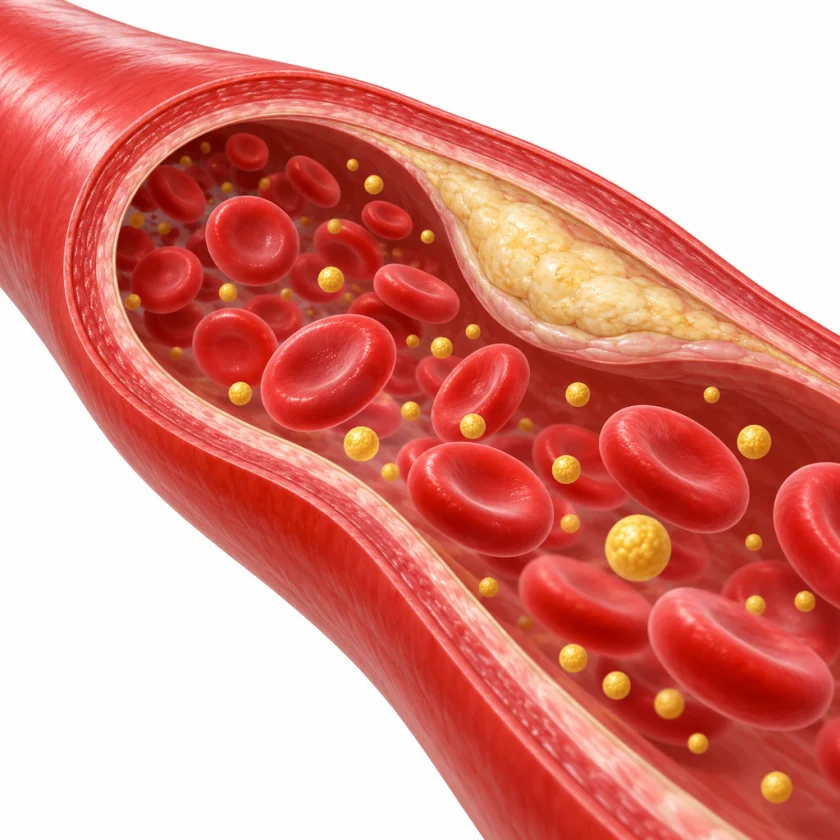
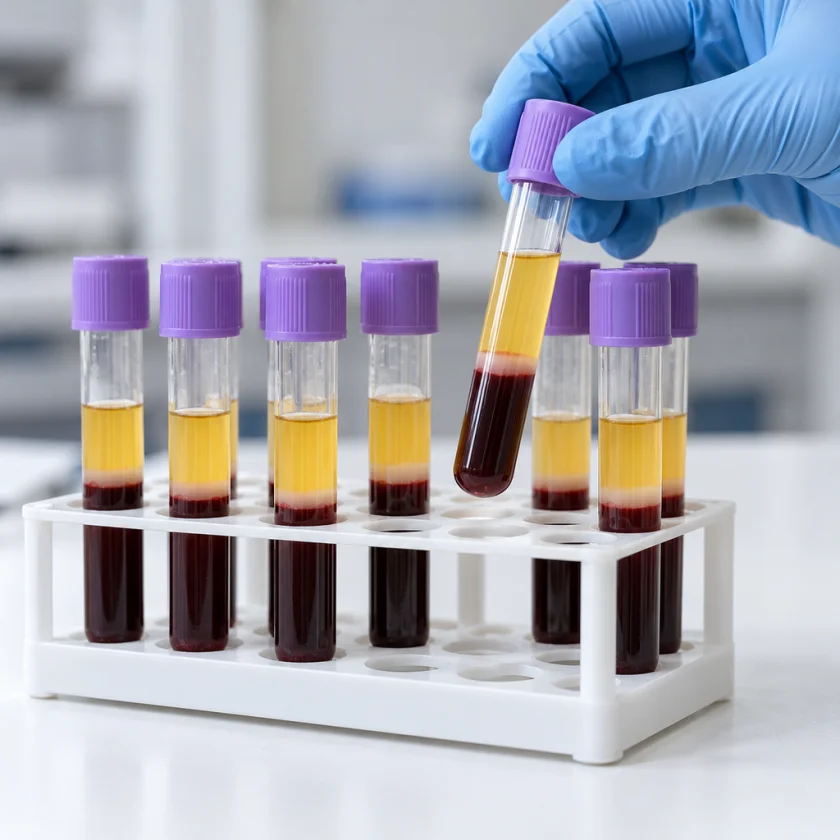
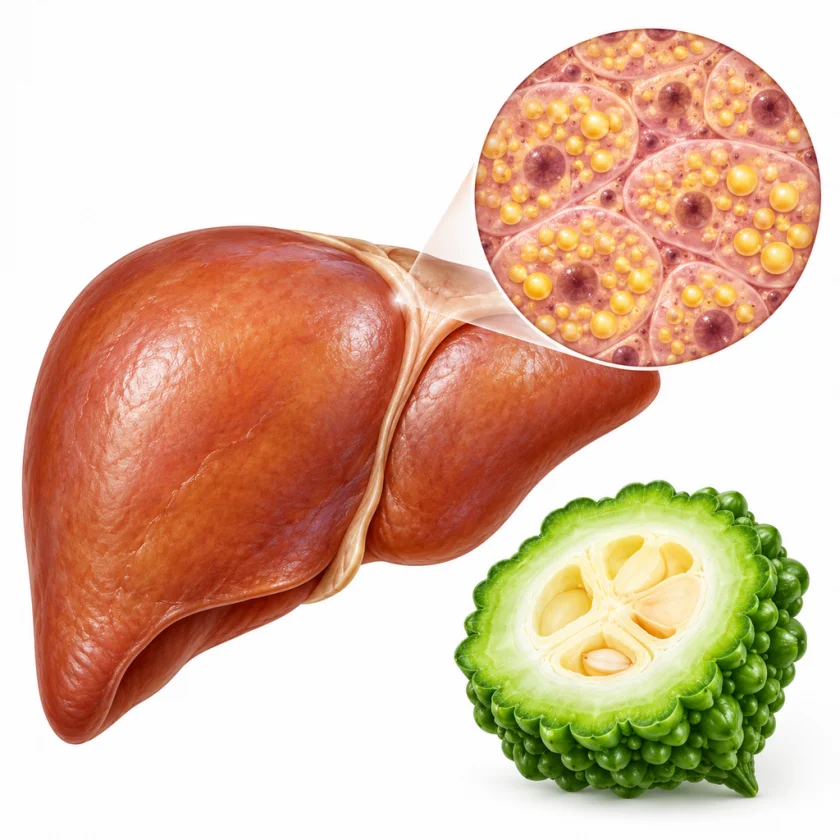
Most bitter melon research is about blood sugar, but nearly every trial also drew blood for a lipid panel, so there is a small body of human data on cholesterol and triglycerides as a side effect of the glucose work. A popular 2026 video on bitter melon mentions two of those results — a drop in total cholesterol in a 2024 meta-analysis and a drop in LDL cholesterol in a 2018 Japanese trial. This page sets out what those studies, and three others, actually measured: which lipid numbers moved, by how much, in whom, for how long, and which numbers did not move at all. The short version is that the results point in different directions depending on the study, the effects that do reach significance are small, and no trial ran longer than about four months.
Table of Contents
- What the Video Says About Lipids
- Reading the Numbers: mmol/L and mg/dL
- The 2024 Heliyon Meta-Analysis
- The 2024 Lipid Meta-Analysis
- The 2018 Japanese Trial
- The 2023 Frontiers Meta-Analysis
- The 2015 Comparison With a Diabetes Drug
- Proposed Mechanisms: Mostly Lab and Animal Data
- What the Numbers Do and Do Not Show
- Where This Page Corrects the Video
- Key Research Papers
- Connections
- Featured Videos
What the Video Says About Lipids
Blood fats get a short passage near the end of the video’s research segment. The presenter returns to the 2024 meta-analysis published in Heliyon, which the video had already described for its blood-sugar findings, and points out that total cholesterol fell significantly in that analysis — by 0.38 mmol/L. The video then adds that a 2018 randomized trial from Japan linked a bitter melon extract with lower LDL cholesterol.
Both statements match the papers as far as they go. What the video leaves out is the rest of each result: the same Heliyon paper found no significant change in LDL, HDL or triglycerides, and the Japanese trial found LDL lower but total cholesterol unchanged. The video also describes the Heliyon participants as people “concerned about their blood sugar,” while the paper enrolled people with diagnosed type 2 diabetes. And while the video cites the 2023 Frontiers in Nutrition meta-analysis for its finding on body weight, that paper also tested cholesterol and found nothing. The sections below give each study in full.
Reading the Numbers: mmol/L and mg/dL
The studies on this page report lipids in two different units, which makes them hard to compare at a glance. Most of the world, including the Heliyon meta-analysis, uses millimoles per liter (mmol/L). Laboratories in the United States report milligrams per deciliter (mg/dL), and the 2024 lipid meta-analysis by Amini and colleagues uses mg/dL as well.
The conversion depends on the molecule, because a millimole of cholesterol and a millimole of triglyceride weigh different amounts:
- Cholesterol (total, LDL or HDL): mmol/L × 38.67 = mg/dL
- Triglycerides: mmol/L × 88.57 = mg/dL
Applied to the figures on this page:
- The Heliyon drop in total cholesterol of 0.38 mmol/L ≈ 14.7 mg/dL.
- The Amini drop in total cholesterol of 9.71 mg/dL ≈ 0.25 mmol/L.
- The Amini drop in triglycerides of 10.24 mg/dL ≈ 0.12 mmol/L.
For scale, a standard lipid panel in the United States often shows total cholesterol somewhere around 150–250 mg/dL, so a change of 10–15 mg/dL is a shift of a few percent. The Lipid Panel page explains what each number on the report measures.
The 2024 Heliyon Meta-Analysis
Zhang and colleagues pooled 8 randomized controlled trials with 423 participants, all of them people with type 2 diabetes. The review was built around glucose control, with lipids as secondary outcomes, and it used the GRADE system to rate the certainty of each result and a Hartung-Knapp adjustment, a statistical correction that makes pooled confidence intervals more conservative when only a few trials are combined.
For lipids, the findings were:
- Total cholesterol: down 0.38 mmol/L (about 14.7 mg/dL), with a 95% confidence interval of −0.70 to −0.07 mmol/L — statistically significant, but the interval runs from a meaningful drop to almost nothing.
- LDL cholesterol: no significant difference.
- HDL cholesterol: no significant difference.
- Triglycerides: no significant difference.
A fall in total cholesterol without a matching fall in LDL is an awkward pattern to interpret, because LDL usually makes up the largest share of total cholesterol. With only a few hundred people spread across eight small trials, the most likely explanation is limited statistical power: individual components may have shifted slightly in the same direction without any single one reaching significance. The paper does not, on its own, show which lipid fraction moved.
The 2024 Lipid Meta-Analysis
A second 2024 review, by Amini and colleagues in Phytotherapy Research, was designed specifically around blood lipids. It also included 8 randomized trials and 423 participants — the same totals as the Heliyon paper, which suggests the two reviews drew on a largely overlapping pool of trials, although they analysed it differently. Its main results, in mg/dL:
- Total cholesterol: −9.71 mg/dL (95% CI −17.69 to −1.74), significant.
- Triglycerides: −10.24 mg/dL (95% CI −19.92 to −0.56), significant, though the upper end of the interval is close to zero.
- LDL cholesterol: −8.66 mg/dL, not significant (p = 0.12).
- HDL cholesterol: +0.54 mg/dL, not significant.
So the two 2024 reviews agree on a modest total-cholesterol reduction and on no significant LDL or HDL effect, but disagree on triglycerides: significant in the Amini analysis, not significant in the Heliyon analysis. A more conservative statistical method, as the Heliyon authors used, is one plausible reason a borderline result can cross the line in one review and not the other.
The Amini team also broke the data into subgroups. When doses were 2,000 mg a day or less, and when trials lasted 8 weeks or less, total cholesterol and LDL fell and HDL rose. The largest LDL and HDL effects appeared in people with diabetes or prediabetes. Subgroup splits of this kind rest on very few trials each, and a pattern in which lower doses and shorter trials look better than higher doses and longer ones is the opposite of what a simple dose-response would predict — so these findings are best read as leads for future trials rather than settled results.
The authors name their own main limitation: every included trial was shorter than three months. Cholesterol-lowering drugs are judged on years of follow-up and on heart attacks and strokes, not on a few weeks of lab values; no bitter melon trial in this literature has measured those outcomes.
The 2018 Japanese Trial
The trial the video mentions is Kinoshita and Ogata, published in 2018. It was double-blind and placebo-controlled, which is a strength, but small and short: 43 Japanese adults took either 100 mg of a hot-water bitter melon extract three times a day (23 people) or a placebo (20 people) for 30 days.
At the end, LDL cholesterol was significantly lower in the extract group than in the placebo group (p = 0.02). Nothing else changed significantly — not total cholesterol, not HDL, not triglycerides, not blood glucose, body weight, BMI or blood pressure.
That combination — LDL down, total cholesterol unchanged — is the mirror image of the Heliyon result, where total cholesterol fell and LDL did not. In a group of 43 people over one month, a single significant result among many measured outcomes is a reason for a larger, longer trial rather than a confirmed effect. The video’s summary of the LDL finding is accurate; the size and length of the study are the context it does not give.
The 2023 Frontiers Meta-Analysis
Laczkó-Zöld and colleagues pooled 9 randomized trials with 414 patients, followed for 4 to 16 weeks, and compared the change in each outcome on bitter melon with the change on placebo. Their title states the conclusion: the metabolic effect of bitter melon “cannot be determined” from the available clinical evidence.
For lipids, the differences from placebo were close to zero and none was significant:
- LDL cholesterol: mean difference −0.10 (95% CI −0.28 to 0.08).
- Total cholesterol: mean difference −0.04 (95% CI −0.17 to 0.09).
- HDL cholesterol: mean difference −0.04 (95% CI −0.17 to 0.09).
The same review found no significant effect on fasting glucose, HbA1c, body weight, BMI or blood pressure. On the safety side, liver enzymes (ALT, AST) and creatinine did not change compared with placebo. The authors describe the overall statistical power as low and the trials as too short to detect long-term metabolic effects.
Why does this review find nothing on total cholesterol when the two 2024 reviews find a modest drop? The trial sets differ, and this analysis compared change from baseline against placebo. When small, short trials are combined, differences in which trials are included and how they are analysed are enough to move a borderline result either side of significance — which is itself a sign of how weak the signal is.
The 2015 Comparison With a Diabetes Drug
A 2015 trial from Pakistan by Inayat U Rahman and colleagues, published in Nutrition Journal, is titled “Lower hypoglycemic but higher antiatherogenic effects of bitter melon than glibenclamide in type 2 diabetic patients.” Glibenclamide (also called glyburide) is a prescription sulfonylurea drug for type 2 diabetes.
According to the abstract, 95 people with type 2 diabetes were randomized to bitter melon at 2 g or 4 g a day, or to glibenclamide, for 10 weeks. Glibenclamide lowered blood sugar more. Blood lipids, an atherogenic index, body weight and systolic blood pressure improved in both bitter melon groups and worsened in the glibenclamide group.
Two features limit what this trial can say about cholesterol. There was no placebo group, so the bitter melon results are compared with the patients’ own starting values and with an active drug, rather than with no treatment. And the abstract describes the lipid changes as improvements without giving their size, so the trial does not add a number that can be set beside the meta-analyses.
Proposed Mechanisms: Mostly Lab and Animal Data
None of the human trials above was designed to show how bitter melon might affect blood fats. The explanations that circulate come from cell and animal work, or from general nutrition science.
Cucurbitane triterpenoids and AMPK (cell and mouse data). Tan and colleagues (2008) isolated cucurbitane glycosides from bitter melon — momordicosides Q, R, S and T and karaviloside XI — and tested them in muscle cells and fat cells grown in the lab. The compounds moved the GLUT4 glucose transporter to the cell surface, and this was associated with higher activity of AMPK, an energy-sensing enzyme that also regulates fat burning. In both insulin-sensitive and insulin-resistant mice, the compounds increased fatty-acid oxidation and improved glucose handling. Increased fat oxidation is one plausible route to lower triglycerides, but the study measured it in mice and cell cultures, not in people, and it did not measure human blood lipids. These cucurbitane compounds are also among the substances that make bitter melon bitter (Takase 2019).
Fiber (general nutrition principle). Raw bitter melon contains about 2.8 g of fiber per 100 g (USDA FoodData Central). Soluble fiber in general is known to bind bile acids in the gut, which leads the liver to pull cholesterol from the blood to make more. Whether the amount of fiber in a serving of bitter melon does this to a measurable degree has not been tested in the trials above. Most of them also used extracts or powders in capsules, where fiber content is low or unknown, so fiber cannot explain their results.
Animal models of dyslipidemia. The Kinoshita paper notes that several experimental studies report improved lipid metabolism in animal models of dyslipidemia and diabetes; that animal background is the reason the human trial was run. Animal doses are often far higher per kilogram than anything used in human trials.
What the Numbers Do and Do Not Show
What they show. Across two 2024 meta-analyses, bitter melon preparations were associated with a modest fall in total cholesterol, in the range of roughly 10 to 15 mg/dL, over trials lasting weeks to a few months. One of those reviews also found a small triglyceride reduction of about 10 mg/dL. A single 30-day trial in 43 Japanese adults found LDL lower than placebo. A 2015 trial without a placebo arm reported lipid improvements compared with a sulfonylurea drug.
What they do not show.
- No meta-analysis found a significant effect on LDL or HDL cholesterol.
- The 2023 Frontiers meta-analysis found no significant effect on any lipid it tested.
- The results that did reach significance have confidence intervals that come close to zero, and they do not line up across studies (total cholesterol without LDL in one, LDL without total cholesterol in another).
- No trial ran longer than about four months, and none measured heart attacks, strokes or other outcomes that lipid numbers stand in for.
- Preparations varied widely — fruit powders, hot-water extracts, juices, capsules — so a result from one preparation does not carry over to another, or to bitter melon eaten as a vegetable.
- Many participants had type 2 diabetes, so results may not apply to people with high cholesterol alone.
How the size compares. A 10–15 mg/dL fall in total cholesterol is small next to the reductions reported in large trials of standard lipid-lowering medicines, and the bitter melon figures come from far smaller and shorter studies. The evidence describes a possible small effect that has not been confirmed, not an established cholesterol treatment.
Bitter melon also lowers blood sugar, and its safety profile includes concerns in pregnancy and for people with G6PD deficiency; these are covered on the safety page. Decisions about supplements alongside cholesterol or diabetes medicines belong with a clinician who knows the full picture.
Where This Page Corrects the Video
Errors
- Who was studied (E3). The video describes the 423 participants of the 2024 Heliyon meta-analysis as people concerned about their blood sugar. The paper enrolled patients with diagnosed type 2 diabetes. The video also reports only the total-cholesterol drop from that paper; the same analysis found no significant change in LDL, HDL or triglycerides.
- What the 2023 review found (E5). The video cites the 2023 Frontiers in Nutrition meta-analysis for finding no change in body weight, which is correct. That paper also found no significant effect on fasting glucose, HbA1c, LDL cholesterol or total cholesterol, and its title states that the metabolic effect of bitter melon cannot be determined from the available trials.
Simplifications
- The 2018 Japanese trial (S5). The video is right that this trial found lower LDL cholesterol. It was a 43-person, 30-day study, and total cholesterol, HDL and triglycerides did not change significantly.
Key Research Papers
- Zhang X, Zhao Y, Song Y, Miao M. Effects of Momordica charantia L. supplementation on glycemic control and lipid profile in type 2 diabetes mellitus patients: a systematic review and meta-analysis of randomized controlled trials. Heliyon. 2024;10(10):e31126. PMID: 38784554
- Amini MR, Rasaei N, Jalalzadeh M, Pourreza S, Hekmatdoost A. The effects of bitter melon (Momordica charantia) on lipid profile: a systematic review and meta-analysis of randomized controlled trials. Phytother Res. 2024;38(12):5949-5961. PMID: 39444254
- Kinoshita H, Ogata Y. Effect of bitter melon extracts on lipid levels in Japanese subjects: a randomized controlled study. Evid Based Complement Alternat Med. 2018;2018:4915784. PMID: 30532795
- Laczkó-Zöld E, Csupor-Löffler B, Kolcsár EB, Ferenci T, Nan M, Tóth B, Csupor D. The metabolic effect of Momordica charantia cannot be determined based on the available clinical evidence: a systematic review and meta-analysis of randomized clinical trials. Front Nutr. 2023;10:1200801. PMID: 38274207
- Inayat U Rahman, Khan RU, Khalil Ur Rahman, Bashir M. Lower hypoglycemic but higher antiatherogenic effects of bitter melon than glibenclamide in type 2 diabetic patients. Nutr J. 2015;14:13. PMID: 25623883
- Tan MJ, Ye JM, Turner N, et al. Antidiabetic activities of triterpenoids isolated from bitter melon associated with activation of the AMPK pathway. Chem Biol. 2008;15(3):263-273. PMID: 18355726
- Takase S, Kera K, Nagashima Y, et al. Allylic hydroxylation of triterpenoids by a plant cytochrome P450 triggers key chemical transformations that produce a variety of bitter compounds. J Biol Chem. 2019;294(49):18662-18673. PMID: 31656227
PubMed Topic Searches
Connections
- Bitter Melon (Main Page)
- Bitter Melon Benefits Hub
- Bitter Melon Clinical Trials: Why the Meta-Analyses Disagree
- Bitter Melon Safety: Seeds, Favism, Pregnancy and Medications
- Why Bitter Melon Is Bitter: Compounds, Nutrition and Cooking
- Bitter Melon for Blood Sugar
- Bitter Melon for Diabetes Complications
- Bitter Melon for Weight Loss
- Bitter Melon History
- Bitter Melon (Blood Sugar Remedies)
- Lipid Panel