⚠ Evidence warning: Clinical trials or other evidence do not support the claims that bitter melon produces real but modest improvement in blood sugar, hemoglobin A1c and insulin resistance in type 2 diabetes, that only the unripe green fruit works, that its mechanisms add up to a meaningful effect, and that it is a well-tolerated, reasonable early-stage adjunct. This page keeps it as a report of what people, websites or other media say.
Bitter Melon for Blood Sugar
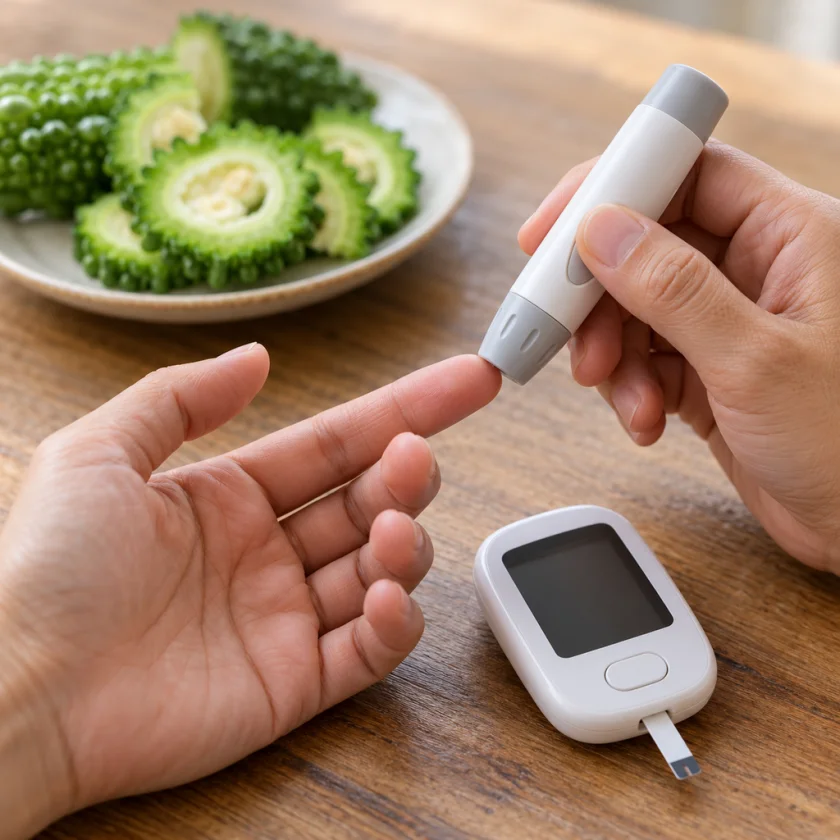
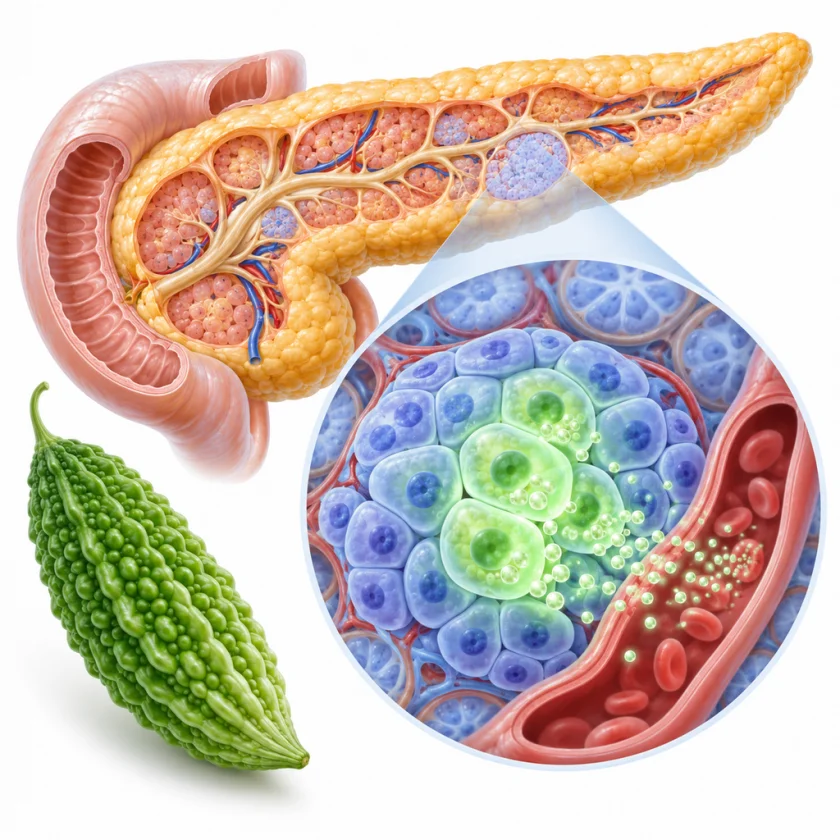
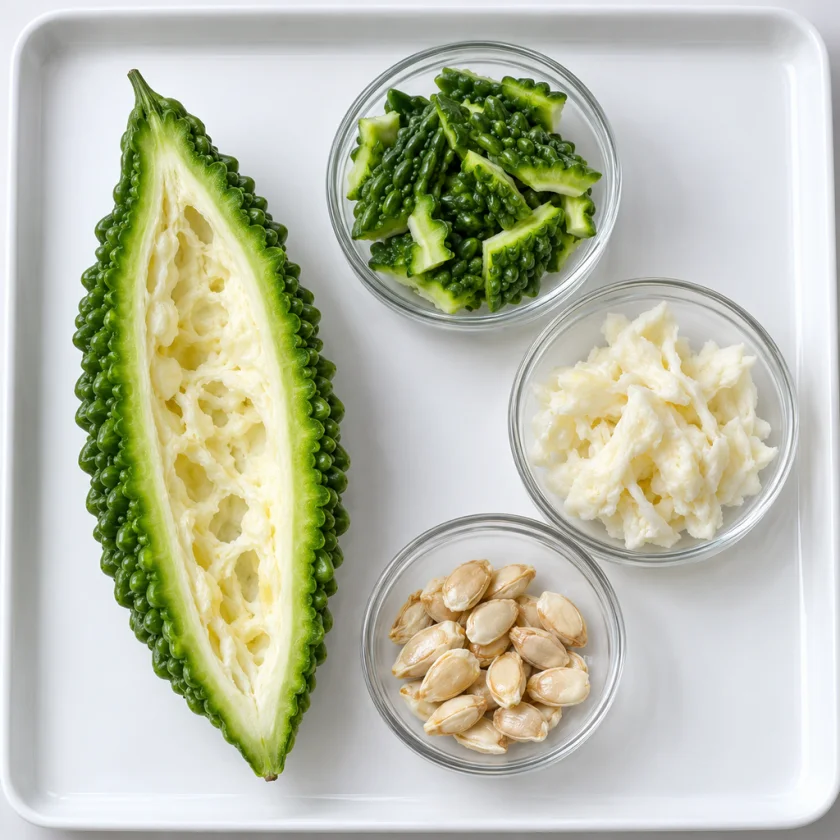
Bitter melon's reputation as a hypoglycemic plant remedy goes back over a thousand years in both the Ayurvedic and Traditional Chinese Medicine traditions, where the intensely bitter unripe fruit (karela in Hindi, kŭgua in Chinese, ampalaya in Tagalog, cerasee in the Caribbean) was prescribed for what we now recognize as type 2 diabetes long before insulin was discovered. Modern phytochemistry has identified at least three structurally distinct hypoglycemic compound classes — the steroidal-saponin charantin, the protein polypeptide-p (about 166 amino acids, sometimes called “plant insulin”), and the glycoalkaloid vicine — operating through at least five complementary mechanisms. The clinical evidence base includes the seminal Welihinda 1986 trial in type 2 diabetics from Sri Lanka, the Krawinkel & Keding 2006 mechanistic review, and the Yin et al. 2014 systematic review and meta-analysis, which pooled four randomized controlled trials and found no significant effect on fasting glucose or hemoglobin A1c; later meta-analyses disagree with one another. In the one head-to-head trial with metformin, bitter melon lowered blood sugar less than metformin and only at the highest dose tested. Its food-grade safety profile carries an important glucose-6-phosphate dehydrogenase (G6PD) caveat. Effect size is modest — bitter melon lowers fasting glucose meaningfully but less dramatically than pharmaceutical metformin — but the food-grade safety profile (with the important G6PD caveat) and the multi-mechanism action make it a reasonable early-stage adjunct in the metabolic toolkit.
Table of Contents
- A Thousand Years of Use for “Sweet Urine”
- Charantin: The Steroidal-Saponin Hypoglycemic
- Polypeptide-P: The Plant Insulin Mimetic
- Vicine: The Third Hypoglycemic Principle (with a Catch)
- The Welihinda 1986 Sri Lankan Trial
- The Krawinkel & Keding Mechanistic Review
- The Yin 2014 Meta-Analysis of Randomized Controlled Trials
- The Five Documented Mechanisms
- Doses Used in Trials and Traditional Practice
- Timing Around Meals and Other Medications
- What Effect Size the Trials Found
- Cautions and Contraindications
- Key Research Papers
- Connections
- Featured Videos
A Thousand Years of Use for “Sweet Urine”
Diabetes was recognized as a distinct clinical syndrome — characterized by polyuria, polydipsia, weight loss, and sweet-tasting urine that attracted ants — in both classical Ayurvedic medicine (where it was called madhumeha, “honey-urine”) and Traditional Chinese Medicine (where it was called xiāo kĕ, “wasting-thirst syndrome”) for at least two thousand years. The clinical observation that bitter-tasting foods sometimes seemed to help is found in both traditions and is the historical reason bitter melon was singled out from the broader cucurbit family for medicinal use.
In the Ayurvedic Charaka Samhita and Sushruta Samhita, bitter gourd (karela) is classified as tikta rasa (bitter taste) and pitta-kapha har (reduces excess fire and damp), with explicit indication for prameha (urinary disorders, including diabetes). In Traditional Chinese Medicine, kŭgua is described as “cooling” (counteracting the heat of summer) and is used for xiāo kĕ, dysentery, and skin eruptions. Across the Caribbean, where bitter melon spread with the African and South Asian diaspora, it is brewed as “cerasee” or “asorosi” tea and traditionally taken to “cool the blood” and treat what was called “the sugar disease” long before the chemistry of insulin was understood.
The first Western pharmacological investigation of the antidiabetic claim was published by Sushil Kumar Mukherjee in 1956, who confirmed dose-dependent fasting blood glucose reduction in rabbit and dog models given bitter melon juice. The modern era of bitter melon as a candidate pharmacological agent begins with Lolitkar and Rao's 1962 isolation of charantin.
Charantin: The Steroidal-Saponin Hypoglycemic
Charantin was isolated and named by Lolitkar and Rao at the Indian Institute of Science, Bangalore, in 1962, as the principal hypoglycemic constituent of Momordica charantia. Charantin is not a single compound but a roughly 1:1 mixture of two steroidal saponins, sitosteryl glucoside and stigmasteryl glucoside, with the two beta-sitosterol-derived structures present in both the fruit and the seeds.
The mechanistic profile of charantin includes:
- Enhanced peripheral glucose uptake by skeletal muscle and adipose tissue, mediated by increased GLUT4 transporter translocation to the cell membrane
- Improved hepatic glycogen synthesis, channeling glucose into storage rather than circulation
- Reduction in hepatic gluconeogenesis, suppressing the liver's output of new glucose during fasting
- Stimulation of pancreatic insulin release from beta cells, at least in animal models with intact endocrine pancreas
- Modest inhibition of intestinal disaccharidase activity, slowing post-meal glucose absorption
The Welihinda 1986 trial (described in more detail below) used bitter melon fruit juice, not a charantin extract, and reported improved glucose tolerance in 73% of the type 2 diabetic patients tested in Sri Lanka. Subsequent commercial extracts are commonly standardized to charantin content, typically in the range of 5-10% by weight, with 7% being the most common label specification.
Polypeptide-P: The Plant Insulin Mimetic
If charantin is the workhorse, polypeptide-p (sometimes called p-insulin or “plant insulin”) is the showpiece — the molecule that gives bitter melon its “vegetable insulin” nickname. It was isolated by Khanna and colleagues at the All India Institute of Medical Sciences in 1981, who published in Journal of Natural Products. Polypeptide-p was isolated from the fruit, seeds, and tissue of bitter melon; Khanna's amino acid analysis gave it a minimum molecular weight of about 11,000 (166 amino acids). It is reported to have structural similarity to animal insulin and to bind insulin receptors with low affinity, and Khanna described it as a very effective blood-sugar-lowering agent when injected under the skin (subcutaneously) in gerbils, langurs (a monkey), and humans.
The clinical problem with polypeptide-p as a therapeutic is the same problem that long delayed oral insulin: as a peptide, it is largely degraded by gastric acid and protease before it can reach the bloodstream in active form. The subcutaneous administration that worked in the Khanna trials is not realistic as a daily home therapy. Some recent encapsulated and modified-release formulations are under investigation, but the standardized whole-fruit oral extract that most consumers buy delivers minimal active polypeptide-p to systemic circulation by the oral route.
What polypeptide-p does prove is that the “plant insulin” label is not entirely metaphorical — a plant-derived molecule with genuine insulin-receptor-binding activity does exist in bitter melon. Any effect of oral bitter melon would have to come mainly from other compounds — charantin, and the cucurbitane triterpenoids that activate AMP-activated protein kinase in cell and mouse studies (discussed below) — with polypeptide-p making at most a small contribution through whatever fraction survives gastric transit.
Vicine: The Third Hypoglycemic Principle (with a Catch)
Vicine is a glycoalkaloid found in both fava beans and bitter melon seeds, and it is a documented hypoglycemic agent in its own right — the third compound class contributing to bitter melon's glucose-lowering effect. Vicine is metabolized in the gut to divicine, which produces a mild hypoglycemic effect at moderate doses.
The catch — and it is a serious one — is that divicine generates hydrogen peroxide as a metabolic byproduct, which destroys red blood cells in individuals with glucose-6-phosphate dehydrogenase (G6PD) deficiency. Glucose-6-phosphate dehydrogenase provides the reduced glutathione needed to detoxify peroxide; without adequate glucose-6-phosphate dehydrogenase activity, the red cell hemoglobin is oxidized to methemoglobin, the cell membrane is damaged by lipid peroxidation, and acute hemolysis follows. This is the mechanism of the classical “favism” reaction in fava-bean-eating Mediterranean populations.
Glucose-6-phosphate dehydrogenase deficiency is the most common human enzymopathy worldwide, affecting an estimated 400 million people, with highest prevalence in Mediterranean (Italy, Greece, Sardinia), African (West Africa, the African diaspora), Middle Eastern (Iraq, Iran, Saudi Arabia), and South/Southeast Asian (India, Thailand, the Philippines) populations. These are precisely the populations where bitter melon has been used medicinally for centuries, which has led to occasional case reports of hemolytic crisis after intensive bitter melon use.
Because vicine is concentrated in the seeds, removing all seeds before eating removes the main source of vicine. A blood test for glucose-6-phosphate dehydrogenase shows whether a person has the deficiency; this matters most for people of glucose-6-phosphate dehydrogenase-deficient ancestry and for anyone with a personal or family history of favism. Basch 2003 lists a favism-like syndrome among the reported adverse effects of bitter melon. Symptoms of a hemolytic crisis include sudden fatigue, dark or tea-colored urine, jaundice, and shortness of breath, typically beginning 24-48 hours after ingestion of vicine-containing food.
The Welihinda 1986 Sri Lankan Trial
The seminal modern human trial of bitter melon for diabetes was published by Welihinda, Karunanayake, Sheriff, and Jayasinghe in Journal of Ethnopharmacology in 1986, titled “Effect of Momordica charantia on the glucose tolerance in maturity onset diabetes.” The trial enrolled patients with newly diagnosed type 2 diabetes (then called maturity-onset diabetes) at the National Hospital of Sri Lanka. Participants were given a single standardized dose of bitter melon fruit juice in fasting state and then subjected to an oral glucose tolerance test 30 minutes later.
Results: the fruit juice significantly improved the glucose tolerance of 73% of the patients investigated, while the other 27% did not respond. The use of the unripe green fruit comes from traditional practice. The effect requires the unripe green fruit — the ripe red fruit, which contains different cucurbitacin and momordicin compositions, does not produce the same hypoglycemic effect. This is the empirical basis for the modern recommendation to use unripe green fruit or extracts standardized to charantin content.
The Welihinda 1986 paper is a much-cited early bitter melon clinical paper. Its limitations (single-dose, no placebo control by modern standards, small sample) led to the later randomized controlled trials, whose pooled results disagree with one another (see the meta-analysis section below).
The Krawinkel & Keding Mechanistic Review
A widely cited mechanistic review of bitter melon's antidiabetic activity is Krawinkel MB and Keding GB, “Bitter gourd (Momordica charantia): a dietary approach to hyperglycemia,” published in Nutrition Reviews in 2006. The Krawinkel review is the standard reference for sorting out which of the dozens of claimed hypoglycemic mechanisms are well-supported by the underlying biochemistry and which are speculative.
Krawinkel & Keding catalog the documented effects: enhanced peripheral glucose uptake via GLUT4, suppressed hepatic gluconeogenesis, stimulated insulin release from pancreatic beta cells, inhibited intestinal glucose absorption via disaccharidase inhibition, and apparent insulin-receptor sensitization. They also emphasize that the magnitude of clinical effect is modest, that the active compound profile varies substantially with the part of the plant used (fruit pulp, seeds, whole fruit, leaves), and that standardization to a single marker compound (charantin) is imperfect because the clinical effect is the sum of contributions from multiple compound classes.
The Krawinkel review concludes that the mechanism of action — whether through insulin release, altered glucose metabolism or an insulin-like effect — is still under debate, and that adverse effects are known. It describes bitter gourd as having the potential to become part of the diet or a dietary supplement for people with diabetes and prediabetes, and adds that well-designed research is needed before a dietary recommendation can be given.
For clinicians and patients considering bitter melon as part of a metabolic management plan, the Krawinkel review is the single most useful starting point. Bitter melon is a legitimate dietary adjunct for type 2 diabetes, with realistic expectations of modest fasting glucose and hemoglobin A1c (HbA1c) reduction rather than the dramatic effect sometimes claimed in promotional literature.
The Yin 2014 Meta-Analysis of Randomized Controlled Trials
An early pooled analysis comes from Yin RV, Lee NC, Hirpara H, and Phung OJ, “The effect of bitter melon (Mormordica charantia) in patients with diabetes mellitus: a systematic review and meta-analysis,” published in Nutrition & Diabetes in 2014. The Yin meta-analysis searched for randomized controlled trials comparing bitter melon with no treatment in type 1 or type 2 diabetes and found four, each with 40-66 participants followed for 4 to 12 weeks — 208 people with type 2 diabetes in total (mean age 56.5 years).
The pooled effect estimates from the Yin meta-analysis:
- Fasting plasma glucose — no significant reduction compared with no treatment (weighted mean difference 2.23 mg/dL, 95% confidence interval −14.91 to 19.37)
- Hemoglobin A1c — no significant reduction (weighted mean difference −0.13 percentage points, 95% confidence interval −0.41 to 0.16)
- Risk of bias — judged unclear for every included trial
The Yin authors concluded that bitter melon supplementation compared with no treatment did not show significant glycemic improvements on either hemoglobin A1c or fasting plasma glucose. In the one head-to-head trial with metformin (Fuangchan 2011, covered in the Diabetes Complications deep-dive), bitter melon had a modest effect that was smaller than metformin's.
Later reviews disagree. A 2019 meta-analysis (Peter and colleagues) of 10 studies in 1,045 people with type 2 diabetes found that, compared with placebo, bitter melon lowered fasting glucose by 0.72 mmol/L, post-meal glucose by 1.43 mmol/L and hemoglobin A1c by 0.26 percentage points, but rated the evidence low to very low quality; no serious adverse effects were reported. A 2024 meta-analysis (Laczkó-Zöld and colleagues) of 9 trials in 414 people found no significant effect over placebo on fasting glucose or hemoglobin A1c, titled its paper “cannot be determined based on the available clinical evidence,” and noted the trials were too short and too small to detect long-term effects. A 2025 meta-analysis (Mkhize and colleagues) of 25 trials in people with prediabetes or type 2 diabetes reported lower fasting glucose and hemoglobin A1c (standardized mean differences −0.46 and −0.57, a unit-free measure of effect size). The page Bitter Melon Clinical Trials: Why the Meta-Analyses Disagree compares these reviews in depth.
Bitter melon produces real but modest glycemic improvement in type 2 diabetes patients, the magnitude is smaller than that of pharmaceutical metformin (as confirmed by the Fuangchan 2011 head-to-head trial covered in the Diabetes Complications deep-dive), and it is a reasonable dietary or supplement-form adjunct for patients with early-stage type 2 diabetes, prediabetes, or insulin resistance.
Safety profile — well-tolerated across trials with mostly mild gastrointestinal adverse events; no major safety signal at typical dosing.
The Five Documented Mechanisms
Pulling together the chemistry and the laboratory data, at least five mechanisms have been proposed for bitter melon's hypoglycemic effect, most of them characterized in cell and animal studies rather than in people:
- Increased GLUT4 translocation in skeletal muscle — the GLUT4 transporter normally requires insulin signaling to traffic from intracellular vesicles to the cell membrane, where it then enables glucose uptake. In cultured muscle and fat cells, cucurbitane triterpenoids from bitter melon (momordicosides Q, R, S and T and karaviloside XI) increased this translocation, and in mice they improved glucose disposal during glucose tolerance tests (Tan 2008); this has not been shown directly in human trials.
- AMP-activated protein kinase (AMPK) activation — AMP-activated protein kinase is the master cellular energy sensor that responds to adenosine triphosphate (ATP) depletion (the metabolic signature of exercise, fasting, and caloric restriction). When activated, AMP-activated protein kinase increases glucose uptake into muscle, suppresses hepatic gluconeogenesis, and shifts cellular metabolism toward fatty-acid oxidation. In the same cell and mouse studies (Tan 2008), and in a cell-based screen of compounds from the bitter melon stem (Cheng 2008), bitter melon triterpenoids activated AMP-activated protein kinase, through a still-not-fully-mapped mechanism that overlaps with the way pharmaceutical metformin works; this evidence comes from cell cultures and mice, not human trials.
- Insulin-mimetic receptor binding — polypeptide-p binds insulin receptors directly with low affinity, producing a small fraction of the downstream insulin signaling cascade independently of pancreatic insulin secretion.
- Suppressed hepatic gluconeogenesis — bitter melon constituents reduce the liver's rate of de novo glucose synthesis from amino acid and glycerol precursors, contributing to lower fasting glucose. This is the same target as metformin and is the dominant mechanism by which fasting (rather than post-meal) glucose is lowered.
- Alpha-glucosidase and alpha-amylase inhibition in the gut — in vitro work has shown bitter melon extracts inhibit the intestinal brush-border disaccharidases that liberate glucose from dietary starch and sucrose, slowing the rate of carbohydrate digestion. This contributes to lower post-meal glucose peaks in the same general way as the pharmaceutical acarbose, but with a much milder effect.
The polypharmacy is part of what makes bitter melon difficult to standardize and difficult to compare directly with single-target pharmaceutical agents. It is also part of what makes it a reasonable dietary adjunct — the mechanisms are complementary, the effect at any single mechanism is small, and the cumulative effect on glycemic control is meaningful even though no single pathway is dramatically affected. The mechanisms are complementary and the effect at any single one is small; whether their combined effect on blood sugar is meaningful in people is what the clinical trials disagree about (see the meta-analysis section above).
Doses Used in Trials and Traditional Practice
Dosing varies substantially by form. The clinical-trial doses that produced measurable glycemic improvement in published trials are among the amounts below. The amounts used in published randomized controlled trials (RCTs) and in traditional practice are:
- Standardized extract (typically labeled to 7% charantin) — 500 mg twice daily to 1,000 mg twice daily, with meals. In the 4-week Fuangchan 2011 trial, which compared 500, 1,000 and 2,000 mg a day, only 2,000 mg a day lowered fructosamine (a blood marker of average sugar over the previous few weeks) significantly, by 10.2 µmol/L, against 16.8 µmol/L with metformin 1,000 mg a day; 500 and 1,000 mg a day did not lower it significantly.
- Dried fruit powder — 3-5 g daily, divided into two or three doses with meals. Less standardized than extract; a food-grade form. In a Tanzanian trial, 52 people with prediabetes took 2.5 g of bitter gourd powder a day for 8 weeks and a cucumber juice comparison for 8 weeks (crossover design, 4-week break between); fasting glucose fell 0.31 mmol/L (5.6 mg/dL) more with bitter gourd, the effect was larger in people with higher starting glucose, not everyone responded, and no serious adverse effects were seen. The authors point to its possible use for dietary self-management where professional medical care is hard to reach (Krawinkel 2018).
- Fresh juice from green unripe fruit — 50-100 mL once or twice daily on empty stomach (extremely bitter; usually diluted with cucumber, apple, or lemon juice to improve palatability). This is the form most consistent with the Welihinda 1986 trial protocol but the least convenient for sustained use.
- Whole cooked fruit as food — 100-200 g of cooked bitter melon, two to four times per week, eaten as a regular dietary staple. This is the traditional Indian, Chinese, Filipino, and Caribbean usage pattern, in which it is regarded as helping blood sugar, and the safest entry point for someone exploring bitter melon.
- Dried fruit slices brewed as tea (cerasee tea) — 3-6 g of dried slices simmered in water for 10-15 minutes, one to two cups daily. The Caribbean tradition.
The clinical trials measured outcomes after 4 to 16 weeks, so any change is tracked as a trend in fasting glucose, hemoglobin A1c, or continuous glucose monitor data over weeks, not days. Most clinical trials measured outcomes at 8-12 weeks, and the hemoglobin A1c reduction is most evident at three months.
For continuous glucose monitor users, see our CGM page for monitoring guidance, and the CGM and Time-in-Range for Diabetes deep-dive for interpretation.
Timing Around Meals and Other Medications
Bitter melon's mechanisms operate on slightly different timescales. The alpha-glucosidase / alpha-amylase inhibition needs the bitter melon to be present in the gut at the same time as the carbohydrate-rich meal, so for that mechanism the dose is taken with meals. The GLUT4 translocation and AMP-activated protein kinase activation operate more slowly and are thought to benefit from sustained tissue exposure, which is why twice-daily or thrice-daily doses are used rather than a single daily dose.
A common approach is a standardized extract taken with the two largest meals of the day, typically breakfast and dinner, meant to cover both post-meal glucose and the slower-onset mechanisms.
For patients on diabetes medication, the timing question is more consequential. Bitter melon adds to the hypoglycemic effect of insulin, sulfonylureas (glipizide, glyburide, glimepiride), meglitinides (repaglinide, nateglinide), and to a lesser extent metformin. Starting bitter melon while on full-dose diabetes medication can therefore produce low blood sugar (hypoglycemia). What the safety literature reports:
- Basch 2003 notes that bitter melon may have additive effects when taken with other glucose-lowering agents
- The adverse effects listed in the same review include hypoglycemic coma and convulsions in children
- The review concludes that the data are not sufficient to support its use without careful supervision and monitoring
- Fasting glucose below 100 mg/dL, or post-meal glucose repeatedly below 140 mg/dL, on top of diabetes medicine means blood sugar is running lower than when the medicine dose was set
Bitter melon does not significantly affect the absorption or metabolism of common diabetes medications via cytochrome P450 or transporter pathways, so the interaction is purely pharmacodynamic (additive hypoglycemic effect), not pharmacokinetic.
What Effect Size the Trials Found
The gap between promotional claims and the clinical evidence is large, and the pooled reviews of the trials disagree with one another:
- Yin 2014 (4 trials, 208 people with type 2 diabetes, 4-12 weeks) — no significant change in fasting glucose or hemoglobin A1c compared with no treatment.
- Peter 2019 (10 studies, 1,045 people with type 2 diabetes, 4-16 weeks) — compared with placebo, fasting glucose fell 0.72 mmol/L, post-meal glucose 1.43 mmol/L and hemoglobin A1c 0.26 percentage points; the evidence was rated low to very low quality. One prediabetes study (52 people) showed fasting glucose 0.31 mmol/L lower.
- Laczkó-Zöld 2024 (9 trials, 414 people, 4-16 weeks) — no significant effect over placebo on fasting glucose or hemoglobin A1c.
- Mkhize 2025 (25 trials, prediabetes or type 2 diabetes) — lower fasting glucose and hemoglobin A1c (standardized mean differences −0.46 and −0.57), and lower fasting insulin and homeostatic model assessment of insulin resistance (HOMA-IR) (standardized mean differences −0.48 and −0.52).
- Compared with metformin — in the 4-week Fuangchan 2011 trial, bitter melon 2,000 mg a day lowered fructosamine by 10.2 µmol/L and metformin 1,000 mg a day by 16.8 µmol/L; the authors concluded the effect of bitter melon was less than metformin's.
A reasonable expectation for a patient with type 2 diabetes or prediabetes starting bitter melon at clinical-trial doses is:
- Fasting plasma glucose — reduction over 8-12 weeks.
- Hemoglobin A1c — reduction over 12 weeks. This is roughly one-half to one-third the magnitude of effect from pharmaceutical metformin at 1-2 g/day.
- Post-meal glucose excursions — visible reduction on a continuous glucose monitor (CGM), particularly after high-carbohydrate meals when bitter melon is taken with the meal
- Insulin resistance markers (HOMA-IR, fasting insulin) — modest improvement, on the order of 10-20% reduction in calculated homeostatic model assessment of insulin resistance over 12 weeks
What is not known: the trials lasted only 4 to 16 weeks, used different preparations (juice, powder, extracts) and doses, and were mostly small, so long-term effects are unknown; the Peter 2019 authors call for trials of a standardized bitter melon preparation. The page Bitter Melon Clinical Trials: Why the Meta-Analyses Disagree sets out why the reviews reach different answers.
No trial on this page showed bitter melon normalizing hemoglobin A1c from 9% to 6% on its own, replacing insulin in type 1 diabetes, reversing advanced diabetes complications, or working as a stand-alone weight-loss intervention. Peter 2019 describes the preparations it pooled as adjuncts. The realistic role is as one component of a comprehensive metabolic management plan that also includes dietary carbohydrate moderation, regular physical activity, sleep hygiene, and (in most cases) pharmaceutical therapy under medical supervision.
Cautions and Contraindications
- Glucose-6-phosphate dehydrogenase deficiency — the seeds carry the vicine (favism) risk described above, and Basch 2003 lists a favism-like syndrome among reported adverse effects; the deficiency is most common in people of Mediterranean, African, Middle Eastern, or South/Southeast Asian ancestry, and a blood test shows it
- Pregnancy — absolute contraindication; bitter melon has uterine-stimulating activity and has been used as an abortifacient in folk medicine across multiple cultures
- Hypoglycemia with diabetes medication — additive effect with insulin, sulfonylureas, meglitinides, metformin (Basch 2003), so blood sugar can fall lower than the medicine alone would take it
- Children — the ripe red fruit and seeds have caused vomiting, diarrhea, and hypoglycemic coma in young children; Basch 2003 reports hypoglycemic coma and convulsions in children
- Male fertility — high-dose animal studies have suggested reversible impairment of spermatogenesis, and Basch 2003 lists reduced fertility in mice among reported adverse effects
- Gastrointestinal upset — bitter melon can cause nausea, abdominal pain, and diarrhea, especially at higher doses or as fresh juice
- Not a substitute for established therapy — in the 4-week Fuangchan 2011 trial only the 2,000 mg/day dose lowered fructosamine significantly, and less than metformin 1,000 mg/day did; Basch 2003 concludes that the data are not sufficient to support its use without careful supervision and monitoring
Key Research Papers
- Welihinda J, Karunanayake EH, Sheriff MH, Jayasinghe KS (1986). Effect of Momordica charantia on the glucose tolerance in maturity onset diabetes. Journal of Ethnopharmacology 17(3):277-282. — PubMed PMID: 3807390
- Krawinkel MB, Keding GB (2006). Bitter gourd (Momordica charantia): a dietary approach to hyperglycemia. Nutrition Reviews 64(7 Pt 1):331-337. — PubMed PMID: 16910221
- Yin RV, Lee NC, Hirpara H, Phung OJ (2014). The effect of bitter melon (Mormordica charantia) in patients with diabetes mellitus: a systematic review and meta-analysis. Nutrition & Diabetes 4(12):e145. — PubMed PMID: 25504465
- Khanna P, Jain SC, Panagariya A, Dixit VP (1981). Hypoglycemic activity of polypeptide-p from a plant source. Journal of Natural Products 44(6):648-655. — PubMed PMID: 7334382
- Lolitkar MM, Rao MR (1962). Pharmacology of a hypoglycaemic principle isolated from the fruits of Momordica charantia. Indian Journal of Pharmacy 24:129-134. — PubMed: Lolitkar & Rao charantin isolation
- Leung L, Birtwhistle R, Kotecha J, Hannah S, Cuthbertson S (2009). Anti-diabetic and hypoglycaemic effects of Momordica charantia (bitter melon): a mini review. British Journal of Nutrition 102(12):1703-1708. — PubMed PMID: 19825210
- Ahmad N, Hassan MR, Halder H, Bennoor KS (1999). Effect of Momordica charantia (Karolla) extracts on fasting and postprandial serum glucose levels in NIDDM patients. Bangladesh Medical Research Council Bulletin 25(1):11-13. — PubMed PMID: 10758656
- Joseph B, Jini D (2013). Antidiabetic effects of Momordica charantia (bitter melon) and its medicinal potency. Asian Pacific Journal of Tropical Disease 3(2):93-102. — PubMed
- Tan MJ, Ye JM, Turner N, Hohnen-Behrens C, Ke CQ, Tang CP, Chen T, Weiss HC, Gesing ER, Rowland A, James DE, Ye Y (2008). Antidiabetic activities of triterpenoids isolated from bitter melon associated with activation of the AMPK pathway. Chemistry & Biology 15(3):263-273. — PubMed PMID: 18355726
- Cheng HL, Huang HK, Chang CI, Tsai CP, Chou CH (2008). A cell-based screening identifies compounds from the stem of Momordica charantia that overcome insulin resistance and activate AMP-activated protein kinase. Journal of Agricultural and Food Chemistry 56(16):6835-6843. — PubMed PMID: 18656931
- Habicht SD, Ludwig C, Yang RY, Krawinkel MB (2014). Momordica charantia and type 2 diabetes: from in vitro to human studies. Current Diabetes Reviews 10(1):48-60. — PubMed PMID: 24295371
- Basch E, Gabardi S, Ulbricht C (2003). Bitter melon (Momordica charantia): a review of efficacy and safety. American Journal of Health-System Pharmacy 60(4):356-359. — PubMed PMID: 12625217
- Fuangchan A, Sonthisombat P, Seubnukarn T, Chanouan R, Chotchaisuwat P, Sirigulsatien V, Ingkaninan K, Plianbangchang P, Haines ST (2011). Hypoglycemic effect of bitter melon compared with metformin in newly diagnosed type 2 diabetes patients. Journal of Ethnopharmacology 134(2):422-428. — PubMed PMID: 21211558
- Peter EL, Kasali FM, Deyno S, Mtewa A, Nagendrappa PB, Tolo CU, Ogwang PE, Sesaazi D (2019). Momordica charantia L. lowers elevated glycaemia in type 2 diabetes mellitus patients: systematic review and meta-analysis. Journal of Ethnopharmacology 231:311-324. — PubMed PMID: 30385422
- Laczkó-Zöld E, Csupor-Löffler B, Kolcsár EB, Ferenci T, Nan M, Tóth B, Csupor D (2024). The metabolic effect of Momordica charantia cannot be determined based on the available clinical evidence: a systematic review and meta-analysis of randomized clinical trials. Frontiers in Nutrition 10:1200801. — PubMed PMID: 38274207
- Mkhize SAL, Phoswa WN, Ngubane PS, Mokgalaboni K (2025). Efficacy of Momordica charantia in glycaemic control and insulin resistance among patients with prediabetes and type 2 diabetes. A GRADE-adherent meta-analysis of randomised controlled trials. Metabolism Open 28:100407. — PubMed PMID: 41280283
- Krawinkel MB, Ludwig C, Swai ME, Yang RY, Chun KP, Habicht SD (2018). Bitter gourd reduces elevated fasting plasma glucose levels in an intervention study among prediabetics in Tanzania. Journal of Ethnopharmacology 216:1-7. — PubMed PMID: 29339109
PubMed Topic Searches
Connections
- All Herbs
- Bitter Melon (Main Page)
- Bitter Melon Benefits Hub
- Bitter Melon Clinical Trial Evidence
- Bitter Melon for Diabetes Complications
- Bitter Melon for Weight Loss
- Bitter Melon Cancer Cell Studies
- Berberine
- Gymnema
- Cinnamon
- Fenugreek
- Diabetes
- Insulin Resistance
- CGM and Time-in-Range
- Hemoglobin A1c
- Fasting Insulin
- CGM (Continuous Glucose Monitor)
- Blood Sugar Management
- Fasting