Haritaki for Oral Health and Gums
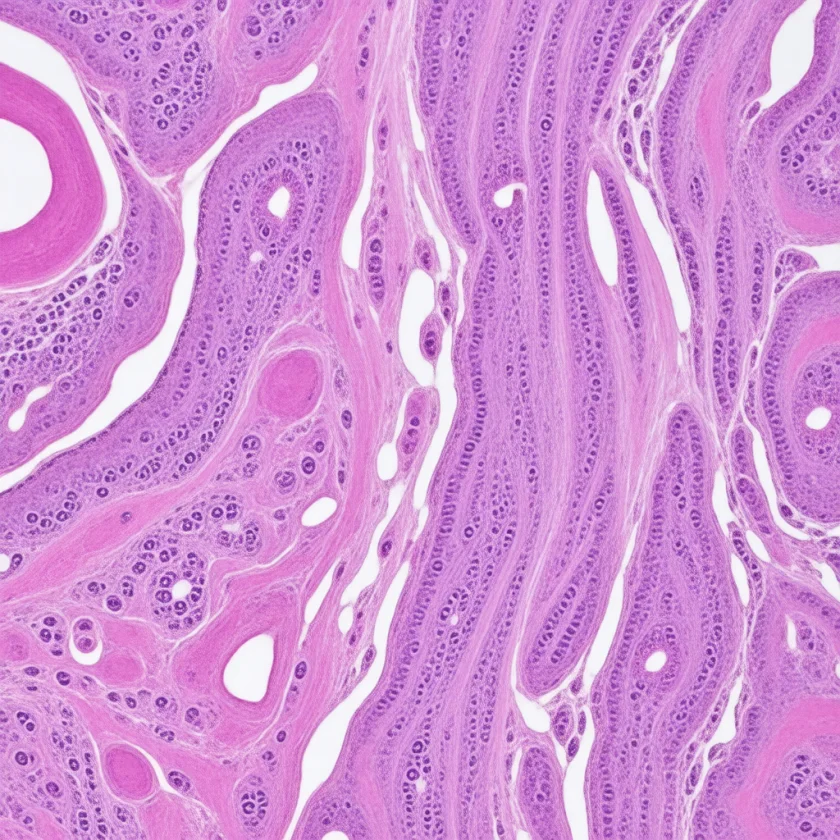
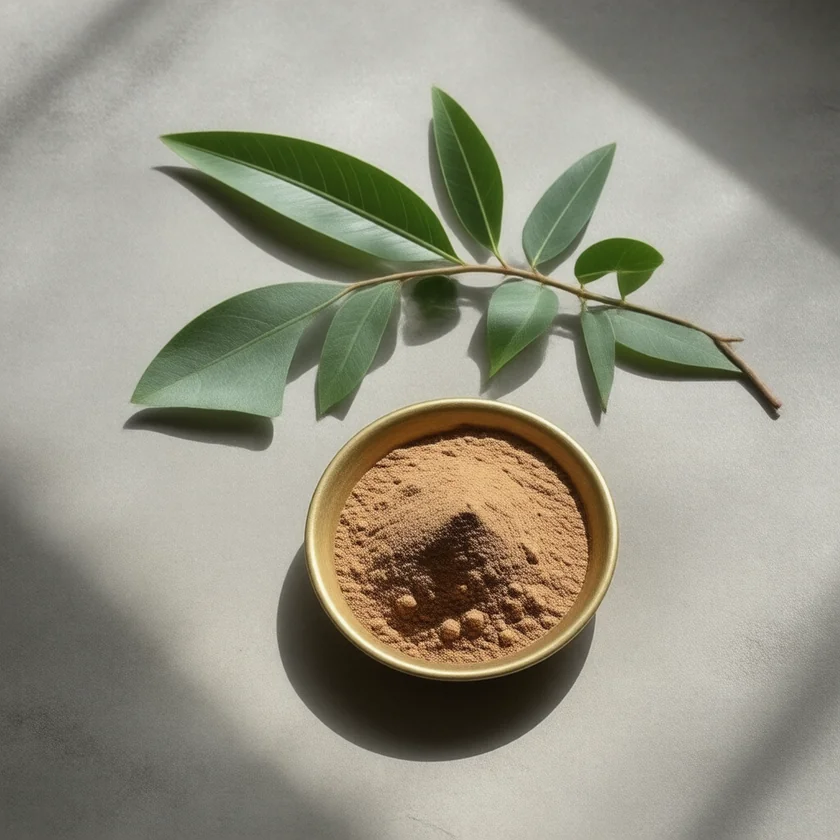
This is the surprise in the haritaki literature. Almost nobody buys the herb for their gums, and yet dentistry is the one place where randomised human trials genuinely exist. Several small controlled trials of a Terminalia chebula or Triphala mouthrinse have compared it against 0.2% chlorhexidine — the standard antiplaque prescription rinse — and reported reductions in plaque and gingival inflammation that were not statistically distinguishable from chlorhexidine's.
That is a real and interesting result, and it needs two honest qualifications immediately. First, most of these trials used Triphala, the three-fruit formula of haritaki, baheda and amla — so the result belongs to the formula, not to haritaki alone, and only a minority of the work isolates T. chebula by itself. Second, “comparable to chlorhexidine in a small, short, single-centre trial” is not “proven equivalent to chlorhexidine”. Those are different statements, and the distance between them is the subject of this page.
One more distinction that matters more than it sounds: these are rinses, spat out. They tell you nothing whatsoever about swallowing haritaki, and conversely the tannin–iron problem that dominates the oral-supplement discussion barely applies to something you spit into a sink.
Table of Contents
- Evidence Tier for This Page
- What the Trials Actually Did
- The Chlorhexidine Comparison, Read Honestly
- Why Trial Size and Length Change the Conclusion
- Triphala Rinse Versus T. chebula Rinse
- Mechanism: Tannins, Biofilm and Bacteria
- Dental Caries: A Separate Strand
- What “Comparable” Does Not License You to Say
- Practical Use of a Rinse
- Staining, Taste and the Real Trade-Off
- What a Rinse Cannot Do
- Key Research Papers
- Connections
- Featured Videos
Evidence Tier for This Page
- Randomized clinical trial — Triphala rinse. Multiple small controlled trials in gingivitis and periodontal disease, with placebo and chlorhexidine comparators, following plaque and gingival indices over two weeks to three months. Formula, not haritaki alone.
- Randomized clinical trial and clinical study — T. chebula rinse alone. A smaller strand, mostly around dental caries and salivary bacterial counts. This is the part that is genuinely about haritaki.
- Preliminary (in vitro). Antibacterial activity against oral streptococci and periodontal pathogens, biofilm inhibition, effects on bacterial adhesion and on glucosyltransferase activity. Plentiful and easy to over-read.
- Traditional use only. Chewing the fruit, gargling a decoction, and haritaki-containing tooth powders across Ayurvedic, Unani and Tibetan practice.
- Caution. Tannin-rich rinses can stain; swallowing matters in children; a rinse is an adjunct and never a substitute for mechanical cleaning or for treating periodontitis.
What the Trials Actually Did
The design that recurs across this literature is worth describing once, because once you know it you can read any of these papers quickly.
Population. Adults or adolescents with plaque-induced gingivitis, sometimes with established periodontal disease, recruited mostly from a single dental school or hospital clinic (the 2014 Naiktari trial was described as multicentre).
Intervention. An aqueous Triphala or T. chebula preparation, used as a rinse twice daily, generally around 10 mL for a minute. The concentrations reported vary: a 2021 Triphala trial used a 0.4% rinse, while the T. chebula rinse studies used a 10% extract solution.
Comparators. Usually two: a placebo or distilled-water rinse, and 0.2% chlorhexidine gluconate, the standard prescription antiplaque rinse. Having both arms is what makes these trials worth reading; a herbal rinse beating water is nearly uninformative.
Outcomes. Plaque index and gingival index, both long-established clinical scoring systems, measured at baseline and at follow-up visits — at 7, 30 and 60 days in the 2016 Pradeep trial, and at day 15 in the 2014 Naiktari trial. Some trials add bleeding on probing, salivary or plaque bacterial counts, and probing depth.
The result pattern. Both active rinses beat placebo on plaque and gingival scores, and the difference between the Triphala arm and the chlorhexidine arm generally does not reach statistical significance. Pradeep and colleagues reported this design and this pattern in the Journal of Periodontology in 2016, in ninety people with chronic generalised gingivitis followed to 60 days; Naiktari and colleagues reported a comparable outcome in 120 hospitalised patients with periodontal disease, after two weeks of twice-daily rinsing, in the Journal of Periodontal and Implant Science in 2014. A 2021 double-blind trial in 72 schoolchildren aged 14–15 in Pune, India, compared a 0.4% Triphala rinse with 0.12% chlorhexidine over 90 days of supervised use and found similar reductions in plaque, gum inflammation and plaque bacteria (Streptococcus mutans, Streptococcus sanguinis and lactobacilli) — one of the longer trials in this strand. A series of further small trials, several of them crossover studies in schoolchildren, have pointed the same way, and systematic reviews pooling them reach broadly favourable conclusions on that limited base.
The Chlorhexidine Comparison, Read Honestly
Chlorhexidine is not a soft target. It is the reference antiplaque agent in dentistry, and understanding why makes the comparison meaningful rather than flattering.
Why chlorhexidine works so well: substantivity. Chlorhexidine is a cationic bis-biguanide. It binds to the negatively charged surfaces of the oral cavity — enamel, pellicle, mucosa, salivary glycoproteins — and is then released slowly over hours, so a one-minute rinse keeps working long after you have spat it out. Almost no other oral antiseptic matches that retention, and it is the main reason chlorhexidine outperforms rinses that are more potent in a test tube.
Why chlorhexidine is nonetheless not used indefinitely. Its drawbacks are well documented and clinically real:
- Extrinsic brown staining of teeth, restorations and the tongue, worse with tea, coffee and red wine, and requiring professional cleaning to remove.
- Taste alteration, often a blunting of salt perception, which can persist for hours and which some people find intolerable.
- Increased supragingival calculus formation.
- Mucosal irritation or desquamation in a minority, and rare hypersensitivity reactions.
- Inactivation by anionic surfactants. Sodium lauryl sulphate in ordinary toothpaste inactivates chlorhexidine, which is why the standard instruction is to leave a gap of around thirty minutes between brushing and rinsing. This is one of the most common reasons chlorhexidine appears not to work.
For those reasons chlorhexidine is normally prescribed for defined short courses — after periodontal surgery, during acute gingival inflammation, when mechanical cleaning is temporarily impossible. That is exactly the niche where a comparable-but-better-tolerated alternative would be genuinely useful, and it is why the Triphala trials attracted interest at all. It is not that dentistry needed a new antiseptic; it is that chlorhexidine's side-effect profile limits how long it can be used.
Why Trial Size and Length Change the Conclusion
Here is the part that supplement marketing skips, and it is not a technicality.
Ninety participants split three ways is thirty per arm. A trial with thirty people per group has limited power to detect a modest difference between two active treatments. When such a trial reports “no significant difference between Triphala and chlorhexidine”, the correct reading is this study could not detect a difference, which is not the same as there is no difference. Demonstrating that two treatments are genuinely equivalent requires a formally designed non-inferiority trial with a pre-specified margin and a sample size calculated for that purpose. That trial has not been done here.
The pooled evidence carries the same uncertainty. A 2023 meta-analysis of 41 randomised trials of Ayurvedic and herbal plaque-control agents in gingivitis found Triphala rinses “as good as” the control rinses on the plaque index, with a standardised mean difference of −0.65 and a 95% confidence interval of −1.32 to 0.03 — an interval that crosses zero, so the pooled result is compatible with no difference.
Four further limitations, stated because they are shared across the whole strand:
- Short duration. Two weeks to three months is a reasonable window for plaque and gingivitis scores. It says nothing about a year of use, about attachment loss, or about tooth retention.
- Mostly single-centre and geographically concentrated. Most of this work comes from Indian dental schools. That does not make it wrong — it is entirely reasonable that the research happens where the traditional medicine is practised — but independent replication in other populations and other centres is what turns a promising result into a settled one, and it has not accumulated.
- Blinding is hard. A tannin-rich herbal rinse tastes strongly astringent and chlorhexidine tastes distinctively bitter. Participants can often tell which arm they are in, and plaque and gingival indices are not fully immune to that, since they depend partly on how well someone brushes.
- Product standardisation. A “Triphala rinse” prepared in one dental school's pharmacy is not a defined pharmaceutical product. Tannin content varies with fruit grade, origin, ratio and extraction method, so the intervention in one trial may not match the next, and neither matches what you would make at home.
The fair summary: a consistent signal across several small trials that a Triphala rinse reduces plaque and gingival inflammation, and does so to an extent that small trials could not distinguish from chlorhexidine. Promising, replicated at small scale, not established.
Triphala Rinse Versus T. chebula Rinse
Because this page is about haritaki specifically, the distinction has to be made explicitly rather than glossed.
The gingivitis and periodontal trials mostly used Triphala. Pradeep's trial, Naiktari's trial, and the majority of the pooled studies in the systematic reviews administered the three-fruit formula. Those results are Triphala results. Haritaki is one third of the formula by weight and is plausibly the largest single tannin contributor of the three, but “plausibly the largest contributor” is an inference, not a finding.
A smaller strand does isolate T. chebula. Jagtap and Karkera published work in the Journal of Ethnopharmacology in 1999 on an aqueous extract of Terminalia chebula as an anticaries agent, examining its effect on salivary bacterial counts after rinsing — a study of the single fruit. Subsequent clinical work on T. chebula rinses for caries and for plaque has continued in that vein, and comparative in-vitro studies frequently test the three Triphala fruits separately against oral pathogens.
What that means when you buy something. A product marketed as a “haritaki mouthwash” citing the gingivitis trials is citing Triphala trials. If you want the intervention that was tested in people for gingivitis, that is a Triphala rinse. If you want the intervention tested for salivary bacterial counts and caries, that is closer to a T. chebula rinse. They are not interchangeable, and no head-to-head trial has compared the formula against the single fruit for gum outcomes.
Mechanism: Tannins, Biofilm and Bacteria
The mechanistic story here is more coherent than for haritaki's other claimed uses, mainly because a mouthrinse works by direct contact and does not have to survive digestion or cross a gut wall. That is a genuine pharmacological advantage and it deserves saying: the oral cavity is the one place where haritaki's poor oral bioavailability does not matter.
Four plausible contributions, all preliminary in the sense that they come from laboratory work:
- Direct antibacterial activity. T. chebula extracts inhibit Streptococcus mutans, Streptococcus sanguinis, Porphyromonas gingivalis and other oral organisms in culture. Tannins are broadly antibacterial, partly by binding and precipitating bacterial surface proteins and partly by chelating the metal ions bacteria need.
- Interference with adhesion and biofilm formation. Dental plaque is a biofilm, and its formation depends on bacterial adhesion to the salivary pellicle and on extracellular glucan synthesis by glucosyltransferases. Polyphenols inhibit glucosyltransferase activity in vitro and interfere with adhesion. Preventing a biofilm from establishing is a more achievable target than killing an established one.
- Astringent action on inflamed gingiva. This is the traditional rationale and it is chemically straightforward. Tannins precipitate surface proteins, which tightens tissue and reduces exudate and bleeding from inflamed gum margins. An astringent effect on a bleeding gingival margin is real, immediate, and also partly cosmetic — it can reduce a bleeding score without addressing the underlying infection, which is a genuine confounder in trials that use bleeding indices.
- Local anti-inflammatory and antioxidant effects. Gingival inflammation involves reactive oxygen species and inflammatory cytokines, and haritaki polyphenols act on both in laboratory systems. Plausible, and the hardest of the four to demonstrate in a mouth.
What is missing. Nobody has shown substantivity for haritaki tannins comparable to chlorhexidine's — that is, retention on oral surfaces with slow release over hours. That is chlorhexidine's central advantage, and if a herbal rinse lacks it, matching chlorhexidine's clinical effect would have to happen some other way. This is an open question, not a settled one.
Dental Caries: A Separate Strand
Caries and gingivitis are different diseases with different bacteriology, and the haritaki evidence divides along the same line.
The caries interest centres on Streptococcus mutans, the organism most associated with the acid demineralisation that produces cavities. T. chebula extracts inhibit S. mutans in culture, and rinsing with an aqueous extract has been reported to reduce salivary bacterial counts — the strand Jagtap and Karkera opened, with a 10% extract solution, and which later clinical studies of T. chebula as an anticaries rinse continued. In one of these, a 2016 randomised trial in 60 high-caries-risk children aged 8–12 in Karnataka, India, a rinse of a 10% hot or cold water extract of haritaki lowered saliva Streptococcus mutans counts at 10, 60 and 90 minutes after rinsing compared with the control group; 65–75% of the children found the taste acceptable.
Two honest caveats:
- Salivary bacterial counts are a surrogate, not a cavity. Reducing counts for an hour or a day after rinsing is a long way from preventing a lesion over years. Caries prevention trials with real endpoints take years and large numbers.
- Fluoride is the comparator, and it is a strong one. The evidence base for fluoride in caries prevention is one of the largest in dentistry. A herbal rinse with promising surrogate data is not competing on equal terms and is not, on this evidence, an alternative to it.
Tier: preliminary, with small clinical studies on surrogate endpoints.
What “Comparable” Does Not License You to Say
A short list, because this is where the claims usually break.
- Not “as effective as chlorhexidine”. The trials were not powered or designed to show equivalence. “No significant difference in a trial of thirty per arm” is a much weaker statement.
- Not “a replacement for prescription mouthwash”. If a dentist has prescribed chlorhexidine after surgery or for acute infection, that is a specific clinical decision. Substituting a herbal rinse on the strength of these trials is not supported.
- Not “treats gum disease”. Gingivitis and periodontitis are not the same. Gingivitis is reversible inflammation; periodontitis involves irreversible loss of attachment and bone, and its treatment is mechanical debridement, sometimes surgery, and sometimes systemic antibiotics. No rinse treats periodontitis.
- Not “haritaki proven for gums”. Most of it is Triphala.
- Not transferable to swallowing. These are rinse trials. They provide no evidence for oral haritaki supplementation for any purpose, including gum health.
- Not a substitute for brushing and flossing. Plaque is a biofilm mechanically attached to teeth. Every serious antiplaque guideline treats rinses as adjuncts.
Practical Use of a Rinse
Offered as a description of what the trials did and what traditional practice does, not as a treatment recommendation. Gum problems that persist have causes a rinse does not treat (see What a Rinse Cannot Do).
- Concentration. Trials used defined aqueous preparations — about 0.4% for a Triphala rinse and 10% in the T. chebula rinse studies. Stronger has not been shown to be better: a stronger solution stains more and tastes worse, and no dose-response study exists.
- Preparation. A cooled water infusion or weak decoction of the powder, strained thoroughly. A homemade aqueous herbal preparation with no preservative is a bacterial growth medium after a day or two at room temperature, which is why it is made fresh and kept cold.
- Use. In the trials, roughly 10 mL was swished for about a minute, twice daily, and spat out, not swallowed.
- Timing around toothpaste. The thirty-minute gap rule exists for chlorhexidine because of surfactant inactivation. Whether it applies to tannin rinses is unstudied; leaving a gap after brushing has no known downside.
- Duration. The trials ran from two weeks to about three months. There is no evidence for indefinite use, and no long-term safety data for a tannin rinse on oral tissues.
- Children. Some of the trials were in schoolchildren, under supervision. Young children tend to swallow rinses, and no safety data exist for home-made herbal rinses in young children.
The systemic caution barely applies here, and that is worth stating. The tannin–iron interaction that dominates the rest of the haritaki discussion depends on tannins meeting food iron in the gut. A rinse that is spat out delivers almost nothing systemically. Anyone who is iron-deficient and has been told to avoid haritaki internally gets almost none of that effect from a rinse that is spat out — but swallowing the rinse removes that reasoning.
Staining, Taste and the Real Trade-Off
Since chlorhexidine's staining is the main practical reason to look for an alternative, it would be dishonest not to point out that tannins stain too.
Tannins are exactly the compound class responsible for the extrinsic brown discolouration that tea and red wine leave on teeth. They bind to the pellicle and to enamel surface proteins, and they oxidise to darker products. A dark, astringent herbal rinse used twice daily for two months is not a plausible candidate for a stain-free experience. The trials that measured staining and tolerability generally report the herbal rinse as better tolerated than chlorhexidine on taste and staining, which is a real finding — but “better than chlorhexidine” is not “none”, and chlorhexidine's staining is notoriously heavy.
The rest of the trade-off, stated plainly:
- Taste. Haritaki is intensely astringent — a mouth-drying pucker. Many people find that no more pleasant than chlorhexidine's bitterness, just differently unpleasant.
- Standardisation. Chlorhexidine is a defined molecule at a defined concentration. A herbal rinse is not, and a home preparation is even less so. That is a real disadvantage for anything used as a medicine.
- Cost and access. The clear advantage, and probably the honest reason this research exists: haritaki is cheap, locally available across South Asia, and needs no prescription. For population-level oral disease in low-resource settings that matters a great deal, and it is a better justification for the research programme than novelty is.
What a Rinse Cannot Do
A mouthrinse of any kind, herbal or pharmaceutical, has a narrow job. It does not:
- Remove established plaque or calculus. That is mechanical — a brush, floss or interdental brush, and a professional scale for calculus.
- Reach the bottom of a periodontal pocket. Rinsing does not meaningfully penetrate a deep pocket; that requires subgingival instrumentation.
- Reverse attachment or bone loss. Once periodontal attachment is lost it does not come back with a rinse.
- Treat a dental abscess or an infected tooth. Those need dental treatment, urgently.
- Fix the causes. Smoking, poorly controlled diabetes, dry mouth from medication, and a high-sugar diet drive gum disease harder than any rinse can offset.
See gingivitis and dentistry for what the actual management looks like. Persistent bleeding gums, gum recession, loose teeth, persistent bad breath or pain are signs of disease that a rinse does not treat and that dentists assess.
Key Research Papers
Named papers link their checked PubMed records; the remaining entries are PubMed topic searches, so a link cannot silently point at the wrong paper. Where the intervention was the Triphala formula rather than haritaki alone, the entry says so.
- Pradeep AR, Suke DK, Martande SS, Singh SP, Nagpal K, Naik SB. Triphala, a new herbal mouthwash for the treatment of gingivitis: a randomized controlled clinical trial. Journal of Periodontology. 2016;87(11):1352–1359. — PubMed PMID: 27442086 — Placebo, Triphala and chlorhexidine arms, ninety participants with chronic generalised gingivitis, plaque and gingival indices at 7, 30 and 60 days. Randomized clinical trial; Triphala, not haritaki alone.
- Naiktari RS, Gaonkar P, Gurav AN, Khiste SV. A randomized clinical trial to evaluate and compare the efficacy of triphala mouthwash with 0.2% chlorhexidine in hospitalized patients with periodontal diseases. Journal of Periodontal and Implant Science. 2014;44(3):134–140. — PubMed PMID: 24921057 — 120 patients, two weeks. Randomized clinical trial; Triphala, not haritaki alone.
- Bhor K, Shetty V, Garcha V, Ambildhok K, Vinay V, Nimbulkar G. Effect of 0.4% Triphala and 0.12% chlorhexidine mouthwash on dental plaque, gingival inflammation, and microbial growth in 14–15-year-old schoolchildren: a randomized controlled clinical trial. Journal of Indian Society of Periodontology. 2021;25(6):518–524. — PubMed PMID: 34898918 — Randomized clinical trial; Triphala, not haritaki alone.
- Jagtap AG, Karkera SG. Potential of the aqueous extract of Terminalia chebula as an anticaries agent. Journal of Ethnopharmacology. 1999;68(1–3):299–306. — PubMed PMID: 10624892 — Includes effects on salivary bacterial counts after rinsing with a 10% solution. Clinical study on a surrogate endpoint; haritaki alone.
- Palit M, Hegde SK, Bhat SS. Effectiveness of mouthrinse formulated from aqueous extract of Terminalia chebula on salivary Streptococcus mutans count and pH among 8- to 12-year-old school children of Karnataka: a randomized clinical trial. International Journal of Clinical Pediatric Dentistry. 2016;9(4):349–354. — PubMed PMID: 28127168 — Randomized clinical trial on a surrogate endpoint; haritaki alone.
- Clinical studies of a Terminalia chebula rinse for caries prevention and plaque control. Small clinical studies; haritaki alone. Topic search
- Terminalia chebula and Triphala mouthrinse versus chlorhexidine on plaque and gingival indices — the accumulated small randomised and crossover trials, several in schoolchildren and adolescents. Randomized clinical trials, small. Topic search
- Systematic reviews and meta-analyses of Triphala versus chlorhexidine mouthwash. Reviews of a small, geographically concentrated trial base. Topic search
- Javed D, Dixit AK, Anwar S, Rai A, Krishan K. Ayurvedic and herbal plaque control agents in gingivitis: a systematic review and meta-analysis of randomized controlled trials. Journal of Education and Health Promotion. 2023;12:378. — PubMed PMID: 38144032 — Systematic review and meta-analysis.
- Antibacterial activity of Terminalia chebula against Streptococcus mutans and periodontal pathogens in culture. Preliminary (in vitro). Topic search
- Polyphenol inhibition of glucosyltransferase, bacterial adhesion and oral biofilm formation. Preliminary (in vitro). Topic search
- Chlorhexidine mouthrinse — efficacy, substantivity and adverse effects including staining, taste disturbance and calculus. Randomized clinical trials and systematic reviews; the comparator's own evidence base. Topic search
- Inactivation of chlorhexidine by sodium lauryl sulphate and the recommended interval after toothbrushing. Randomized clinical trials. Topic search
- Herbal mouthrinses in the management of plaque-induced gingivitis — the wider comparative literature, useful for placing haritaki among the many plant rinses that have been trialled. Reviews and randomized clinical trials. Topic search
- Nigam M, Mishra AP, Adhikari-Devkota A, Dirar AI, Hassan MM, Adhikari A, Belwal T, Devkota HP. Fruits of Terminalia chebula Retz.: a review on traditional uses, bioactive chemical constituents and pharmacological activities. Phytotherapy Research. 2020;34(10):2518–2533. — PubMed PMID: 32307775 — For the chemistry underlying the antibacterial and astringent effects. Review.
Connections
- All Herbs
- Haritaki (Terminalia chebula) — the main topic page.
- Haritaki, Triphala, Dosing and Safety — what Triphala is and why its evidence keeps being borrowed.
- Gingivitis — the condition these trials were treating.
- Periodontitis — the more serious disease no rinse treats.
- Halitosis — bad breath, and why an astringent rinse is not a cure for its causes.
- Dentistry — the full dental section.
- Gum Disease — overview in the Dentistry section.
- Neem — Dental Health — the other South Asian oral-care herb with a real trial literature.
- Clove — Dental Pain and Oral Health — eugenol, the classic dental herb.
- Myrrh — Oral Health — another astringent resin used for gums.
- Aloe Vera — Oral and Dental — a non-tannin herbal rinse, for comparison.
- Amla and Baheda — the other two fruits in the rinse that was actually tested.
- Diabetes — the systemic condition that drives gum disease hardest.
Safety and disclaimer. This article is health information, not medical or dental advice. The trials described here tested mouthrinses, mostly of the Triphala formula rather than haritaki alone, in small short studies that were not designed to prove equivalence with chlorhexidine. No trial supports a herbal rinse in place of a rinse a dentist has prescribed, or any rinse in place of brushing, flossing and professional care. The trials used rinses that were spat out, not swallowed, and no safety data exist for home-made herbal rinses in young children. Bleeding gums that persist, loose teeth, gum recession, facial swelling or dental pain are signs that dentists treat as needing examination.