⚠ Evidence warning: Clinical trials or other evidence do not support the traditional claim that unripe bael stops diarrhoea and dysentery. This page keeps it as a report of what people, websites or other media say.
Bael for Diarrhoea and Dysentery: The Ripeness Paradox
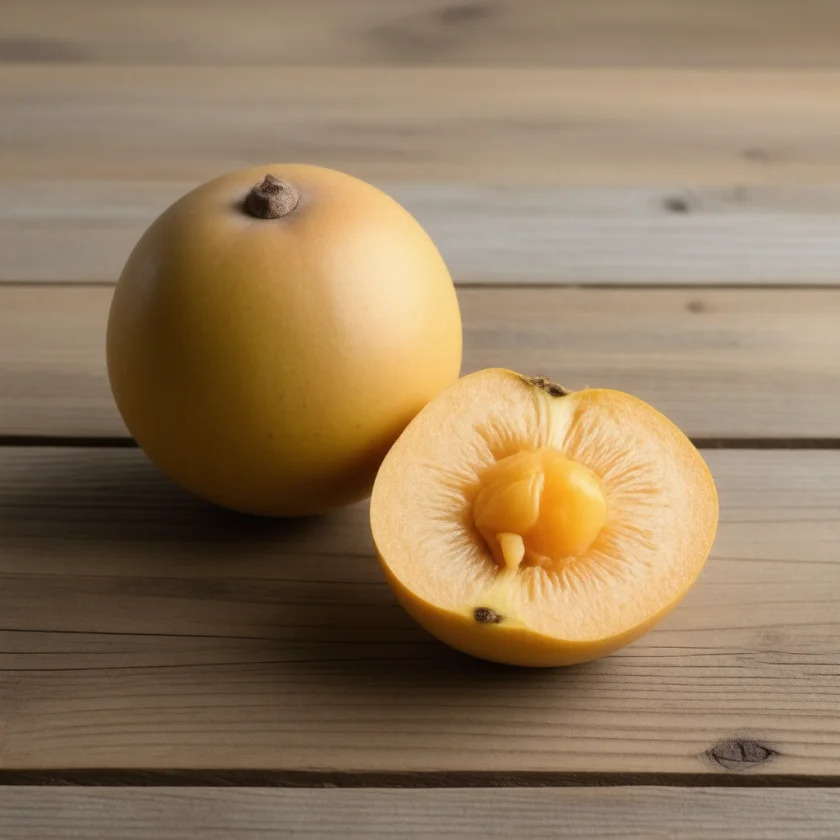
Most herbs on this site are interesting because of a gap between what is claimed and what has been shown. Bael is interesting for a different reason. Its central traditional claim contains a distinction that the modern supplement market has lost, and the distinction turns out to be chemically correct.
Ayurvedic practice does not use “bael” for the bowel. It uses the unripe fruit to stop diarrhoea and the ripe fruit to relieve constipation — opposite effects, same tree, same fruit, different week of the season. That is not folklore muddle. It follows from what happens to the fruit’s chemistry as it matures, and it is the single most practical thing to know before buying anything with “bael” on the label.
This page takes that paradox seriously as pharmacology, then does the harder job: asking what the antidiarrhoeal claim is actually supported by. The answer is not simple, and it is not the same answer in the indexed literature as in the Ayurvedic one. It ends with the point that outranks the rest of the page, which is that acute diarrhoea in a small child is a rehydration emergency and not a herb situation at all.
Table of Contents
- The Paradox in One Paragraph
- What Ripening Changes, and Why It Reverses the Effect
- Maturity Substitution: Borrowed Evidence With No Name
- What the Tradition Actually Specifies
- Three Verdicts, and Which One Applies Here
- Antimicrobial and Antigiardial Work, Read Properly
- The Luminal Arithmetic, With Its Assumptions Printed
- How a Modern Trial Would Measure This
- The Point That Outranks Everything Else Here
- What the Supplement Market Sells Instead
- What Is Not Known: A Numbered List
- Key Research Papers
- Connections
- Featured Videos
The Paradox in One Paragraph
A green, rock-hard bael fruit is mouth-puckeringly astringent. Sliced, sun-dried and simmered into a decoction, it is the classical South Asian household remedy for loose stools. The same fruit left on the tree for a few more weeks turns aromatic and sweet, is scooped out and mixed with water into the summer drink bael sharbat, and is described in the same classical texts as mildly laxative. One plant part, two opposite bowel effects, selected by maturity.
Readers meeting this for the first time usually assume one of two things: that the tradition is simply inconsistent, or that one of the two claims is marketing. Neither is right. The reversal is what you would predict from the fruit’s composition at the two stages, and it is a rare case where a pre-modern distinction survives translation into chemistry without needing to be rescued.
It is also the reason this page exists as a separate article rather than a paragraph. Once you accept that ripeness changes the direction of the effect, every claim, every study and every product about “bael” has to declare which fruit it is talking about — and most of them do not.
What Ripening Changes, and Why It Reverses the Effect
Two families of constituents move in opposite directions as bael ripens, and between them they account for the reversal.
Tannins fall. The unripe fruit is rich in tannins — polyphenols whose defining behaviour is that they bind and precipitate proteins. That is what astringency is: tannins cross-linking the proteins of your oral mucosa and the salivary proteins that normally lubricate it, producing the dry, rough, puckered sensation. Applied further down, to an inflamed and hypersecretory intestinal surface, the same protein-binding is thought to lay down a thin condensed layer over the mucosa, blunting secretion and reducing the irritant signalling that drives urgency. This is the shared mechanism of tannin-rich antidiarrhoeals worldwide — oak bark, blackberry root, tormentil, and the herb this batch pairs bael with, agrimony. Ripening degrades a large fraction of these tannins, which is precisely why a ripe bael is pleasant to eat and a green one is not.
Mucilage, pectin and sugars rise in relative terms. What is left in ripe pulp is a sticky, gelling matrix — soluble fibre plus sugar. Pectin gels; mucilage forms a slippery hydrated film; sugars are osmotically active. A pulp built from those three behaves like any soluble-fibre-and-sugar food: it holds water in the lumen, adds bulk, and gives a gentle osmotic nudge. Hence “mild laxative”, which in modern language means a bulk-forming and mildly osmotic effect rather than a stimulant one. That distinction matters for safety and is picked up on the safety page.
Both directions are honest about their own limits. Note what has just been described: a mechanism, not a measurement. Nobody has published, as far as the indexed record shows, a curve of tannin content against maturity stage for Aegle marmelos paired with a bowel outcome. Searching PubMed for bael and fruit maturity returns a handful of records, and for bael and the unripe fruit barely more — a thin literature for what is supposedly the plant’s defining feature. The compositional reviews describe the constituents; work touching bael’s tannins is likewise a small set of records. So the correct statement is that the chemistry makes the traditional distinction plausible and coherent, not that the chemistry has been measured across ripeness and matched to an effect.
An additional subtlety worth stating, because it cuts against a tidy story: mucilage and pectin are present in the unripe fruit too. They are not a ripe-only feature. Traditional accounts of the unripe decoction describe a soothing quality alongside the astringent one, which fits. What changes with ripening is not that fibre appears but that the astringent fraction leaves and stops dominating.
Maturity Substitution: Borrowed Evidence With No Name
There is a standard list of ways a herb page overstates itself by importing evidence that does not belong to the thing being sold. Evidence gets borrowed across species (one basil’s trials cited for another), across formulas (a ten-herb polyherbal’s result credited to one ingredient), across plant parts (a root result quoted for a leaf tea), across solvents (an alcoholic extract’s antiviral data quoted for a hot-water infusion), and across routes (an inhaled compound’s data quoted for a capsule).
Bael needs a category that list does not have. Call it maturity substitution: the same species, the same part, the same preparation method, and the wrong stage of ripeness. It is a sub-type of part substitution, and it is unusually easy to commit, because nothing in the name of the material warns you. “Bael fruit extract” is a true and complete description of two materials with opposite intended effects.
The practical consequences are worth spelling out one at a time.
- A rodent antidiarrhoeal study on unripe fruit pulp does not support a ripe-fruit product, and it is the ripe fruit that most commercial pulp, powder and beverage concentrate is made from, because that is the fruit that tastes good and is harvested for food.
- Conversely, a study using ripe pulp says nothing about the traditional antidiarrhoeal claim, which is a claim about green fruit. If the tannins are the mechanism, a ripe-pulp study has tested a preparation from which the proposed active fraction has largely departed.
- Reviews that pool “Aegle marmelos fruit extract” studies without recording maturity are pooling two different drugs. Several of the widely cited overviews of the plant — for example the critical review of bael’s bioactive compounds and food applications published in Phytotherapy Research in 2021 (PubMed PMID: 33159390) and the phytochemical and pharmacological review in the Journal of Integrative Medicine in 2018 (PubMed PMID: 29709412) — give a broad account of the plant’s reported activities. Reading them with this question in mind is instructive: maturity is frequently not the axis on which the primary studies are indexed, which is exactly the reporting gap being described.
- A label that says only “bael” is not a specification. If a supplier cannot tell you the maturity stage of the fruit their powder came from, they have not told you what the product is, and no amount of standardisation language repairs that.
Severity. Not all borrowed evidence is equally bad, and it is more useful to say which cases are serious. Maturity substitution in bael is serious for a specific reason: the two materials are claimed to act in opposite directions. Most substitution errors dilute a claim or make it uncertain. This one can invert it. A person with constipation buying an undifferentiated “bael digestive” may receive the astringent form, and a person with loose stools may receive the bulking one. That is a rarer and worse failure mode than the usual overstatement.
What the Tradition Actually Specifies
The classical prescription is more precise than the modern product, and it is worth recording precisely because the precision is the interesting part. Ayurvedic materia medica treats bilva as a principal drug for atisara — diarrhoea — and for grahani, a category covering chronic diarrhoeal and malabsorptive states that has no clean modern equivalent but overlaps with what would now be called functional bowel disease and post-infectious diarrhoea. The form named for these is the unripe fruit. The ripe fruit is placed in a different role entirely: nourishing, cooling, mildly loosening.
Three features of that specification deserve credit, and one deserves scepticism.
- It names the maturity stage. That is a real pharmaceutical variable, correctly identified centuries before anyone could measure a tannin.
- It names the preparation. Sliced and sun-dried, then decocted — an aqueous extraction, which is the appropriate solvent for tannins and mucilage and would not be appropriate for a lipophilic constituent. Traditional practice and traditional chemistry agree here.
- It is a narrow claim. Bael is not a cure-all in its own tradition. It is a gut drug. Narrow traditional claims are more informative than broad ones, because they are more falsifiable.
- But grahani is not a diagnosis you can enrol. A category that spans several modern conditions cannot be the entry criterion for a trial, and its breadth means that traditional reports of success are reports about a heterogeneous population. This is a genuine obstacle to testing the claim, not an excuse for nobody having tested it — the acute-diarrhoea version of the claim is perfectly enrollable.
The wider cultural and religious setting of the bilva tree — and the reason it stands in temple courtyards across India — is covered on the tradition and cultural context page. It belongs there as context. It is not evidence, and it is not offered here as any.
Three Verdicts, and Which One Applies Here
Herbal claims are usually sorted into “proven” and “unproven”, which is too coarse to be useful. Three verdicts are needed, and they are genuinely different epistemic states:
- Absent — never adequately tested. The least damning verdict. It says nothing at all about whether the thing works.
- Old, weak and positive — tested, badly, with a favourable result. Requires naming the specific weaknesses rather than waving at “low quality”.
- Negative — tested adequately and failed. The strongest verdict available, and the one that should lead a page when it exists.
For bael and acute diarrhoea, the honest answer is that the verdict splits by which literature you look in, and that split is itself the finding.
In the indexed literature: one small, old, negative trial for dysentery, and nothing adequate for ordinary diarrhoea. A search of PubMed for bael and diarrhoea returns a small set of records, and for bael and antidiarrhoeal activity fewer still. Run either search and look at what comes back: it is dominated by rodent models — castor-oil-induced diarrhoea and intestinal-transit assays — together with in-vitro antimicrobial screens and review articles restating them. What is not in that return is a randomised, controlled, adequately powered human trial of a standardised unripe-bael preparation with hard endpoints. That absence is a finding, and it should be written as one.
The one controlled test of the traditional dysentery use. A 1991 randomised, double-blind trial in Bangladesh treated 82 men with bacillary dysentery (shigellosis, an infection with Shigella bacteria). Sixteen of them received dried unripe bael fruit powder; the others received one of two other local plants (thankuni, Hydrocotyle asiatica, or gandhavadulia, Paederia foetida), the antibiotic ampicillin, or a placebo. None of the plants, bael included, produced clinical improvement or a bacterial cure compared with ampicillin. It is small and old, but it is a maturity-specified bael preparation tested against a drug and a placebo, and its result was negative (Haider and colleagues, 1991).
A formula trial in irritable bowel syndrome. A 1989 double-blind, randomised six-week trial in 169 people with irritable bowel syndrome (IBS) compared a compound Ayurvedic preparation of bael (Aegle marmelos) plus Bacopa monniere with standard drug treatment and a placebo. The preparation helped 64.9% of the 57 people who took it, against 78.3% of 60 on standard drugs and 32.7% of 52 on placebo, and it was most useful in the diarrhoea-predominant form. Over more than six months of follow-up, neither treatment did better than placebo at preventing relapse. Because it is a two-herb formula, the result cannot be credited to bael alone (Yadav and colleagues, 1989).
In the Ayurvedic clinical literature: probably “old, weak and positive”, but this page will not pretend to have read it. Clinical reports on bilva and on bilva-containing formulations for atisara and grahani do exist; they appear in Indian Ayurvedic journals, many of which are not indexed where a reader can check them, and they are typically small, single-arm or weakly controlled, and inconsistently reported. Two further problems compound the usual ones. First, most of that work tests a formula, not the herb — bilva appears in compound preparations alongside several other astringent and carminative drugs, which makes single-ingredient attribution unsound. Second, an unblinded study of an intervention whose expected result everyone already knows is exactly the design that produces favourable results regardless.
So the page states its own limit. A confident summary of that Ayurvedic clinical literature — how many studies, how large, what they found — would be a guess, and this page declines to offer one. What can be said without guessing is that the indexed, retrievable record contains one small controlled trial of unripe bael powder alone, in shigellosis, which found no benefit compared with ampicillin, and one controlled trial of a two-herb formula in irritable bowel syndrome, and that a claim resting on literature a reader cannot obtain is in a weaker position than one resting on literature they can obtain and criticise. The PubMed search for bael and clinical trials shows how small that return is.
Small, old and negative for dysentery; untested for ordinary diarrhoea. For bacillary dysentery the one controlled trial found no benefit over ampicillin, with only 16 men on bael. For ordinary, non-dysenteric loose stools no adequate trial has been run, so this section does not say bael fails there; it says that claim has not been tested in a way that would let anyone know.
Antimicrobial and Antigiardial Work, Read Properly
Dysentery — bloody, mucus-laden diarrhoea with cramping and tenesmus — is caused by invasive organisms, most often Shigella species, sometimes Entamoeba histolytica, and a traditional claim to treat it implies more than an astringent coating. So the antimicrobial literature matters here in a way it would not for ordinary loose stools.
What exists. There is a real body of in-vitro screening. PubMed carries antibacterial work on Aegle marmelos in reasonable quantity, and a smaller set specifically involving bael and Shigella. Extracts of various parts inhibit a range of enteric organisms in broth or agar assays. Reviews of the plant, including the 2022 overview of bael as an underutilised fruit with nutraceutical value published in the International Journal of Molecular Sciences (PubMed PMID: 36142805), summarise this as one of the plant’s better-replicated laboratory findings.
What that is worth. An in-vitro inhibition is a screening result, not a therapeutic one, and the standard reasons apply: broth is not gut content, an extract is not a decoction, and no absorption, protein binding or metabolism intervenes in a petri dish. The arithmetic section below takes this seriously rather than dismissing it, because for a luminal infection the usual objection is weaker than it looks.
The antigiardial claim, stated exactly. Bael is sometimes listed among plants with activity against Giardia. Here is the precise state of the indexed record, checked rather than assumed: a PubMed search for bael and Giardia returns one record. One. That is the entire indexed basis for a claim that circulates as though it were established. It is not a reason to say bael has no antigiardial activity — a single positive screen is a lead. It is not a basis for describing the plant as an antigiardial agent; the drugs used for confirmed giardiasis are ones that have been tested in trials. The same discipline applies to the single record on bael and rotavirus, which likewise circulates well beyond its evidentiary weight.
The one record, named. The single Giardia record and the single rotavirus record are the same laboratory paper. Brijesh and colleagues (2009) tested a hot-water decoction of dried unripe fruit pulp — the traditional preparation — in the test tube. It killed Giardia and rotavirus, but it did not affect the survival of any of the six bacterial strains tested. What it did instead was reduce how well bacteria stuck to and invaded gut-lining cells, cut the production of cholera toxin, and block cholera toxin and one E. coli toxin (heat-labile toxin) from binding to their target on the cell; it had no effect on a second E. coli toxin (heat-stable toxin) (PubMed PMID: 19930633). So in the one study of the traditional decoction itself, it did not kill bacteria; the broader antibacterial screens used other extracts. That matters for the arithmetic below, which starts from a bacteria-killing concentration.
And the crucial clinical point. Dysentery is caused by invasive organisms that standard antibiotic and antiparasitic treatment targets. Bloody stool, fever, severe cramping, or diarrhoea that persists beyond a couple of days are the signs for which hospitals run a stool test and, frequently, give an antibiotic or antiparasitic chosen against the identified organism. An astringent decoction has no part in that choice — in the one controlled trial in shigellosis, unripe bael powder produced no clinical improvement or bacterial cure compared with ampicillin — and using one while waiting is how a treatable shigellosis becomes a complicated one.
The Luminal Arithmetic, With Its Assumptions Printed
The standard way to deflate an in-vitro antimicrobial finding is to ask how much plant you would have to swallow to reach the inhibitory concentration in your body. The answer is usually absurd — a minimum inhibitory concentration in the milligram-per-millilitre range, spread across roughly 42 litres of body water, comes out in the tens or hundreds of grams of extract.
That calculation is the wrong one here, and saying so is more honest than repeating it. The proposed action of unripe bael is not systemic. Tannins are large, protein-binding polyphenols and are poorly absorbed; the effect claimed for them — astringency on the mucosal surface, plus any antimicrobial action — happens in the lumen, where the herb and the organism are in the same compartment at the same time. So the relevant volume is not body water. It is gut content.
Do the arithmetic in that compartment, and print the assumptions so they can be checked:
- Assume a crude-extract minimum inhibitory concentration of about 1–5 mg/mL against an enteric organism. That is the order of magnitude typical of crude plant extracts in broth assays; it is not a bael-specific measured figure, and this page will not invent one.
- Assume a few hundred millilitres of relevant luminal content — call it 500 mL as a working figure. Colonic and distal small-bowel content volumes vary enormously with the state of the bowel, and in acute diarrhoea they are larger and moving faster, which cuts against the calculation.
- Multiply. 1 mg/mL × 500 mL = 0.5 g of extract. At 5 mg/mL it is 2.5 g.
- Compare with the traditional dose. Roughly 3–6 g of unripe fruit powder daily, or a decoction of 5–10 g of dried slices, is the traditional range. That is the same order of magnitude.
What this does and does not establish. It establishes that the usual dismissal does not apply: unlike an essential-oil claim needing two bottles of oil in the bloodstream, a luminal antimicrobial claim for a gram-scale dose of an unabsorbed astringent is not arithmetically absurd. That is a genuine point in the herb’s favour and it deserves to be stated as clearly as the criticisms.
It does not establish that it works, and four assumptions in that calculation are generous to bael:
- Powder is not extract. Whole dried fruit powder contains the active fraction diluted by everything else in the fruit. A gram of powder is not a gram of extract, and the conversion is unknown.
- Tannins bind the first protein they meet. Dietary protein, mucin and shed epithelial cells are all in the lumen competing for the same binding, so the fraction still available to act on a bacterium is smaller than the dose implies. This is the same property that makes tannins inhibit non-haem iron absorption.
- Broth is not stool. A minimum inhibitory concentration measured in clean growth medium routinely rises — sometimes by a lot — in faecal slurry.
- Transit is against you. The condition being treated is by definition one in which luminal contents are moving quickly and being diluted, which shortens contact time exactly when contact time is the mechanism.
Verdict on the arithmetic: plausible, not demonstrated. Which is a materially better position than most in-vitro herbal antimicrobial claims occupy, and it is worth saying so.
How a Modern Trial Would Measure This
The most common defence of an untested traditional remedy is that it cannot be tested — the condition is too diffuse, the preparation too variable, the tradition too holistic. For acute diarrhoea that defence collapses immediately, because the outcome measures are standard, validated, cheap and used in trials every year. Naming them is the strongest honest thing this page can do, because it shows the tools exist and have been pointed at this plant only once, in a small 1991 dysentery trial.
A competent trial of unripe bael for acute diarrhoea in adults would measure:
- Stool frequency — number of stools in each 24-hour period, the simplest and most-used primary endpoint.
- Stool consistency — scored on the Bristol Stool Form Scale, which is validated, quick, and correlates with transit time. The same instrument that underpins irritable bowel syndrome (IBS) subtyping.
- Duration of illness — time from randomisation to the last unformed stool, the endpoint that matters most to the patient.
- Stool output by weight — the harder, better version of frequency, standard in cholera and secretory-diarrhoea research.
- Rehydration requirement — volume of oral rehydration solution consumed, and the proportion of participants needing intravenous fluid. This is the outcome with the actual clinical stakes.
- Treatment failure and escalation — need for antibiotics, hospitalisation, readmission.
Three design points would decide whether the result was worth anything. The preparation would have to be specified by maturity and characterised analytically, or the trial repeats the error this page is about. The comparator would have to be oral rehydration solution given to both arms, because withholding it would be unethical — meaning the honest question is whether bael adds anything to ORS, not whether it beats nothing. And blinding would need real work: an astringent decoction announces itself in the mouth, so a matched astringent placebo, or at minimum blinded outcome assessment, would be required.
None of that is exotic. It is a routine trial. Only one small trial, in shigellosis, has been run, and none in ordinary acute diarrhoea; that gap is a statement about research funding and commercial incentive, not about feasibility.
The Point That Outranks Everything Else Here
Everything above is a discussion about a marginal, unproven, low-risk traditional adjunct. This section is about the thing that actually determines outcomes, and it matters more than any claim on this page.
Diarrhoea kills by dehydration, and the intervention with the evidence is oral rehydration solution. Not a herb, not an astringent, not a binding agent. ORS — a specific balanced mixture of glucose and electrolytes that exploits sodium–glucose co-transport, which continues to work even when the gut is secreting fluid furiously. It is one of the highest-impact medical interventions of the twentieth century, and the modern reduced-osmolarity formulation has been tested in children in a substantial trial literature. A 2024 systematic review commissioned by the World Health Organization (WHO) found that, compared with the older standard formulation, it shortened acute diarrhoea and lowered stool output and the amount of solution needed, with no clear difference in cure within five days, treatment failure or unplanned drip (intravenous) fluids (Zubairi and colleagues, 2024).
In children, zinc is the second evidence-based component. Zinc supplementation during acute childhood diarrhoea has been studied extensively and is recommended alongside ORS by the World Health Organization and UNICEF. A 2016 Cochrane review of 33 trials in 10,841 children found that in children older than six months zinc may shorten diarrhoea by around half a day, that in children younger than six months it may have no effect on how long diarrhoea lasts, and that it raised the risk of vomiting in both age groups (Lazzerini and Wanzira, 2016). Between them, ORS and zinc are the standard of care, and they are inexpensive and available.
Stated as bluntly as it deserves: acute diarrhoea in a small child is a rehydration emergency, not a herb situation. Bael fruit powder is a common household first response across rural South Asia. That is a fact about practice, not an endorsement, and it is exactly the setting where a delay in giving fluid does harm. WHO guidance for childhood diarrhoea is oral rehydration solution started at once and continued, zinc, and continued feeding. Where a family also gives bael, the harm comes when the herb delays fluid.
Signs that hospitals treat as urgent, in a child or an adult:
- Blood or mucus in the stool, or black tarry stool.
- Fever above 38.5 °C, or any fever in an infant.
- Signs of dehydration — sunken eyes, no tears, dry mouth, reduced or absent urine, lethargy, a sunken fontanelle in a baby, skin that stays pinched.
- Persistent vomiting preventing fluid intake.
- Severe abdominal pain, or abdominal distension.
- Diarrhoea lasting more than two days in a child or more than a few days in an adult — see chronic diarrhoea for the longer-course picture.
- Diarrhoea starting during or after a course of antibiotics.
- Diarrhoea in an infant, a frail elderly person, a pregnant woman, or anyone immunosuppressed.
- Recent travel to an area with cholera or typhoid transmission, or profuse watery “rice-water” stool at any time.
What the Supplement Market Sells Instead
The gap between the tradition and the product is the practical heart of this article, and it points in an unusual direction: here, the traditional system is the more sophisticated of the two.
Classical practice distinguishes two materials with opposite actions and tells you which to use. The supplement market predominantly sells “bael fruit extract”, “bilva powder” or “bael digestive support”, with no maturity stated anywhere on the label or the specification sheet. That is a regression, not a modernisation.
Two specific incoherences show up on shelves and are worth naming:
- The same undifferentiated product marketed for both directions. Listings describing bael as supporting “regularity” and as helping with “loose stools” are describing opposite outcomes from one unspecified material. At most one of those claims can be true of any given batch, and the seller has given you no way to know which.
- Ripe-fruit food products carrying unripe-fruit medicinal claims. Bael sharbat concentrates, jams, murabba and beverage powders are made from ripe fruit because ripe fruit is what tastes good. Where these carry antidiarrhoeal marketing, they are borrowing the green fruit’s reputation for a preparation from which the proposed mechanism has largely been removed by ripening.
What the tradition specifies. The traditional antidiarrhoeal use calls for unripe (green, or bilva kacha) fruit, so only a label that says so describes the traditional material. Dried unripe slices, which can be seen, are more verifiable than a powder, which cannot. Concentrated or standardised extracts carry a separate and more serious concern, set out on the safety page — concentrated bael preparations, and specifically anything naming the alkaloid aegeline, sit downstream of a documented cluster of severe liver injury, and the food record of the fruit does not transfer to them.
What Is Not Known: A Numbered List
Writing the gaps as a list makes them a stated result rather than something a reader has to infer from hedging.
- One small controlled human trial of a maturity-specified bael preparation appears in the indexed literature: dried unripe fruit powder in 16 men with acute shigellosis (1991), with no clinical improvement or bacterial cure compared with ampicillin. None exists for ordinary acute diarrhoea.
- No published tannin-versus-maturity curve for Aegle marmelos paired with a bowel outcome, so the central mechanistic claim of this page is coherent but unquantified.
- No dose-finding work at all. The traditional 3–6 g of powder has no experimental basis; it is inherited practice, and this page will not dress it up as a dose.
- No standardisation marker. There is no agreed constituent to assay that would let two batches of unripe bael powder be compared for potency.
- No human pharmacokinetics. The assumption that bael’s tannins act luminally and are poorly absorbed is generic tannin chemistry, not a bael measurement.
- One head-to-head comparison only — the 1991 shigellosis trial, against ampicillin, a placebo and two other local plants. None against ORS alone, loperamide, or another astringent such as agrimony or tormentil.
- The antigiardial and antirotaviral claims rest on one indexed laboratory record, the same paper for both (Brijesh and colleagues, 2009), which is a lead and not a literature.
- No paediatric safety data for medicinal preparations, in the population where the remedy is most used domestically.
- The retrievable status of the Ayurvedic clinical reports is itself unknown to this page, which is why no summary of them is offered above.
Key Research Papers
Named papers link to their fixed PubMed record. The other links are live PubMed searches, so the return updates as the literature does — and the size of each return is visible, which on this topic is a large part of the point.
- Aegle marmelos — the complete indexed literature. The base rate against which every claim below should be read.
- Bael and diarrhoea — the core search for this page. Note how much of the return is rodent work and review restatement.
- Bael and antidiarrhoeal activity — the narrower term, and a smaller return.
- Bael in castor-oil-induced diarrhoea models — the specific rodent design most often cited for the claim.
- Bael and clinical trials — the return includes the 1991 shigellosis trial and the 1989 irritable-bowel formula trial described above, and little else.
- Bael antibacterial activity — the in-vitro screening literature, which is the plant’s best-replicated laboratory finding.
- Bael and Shigella — the organism that matters for the dysentery claim specifically.
- Bael and Giardia — a single indexed record at the time of writing.
- Bael and tannins — the constituent class on which the whole ripeness argument turns.
- Bael and the unripe fruit, and bael and fruit maturity — two searches whose thin returns are the evidence for the maturity-reporting gap.
- Venthodika and colleagues, “Bioactive compounds of Aegle marmelos L., medicinal values and its food applications: a critical review”, Phytotherapy Research, 2021 — a broad critical review of the plant’s constituents and reported activities. — PubMed PMID: 33159390
- Manandhar and colleagues, “Phytochemical profile and pharmacological activity of Aegle marmelos Linn.”, Journal of Integrative Medicine, 2018 — a widely cited pharmacological overview. — PubMed PMID: 29709412
- Sharma and colleagues, “Aegle marmelos (L.) Corrêa: an underutilized fruit with high nutraceutical values — a review”, International Journal of Molecular Sciences, 2022 — food-science-oriented, and useful precisely because it treats bael as a fruit rather than a drug. — PubMed PMID: 36142805
- Reduced-osmolarity oral rehydration solution in children — the comparator literature that shows what a properly tested diarrhoea intervention looks like.
- Haider R, Khan AK, Aziz KM, Chowdhury A, Kabir I. “Evaluation of indigenous plants in the treatment of acute shigellosis”, Tropical and Geographical Medicine, 1991;43(3):266–270 — the randomised, double-blind trial of dried unripe bael powder in shigellosis. — PubMed PMID: 1816661
- Yadav SK, Jain AK, Tripathi SN, Gupta JP. “Irritable bowel syndrome: therapeutic evaluation of indigenous drugs”, Indian Journal of Medical Research, 1989;90:496–503 — the double-blind trial of a bael-plus-Bacopa formula. — PubMed PMID: 2697693
- Brijesh S, Daswani P, Tetali P, Antia N, Birdi T. “Studies on the antidiarrhoeal activity of Aegle marmelos unripe fruit: validating its traditional usage”, BMC Complementary and Alternative Medicine, 2009;9:47 — the single laboratory record behind the antigiardial and antirotaviral claims. — PubMed PMID: 19930633
- Zubairi MBA, Naqvi SK, Ali AA, Sharif A, Salam RA, Hasnain Z, Soofi S, Ariff S, Nisar YB, Das JK. “Low-osmolarity oral rehydration solution for childhood diarrhoea: a systematic review and meta-analysis”, Journal of Global Health, 2024;14:04166. — PubMed PMID: 39641334
- Zinc supplementation in childhood diarrhoea — the second evidence-based component of standard care.
- Lazzerini M, Wanzira H. “Oral zinc for treating diarrhoea in children”, Cochrane Database of Systematic Reviews, 2016;12:CD005436. — PubMed PMID: 27996088
Connections
- All Herbs
- Bael (Aegle marmelos) — the main article, including the aegeline liver-injury flag and the plant’s full constituent profile.
- Bael Benefits Deep Dive — the hub for this set, with the evidence ledger.
- Bael: Preparations, Dose and Safety — which form implies which ripeness, and what the coumarin content does and does not mean.
- Agrimony: Diarrhoea, Astringency and Tannins — the same astringent mechanism in a European herb, with the same evidentiary problem.
- Agrimony: Iron Absorption, Interactions and Safety — why tannin-rich preparations interfere with non-haem iron.
- Haritaki: Digestion and Constipation — another tannin-rich Indian fruit drug, used in the opposite bowel direction.
- Baheda: Tannins, Gallic Acid and Research — the tannin chemistry in more depth.
- Marshmallow Root: Gut Lining and Reflux — the mucilage half of bael’s mechanism, isolated in a plant that has little else.
- Chronic Diarrhoea — when loose stools stop being an acute episode and need investigation.
- Shigella — the classic cause of bacillary dysentery.
- Escherichia coli — including the strains behind travellers’ diarrhoea.
- Giardia — the parasite behind the single indexed antigiardial record.
- Giardiasis — the illness, and what actually treats it.
- Cholera — the disease that made oral rehydration solution the intervention it is.
- Irritable Bowel Syndrome — where the Bristol Stool Form Scale is used as a routine endpoint.
- Gastroenterology — the wider digestive-disease library.