Tamarind: History and Traditional Use
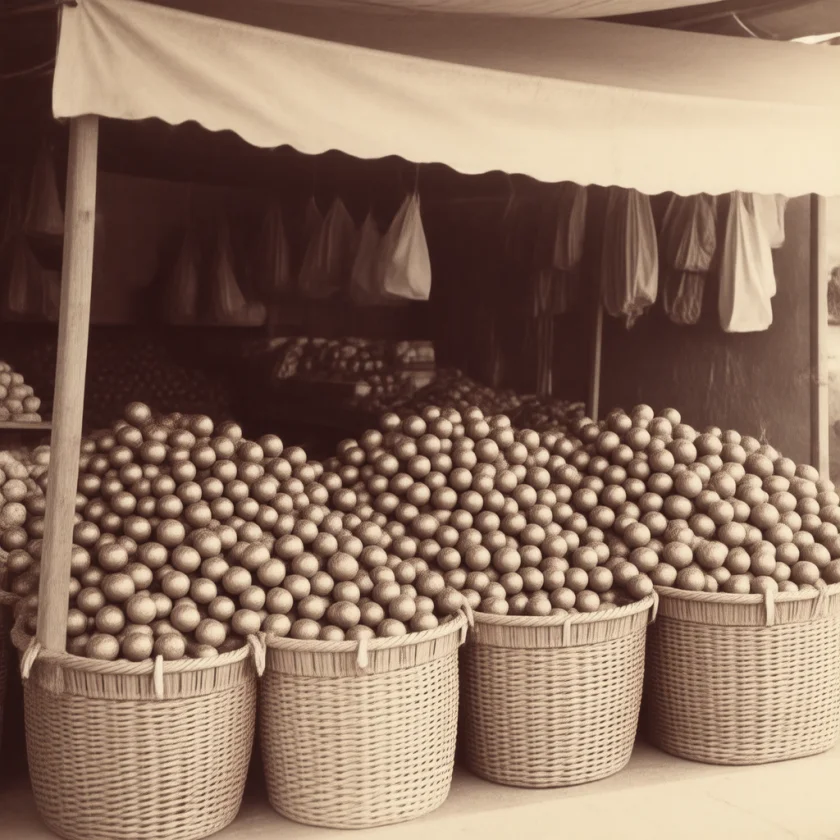
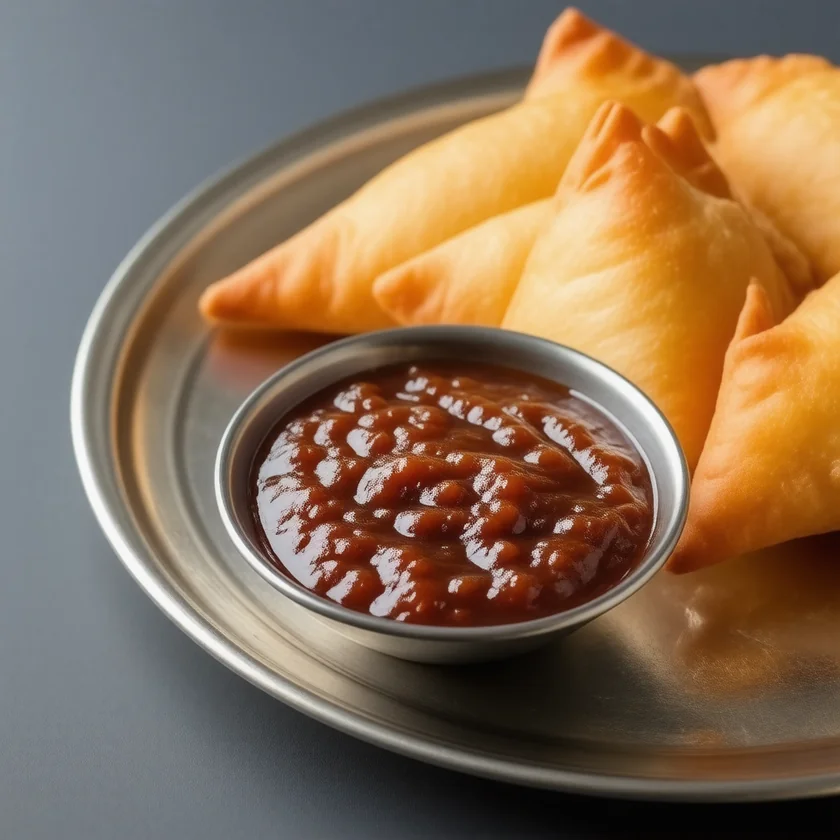
Tamarind is a plant whose name is a small historical error. The Arabs who traded it across the Indian Ocean called it tamr hindi, the "date of India", and the name stuck in Latin, in Linnaeus and in every European language since — yet the tree is not a date palm and it is not Indian. Its home is the dry savanna belt of tropical Africa, and it had already been carried east to India, west into Arab and European pharmacy, and finally across two oceans to Mexico and the Philippines before anyone thought to ask where it began. Along the way it was a fever drink and a gentle laxative in African villages, a sour digestive in Ayurveda, a purge that thirteenth-century pirates forced on their captives, an official drug in nineteenth-century pharmacopoeias, and the sour backbone of pad thai, sambar, chutney and agua de tamarindo. Where the record is firm we say so; where a date rests on a single review or a tradition, we say that too.
Table of Contents
- An African Tree: Origins and Botany
- The "Date of India": How Tamarind Got Its Name
- The Earliest Records: India, Egypt and the Sahel
- Arab Traders, Marco Polo and the Passage into Europe
- Across Two Oceans: Mexico, the Caribbean and the Philippines
- Tamarind in the Pharmacopoeias: Whey, Confections and Refrigerants
- In the Kitchen: Chutney, Sambar, Pad Thai and a Bottled Sauce
- The Chemistry: Tartaric Acid, a Garcinia Confusion and Seed Xyloglucan
- Modern Trials: Fluoride, Lipids and Bacteria
- Tamarind Today
- Key Research Papers
- Connections
- Featured Videos
An African Tree: Origins and Botany
Tamarind, Tamarindus indica, is a large, slow-growing evergreen tree of the pea and bean family, Fabaceae. It is the only species in its genus — botanists call such a genus monotypic — which means that every tamarind on earth, from a Sudanese village shade tree to a Thai orchard grown for sweet dessert pods, is the same plant. The tree reaches twenty to thirty metres and bears a curved, cinnamon-brown pod whose brittle shell holds the part people have valued for thousands of years: a sticky, fibrous, dark pulp wrapped around hard, glossy seeds.
For a long time the tree was assumed to be Indian, and older books still say so, because by the time Europeans met it the subcontinent was where it grew most abundantly and where its use was most elaborate. The botanical consensus is now firmly the other way. Tamarind is native to the dry savanna belt of tropical Africa — the Sudanian zone that runs from Sudan, and especially the Kordofan region, westward through the Sahel to Senegal. It grows there wild and semi-wild, and the ethnobotanical record on the continent is deep and consistent in a way that a recent introduction could not produce. In India, by contrast, it has been cultivated so long that it is sometimes reported as native, but it is a naturalised immigrant that arrived in antiquity by human hands.
Several unrelated plants borrow the name and cause confusion in markets and on supplement labels. Malabar tamarind is Garcinia gummi-gutta (formerly Garcinia cambogia), a fruit of the mangosteen family whose sour principle is hydroxycitric acid, not tartaric acid; it is the "tamarind" of weight-loss supplements and has nothing to do with the tree on this page. Manila tamarind (Pithecellobium dulce) and velvet tamarind (Dialium) are different legumes with vaguely similar pods.
The "Date of India": How Tamarind Got Its Name
The word records the trade route rather than the origin. Arabic tamr hindi means "Indian date": tamr is the dried date (a word shared with Hebrew tamar, the date palm), and hindi is simply "of India". Arab merchants who worked the Indian Ocean met the sticky brown pulp in Indian ports, found that it looked and kept something like pressed dates, and named it for the place they found it. Some Indian sources give the name a Persian form, tamar-i-hind, with the same meaning; either way, it is a Middle Eastern trader's label for an Indian commodity that was really African. Henry Yule's note on the word in his edition of Marco Polo, quoting the Anglo-Indian glossary Hobson-Jobson, adds a further possibility: that the original may have been Arabic thamar, "fruit", of India rather than tamar, "date" — in which case the name was never a mistake about palms at all, only about geography.
From Arabic the name passed into medieval Latin as tamarindus, the form the physicians of medieval Europe used, and from there into English: the Online Etymology Dictionary dates English tamarinde, "pod-shaped fruit of the tamarind tree, used medicinally", to about 1400. Linnaeus kept the Latin and added indica, so the scientific name says "Indian date, of India" — an error botany has corrected but nomenclature never will.
The plant's Asian names tell the rest of the story. In Sanskrit it is amlika, from amla, "sour" — a name that describes the taste rather than the origin, and whose presence in the classical language is one of the arguments for tamarind's antiquity in India. Hindi and Urdu have imli. Malay and Indonesian call it asam jawa, "Javanese sour", which like the Arabic name credits a stop on the trade route rather than the homeland.
The Earliest Records: India, Egypt and the Sahel
A widely cited pharmacognosy review (Bhadoriya and colleagues, 2011) states that the movement of tamarind to Asia must have taken place in the first millennium BC, that its cultivation in Egypt is documented by about 400 BC, and that it is mentioned in Indian scriptures dated somewhere between 1200 and 200 BC. These are secondary claims summarising earlier horticultural literature; we could not check the underlying texts, so we report them as the standard account rather than as established fact. What is not in doubt is the direction of travel: from Africa, across the Red Sea and the Arabian Sea, into the Indian subcontinent, early enough that Sanskrit had a word for it and that the tree became inseparable from South Indian cooking.
In Ayurveda, amlika is classed by taste as sour and by action as heating, and the ripe pulp is used as a digestive and a mild purgative. That framework of tastes and qualities is the system Ayurvedic physicians used, not a modern mechanism. The uses themselves — constipation, poor appetite, a cooling drink in fever — are the same ones that turn up, independently, on the other side of the Indian Ocean.
In traditional African medicine, where the tree is native, the evidence is much richer. A 2010 review in the Journal of Ethnopharmacology (Havinga and colleagues) compiled more than sixty primary sources on tamarind across the continent and found a clear pattern: the fruit is used most prominently as a laxative and a febrifuge (a fever remedy) throughout the Sahel and Sudan ecological zones; the bark and leaves treat wounds, especially in central West Africa; the bark is used for diarrhoea in West Africa and the leaves for the same purpose in East Africa. The same review also recorded uses for malaria, abdominal pain and intestinal worms. That two traditions with little contact converged on the same two uses is not proof that either works, but it is the kind of consistency that makes a plant worth studying.
Arab Traders, Marco Polo and the Passage into Europe
Tamarind entered Western medicine through the Arabic-speaking world, and the name is itself the record of that passage. The physicians of the medieval Islamic world valued it as a cooling drink and mild laxative — a "refrigerant", in the vocabulary European pharmacy inherited — and through their Latin translators tamarindus reached the herbals and dispensatories of Europe. Which physician first wrote it down we cannot say with confidence, so we attach no name to the claim.
The most vivid medieval European mention is not medical at all. In the account of his travels dictated in the 1290s, Marco Polo describes the kingdom of Gujarat on the west coast of India and its pirates, who, in Henry Yule's classic translation, "force the merchants to swallow a stuff called Tamarindi mixed in sea-water, which produces a violent purging" — so that any pearls or gemstones the merchants had swallowed to hide them from the pirates would be recovered. Grim as it is, it is good pharmacology: a thirteenth-century traveller already knew tamarind as the purgative it had long been in Africa and India, and wrote the name in its Arabic-derived form.
Within a century of Polo, the word was in English. The etymological record places tamarinde in English around 1400, explicitly as a medicinal fruit, which tells us that the imported pulp was by then an apothecary's article in northern Europe, arriving in the same eastern trade that brought pepper, ginger and sugar. Tamarind never became a European crop — it will not survive a frost — so it remained an imported, preserved pulp, bought from a druggist rather than grown in a garden.
Across Two Oceans: Mexico, the Caribbean and the Philippines
The Iberian voyages of the sixteenth century did for tamarind what the Arab dhows had done a thousand years earlier. Spanish and Portuguese colonists introduced the tree to Mexico and Central America in the 1500s, and to a lesser degree to South America and the Caribbean, and it took to the tropical lowlands of the New World so thoroughly that it became a staple of the region's cooking. The pulp diluted with water and sweetened became agua de tamarindo, one of the classic aguas frescas of Mexico, and went into the sweet-sour-chilli candies still sold at every Mexican market stall. In the West Indies the pods were preserved in sugar or syrup for export to European druggists.
The Manila galleons, which linked Mexico and the Philippines for two and a half centuries, carried plants in both directions, and tamarind is well established in the Philippines, where it is sampalok. Whether it arrived there from Mexico, from earlier Malay trade, or both, is not something we can settle; what is certain is that it became the signature souring agent of sinigang, the sour soup that is as close as the Philippines has to a national dish. Thai growers, meanwhile, developed sweet dessert cultivars (makham wan) eaten fresh from the shell — a use unknown in Africa, where the sour type is the only type.
Tamarind in the Pharmacopoeias: Whey, Confections and Refrigerants
By the nineteenth century tamarind pulp was an official drug — that is, one with a formal monograph in a national pharmacopoeia. King's American Dispensatory (1898), the great reference of the American Eclectic physicians, records that the United States Pharmacopoeia defined tamarind as "the preserved pulp of the fruit of Tamarindus indica". The same entry summarises the pulp's chemistry — sugar, tartaric, citric and malic acids, potassium bitartrate, pectin and gum — and cites an 1882 analysis by K. Müller putting free tartaric acid at 5.3 to 8.7 per cent of the pulp, figures still in the right range today.
The medical uses were exactly the ones Africa and India had known. King's classes tamarind as "nutritive and refrigerant" — a cooling agent given in "febrile and inflammatory diseases" — and, in larger amounts, a laxative useful for keeping the bowels regular during convalescence. Its best-known preparation was tamarind whey, made, in the dispensatory's words, by "boiling 1 ounce of the pulp in 1 pint of milk, and straining": the acid curdles the milk, the curd is strained off, and what remains is a tart, cooling, mildly laxative drink that a feverish patient could keep down. A dose of the pulp itself ranged from a drachm to two ounces. Tamarind also went into laxative confections alongside senna and cassia, as it still does in India and Thailand. King's adds that a decoction of the flowers "is reputed almost a specific for hemorrhoids" — and is careful to say reputed; so are we.
Tamarind has since fallen out of the Western pharmacopoeias, as most fruit-based refrigerants did once synthetic antipyretics and reliable laxatives arrived. It has no German Commission E or WHO monograph that we could verify; its modern regulatory life is as a food and, through its seed, a pharmaceutical excipient.
In the Kitchen: Chutney, Sambar, Pad Thai and a Bottled Sauce
No other medicinal plant is eaten by so many people so often without their thinking of it as medicine. In South India, tamarind is the sour foundation of sambar, the lentil and vegetable stew, and of rasam, the thin peppery soup that is at once a first course and a household remedy for colds. Across the subcontinent it is the base of the dark sweet-and-sour chutney served with chaat and samosas, and of countless fish curries.
In Thailand it is the sour note in pad thai, balanced against palm sugar and fish sauce; in Malaysia and Indonesia asam jawa sours sambal and rendang; in the Middle East it is a sweet-sour drink, and in West Africa a drink and a sauce for porridge.
Its one great appearance in the English kitchen is indirect. The fermented, anchovy-based Worcestershire-style sauce developed in England in the nineteenth century lists tamarind among its ingredients, and it is tamarind that supplies much of the sauce's fruity sourness beneath the vinegar and molasses. The recipe is said to have been modelled on a sauce encountered in colonial India — a condiment built around an African fruit, learned in India, bottled in England and now sold worldwide.
The Chemistry: Tartaric Acid, a Garcinia Confusion and Seed Xyloglucan
Tartaric acid. Most sour fruits owe their sourness to citric acid (citrus, berries) or malic acid (apples, stone fruit). Tamarind is unusual in being sour chiefly because of tartaric acid, the same acid that gives grapes and wine their bite and that crystallises as "cream of tartar" (potassium bitartrate) in wine barrels. Free tartaric acid is rare in the plant kingdom — grapes and tamarind are its two well-known food sources — and tamarind pulp holds more of it than any other common fruit, somewhere between 8 and 18 per cent of the dry pulp as organic acids, most of it tartaric, together with a few per cent of potassium bitartrate. The nineteenth-century analyses already saw this; what has changed is that we can now ask how the tree makes it. Two independent tamarind genome assemblies published in 2026 both took the tartaric acid pathway as a central question, mapping the genes that let this one legume accumulate an acid its relatives barely produce.
The Garcinia confusion. Because Garcinia gummi-gutta is sold as "Malabar tamarind", it is common to read that tamarind contains hydroxycitric acid (HCA), the compound marketed for weight loss. It does not: HCA is the acid of the Garcinia fruits, a different family, and any claim that tamarind "blocks fat" by way of HCA is about the wrong plant.
Tamarind seed polysaccharide. The hard seeds that Africa and India once discarded, fed to livestock or ground into a poverty flour turned out to hold a compound of real industrial value. The seed kernel is rich in a xyloglucan — a branched sugar polymer of the kind found in plant cell walls — which swells in water into a clear, stable gel; early workers called it "jellose". In the food industry it became a thickener and stabiliser that holds up through heating, freezing and acid; in the textile industry it sized cotton and jute. In pharmacy it is now a mucoadhesive — it clings to wet mucous membranes — and has been used in artificial tears. A 2007 clinical study in BMC Ophthalmology (Rolando and Valente) established the tolerability of tamarind seed polysaccharide eye drops in dry eye, and later trials combined it with hyaluronic acid. Reviews in 2018 and 2020 surveyed its barrier-protective uses over mucous membranes and its role in drug delivery and tissue engineering. It is a neat reversal: the waste product of an ancient food has become the part of the plant with the strongest modern clinical record.
Modern Trials: Fluoride, Lipids and Bacteria
Set against its size in the world's kitchens, the human research on tamarind pulp is small, and the most-cited work comes from a single laboratory. The studies below are reported with their size so that the reader can weigh them.
Fluoride excretion. Parts of India draw drinking water from fluoride-rich rock, and skeletal fluorosis is a serious public-health problem there. Researchers at the National Institute of Nutrition in Hyderabad asked whether tamarind, eaten daily anyway in those regions, changed how much fluoride the body kept. In a randomised, diet-controlled study published in the European Journal of Clinical Nutrition in 2002 (Khandare and colleagues), twenty healthy schoolboys, of whom eighteen completed the study, ate 10 g of tamarind daily with lunch for eighteen days. Urinary fluoride rose significantly, from about 3.5 to about 4.8 mg per day; magnesium and zinc excretion fell. A follow-up in Nutrition in 2004, in thirty adolescent boys from a fluorosis-endemic area who were first given defluoridated water for two weeks and then randomised fifteen and fifteen to tamarind or no tamarind for three weeks, again found higher fluoride excretion and urinary pH in the tamarind group, which the authors read as fluoride being mobilised from bone. These are two small, short trials in boys, from one group, measuring urine rather than disease; they are the origin of every "tamarind removes fluoride" claim online, and no trial large or long enough to show that anyone's bones were better for it has followed.
Lipids and weight. A 2011 study in rats made obese on a cafeteria diet or with a drug found that an ethanol extract of the pulp lowered blood lipids and body weight (Jindal and colleagues), and a 2018 hamster study reported lower cholesterol with altered serum proteins (Lim and colleagues). Both used extracts far more concentrated than a meal, and no adequately sized human trial of tamarind pulp for cholesterol or weight exists that we could verify.
Antibacterial activity. Extracts of the pulp, leaves and bark inhibit a range of bacteria in laboratory dishes — a 2007 report in the Tropical Journal of Pharmaceutical Research (Doughari) is among the most cited — which sits beside the African use of the bark for diarrhoea and wounds. But an acidic extract killing bacteria in a dish is a low bar, and no human trial exists.
Tamarind Today
India is by far the largest producer: its orchards yielded on the order of a quarter of a million tonnes a year in the late twentieth century, and it remains the centre of the trade in pulp, paste and concentrate. Thailand is the home of the sweet cultivars and a major exporter of fresh pods; Mexico grows and consumes it on a scale that reflects five centuries of naturalisation. In its African homeland the tree is still largely gathered rather than farmed, and Sahelian agroforestry programmes now treat it as a candidate for domestication — a curious fate for a plant other continents domesticated millennia ago.
Its uses today divide along the lines of its history: a food eaten more widely than ever; a laxative confection and fever drink where tradition still holds; a pharmaceutical material, through its seed xyloglucan, with a growing clinical record; and a supplement whose fluoride, cholesterol and weight-loss claims rest on two small trials in schoolboys, some rodents and a confusion with an unrelated Garcinia fruit.
The most truthful way to honour that history is to keep the strands apart. The tree deserves its place among the great trans-oceanic plants, and its pulp its place in the world's kitchens and, in moderation, as the gentle purge three traditions independently found it to be. What it does not need is a borrowed reputation: the "date of India" has spent two thousand years being called something it is not, and has done well enough on what it actually is.
Key Research Papers
The list covers tamarind's ethnobotany, the seed-polysaccharide and genome literature behind its chemistry, and the small human and animal studies behind its modern claims. Historical primary texts (Marco Polo in Yule's translation; King's American Dispensatory, 1898) are named in the article, not cited here.
- Havinga RM, Hartl A, Putscher J, Prehsler S, Buchmann C, Vogl CR (2010). Tamarindus indica L. (Fabaceae): patterns of use in traditional African medicine. Journal of Ethnopharmacology. — PubMed PMID: 19963055
- Bhadoriya SS, Ganeshpurkar A, Narwaria J, Rai G, Jain AP (2011). Tamarindus indica: Extent of explored potential. Pharmacognosy Reviews. — PubMed PMID: 22096321
- Kumar CS, Bhattacharya S (2008). Tamarind seed: properties, processing and utilization. Critical Reviews in Food Science and Nutrition. — doi:10.1080/10408390600948600
- Khandare AL, Rao GS, Lakshmaiah N (2002). Effect of tamarind ingestion on fluoride excretion in humans. European Journal of Clinical Nutrition. — PubMed PMID: 11840184
- Khandare AL, Kumar PU, Shanker RG, Venkaiah K, Lakshmaiah N (2004). Additional beneficial effect of tamarind ingestion over defluoridated water supply to adolescent boys in a fluorotic area. Nutrition. — PubMed PMID: 15105030
- Rolando M, Valente C (2007). Establishing the tolerability and performance of tamarind seed polysaccharide (TSP) in treating dry eye syndrome: results of a clinical study. BMC Ophthalmology. — doi:10.1186/1471-2415-7-5
- Piqué N, Gómez-Guillén MDC, Montero MP (2018). Xyloglucan, a Plant Polymer with Barrier Protective Properties over the Mucous Membranes: An Overview. International Journal of Molecular Sciences. — doi:10.3390/ijms19030673
- Singh M, Bisht MS, M G A, Mahajan S, Sharma VK (2026). Chromosome-level genome assembly of Tamarindus indica provides new insights into the evolution of triterpenes and tartaric acid biosynthetic pathway. Molecular Horticulture. — PubMed PMID: 42121224
- Jindal V, Dhingra D, Sharma S, Parle M, Harna RK (2011). Hypolipidemic and weight reducing activity of the ethanolic extract of Tamarindus indica fruit pulp in cafeteria diet- and sulpiride-induced obese rats. Journal of Pharmacology & Pharmacotherapeutics. — PubMed PMID: 21772765
- Doughari JH (2007). Antimicrobial Activity of Tamarindus indica Linn. Tropical Journal of Pharmaceutical Research. — doi:10.4314/tjpr.v5i2.14637
PubMed Topic Searches
- PubMed: Tamarind ethnobotany and traditional use
- PubMed: Tamarind history of pharmacology
- PubMed: Tamarind seed polysaccharide (xyloglucan)