Long Pepper, Piperine and the Bioavailability Question
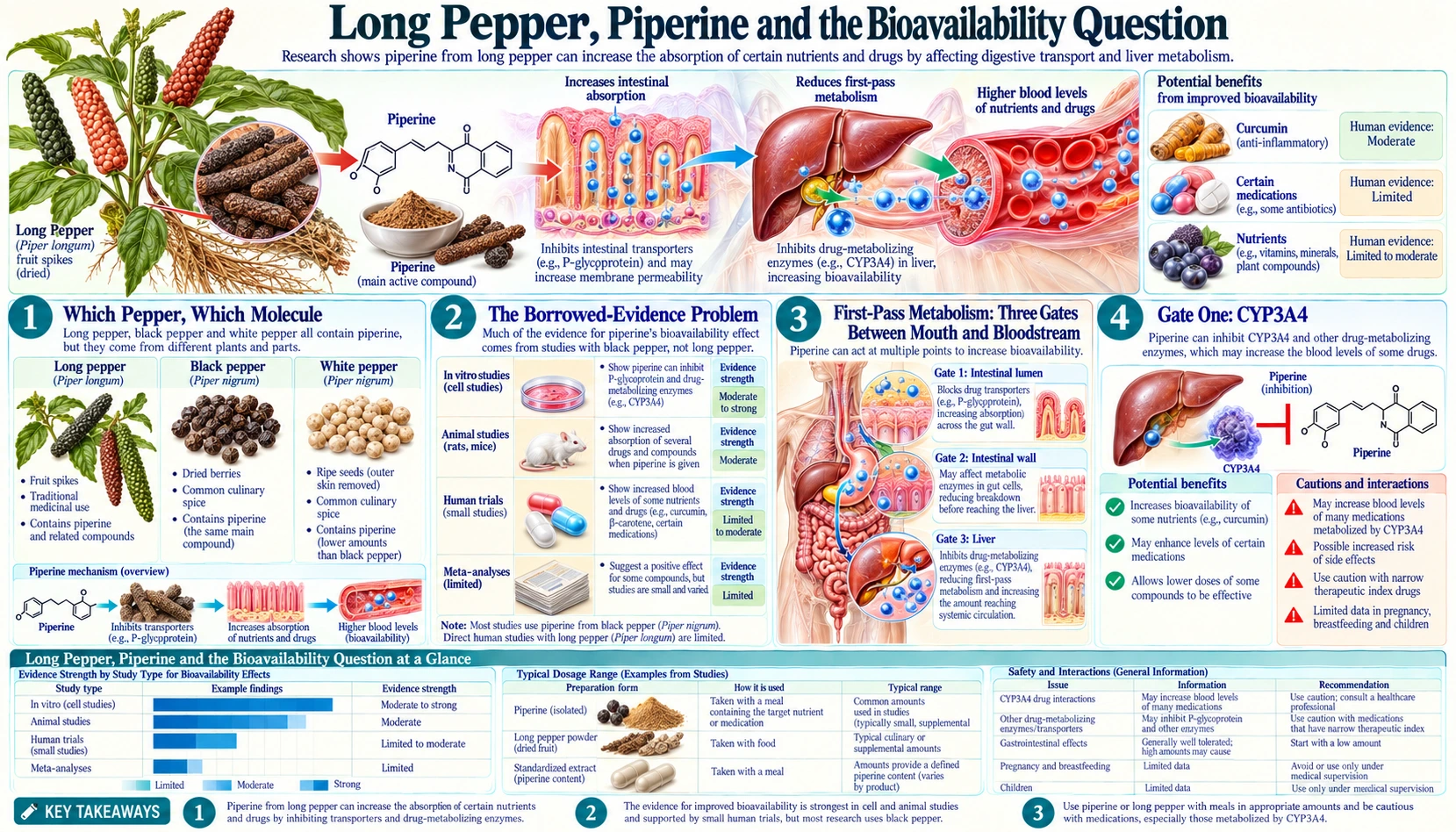
Almost every herbal "benefit" you read about is a claim that a plant does something to you. Long pepper's headline benefit is stranger and much better supported than that: it does something to whatever you take with it. Ayurveda gave this property a name two thousand years before anyone had heard of a cytochrome enzyme — yogavahi, a carrier, a substance whose job is to make the rest of the formula work harder. Modern pharmacology found the machinery, and it turns out the old description was close to right.
This page explains the mechanism honestly, and it is worth reading before the marketing. The bioavailability effect is real, reproducible and has a named molecular basis. It is also the single reason long pepper and its relatives can be genuinely dangerous alongside prescription medication, because a system that lets more of a good thing through lets more of everything through. The benefit and the hazard are not two properties of this herb. They are one property described twice.
Table of Contents
- Which Pepper, Which Molecule
- The Borrowed-Evidence Problem
- First-Pass Metabolism: Three Gates Between Mouth and Bloodstream
- Gate One: Cytochrome P450 3A4
- Gate Two: P-glycoprotein
- Gate Three: Glucuronidation
- The Curcumin Demonstration
- Beyond Curcumin: What Else Piperine Has Been Shown to Lift
- Why the Effect Cannot Be Aimed
- Culinary Exposure Versus a 20 mg Capsule
- Evidence Tiers for Every Claim on This Page
- Practical Reading
- Key Research Papers
- Connections
- Featured Videos
Which Pepper, Which Molecule
Three unrelated things get called "pepper" in English, and only two of them matter here.
- Long pepper is Piper longum L., the plant Ayurveda calls pippali. The part used is a hard grey-brown catkin, a spike of dozens of fused fruits, not a round peppercorn.
- Black pepper is Piper nigrum L., the same genus and family (Piperaceae), a different species, and the source of the individual dried drupes in your pepper mill.
- Chillies, bell peppers and paprika are Capsicum species in the nightshade family. They contain capsaicin, not piperine, and nothing on this page applies to them. They picked up the name "pepper" by historical accident, because long pepper got to Europe first and lent its name to everything pungent that followed.
The two Piper species share the compound that drives the bioavailability effect: piperine, an amide alkaloid formed from piperic acid and piperidine. It is the molecule responsible for pepper's bite, and it is the molecule responsible for the absorption effect. Black pepper is usually the richer source by dry weight; long pepper carries piperine at a low single-digit percentage of the dried spike, varying with origin, ripeness and storage.
What long pepper has that black pepper does not is piperlongumine (also written piplartine), a chemically reactive amide with an entirely separate research literature centred on cancer cell biology. Piperlongumine and piperine are different compounds with different mechanisms, and conflating them is the most common error in writing about this herb. Piperlongumine is discussed on the species and safety page; it has nothing to do with the bioavailability effect and it is not a treatment for anything.
The Borrowed-Evidence Problem
Here is a thing you need to know before you read a single citation, on this page or anywhere else.
Most "piperine" research is black-pepper research. The foundational pharmacology — the enzyme inhibition studies, the human pharmacokinetic crossovers, the paper that gave the mechanism its name — was done with piperine isolated from or attributed to Piper nigrum, because black pepper is cheap, globally available and the obvious commercial source. When a long pepper supplement's label cites "clinical research on piperine," the studies behind that phrase were, more often than not, done on the other species.
Is the borrowing legitimate? Partly. Piperine is one molecule. Piperine purified from P. longum and piperine purified from P. nigrum are chemically identical, so a study showing that piperine inhibits cytochrome P450 3A4 (CYP3A4) tells you something true about the piperine in long pepper. What it does not tell you is:
- How much piperine a given quantity of long pepper actually delivers. Whole-spice content varies by species, cultivar, harvest and age. Dose-equivalence between "a study used 20 mg piperine" and "I ground a spike over my dinner" is not established.
- What the rest of the plant does. Long pepper contains piperlongumine, piperlonguminine, pipernonaline, piperettine, guineensine, lignans and an essential oil. Some of these amides also interact with drug-metabolising enzymes in laboratory work. A whole-spice or whole-extract exposure is not a single-molecule exposure.
- Whether the whole spice of either species behaves identically in a human being. Nobody has run the head-to-head comparison.
Throughout this page, every study is labelled with the species or material actually used. Where the work was done on isolated piperine or on Piper nigrum, it says so. That labelling is the difference between an honest mechanism page and a sales sheet.
First-Pass Metabolism: Three Gates Between Mouth and Bloodstream
When you swallow something, only a fraction of it reaches your circulation. The fraction that does is its oral bioavailability. For a lot of interesting plant compounds — curcumin is the notorious example — that fraction is so small that a generous oral dose produces blood levels far below anything shown to do something in a laboratory dish.
Three systems are responsible, and it helps to picture them as gates in series between the inside of your gut and the inside of your bloodstream.
- Chemical modification. Enzymes in the cells lining the small intestine, and then a second, larger set in the liver, chemically alter the molecule — usually by oxidising it. The dominant enzyme family is cytochrome P450, and the dominant member is cytochrome P450 3A4.
- Active ejection. The intestinal lining runs pumps that grab absorbed molecules out of the cell and throw them back into the gut lumen. The best-known is P-glycoprotein (P-gp, the product of the ABCB1 gene). A molecule can be absorbed, ejected, reabsorbed and ejected repeatedly, which multiplies its exposure to the enzymes in step 1.
- Conjugation. A second wave of enzymes bolts water-soluble handles onto the molecule so the kidneys and bile can dispose of it. The main reaction is glucuronidation, run by the UDP-glucuronosyltransferase (UGT) enzymes, with sulfation as a companion pathway.
Together these constitute the first-pass effect. Everything you swallow runs the gauntlet, and blood levels are what is left at the end.
Laboratory studies show piperine acting on all three gates — on the human proteins for the first two, and in guinea-pig and rat tissue for the third. That is why the effect is broad rather than specific.
Gate One: Cytochrome P450 3A4
Cytochrome P450 3A4 is the single most important drug-metabolising enzyme in the human body. It sits in the gut wall and in the liver, and it is involved in the clearance of a large share of prescription medicines — estimates commonly cited in pharmacology reviews put it near half of all drugs in use. Anything that inhibits cytochrome P450 3A4 raises the blood levels of the enzyme's substrates, because the same swallowed dose survives further.
The evidence that piperine does this is direct and it is human-protein evidence, not species guesswork. Bhardwaj and colleagues, publishing in The Journal of Pharmacology and Experimental Therapeutics in 2002 under the title "Piperine, a major constituent of black pepper, inhibits human P-glycoprotein and cytochrome P450 3A4," tested piperine against cytochrome P450 3A4 in human liver microsomes (from two livers) and against P-gp in monolayers of human intestinal Caco-2 cells. Tier: preclinical (enzyme and cell systems) — but on the human proteins. Material: piperine, attributed to Piper nigrum.
A useful refinement came from Volak and colleagues in Drug Metabolism and Disposition in 2008, comparing curcuminoids and piperine across a panel of human P450, UGT and sulfotransferase enzymes. Their conclusion was that piperine is a relatively selective cytochrome P450 3A4 inhibitor — it hits 3A4 considerably harder than the other P450s — whereas the curcuminoids themselves inhibited a much broader spread of enzymes. That is a genuinely interesting result for two reasons. It means piperine's interaction footprint is narrower than "inhibits cytochrome P450" makes it sound, and it means the interaction risk of a curcumin-plus-piperine supplement is not solely the piperine's fault. Tier: preclinical, human recombinant enzymes.
The much older foundational work — Atal and colleagues' 1985 paper in the same journal on the biochemical basis of enhanced drug bioavailability by piperine — established the general principle in animal and microsomal systems long before the specific human targets were named. Tier: preclinical, animal and microsomal.
Gate Two: P-glycoprotein
P-glycoprotein is an efflux pump, and it is easiest to understand by what it is for. It evolved to keep foreign molecules out of places that matter: the gut lining pumps them back into the intestine, the blood-brain barrier pumps them back into the blood, the kidney tubule pumps them into urine. It is a bouncer, and it is very good at its job. Some drugs are almost entirely defined by it — digoxin's absorption and clearance are dominated by P-gp handling.
Piperine inhibits it. The Bhardwaj 2002 work above showed inhibition of P-gp-mediated transport in cell monolayers, and Zhou, Lim and Chowbay's 2004 review in Drug Metabolism Reviews, "Herbal modulation of P-glycoprotein," places piperine within the broader class of plant constituents that modulate this pump. Tier: preclinical (cell and review). Material: piperine.
The reason P-gp inhibition matters disproportionately is the revolving-door effect. Without inhibition, a molecule that crosses into the intestinal cell may be ejected and have to cross again, and each crossing exposes it to the cytochrome P450 3A4 sitting in that same cell. Shut the pump and you do not merely stop one ejection — you remove several rounds of enzymatic attack. P-gp inhibition and cytochrome P450 3A4 inhibition multiply rather than add, which is why compounds that do both produce larger bioavailability changes than you would predict from either alone. Piperine does both. So, famously, does grapefruit juice.
Gate Three: Glucuronidation
The third gate is the one most often left out of supplement marketing, and for curcumin specifically it may be the most important of the three.
Glucuronidation attaches a glucuronic acid group to a molecule, making it water-soluble and easy to excrete. It happens fast, it happens in the gut wall as well as the liver, and for phenolic compounds it is often the dominant route of disposal. Curcumin is a phenol. Swallow curcumin and most of what gets absorbed is glucuronidated and sulfated almost immediately, which is why measuring "free curcumin" in plasma after an oral dose returns numbers close to the limit of detection.
Work dating to the mid-1980s in isolated intestinal epithelial cells of the guinea pig reported that piperine inhibits glucuronidation in the gut wall, reducing the rate at which absorbed compounds are tagged for excretion: at 50 micromolar piperine the rate of glucuronidation fell to about 50% of the basal rate (Singh and colleagues, 1986). A 1993 study in rat and guinea-pig liver and small intestine found piperine acted more strongly on intestinal glucuronidation than in rat liver (Reen and colleagues). In human enzyme tests, the picture differs: in the Volak 2008 comparison above, piperine had little effect on UGT and acted mainly on cytochrome P450 3A4, while the curcuminoids themselves inhibited UGT. Tier: preclinical (guinea-pig and rat cells and tissue). Material: piperine. Both older papers are listed in the research section below.
For a compound whose problem is conjugation rather than oxidation, this is the gate that matters, and it is the best mechanistic explanation for why the curcumin effect is as large as it is.
The Curcumin Demonstration
This is the study that turned a traditional concept into a product category.
Shoba and colleagues, Planta Medica, 1998: "Influence of piperine on the pharmacokinetics of curcumin in animals and human volunteers." In healthy human volunteers, curcumin alone at 2 g produced serum levels that were extremely low or undetectable. Adding 20 mg of piperine to the same 2 g curcumin dose increased curcumin bioavailability by about 2000% — roughly a twenty-fold rise. Tier: human pharmacokinetic study (small, healthy volunteers, crossover design). Material: isolated piperine.
Two things deserve emphasis. First, this is a pharmacokinetic result, not a clinical one. It shows more curcumin in the blood. It does not by itself show that anyone got better at anything. Second, the study is small and old, and the 2000% figure gets quoted with a confidence the original sample size does not really support. It has nonetheless held up as the reference point, and the 20 mg piperine dose printed on turmeric supplement labels around the world is traceable to this one paper rather than to any dose-finding study of piperine itself.
Why did curcumin need the help so badly? Anand and colleagues laid the problem out in Molecular Pharmaceutics in 2007 in "Bioavailability of curcumin: problems and promises": poor aqueous solubility, chemical instability at intestinal pH, rapid metabolism and rapid systemic elimination, all at once. Piperine addresses the metabolic component and not the solubility component, which is why other strategies — phospholipid complexes, micellar and nanoparticle formulations, oil co-administration — exist alongside it and sometimes outperform it. The turmeric bioavailability and forms page covers those alternatives in detail.
Heidari and colleagues reviewed the curcumin-plus-piperine literature in Phytotherapy Research in 2023, across preclinical and clinical studies. Their review reports beneficial effects of the combination on blood-sugar measures, blood fats and antioxidant status in diabetes, on inflammation linked to obesity and metabolic syndrome, and in several other conditions, and concludes that further high-quality clinical trials are needed to firmly establish its clinical efficacy. A 2026 systematic review by Pan and colleagues in Frontiers in Nutrition found 20 randomised trials of the combination, with 8 to 117 participants each and lasting 1 to 12 weeks, using piperine at 5 to 15 mg a day; it called for larger, longer-term trials with standardised objectives. Enhancement is established. Benefit is a separate question, still open.
Beyond Curcumin: What Else Piperine Has Been Shown to Lift
Curcumin is the famous case but not the only one. Human pharmacokinetic studies with isolated piperine have reported increased blood levels of several drugs, and these are covered in detail on the drug interactions page because from a patient's point of view they are the same finding wearing different clothes. In brief:
- Propranolol and theophylline — Bano and colleagues reported increased bioavailability of both in healthy volunteers given piperine, in the European Journal of Clinical Pharmacology in 1991. Tier: small human pharmacokinetic study.
- Phenytoin — raised plasma levels reported both in healthy volunteers and, in later work by Pattanaik and colleagues in Phytotherapy Research in 2006, in patients with epilepsy already at steady state on the drug. In that study, 20 patients with uncontrolled epilepsy taking phenytoin 150 mg or 200 mg twice daily were given a single 20 mg dose of piperine, which significantly raised phenytoin's total exposure (AUC, p < 0.01) and peak level (Cmax, p < 0.001). A 2025 systematic review of phenytoin food and herb interactions (12 studies) concluded that concurrent use of phenytoin and piperine calls for monitoring because of possible increases in plasma levels. Tier: small human studies, including in patients.
- Carbamazepine — a comparable steady-state interaction reported by the same group in Phytotherapy Research in 2009: in 20 patients taking carbamazepine 300 mg or 500 mg twice daily, a single 20 mg dose of piperine significantly increased carbamazepine's total exposure (AUC, p < 0.001) in both dose groups. Tier: small human study in patients.
- Rifampicin — Indian tuberculosis researchers have pursued piperine deliberately as a dose-sparing co-formulation, work going back to a 1985 report of raised rifampicin blood levels in pulmonary tuberculosis patients (Zutshi and colleagues, Journal of the Association of Physicians of India). A 2017 randomised phase III trial enrolled 216 patients with newly diagnosed pulmonary tuberculosis: 99 received a fixed-dose combination of rifampicin 200 mg, isoniazid 300 mg and piperine 10 mg, and 117 received conventional therapy, both with ethambutol and pyrazinamide. Sputum conversion at 4 weeks was 93% versus 84%, cure at 24 weeks was 92% versus 82%, and liver-enzyme rises were seen in 3 versus 9 patients; 75% and 79% of the two groups completed the study. Tier: human, one early report and one randomised trial; also a licensed formulation strategy in India.
- Nevirapine — a randomised, placebo-controlled crossover pilot study in 8 healthy adult men (Kasibhatta and Naidu, Drugs in R&D, 2007) gave piperine 20 mg each morning for 6 days and then with a 200 mg dose of this antiretroviral; nevirapine's peak blood level rose by approximately 120% and its total exposure (AUC extrapolated to infinity) by approximately 170%. Tier: small human crossover.
- Beta-carotene, coenzyme Q10, resveratrol, epigallocatechin gallate and several other poorly absorbed nutrients — reported increases, mostly in animal or small human work, of varying quality. Tier: preliminary.
Notice what this list is. It is not a list of nutrients. It is mostly a list of prescription drugs with clinically meaningful dose-response relationships, three of which are antiepileptics or antimicrobials where getting the level wrong has consequences in both directions. The research programme that produced the "natural bioavailability enhancer" marketing claim is, almost line for line, the research programme that establishes the interaction hazard.
Why the Effect Cannot Be Aimed
The obvious question, once you understand the mechanism, is whether the enhancement can be pointed at the thing you want and away from the things you do not.
It cannot, and the reason is structural. Piperine does not recognise curcumin, escort it across the gut wall, or bind to it in any way. It sits on enzymes and pumps and slows them down. The gate stays partly open for the duration, and everything in the queue benefits equally — the supplement you bought, the medication you take at breakfast, and any dietary compound that happens to be a cytochrome P450 3A4 or P-gp substrate. There is no targeting layer.
Two consequences follow, and they are worth stating plainly:
- Separating doses in time helps, but does not solve it. Taking a piperine supplement at a different time of day from a medication reduces the overlap in the intestine. It does not fully remove hepatic cytochrome P450 3A4 inhibition, which outlasts the gut-lumen encounter. Spacing reduces the overlap; it does not remove the interaction.
- More piperine is not better. Enzyme inhibition saturates — once you have substantially occupied cytochrome P450 3A4, adding more piperine buys progressively less enhancement. The interaction risk does not plateau in the same tidy way, and neither does gastric irritation. The dose-response curves for benefit and for hazard are different shapes, and the hazard curve keeps going.
Culinary Exposure Versus a 20 mg Capsule
This distinction does most of the practical work on this whole topic, so it gets its own section.
Grating a long pepper spike over a dish is a different pharmacological event from swallowing a standardised piperine capsule. A single spike grated across a meal for several people delivers a fraction of a gram of spice, of which piperine is a low single-digit percentage, split between however many people eat it. The resulting piperine intake is a small number of milligrams at most, taken with a large volume of food, at irregular intervals.
A commercial piperine extract is typically standardised to around 95% piperine and dosed at 5 to 20 mg per capsule, taken daily, often on a schedule designed to coincide with something else you want absorbed. That is a deliberate, repeated, concentrated exposure aimed squarely at the mechanism. Trikatu capsules concentrate piperine from two Piper species at once.
Human populations have eaten Piper spices daily for millennia without pepper being recognised as a drug-interaction problem, and culinary use is not what any of the cautions on this site are about. The cautions are about supplements. When you read that piperine interacts with medication, the mental image should be a capsule with a milligram figure on the label, not a pepper mill.
One trial has tested kitchen amounts directly. In a 2026 randomised crossover trial (Durham and colleagues, Nutrients), 30 adults aged 40 or over with moderate chronic pain took turmeric in culinary amounts (300 mg, 1 g or 3 g), with or without black pepper, for 21 days. Pain ratings fell from the start to week 3 (p < 0.001), but adding black pepper made no statistically significant difference (p = 0.157). The study used black pepper, not long pepper, and measured self-reported pain rather than blood levels. Tier: small human trial.
Evidence Tiers for Every Claim on This Page
Collected in one place, so nothing on this page can be quoted at a higher confidence than it deserves.
- Piperine inhibits human cytochrome P450 3A4 and P-glycoprotein — preclinical, but on human proteins, and replicated. As solid as a mechanism gets short of a clinical endpoint.
- Piperine inhibits intestinal glucuronidation — preclinical (guinea-pig and rat cells and tissue). In human enzyme tests (Volak 2008) piperine had little effect on UGT.
- Piperine raises curcumin blood levels in humans — human pharmacokinetic study, small, single landmark trial plus supporting work. Widely accepted; the specific 2000% figure rests on one small study.
- Piperine raises blood levels of several prescription drugs in humans — multiple small human pharmacokinetic studies, some in patients.
- Raising curcumin blood levels produces clinical benefit — unresolved. Many small trials of the combination, heterogeneous, poorly poolable.
- Long pepper specifically (as opposed to isolated piperine) enhances bioavailability in humans at culinary or traditional doses — not established. Traditional-use tier plus reasonable mechanistic inference.
- Yogavahi, the traditional carrier concept — traditional use only, but unusually well vindicated by later mechanism work.
Practical Reading
What the evidence above means in everyday terms:
- Long pepper in cooking is a culinary amount, not a pharmacological dose. It is a spice with a slow, sweet, resinous heat, and the drug-interaction studies on this page used concentrated piperine, not kitchen quantities.
- If you take a turmeric or curcumin supplement, the piperine in it is doing real work. That is one of the few places where a supplement's "proprietary absorption blend" corresponds to a documented mechanism rather than a marketing department.
- In human studies, piperine at 20 mg raised blood levels of phenytoin, carbamazepine, propranolol, theophylline and nevirapine (details above and on the drug interactions page). Supplement labels state piperine in milligrams, the same unit these studies used. This is the specific consequence of the specific mechanism described above.
- "Enhanced bioavailability" is not a benefit in itself. More of a compound in your blood is only good if that compound does something good at that level, and for most of the compounds piperine is paired with, that remains an open question.
Key Research Papers
Every entry below closes with a link to its PubMed record; live topic searches follow the list.
- Shoba G, Joy D, Joseph T, et al. "Influence of piperine on the pharmacokinetics of curcumin in animals and human volunteers." Planta Medica, 1998. The landmark human demonstration; 20 mg piperine with 2 g curcumin, about a twenty-fold rise in curcumin bioavailability. Human PK, small. — PubMed PMID: 9619120
- Bhardwaj RK, Glaeser H, Becquemont L, et al. "Piperine, a major constituent of black pepper, inhibits human P-glycoprotein and CYP3A4." The Journal of Pharmacology and Experimental Therapeutics, 2002. The mechanism paper: human liver microsomes and Caco-2 cell monolayers. Preclinical, human proteins; material attributed to Piper nigrum. — PubMed PMID: 12130727
- Volak LP, Ghirmai S, Cashman JR, Court MH. "Curcuminoids inhibit multiple human cytochromes P450, UDP-glucuronosyltransferase, and sulfotransferase enzymes, whereas piperine is a relatively selective CYP3A4 inhibitor." Drug Metabolism and Disposition, 2008. Refines the picture: piperine is narrower than "P450 inhibitor" suggests, and curcuminoids are broader. Preclinical, human recombinant enzymes. — PubMed PMID: 18480186
- Atal CK, Dubey RK, Singh J. "Biochemical basis of enhanced drug bioavailability by piperine." The Journal of Pharmacology and Experimental Therapeutics, 1985. The foundational demonstration that piperine inhibits drug metabolism. Preclinical, animal and microsomal. — PubMed PMID: 3917507
- Anand P, Kunnumakkara AB, Newman RA, Aggarwal BB. "Bioavailability of curcumin: problems and promises." Molecular Pharmaceutics, 2007. Why curcumin needed rescuing in the first place, and the full menu of strategies. Review. — PubMed PMID: 17999464
- Heidari H, Bagherniya M, Majeed M, et al. "Curcumin-piperine co-supplementation and human health: a comprehensive review of preclinical and clinical studies." Phytotherapy Research, 2023. Reviews what the combination trials report and calls for further high-quality trials. Review of human and preclinical work. — PubMed PMID: 36720711
- Zhou S, Lim LY, Chowbay B. "Herbal modulation of P-glycoprotein." Drug Metabolism Reviews, 2004. Places piperine among plant constituents that alter efflux transport. Review, preclinical. — PubMed PMID: 15072439
- Bano G, Raina RK, Zutshi U, et al. "Effect of piperine on bioavailability and pharmacokinetics of propranolol and theophylline in healthy volunteers." European Journal of Clinical Pharmacology, 1991. Early human evidence that the effect reaches prescription drugs. Human PK, small. — PubMed PMID: 1815977
- Han HK. "The effects of black pepper on the intestinal absorption and hepatic metabolism of drugs." Expert Opinion on Drug Metabolism & Toxicology, 2011. A compact review of the whole absorption-and-metabolism picture for Piper nigrum. Review. — PubMed PMID: 21434835
- Yadav V, Krishnan A, Vohora D. "A systematic review on Piper longum L.: bridging traditional knowledge and pharmacological evidence for future translational research." Journal of Ethnopharmacology, 2020. The best single entry point to long-pepper-specific rather than black-pepper-specific literature. Systematic review. — PubMed PMID: 31568819
- Biswas P, Ghorai M, Mishra T, et al. "Piper longum L.: a comprehensive review on traditional uses, phytochemistry, pharmacology, and health-promoting activities." Phytotherapy Research, 2022. Broad and current; good for the amide alkaloid chemistry. Review. — PubMed PMID: 36256521
- Johri RK, Zutshi U. "An Ayurvedic formulation 'Trikatu' and its constituents." Journal of Ethnopharmacology, 1992. The formula in which long pepper is nearly always actually taken, and the confound that follows from that. Review and preclinical. — PubMed PMID: 1434692
- Singh J, Dubey RK, Atal CK. "Piperine-mediated inhibition of glucuronidation activity in isolated epithelial cells of the guinea-pig small intestine: evidence that piperine lowers the endogeneous UDP-glucuronic acid content." The Journal of Pharmacology and Experimental Therapeutics, 1986. The glucuronidation finding. Preclinical, guinea-pig cells. — PubMed PMID: 3080587
- Reen RK, Jamwal DS, Taneja SC, Koul JL, Dubey RK, Wiebel FJ, Singh J. "Impairment of UDP-glucose dehydrogenase and glucuronidation activities in liver and small intestine of rat and guinea pig in vitro by piperine." Biochemical Pharmacology, 1993. Preclinical, rat and guinea-pig tissue. — PubMed PMID: 8347144
- Pan C, Wang S, Yang Y, Hu J, Pan Y. "Curcumin-piperine supplementation modulates inflammation, oxidative stress, and cardiometabolic risk: a systematic review of randomized controlled trials." Frontiers in Nutrition, 2026. 20 randomised trials, 8 to 117 participants, 1 to 12 weeks. Systematic review. — PubMed PMID: 42232574
- Pattanaik S, Hota D, Prabhakar S, Kharbanda P, Pandhi P. "Effect of piperine on the steady-state pharmacokinetics of phenytoin in patients with epilepsy." Phytotherapy Research, 2006. Human PK, 20 patients. — PubMed PMID: 16767797
- Pattanaik S, Hota D, Prabhakar S, Kharbanda P, Pandhi P. "Pharmacokinetic interaction of single dose of piperine with steady-state carbamazepine in epilepsy patients." Phytotherapy Research, 2009. Human PK, 20 patients. — PubMed PMID: 19283724
- Orellana-Paucar AM, Mosquera-Lopez ET, Bustamante-Alvarez NM, Machado-Orellana MG, Vintimilla-Rojas DA, Atiencia-Palacios JD, Espinoza-Fajardo AC. "Optimizing phenytoin therapy: a systematic review of clinically relevant food and herb interactions." Frontiers in Pharmacology, 2025. Systematic review, 12 studies. — PubMed PMID: 41560756
- Zutshi RK, Singh R, Zutshi U, Johri RK, Atal CK. "Influence of piperine on rifampicin blood levels in patients of pulmonary tuberculosis." The Journal of the Association of Physicians of India, 1985. Human, early report. — PubMed PMID: 4044481
- Patel N, Jagannath K, Vora A, Patel M, Patel A. "A Randomized, Controlled, Phase III Clinical Trial to Evaluate the Efficacy and Tolerability of Risorine with Conventional Rifampicin in the Treatment of Newly Diagnosed Pulmonary Tuberculosis Patients." The Journal of the Association of Physicians of India, 2017. Randomised trial, 216 patients. — PubMed PMID: 29313577
- Kasibhatta R, Naidu MU. "Influence of piperine on the pharmacokinetics of nevirapine under fasting conditions: a randomised, crossover, placebo-controlled study." Drugs in R&D, 2007. Human PK, 8 healthy men. — PubMed PMID: 17963429
- Durham L, Oster RA, Ithurburn M, Reynolds C, Hill JO, Smith DL Jr. "Bioenhancer Assessment of Black Pepper with Turmeric on Self-Reported Pain Ratings in Adults: A Randomized, Cross-Over, Clinical Trial." Nutrients, 2026. Culinary amounts of turmeric with and without black pepper. Randomised crossover, 30 adults. — PubMed PMID: 41599836
PubMed Topic Searches
- PubMed: Piperine as a bioavailability enhancer
- PubMed: Piperine and glucuronidation / UGT inhibition
- PubMed: Piperine and intestinal efflux transporters
- PubMed: Piperine content of Piper longum
- PubMed: Curcumin plus piperine clinical trials
- PubMed: CYP3A4 and intestinal first-pass metabolism
- PubMed: Bioenhancers in Ayurveda (yogavahi)
- PubMed: Piperine pharmacokinetics in humans
External Resources
- National Center for Complementary and Integrative Health — US government plain-language summaries of herb and supplement evidence.
- PubChem — searchable chemical records for piperine and piperlongumine, including structure and property data.
- PubMed — the biomedical literature index behind every citation on this page.
Connections
- All Herbs
- Long Pepper — the main article: botany, history, the Roman price list, and the full compound inventory.
- Piperine and Drug Interactions — the same mechanism read as a hazard, for anyone taking prescription medication.
- Species, Trikatu and Safety — which Piper you actually bought, and why piperlongumine is a separate story.
- Digestive and Respiratory Uses — the traditional indications, at traditional-use tier.
- Black Pepper: Absorption and Bioavailability — the same mechanism from the other Piper species, and the source of most of the primary evidence.
- Black Pepper — Piper nigrum, long pepper's partner in Trikatu and the richer piperine source.
- Turmeric: Bioavailability and Forms — piperine compared with phospholipid, micellar and oil-based absorption strategies.
- Curcumin — the compound whose absorption problem made piperine commercially famous.
- Turmeric — the source plant, and the supplement most likely to contain piperine already.
- Grapefruit — the best-known dietary cytochrome P450 3A4 inhibitor, and the closest everyday analogy for what piperine does.
- Liver Function Tests — the panel that monitors the organ doing most of the first-pass metabolism described here.
Safety note and disclaimer. This page is educational and is not medical advice. The bioavailability effect described here is a documented drug-interaction mechanism as well as a marketed benefit: piperine supplements can raise blood levels of prescription medicines, and nobody adjusts your prescription to account for a supplement your prescriber does not know about. The risk is greatest for medicines with a narrow margin between an effective and a harmful dose, such as the antiepileptics phenytoin and carbamazepine, whose blood levels rose with 20 mg piperine in the patient studies above; piperine, Trikatu and standardised long pepper extracts all deliver it. Culinary use of long pepper as a spice is a different and much smaller exposure. Long pepper is not a treatment for any disease, and this page is not a substitute for medical care.