Curry Leaf for Cholesterol and Liver Health
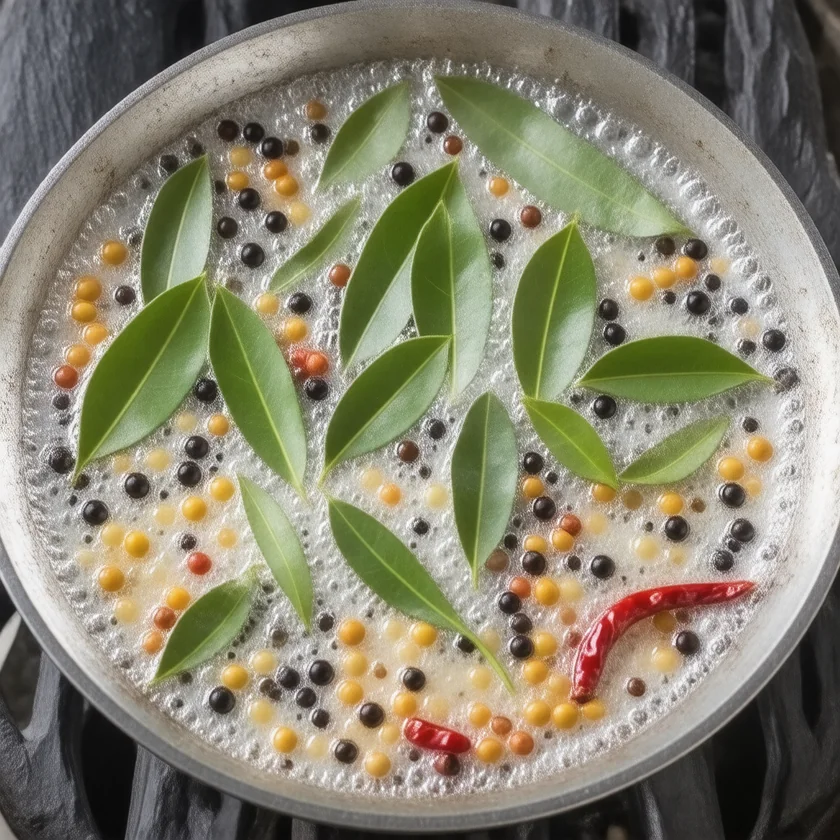
Two claims travel together in the curry leaf literature: that it improves the blood lipid profile, and that it protects the liver. They travel together because they come from the same experiments — the rodent studies that measured glucose usually measured cholesterol at the same time, and the liver was the organ they looked at afterwards. This page separates them, explains the proposed mechanisms, and is direct about the fact that both rest almost entirely on animals.
Table of Contents
- First: This Is Not Curry Powder
- Two Claims, One Set of Experiments
- How Curry Leaf Is Proposed to Affect Lipids
- The Animal Lipid Evidence
- The Human Lipid Evidence
- Liver Protection: What the Models Actually Test
- Why Almost Every Plant Looks Hepatoprotective
- Fatty Liver Disease: What Is and Is Not Known
- Oxidative Stress and the Antioxidant Framing
- Evidence Tier Summary
- Practical Use and What Actually Moves Lipids
- Cautions, Interactions and Liver Safety
- Key Research Papers
- Connections
- Featured Videos
First: This Is Not Curry Powder
Curry leaf is Murraya koenigii, a single aromatic leaf from a small tree in the citrus family. Curry powder is a manufactured spice blend and contains no curry leaf whatsoever — typically turmeric, coriander seed, cumin, fenugreek, chilli and black pepper, in whatever proportions the packer chose. The English word is shared by accident, from the Tamil kari.
On this page the distinction has real teeth, because the cholesterol literature on the two is completely separate. Claims about “curry” and cholesterol usually rest on turmeric or fenugreek, both of which have their own lipid research. Everything below is about the leaf.
Two Claims, One Set of Experiments
The lipid claim and the liver claim are not independent findings that happen to agree. In a typical rodent experiment, animals are made diabetic or fed a high-fat diet, given curry leaf extract for a few weeks, and then a panel is run: glucose, total cholesterol, low-density lipoprotein (LDL), high-density lipoprotein (HDL), triglycerides, and the liver enzymes alanine aminotransferase (ALT) and aspartate aminotransferase (AST). Liver tissue is often examined histologically. One experiment therefore generates a glucose result, a lipid result and a liver result, and a review can cite it three times.
This is not misconduct — it is normal, efficient preclinical practice. But it means the apparent breadth of curry leaf's effects is partly an artefact of how the studies were designed. Three findings from one experiment are one experiment's worth of evidence, not three.
How Curry Leaf Is Proposed to Affect Lipids
Several mechanisms appear in the literature. All are preliminary — animal or in vitro.
- Increased faecal excretion of cholesterol and bile acids. The most frequently proposed route. The liver makes bile acids out of cholesterol and secretes them into the gut; most are reabsorbed in the ileum and recycled. Anything that binds them in the lumen and carries them out in the stool forces the liver to consume more cholesterol making replacements, which lowers circulating low-density lipoprotein. This is exactly how the bile-acid sequestrant drugs work, and it is also part of why soluble fibre works. Rodent studies have reported increased faecal sterol and bile-acid output with curry leaf feeding.
- Pancreatic lipase inhibition. Slowing the enzyme that digests dietary triglycerides reduces fat absorption. This is the mechanism of the drug orlistat. Curry leaf extracts and mahanimbine have been reported to inhibit lipase in assays, and this is the mechanism proposed for the reduced weight gain seen in high-fat-fed rats. In a 2009 test-tube screen of 63 extracts from 21 plants, all three curry leaf extracts tested blocked more than 80% of pancreatic lipase activity, and the carbazole alkaloid mahanimbine had an IC50 (the concentration that halves the enzyme's activity) of 17.9 micromolar (Birari 2009). In vitro only.
- Modulation of hepatic lipid-handling enzymes. Reported changes in HMG-CoA reductase activity — the rate-limiting step in cholesterol synthesis and the target of statins — and in fatty-acid synthesis and oxidation pathways in treated animals.
- Reduced lipid peroxidation. Curry leaf is phenolic-rich and reduces markers of lipid peroxidation such as malondialdehyde in treated animals. Whether that changes anything clinically in a person is a separate question entirely.
Notice that mechanisms one, two and three each mirror a real drug class. That is a reasonable argument for the plant being worth studying. It is not an argument that the plant works, and the difference between the two is the entire point of clinical trials.
The Animal Lipid Evidence
Evidence tier: preliminary — animal.
Xie and colleagues reported that curry leaf reduced blood cholesterol and glucose levels in genetically obese ob/ob mice in the American Journal of Chinese Medicine in 2006: the mice received daily injections of 80 mg/kg extract into the abdominal cavity for 10 days, and blood cholesterol fell from 277.6 to 182.0 mg/dl. Birari, Javia and Bhutani reported antiobesity and lipid-lowering effects of leaf extracts and of isolated mahanimbine in high-fat-diet-induced obese rats in Fitoterapia in 2010 — the study that most directly implicates a single named carbazole in the lipid effect. The rats were given leaf extract at 300 mg/kg/day, or mahanimbine at 30 mg/kg/day, by mouth for 2 weeks; both lowered body weight gain, plasma total cholesterol and triglycerides. Beyond those, a wider set of rodent studies reports reductions in total cholesterol, low-density lipoprotein and triglycerides, sometimes with increased high-density lipoprotein, in animals on high-fat or high-cholesterol diets.
The standard caveats apply and are worth restating because they are so easy to skip past:
- Doses are far above dietary intake. Extract at hundreds of milligrams per kilogram body weight is normal in these designs. Nobody eats the human equivalent.
- Rodent lipid metabolism differs from human lipid metabolism in important ways — different lipoprotein distribution, different response to dietary cholesterol. Rodents are a poor model for human dyslipidaemia, which is why so many promising preclinical lipid agents have failed in people.
- The comparison is usually against an unhealthy control. Showing that an extract partly offsets the damage of a deliberately atherogenic diet is not the same as showing benefit in an ordinary animal, still less in a person eating a normal diet.
The Human Lipid Evidence
Evidence tier: preliminary — small human studies.
The human record is the same short shelf as on the blood-sugar page. Iyer and Mani's study of curry leaf supplementation in people with non-insulin-dependent diabetes, in Plant Foods for Human Nutrition in 1990, gave 30 people with non-insulin-dependent diabetes 12 g of curry leaf powder (providing 2.5 g of fibre) daily for 1 month. Blood sugar fell briefly at the 15-day point, and the study found no appreciable change in serum lipids or lipoprotein cholesterol at 15 or 30 days. The study involved tens of participants rather than hundreds, and its abstract describes no placebo group.
Searching the human lipid literature on Murraya koenigii is the fastest way to confirm the shape of this: there is no randomised controlled trial reporting low-density lipoprotein reduction with curry leaf, and no lipid guideline mentions it. The approaches to high low-density lipoprotein with actual trial support are others, such as soluble fibre, plant sterols and, where indicated, a statin — interventions whose effect sizes are known rather than assumed.
Liver Protection: What the Models Actually Test
Evidence tier: preliminary — animal and in vitro.
A cluster of animal experiments reports that curry leaf extract protects against chemically induced liver injury. It is worth understanding exactly what these experiments do, because the phrase “protects the liver” conceals a very specific setup.
- Carbon tetrachloride (CCl4). An industrial solvent that the liver's own cytochrome P450 enzymes convert into a trichloromethyl radical, which then attacks membrane lipids. Animals are dosed with CCl4, serum alanine aminotransferase and aspartate aminotransferase rise sharply as hepatocytes rupture, and the question is whether pre-treatment blunts that rise. This is a model of acute free-radical hepatotoxicity, and it is exquisitely sensitive to antioxidants.
- Paracetamol (acetaminophen) overdose. At toxic doses, paracetamol metabolism generates NAPQI, which depletes hepatic glutathione and then binds proteins. Again, a glutathione-dependent oxidative injury, and again a model in which antioxidant pre-treatment reliably looks good.
- Ethanol. Acute or subchronic alcohol dosing, with similar oxidative-injury endpoints.
In each case, curry leaf pre-treatment has been reported to reduce the enzyme rise and to reduce histological damage. The hepatoprotection literature on this plant is not small.
Why Almost Every Plant Looks Hepatoprotective
This deserves its own section, because it is the most important interpretive point on the page.
The three standard hepatotoxicity models all work by oxidative injury, and all three are blunted by more or less any antioxidant-rich plant extract. The published hepatoprotection literature therefore contains hundreds of plants, most of which have never been shown to do anything for a human liver. Finding that curry leaf joins the list tells you it contains phenolics, which was already known.
Three further gaps between these models and real liver disease:
- Pre-treatment is not treatment. Most designs give the extract before the toxin. That answers a question about prophylaxis against a single acute chemical insult, not about improving an already-damaged liver.
- Acute chemical injury is not chronic liver disease. The conditions people actually have — metabolic fatty liver disease, alcohol-related liver disease, viral hepatitis, autoimmune hepatitis — develop over years through inflammation and fibrosis. A single-dose CCl4 experiment models none of them.
- Falling alanine aminotransferase is not the same as a healthier liver. Alanine aminotransferase is a leakage marker. It can fall because fewer cells are dying, or because there are fewer cells left to leak.
None of this means the finding is worthless. It means the correct reading is “this plant contains antioxidant compounds and behaves accordingly in a standard rodent assay”, not “this plant protects your liver”.
Fatty Liver Disease: What Is and Is Not Known
The most common liver problem in the countries where curry leaf supplements are marketed is metabolic fatty liver disease — fat accumulation in hepatocytes, driven mainly by insulin resistance, excess calories, and particularly excess fructose and alcohol. See Fatty Liver Disease for the full picture.
The condition has a new name. In 2023 three large international liver associations renamed non-alcoholic fatty liver disease (NAFLD) metabolic dysfunction-associated steatotic liver disease (MASLD), after a consensus process with 236 panelists from 56 countries. The new definition requires at least 1 of 5 cardiometabolic risk factors. People with metabolic dysfunction-associated steatotic liver disease who drink more alcohol (140–350 g a week for women, 210–420 g a week for men) are placed in a new group called MetALD (Rinella 2023).
What can honestly be said about curry leaf here:
- Rodent studies in high-fat-fed animals report less hepatic fat accumulation alongside the lipid changes. Preliminary — animal.
- The proposed mechanisms — reduced fat absorption, improved insulin sensitivity, reduced lipid peroxidation — are each individually plausible for a fatty liver, which is precisely why the story sounds compelling.
- There is no human trial of curry leaf in fatty liver disease. No change in liver fat measured by imaging, no change in fibrosis markers, nothing. Not established.
- The interventions with actual human evidence in fatty liver are unexciting and effective: weight reduction of seven to ten percent where there is excess weight, removing alcohol, cutting sugar-sweetened drinks, treating insulin resistance, and physical activity independent of weight change.
Oxidative Stress and the Antioxidant Framing
Curry leaf is genuinely rich in phenolic compounds and performs well in laboratory radical-scavenging assays. Tachibana, Kikuzaki, Lajis and Nakatani characterised the antioxidative activity of carbazoles from Murraya koenigii leaves in the Journal of Agricultural and Food Chemistry in 2001, and Ningappa, Dinesha and Srinivas reported antioxidant and free radical scavenging activities of polyphenol-enriched curry leaf extracts in Food Chemistry in 2008. Evidence tier: preliminary — in vitro.
The interpretive rule bears repeating, because the antioxidant framing is doing most of the persuasive work in curry leaf marketing: a DPPH or FRAP score is a chemical property of an extract measured in a tube. It does not account for how little of a polyphenol is absorbed, how extensively the gut wall and liver conjugate what is absorbed, or how briefly the metabolites circulate. Large randomised trials of concentrated antioxidant supplements in humans have a long history of null and occasionally harmful results, which is precisely why “high in antioxidants” stopped being a serious clinical argument some time ago.
Evidence Tier Summary
- Curry leaf lowers total cholesterol, low-density lipoprotein and triglycerides in rodents on high-fat diets. Preliminary — animal.
- Curry leaf and mahanimbine inhibit pancreatic lipase and increase faecal sterol excretion. Preliminary — animal and in vitro.
- Curry leaf supplementation and lipid measures in people with type 2 diabetes. Not supported by the one human study. In 30 people taking 12 g of curry leaf powder daily for 1 month, serum lipids and lipoprotein cholesterol showed no appreciable change.
- Curry leaf lowers low-density lipoprotein in humans, or reduces cardiovascular events. Not established. No randomised trial exists.
- Curry leaf reduces liver enzyme rises in chemically-poisoned rodents. Preliminary — animal. A finding shared by most antioxidant-rich plants.
- Curry leaf treats or prevents human liver disease, including fatty liver. Not established. No human data of any kind.
- Curry leaf as a bitter tonic and liver remedy in traditional practice. Traditional use only.
Practical Use and What Actually Moves Lipids
If the goal is a better lipid panel or a healthier liver, it is worth being clear about relative magnitudes. Cooking generously with curry leaves is pleasant, safe and free of downside — and its expected effect on your low-density lipoprotein is somewhere between very small and zero. The things with measured human effect sizes are:
- Soluble fibre — oats, barley, legumes, psyllium. This is the bile-acid mechanism curry leaf is proposed to share, at doses that have actually been tested in people.
- Losing excess weight and removing alcohol — the two largest levers on triglycerides and on liver fat.
- Physical activity — independently improves triglycerides, high-density lipoprotein and hepatic fat.
- Statins and other lipid-lowering drugs where indicated — effect sizes established in trials with hundreds of thousands of participants combined.
Curry leaf's place is as a food. There is no established therapeutic dose for curry leaf and no dose-finding trial for any preparation; commercial capsule figures come from manufacturers.
Cautions, Interactions and Liver Safety
Culinary curry leaf is safe and needs no precautions. The cautions below apply to concentrated extracts, high-dose powders, essential oil and bark preparations.
- Hypoglycaemia with diabetes medication. The same rodent studies that report lipid effects report glucose lowering. If you take metformin, a sulfonylurea (glipizide, glyburide, gliclazide, glimepiride), a glucagon-like peptide-1 (GLP-1) agonist, a sodium-glucose cotransporter-2 inhibitor or insulin, a curry leaf extract may add to that effect, and the risk when the effects add together is low blood sugar (hypoglycaemia). This is the single most substantive interaction on this plant.
- Herbal extracts and the liver, in the other direction. The irony of hepatoprotective marketing is that concentrated botanical extracts are a recognised cause of drug-induced liver injury — not curry leaf specifically, for which no case series exists, but the category. For people with existing liver disease, unstudied concentrates carry more uncertainty, not less. The U.S. National Institutes of Health (NIH) LiverTox database is the reference for this.
- Bark and root bark. A higher and chemically different carbazole load than the leaf, no human dosing studies, no toxicology. “Curry tree bark” products are untested herbal medicines, not a stronger form of the food.
- Pregnancy and breastfeeding. Culinary use is traditional and unremarkable. Concentrated extracts have no safety data in pregnancy or breastfeeding.
- Essential oil is not for internal use.
- Surgery. No stopping interval before surgery has been studied for curry leaf extracts.
- Product quality. Carbazole content varies severalfold and is rarely verified by third-party testing.
Key Research Papers
Citations give authors, title, journal and year in plain text and close with the paper's PubMed record number (PMID) or DOI; the live literature searches link to PubMed searches.
- Xie JT, Chang WT, Wang CZ, et al. Curry leaf (Murraya koenigii Spreng.) reduces blood cholesterol and glucose levels in ob/ob mice. American Journal of Chinese Medicine. 2006;34(2):279-84 — PubMed PMID: 16552838. Preliminary — animal.
- Birari R, Javia V, Bhutani KK. Antiobesity and lipid lowering effects of Murraya koenigii (L.) Spreng leaves extracts and mahanimbine on high fat diet induced obese rats. Fitoterapia. 2010;81(8):1129-33 — PubMed PMID: 20655993. Preliminary — animal.
- Iyer UM, Mani UV. Studies on the effect of curry leaves supplementation (Murraya Koenigi) on lipid profile, glycated proteins and amino acids in non-insulin-dependent diabetic patients. Plant Foods for Human Nutrition. 1990;40(4):275-82 — PubMed PMID: 2174154. Small human study; no appreciable change in serum lipids.
- Tachibana Y, Kikuzaki H, Lajis NH, Nakatani N. Antioxidative activity of carbazoles from Murraya koenigii leaves. Journal of Agricultural and Food Chemistry. 2001;49(11):5589-94 — PubMed PMID: 11714364. Preliminary — in vitro.
- Ningappa MB, Dinesha R, Srinivas L. Antioxidant and free radical scavenging activities of polyphenol-enriched curry leaf (Murraya koenigii L.) extracts. Food Chemistry. 2008;106(2):720-728 — doi:10.1016/j.foodchem.2007.06.057. Preliminary — in vitro.
- Birari R, Roy SK, Singh A, Bhutani KK. Pancreatic lipase inhibitory alkaloids of Murraya koenigii leaves. Natural Product Communications. 2009;4(8):1089-92 — PubMed PMID: 19768989. In vitro.
- Rinella ME, Lazarus JV, Ratziu V, et al. A multisociety Delphi consensus statement on new fatty liver disease nomenclature. Hepatology. 2023;78(6):1966-1986 — PubMed PMID: 37363821
- Live literature search: Murraya koenigii hepatoprotective — the CCl4, paracetamol and ethanol liver-injury models.
- Live literature search: Murraya koenigii hypolipidemic cholesterol rats — the wider rodent lipid literature.
- Live literature search: Murraya koenigii lipid profile in humans — run this to see how short the human list is.
- Live literature search: Murraya koenigii pancreatic lipase inhibition — the fat-absorption mechanism.
- Live literature search: Carbon tetrachloride hepatotoxicity models and plant extracts — the context that explains why so many plants appear hepatoprotective. — Search PubMed
- Live literature search: Herb-induced liver injury from dietary supplements — the risk that runs opposite to the marketing.
Connections
- All Herbs
- Curry Leaf Benefits Hub — all four deep dives and how the evidence tiers are applied.
- Curry Leaf (Murraya koenigii) — botany, names, culinary technique, forms and full cautions.
- Curry Leaf for Blood Sugar and Diabetes — the glucose half of the same experiments, plus the interaction detail.
- Cholesterol Management — what actually moves low-density lipoprotein in humans, with measured effect sizes.
- Atherosclerosis — why low-density lipoprotein matters in the first place.
- Fatty Liver Disease — the common liver condition curry leaf is often marketed against, and the interventions with real evidence.
- Lipid Panel — the test that would settle the lipid claim.
- Liver Function Tests — what alanine aminotransferase and aspartate aminotransferase actually measure, and their limits.
- Gamma-Glutamyl Transferase — the additional liver marker most sensitive to alcohol.
- Milk Thistle — the classic hepatoprotective herb, and a much better-studied comparison for these claims.
- Turmeric — the curry-powder component that most “curry and cholesterol” claims actually rest on.
- Berberine — a plant alkaloid with genuinely better human lipid and glucose trial data, for contrast.
This page is educational and is not medical advice. Curry leaf has not been shown in controlled human trials to lower cholesterol, improve liver function or treat fatty liver disease, whereas lipid-lowering treatment and the dietary and lifestyle changes listed above have measured effects. Concentrated botanical extracts are themselves a recognised cause of liver injury as a category, so for anyone with existing liver disease unstudied concentrates carry more uncertainty rather than less. A curry leaf extract can add to the effect of glucose-lowering medication, and the risk is low blood sugar. Cooking with curry leaves needs no precautions.