Curry Leaf — Benefits Deep Dive
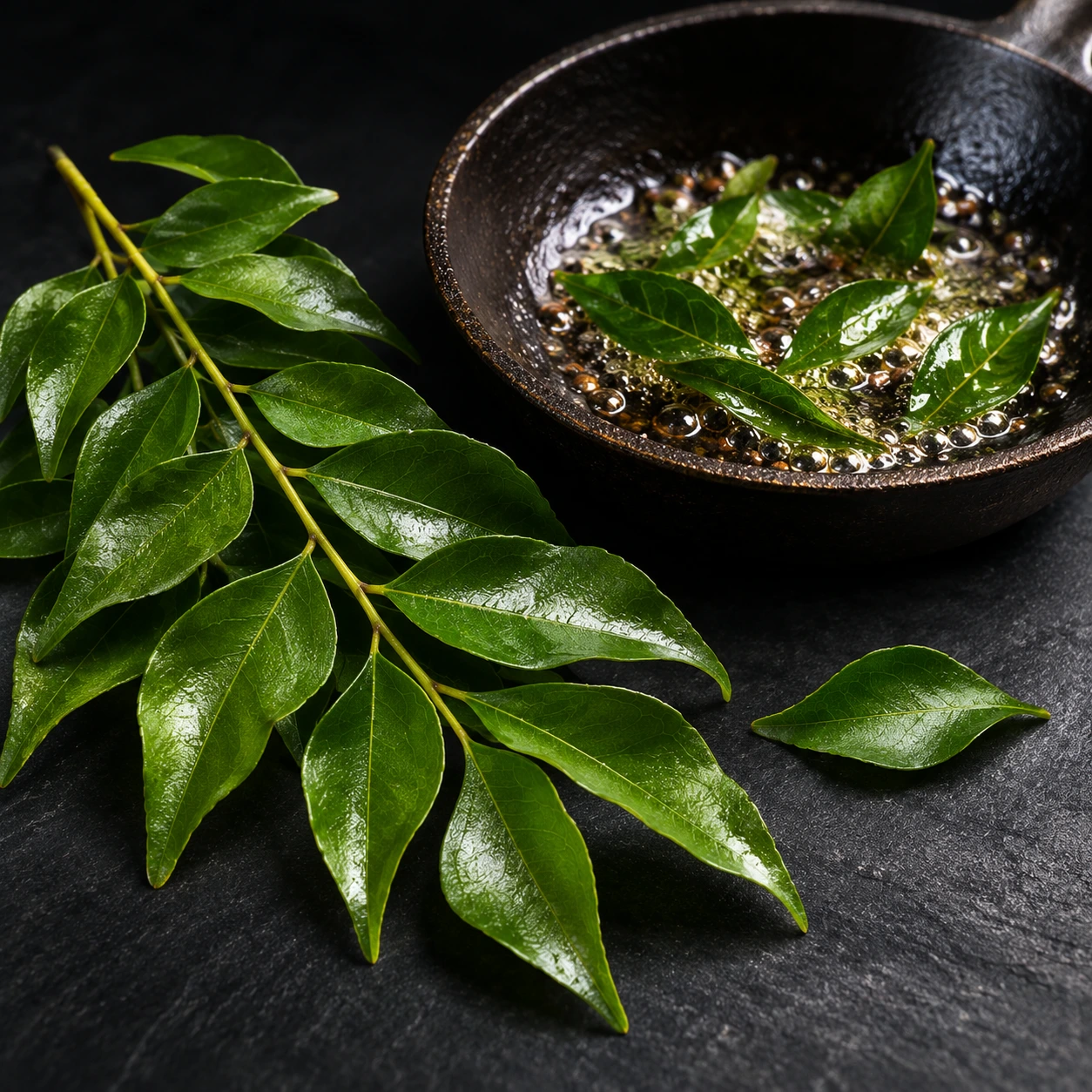
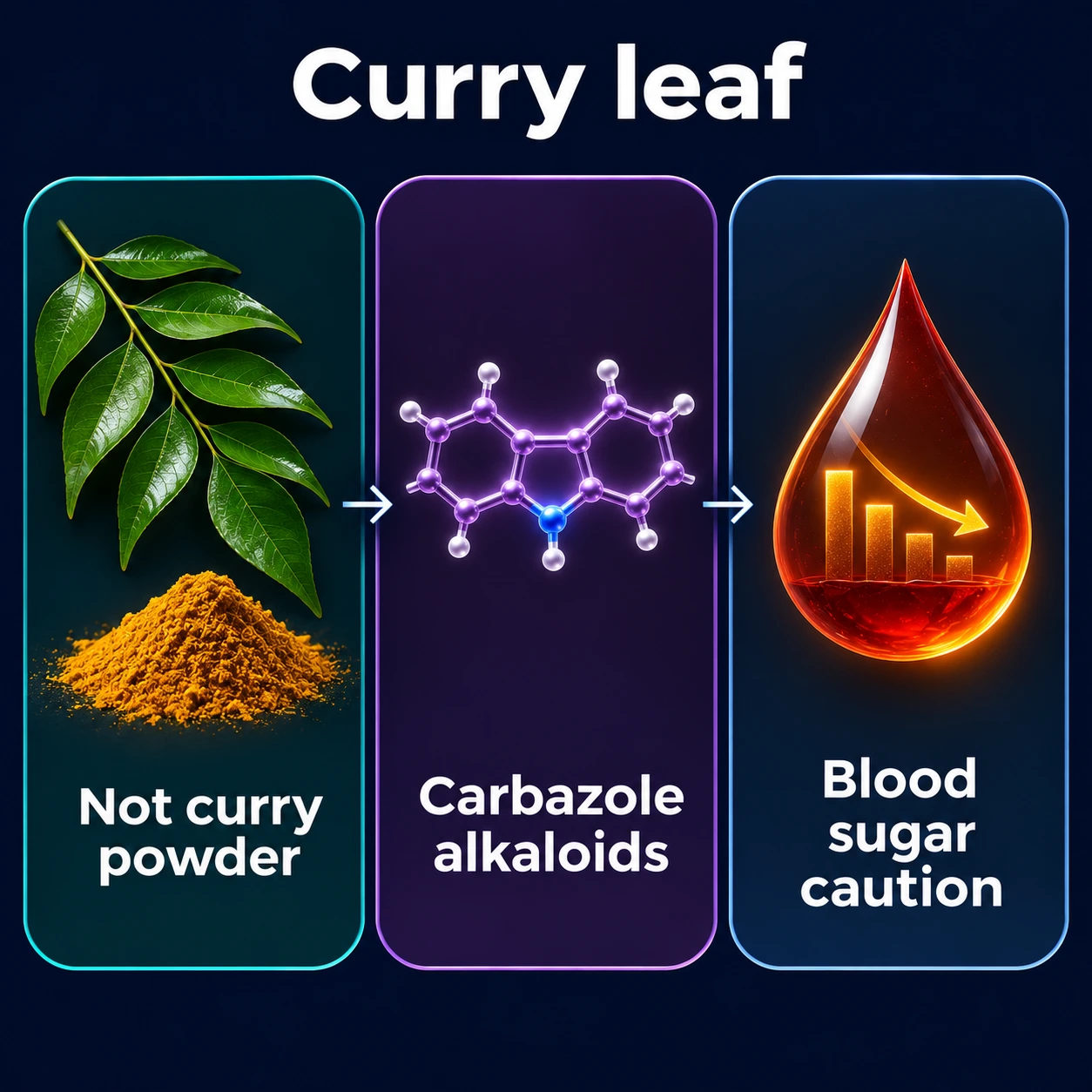
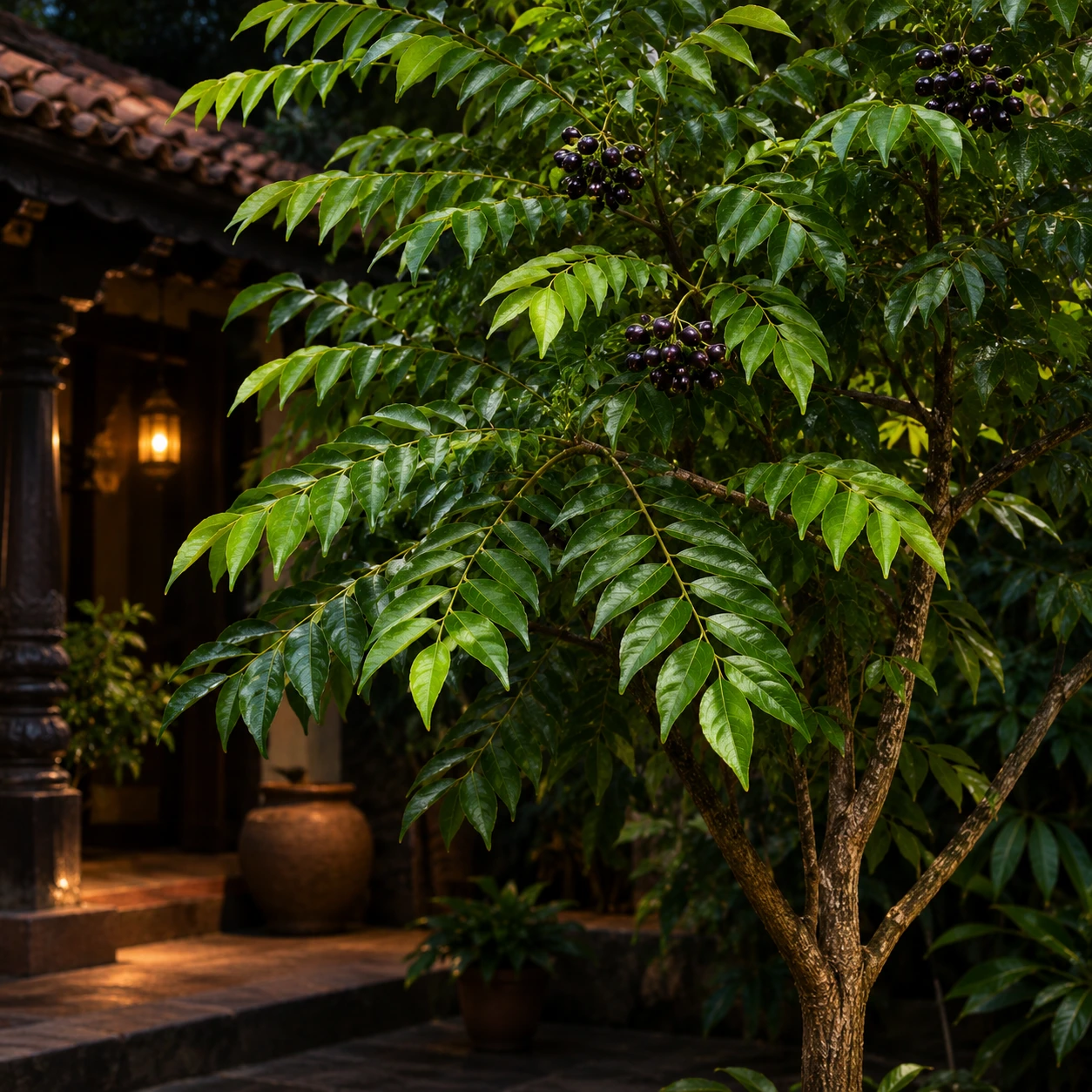
Curry leaf is the aromatic leaf of Murraya koenigii, a small tree in the citrus family grown in courtyards across South India, Sri Lanka and Southeast Asia. Before anything else, the single most common misunderstanding about this plant has to be cleared away: curry leaf has nothing whatsoever to do with curry powder. Curry powder is a manufactured spice blend — usually turmeric-dominant, with coriander, cumin, fenugreek, chilli and pepper — assembled for the British export market in the eighteenth and nineteenth centuries. It contains no curry leaf at all. The two share an English word by accident of transliteration from the Tamil kari, and nothing else. One is a factory blend of ground seeds and rhizomes; the other is a single fresh green leaf from a single named tree.
That confusion matters here because it runs straight through the health claims. People read that “curry” lowers blood sugar or protects the liver, and the underlying study may have been about turmeric, or about a blend, or about Murraya koenigii leaf extract in rats — three completely different things. These four articles are about the leaf, and only the leaf.
The second thing to say up front is what kind of evidence exists. Curry leaf has a genuinely large research literature, and almost all of it is preliminary: rodents, isolated cells, enzyme assays in a cuvette. There are a small number of human supplementation studies, mostly old, small and short. There is no large randomised controlled trial of curry leaf for any condition, and no clinical guideline anywhere recommends it as a treatment. That does not make the plant uninteresting — it makes it a food with a promising and unfinished research story. Each article below labels every claim by tier: randomized clinical trial, preliminary (animal or in vitro), or traditional use only. The most heavily marketed claim of all, curry leaf for hair growth and grey hair, sits squarely in the last category, and the article on it says so plainly rather than repeating the advertising.
Deep-Dive Articles
Blood Sugar and Diabetes
The most-researched and most-oversold claim. Enzyme inhibition in a test tube, a large and fairly consistent rodent literature, and human data far too thin to build a decision on — plus the hypoglycaemia interaction that anyone on diabetes medication needs to know about before touching an extract.
Read the deep dive →Cholesterol and Liver Health
Rodent studies report lower low-density lipoprotein (LDL) and triglycerides and protection against chemically induced liver injury. What the proposed mechanisms are, why hepatoprotection findings are so common for antioxidant-rich plants, and what the handful of human lipid measurements actually showed.
Read the deep dive →Hair and Skin
The most marketed claim and the weakest evidence on the plant. There is essentially no controlled human trial of curry leaf for hair loss or greying. This article explains the real biology of the follicle, what the proposed mechanism would have to do, and what a curry-leaf oil massage plausibly does instead.
Read the deep dive →Digestion and Antioxidant Defence
The oldest traditional use and the least controversial one. Aromatic bitters, gastroprotective animal work, laboratory antimicrobial activity that stops well short of being an antibiotic, and an honest account of what a high DPPH (2,2-diphenyl-1-picrylhydrazyl) antioxidant score does and does not mean for a person.
Read the deep dive →Table of Contents
Curry Leaf Is Not Curry Powder
It is worth spending a section on this, because it is the source of more bad health writing about this plant than anything else.
Curry powder is a blend. A typical commercial jar is turmeric, ground coriander seed, cumin, fenugreek, chilli and black pepper, in proportions chosen by whoever packed it, sometimes with mustard, ginger, cinnamon or cardamom. Its health literature is really the literature of its components — overwhelmingly turmeric and its curcuminoids, with some work on fenugreek and cinnamon. None of that transfers to curry leaf. Curry powder is also barely used in South Indian home cooking; it was a shortcut invented for cooks who did not have an Indian spice box.
Curry leaf is Murraya koenigii, family Rutaceae — the citrus family. Hold a leaflet to the light and it is peppered with translucent dots; those are oil glands, the same structures that make lemon peel spray when you bend it. Crushed, it smells citrusy and resinous with an anise edge, nothing like curry powder. Its distinctive chemistry is a family of carbazole alkaloids found almost nowhere else in the plant kingdom, and that chemistry is what its research literature is actually about.
There is a third plant in the confusion. Garden centres outside the tropics sell a silver-leaved Mediterranean shrub labelled “curry plant”. That is Helichrysum italicum, a daisy relative, and it is neither curry leaf nor a substitute for it — it simply smells faintly of curry powder when the sun warms it. When reading any claim about “curry”, the first question is always which of these three — or which spice blend — is actually being discussed. A surprising number of wellness articles never establish that at all.
How to Read the Evidence on This Plant
Every claim in these four articles carries one of the labels below. They are not decorative, and they are the main reason to read these pages rather than a supplement listing.
- Randomized clinical trial. Human beings, randomly assigned, ideally blinded and placebo-controlled, with a pre-specified outcome. For curry leaf, this tier is nearly empty. No adequately powered randomised trial of curry leaf exists for blood sugar, lipids, liver function, hair or anything else. One small randomised trial does exist: in 2018, 45 adults with mild-to-moderate gum inflammation (gingivitis) had their teeth scaled and were split into three groups — a curry-leaf mouthwash, the standard chlorhexidine mouthwash, or scaling alone. After 14 days both mouthwash groups differed significantly from the scaling-only group and did not differ from each other, and the authors concluded that the curry-leaf mouthwash was “equally effective” as chlorhexidine for plaque-induced gingivitis (Varghese and colleagues, 2018).
- Preliminary — human, uncontrolled or small. A handful of supplementation studies exist, most notably work from around 1990 in people with non-insulin-dependent diabetes. These involve tens of participants, run for weeks, and frequently lack a proper placebo arm. They are worth reporting and worth not over-reading. In the best known, 30 people with non-insulin-dependent (type 2) diabetes took 12 g of curry-leaf powder a day for one month: fasting and after-meal blood sugar fell for a short time at day 15, while glycated proteins, cholesterol and other blood fats showed no appreciable change at 15 or 30 days (Iyer and Mani, 1990). A 2023 study from Pakistan gave 45 women with type 2 diabetes curry-leaf extract capsules (5 or 10 mg per kg of body weight) for 45 days and reported significant falls in fasting blood sugar, random blood sugar and glycated haemoglobin (HbA1c, a measure of average blood sugar over recent months); its abstract does not describe a placebo group or random assignment (Farooq and colleagues, 2023).
- Preliminary — animal or in vitro. This is where the great bulk of the curry leaf literature sits: streptozotocin-diabetic rats, high-fat-fed rodents, cancer cell lines, bacterial cultures, enzyme-inhibition assays. Rodent doses are routinely many times, on a body-weight basis, what a person eats as food.
- Traditional use only. Documented, often centuries old, and genuinely informative about what people believed and did — but not evidence that the belief was correct. The hair-oil tradition is the clearest example on this plant.
A fifth category deserves naming because it appears constantly in herbal marketing: the laboratory antioxidant score. DPPH, FRAP (ferric reducing antioxidant power) and ABTS (2,2′-azino-bis(3-ethylbenzothiazoline-6-sulfonic acid)) assays measure how well an extract neutralises a synthetic radical in a tube. Nearly every dark aromatic leaf scores well. A high score tells you the extract contains phenolics and flavonoids; it says nothing about what survives digestion, absorption and hepatic metabolism, and it is not a health outcome. Curry leaf scores well. That is chemistry, not a benefit.
The Carbazole Alkaloids Behind the Claims
Carbazole alkaloids are nitrogen-containing three-ring compounds that are largely characteristic of the genus Murraya and its close Rutaceae relatives. Dozens have been isolated from the leaf, stem, bark and root of Murraya koenigii. Three names recur throughout the research and are worth knowing, because they are what standardised extracts are measured against:
- Mahanimbine — typically the most abundant carbazole in the leaf and the usual marker compound for standardised extracts. Most of the antidiabetic and lipid-lowering rodent work that names a single compound names this one.
- Koenimbine (also written koenimbin) — named directly for the species, and studied mainly for antioxidant and cytotoxic activity in cell systems.
- Girinimbine — a pyrano-carbazole studied for antimicrobial activity and for apoptosis induction in cultured cancer cell lines.
Others appear regularly in the literature: mahanine, behind most of the cell-culture apoptosis work; koenigicine; and murrayanine, historically the first carbazole isolated from the plant and part of why the genus became chemically interesting at all. Alongside them sits a volatile fraction — under one percent of the fresh leaf — dominated by α-pinene, β-pinene, sabinene, limonene and β-caryophyllene. That volatile fraction is the flavour, and it is what evaporates when the leaves are dried.
One caveat governs everything downstream: carbazole content varies severalfold between chemotypes, regions, seasons and plant parts. Two curry leaf samples from different parts of India can differ enormously in mahanimbine, and two essential-oil chromatograms can barely look like the same species. This is a large part of why published results are hard to compare, and a strong argument against assuming a capsule of “curry leaf extract” bears any fixed relationship to the leaves in a kitchen.
Food, Powder and Capsule Are Not the Same Thing
Three products carry the name and they have almost nothing in common.
- Fresh leaf — one or two sprigs in a dish, perhaps one to three grams. This is the form with centuries of daily use by hundreds of millions of people and an excellent safety record. It is also the form with essentially no therapeutic evidence, because nobody has run a trial on seasoning.
- Dried leaf powder — the form used in the older human supplementation studies, at roughly ten to fifteen grams a day, which is a large handful and far beyond normal seasoning. The 1990 Iyer and Mani study, for example, used 12 g of powder a day, providing 2.5 g of fibre, for one month. Potency ranges from freshly dried to effectively inert, and there is no way to tell from the packet.
- Standardised extract capsule — usually marketed for blood sugar, sometimes standardised to mahanimbine. This is the form with the least evidence and the most marketing, and it is the only form that carries a meaningful interaction risk.
Standardising to one marker compound does not fix the variability problem, because it says nothing about the rest of the profile. For its putative metabolic effects, cooking with the leaf is the form with the long safety record, and the capsule is where the uncertainty is.
Safety and the Hypoglycaemia Interaction
Culinary curry leaf is about as safe as a plant food gets. Nothing in this section applies to putting a sprig in a pot of sambar.
The cautions attach to concentrated extracts, high-dose powders, essential oil and bark preparations. The most substantive one is this: if curry leaf extract lowers blood glucose, it can stack with glucose-lowering medication. For people taking metformin, a sulfonylurea such as glipizide, glyburide or gliclazide, a glucagon-like peptide-1 (GLP-1) agonist, a sodium-glucose cotransporter-2 inhibitor or insulin, any blood-sugar-lowering effect of a curry leaf supplement adds to the effect of the medicine, and the weeks after starting a supplement are when such an added effect first shows. The signs of low blood sugar (hypoglycaemia) are shakiness, sweating, sudden hunger and palpitations; confusion and loss of consciousness are signs of severe hypoglycaemia that hospitals treat as an emergency. The same logic is why supplemental extracts are commonly stopped roughly two weeks before scheduled surgery, when blood sugar is being managed deliberately.
Beyond that: concentrated extracts have no safety data in pregnancy or breastfeeding, while culinary use is traditional and unremarkable; steam-distilled curry leaf essential oil is not made for internal use or for undiluted application to skin; bark and root-bark preparations carry a higher and chemically different alkaloid load with essentially no human safety data; the seed inside the berry is regarded as toxic and traditionally discarded; and contact reactions to Rutaceae plants, while uncommon, are documented. Supplements have not been studied in children; food use is ordinary.
Key Research Papers
Each citation below gives the authors, title, journal and year in plain text and closes with its PubMed record number (PMID) or DOI, checked against PubMed and Crossref. The “live literature search” entries link to PubMed searches.
Blood sugar and metabolic effects
- Yadav S, Vats V, Dhunnoo Y, Grover JK. Hypoglycemic and antihyperglycemic activity of Murraya koenigii leaves in diabetic rats. Journal of Ethnopharmacology, 2002;82(2-3):111-6. PubMed PMID: 12241985. Preliminary — animal.
- Iyer UM, Mani UV. Studies on the effect of curry leaves supplementation (Murraya Koenigi) on lipid profile, glycated proteins and amino acids in non-insulin-dependent diabetic patients. Plant Foods for Human Nutrition, 1990;40(4):275-82. PubMed PMID: 2174154. Preliminary — small human supplementation study.
- Farooq M, Ul Ain I, Aysha Iftikhar Z, et al. Investigating the therapeutic potential of aqueous extraction of curry plant (Murraya koenigi) leaves supplementation for the regulation of blood glucose level in type 2 diabetes mellitus in female human subjects. Pakistan Journal of Pharmaceutical Sciences, 2023;36(2(Special)):601-605. PubMed PMID: 37548196. Preliminary — small human study; no placebo group or randomisation described.
- Live literature search: Murraya koenigii alpha-glucosidase inhibition — the enzyme-assay work behind the proposed mechanism.
Lipids, liver and body weight
- Xie JT, Chang WT, Wang CZ, et al. Curry leaf (Murraya koenigii Spreng.) reduces blood cholesterol and glucose levels in ob/ob mice. American Journal of Chinese Medicine, 2006;34(2):279-84. PubMed PMID: 16552838. Preliminary — animal.
- Birari R, Javia V, Bhutani KK. Antiobesity and lipid lowering effects of Murraya koenigii (L.) Spreng leaves extracts and mahanimbine on high fat diet induced obese rats. Fitoterapia, 2010;81(8):1129-33. PubMed PMID: 20655993. Preliminary — animal.
- Live literature search: Murraya koenigii hepatoprotective — the chemically-induced liver-injury models.
Phytochemistry and antioxidant activity
- Tachibana Y, Kikuzaki H, Lajis NH, Nakatani N. Antioxidative activity of carbazoles from Murraya koenigii leaves. Journal of Agricultural and Food Chemistry, 2001;49(11):5589-94. PubMed PMID: 11714364. Preliminary — in vitro.
- Ningappa MB, Dinesha R, Srinivas L. Antioxidant and free radical scavenging activities of polyphenol-enriched curry leaf (Murraya koenigii L.) extracts. Food Chemistry, 2008;106(2):720-728. doi:10.1016/j.foodchem.2007.06.057. Preliminary — in vitro.
- Live literature searches for the three named alkaloids: mahanimbine, koenimbine and girinimbine.
Antimicrobial, digestive and cell-culture work
- Nagappan T, Ramasamy P, Wahid ME, Segaran TC, Vairappan CS. Biological activity of carbazole alkaloids and essential oil of Murraya koenigii against antibiotic resistant microbes and cancer cell lines. Molecules, 2011;16(11):9651-64. PubMed PMID: 22105714. Preliminary — in vitro.
- Rahman MM, Gray AI. A benzoisofuranone derivative and carbazole alkaloids from Murraya koenigii and their antimicrobial activity. Phytochemistry, 2005;66(13):1601-6. PubMed PMID: 15955541. Preliminary — in vitro.
- Ghasemzadeh A, Jaafar HZ, Rahmat A, Devarajan T. Evaluation of bioactive compounds, pharmaceutical quality, and anticancer activity of curry leaf (Murraya koenigii L.). Evidence-Based Complementary and Alternative Medicine, 2014;2014:873803. PubMed PMID: 24693327. Preliminary — in vitro.
Gum inflammation — the one small randomised trial
- Varghese A, Babu HM, Kukkera PN. Comparative evaluation of efficacy of Murraya koenigii and chlorhexidine gluconate in the treatment of gingivitis: a randomized controlled clinical trial. Journal of the Indian Society of Periodontology, 2018;22(5):427-432. PubMed PMID: 30210192. Randomised clinical trial — small (45 participants), 14 days.
Hair, skin and greying — where the finding is an absence
- Live literature search: Murraya koenigii hair growth. Run it. The scarcity of controlled human work is itself the result, and it is why this claim is labelled traditional use only throughout.
- Live literature search: Hair greying and melanocyte stem cell depletion — the actual biology of greying, which is what any repigmentation claim would have to overcome.
- Live literature search: Murraya koenigii wound healing — the small animal literature behind the topical skin claims.
External Resources
- PubMed — all Murraya koenigii literature. The complete searchable record, and the only honest way to see how much of it is rodents.
- U.S. National Center for Complementary and Integrative Health (NCCIH) — Herbs at a Glance. The US National Center for Complementary and Integrative Health's plain-language evidence summaries. Curry leaf does not have an entry, which is itself informative about where it sits in the evidence hierarchy.
- LiverTox — U.S. National Institutes of Health (NIH) database of drug and herbal liver injury. The reference source on liver injury reported with drugs and concentrated herbal extracts.
- ClinicalTrials.gov — registered Murraya koenigii studies. A short list, and worth checking periodically as the evidence base develops.
- U.S. National Institutes of Health Office of Dietary Supplements. Background on how supplements are regulated in the United States, which explains why extract potency varies so widely between brands.
- Plants of the World Online — Murraya koenigii. Kew's authoritative taxonomic record, useful for settling which plant a source is actually talking about.
Connections
- All Herbs
- Curry Leaf (Murraya koenigii) — the main topic page: botany, regional names, culinary technique, forms, dosage and full cautions.
- Neem (Azadirachta indica) — the bitter tree that curry leaf's Hindi nickname meetha neem constantly gets it confused with. Different family, different chemistry, different uses.
- Chen Pi (Dried Tangerine Peel) — the other great Rutaceae digestive aromatic, and a useful comparison for how citrus-family volatile oils are used medicinally.
- Turmeric — the actual dominant ingredient in curry powder, and the source of most of the health claims mistakenly attached to curry leaf.
- Fenugreek — another curry-powder component with its own blood-sugar literature, and a considerably better-studied one.
- Gymnema sylvestre — the Ayurvedic herb with the longest-standing reputation for prameha, the classical category overlapping with diabetes.
- Bitter Melon — the food-plant comparison for curry leaf's blood-sugar claim, with a similar mix of strong rodent work and thin human data.
- Type 2 Diabetes — the condition curry leaf extracts are most often marketed for, and its evidence-based management.
- Alopecia (Hair Loss) — the real causes and the treatments that have actually been tested in people.
This page is educational and is not medical advice. Curry leaf as a food is safe and well established; concentrated extracts are a different proposition, are not regulated as medicines, and have not been tested in large controlled human trials for any condition. For people taking glucose-lowering medication, any blood-sugar-lowering effect of a curry leaf supplement adds to the medicine's effect, and curry leaf has not been shown to replace any prescribed diabetes treatment.