Sacred Lotus Leaf for Lipids and Weight

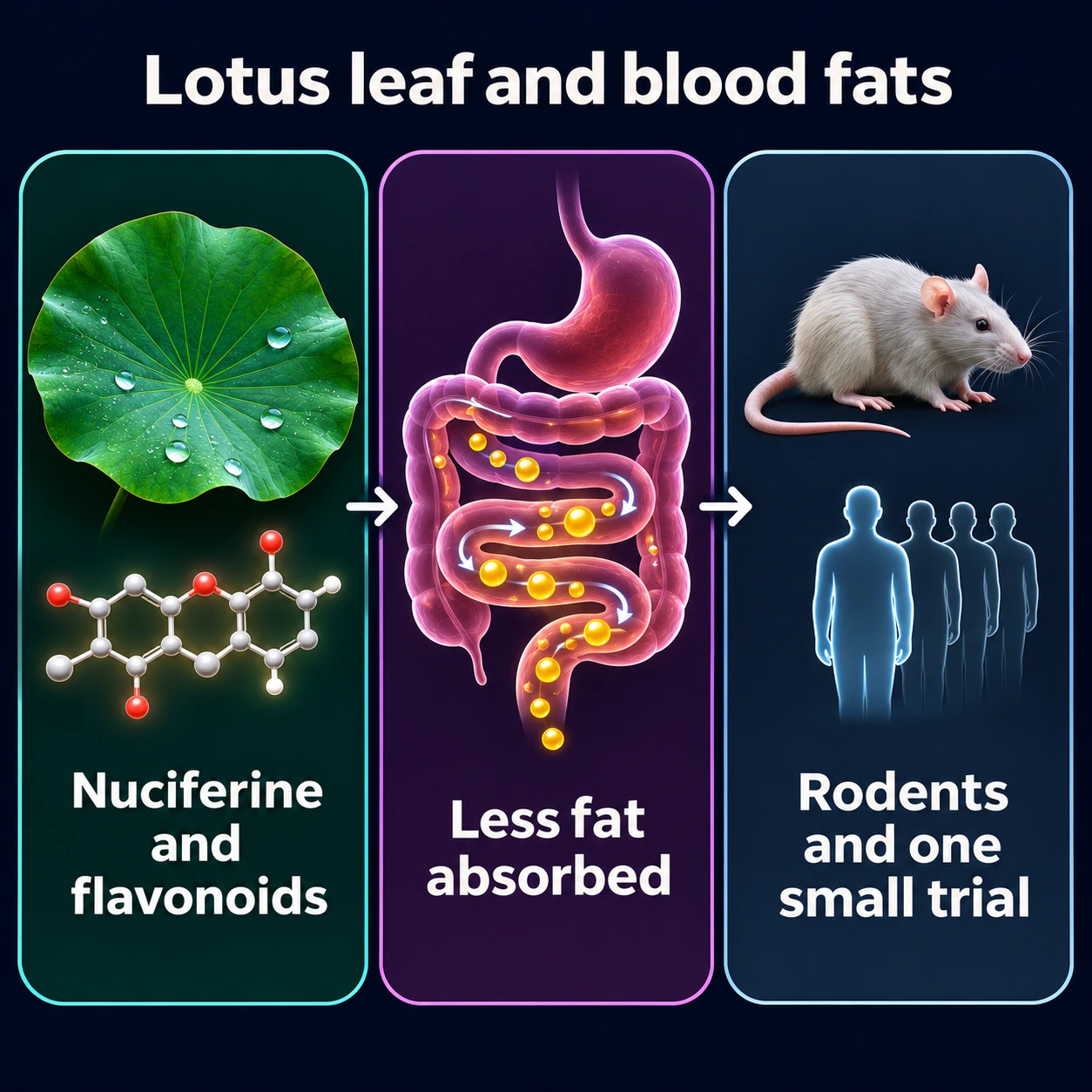
The title of this page says “leaf” on purpose. Essentially all of the metabolic research on Nelumbo nucifera — body fat, blood lipids, blood sugar, liver fat — was done on the leaf, he ye, or on nuciferine, the aporphine alkaloid the leaf carries. Not the seed. Not the calming green embryo inside the seed. Not the rhizome you buy as a vegetable. If a lotus product is being sold to you for weight or cholesterol and the label does not say leaf, the research being invoked is not research on what is in the bottle. The part-by-part page is the background for that claim.
With that settled, the honest summary is: a coherent mechanism story, consistent rodent results, one small human trial, and a literature riddled with multi-herb formulas that cannot attribute anything to lotus. That is better than most traditional herbs manage, and it is a long way short of proof.
Table of Contents
- This Is the Leaf's Research, Not the Plant's
- Four Proposed Mechanisms
- The Rodent Evidence, and What It Is Worth
- The Human Evidence: One Randomized Trial
- The Multi-Herb Confound
- Blood Lipids Specifically
- Blood Sugar and Enzyme Inhibition
- Liver Fat
- Putting the Effect Size in Context
- Traditional and Studied Preparations
- What Outranks It
- Key Research Papers
- Connections
- Featured Videos
This Is the Leaf's Research, Not the Plant's
In modern Chinese practice, lotus leaf is the part reached for in the context of high blood lipids and excess weight. That has been true since roughly the mid-twentieth century, and it is now the leaf's dominant commercial identity: dried, cut and brewed as a tea, or extracted into capsules standardized to flavonoids or to a named marker compound. Traditionally the leaf is classed as bitter and neutral, said to clear summer-heat and damp and to raise the clear yang — a description that has no obvious relationship to lipid metabolism, which is a reminder that the modern indication is a modern graft onto an old drug rather than a continuous tradition.
The leaf's chemistry is what makes it the metabolic candidate:
- Aporphine alkaloids — nuciferine principally, plus N-nornuciferine, roemerine, anonaine, asimilobine and pronuciferine.
- Flavonoids — quercetin and its glycosides, above all quercetin-3-O-glucuronide, which is the marker compound in the extract used in the one decent human trial; plus kaempferol glycosides, hyperoside, isoquercitrin, catechin and rutin.
Both classes are plausible contributors, and no study has cleanly separated their contributions in a whole-leaf extract. When you read that “nuciferine reduces fat accumulation”, that is usually a study of isolated nuciferine; when you read that “lotus leaf extract reduces body fat”, that is a mixture in which the flavonoids may be doing much of the work. The two claims are not the same claim.
Four Proposed Mechanisms
Four routes are proposed in the preclinical literature. All four are preliminary (in-vitro or rodent). They are listed in rough order of how directly they have been demonstrated.
- Pancreatic lipase inhibition — less dietary fat absorbed. Lotus-leaf extract inhibits pancreatic lipase in test-tube assays. Lipase splits dietary triglycerides so they can be taken up; inhibit it and some fat passes through unabsorbed. This is the same mechanism as the drug orlistat, and it is worth noting that orlistat's characteristic side effect — oily, urgent stools — is the signature of meaningful lipase inhibition. Lotus-leaf tea does not typically produce that, which suggests the inhibition achieved in a person is modest at best.
- Activation of AMP-activated protein kinase (AMPK). AMP-activated protein kinase is the cell's low-fuel switch: when it is on, the cell burns fuel and stops storing it. Nuciferine and lotus-leaf extract activate AMP-activated protein kinase in liver and fat tissue in rodent and cell studies, which would shift the balance towards fat oxidation. AMP-activated protein kinase is also the mechanism attributed to metformin and to a long list of botanicals, and “activates AMP-activated protein kinase” is a very common claim that translates into a clinical effect far less often than it is invoked.
- Suppression of fat-cell differentiation. In cultured preadipocytes, lotus-leaf constituents suppress the transcription factors that drive an immature cell into becoming a mature fat-storing adipocyte. This is a real and reproducible cell-culture finding. Its relevance to an adult human, whose fat-cell number is relatively stable and whose fat mass changes mostly through cell size, is uncertain.
- Increased fat oxidation and reduced hepatic lipogenesis. Downstream of AMP-activated protein kinase, rodent studies report increased fatty-acid oxidation and reduced synthesis of new fat in the liver. This is the mechanism most consistent with the liver-fat findings described below.
Four plausible mechanisms is not four times the evidence. A plant with a lot of biologically active molecules will produce hits in a lot of mechanistic assays; that is what those assays are for. The mechanism story tells you the effect is not impossible. Only outcome data can tell you it happens.
The Rodent Evidence, and What It Is Worth
The animal literature is the strongest part of this file and it is reasonably consistent. In rats and mice fed a high-fat diet, lotus-leaf extract has repeatedly been reported to reduce body weight gain, liver fat, serum triglycerides and low-density lipoprotein (LDL) cholesterol relative to high-fat controls. Isolated nuciferine produces broadly similar results, and adds reported improvements in insulin sensitivity in rodent models of metabolic syndrome. Evidence tier: preliminary (animal).
Three caveats belong with that consistency, and they apply to the whole genre rather than to lotus specifically:
- “Reduced weight gain” is not “weight loss”. Most of these designs give the extract alongside a fattening diet from the start and compare against animals gaining faster. That models prevention in a rodent, not treatment in a person who is already overweight.
- Doses are frequently high. Rodent metabolic studies often use extract doses that, scaled by body weight, exceed what a human would take by a wide margin. Scaling across species is not a simple multiplication, but the direction of the discrepancy is consistently unfavourable.
- Publication pressure favours positive results, and there is no registry of unpublished rodent botanical experiments. A consistent literature and a consistent effect are not the same thing.
The Human Evidence: One Randomized Trial
There is one randomized, double-blind human trial of reasonable design, and it is the reason lotus leaf is discussed at all rather than filed with the purely traditional herbs.
Ye and colleagues published “Fat reducing effects of Nelumbo nucifera leaf extract in overweight patients” in Natural Product Research in 2022. Sixty overweight adults — body mass index between 24 and 28, so overweight rather than obese — took an extract of sun-dried lotus leaf whose main component was quercetin-3-glucuronide, for twelve weeks, and were compared with non-intervention control groups. Whole-body fat fell significantly in both men and women relative to control; only the men also showed significant reductions in visceral (belly-organ) fat and waist circumference. Evidence tier: randomized controlled trial — single, small, and with two important limitations.
The limitations, stated plainly because they change how much weight the trial deserves:
- Industry authorship. Several authors were employees of the food company producing the extract. That does not make a result wrong, but it is an established predictor of favourable outcomes across nutrition and supplement research, and it means independent replication matters more than usual.
- The comparison groups are described as non-intervention controls rather than a matched placebo, which weakens the double-blind claim. If participants knew which arm they were in, expectation and behaviour change are uncontrolled.
- Sixty participants over twelve weeks is small and short for a body-composition endpoint, and it has not been independently replicated at the time of writing.
The trial is a promising signal that would justify a larger independent trial. It is not a settled result, and it does not make lotus leaf “clinically proven”.
The Multi-Herb Confound
This is the structural problem with the human-facing literature on lotus leaf, and it deserves its own section because it is how most of that literature is built.
Lotus leaf rarely appears alone in a product or a study. It is a standard component of Chinese proprietary formulas for hyperlipidaemia and weight, where it sits alongside herbs such as hawthorn, cassia seed, green tea and others, and it is a common ingredient in Western multi-botanical “metabolism” supplements. Trials of those products are trials of the product.
The consequence is precise and unavoidable: a multi-herb trial cannot attribute its result to lotus. If a formula containing lotus leaf, green tea extract and a fibre lowers low-density lipoprotein cholesterol, the most parsimonious explanation involves the ingredients with established lipid effects, and lotus may have contributed nothing. The same applies in reverse to adverse effects. Wherever this page cites human data, it says whether the intervention was lotus alone or a formula, because the alternative is to let formula results accumulate as though they were lotus results — which is precisely how a thin evidence base gets described as robust.
Two practical implications for a reader:
- When a product cites “clinical studies”, the study may have used that product, a single-herb extract, or a different formula entirely.
- Only lotus leaf taken alone can show what lotus leaf does. A formula answers a different question.
Blood Lipids Specifically
The lipid claim — lower triglycerides, lower low-density lipoprotein cholesterol — is the leaf's oldest modern indication in China and the reason it sits in herb-shop windows. The evidence is layered as follows:
- In vitro: lipase inhibition, plus flavonoid antioxidant activity that is often invoked for lipid oxidation rather than lipid levels. Preliminary.
- Rodent: reasonably consistent reductions in serum triglycerides and low-density lipoprotein cholesterol in high-fat-fed animals. Preliminary.
- Human, lotus alone: the 2022 body-composition trial did not establish a lipid benefit as its primary finding — it measured fat mass. There is no adequately powered randomized trial of lotus leaf alone with a lipid panel as the primary endpoint.
- Human, multi-herb: present, and uninterpretable for lotus for the reasons above. Multi-herb confound.
If your reason for considering lotus leaf is a lipid panel, the honest position is that the human evidence for that specific endpoint does not yet exist. Interventions with strong lipid evidence do exist, and they are not exotic: dietary pattern, soluble fibre, weight change, exercise, and where indicated, prescription therapy. See Cholesterol Management and Lipid Panel.
Blood Sugar and Enzyme Inhibition
Lotus-leaf and lotus-seedpod extracts inhibit α-glucosidase and α-amylase in the test tube — the same enzymes targeted by the drug acarbose — which would slow the breakdown of starch into absorbable glucose and blunt post-meal glucose peaks. Nuciferine has additionally been reported to improve insulin sensitivity and reduce hepatic fat in rodent models of metabolic syndrome. Evidence tier: preliminary (in-vitro and rodent) throughout.
Human evidence for glycaemic outcomes is essentially absent. The body-composition trial did not establish glucose or hemoglobin A1c (HbA1c) benefits, and there is no adequately powered randomized trial of lotus for type 2 diabetes or prediabetes. Enzyme inhibition in a cuvette is a hypothesis about what might happen in a gut, not a demonstration that it does — the concentration achieved in a cuvette and the concentration achieved in an intestine after a cup of tea are different numbers, and nobody has measured the second one.
For a person with diabetes who drinks lotus-leaf tea, no human study shows either a benefit or a risk to blood sugar, and no study supports it in place of diabetes medication. Home glucose readings are what show one person's own response, rather than an assumed benefit or risk. See Type 2 Diabetes and Insulin Resistance.
Liver Fat
Reduced hepatic fat is one of the more consistent rodent findings, and mechanistically it is the one that hangs together best: AMP-activated protein kinase activation reduces new fat synthesis in the liver and increases fatty-acid oxidation, and rodent studies of both lotus-leaf extract and isolated nuciferine report lower liver triglyceride content and improved liver histology in high-fat-diet models. Evidence tier: preliminary (animal).
There is no human trial of lotus leaf for fatty liver disease. That is worth stating clearly because non-alcoholic fatty liver disease is common, largely asymptomatic, and a magnet for supplement marketing. The intervention with the strongest evidence for it remains weight reduction and dietary change. See Non-Alcoholic Fatty Liver Disease.
One caution in the other direction: concentrated botanical extracts are a recognised cause of drug-induced liver injury as a class. There is no signal for lotus specifically, but “good for the liver in a mouse” is not a reason to skip the general caution about concentrated herbal extracts and liver enzymes.
Putting the Effect Size in Context
This is the section most weight-supplement writing omits. Suppose the one human trial is broadly right. What did it actually show?
A modest shift in body composition — fat mass, and in men waist circumference — over twelve weeks, in people who were overweight but not obese, taking a specific proprietary extract. That is the whole claim. It is not a claim about scale weight dropping, not a claim about obesity, not a claim about a metabolic disease endpoint, and not a claim that transfers automatically to a different extract at a different concentration.
Set against that:
- Anyone selling lotus leaf as a fat-burner is far ahead of the data. The vocabulary of “fat burning”, “metabolism boosting” and “detox” has no counterpart in the trial.
- The extract matters and it is usually unspecified. The trial used a sun-dried leaf extract with a stated marker compound. A supermarket lotus-leaf tea bag, a 10:1 capsule and a nuciferine-standardized extract are three different exposures, and the trial result belongs to one of them.
- Lotus-leaf tea is a pleasant, cheap, caffeine-free drink. That is a genuine and sufficient reason to drink it. It does not need to be a weight-loss drug to be worth having.
Traditional and Studied Preparations
Not a recommendation and not dosing advice — a description of what the traditional and studied preparations actually are, and what it takes to tell a real effect from a chance one.
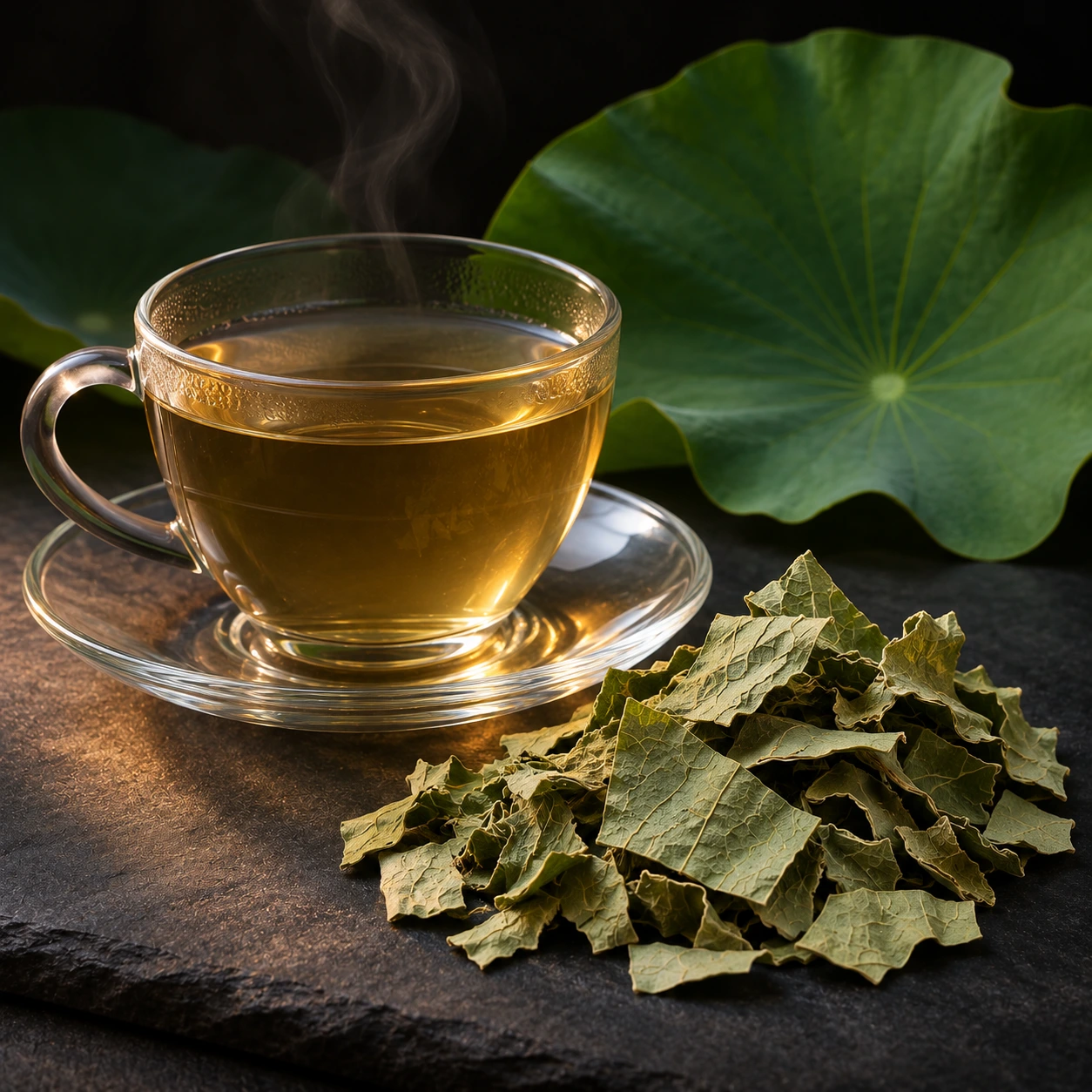
- The part is leaf. He ye — large brittle grey-green fragments, sold cut and dried. Cheap in an Asian grocery.
- Traditional decoction amounts. Chinese herbal practice typically uses roughly 3–10 g of dried leaf per day. A home-brewed tea from a level tablespoon of cut leaf, steeped five to ten minutes in just-boiled water, sits at the low end of that range.
- Extract doses do not transfer. A gram figure from the trial cannot be applied to a shelf product, because extraction ratio and standardization differ. Only a label that states a marker compound and its amount allows a product to be compared with the trial extract at all.
- Single herb, not a formula. A formula's result says nothing about lotus on its own.
- Measurement. For body composition, a tape measure at the waist every two weeks is more informative than the scale. For lipids, a panel before and after twelve weeks is the only real answer — and a single panel moves for many reasons.
- Starting amount. One cup a day is the low end of home use; a week at that level shows whether it suits a person before it becomes a habit.
- The interaction list. Concentrated leaf products carry the nuciferine receptor concerns for anyone also taking psychiatric, sedative or dopaminergic medication; they are set out in Dosing, Interactions and Safety.
- Not a substitute for proven treatment. Where lipids or glucose are managed with medication, the evidence places lotus leaf as an addition at most.
What Outranks It
Honest placement means naming the interventions with better evidence for the same endpoints. For body fat and lipids, the ranking is not controversial:
- Dietary pattern and total energy intake — the intervention that dwarfs every supplement in this field.
- Soluble fibre — real, replicated low-density lipoprotein-lowering, from whole foods including oats, beans, lentils and brown rice.
- Physical activity — particularly for visceral fat and triglycerides, which are the endpoints lotus's trial touched.
- Weight reduction itself — the single most effective intervention for liver fat and for insulin resistance.
- Prescription therapy where indicated — for anyone with established cardiovascular risk, this is not a category a tea competes with.
Lotus leaf, at its best, is a small addition on top of those. Sold as a replacement for them, it is a distraction.
Key Research Papers
Named papers link to their PubMed record; the other entries are live PubMed topic searches.
- Ye L, Wang X, Konno T, Gong X, Ding H, Yan H, Ji ZS, Liu E. Fat reducing effects of Nelumbo nucifera leaf extract in overweight patients. Nat Prod Res. 2022;36(18):4776–4781. PubMed PMID: 34852695 — the single randomized human trial; note the industry authorship.
- Nuciferine, lipid metabolism and AMPK — the mechanistic core of the rodent literature.
- Lotus leaf and pancreatic lipase inhibition — the fat-absorption mechanism, in vitro.
- Lotus leaf and adipocyte differentiation — the cell-culture work on fat-cell maturation.
- Lotus and blood lipids — the rodent lipid literature, and the multi-herb human studies.
- Nuciferine and hepatic steatosis — the liver-fat findings, animal only.
- α-glucosidase and α-amylase inhibition — the blood-sugar hypothesis, in vitro.
- Nuciferine and insulin sensitivity in rodent models
- Quercetin-3-O-glucuronide in lotus leaf — the marker compound in the trial extract.
- Zhao T, Zhu Y, Zhao R, Xiong S, Sun J, Zhang J, Fan D, Deng J, Yang H. Structure-activity relationship, bioactivities, molecular mechanisms, and clinical application of nuciferine on inflammation-related diseases. Pharmacol Res. 2023;193:106820. PubMed PMID: 37315822 — nuciferine pharmacology review, inflammation-related disease.
- Ren X, Chen H, Wang H, Wang Y, Huang C, Pan H. Advances in the pharmacological effects and mechanisms of Nelumbo nucifera gaertn. Extract nuciferine. J Ethnopharmacol. 2024;331:118262. PubMed PMID: 38670406 — nuciferine pharmacology review, mechanisms.
- Multi-herb formulas for hyperlipidaemia — the confounded literature described above, viewed directly.
- Chen G, Zhu M, Guo M. Research advances in traditional and modern use of Nelumbo nucifera: phytochemicals, health promoting activities and beyond. Crit Rev Food Sci Nutr. 2019;59(sup1):S189–S209. PubMed PMID: 30633540 — species-wide review, for how the leaf's modern indication arose.
Connections
- All Herbs
- Sacred Lotus Benefits Hub — the overview and the other three deep dives.
- Which Part Does What — why this page is about the leaf and nothing else.
- Dosing, Interactions and Safety — before combining a leaf extract with any medication.
- Sacred Lotus (Nelumbo nucifera) — the main page.
- Cholesterol Management — the interventions that actually move a lipid panel.
- Lipid Panel — how to read the test you would use to check.
- Obesity — the condition lotus leaf is marketed against.
- Metabolic Syndrome — the cluster the rodent models are built to imitate.
- Insulin Resistance — the mechanism behind most of it.
- Type 2 Diabetes — where the enzyme-inhibition hypothesis points, and where the human data stop.
- Non-Alcoholic Fatty Liver Disease — the liver-fat endpoint, with no human lotus data.
- Quercetin — the flavonoid family behind the leaf extract's marker compound.
A closing note on safety. Lotus-leaf tea is a traditional food-adjacent preparation with a long track record. Concentrated leaf extracts are pharmacologically active: nuciferine engages serotonin and dopamine receptors in laboratory assays, which raises an interaction concern for people taking antipsychotics, antidepressants, dopaminergic Parkinson's medication or sedatives. There is no adequate human safety data for concentrated products in pregnancy and breastfeeding, and traditional Chinese sources regard lotus leaf as unsuitable in pregnancy. No study shows that a herb can replace medication for lipids, blood pressure or blood sugar. Nothing on this page is medical advice or a treatment recommendation.