⚠ Evidence warning: Clinical trials or other evidence do not support the claims that tulsi improves lung function in asthma and COPD, treats bronchitis, allergic rhinitis and cough, and lets people lower their asthma medicine. This page keeps it as a report of what people, websites or other media say.
Holy Basil for Respiratory Health
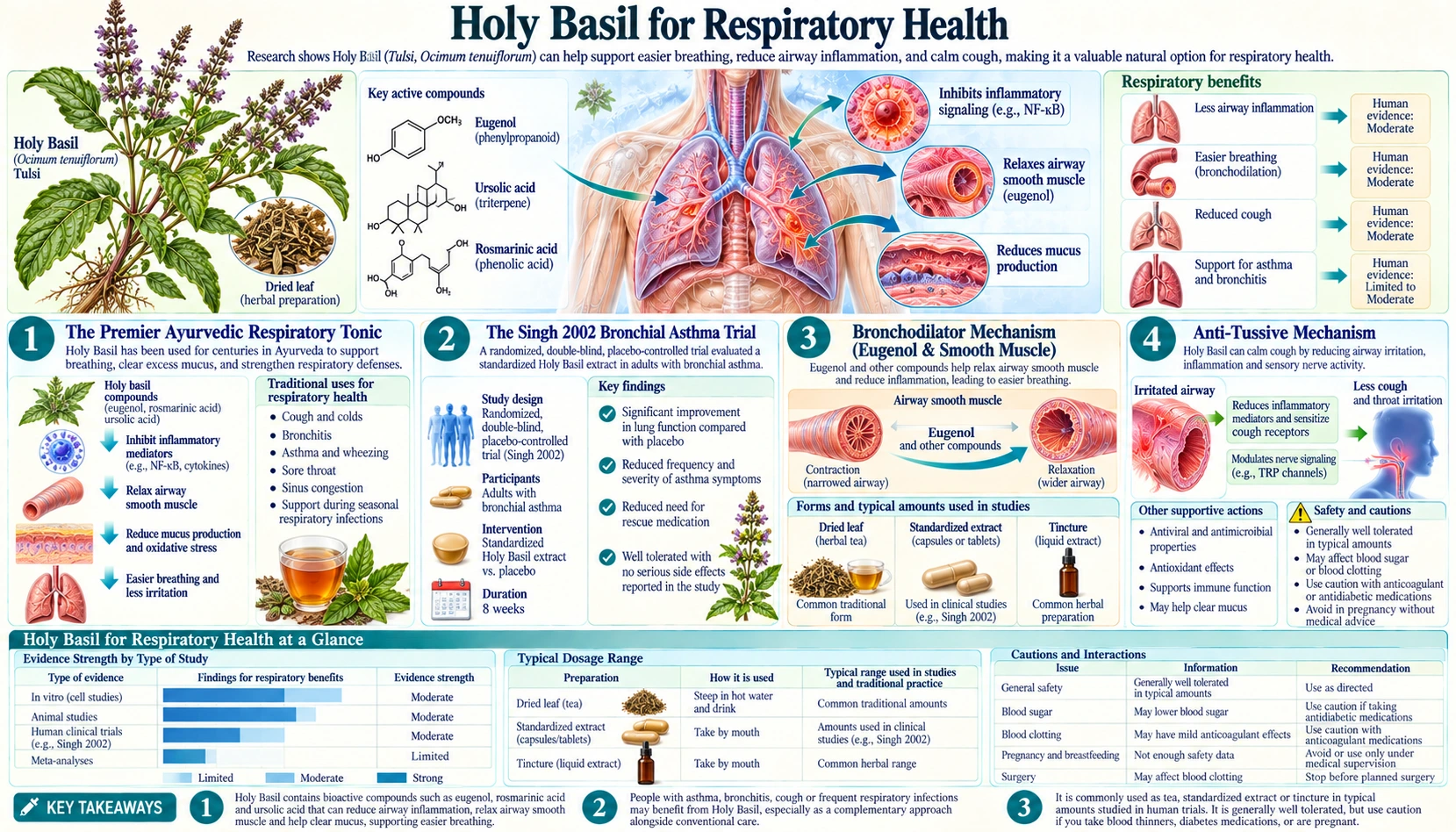
Respiratory complaints are among holy basil's oldest traditional uses. In human research the evidence is thin: a 2017 systematic review of 24 human studies of tulsi found one respiratory study, an open (uncontrolled) 1983 trial in which 20 adults with asthma took 500 mg of dried tulsi leaf three times a day for a week and reported relief within 3 days and better vital capacity. Most of what is known about the mechanism comes from laboratory and animal work. The mechanism proposed combines three distinct actions that are rare to find in a single plant: anti-tussive (cough-suppressing) via eugenol's effect on cough reflex sensitivity, expectorant via volatile oil stimulation of bronchial secretions, and mucolytic via thinning of accumulated mucus. The traditional Ayurvedic combinations with ginger, turmeric, and black pepper are described as acting together and remain a common household remedy in India for cough, bronchitis, and seasonal upper-respiratory infection. This deep-dive walks through the evidence, the mechanism, and the modern formulations.
Table of Contents
- The Premier Ayurvedic Respiratory Tonic
- The Human Asthma Evidence: One Open 1983 Study
- Bronchodilator Mechanism (Eugenol & Smooth Muscle)
- Anti-Tussive Mechanism
- Expectorant and Mucolytic Mechanisms
- Anti-Inflammatory Effects in the Airway
- Allergic Rhinitis and Histamine-Driven Conditions
- Acute and Chronic Bronchitis
- Traditional Combinations with Ginger, Turmeric, and Black Pepper
- Modern Ayurvedic Respiratory Formulations
- Traditional and Practitioner Doses for Respiratory Conditions
- Cautions and Warning Signs
- Key Research Papers
- Connections
- Featured Videos
The Premier Ayurvedic Respiratory Tonic
Within the Ayurvedic pharmacopoeia, tulsi is the primary herb prescribed for respiratory conditions. The Charaka Samhita lists tulsi specifically for kasa (cough), shvasa (asthma and dyspnea), and hikka (hiccup-like respiratory irregularity), along with broader respiratory categories including bronchitis, pleurisy, and chronic respiratory weakness. The traditional respiratory positioning of tulsi predates the modern molecular understanding by nearly three millennia and reflects accumulated empirical observation over countless generations of clinical use.
The Ayurvedic prescription for acute respiratory infection is straightforward and remarkably specific:
- Fresh tulsi leaves (5 to 10) chewed with a small piece of ginger root and a pinch of black pepper, at the very first sign of cough or sore throat
- Tulsi tea (strong decoction, multiple cups daily) with raw honey for cough suppression and mucosal soothing
- Tulsi-pippali (long pepper) combination for chronic bronchitis and asthma maintenance
- Tulsi essential oil steam inhalation for sinus congestion and upper-airway infection
- Tulsi paste applied topically to the chest for bronchitis (the volatile oils are absorbed through the skin and through inhalation of the warmed vapor)
This is one of the few areas where modern Western respiratory medicine has accepted a substantial role for traditional Ayurvedic preparations. The Government of India Pharmacopoeia includes multiple tulsi-based monographs for respiratory indications, and tulsi appears in dozens of registered Ayurvedic cough syrups, lozenges, and inhaled preparations sold throughout India and increasingly worldwide. The traditional respiratory use has the longest history and the most consistent traditional prescription of holy basil's applications; its modern human trial evidence is limited to the one open 1983 asthma study described below.
The Human Asthma Evidence: One Open 1983 Study
A 2017 systematic review (Jamshidi and Cohen) gathered every human study of tulsi that reported a clinical outcome — 24 studies in all. It found one asthma study: an open (uncontrolled) trial published in 1983, in which 20 adults with asthma took tablets of 500 mg of dried tulsi leaf three times a day for 1 week. The study reported relief of asthma symptoms within 3 days and improved vital capacity. The review lists no controlled trial of tulsi for asthma or any other respiratory condition, and no published trial of tulsi fixed oil in asthma or chronic obstructive airway disease was found in PubMed.
Tulsi fixed oil is a different product from the essential oil: it is the pale yellow oil from the seeds, which contains the omega-3 fat alpha-linolenic acid. Its anti-inflammatory and antihistamine-like effects have been studied in animals (summarised in a 2007 overview by Singh and colleagues), not in people with lung disease. The leaf powder and tea preparations remain the most common forms used in household practice.
Use for chronic bronchitis, allergic rhinitis and recurrent upper-respiratory infection rests on tradition and practitioners' experience.
Bronchodilator Mechanism (Eugenol & Smooth Muscle)
Asthma and chronic obstructive airway disease share a common feature: pathological constriction of bronchial smooth muscle that narrows the airway and impedes airflow. Standard pharmaceutical bronchodilators (albuterol, salmeterol, formoterol) act on beta-2 adrenergic receptors on bronchial smooth muscle, triggering relaxation. Alternative pharmaceutical approaches include muscarinic antagonists (ipratropium, tiotropium) and methylxanthines (theophylline).
Tulsi's bronchodilatory effect appears to operate through eugenol's action on smooth muscle calcium handling. Eugenol blocks L-type calcium channels in smooth muscle cells, reducing the influx of calcium that drives contraction. This is essentially the same mechanism by which pharmaceutical calcium-channel blockers (verapamil, diltiazem) relax cardiac and vascular smooth muscle, and a similar pharmacology has been demonstrated in bronchial smooth muscle preparations exposed to eugenol.
The effect is mild compared to a pharmaceutical-grade bronchodilator, which is why tulsi is positioned as an adjunct rather than a substitute for standard inhaled bronchodilators in established asthma. For mild bronchospasm, exercise-induced bronchoconstriction, or as an additive component on top of standard therapy, the eugenol-mediated bronchodilation is proposed to add benefit; this has not been tested in a controlled human trial.
Importantly, the eugenol mechanism is also responsible for tulsi's mild antihypertensive effect and its mild blood-thinning effect — the same calcium-channel-blocking activity that relaxes bronchial smooth muscle also relaxes vascular smooth muscle and reduces platelet activation. This is an example of polypharmacy emerging from a single compound, with effects that may be desirable (in patients with comorbid asthma, hypertension, and elevated cardiovascular risk) or that may require caution (in patients on antihypertensives or anticoagulants where the additive effect could be excessive).
Anti-Tussive Mechanism
The cough reflex is a protective airway clearance mechanism, but in many respiratory conditions cough becomes pathological — excessively frequent, unproductive, sleep-disrupting, and physically exhausting. The conventional pharmaceutical approach to cough suppression uses opioid-class antitussives (codeine, dextromethorphan), which act centrally on the cough center in the brainstem.
Tulsi's anti-tussive action appears to operate through a different mechanism, more peripheral than central. The volatile oils, when inhaled or absorbed through the upper respiratory mucosa, reduce the sensitivity of peripheral cough receptors in the trachea and bronchi to the irritants that trigger the cough reflex. This is mechanistically similar to the action of menthol-based cough preparations and to the historical use of camphor and eucalyptus oil for cough.
The peripheral mechanism has several advantages over central opioid-class antitussives:
- No respiratory depression (a serious risk with opioid antitussives in vulnerable populations)
- No sedation or cognitive impairment
- No dependency liability
- No interaction with sedatives, alcohol, or anesthesia
- Safer in pediatric populations (codeine is contraindicated in children due to ultra-rapid metabolizer-related fatalities; dextromethorphan has been linked to recreational abuse in adolescents)
- Safer in older adults where opioid antitussives raise fall and respiratory-depression risk
For uncomplicated cough — viral upper-respiratory infection cough, post-viral cough, mild bronchitis cough — tulsi tea with honey is a traditional household remedy. The honey part has trial support: a 2026 meta-analysis of 6 randomized trials (576 children, mostly aged 3-5, followed for 3 days) found honey about as effective as cough medicines on most measures and better for the child's sleep; the authors call the stronger signals from their extra analyses hypothesis-generating. Tulsi itself has not been tested in a cough trial. Honey is not given to babies under 1 year because of the risk of infant botulism.
Expectorant and Mucolytic Mechanisms
Expectorant and mucolytic actions are distinct but related. An expectorant promotes the clearance of accumulated mucus from the airways, typically by increasing bronchial secretions to dilute thick mucus and stimulating ciliary clearance. A mucolytic directly thins the mucus itself by breaking the disulfide bonds and hydrogen bonds that hold mucin glycoproteins in their viscous gel structure. Both effects support mucus clearance from the airways but operate at different levels.
Tulsi provides both effects through different compound classes:
- Expectorant action — the volatile essential oils, particularly eugenol and the terpenes, stimulate the secretory cells in the bronchial epithelium to increase the watery mucus output that dilutes the thick mucus already present, making it easier to clear by ciliary action and by cough. The warming, mildly irritant quality of the volatile oils on the respiratory mucosa is the driver.
- Mucolytic action — the sulfur-containing compounds in tulsi (similar to those in onion and garlic, although less concentrated) appear to provide modest direct mucolytic activity, breaking disulfide bonds in mucin glycoproteins. The effect is mild compared to pharmaceutical mucolytics like N-acetylcysteine but contributes to overall mucus thinning.
- Anti-inflammatory effect on mucus production — by reducing the underlying airway inflammation that drives excessive mucus production, tulsi addresses the upstream cause rather than just the symptomatic accumulation. This is the most clinically meaningful of the three mechanisms over the medium-to-long term.
The combination of expectorant, mucolytic, and anti-inflammatory mechanisms is unusual in a single plant. Most pharmaceutical respiratory products focus on one mechanism — guaifenesin is purely an expectorant, N-acetylcysteine is purely mucolytic, inhaled corticosteroids are purely anti-inflammatory, beta-agonists are purely bronchodilatory. Tulsi's multi-mechanism action is the reason given for its traditional use across a range of productive-cough conditions (bronchitis, post-viral residual cough, mild chronic obstructive pulmonary disease (COPD) exacerbation, allergic post-nasal drip) where targeted pharmaceutical agents may address only part of the picture.
Anti-Inflammatory Effects in the Airway
Airway inflammation is the common pathophysiologic feature of asthma, chronic bronchitis, allergic rhinitis, and most viral and bacterial respiratory infections. The cellular and molecular drivers vary by condition (eosinophil-driven in classical allergic asthma, neutrophil-driven in chronic obstructive pulmonary disease, mast-cell-and-histamine-driven in allergic rhinitis, cytokine-storm-driven in severe viral infection), but the downstream consequence is the same: airway edema, mucus hypersecretion, smooth muscle contraction, and the symptom complex of cough, dyspnea, wheezing, and mucus production.
Tulsi's broad anti-inflammatory action targets several of the molecular drivers:
- Cyclooxygenase-2 (COX-2) inhibition via eugenol — reduces prostaglandin-driven inflammation in the airway epithelium
- LOX inhibition via rosmarinic acid — reduces leukotriene production, particularly relevant in allergic and exercise-induced asthma where leukotrienes drive much of the bronchoconstriction
- NF-kB suppression via ursolic acid — reduces upstream cytokine production (tumor necrosis factor-alpha, interleukin-6, IL-8) that perpetuates airway inflammation
- Mast cell stabilization — modest mast cell stabilizing activity has been documented in animal models, contributing to the antihistamine-like clinical effect in allergic rhinitis
- Antioxidant protection — the rich polyphenol content of tulsi provides direct antioxidant defense against the oxidative stress that accompanies airway inflammation and the further oxidative damage produced by neutrophil and eosinophil degranulation
The multi-mechanism anti-inflammatory action is particularly suited to chronic background respiratory conditions where standard anti-inflammatory therapy (inhaled corticosteroids, leukotriene antagonists, anti-IgE biologics) may not fully control symptoms or may carry unwanted side effects. Tulsi is not a substitute for inhaled corticosteroids in moderate-to-severe persistent asthma, but as an adjunct it may allow some patients to maintain control at lower pharmaceutical doses than they would otherwise require.
Allergic Rhinitis and Histamine-Driven Conditions
Allergic rhinitis (hay fever, seasonal allergies) and the related conditions of vasomotor rhinitis, allergic conjunctivitis, and the upper-airway component of allergic asthma are driven principally by mast cell degranulation and histamine release in response to inhaled allergens. Standard pharmaceutical treatment uses oral antihistamines (loratadine, cetirizine, fexofenadine), intranasal corticosteroids (fluticasone, mometasone), and in some cases leukotriene antagonists (montelukast) or allergen immunotherapy.
Tulsi has documented antihistamine-like activity via several mechanisms. Rosmarinic acid inhibits the release of histamine from mast cells. The herb's overall mast-cell-stabilizing action reduces the explosive degranulation that produces the immediate-phase allergic response. The anti-inflammatory NF-kB and LOX inhibition reduces the late-phase eosinophil-mediated inflammation that follows the immediate histamine response by several hours. The combination produces an effect similar to a mild antihistamine combined with a mild leukotriene antagonist, without the sedation that limits older antihistamines like diphenhydramine.
For mild-to-moderate allergic rhinitis, tulsi tea three times daily during the pollen season is a traditional natural approach, often combined with quercetin (the flavonoid mast-cell stabilizer found in onions and apples), bromelain (the pineapple-derived proteolytic enzyme), and vitamin C. Severe allergic rhinitis is usually treated with conventional drugs, with tulsi used alongside them rather than instead.
For more on natural approaches to mast-cell mediated conditions, see the Natural Mast Cell Stabilizers page.
Acute and Chronic Bronchitis
Acute bronchitis — usually viral, often following an upper-respiratory infection — is one of the most appropriate clinical applications of tulsi. The combination of antiviral activity, anti-tussive effect, expectorant and mucolytic action, anti-inflammatory effect, and antibacterial activity against potential bacterial superinfection addresses essentially all the pathophysiologic mechanisms of the condition. The standard Indian household acute bronchitis protocol — tulsi tea with ginger, raw honey, and black pepper, drunk hot, multiple times daily, combined with steam inhalation — is a long-standing traditional remedy for uncomplicated cases.
Chronic bronchitis, typically associated with cigarette smoking and a form of chronic obstructive pulmonary disease, is a more difficult target. The structural airway damage of chronic bronchitis is not reversible by any pharmaceutical or herbal intervention. But the inflammatory component, the mucus hypersecretion, and the susceptibility to acute infectious exacerbation can all be modulated. Long-term daily tulsi (300 to 600 mg standardized extract twice daily, or 2-3 cups daily of tulsi tea) appears to reduce frequency of acute exacerbations and to improve baseline symptom burden in chronic bronchitis patients, although no controlled trial has tested this.
Smoking cessation remains the dominant intervention in chronic bronchitis — no herbal or pharmaceutical intervention substitutes for that. But for patients who have quit and are managing the residual chronic-bronchitis component, or for current smokers awaiting cessation success, tulsi is used as an adjunct to standard inhaled bronchodilator and (where indicated) inhaled corticosteroid therapy.
Traditional Combinations with Ginger, Turmeric, and Black Pepper
The classical Ayurvedic respiratory formulas almost never use tulsi alone. The standard combinations include:
- Tulsi-pippali (long pepper) — the classic anti-asthmatic and anti-bronchitic formula. Pippali (Piper longum) is a close relative of black pepper with stronger respiratory action; it serves as a bioenhancer (increasing absorption of other compounds), a mild expectorant, and a direct bronchodilator. The combination is used in Ayurvedic cough syrups and in chronic respiratory maintenance regimens.
- Tulsi-ginger-honey-black-pepper tea — the universal household acute respiratory remedy. Each ingredient contributes: tulsi (antimicrobial, anti-inflammatory, bronchodilator), ginger (warming, anti-emetic, anti-inflammatory), honey (antimicrobial, soothing, cough suppressant), black pepper (expectorant, bioenhancer via piperine). Drunk hot, multiple cups daily.
- Tulsi-turmeric-honey paste — topical application to the chest for bronchitis. The turmeric provides additional anti-inflammatory action via curcumin; the honey serves as a vehicle and adds antimicrobial action; the tulsi provides the volatile-oil component that is partly absorbed through skin and partly inhaled as the warmed paste releases vapor.
- Tulsi steam inhalation — tulsi leaves added to a pot of boiling water, with the patient inhaling the steam under a towel. Used for sinus congestion, upper-airway infection, and early bronchitis. The eugenol and other volatile compounds reach the respiratory mucosa directly at high local concentration.
- Sitopaladi churna — a classical Ayurvedic respiratory powder containing tulsi alongside cardamom, cinnamon, bamboo concretion, and rock sugar. Used for chronic cough and respiratory weakness.
- Talisadi churna — another classical multi-herb respiratory powder including tulsi, used for chronic bronchitis, allergic rhinitis, and post-viral respiratory residue.
The traditional combinations are mechanistically sound — modern pharmacology has confirmed synergistic respiratory action when these compounds are combined. The piperine in black pepper, for example, increases bioavailability of curcumin (from turmeric) by approximately 2000% and substantially enhances absorption of many polyphenolic compounds including those in tulsi. The traditional formulators understood this empirically and built their compound formulas to exploit it. For more on ginger and turmeric respiratory effects, see their dedicated pages.
Modern Ayurvedic Respiratory Formulations
The traditional formulas have been modernized and commercialized into a wide range of consumer products available in India and increasingly worldwide:
- Tulsi drops / tulsi essence — concentrated alcoholic or glycerin extracts of tulsi leaf, dosed at 5 to 10 drops in warm water multiple times daily during acute respiratory illness
- Tulsi cough syrups — honey-based syrups combining tulsi with ginger, licorice, pippali, and other respiratory herbs, marketed both as pediatric and adult cough remedies
- Tulsi-Pippali capsules — standardized capsule preparations for chronic respiratory maintenance, typically dosed 1-2 capsules twice daily
- Tulsi lozenges and throat drops — for sore throat and irritative cough, providing direct local contact of the volatile oils with the pharyngeal mucosa
- Tulsi-eucalyptus inhalers — portable inhaler devices combining tulsi essential oil with eucalyptus oil for sinus congestion and upper-airway clearance
- Multi-herb Ayurvedic respiratory tonics — commercial formulas that include tulsi as a primary ingredient alongside other respiratory herbs
The quality of consumer Ayurvedic respiratory products varies substantially. Some manufacturers document standardization and quality control; many less-regulated products offer lower compound concentration and inconsistent activity. Products made to batch-testing standards give the most consistent content.
Outside India, the most widely available forms are loose-leaf tulsi tea, standardized capsule extracts and multi-herb Ayurvedic respiratory tonics. The fresh-leaf and traditional-paste preparations require access to fresh tulsi plants, which is increasingly possible in temperate climates where the plant can be grown as a summer annual.
Traditional and Practitioner Doses for Respiratory Conditions
The doses used in traditional and practitioner practice vary by condition; none has been tested in a controlled respiratory trial:
- Acute viral upper-respiratory infection (cold, flu, mild bronchitis) — tulsi-ginger-honey-pepper tea every 2-3 hours during waking hours for the first 48 hours of illness, then 3-4 cups daily until symptoms resolve. Optional addition of 5 to 10 drops of tulsi essence in each cup for stronger effect.
- Chronic bronchitis / persistent productive cough — standardized extract 300 to 600 mg twice daily, long-term. Expectorant herbs (mullein, marshmallow root) are added in practice when mucus is thick and difficult to clear, and tulsi-pippali combination capsules are used for stronger respiratory action.
- Mild bronchial asthma (adjunct to inhaled bronchodilators) — standardized extract 300 to 600 mg twice daily, used as an ongoing adjunct to standard inhaled therapy (the one human asthma study, an open 1983 trial, used 500 mg of dried leaf three times a day for a week). Tulsi is too slow-acting to take the place of inhaled rescue therapy (albuterol) during acute bronchospasm.
- Allergic rhinitis (seasonal allergies) — 2-3 cups daily of strong tulsi tea, or 300 mg standardized extract twice daily, starting 1-2 weeks before expected pollen season and continuing throughout. Quercetin (500 mg twice daily) and bromelain (250 mg twice daily) are often added for a stronger antihistamine-like effect.
- Sinusitis and upper-airway infection — tulsi steam inhalation 2-3 times daily (tulsi leaves added to boiled water, steam inhaled under a towel for 5-10 minutes), combined with internal tulsi tea or capsules. The local high-concentration delivery via steam is more effective for sinus and upper-airway targets than oral delivery alone.
- Sore throat and laryngitis — tulsi tea drunk hot with raw honey, plus tulsi-extract throat lozenges if available. Gargling with cooled strong tulsi tea provides direct contact of the antimicrobial volatile oils with the pharyngeal mucosa.
For acute respiratory illness, the dose can be higher than for chronic maintenance because the duration is short. For chronic respiratory conditions, the standard maintenance doses (300-600 mg standardized extract twice daily, or 2-3 cups daily of tea) are used long-term in practice, with periodic breaks.
Cautions and Warning Signs
- Severe asthma or chronic obstructive pulmonary disease — tulsi is an adjunct, not a substitute, for standard inhaled bronchodilator and corticosteroid therapy. Herbal therapy alone has not been tested for moderate-to-severe persistent asthma or significant chronic obstructive pulmonary disease.
- Acute severe respiratory distress — severe shortness of breath, inability to speak in full sentences, blue lips, chest pain, or rapidly worsening respiratory symptoms are signs that hospitals treat as emergencies.
- Pneumonia — the signs of pneumonia (high fever, productive cough with discolored sputum, pleuritic chest pain, ill appearance) are treated with antibiotics when the cause is bacterial. Tulsi is used by some people during recovery alongside that treatment, not in place of it.
- Children with persistent cough — cough lasting more than 2 weeks in a child can be a sign of reactive airway disease, an inhaled foreign body, whooping cough (pertussis), or other conditions that need specific treatment.
- Honey in infants under 1 year — honey is not given to infants under 1 year because of the risk of infant botulism; for them the traditional tulsi-ginger tea is made without honey.
- Eugenol allergy — rare allergic reactions to eugenol have been documented, presenting as oral mucosal irritation or, rarely, broader allergic symptoms. An oral or skin reaction after taking tulsi is a sign of this sensitivity.
- Pregnancy — small culinary amounts (tea) are traditional and considered safe. There is no good safety data on high-dose tulsi supplements in pregnancy.
- Drug interactions — the same antiplatelet, hypoglycemic, and antihypertensive considerations covered in the stress and diabetes deep-dives apply.
Key Research Papers
- Khanna N, Bhatia J (2003). Antinociceptive action of Ocimum sanctum: possible mechanisms involved. Journal of Ethnopharmacology. — PubMed PMID: 12963158
- Singh S (1998). Comparative evaluation of antiinflammatory potential of fixed oil of different species of Ocimum and its possible mechanism of action. Indian Journal of Experimental Biology. 1998;36(10):1028-31. — PubMed PMID: 10356964
- Singh S, Taneja M, Majumdar DK (2007). Biological activities of Ocimum sanctum L. fixed oil — an overview. Indian Journal of Experimental Biology. 2007;45(5):403-12. — PubMed PMID: 17569280
- Kelm MA et al. (2000). Antioxidant and cyclooxygenase inhibitory phenolic compounds from Ocimum sanctum Linn. Phytomedicine. — PubMed PMID: 10782484
- Saharkhiz MJ, Kamyab AA, Kazerani NK, Zomorodian K, Pakshir K, Rahimi MJ (2015). Chemical compositions and antimicrobial activities of Ocimum sanctum L. essential oils at different harvest stages. Jundishapur Journal of Microbiology. 2015;8(1):e13720. — PubMed PMID: 25763132
- Jamshidi N, Cohen MM (2017). The clinical efficacy and safety of tulsi in humans: a systematic review. Evidence-Based Complementary and Alternative Medicine. — PubMed PMID: 28400848
- Cohen MM (2014). Tulsi — Ocimum sanctum: A herb for all reasons. Journal of Ayurveda and Integrative Medicine, 5(4), 251-259. — PubMed PMID: 25624701
- Timm Brun M, Abreu Vianna Braga MC, Teixeira Ferraz Grunewald S (2026). Honey vs. pharmacological treatment for acute cough in children: a systematic review and meta-analysis of randomized controlled trials. European Journal of Pediatrics. 2026;185(9). — PubMed PMID: 42671586
PubMed Topic Searches
Connections
- All Herbs
- Holy Basil Overview
- Holy Basil Benefits Hub
- Holy Basil for Stress
- Holy Basil for Blood Sugar
- Holy Basil for Immune Function
- Ginger
- Turmeric
- Neem
- Immune Boosting
- Natural Mast Cell Stabilizers
- Vitamin C
- Vitamin D3
- Oxidative Stress
- Ashwagandha
- Bronchitis — the condition the tulsi-ginger-honey-pepper protocol above is built for, in both its acute viral and chronic smoking-related forms.
- History