Spinach — Benefits Deep Dive
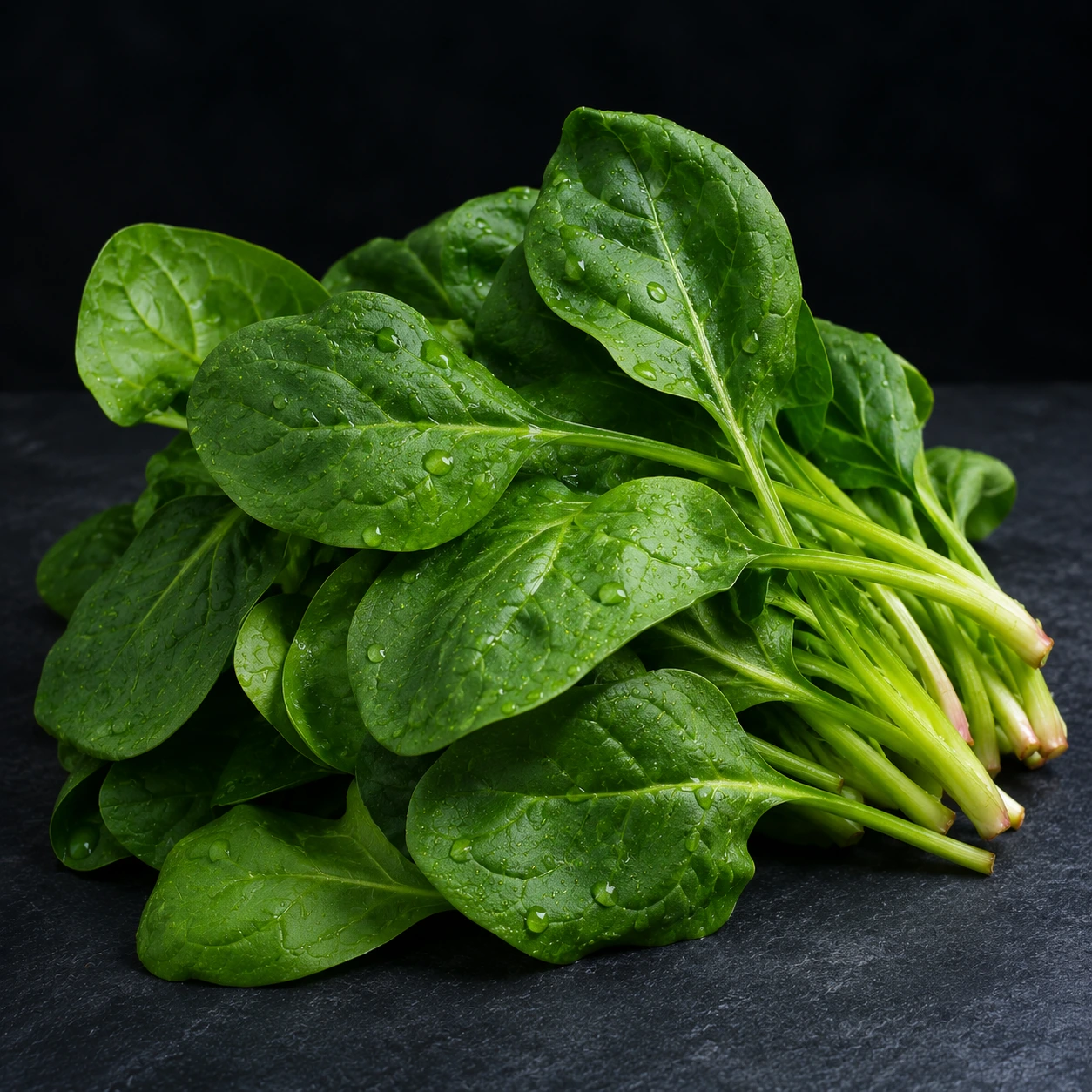
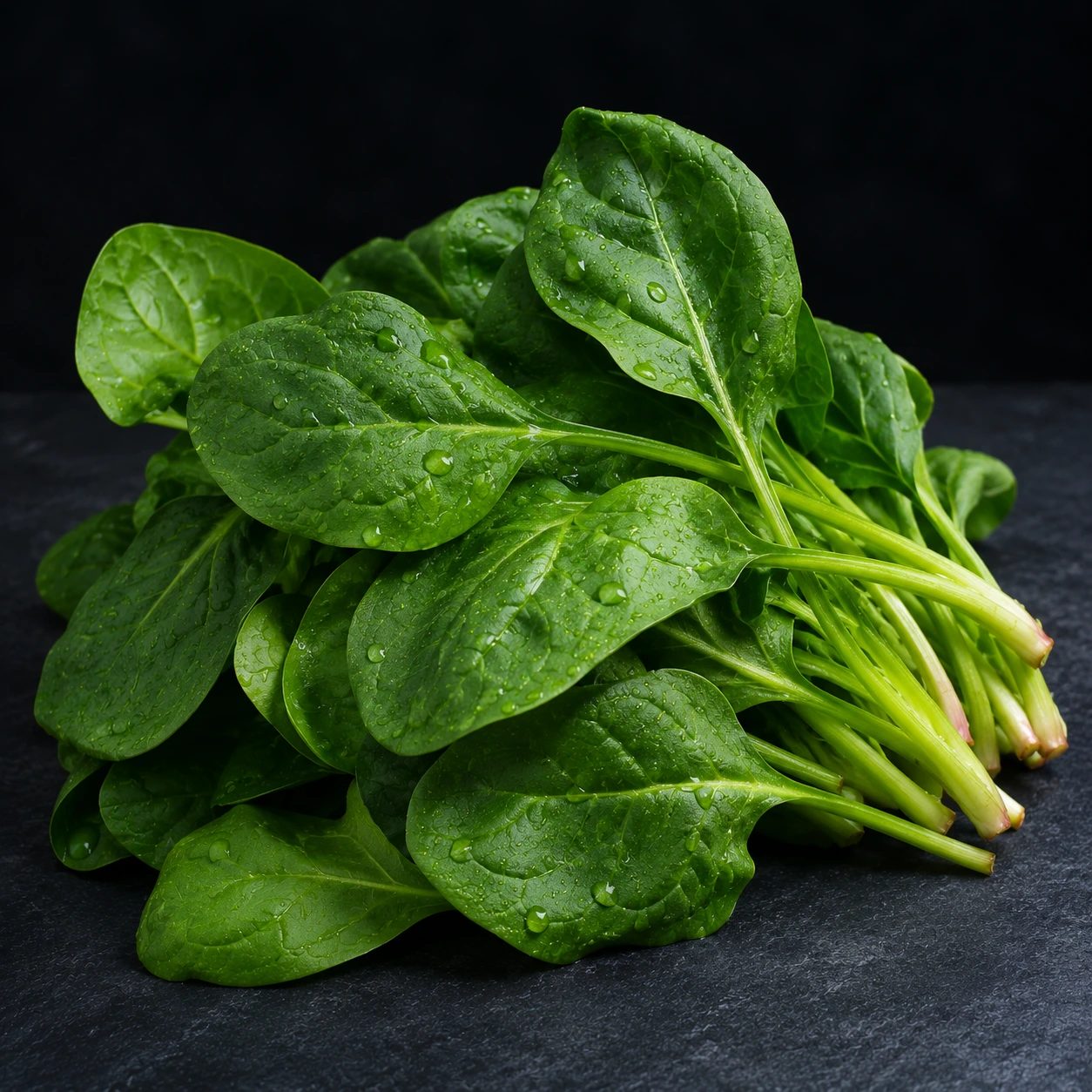
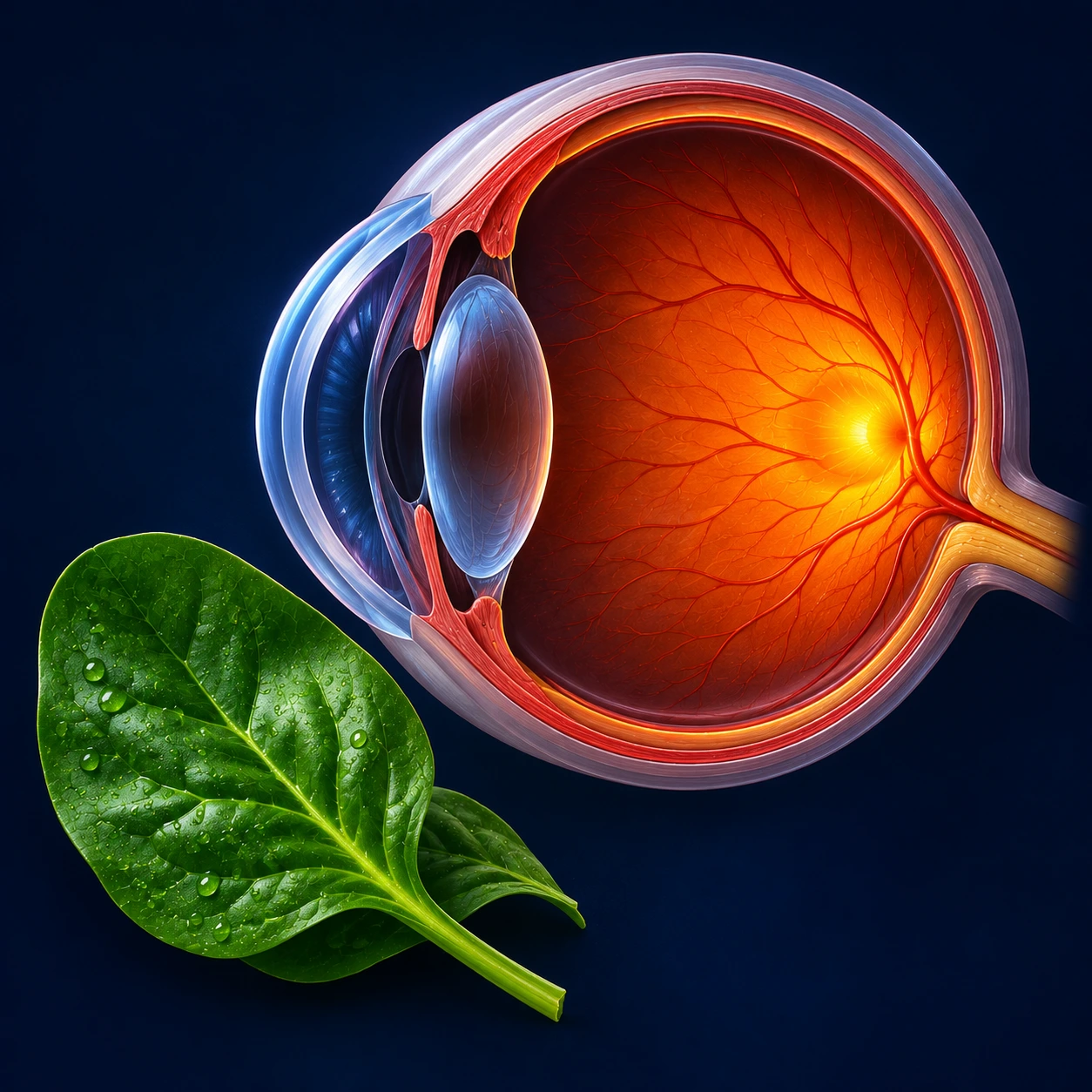
Spinach (Spinacia oleracea) packs an unusual combination of micronutrients into a low-calorie leaf — the highest dietary folate density of any common green, one of the richest sources of lutein and zeaxanthin for the macula, substantial non-heme iron, abundant magnesium and potassium, and a high concentration of dietary nitrate that converts to vasodilatory nitric oxide. The four deep-dive pages below explore the benefits where the clinical literature is strongest: folate for neural tube defect prevention in pregnancy, lutein and zeaxanthin for age-related macular degeneration, the iron-oxalate paradox that determines how much iron the body actually absorbs, and the cooking-versus-raw question that affects every nutrient on this list differently.
Deep-Dive Articles
Folate & Pregnancy
One cup of cooked spinach supplies 263 mcg DFE of folate — roughly 66% of the Recommended Dietary Allowance (RDA) and a meaningful share of the 600 mcg/day pregnancy requirement. The MRC Vitamin Study (1991) demonstrated 72% reduction in neural tube defect recurrence with periconceptional folate. This page covers the methylfolate vs folic acid distinction, methylenetetrahydrofolate reductase (MTHFR) polymorphisms, and why food folate from greens like spinach is sometimes preferred to synthetic folic acid.
Read the deep dive →Lutein & Eye Health
Spinach is among the richest dietary sources of lutein and zeaxanthin — the two xanthophyll carotenoids that concentrate in the macula and form the macular pigment. In the AREDS2 trial, adding 10 mg lutein + 2 mg zeaxanthin to the AREDS supplement did not further reduce progression to advanced age-related macular degeneration (AMD) in the main analysis; because beta-carotene was linked to more lung cancers, mostly in former smokers, lutein + zeaxanthin became the suggested replacement for it. This page covers the mechanism, the EDCCS & POLA epidemiology, blue-light filtering, and how spinach compares to kale and egg yolks for bioavailable xanthophylls.
Read the deep dive →Iron Absorption & Oxalates
The Popeye myth notwithstanding, spinach iron is poorly absorbed — its non-heme iron yields about 2% bioavailability versus 15-35% for heme iron from red meat. This page explains the oxalate-mineral chelation chemistry, the vitamin C co-factor that doubles absorption, kidney stone risk in oxalate-sensitive individuals, and which cooking methods reduce oxalate load without destroying the lutein and folate.
Read the deep dive →Cooking vs Raw
The cooking question for spinach has different answers for different nutrients. Boiling halves the folate; steaming preserves it. Cooking dramatically increases lutein bioavailability by disrupting the chloroplast matrix. Soluble oxalate drops 30-87% with boiling but only modestly with steaming. Vitamin C falls with any heat. This page lays out the per-nutrient trade-offs between preparation methods.
Read the deep dive →Table of Contents
- Deep-Dive Articles
- Why Spinach Stands Out Among Leafy Greens
- Nutrient Density Summary (Per 100 g Cooked)
- Research Papers: Folate & Pregnancy
- Research Papers: Lutein, Zeaxanthin & Eyes
- Research Papers: Iron, Oxalates & Bioavailability
- Research Papers: Dietary Nitrate & Cardiovascular Effects
- Research Papers: Cooking, Storage & Preparation
- External Authoritative Resources
- Connections
- Featured Videos
Why Spinach Stands Out Among Leafy Greens
Kale gets more press, but spinach has the broader micronutrient envelope. The U.S. Department of Agriculture (USDA) FoodData Central database lists spinach in the top three U.S. food sources for folate density (after beef liver and lentils), the top food source for lutein + zeaxanthin (alongside kale and collards), one of the top vegetable sources of iron and magnesium, and among the top sources of dietary nitrate (alongside beetroot and arugula). Spinach is also unusually low in calories — about 23 kcal per 100 g raw — so the nutrient-per-calorie ratio is among the highest of any common food.
What separates spinach from kale and other crucifers is the combination of three things:
- Highest folate per gram — spinach has roughly 50% more folate than kale on a cooked weight basis, and 4-5x the folate of romaine or iceberg lettuce. This matters most in pregnancy and in adults with methylenetetrahydrofolate reductase polymorphisms that benefit from food folate over synthetic folic acid.
- Concentrated xanthophyll carotenoids — spinach is one of the two top food sources of lutein and zeaxanthin, the carotenoid pair that selectively accumulates in the macular pigment of the retina. Cooked spinach has approximately 12 mg lutein per cup, which exceeds the 10 mg AREDS2 trial dose in a single serving.
- The iron paradox — high content, low bioavailability — spinach is rich in non-heme iron (3.57 mg per 100 g boiled and drained, USDA FoodData Central 168463), but little of it is absorbed. Real-world absorption is approximately 2%, dramatically below the iconic Popeye image. Oxalate is often blamed, but a Zurich stable-isotope study in women found otherwise: a 150 g portion of spinach carried 1.27 g of oxalic acid against 0.01 g in the same amount of kale, yet adding 1.26 g of oxalic acid to a kale meal did not change iron absorption (10.7% without, 11.5% with). Absorption from the spinach meal was 24% lower than from kale, a difference that was not statistically significant; spinach was also higher in calcium and polyphenols. The authors conclude that oxalic acid in fruits and vegetables "is of minor relevance in iron nutrition" (Bonsmann 2008). Vitamin C co-ingestion can roughly double this, but spinach is not a reliable iron source for treatment of deficiency.
The cooking-versus-raw question is more consequential for spinach than for most foods because the answer differs per nutrient. Boiling halves folate but more than doubles lutein bioavailability and cuts oxalate by 30-87%. Steaming preserves folate and reduces oxalate less but still increases carotenoid absorption. That 30–87% range comes from a test of nine vegetables, in which steaming cut soluble oxalate by only 5–53%; almost all of the lost oxalate was found in the cooking water, so the water is what carries it away (Chai and Liebman 2005). Raw spinach has the maximum vitamin C, and raw vegetables keep most of their oxalate in the soluble form, which appears to be better absorbed, so for people who eat spinach daily the preparation method changes how much oxalate they take in.
One additional benefit that cuts across all four deep-dives: spinach is rich in dietary nitrate (approximately 250 mg per 100 g, comparable to beetroot). Oral bacteria reduce dietary nitrate to nitrite, which is then converted in the stomach and tissues to nitric oxide, producing vasodilation, modest blood pressure reduction, and improved exercise economy. A 2013 meta-analysis of 16 short crossover trials (254 adults; each intervention lasted from 2 hours to 15 days) found systolic blood pressure 4.4 mmHg lower with inorganic nitrate or beetroot juice; the 1.1 mmHg fall in diastolic pressure was not statistically significant, and the authors note that long-term trials are still needed (Siervo 2013). This is the nitrate-nitrite-NO pathway and is the same mechanism behind beetroot juice's blood pressure effect.
Nutrient Density Summary (Per 100 g Cooked)
Per the U.S. Department of Agriculture FoodData Central database (FDC ID 168463 cooked spinach, drained, no added fat):
- Calories — 23 kcal
- Folate — 146 mcg DFE (37% Recommended Dietary Allowance, ~25% pregnancy Recommended Dietary Allowance)
- Vitamin K1 — 493 mcg (411% Recommended Dietary Allowance — among the highest of any food)
- Vitamin A (as beta-carotene) — 524 mcg RAE (58% Recommended Dietary Allowance)
- Lutein + Zeaxanthin — ~11,300 mcg (no Recommended Dietary Allowance; AREDS2 trial dose 10,000 mcg/day for age-related macular degeneration)
- Iron (non-heme) — 3.57 mg (only ~2% absorbed; a stable-isotope study found oxalic acid itself does not lower iron absorption)
- Magnesium — 87 mg (22% Recommended Dietary Allowance)
- Potassium — 466 mg (10% AI)
- Calcium — 136 mg (10% Recommended Dietary Allowance — but only ~5% absorbed due to oxalate)
- Manganese — 0.94 mg (40% Recommended Dietary Allowance)
- Vitamin C — 9.8 mg (11% Recommended Dietary Allowance — reduced from raw by cooking)
- Vitamin E — 2.1 mg (14% Recommended Dietary Allowance)
- Dietary Nitrate — ~250 mg (no Recommended Dietary Allowance; produces NO-mediated vasodilation)
- Total Oxalate — 750-1,500 mg (relevant to kidney stone risk in susceptible individuals; reduced by boiling)
A safety fact about juicing: A 2018 case report describes a 65-year-old woman with normal kidney function who developed acute oxalate kidney damage (acute oxalate nephropathy) that progressed to end-stage kidney failure after a green smoothie juice "cleanse" made by juicing oxalate-rich green leafy vegetables and fruits. Her risk factors were an earlier gastric bypass and recent prolonged antibiotic treatment. The authors name chronic kidney disease, gastric bypass and antibiotic use as risk factors that make such juice cleanses dangerous, because they raise oxalate absorption (Makkapati 2018).
The single most striking number is vitamin K1 — cooked spinach contains over four times the adult Recommended Dietary Allowance in a 100 g serving. This is the basis of the warfarin interaction caution: patients on warfarin require consistent (not zero) vitamin K intake, and a sudden large change in spinach consumption can disrupt international normalized ratio (INR) control. The same vitamin K1 is necessary for healthy bone mineralization, blood clotting, and the gamma-carboxylation of matrix Gla protein that prevents arterial calcification.
Research Papers: Folate & Pregnancy
- MRC Vitamin Study Research Group (1991). Prevention of neural tube defects: results of the Medical Research Council Vitamin Study. The Lancet — PubMed PMID: 1677062
- Czeizel AE, Dudas I (1992). Prevention of the first occurrence of neural-tube defects by periconceptional vitamin supplementation. NEJM — PubMed PMID: 1307234
- De-Regil LM et al. (2015). Effects and safety of periconceptional oral folate supplementation for preventing birth defects (Cochrane). — PubMed PMID: 26662928
- Bailey LB, Stover PJ et al. (2015). Biomarkers of nutrition for development — folate review. Journal of Nutrition — Search PubMed
- Frosst P et al. (1995). A candidate genetic risk factor for vascular disease: a common mutation in methylenetetrahydrofolate reductase (MTHFR C677T). Nature Genetics — PubMed PMID: 7647779
- Pietrzik K et al. (2010). Folic acid and L-5-methyltetrahydrofolate: comparison of clinical pharmacokinetics and pharmacodynamics. Clinical Pharmacokinetics — PubMed PMID: 20608755
- Bailey LB (1998). Dietary reference intakes for folate: the debut of dietary folate equivalents. Nutrition Reviews — Search PubMed
- WHO (2015). Guideline: Optimal serum and red blood cell folate concentrations in women of reproductive age for prevention of neural tube defects. PubMed: WHO 2015 folate guideline
- McNulty H et al. (2017). Effect of continued folic acid supplementation beyond the first trimester of pregnancy on cognitive performance in the child: a follow-up study from a randomized controlled trial (FASSTT Offspring Trial). BMC Medicine — Search PubMed
- Crider KS, Yang TP, Berry RJ, Bailey LB (2012). Folate and DNA methylation: a review of molecular mechanisms and the evidence for folate's role. Advances in Nutrition 3(1):21–38 — PubMed PMID: 22332098
Research Papers: Lutein, Zeaxanthin & Eyes
- AREDS2 Research Group (2013). Lutein + zeaxanthin and omega-3 fatty acids for age-related macular degeneration. JAMA — PubMed PMID: 23644932
- Seddon JM et al. (1994). Dietary carotenoids, vitamins A, C, and E, and advanced age-related macular degeneration (Eye Disease Case-Control Study). JAMA — PubMed PMID: 7933422
- Delcourt C et al. (2006). Plasma lutein and zeaxanthin and other carotenoids as modifiable risk factors for age-related maculopathy and cataract: the POLA Study. IOVS — Search PubMed
- Bone RA, Landrum JT et al. (1997). Distribution of lutein and zeaxanthin stereoisomers in the human retina. Experimental Eye Research — Search PubMed
- Hammond BR Jr et al. (2014). A double-blind, placebo-controlled study on the effects of lutein and zeaxanthin on photostress recovery, glare disability, and chromatic contrast. IOVS — Search PubMed
- Eisenhauer B, Natoli S, Liew G, Flood VM (2017). Lutein and Zeaxanthin-Food Sources, Bioavailability and Dietary Variety in Age-Related Macular Degeneration Protection. Nutrients 9(2):120 — PubMed PMID: 28208784
- Chung HY et al. (2004). Lutein bioavailability is higher from lutein-enriched eggs than from supplements and spinach in men. Journal of Nutrition — Search PubMed
- Castenmiller JJ et al. (1999). The food matrix of spinach is a limiting factor in determining the bioavailability of beta-carotene and to a lesser extent of lutein in humans. Journal of Nutrition — Search PubMed
- Stringham JM, Hammond BR (2008). Macular pigment and visual performance under glare conditions. Optometry & Vision Science — Search PubMed
- Ma L et al. (2012). Lutein and zeaxanthin intake and the risk of age-related macular degeneration: a systematic review and meta-analysis. British Journal of Nutrition — Search PubMed
Research Papers: Iron, Oxalates & Bioavailability
- Hallberg L, Hulthen L (2000). Prediction of dietary iron absorption: an algorithm for calculating absorption and bioavailability of dietary iron. AJCN. — Search PubMed
- Cook JD, Reddy MB (2001). Effect of ascorbic acid intake on nonheme-iron absorption from a complete diet. AJCN. — Search PubMed
- Bohn T, Davidsson L et al. (2004). Phytic acid added to white-wheat bread inhibits fractional apparent magnesium absorption in humans. AJCN. — Search PubMed
- Heaney RP, Weaver CM (1989). Oxalate: effect on calcium absorbability. AJCN 50(4):830–832. — PubMed PMID: 2801588
- Chai W, Liebman M (2005). Effect of different cooking methods on vegetable oxalate content. Journal of Agricultural & Food Chemistry. — PubMed PMID: 15826055
- Curhan GC, Willett WC, Rimm EB, Stampfer MJ (1993). A prospective study of dietary calcium and other nutrients and the risk of symptomatic kidney stones. NEJM 328(12):833–838. — PubMed PMID: 8441427
- Taylor EN, Curhan GC (2008). Determinants of 24-hour urinary oxalate excretion. CJASN. — PubMed PMID: 18650406
- López MA, Martos FC (2004). Iron availability: an updated review. International Journal of Food Sciences & Nutrition 55(8):597–606. — PubMed PMID: 16019304
- genannt Bonsmann SS, Walczyk T, Renggli S, Hurrell RF (2008). Oxalic acid does not influence nonhaem iron absorption in humans: a comparison of kale and spinach meals. European Journal of Clinical Nutrition 62(3):336–341. — PubMed PMID: 17440529
- Makkapati S, D'Agati VD, Balsam L (2018). "Green Smoothie Cleanse" Causing Acute Oxalate Nephropathy. American Journal of Kidney Diseases 71(2):281–286. — PubMed PMID: 29203127
Research Papers: Dietary Nitrate & Cardiovascular Effects
- Lundberg JO et al. (2008). The nitrate-nitrite-nitric oxide pathway in physiology and therapeutics. Nature Reviews Drug Discovery. — PubMed PMID: 18167491
- Webb AJ et al. (2008). Acute blood pressure lowering, vasoprotective, and antiplatelet properties of dietary nitrate via bioconversion to nitrite. Hypertension. — PubMed PMID: 18250365
- Siervo M et al. (2013). Inorganic nitrate and beetroot juice supplementation reduces blood pressure in adults: a systematic review and meta-analysis. Journal of Nutrition. — PubMed PMID: 23596162
- Hord NG et al. (2009). Food sources of nitrates and nitrites: the physiologic context for potential health benefits. AJCN. — PubMed PMID: 19439460
- Larsen FJ, Ekblom B, Sahlin K, Lundberg JO, Weitzberg E (2006). Effects of dietary nitrate on blood pressure in healthy volunteers. NEJM 355(26):2792–2793. — PubMed PMID: 17192551
- Joris PJ, Mensink RP (2013). Beetroot juice improves in overweight and slightly obese men postprandial endothelial function after consumption of a mixed meal. Atherosclerosis 231(1):78–83. — PubMed PMID: 24125415
- Bondonno CP et al. (2021). Vegetable nitrate intake, blood pressure and incident cardiovascular disease: Danish Diet, Cancer, and Health Study. European J Epidemiology 36(8):813–825. — PubMed PMID: 33884541
Research Papers: Cooking, Storage & Preparation
- McKillop DJ et al. (2002). The effect of different cooking methods on folate retention in various foods that are amongst the major contributors to folate intake in the UK diet. British J Nutrition. — Search PubMed
- Chai W, Liebman M (2005). Effect of different cooking methods on vegetable oxalate content. Journal of Agricultural & Food Chemistry. — PubMed PMID: 15826055
- Bongoni R et al. (2014). Evaluation of different cooking conditions on broccoli to improve the nutritional value and consumer acceptance. Plant Foods Hum Nutr. — Search PubMed
- Lessin WJ et al. (1997). Quantification of cis-trans isomers of provitamin A carotenoids in fresh and processed fruits and vegetables. J Agric Food Chem. PubMed: Cis/trans carotenoid processing
- Edwards AJ et al. (2002). Consumption of watermelon juice increases plasma concentrations of lycopene and beta-carotene in humans. J Nutr. — Search PubMed
- Hedren E et al. (2002). Estimation of carotenoid accessibility from carrots determined by an in vitro digestion method. European J Clinical Nutrition. — Search PubMed
- van het Hof KH et al. (2000). Dietary factors that affect the bioavailability of carotenoids. J Nutrition. — Search PubMed
- Dewanto V et al. (2002). Thermal processing enhances the nutritional value of tomatoes by increasing total antioxidant activity. J Agric Food Chem. — PubMed PMID: 11982434
- Bergquist SA, Gertsson UE, Nordmark LY, Olsson ME (2007). Ascorbic acid, carotenoids, and visual quality of baby spinach as affected by shade netting and postharvest storage. J Agric Food Chem 55(21):8444–8451. — PubMed PMID: 17880149
External Authoritative Resources
- U.S. Department of Agriculture FoodData Central — Spinach, cooked, boiled, drained (FDC ID 168463) — the authoritative U.S. nutrient composition reference
- U.S. National Institutes of Health (NIH) Office of Dietary Supplements — Folate Fact Sheet (Health Professionals)
- Linus Pauling Institute — Carotenoids (lutein, zeaxanthin) Micronutrient Information Center
- National Eye Institute — AREDS / AREDS2 trial results
- PubMed — All research on spinach nutrition
Connections
- All Food
- Spinach (Main Page)
- Folate & Pregnancy
- Lutein & Eye Health
- Iron Absorption & Oxalates
- Cooking vs Raw
- Kale
- Folate (Vitamin B9)
- Vitamin K1 / K2
- Vitamin A (Beta-Carotene)
- Iron
- Magnesium
- Potassium
- Macular Degeneration
- Iron Deficiency Anemia
- Kidney Stones
- Beets (Nitrate Source)
- History
- Nutrients