Tuna: Light vs Albacore (Species Comparison)
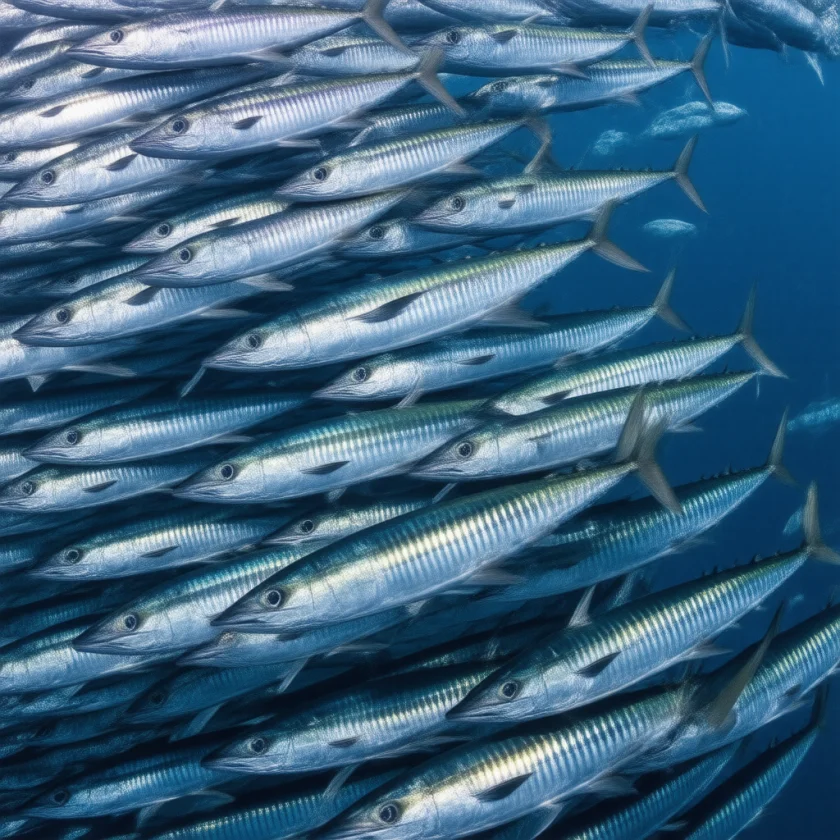
The label on a can of tuna in the United States hides more than it reveals. "Light" tuna is almost always skipjack (Katsuwonus pelamis), occasionally yellowfin (Thunnus albacares); "White" tuna is always albacore (Thunnus alalunga); "Sushi-grade" or fresh steaks are usually yellowfin, sometimes bigeye (Thunnus obesus); and "Toro" sashimi is bluefin (Thunnus thynnus, T. orientalis, T. maccoyii). U.S. Food and Drug Administration testing puts average mercury at 0.13 ppm for canned light tuna, 0.35 ppm for canned albacore and for fresh/frozen yellowfin, and 0.69 ppm for bigeye — spanning a 5-fold range — while the FDA table has no bluefin figure at all; omega-3 concentrations vary almost as much. Bluefin sashimi is a different food from canned skipjack on both the benefit and risk axes. This deep-dive lays out the species-by-species numbers and sets them against common eating situations.
Table of Contents
- The Four Commercially Relevant Tuna Species
- Mercury by Species: The U.S. Food and Drug Administration Testing Data
- Omega-3 by Species
- Why Mercury Scales with Trophic Level and Omega-3 Does Not
- Canning Method: Water, Oil, Pouch, Solid vs Chunk
- Sashimi-Grade Yellowfin and Bigeye
- Bluefin: The Highest-Mercury, Highest-Omega-3, Highest-Risk Choice
- Common Situations: What the Numbers and FDA/EPA Advice Show
- Key Research Papers
- Connections
- Featured Videos
The Four Commercially Relevant Tuna Species
Of the eight tuna species in genera Thunnus and Katsuwonus, four account for the overwhelming majority of US consumption:
- Skipjack (Katsuwonus pelamis) — smallest (up to nearly 4 feet and more than 70 lb), with a life span of around 8-12 years; in the Pacific it can reproduce at about 1.3 feet in length (NOAA Fisheries). Lives 2-3 trophic levels up the food chain (eats small pelagic fish, squid, crustaceans). Tropical and subtropical worldwide. Accounts for >70% of the global tuna catch by weight. Almost all "canned light" tuna in the US is skipjack.
- Yellowfin (Thunnus albacares) — medium-sized (~80 lb mature, up to 6 feet and 400 lb), most able to reproduce by age 2, with a life span of 6-7 years (NOAA Fisheries). Tropical and subtropical worldwide. Sold as "ahi" in Hawaii and on Japanese-style menus, as fresh steaks, and occasionally as "canned light" (read the label).
- Albacore (Thunnus alalunga) — medium-sized (~60 lb mature, max ~90 lb), 5-6 year maturation, max ~9-13 years. Temperate waters globally. The only tuna allowed to be labeled "white meat" or "solid white" under US FDA rules. The standard species for canned white tuna.
- Bigeye (Thunnus obesus) — large (~100 lb mature, max ~500 lb), 4-year maturation, max ~11 years. Tropical and subtropical. Sold as high-end sashimi ("mebachi" or "ahi" depending on market). Almost never canned. U.S. Food and Drug Administration (FDA) puts bigeye on the "Choices to Avoid" list for pregnant women and children.
- Bluefin (three species: T. thynnus Atlantic, T. orientalis Pacific, T. maccoyii Southern) — largest tuna, mature at 5-15 years depending on stock, max ~1,500 lb, max ~40+ years. The sashimi king. Toro is the fatty belly cut. All three bluefin species are stock-overfished or recovering. Bluefin does not appear on the U.S. Food and Drug Administration/U.S. Environmental Protection Agency fish-advice lists.
The species directly determine both the nutrient profile (especially omega-3 concentration, which tracks body fat) and the mercury content (which scales with trophic level, lifespan, and body size).
Mercury by Species: The U.S. Food and Drug Administration Testing Data
The U.S. Food and Drug Administration has maintained a commercial fish mercury monitoring program for decades. The mean mercury concentrations in its table "Mercury Levels in Commercial Fish and Shellfish (1990-2012)" (tuna samples collected 1991-2010):
- Skipjack (canned light): 0.126 ppm (mean), range not detected to 0.889 ppm. ~95% of samples below 0.30 ppm.
- Yellowfin (fresh/frozen): 0.354 ppm (mean), range 0.000-1.478 ppm.
- Albacore (canned white): 0.350 ppm (mean), range not detected to 0.853 ppm.
- Bigeye (sashimi): 0.689 ppm (mean), range 0.128-1.816 ppm. The U.S. Food and Drug Administration action level for mercury is 1.0 ppm, and individual bigeye samples sometimes exceed this.
- Bluefin (sashimi/toro): no row in the FDA table (0.689 ppm is the FDA figure for bigeye). Independent studies found means of 1.18 ppm in Mediterranean bluefin muscle (2002) and, in sushi, 1.04 ppm for lean bluefin (akami) and 0.39 ppm for fatty bluefin (toro) (2010).
The 3-fold difference between skipjack (0.13 ppm) and albacore (0.35 ppm) is the central reason the U.S. Food and Drug Administration/U.S. Environmental Protection Agency (EPA) advisory partitions weekly serving limits by species. The 5-fold difference between skipjack and bigeye is why bigeye appears on the FDA/EPA "Choices to Avoid" list; bluefin is not on the FDA/EPA lists.
Translating to per-serving methylmercury intake (3-oz serving = 85 g):
- Skipjack 3 oz: 11 µg methylmercury
- Yellowfin 3 oz: 30 µg methylmercury
- Albacore 3 oz: 30 µg methylmercury
- Bigeye 3 oz: 59 µg methylmercury
- Bluefin 3 oz: no FDA figure (see the bluefin values above)
For reference, the U.S. Environmental Protection Agency Reference Dose for methylmercury is 0.1 µg/kg body weight per day. For a 70-kg adult, that is 7 µg/day or 49 µg/week. A single 3-oz skipjack serving (11 µg) consumed weekly contributes ~22% of the weekly RfD. A single 3-oz bigeye serving (59 µg) exceeds the weekly RfD on its own. The U.S. Environmental Protection Agency RfD itself has a 10× uncertainty factor built in — transient exceedances do not produce harm. But the math illustrates why high-frequency bluefin consumption is the population behavior most likely to push hair mercury above the WHO benchmark.
Omega-3 by Species
Combined eicosapentaenoic acid (EPA) + docosahexaenoic acid (DHA) per 3-oz cooked serving:
- Skipjack (canned light): 230-280 mg
- Yellowfin (fresh, cooked): 270 mg
- Albacore (canned white): 700-800 mg (~3× light)
- Bigeye (fresh, cooked): 280 mg (lower than expected for its size; bigeye loses fat to fish-oil-processed dressings during the long transit from fishery to sushi bar)
- Bluefin (akami lean cut): 1,300 mg
- Bluefin (otoro fatty belly cut): 3,000-4,000 mg per 3 oz — among the densest omega-3 foods on earth, exceeded only by Atlantic mackerel and some salmon belly
Albacore is roughly 3× the omega-3 of skipjack, mirroring the 3× mercury content. Bluefin otoro is ~15× the omega-3 of skipjack but also carries several times the mercury. The benefit-vs-risk slope — that is, the omega-3 you gain per microgram of additional mercury exposure — is actually best for skipjack, modest for albacore and yellowfin, and worst for bigeye. Bluefin otoro is anomalous: extraordinarily high omega-3 makes the slope reasonable, but the absolute mercury exposure per serving is high enough that frequent consumption pushes the weekly mercury intake above safe limits even for adults.
Why Mercury Scales with Trophic Level and Omega-3 Does Not
A 2011 review of fish benefits and risks (Mahaffey and colleagues) separates the two. Methylmercury is the only form of mercury that biomagnifies in aquatic food webs: its concentration in fish consistently increases with trophic level, so larger, older, higher-trophic-level fish generally carry more of it. Omega-3s do not follow that rule — the review reports that they "show irregular retention patterns at different trophic levels," that docosahexaenoic acid shows little relationship with fish body size, and that a species' fat content is only moderately predictive of its omega-3 content. It states that the mercury and omega-3 content of a species are generally not consistently associated, and many species that are high in omega-3s are low in methylmercury and vice versa.
How the two move through the marine food web:
- Phytoplankton (algae) synthesize eicosapentaenoic acid and docosahexaenoic acid; fish cannot make them and obtain them from algae through the food web. Methylmercury enters at the base too, formed from inorganic mercury by microbes in water and sediments.
- Zooplankton eat phytoplankton. How much docosahexaenoic acid plankton retain appears to depend on which species make up the food web; methylmercury is passed on with the food.
- Small fish (anchovies, sardines, herring) eat zooplankton. They sit low on the mercury ladder, yet the review notes that even these lower-trophic-level fish can have high levels of docosahexaenoic acid.
- Mid-sized predators (mackerel, skipjack) eat small fish; their methylmercury is higher than that of their prey.
- Large predators (yellowfin, albacore) carry more methylmercury again; their omega-3 content depends on the species and its fat content rather than on its rung in the food web.
- Apex predators (bigeye, bluefin, swordfish, marlin, shark) carry the most methylmercury — the review notes that top predator fish can reach concentrations up to 10 million times those in the water — while their omega-3 content, as in other fish, depends on how fatty the fish or cut is.
This is why eating low on the marine food chain (sardines, anchovies, herring) gives the best omega-3-per-mercury ratio of any seafood option. Sardines deliver ~1,000 mg of eicosapentaenoic acid+docosahexaenoic acid per 3-oz can with a mean mercury content of 0.013 ppm in FDA testing. Two cans of sardines per week delivers more omega-3 than two cans of light tuna at one-tenth the mercury exposure. For more on this, see Sardines and Anchovies.
Canning Method: Water, Oil, Pouch, Solid vs Chunk
Beyond species, the canning method matters:
- Water-packed: The standard health-conscious choice. Calorie-efficient (100 kcal/3 oz). Some loss of native omega-3 into the canning water (which is discarded when drained — though using it in soup or dressing recovers it).
- Oil-packed (soybean): Adds 5-10 g of additional fat per serving (~200 kcal/3 oz total). The added soybean oil is high in linoleic acid (omega-6), which slightly worsens the dietary omega-6:omega-3 ratio. Better mouth-feel and longer shelf life of native omega-3 (the canning oil dilutes oxidation).
- Oil-packed (olive): European tradition (Spain, Portugal, Italy). Higher quality oil, often a better omega-6:omega-3 profile than soybean. Adds calories.
- Pouch-packed: Foil pouches use less water/oil and preserve more native omega-3 than canned. The pouch format also tends to be higher-quality fish (more solid pieces, less chunked).
- Solid vs Chunk vs Flake: Solid is one solid piece of muscle; chunk is broken pieces; flake is fines. Solid is more expensive and tends to be higher-quality fish. Nutritionally similar.
- Smoked tuna: Adds polycyclic aromatic hydrocarbons (PAHs) from the smoking process. Occasional consumption adds little; a daily smoked-tuna habit adds up.
- Tuna jerky: Lower water content concentrates everything — protein, omega-3, mercury, and sodium; the sodium shows on the label.
For canned tuna specifically, the most common low-quality flag is high sodium content. Standard canned tuna has 250-400 mg sodium per 3 oz. "No salt added" or "low sodium" versions drop to 40-80 mg sodium per 3 oz, an order of magnitude lower, with no taste penalty if used in salads or pasta.
Sashimi-Grade Yellowfin and Bigeye
"Sashimi-grade" or "sushi-grade" is not a regulated designation in the United States. In practice, the term implies that the fish has been frozen at -20 °C for at least 7 days (or -35 °C for at least 15 hours) to kill parasites, per U.S. Food and Drug Administration guidance, and is fresh enough for raw consumption. Tuna is one of the few fish where the U.S. Food and Drug Administration parasite-killing freeze is optional, because tuna are rarely parasitized in commercially relevant ways — however, the freeze is still done as quality control.
The dominant sashimi species in US sushi restaurants are:
- Yellowfin (ahi): The standard ahi at most US sushi restaurants. Mercury ~0.35 ppm. A typical 4-piece nigiri serving uses ~40 g of fish, delivering ~14 µg of methylmercury.
- Bigeye: Premium ahi at higher-end restaurants. Mercury ~0.69 ppm. The same 40-g serving delivers ~28 µg of methylmercury — double yellowfin.
- Bluefin akami, chu-toro, o-toro: No FDA mercury figure; a 2010 sushi study found means of 1.04 ppm for lean akami and 0.39 ppm for fatty toro. O-toro has the highest omega-3 and the highest fat content.
For a regular sushi eater (1-2 meals per week), choosing yellowfin over bigeye or lean bluefin roughly halves the mercury exposure. For sushi enthusiasts (3+ meals per week), shifting toward salmon, mackerel, and sardine-based items reduces mercury exposure by another 10-fold while preserving the omega-3 benefit.
Bluefin: The Highest-Mercury, Highest-Omega-3, Highest-Risk Choice
Bluefin tuna deserves its own treatment because it sits at the extremes on three independent axes:
- Highest mercury among commonly consumed tuna species in some testing. The FDA has no bluefin data, but a 2010 sushi study found lean bluefin (akami) averaged 1.04 ppm, against 0.87 ppm for lean bigeye and 0.47 ppm for lean yellowfin (fatty bluefin toro averaged 0.39 ppm). At 3 oz per serving, a single lean bluefin meal can exceed the U.S. Environmental Protection Agency weekly methylmercury RfD.
- Highest omega-3 among any commonly consumed fish, particularly the otoro (fatty belly) cut (3,000-4,000 mg per 3 oz). Among foods, only Atlantic mackerel and salmon belly approach this density.
- Most environmentally compromised of any tuna species. Atlantic bluefin (T. thynnus) collapsed to less than 10% of unfished biomass by the early 2000s; populations are now recovering but remain heavily monitored. Pacific bluefin (T. orientalis) was assessed at 4% of unfished biomass in 2014, the most depleted of any major tuna stock. Southern bluefin (T. maccoyii) is rated "Avoid" by Monterey Bay Aquarium Seafood Watch. See Sustainability for details.
A single bluefin tuna can fetch more than $1 million at the Tokyo Toyosu fish market auction (a 612-lb Pacific bluefin sold for $3.1 million in January 2019). This price level is the practical reason recovery is so difficult: even with strict quota management, the per-fish economic incentive to land bluefin remains overwhelming.
What this means in practice: the FDA/EPA advice for pregnancy, breastfeeding and childhood does not list bluefin, but the measured mercury of lean bluefin is in the same high range as bigeye, which that advice lists as a Choice to Avoid. For other adults, the population-level problem is heavy weekly consumption by enthusiasts, not occasional restaurant treats (once or twice a quarter) by the broader population.
Common Situations: What the Numbers and FDA/EPA Advice Show
- Canned tuna for weekday lunches: Canned light (skipjack) has the best omega-3-per-mercury ratio of any tuna and is on the FDA/EPA "Best Choices" list; water-packed and low-sodium versions cut calories and sodium. 2-3 cans per week matches the 2 to 3 weekly "Best Choices" servings in the FDA/EPA pregnancy advice.
- More omega-3 from tuna: Canned white (albacore) has about 3× the omega-3 of light tuna and is on the FDA/EPA "Good Choices" list (one serving a week in the pregnancy advice); salmon, sardines, and anchovies all carry more omega-3 and less mercury than albacore.
- Pregnancy and breastfeeding: The FDA/EPA advice is 2 to 3 servings (4 oz each) a week from the "Best Choices" list, which includes canned light tuna, or 1 serving from the "Good Choices" list, which includes albacore and yellowfin. Bigeye is a "Choice to Avoid"; bluefin is not listed. A hair mercury test before conception and again in the second trimester measures actual exposure.
- Tuna for children: The FDA/EPA childhood advice gives a serving as about 1 oz at age 1-3, 2 oz at age 4-7, 3 oz at age 8-10, and 4 oz at age 11, at 2 servings a week from the "Best Choices" list, which includes canned light tuna; albacore is on the "Good Choices" list.
- Sushi 2-3 times a week: Salmon, mackerel saba, sardine iwashi, and shrimp nigiri are lower in mercury than tuna nigiri; keeping tuna nigiri (especially bluefin/bigeye/o-toro) to one or two pieces per meal keeps mercury exposure down.
- High-protein diets with 5+ cans of tuna a week: At this intake, skipjack keeps mercury lowest. A hair mercury test at the start and again 8-12 weeks in measures actual exposure, and rotating in chicken, eggs, whey, and salmon spreads it out.
- The most fish-based omega-3 with the least mercury: Sardines, anchovies, Pacific herring, wild Alaskan salmon. All low on the food chain, all near-zero mercury, all 1,000+ mg omega-3 per serving.
- One sushi meal a week: Yellowfin is on the FDA/EPA "Good Choices" list; bigeye is a "Choice to Avoid" and bluefin is not listed, and an occasional serving adds far less mercury than regular ones. Salmon and mackerel carry more omega-3 with less mercury.
For the comprehensive sustainability picture overlaid on top of these mercury-and-nutrition choices, see Sustainability.
Key Research Papers
- Karimi R, Fitzgerald TP, Fisher NS (2012). A quantitative synthesis of mercury in commercial seafood and implications for exposure in the United States. Environmental Health Perspectives 120(11):1512-9. — PubMed PMID: 22732656
- Lowenstein JH et al. (2010). DNA barcodes reveal species-specific mercury levels in tuna sushi that pose a health risk to consumers. Biology Letters 6(5):692-5. — Search PubMed
- Burger J, Gochfeld M (2004). Mercury in canned tuna: white versus light and temporal variation. Environmental Research 96(3):239-49. — PubMed PMID: 15364590
- Mahaffey KR et al. (2011). Balancing the benefits of n-3 polyunsaturated fatty acids and the risks of methylmercury exposure from fish consumption. Nutrition Reviews 69(9):493-508. — PubMed PMID: 21884130
- Storelli MM, Stuffler RG, Marcotrigiano GO (2002). Total and methylmercury residues in tuna-fish from the Mediterranean sea. Food Additives and Contaminants 19(8):715-20. — PubMed PMID: 12227935
- Gerstenberger SL, Martinson A, Kramer JL (2010). An evaluation of mercury concentrations in three brands of canned tuna. Environmental Toxicology and Chemistry 29(2):237-242. — PubMed PMID: 20821440
- FDA (2017). Mercury Concentrations in Fish: FDA Monitoring Program (1990-2012) updated 2017. PubMed: FDA mercury monitoring
- Bosch AC et al. (2016). Heavy metals in marine fish meat and consumer health: a review. Journal of the Science of Food and Agriculture 96(1):32-48. — PubMed PMID: 26238481
- Strain JJ et al. (2015). Prenatal exposure to methyl mercury from fish consumption and polyunsaturated fatty acids: associations with child development at 20 mo of age in an observational study in the Republic of Seychelles. AJCN 101(3):530-7. — PubMed PMID: 25733638