⚠ Evidence warning: Clinical trials or other evidence do not support the claims that vitamin D3 raises blood levels two to three times more than vitamin D2, that most adults at northern latitudes benefit from a daily vitamin D3 supplement, and that two to three salmon servings a week lower respiratory infection risk. This page keeps it as a report of what people, websites or other media say.
Salmon Vitamin D Content
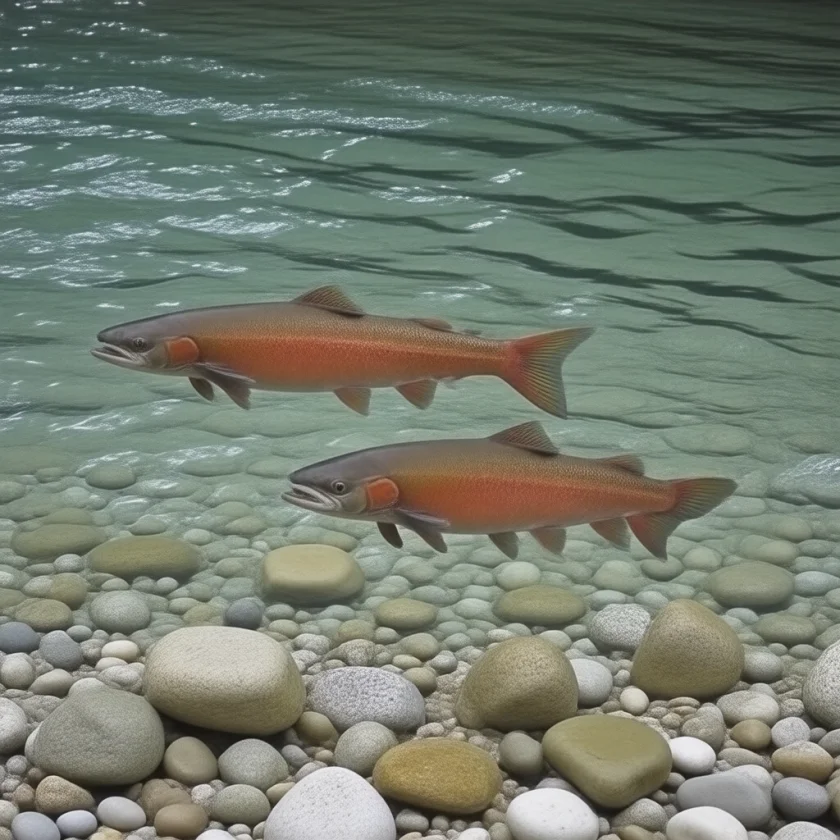
Vitamin D is the prohormone humans evolved to synthesize in skin from 7-dehydrocholesterol on exposure to ultraviolet B (UVB) radiation, but the modern indoor lifestyle, latitudes north of 35°, sunscreen use, and seasonal sun angle leave a large fraction of the population deficient. Dietary sources are limited — few foods naturally contain Vitamin D in meaningful quantities. Wild salmon is one of the rare exceptions and arguably the single best natural-food source: a 2007 study measured wild-caught salmon at an average of 988 international units (IU) per 3.5 oz serving with no split by species, figures of up to 990 international units are quoted for wild king (chinook) salmon, and the U.S. Department of Agriculture (USDA) lists wild sockeye at 563 international units raw and 670 cooked per 100 g, with the form being D3 (cholecalciferol), the same animal-form Vitamin D humans synthesize endogenously. This page covers the biochemistry of salmon Vitamin D, the wild-vs-farmed gap, the seasonal northern-latitude case, and the synergy with marine omega-3s for skeletal and immune function.
Table of Contents
- Why Fatty Fish Have So Much Vitamin D
- D3 (Cholecalciferol) vs D2 (Ergocalciferol)
- The Wild-vs-Farmed Vitamin D Gap
- Species-by-Species Vitamin D Content
- The Seasonal Northern-Latitude Case
- Meeting the Recommended Dietary Allowance with Salmon
- Bone Mineralization and Fracture Prevention
- Immune Function and Respiratory Infection
- Synergy with Omega-3 and K2
- Absorption Considerations
- Cautions
- Key Research Papers
- Connections
- Featured Videos
Why Fatty Fish Have So Much Vitamin D
The Vitamin D in oily fish ultimately traces back to photochemistry at the ocean surface. Ultraviolet B radiation (290-315 nm) penetrates the upper few meters of seawater and triggers conversion of ergosterol in phytoplankton and 7-dehydrocholesterol in zooplankton into pre-Vitamin D, which thermally isomerizes to Vitamin D2 (ergocalciferol) and Vitamin D3 (cholecalciferol). Small fish consume the zooplankton and accumulate the D3 in their lipid stores. Larger predator fish like salmon eat the smaller fish and further concentrate the D3 in their own lipid-rich tissues.
The biological logic is the same as for retinol, omega-3s, and astaxanthin — lipid-soluble nutrients bioaccumulate up the marine food chain into the lipid stores of the larger fish, with concentration factors of 5-50x at each trophic level. By the time the nutrient reaches an adult salmon, the concentration in muscle and liver tissue is hundreds of times higher than the seawater photochemical production rate.
This is why fatty marine fish are unique among foods for Vitamin D content. Plant foods contain essentially no Vitamin D (a few mushrooms exposed to ultraviolet (UV) light can develop modest D2, but typical levels are low). Land animal meat contains some D3 from grass-fed animals exposed to sunlight, but in much lower concentrations than oily fish — a 3.5 oz beef serving contains roughly 5-15 international units of D3, compared to 570 international units in wild sockeye. Eggs from pasture-raised hens have 40-100 international units per yolk depending on sun exposure. If not fortified, milk and dairy products are normally low in vitamin D, with the exception of butter because of its high fat content; typical fortified milk has 100 international units per cup.
D3 (Cholecalciferol) vs D2 (Ergocalciferol)
"Vitamin D" is the family name for two related secosteroids:
- Vitamin D3 (cholecalciferol) — the animal form, produced in skin from 7-dehydrocholesterol on ultraviolet B exposure, and stored in animal tissues. The form humans synthesize endogenously. Found in fatty fish, fish liver oils, egg yolks (from pasture-raised hens), and animal liver.
- Vitamin D2 (ergocalciferol) — the plant/fungal form, produced from ergosterol in mushrooms and yeasts on ultraviolet exposure. Used in some prescription Vitamin D preparations (ergocalciferol capsules) and historically in some fortified foods.
The two forms are nominally bioequivalent but accumulating evidence suggests D3 is functionally superior:
- Half-life — D3 has approximately 2-3 times the serum half-life of D2 because it binds more tightly to vitamin D-binding protein (DBP)
- Serum 25(OH)D response — a 2012 meta-analysis of randomized trials found D3 raised serum 25-hydroxyvitamin D more than D2 overall (P = 0.001); the difference was significant with bolus dosing, "but the effect was lost with daily supplementation". The figure of approximately 2-3 fold higher elevation per unit dose does not come from that paper
- Active 1,25(OH)2D production — D3 produces preferentially the natural human active metabolite, while D2 is metabolized into 1,25(OH)2-ergocalciferol, which may have somewhat different receptor binding kinetics
- Stability — D3 is more stable to oxidation and degradation in food matrices and supplements
Most adults in northern latitudes have suboptimal serum 25-hydroxyvitamin D at some point in the year, and the authors of that meta-analysis conclude that D3 "could potentially become the preferred choice for supplementation", while stating that additional research is required. Wild fatty fish supply D3; one analysis also found some D2 in farmed salmon and none in wild-caught salmon. Most over-the-counter Vitamin D supplements now use D3 as well, while prescription ergocalciferol in the US is D2, so a Vitamin D prescription may be for the D2 form.
For the comprehensive Vitamin D biology, see our Vitamin D3 page.
The Wild-vs-Farmed Vitamin D Gap
One of the most striking findings in salmon nutritional analysis is the dramatic difference in Vitamin D content between wild and farmed salmon. The 2007 Lu et al. analysis published in the Journal of Steroid Biochemistry and Molecular Biology measured Vitamin D3 by high performance liquid chromatography in wild-caught salmon, farmed salmon and several other fish. Its table does not split the wild salmon by species. Findings:
- Wild-caught salmon: 988 ±524 international units per 3.5 oz (mean and standard error, 9 samples)
- Farmed salmon: 240 ±108 international units per 3.5 oz (9 samples) — approximately 25% of the wild content
- Figures of 987 international units per 100 g for wild sockeye (described as the highest of any commonly consumed fatty fish) and approximately 230-1000 international units per 100 g for wild king (chinook), highly variable by source, are not in this study's table
U.S. Department of Agriculture values differ from Lu in both directions: wild sockeye is listed at 563 international units raw and 670 cooked per 100 g, below Lu's wild figure, while farmed Atlantic is listed at 441 raw and 526 cooked, well above Lu's farmed figure. The wild-to-farmed ratio of about 4x comes from Lu and is not consistent across sources.
Vitamin D in salmon depends on feed and water. A 2019 study measured wild Atlantic salmon at 18.5 ±4.6 µg per 100 g from the Baltic Sea and 9.4 ±1.9 µg from the North Sea (1 µg equals 40 international units). Farmed salmon in its 12-week feeding trial, on 270-1440 µg vitamin D3 per kg of feed, reached 2.9-9.5 µg per 100 g, and farmed salmon in 2018 data had 2.3-7.3 µg. The authors report "large variation" and call information on salmonids very limited. Another analysis found vitamin D2 in farmed salmon but not in wild-caught salmon from Alaska.
The mechanism for this gap is environmental: wild Pacific salmon eat krill, herring, anchovies, and other small fish that get Vitamin D from phytoplankton-and-zooplankton photochemistry. Farmed Atlantic salmon are raised on pellets containing relatively little natural-source Vitamin D and accumulate proportionally less in their flesh. Some aquaculture operations add Vitamin D3 to feed to compensate, but the resulting flesh concentrations in the analyses above stay below or overlap those of wild fish.
The wild-vs-farmed distinction is therefore particularly important when salmon is being eaten primarily for its Vitamin D content — e.g., northern-latitude winter consumption. In Lu's samples wild salmon was far ahead of farmed for Vitamin D; in the U.S. Department of Agriculture records the gap is smaller. For omega-3 purposes (where farmed actually has more total eicosapentaenoic acid (EPA) + docosahexaenoic acid (DHA)), the calculation is more nuanced — see our Wild vs Farmed deep-dive.
Species-by-Species Vitamin D Content
Vitamin D per 100 g (3.5 oz) from the U.S. Department of Agriculture FoodData Central records read for this page (record numbers in brackets), beside the approximate figures this page has carried, whose source is not named:
| Species | U.S. Department of Agriculture, raw | U.S. Department of Agriculture, cooked (dry heat) | Approximate figure, source not named (per 100 g cooked fillet) | Notes |
|---|---|---|---|---|
| Wild king (chinook) | no value [173688] | no value [171999] | ~990 (range 230-990) | Described as highest of Pacific species, especially Alaskan; smoked chinook is listed at 685 [173687] |
| Wild sockeye | 563 [173691] | 670 [173692] | ~570-987 | Deepest red flesh, very high D + astaxanthin |
| Wild coho (silver) | 361 [175136] | no value, moist heat [175137] | ~250-500 | Middle of the wild range |
| Wild pink salmon | 435 [175138] | 522 [172001] | ~400-450 | Lower fat content but still notable D |
| Wild chum (keta) | no value [173689] | no value [172000] | ~250-400 | Most affordable wild option |
| Farmed Atlantic | 441 [175167] | 526 [175168] | ~150-250 | Variable by feed formulation |
| Canned wild sockeye | Drained 841 [173693]; without skin and bones 859 [173723]; whole can 761 [175174] | ~700-800 | Bones contribute calcium too | |
| Canned wild pink | Drained 580 [175175]; without skin and bones 563 [173724]; whole can 547 [173690] | ~400-500 | Most economical D source | |
Direct measurements from studies: Lu 2007 found 988 ±524 international units per 3.5 oz in wild-caught salmon and 240 ±108 in farmed; a 2019 study found 2.9-9.5 µg per 100 g in farmed salmon and 2.3-7.3 µg in 2018 samples. What is not known: the U.S. Department of Agriculture records read give no vitamin D value for chinook (raw or cooked) or chum, and Lu's samples varied very widely, so a single number for any species is uncertain.
For comparison, other oily fish:
- Sardines (canned in oil): approximately 180-270 international units per 100 g
- Herring: approximately 200-400 international units per 100 g; U.S. Department of Agriculture lists Atlantic herring at 167 raw, 214 cooked and 113 pickled
- Mackerel: approximately 360-640 international units per 100 g; the one sample in Lu 2007 measured 24 international units per 3.5 oz
- Tuna (canned light): approximately 250-280 international units per 100 g when packed in oil (U.S. Department of Agriculture 269); 47 when packed in water
- Cod liver oil: approximately 450-1,360 international units per teaspoon (5 mL)
- Trout (rainbow): approximately 540 international units per 100 g; U.S. Department of Agriculture lists farmed rainbow at 635 raw and 759 cooked; Lu 2007 measured farmed trout at 388 ±212 per 3.5 oz
Cod liver oil deserves a special note — it is the classic traditional concentrated source of Vitamin D (and Vitamin A) used in northern European countries for centuries. The Norwegian government's post-WWII cod-liver-oil supplementation program is credited with the near-elimination of childhood rickets in Norway despite the country's northern latitude.
The Seasonal Northern-Latitude Case
The case for dietary salmon as Vitamin D source is strongest for adults living above approximately 35° N latitude (a line roughly through Atlanta, Memphis, Los Angeles), where the winter sun angle is low. In a 1988 study, human skin exposed on cloudless days in Boston (42.2° N) produced no previtamin D3 from November through February, and in Edmonton (52° N) from October through March. Further south, at 34° N and 18° N, sunlight still drove the conversion in the middle of winter.
The mechanism: ultraviolet B photons must penetrate the ozone layer at an angle steep enough to reach the surface in sufficient quantity. Some descriptions place the cut-off near 50° solar elevation angle, with the ozone column blocking essentially all ultraviolet B below it; the 1988 study gives no such figure, and its midwinter result at 34° N does not fit a cut-off at ~35° latitude. On sunny days in the months above, skin Vitamin D synthesis in Boston is essentially zero, and Seattle lies further north than Boston. Sunscreen, indoor occupation, dark skin pigmentation, and clothing further reduce already-marginal winter D synthesis at any latitude.
The population consequence is a clear seasonal pattern in serum 25-hydroxyvitamin D: northern-latitude populations show peak D in late summer (August-September) and trough in late winter (March-April), with average winter levels often in the insufficient range (below 30 ng/mL or 75 nmol/L). A significant fraction reach frank deficiency (<20 ng/mL or 50 nmol/L) by late winter.
This is where dietary salmon becomes most consequential. A 3.5 oz serving of wild sockeye delivers roughly the full daily Recommended Dietary Allowance (RDA) (600 international units for adults under 70, 800 international units for adults 70+) in a single meal. 2-3 servings per week of wild salmon can substantially blunt the winter deficiency trough, particularly when combined with the Vitamin D in fortified dairy and eggs.
The traditional Inuit / Aleut / Coast Salish populations of the far north were able to maintain adequate Vitamin D status year-round despite essentially zero winter sun synthesis precisely because their diet was dominated by oily fish, marine mammal blubber, and fish liver — concentrated D3 sources. Modern industrial populations at the same latitudes have largely lost this dietary buffer, with the consequence that >40% of US adults at northern latitudes have suboptimal winter serum 25(OH)D.
Meeting the Recommended Dietary Allowance with Salmon
Current Institute of Medicine Recommended Dietary Allowance for Vitamin D:
- Adults 19-70 years: 600 international units/day
- Adults 71+ years: 800 international units/day
- Pregnancy / lactation: 600 international units/day (often considered insufficient by many clinicians; the 2011 Endocrine Society guideline gave 1500-2000 international units/day, and its 2024 guideline suggests supplementation in pregnancy and states that the optimal dose remains unclear)
- Children 1-18 years: 600 international units/day
- Tolerable Upper Intake Level (UL): 4000 international units/day for adults
Many endocrinologists and Vitamin D researchers consider the IOM RDA to be too low, particularly for individuals at northern latitudes or with darker skin pigmentation. The 2011 Endocrine Society guideline gave 1500-2000 international units/day to maintain serum 25(OH)D above 30 ng/mL for most adults, with up to 10,000 international units/day considered safe.
The Endocrine Society's 2024 guideline changed this position. It suggests vitamin D supplementation for ages 1-18, for those aged 75 and older, in pregnancy and in high-risk prediabetes. It suggests against supplementation above the Dietary Reference Intakes to lower disease risk in healthy adults younger than 75, found "no clear evidence defining the optimal target level" of 25(OH)D, and suggests against routine 25(OH)D testing in the populations it considered. It states that it was not meant to replace the Dietary Reference Intakes and does not apply to people with established reasons for vitamin D treatment or testing.
Practical translation to salmon servings to hit different daily Vitamin D targets:
- 600 international units/day (IOM RDA, adults <70) — one 100 g serving of wild sockeye covers a full day; alternately ~1.5 servings of wild coho or pink
- 1000 international units/day (a commonly quoted target) — approximately 1.5 servings of wild sockeye per day, or one daily serving plus supplemental D3
- 2000 international units/day (2011 Endocrine Society figure for adults at risk) — not practical from salmon alone; reached with supplemental D3
Two to three servings of wild salmon per week provide a substantial baseline Vitamin D contribution (averaging 200-400 international units/day across the week). Supporters of higher intakes hold that most adults at northern latitudes still benefit from a daily D3 supplement (typically 1000-2000 international units) particularly in winter, and describe serum 25(OH)D testing once or twice per year (target 30-50 ng/mL or 75-125 nmol/L) for adults with risk factors; the 2024 guideline above takes a different position on both.
Bone Mineralization and Fracture Prevention
The classical Vitamin D function is calcium and phosphate regulation for bone mineralization. The active form 1,25-dihydroxyvitamin D (calcitriol) acts through the vitamin D receptor (VDR) in the small intestine to upregulate calcium-binding protein and active calcium absorption, and in the kidney to regulate renal calcium reabsorption. Without adequate Vitamin D, intestinal calcium absorption drops from approximately 30-40% to as low as 10-15%, regardless of dietary calcium intake.
Severe Vitamin D deficiency in growing children produces rickets (impaired bone mineralization with bowed legs and characteristic skeletal deformities). In adults, severe deficiency produces osteomalacia (soft bones, bone pain, fracture risk). Less severe insufficiency produces subclinical compromise of bone mineral density and increased fracture risk in older adults.
A 2012 pooled analysis by Bischoff-Ferrari and colleagues in the New England Journal of Medicine (31,022 people aged 65 or older) found fewer fractures only at the highest actual intake (median 800 international units/day, range 792-2000): hip fracture risk approximately 30% lower and non-vertebral fracture risk 14% lower. Compared by the group people were randomly assigned to, the reduction in hip fracture was a nonsignificant 10% (hazard ratio 0.90) and in non-vertebral fracture 7%. The same lead author's 2009 meta-analysis in Archives of Internal Medicine found, for received doses above 400 international units/day, a relative risk of 0.80 for non-vertebral and 0.82 for hip fracture. Lower doses (400 international units/day) did not show consistent fracture reduction. Findings of this kind are described as the basis for the higher Recommended Dietary Allowance (800 international units/day) in adults over 70 and for routine combined calcium + Vitamin D supplementation in osteoporosis management.
The largest recent trial tested people not selected for low vitamin D or weak bones. In the Vitamin D and Omega-3 Trial, 25,871 generally healthy midlife and older adults took 2,000 international units of vitamin D3 a day or placebo for a median of 5.3 years. Total fractures did not differ (hazard ratio 0.98), nor did non-vertebral or hip fractures, and the blood vitamin D level at the start did not change the result.
The whole-food translation: regular oily-fish consumption is associated with better preservation of bone mineral density in observational studies, plausibly through the dual Vitamin D + eicosapentaenoic acid/docosahexaenoic acid contribution. The omega-3s independently reduce osteoclast activity and modulate inflammatory bone resorption.
For more on bone health, see our Osteoporosis page.
Immune Function and Respiratory Infection
Vitamin D is now well-established as an immune modulator independent of its skeletal effects. The VDR is expressed in essentially all immune cell types (T cells, B cells, dendritic cells, macrophages, neutrophils). Active 1,25(OH)2D upregulates expression of antimicrobial peptides cathelicidin (LL-37) and beta-defensin in macrophages and epithelial cells, and modulates T-cell differentiation in ways that complement the parallel retinoic-acid signaling discussed in our Vitamin A Immune page.
The Martineau et al. 2017 individual-patient-data meta-analysis published in BMJ pooled 25 randomized trials of Vitamin D supplementation for acute respiratory infection prevention, including 10,933 participants. Findings:
- Overall, Vitamin D supplementation reduced the risk of at least one acute respiratory infection by 12%
- The benefit was concentrated in subjects with baseline serum 25(OH)D <25 nmol/L (frank deficiency), where supplementation reduced infection risk by 70%
- Daily or weekly dosing was effective; bolus dosing (single large doses) was not
This pattern — substantial protective effect in deficient subjects, smaller effect in already-replete subjects — mirrors the Vitamin A immune story and several other micronutrient-and-infection patterns. The clinical implication: routine Vitamin D adequacy is a meaningful population-level lever for respiratory infection burden, particularly in deficient subgroups (northern latitudes in winter, darker skin pigmentation, indoor occupations, elderly).
A 2025 update pooled 40 trials and 61,589 participants. Vitamin D no longer significantly lowered acute respiratory infections (odds ratio 0.94, 95% confidence interval 0.88-1.00, P = 0.057, against 0.92 in the 2021 version), and subgroup analysis found no difference by age, starting vitamin D status, dosing frequency or dose size, so the large subgroup effect above was not reproduced.
Salmon's contribution: 2-3 servings per week provides a meaningful contribution to Vitamin D adequacy, which translates to reduced respiratory infection risk for the substantial fraction of the population who is deficient at baseline.
Synergy with Omega-3 and K2
One of the underappreciated advantages of whole-food salmon as a Vitamin D source is the simultaneous delivery of co-nutrients that optimize Vitamin D's function:
- Omega-3 eicosapentaenoic acid and docosahexaenoic acid — both modulate inflammation in ways that complement Vitamin D's immune effects. The combination of omega-3 + Vitamin D appears to have additive effects on inflammatory markers in trial settings. See our Omega-3 eicosapentaenoic acid & docosahexaenoic acid page.
- High-quality protein — calcium and Vitamin D absorption are influenced by overall protein adequacy; salmon supplies both nutrients in the same meal
- Vitamin K (small amounts of K2 from fish) — K2 directs calcium to bone hydroxyapatite via osteocalcin gamma-carboxylation, while preventing soft-tissue calcium deposition via matrix-gla-protein. The A-D-K2 synergy is documented in cardiovascular and bone outcomes
- Selenium — required for selenocysteine in glutathione peroxidase and thioredoxin reductase, complementing the antioxidant biology
- Iodine and B12 — trace nutrients required for thyroid and methylation function that share metabolic networks with Vitamin D signaling
This synergy is part of the case for whole-food rather than isolated-supplement approaches to nutrient adequacy. A daily Vitamin D capsule supplies cholecalciferol but nothing else; a salmon meal supplies cholecalciferol plus the omega-3, protein, selenium, B12, iodine, and astaxanthin that collectively support the broader nutrient network.
Absorption Considerations
Vitamin D is fat-soluble, so absorption efficiency depends on:
- Adequate dietary fat in the meal — not an issue for salmon, which is rich in its own lipids; potentially relevant for low-fat fortified milk or fat-free supplements taken without food
- Functional bile acid secretion — patients with cholestatic liver disease, ileal resection, or chronic cholestyramine use have impaired absorption
- Intact small-intestinal mucosa — patients with celiac disease, Crohn's disease, or short-bowel syndrome have reduced absorption
- Pancreatic lipase activity — patients with chronic pancreatitis or cystic fibrosis have reduced fat-soluble vitamin absorption
- Body fat composition — Vitamin D is sequestered into adipose tissue, so obese individuals often need 2-3x higher doses to achieve the same serum 25(OH)D
Salmon's lipid matrix is essentially ideal for Vitamin D absorption — the D3 is dissolved in salmon's own omega-3-rich oil and presents to the small intestine in micelles already optimally formed by gastric lipolysis and bile-acid emulsification.
Cooking method has minimal effect on Vitamin D content (the molecule is relatively stable to brief heat exposure). Baking, broiling, poaching, and grilling all preserve the bulk of the Vitamin D content. Prolonged high-heat frying may produce some degradation. Lu 2007 measured this directly: farmed salmon with 245 international units per 3.5 oz uncooked kept 240 when baked, but only about 50% (123) when fried in vegetable oil. A loss figure of typically <20% for frying does not come from that study.
Cautions
- Sarcoidosis and other granulomatous diseases — patients with sarcoidosis can have ectopic 1-alpha-hydroxylase activity in granulomatous tissue, producing inappropriate active 1,25(OH)2D and hypercalcemia even at modest Vitamin D intake. Monitoring calcium and limiting dietary D are the measures described for these patients
- Hypercalcemia — very high dietary D intake combined with high calcium intake can rarely produce hypercalcemia, particularly in those with renal impairment
- Chronic kidney disease — advanced chronic kidney disease (CKD) impairs the renal 1-alpha-hydroxylation that converts 25(OH)D to active 1,25(OH)2D; dietary Vitamin D intake remains valuable but active forms (calcitriol, paricalcitol) are often used clinically
- Hyperparathyroidism — both primary and secondary hyperparathyroidism alter Vitamin D metabolism, so the response to supplementation differs from person to person
- Drug interactions — corticosteroids, anticonvulsants (phenytoin, phenobarbital, carbamazepine), antiretrovirals, and orlistat all accelerate Vitamin D catabolism or impair absorption
- Mercury in salmon — salmon is low-mercury (see Wild vs Farmed), and the U.S. Food and Drug Administration and Environmental Protection Agency "Best Choices" advice for pregnant women lists 2-3 servings per week of low-mercury fish
- Cod liver oil and Vitamin A — cod liver oil as a combined Vitamin A + D source adds to total Vitamin A intake, and too much causes hypervitaminosis A, a particular concern in pregnancy
Key Research Papers
- Lu Z et al. (2007). An evaluation of the vitamin D3 content in fish: is the vitamin D content adequate to satisfy the dietary requirement for vitamin D? Journal of Steroid Biochemistry and Molecular Biology. — PubMed PMID: 17267210
- Holick MF (2007). Vitamin D deficiency. NEJM. — PubMed PMID: 17634462
- Martineau AR et al. (2017). Vitamin D supplementation to prevent acute respiratory tract infections: systematic review and meta-analysis of individual participant data. BMJ. — PubMed PMID: 28202713
- Bischoff-Ferrari HA et al. (2009). Prevention of nonvertebral fractures with oral vitamin D and dose dependency. Archives of Internal Medicine. — PubMed PMID: 19307517
- Tripkovic L et al. (2012). Comparison of vitamin D2 and vitamin D3 supplementation in raising serum 25-hydroxyvitamin D status: a systematic review and meta-analysis. American Journal of Clinical Nutrition. — PubMed PMID: 22552031
- Holick MF et al. (2011). Evaluation, treatment, and prevention of vitamin D deficiency: an Endocrine Society clinical practice guideline. Journal of Clinical Endocrinology & Metabolism. — PubMed PMID: 21646368
- Webb AR, Kline L, Holick MF (1988). Influence of season and latitude on the cutaneous synthesis of vitamin D3. Journal of Clinical Endocrinology & Metabolism. — PubMed PMID: 2839537
- Urbain P, Singler F, Ihorst G, Biesalski HK, Bertz H (2011). Bioavailability of vitamin D2 from UV-B-irradiated button mushrooms in healthy adults deficient in serum 25-hydroxyvitamin D: a randomized controlled trial. European Journal of Clinical Nutrition. — PubMed PMID: 21540874
- Ovesen L et al. (2003). Geographical differences in vitamin D status, with particular reference to European countries. Proceedings of the Nutrition Society. — PubMed PMID: 15018480
- Mattila P, Piironen V, Bäckman C, Asunmaa A, Uusi-Rauva E, Koivistoinen P (1992). Determination of vitamin D3 in egg yolk by high-performance liquid chromatography with diode array detection. Journal of Food Composition and Analysis. — doi:10.1016/0889-1575(92)90062-o
- Schmid A, Walther B (2013). Natural vitamin D content in animal products. Advances in Nutrition. — PubMed PMID: 23858093
- Bischoff-Ferrari HA et al. (2012). A pooled analysis of vitamin D dose requirements for fracture prevention. New England Journal of Medicine. — PubMed PMID: 22762317
- LeBoff MS et al. (2022). Supplemental Vitamin D and Incident Fractures in Midlife and Older Adults. New England Journal of Medicine. — PubMed PMID: 35939577
- Jolliffe DA et al. (2025). Vitamin D supplementation to prevent acute respiratory infections: systematic review and meta-analysis of stratified aggregate data. Lancet Diabetes & Endocrinology. — PubMed PMID: 39993397
- Demay MB et al. (2024). Vitamin D for the Prevention of Disease: An Endocrine Society Clinical Practice Guideline. Journal of Clinical Endocrinology & Metabolism. — PubMed PMID: 38828931
- Jakobsen J, Smith C, Bysted A, Cashman KD (2019). Vitamin D in Wild and Farmed Atlantic Salmon (Salmo Salar)-What Do We Know? Nutrients. — PubMed PMID: 31036792
- Chen TC et al. (2007). Factors that influence the cutaneous synthesis and dietary sources of vitamin D. Archives of Biochemistry and Biophysics. — PubMed PMID: 17254541