Herring — Benefits Deep Dive
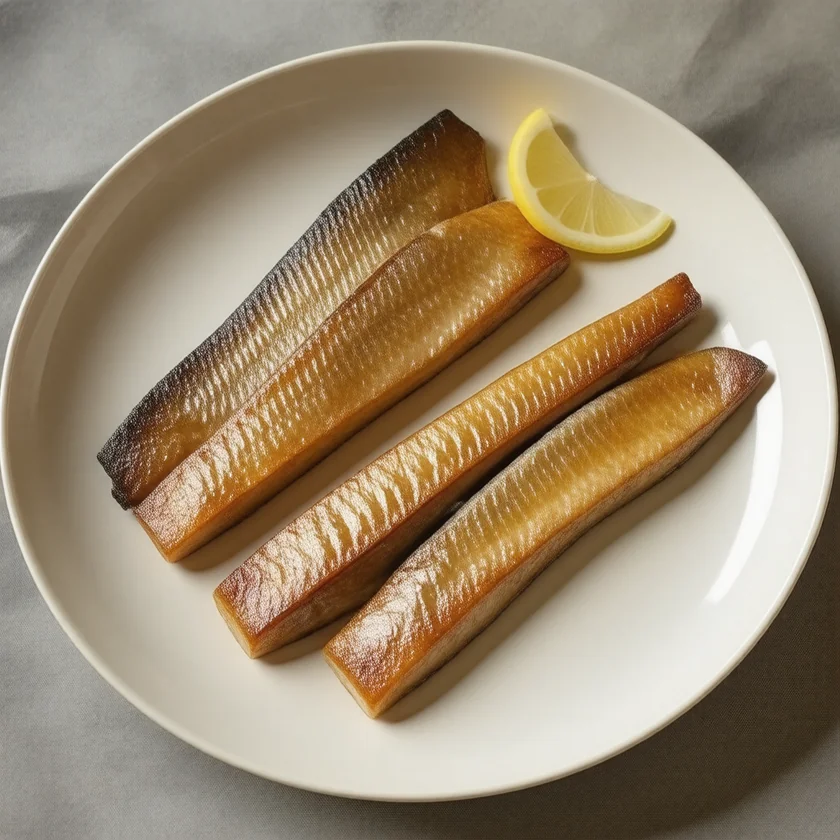
Herring (Clupea harengus in the Atlantic, Clupea pallasii in the Pacific) is one of the most nutrient-dense and economically accessible fish in the human food supply. A single 100 g serving delivers approximately 1.7–2.0 g of marine omega-3 fatty acids (eicosapentaenoic acid (EPA) + docosahexaenoic acid (DHA)), about 167 international units (IU) of Vitamin D3 raw and 214 IU cooked (U.S. Department of Agriculture (USDA) FoodData Central values for Atlantic herring), and roughly 13.7 mcg of Vitamin B12 (570% of the adult Recommended Dietary Allowance, RDA) — making it one of the few foods that simultaneously addresses three of the most common nutritional deficiencies in industrialized populations. Because herring is a small, short-lived, plankton-feeding forage fish, it carries a fraction of the mercury, dioxin, and polychlorinated biphenyl (PCB) load of larger predators like tuna or swordfish. Four benefit pages below explore the omega-3 density that places herring among the top three fish for eicosapentaenoic acid + docosahexaenoic acid per serving, the dual Vitamin D and B12 contribution, the trade-offs between pickled, smoked, and fresh preparations, and the sustainability and mercury profile that make herring a defensible choice on both nutritional and ecological grounds.
Deep-Dive Articles
Omega-3 Density
The 1.7–2.0 g eicosapentaenoic acid + docosahexaenoic acid per 100 g serving, herring's place in the top three omega-3 fish (alongside mackerel and sardines), why marine omega-3 is biochemically distinct from plant alpha-linolenic acid (ALA), the conversion-independent direct eicosapentaenoic acid/docosahexaenoic acid supply, the GISSI-Prevenzione 11,324-patient secondary-prevention trial, REDUCE-IT and icosapent ethyl, and the Inuit cardioprotective epidemiology that launched the omega-3 hypothesis.
Read the deep dive →Vitamin D and B12
Herring as one of the rare natural food sources of meaningful Vitamin D3 (about 167 international units per 100 g raw and 214 cooked in U.S. Department of Agriculture FoodData Central), the 13.7 mcg B12 per 100 g (570% Recommended Dietary Allowance), why fish-derived D3 differs from supplement D2, methylmalonic acid as the gold-standard B12 functional marker, and the methylcobalamin / adenosylcobalamin / hydroxocobalamin pathway distinctions for individuals with methylenetetrahydrofolate reductase (MTHFR) or methionine synthase reductase (MTRR) polymorphisms.
Read the deep dive →Pickled vs Fresh
How pickling, smoking, salting, and kippering affect omega-3 retention, sodium content (~870–1,300 mg per 100 g pickled vs ~90 mg fresh), histamine accumulation in improperly stored fish, biogenic amine formation, the Dutch Hollandse Nieuwe tradition, surströmming fermentation, rollmops, and matjes — with a practical decision tree for choosing the preparation that matches the consumer's blood pressure, kidney function, and histamine tolerance.
Read the deep dive →Sustainability and Lower Mercury
Why short-lived plankton-feeding forage fish accumulate far less mercury than large predators, the Marine Stewardship Council (MSC)-certified North Sea and Norwegian Spring-Spawning herring fisheries, the International Council for the Exploration of the Sea (ICES) quota system, herring's place on the joint U.S. Food and Drug Administration and Environmental Protection Agency "Best Choices" fish list for pregnancy, the 0.04–0.08 ppm mercury range (vs 0.36 ppm for canned albacore and 0.99 ppm for swordfish), dioxin and polychlorinated biphenyl profile, and the carbon footprint comparison with beef and chicken protein sources.
Read the deep dive →Table of Contents
- Deep-Dive Articles
- Why Herring Produces Effects Across So Many Systems
- Two Large Fish-Oil Trials Point in Different Directions
- Research Papers: Omega-3 (Eicosapentaenoic Acid + Docosahexaenoic Acid)
- Research Papers: Vitamin D and B12
- Research Papers: Preparation Methods and Nutrient Retention
- Research Papers: Sustainability, Mercury, and Contaminants
- Research Papers: Cross-Cutting (Cardiology, Cognition, Pregnancy)
- External Authoritative Resources
- Connections
- Featured Videos
Why Herring Produces Effects Across So Many Systems
Most "superfoods" rest on one or two active components. Herring is unusual because it concentrates four nutritionally distinct compounds that each map to a separate physiological mechanism, and because the matrix of a small short-lived forage fish protects against the contaminant trade-off that limits larger fish.
- Marine long-chain omega-3 (eicosapentaenoic acid + docosahexaenoic acid) — eicosapentaenoic acid (EPA) and docosahexaenoic acid (DHA) are incorporated directly into cell membrane phospholipids and serve as substrate for the resolvin and protectin specialized pro-resolving mediator (SPM) families. This is the mechanism behind the cardioprotective, anti-inflammatory, and neurocognitive effects of fatty fish consumption. Critically, eicosapentaenoic acid and docosahexaenoic acid from fish bypass the inefficient alpha-linolenic acid-to-EPA conversion (~5% in adult males) that limits plant omega-3 sources like flaxseed. A 2006 review of human studies by Burdge describes the limit in plain terms: men turn plant alpha-linolenic acid into eicosapentaenoic acid but make very little docosahexaenoic acid from it, while women convert more, possibly because of an effect of oestrogen.
- Vitamin D3 (cholecalciferol) — herring is among the very few natural foods that deliver pharmacologically meaningful Vitamin D3 without supplementation. U.S. Department of Agriculture FoodData Central lists 167 international units per 100 g of raw Atlantic herring, 214 international units cooked (dry heat) and 113 international units pickled. A 2007 Boston University study (Lu and colleagues) found that the vitamin D content of fish varied widely, even within the same species. This addresses the population-level Vitamin D insufficiency that affects an estimated 40% of US adults and underlies bone, immune, and cardiovascular effects covered in the D and B12 deep-dive.
- Vitamin B12 (cobalamin) — at 13.7 mcg per 100 g, herring delivers 570% of the adult B12 Recommended Dietary Allowance in a single serving. B12 is essential for methylation (methionine synthase), succinyl-CoA formation (methylmalonyl-CoA mutase), erythropoiesis, and myelin maintenance. Subclinical B12 deficiency is endemic in older adults, vegans, and patients on long-term metformin or proton pump inhibitor (PPI) therapy.
- Low contaminant burden — because herring are small (~25 cm), short-lived (5–8 years), low on the food chain (plankton and small crustacean feeders), and rapidly reproducing, they accumulate far less methylmercury than larger predators: the U.S. Food and Drug Administration (FDA) mercury table gives a mean of 0.078 parts per million (ppm) for herring, against 0.350 ppm for canned albacore tuna and 0.995 ppm for swordfish. The sustainability and mercury deep-dive documents the regulatory and ecological framework that places herring on the "Best Choices" list of the joint U.S. Food and Drug Administration and Environmental Protection Agency "Advice about Eating Fish", written for people who are or might become pregnant or are breastfeeding and for children aged 1 to 11.
The fourth dimension — covered in the pickled vs fresh deep-dive — is preparation, because the nutritional profile of herring is materially affected by the form in which it is consumed. Pickling introduces 870–1,300 mg of sodium per 100 g serving and can degrade some eicosapentaenoic acid/docosahexaenoic acid via oxidation during the marinating period. Smoking adds polycyclic aromatic hydrocarbon (PAH) exposure depending on the smoking method. Salting compresses sodium even further. Fresh, baked, or grilled herring preserves the full nutrient profile but has a shorter shelf life and a stronger flavor that many consumers find challenging. Each preparation has defensible cases — the deep-dive maps the trade-offs.
Two Large Fish-Oil Trials Point in Different Directions
Two large fish-oil trials, both published in the New England Journal of Medicine in January 2019, pull in different directions, which matters when reading the omega-3 claims made for herring.
- VITAL gave 25,871 adults in the United States (men aged 50 or older, women aged 55 or older, with no requirement of heart disease) either 1 g a day of marine omega-3 fatty acids or a placebo, and followed them for a median of 5.3 years. A major cardiovascular event (heart attack, stroke or death from cardiovascular causes) occurred in 386 people in the omega-3 group and 419 in the placebo group, a difference that was not statistically significant (hazard ratio 0.92; 95% confidence interval 0.80 to 1.06). Invasive cancer was not lower either (820 vs 797 people). Among the secondary results, total heart attacks were lower in the omega-3 group (hazard ratio 0.72; 95% confidence interval 0.59 to 0.90). No excess bleeding or other serious side effects were seen.
- REDUCE-IT tested something different: 4 g a day of icosapent ethyl, a highly purified eicosapentaenoic acid drug, against placebo in 8,179 people already taking statins who had raised triglycerides and either established cardiovascular disease or diabetes with other risk factors. Over a median of 4.9 years, the main combined end point (cardiovascular death, heart attack, stroke, artery-opening procedures or unstable angina) occurred in 17.2% of the drug group and 22.0% of the placebo group (hazard ratio 0.75). More people on the drug were admitted to hospital for atrial fibrillation or flutter (3.1% vs 2.1%).
Neither trial tested eating herring: VITAL used a 1 g fish-oil capsule in a general population, and REDUCE-IT used a high-dose purified eicosapentaenoic acid drug in people at high cardiovascular risk.
Research Papers: Omega-3 (Eicosapentaenoic Acid + Docosahexaenoic Acid)
- GISSI-Prevenzione trial, omega-3 fatty acids in post-MI patients (Lancet 1999) — PubMed PMID: 10465168
- REDUCE-IT trial, icosapent ethyl for cardiovascular risk reduction (NEJM 2019) — PubMed PMID: 30415628
- Bang and Dyerberg, Greenland Inuit plasma lipid pattern and cardiovascular disease (Lancet 1971) — Search PubMed
- Mozaffarian D and Wu JH, omega-3 fatty acids and cardiovascular disease: effects on risk factors, molecular pathways, and clinical events (J Am Coll Cardiol 2011;58(20):2047-67) — PubMed PMID: 22051327
- Serhan CN, pro-resolving lipid mediators are leads for resolution physiology (Nature 2014;510(7503):92-101) — PubMed PMID: 24899309
- Burdge GC, conversion of alpha-linolenic acid to EPA and DHA in adults. — PubMed PMID: 16828546
- VITAL trial, marine omega-3 and primary prevention of cardiovascular disease (NEJM 2019) — PubMed PMID: 30415637
- Calder PC, omega-3 fatty acids and inflammatory processes (Nutrients 2010;2(3):355-374) — PubMed PMID: 22254027
- Mozaffarian D and Rimm EB, fish intake, contaminants, and human health (JAMA 2006) — PubMed PMID: 17047219
- Innes JK and Calder PC, marine omega-3 (n-3) fatty acids for cardiovascular health: an update for 2020 (Int J Mol Sci 2020;21(4):1362) — PubMed PMID: 32085487
Research Papers: Vitamin D and B12
- Lu Z, Chen TC, Zhang A, et al., an evaluation of the vitamin D3 content in fish: is the vitamin D content adequate to satisfy the dietary requirement for vitamin D? (J Steroid Biochem Mol Biol 2007;103(3-5):642-4) — PubMed PMID: 17267210
- Holick MF, Vitamin D deficiency review (NEJM 2007) — PubMed PMID: 17634462
- Ostermeyer U and Schmidt T, Vitamin D content of fish species commonly consumed in Germany PubMed: Ostermeyer fish D content
- Tripkovic L et al., D2 vs D3 supplementation meta-analysis. — PubMed PMID: 22552031
- Allen LH, B12 bioavailability from animal food sources (Am J Clin Nutr 2009) — Search PubMed
- Stabler SP, vitamin B12 deficiency review (NEJM 2013) — PubMed PMID: 23301732
- Methylmalonic acid as a functional marker of B12 status PubMed: MMA functional marker
- Long-term metformin use and B12 deficiency (BMJ 2010) — PubMed PMID: 20488910
- Proton pump inhibitor use and B12 deficiency (JAMA 2013) — PubMed PMID: 24327038
- Autier P, Boniol M, Pizot C, Mullie P, vitamin D status and ill health: a systematic review (Lancet Diabetes Endocrinol 2014;2(1):76-89) — PubMed PMID: 24622671
Research Papers: Preparation Methods and Nutrient Retention
- Aro T et al., omega-3 fatty acid retention in pickled and salted herring PubMed: Aro herring preparations
- Hosomi R et al., effect of cooking methods on omega-3 retention in fish PubMed: Cooking methods and omega-3
- Histamine and biogenic amine formation in fermented and improperly stored fish (FDA review) PubMed: Histamine in fish
- Polycyclic aromatic hydrocarbons (PAH) in traditional smoked fish PubMed: PAH in smoked fish
- Sodium content of pickled herring vs fresh and impact on hypertensive populations PubMed: Sodium pickled fish
- Nielsen NS et al., lipid oxidation in marinated herring during storage PubMed: Marinated herring oxidation
- Surströmming fermentation microbiology and flavor compounds PubMed: Surströmming microbiology
- Vitamin D stability in canned and processed fish PubMed: Vitamin D in canned fish
- Salt-curing and protein quality of herring products PubMed: Salt-cured herring
- Effect of vinegar marinade pH on parasite (Anisakis) viability in herring PubMed: Anisakis and marinade
Research Papers: Sustainability, Mercury, and Contaminants
- FDA/EPA "Advice About Eating Fish" mercury guidelines for pregnant women PubMed: FDA/EPA mercury advisory
- Mahaffey KR, methylmercury exposure and human health (FDA review) PubMed: Mahaffey mercury
- Mercury content of commercial fish species (FDA database analysis) PubMed: Mercury in commercial fish
- Sustainability of small pelagic fish stocks (ICES North Sea herring assessment) PubMed: ICES herring assessment
- Dioxin and PCB content of Baltic vs North Atlantic herring PubMed: Dioxin in herring
- Carbon footprint of capture fisheries vs livestock protein PubMed: Fisheries carbon footprint
- Forage fish and trophic-level ecosystem impacts PubMed: Forage fish ecosystem
- Marine Stewardship Council (MSC) certification and fish stock recovery PubMed: MSC certification
- Mercury body burden in low-trophic-level vs high-trophic-level fish consumers PubMed: Mercury body burden
- Microplastic content in small pelagic fish PubMed: Microplastics in pelagic fish
Research Papers: Cross-Cutting (Cardiology, Cognition, Pregnancy)
- Hu FB et al., fish consumption and CHD mortality in women (JAMA 2002) — Search PubMed
- Daviglus ML et al., fish consumption and 30-year risk of fatal MI (NEJM 1997) — Search PubMed
- Hibbeln JR, fish consumption in pregnancy and child cognitive development (ALSPAC, Lancet 2007) — PubMed PMID: 17307104
- Yurko-Mauro K et al., DHA supplementation and cognitive function in older adults (MIDAS) — Search PubMed
- Cao J et al., omega-3 status and Alzheimer's disease risk PubMed: Omega-3 and Alzheimer's
- Mediterranean diet and cardiovascular outcomes (PREDIMED, NEJM 2018) — PubMed PMID: 29897866
- Fish consumption and depression (meta-analysis) PubMed: Fish and depression
- Omega-3 and rheumatoid arthritis disease activity PubMed: Omega-3 and RA
- Triglyceride lowering with marine omega-3 fatty acids PubMed: Omega-3 and triglycerides
- Pregnancy DHA intake and infant visual and neural development PubMed: Pregnancy DHA
External Authoritative Resources
- U.S. Food and Drug Administration (FDA) — Advice About Eating Fish — the official US "best choices" list, which includes herring
- U.S. National Institutes of Health (NIH) Office of Dietary Supplements — Omega-3 Fatty Acids
- U.S. National Institutes of Health Office of Dietary Supplements (ODS) — Vitamin D Health Professional Fact Sheet
- U.S. National Institutes of Health Office of Dietary Supplements — Vitamin B12 Health Professional Fact Sheet
- Monterey Bay Aquarium Seafood Watch — Herring Recommendations
- U.S. Department of Agriculture (USDA) FoodData Central — Herring nutrient profile
- PubMed — All research on herring nutrition