Vitamin C and Immunity
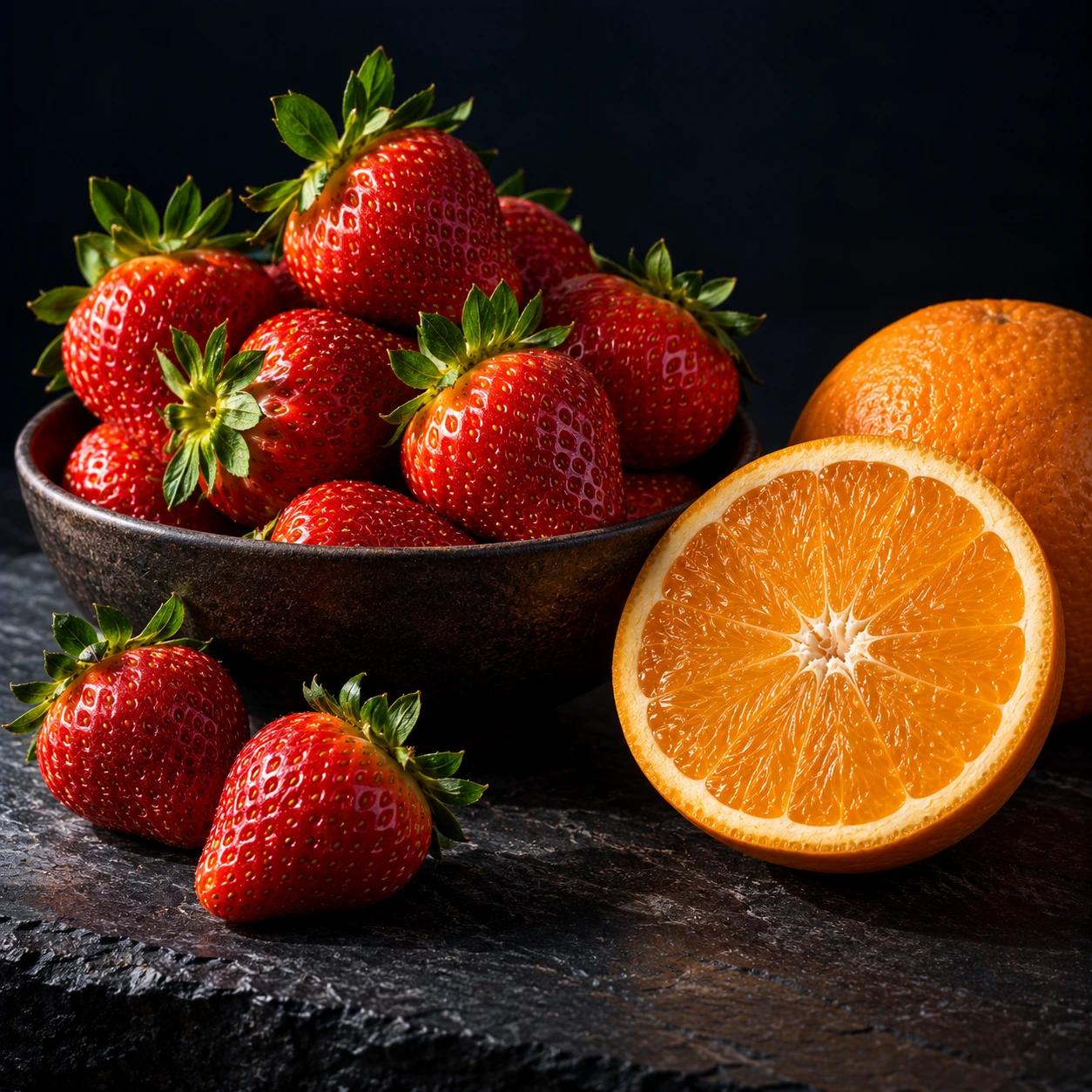
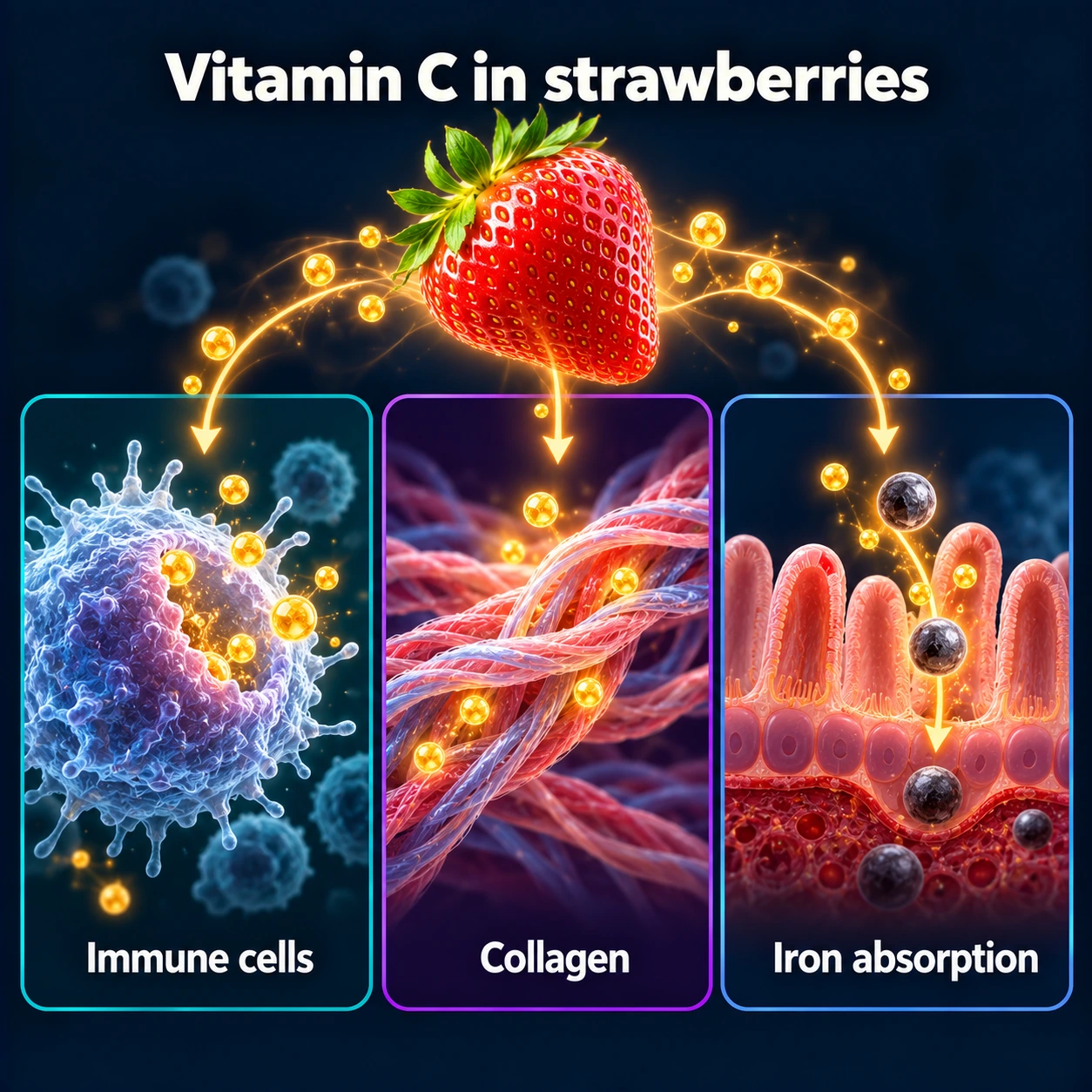
If someone asks you to name a high-vitamin-C food, you will almost certainly say orange. It is one of the most successful pieces of food marketing in history, and by weight it is wrong. Gram for gram, raw strawberries carry more vitamin C than a raw orange — roughly 59 mg per 100 g against about 53 mg, according to the U.S. Department of Agriculture's own composition database. A cup of sliced strawberries supplies somewhere around 90 mg, which covers an adult's entire daily requirement with room to spare. That is a genuinely useful fact, because strawberries are eaten raw, are eaten in quantity, and are not competing for space with anything. This article explains what that vitamin C actually does — especially in the immune system, where the evidence is stronger and stranger than the "vitamin C cures colds" folklore suggests — and what is known about how storage and handling change it between the shop and the bowl.
Table of Contents
- More Vitamin C Than an Orange
- What Vitamin C Actually Does
- Vitamin C Inside an Immune Cell
- The Common Cold, Honestly
- How Much Your Body Can Actually Use
- Collagen, Skin, and Healing
- The Iron Trick
- Scurvy Is Not a Museum Piece
- Keeping the Vitamin C In
- Who Benefits Most
- Key Research Papers
- Connections
- Featured Videos
More Vitamin C Than an Orange
The numbers, from the U.S. Department of Agriculture (USDA) FoodData Central composition tables, are these. Raw strawberries contain approximately 59 mg of vitamin C per 100 g. Raw oranges, averaged across commercial varieties, contain approximately 53 mg per 100 g. Strawberries win, and they win before you account for the fact that a portion of strawberries is easy to make large.
Translated into the way people actually eat:
- A cup of halved strawberries (about 150 g) supplies roughly 85–90 mg of vitamin C.
- The adult Recommended Dietary Allowance is 90 mg for men and 75 mg for women.
- So a single generous bowl of strawberries covers essentially a full day's requirement.
Two honest caveats. First, these are averages: vitamin C content varies substantially between cultivars, with ripeness, with growing conditions and with how long the fruit has been in storage, so any single punnet may be above or below the book figure. Second, strawberries are not the top of the entire league table — guava, blackcurrants, red bell peppers and several others are higher still. The point is not that strawberries are the champion. It is that a food most people file under "sweet treat" is quietly out-performing the food they file under "vitamin C," and doing it in a form that is pleasant to eat a cupful of.
Strawberries also bring a second thing that a vitamin C tablet does not: a matrix of polyphenols, principally anthocyanins and ellagitannins, that appear to contribute to the effects seen in feeding studies. Those are covered in the companion articles on anthocyanins and metabolic health.
What Vitamin C Actually Does
Vitamin C — ascorbic acid — is not a single-purpose nutrient. It is a cofactor, a small molecule that a set of specific enzymes require in order to work, and it is a water-soluble antioxidant that gives up electrons to neutralise reactive molecules. Humans are unusual in needing it from food at all; most mammals synthesise their own, but our ancestors lost the last enzyme in that pathway, so we depend entirely on diet.
The jobs it does include:
- Building collagen. Two enzymes, prolyl hydroxylase and lysyl hydroxylase, stabilise the collagen triple helix, and both need vitamin C. Without it, collagen is made but is structurally weak — which is the whole of scurvy in one sentence.
- Making carnitine. Two steps in carnitine synthesis are vitamin C-dependent. Carnitine ferries fatty acids into mitochondria to be burned, which is part of why profound deficiency causes severe fatigue.
- Making neurotransmitters. Dopamine beta-hydroxylase, which converts dopamine to noradrenaline, requires vitamin C. The brain and adrenal glands hold some of the highest ascorbate concentrations in the body.
- Recycling other antioxidants. Vitamin C regenerates vitamin E from its oxidised form, so the two work as a team rather than in isolation.
- Keeping iron in a usable state. It reduces dietary iron from the ferric to the ferrous form, which the gut absorbs far more readily — see the iron section below.
- Regulating gene activity. A family of enzymes involved in modifying DNA and histones also uses vitamin C, which is one of the more recent and more interesting threads in the research.
Notice how ordinary this list is. Vitamin C is not exotic; it is a maintenance nutrient, involved in a handful of unglamorous reactions the body performs constantly. That is exactly why running low on it produces such a scattered set of symptoms.
Vitamin C Inside an Immune Cell
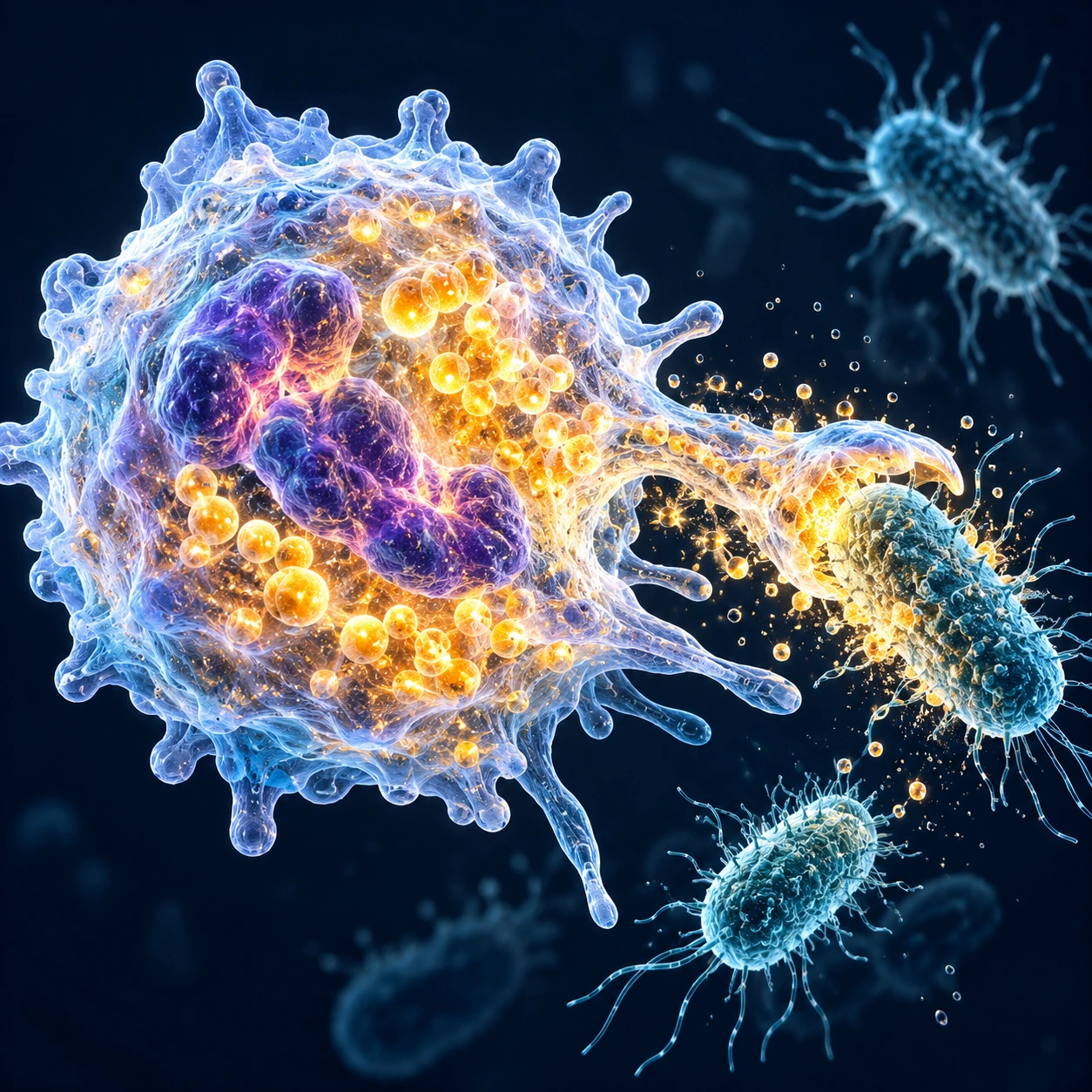
The connection between vitamin C and immunity is not folklore, though the popular version of it is. The concrete finding is that white blood cells concentrate vitamin C aggressively. Neutrophils, monocytes and lymphocytes actively transport ascorbate inward and hold it at concentrations many times higher than the surrounding plasma. In Levine and colleagues' 1996 depletion–repletion study, neutrophils, monocytes and lymphocytes saturated at 100 mg a day and contained concentrations at least 14-fold higher than plasma. Cells do not spend energy accumulating something they do not use.
Carr and Maggini's 2017 review in Nutrients is the standard summary of what that vitamin C is doing there, and the mechanisms are specific:
- Barrier maintenance. Skin and the linings of the airways and gut are the first defence, and they are collagen-dependent structures. Vitamin C supports epithelial barrier function and the synthesis of the lipid barrier of the skin.
- Neutrophil movement. Vitamin C supports chemotaxis — the ability of a neutrophil to detect a chemical signal from an infection site and travel toward it.
- Killing, then cleaning up. Neutrophils destroy bacteria using bursts of reactive oxygen species. Vitamin C both supports that killing function and protects the cell itself from the oxidative damage it is generating. It also supports apoptosis — the orderly death of spent neutrophils — and their clearance by macrophages. That clean-up stage matters: neutrophils that die messily spill their contents and prolong inflammation.
- Lymphocyte function. Vitamin C supports the proliferation and differentiation of B and T cells and appears to influence antibody production.
Two things follow from this that are worth holding on to. First, the effect is about having enough, not about having lots — these are enzyme and transport systems that saturate. Second, requirements genuinely rise during infection: plasma and leukocyte ascorbate fall during acute illness, which is consistent with increased use and turnover rather than with a magic dose-response.
The Common Cold, Honestly
This is where popular belief and evidence part company, and it is worth getting right because the real answer is more interesting than either the hype or the debunking.
The definitive source is the Cochrane review by Hemilä and Chalker, which pooled decades of randomised trials of regular vitamin C supplementation. Its findings, in plain terms:
- Regular supplementation does not stop ordinary people catching colds. Across the general adult population, taking vitamin C every day made no meaningful difference to how often people got sick. This is the finding that deserves the most emphasis, because it is the one most often ignored.
- It does modestly shorten colds. In people taking it regularly, colds were shorter — by roughly 8% in adults and around 14% in children. On a week-long cold, that is a matter of hours, not days.
- There is one population where the effect is large. In trials of people under extreme short-term physical stress — marathon runners, skiers, soldiers on subarctic exercises — regular vitamin C roughly halved the incidence of colds. This is a real and consistent finding, and it is the reason the topic never quite dies.
- Starting it once you already feel ill has not shown consistent benefit in the therapeutic trials. The benefit, such as it is, comes from habitual intake.
How should a person eating strawberries read that? Reasonably. The Cochrane review excluded trials that used less than 0.2 g of vitamin C per day, so its findings come from supplement doses, not from the amount in a cup of strawberries; it did not test food. It is not going to make you immune to colds, and no honest reading of the evidence says it will. What it will do is keep you comfortably above the threshold where immune cell function is compromised, which is a real and worthwhile thing even if it makes for a boring headline. Hemilä's 2017 overview in Nutrients covers the wider infection literature, including pneumonia: it reports that three controlled trials found vitamin C prevented pneumonia, and two controlled trials found a treatment benefit of vitamin C for pneumonia patients.
A 2023 meta-analysis by Hemilä and Chalker in BMC Public Health looked at how bad colds get rather than how long they last. It pooled 15 comparisons from 10 randomised, double-blind trials of at least 1 g of vitamin C a day. Compared with placebo, vitamin C decreased the severity of the common cold by 15% (95% confidence interval 9–21%). In the five comparisons that measured mild and severe symptoms directly, vitamin C had a significant benefit on the duration of severe symptoms and no significant effect on the duration of mild symptoms. These, too, were supplement doses of at least 1 g a day.
How Much Your Body Can Actually Use
There is a good physiological reason to prefer getting vitamin C from food, and it is not sentimentality about whole foods. It is pharmacokinetics.
The landmark work here is Levine and colleagues' depletion–repletion study in the Proceedings of the National Academy of Sciences (1996), followed by Padayatty and colleagues in the Annals of Internal Medicine (2004). They fed healthy volunteers controlled doses and measured what happened. The pattern:
- At low intakes, absorption is efficient — close to complete.
- Plasma concentration rises steeply with intake up to around 100 mg per day, then flattens.
- In Levine's study, 200 mg per day was the first dose beyond the steep part of the curve, and complete plasma saturation occurred at 1000 mg per day.
- Absorption was complete for a single 200 mg dose; at single doses of 500 mg and higher, absorption declined and the absorbed amount was excreted by the kidneys. A 1,000 mg tablet does not put ten times as much into your blood as a 100 mg one; a large fraction of it goes down the toilet.
Put a cup of strawberries against that curve and it sits almost exactly in the efficient part of it. Ninety milligrams, absorbed nearly completely, spread through the day if you eat fruit more than once — that is the shape of intake the body is built for. The intakes where absorption collapses are the ones only achievable with tablets.
Very high supplemental doses are not generally dangerous in healthy people — the tolerable upper intake level is set at 2,000 mg per day for adults, chiefly because larger amounts cause osmotic diarrhoea and abdominal discomfort — but people who form calcium oxalate kidney stones have a specific reason for caution, since ascorbate is metabolised in part to oxalate. That is an argument about supplements, not about fruit.
Collagen, Skin, and Healing
Collagen is the most abundant protein in the body: the scaffolding of skin, blood vessel walls, tendon, cartilage, bone matrix and gum tissue. Building it requires the two hydroxylase enzymes named earlier, and both require vitamin C to keep their iron centre in the working state. Deprive the body of vitamin C and it keeps producing collagen chains, but they do not fold or cross-link properly, and the tissue built from them is fragile.
Pullar, Carr and Vissers' 2017 review sets out what this means for skin specifically. Skin holds high concentrations of ascorbate, particularly in the epidermis, and vitamin C contributes to:
- Structural collagen in the dermis, which determines firmness and resilience.
- The skin's own antioxidant defence against ultraviolet light and pollution, working alongside vitamin E.
- Wound healing, where the demand for new collagen is acute and local ascorbate is consumed rapidly.
- Barrier lipid synthesis, which affects how much water the skin loses.
This is a good place to be clear about what the evidence does and does not support. Adequate vitamin C is necessary for healthy skin and for wound repair — deficiency visibly impairs both. It does not follow that large amounts produce proportionally better skin in a well-nourished person; that leap is where the supplement marketing lives. Fruit that supplies the daily requirement meets the need that the deficiency findings describe; the evidence described here does not show strawberries working as an anti-ageing treatment.
The Iron Trick
This is the most practically useful thing in the article, and almost nobody does it deliberately.
Iron in food comes in two forms. Haem iron, from meat and fish, is absorbed efficiently and is not much affected by the rest of the meal. Non-haem iron, from plants — lentils, beans, leafy greens, whole grains, nuts, seeds — is absorbed poorly, often only a few percent of what is on the plate, and its absorption is strongly influenced by what it is eaten with. Phytates in grains and legumes, polyphenols in tea and coffee, and calcium all inhibit it.
Vitamin C reverses much of that inhibition. The classic work by Lynch and Cook established the mechanism: ascorbate reduces ferric iron to the ferrous form, and it forms a chelate (a tightly bound complex) with ferric iron at acid pH that remains soluble at the alkaline pH of the duodenum, the first stretch of the small intestine, where iron would otherwise precipitate. Lynch and Cook report that ascorbic acid can reverse the inhibiting effect of tea and calcium/phosphate, that the enhancement of iron absorption from vegetable meals is directly proportional to the quantity of ascorbic acid present, and that its influence may be less pronounced in meals containing meat, fish or poultry. The effect is dose-dependent, it happens within the same meal, and it can multiply the iron absorbed from a plant-based meal several times over.
Which makes strawberries an unusually convenient tool, because they go with the exact foods that need the help:
- Strawberries on oatmeal or porridge. Oats carry both iron and phytate; the fruit's vitamin C works against the phytate.
- Strawberries in a spinach salad. A genuinely classic combination, and the reason it works nutritionally is the vitamin C acting on the greens' non-haem iron. Spinach also brings oxalate, which binds iron, so the vitamin C has real work to do here.
- Strawberries alongside lentils, beans or brown rice. Fruit as part of the same meal, not two hours later — the effect depends on the vitamin C and the iron being in the gut together.
- Strawberries with nuts and seeds — pumpkin seeds in particular are iron-dense.
One practical caution that follows from the same chemistry: tea and coffee with a meal inhibit non-haem iron absorption substantially. For people whose iron status is a concern — menstruating women, pregnancy, vegetarian and vegan eating patterns, blood donors — the two findings work in opposite directions: tea or coffee taken with a meal lowers non-haem iron absorption, and vitamin C eaten in the same meal raises it.
Scurvy Is Not a Museum Piece
Scurvy is the disease of vitamin C deficiency, and it is worth understanding because it shows what the vitamin is doing when things go right. Every classic sign follows from collagen that will not hold together: bleeding and spongy gums, loose teeth, easy bruising, bleeding into joints and muscles, wounds that reopen, corkscrew-shaped body hairs with tiny haemorrhages around each follicle, and a profound, characteristic fatigue that appears before any of the visible signs.
Magiorkinis and colleagues' history of the disease traces it from ancient descriptions through the age of sail — where it killed more sailors than combat did — to James Lind's 1747 shipboard trial, one of the first controlled clinical experiments ever performed, in which oranges and lemons cured the affected sailors and the other treatments did not.
It has not gone away. Scurvy still turns up in modern hospitals, in people whose diets have narrowed for reasons that have nothing to do with poverty of supply: severe alcohol dependence, restrictive eating disorders, some autism-associated food selectivity in children, isolated older people living on tea and toast, people on long-term restricted diets after gastrointestinal surgery, and those with severe mental illness. It is routinely missed, because clinicians do not expect it and the early symptoms are non-specific. The dose that cures it is small — tens of milligrams a day — which is another way of saying that a bowl of strawberries a few times a week makes the whole question moot.
Keeping the Vitamin C In
Vitamin C is the most fragile of the common vitamins. It degrades with time, warmth, light, oxygen exposure and contact with water. Strawberries behave differently from that general rule in the one storage study cited here. Cordenunsi and colleagues (2005) stored three strawberry cultivars (Dover, Campineiro and Oso Grande) at 6, 16 and 25 °C for 6 days. Vitamin C content increased during storage, which the authors read as new biosynthesis inside the fruit, and low temperature negatively affected that accumulation: the berries kept cold gained less vitamin C than those kept warmer. The authors judged cold storage an effective way to maintain strawberry quality, and wrote that a compromise between sensory and nutritional values can be achieved at 16 °C for all three cultivars. This was one 6-day study of three cultivars; it does not show what happens over longer storage or in other varieties. The handling points below concern the fruit itself:
- Cold storage and mould. Strawberries left on a warm counter mould faster than refrigerated ones. In the Cordenunsi study the cold slowed the rise in vitamin C rather than preserving more of it.
- Washing just before eating. Surface moisture accelerates both spoilage and nutrient loss, which is why berries are usually stored dry and washed at the last moment.
- Soaking and hulling. Vitamin C is water-soluble and leaches out of a cut surface, so rinsing whole berries under running water before the green tops come off limits that loss.
- How many days. The one storage study cited here followed the fruit for 6 days, and vitamin C rose rather than fell over that time; it did not measure longer storage.
- Frozen strawberries. They are usually picked ripe and frozen quickly, and out of season they are generally cheaper than fresh.
- Cooking costs you most of it. Jam, compote, pie filling and baked goods lose a large share of the vitamin C to heat and to leaching into the syrup. Cooked strawberries are still a pleasure and still carry their polyphenols, which survive heat far better — but they are not a reliable vitamin C source.
- Smoothies. A smoothie that has been sitting open in the fridge since yesterday morning has lost some of what it was made for.
None of this takes effort: most people already keep strawberries in the fridge, rinse them whole just before eating and finish them within a few days.
Who Benefits Most
Vitamin C from fruit is useful to everyone, but a few groups have either a higher requirement or a higher likelihood of falling short:
- Smokers. The Recommended Dietary Allowance (RDA) for smokers is set 35 mg per day higher than for non-smokers, because oxidative stress and metabolic turnover of ascorbate are greater. People exposed to significant second-hand smoke are in a similar position.
- People eating little fruit and vegetable. The single largest determinant of vitamin C status is simply whether fruit and vegetables are on the plate. Very low intakes are common in narrow or convenience-heavy eating patterns.
- Older adults living alone. Appetite, mobility, dentition and shopping access all conspire against fresh produce. Strawberries are soft, need no preparation and require no chewing effort, which makes them one of the easier options.
- People with plant-based iron needs. Vegetarians, vegans, menstruating women and blood donors get double value from vitamin C because of the iron effect above.
- People under heavy physical stress. The one population where the cold trials showed a large effect. Athletes in heavy training blocks have a defensible reason to keep intake reliably adequate.
- People recovering from surgery or wounds. Collagen demand is elevated while healing, and adequate vitamin C is a genuine requirement rather than an optional extra.
- People with malabsorption or restricted diets. Inflammatory bowel disease, coeliac disease, post-surgical short bowel and long-term elimination diets all raise the risk of quietly running low.
For everyone else, the summary is simple and undramatic. A cup of strawberries covers the day. It is not a treatment and it will not stop you catching a cold. It keeps a nutrient that a dozen enzymes depend on comfortably topped up, in a form your gut absorbs almost completely, and it happens to taste like summer.
Key Research Papers
- Carr AC, Maggini S. Vitamin C and immune function. Nutrients. 2017;9(11):1211. — The standard review of ascorbate in barrier function, neutrophil chemotaxis and killing, apoptosis and clearance, and lymphocyte function. — doi:10.3390/nu9111211
- Hemilä H, Chalker E. Vitamin C for preventing and treating the common cold. Cochrane Database of Systematic Reviews. 2013;(1):CD000980. — No reduction in cold incidence in the general population; a modest reduction in duration; a roughly halved incidence in people under extreme physical stress. — doi:10.1002/14651858.CD000980.pub4
- Hemilä H. Vitamin C and infections. Nutrients. 2017;9(4):339. — doi:10.3390/nu9040339
- Hemilä H, Chalker E. Vitamin C reduces the severity of common colds: a meta-analysis. BMC Public Health. 2023;23(1):2468. — Fifteen comparisons from 10 randomised double-blind trials of at least 1 g a day: severity reduced by 15% (95% CI 9–21%). — doi:10.1186/s12889-023-17229-8
- Levine M, Conry-Cantilena C, Wang Y, et al. Vitamin C pharmacokinetics in healthy volunteers: evidence for a recommended dietary allowance. Proceedings of the National Academy of Sciences. 1996;93(8):3704–3709. — The depletion–repletion study establishing where plasma ascorbate saturates. — doi:10.1073/pnas.93.8.3704
- Padayatty SJ, Sun H, Wang Y, et al. Vitamin C pharmacokinetics: implications for oral and intravenous use. Annals of Internal Medicine. 2004;140(7):533–537. — doi:10.7326/0003-4819-140-7-200404060-00010
- Pullar JM, Carr AC, Vissers MCM. The roles of vitamin C in skin health. Nutrients. 2017;9(8):866. — doi:10.3390/nu9080866
- Lynch SR, Cook JD. Interaction of vitamin C and iron. Annals of the New York Academy of Sciences. 1980;355:32–44. — The mechanism behind the strawberries-with-lentils pairing. — doi:10.1111/j.1749-6632.1980.tb21325.x
- Magiorkinis E, Beloukas A, Diamantis A. Scurvy: past, present and future. European Journal of Internal Medicine. 2011;22(2):147–152. — doi:10.1016/j.ejim.2010.10.006
- Cordenunsi BR, Genovese MI, Oliveira do Nascimento JR, et al. Effects of temperature on the chemical composition and antioxidant activity of three strawberry cultivars. Food Chemistry. 2005;91(1):113–121. — Three cultivars stored at 6, 16 and 25 °C for 6 days: vitamin C rose during storage, and low temperature negatively affected that rise. — doi:10.1016/j.foodchem.2004.05.054
- Giampieri F, Tulipani S, Alvarez-Suarez JM, et al. The strawberry: composition, nutritional quality, and impact on human health. Nutrition. 2012;28(1):9–19. — doi:10.1016/j.nut.2011.08.009
- Aaby K, Mazur S, Nes A, Skrede G. Phenolic compounds in strawberry (Fragaria × ananassa Duch.) fruits: composition in 27 cultivars and changes during ripening. Food Chemistry. 2012;132(1):86–97. — Documents how much composition varies between cultivars and with ripeness. — doi:10.1016/j.foodchem.2011.10.037
- USDA FoodData Central, U.S. Department of Agriculture, Agricultural Research Service. — fdc.nal.usda.gov — The source of the 59 mg vs 53 mg per 100 g comparison between raw strawberries and raw oranges.
- PubMed topic search: PubMed: ascorbic acid and neutrophil function
- PubMed topic search: PubMed: vitamin C and non-haem iron absorption