Anthocyanins and Heart Health
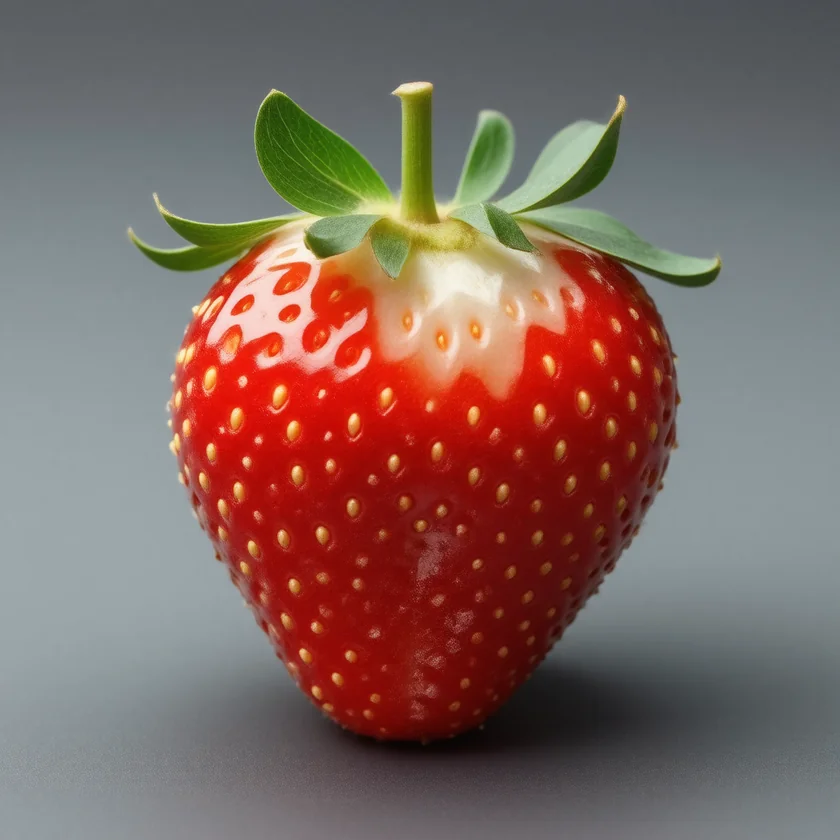
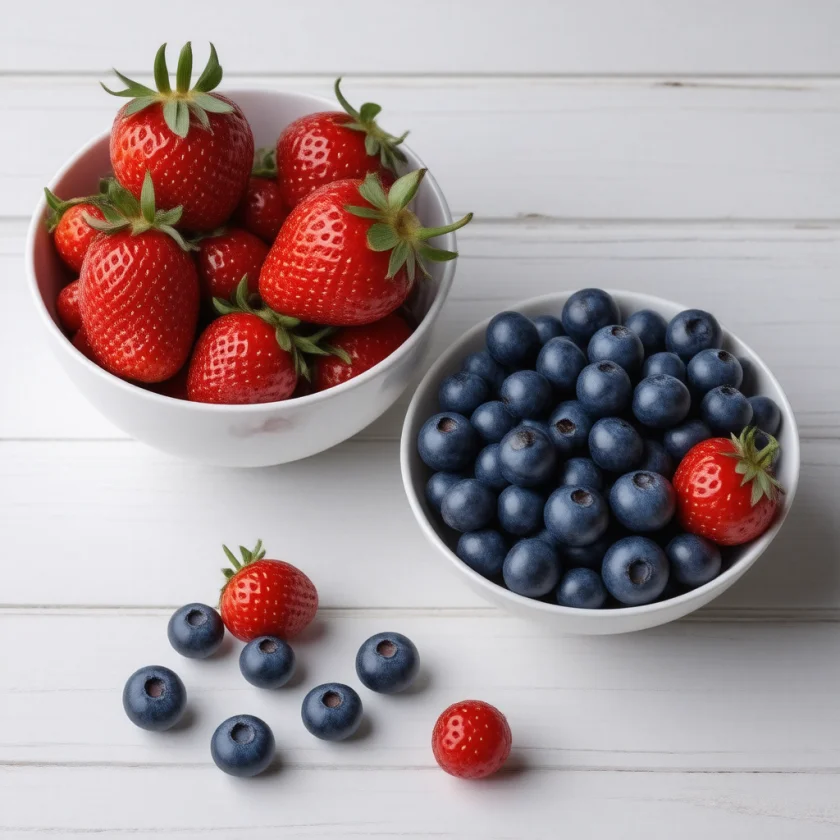
Berries are usually lumped together in health writing, as though a strawberry and a blueberry were interchangeable. Chemically they are not. The pigment that makes a blueberry blue-black is mostly cyanidin and delphinidin; the pigment that makes a strawberry scarlet is overwhelmingly a single, simpler compound called pelargonidin-3-glucoside, which is uncommon as a dominant anthocyanin anywhere else in the diet. That difference is why strawberries are a bright true red rather than purple, and it also means the strawberry brings something to the table that other berries do not. This article covers what pelargonidin actually is, what happens to it after you swallow it (the answer is stranger than "it acts as an antioxidant in your blood"), what the large population studies and the feeding trials each show, and where the honest limits of that evidence lie.
Table of Contents
- The Pigment That Makes Strawberries Different
- Where It Sits in the Fruit
- What Happens After You Swallow It
- What the Big Population Studies Show
- What the Feeding Trials Show
- How It Might Actually Work
- Beyond the Heart: Inflammation and Joints
- Berries and the Ageing Brain
- What a Realistic Dose Looks Like
- How Colour, Freezing and Preparation Affect What You Get
- The Honest Limits
- Key Research Papers
- Connections
- Featured Videos
The Pigment That Makes Strawberries Different
Anthocyanins are the water-soluble pigments responsible for most of the red, purple and blue in fruit and vegetables. They belong to the flavonoid family, and there are six that matter in food: pelargonidin, cyanidin, delphinidin, peonidin, petunidin and malvidin. Each has a characteristic colour range, and each fruit has its own signature.
Strawberries are unusual because they are so one-note. Pelargonidin-3-glucoside is by a wide margin the dominant anthocyanin in ripe strawberry fruit — in most cultivars it accounts for the large majority of total anthocyanin content, with pelargonidin-3-rutinoside and a smaller amount of cyanidin-3-glucoside making up much of the remainder. Aaby and colleagues measured 27 cultivars and found the pattern held across all of them, with the absolute amounts varying a great deal between varieties and rising sharply as the fruit ripened.
Compare that with the neighbours:
- Blueberries carry a complex mixture dominated by delphinidin and malvidin derivatives — hence the blue-purple.
- Blackberries and cherries are largely cyanidin-based.
- Red grapes lean on malvidin.
- Strawberries and raspberries are the notable dietary sources where pelargonidin leads — and strawberries far more so than raspberries.
Pelargonidin has one fewer hydroxyl group on its B-ring than cyanidin, and one fewer again than delphinidin. That small structural difference determines the colour (fewer hydroxyls shifts it toward orange-red), and it also affects how the molecule behaves in the gut and the bloodstream. If you eat only one kind of berry, you are eating a narrower chemical range than you might assume — which is the practical argument for mixing them rather than for elevating any one.
The general chemistry and health literature on this whole class of compounds is covered on the site's Anthocyanins page; this article stays with what is specific to strawberries.
Where It Sits in the Fruit
Anthocyanins accumulate in the outer tissue of the receptacle — the red flesh — and their concentration is one of the most reliable visual signals in the whole of fruit selection. A strawberry that is deep red all the way through has more of them than one that is pale or white-shouldered.
Three things follow, and all are practical:
- Strawberries do not ripen after picking. Unlike a banana or a pear, a strawberry picked pale stays pale. Its sugar content and anthocyanin content are set at harvest, so fruit that is not fully coloured when bought does not improve on the counter.
- Colour is a real proxy for content. Aaby's cultivar work found anthocyanins rising steeply through ripening. Deep colour, strong aroma and full flavour tend to travel together, which is a rare case where the appealing fruit is also the more nutritious one.
- Large is not better. The very large, hollow-centred, pale-fleshed berries bred for volume and transport tend to be more dilute in every respect. Smaller, denser, fully-red fruit generally carries more per gram.
The achenes — the little specks on the outside, which are botanically the true fruits — contribute almost nothing to the anthocyanin content but carry a disproportionate share of the fruit's ellagitannins. Ariza and colleagues have documented how concentrated the achenes are in those compounds. That is a separate story, told in the article on blood sugar and metabolic health, but it is another reason to eat strawberries whole rather than juiced.
What Happens After You Swallow It
Here is where the popular story about berries and antioxidants breaks down, and where the real science is more interesting.
Anthocyanins have low apparent bioavailability. Measured as intact pigment recovered in blood and urine, only a small fraction — typically well under a few percent — of what you eat shows up. For strawberries, Felgines and colleagues measured it directly: six volunteers ate a meal containing 200 g of strawberries, and total urinary excretion of strawberry anthocyanin metabolites corresponded to 1.80% of the pelargonidin-3-glucoside eaten. For years this was treated as an embarrassment for the field: how can a compound do anything if almost none of it gets in?
The answer came from tracer work. Czank and colleagues gave eight men 500 mg of a 13C-labelled anthocyanin (cyanidin-3-glucoside) and tracked where the carbon went. Counting the breakdown products as well as the intact pigment, the relative bioavailability was 12.38%. The intact pigment was indeed scarce — but the labelled carbon turned up abundantly as a wide range of degradation products and phenolic metabolites, circulating for far longer and at far higher concentrations than the parent compound, and cleared over a couple of days rather than a couple of hours: the labelled metabolites were present in the circulation for up to 48 hours, with half-lives between 12.44 and 51.62 hours. Kay and colleagues had earlier shown that anthocyanins circulate in adult men primarily as metabolites rather than in their original form. Fang's review of anthocyanin bioavailability makes the same point across the literature.
For strawberries specifically, Felgines and colleagues fed volunteers strawberries and recovered pelargonidin in urine largely as glucuronide and sulfate conjugates — the liver's standard processing chemistry — rather than as the pigment that went in; more than 80% of what was excreted was a single monoglucuronide of pelargonidin. Sandhu and colleagues followed the metabolic fate of strawberry polyphenols after chronic intake in healthy older adults and again found a broad spread of downstream metabolites.
What this means in plain language:
- The idea that you eat a red pigment and it floats around your bloodstream mopping up free radicals is essentially wrong. Plasma concentrations of intact anthocyanin are far too low for that.
- What you actually get is a large and long-lived family of smaller phenolic compounds, produced partly by the liver and partly by gut bacteria, at concentrations that are biologically plausible.
- Effects seen in trials are therefore most likely driven by signalling — these metabolites interacting with cells and gene expression — rather than by direct chemical antioxidant activity in blood.
- Because gut bacteria are involved, different people process the same berry differently. This is a recurring theme in polyphenol research and a good reason to be sceptical of any promise of a uniform effect.
What the Big Population Studies Show
The observational evidence for anthocyanins and heart disease points mostly in one direction, though not for every outcome, and strawberries are a major contributor to intake in Western diets.
The most cited single study is Cassidy and colleagues (2013) in Circulation, drawing on the Nurses' Health Study II — a cohort of nearly 94,000 younger and middle-aged women followed for 18 years. Women in the highest quintile of anthocyanin intake had roughly a third lower rate of heart attack than those in the lowest, after adjustment for a long list of dietary and lifestyle factors. The two foods driving intake in that population were strawberries and blueberries, and eating more than three servings a week of the two combined showed a trend toward lower risk that did not reach statistical significance (hazard ratio 0.66, 95% confidence interval 0.40–1.08).
Cassidy and colleagues (2016) in the American Journal of Clinical Nutrition looked at 43,880 men in the Health Professionals Follow-up Study over 24 years. Higher anthocyanin intake was not associated with total or fatal heart attack, or with stroke; after adjustment it was associated with a lower risk of nonfatal heart attack (hazard ratio 0.87, 95% confidence interval 0.75–1.00), a borderline result. So the men's cohort only partly replicated the women's finding — which matters, because a finding that appears in only one sex or one cohort is weaker than one that replicates.
Now the caveat, and it is not a formality. These are observational studies and they cannot establish cause. People who eat a lot of berries differ systematically from people who do not: they eat more produce overall, tend to smoke less, exercise more, weigh less, have more education and more money, and are more likely to see a doctor. Statistical adjustment reduces this problem but cannot eliminate it, because you can only adjust for what you measured. The berry association could be partly or largely a marker for a whole way of living.
Both of those cohorts are American, so the next question is what happens when many cohorts are pooled. Two pooled analyses give a mixed answer:
- Kimble and colleagues (2019), Critical Reviews in Food Science and Nutrition: a meta-analysis of prospective cohort studies linked dietary anthocyanins with a lower risk of coronary heart disease (relative risk 0.91, 95% CI 0.83–0.99) and of cardiovascular death (0.92, 95% CI 0.87–0.97), but found no relationship with heart attack, stroke or total cardiovascular disease. The heart-attack finding from the Nurses' study was therefore not confirmed when cohorts were pooled.
- Xu and colleagues (2021), Frontiers in Nutrition: pooling 15 prospective cohort studies, high dietary anthocyanin intake was related to a lower risk of coronary heart disease (relative risk 0.83, 95% CI 0.72–0.95), total cardiovascular disease (0.73, 95% CI 0.55–0.97) and cardiovascular deaths (0.91, 95% CI 0.87–0.96). In the same review's pooled trials, anthocyanin-rich berries lowered blood total cholesterol and C-reactive protein (a blood marker of inflammation), but neither berries nor purified anthocyanins substantially improved body mass index, blood pressure or flow-mediated dilation (a test of how well an artery widens).
What keeps the finding under study is that pooled cohorts point the same way for coronary heart disease and cardiovascular death, and that there are plausible mechanisms tested in the trials below. That is about as much as observational nutrition can offer: a reason for interest, not proof.
What the Feeding Trials Show
Randomised controlled trials are the stronger design, and strawberries have been tested in a decent number of them — usually as freeze-dried strawberry powder, which lets researchers standardise the dose and blind the comparison.
- Basu and colleagues (2010), Nutrition Research: adults with metabolic syndrome given freeze-dried strawberries showed reductions in total and low-density lipoprotein (LDL) cholesterol and in a marker of vascular adhesion, without changes in blood pressure or glucose. Twenty-seven adults (2 men, 25 women) drank a beverage made with 50 g of freeze-dried strawberries a day — which the authors equate to approximately 3 cups of fresh strawberries — or water, for 8 weeks. Total cholesterol fell from 5.8 to 5.2 mmol/L and LDL cholesterol from 3.5 to 3.1 mmol/L, and blood vascular cell adhesion molecule-1 (VCAM-1) fell from 272.7 to 223.0 ng/mL; serum glucose, triglycerides, HDL cholesterol, blood pressure and waist circumference did not change. A clean, modest, believable result.
- Zunino and colleagues (2012), British Journal of Nutrition: short-term strawberry powder in obese adults produced modest improvements in the lipid and low-density lipoprotein particle profile.
- Ellis and colleagues (2011), Journal of Atherosclerosis and Thrombosis: six weeks of daily strawberry intake in overweight men and women blunted the inflammatory and thrombotic response to a challenge meal — a nice demonstration that the effect shows up in how the body handles a stressor, not only in fasting numbers.
- Basu and colleagues (2021), Antioxidants: a randomised controlled crossover trial in adults with features of metabolic syndrome and a low baseline intake of fruit and vegetables (33 completed all three four-week phases) compared a control powder with 13 g a day (one serving) and 32 g a day (2.5 servings) of strawberry powder. Both doses raised serum antioxidant capacity and superoxide dismutase activity and lowered lipid peroxidation; the higher dose also lowered blood levels of soluble vascular cell adhesion molecule-1 (sVCAM-1) and tumour necrosis factor-α, which the authors use as blood markers of endothelial function and inflammation. The trial measured these blood markers; it did not measure the responsiveness of the blood vessel lining itself.
- Huang and colleagues (2016), Scientific Reports: a meta-analysis of randomised trials of berry consumption across cardiovascular risk factors, pooling the small studies to see whether a signal survives. It pooled 22 trials with 1,251 people and reported favourable effects on several risk markers — LDL cholesterol down by 0.21 mmol/L and systolic blood pressure down by 2.72 mmHg, with reductions also in fasting glucose, body mass index, HbA1c and tumour necrosis factor-α — while noting, as such analyses usually must, that the individual trials were small, short and heterogeneous.
Two meta-analyses limited to strawberries narrow the picture. Gao and colleagues (2020), British Journal of Nutrition, pooled 11 strawberry trials: strawberries lowered C-reactive protein by 0.63 mg/l but did not change blood pressure, blood fats or fasting blood glucose in the main analyses. Total cholesterol fell (by 0.52 mmol/l) only in people whose starting level was above 5 mmol/l, and LDL cholesterol (by 0.31 mmol/l) only in people starting above 3 mmol/l. Shahraki Jazinaki and colleagues (2025), Avicenna Journal of Phytomedicine, pooled eight trials and found no significant effect of strawberries on systolic or diastolic blood pressure.
Read as a group, these trials say something fairly specific: strawberries produce small improvements in some intermediate markers — C-reactive protein, oxidative stress markers, adhesion molecules, post-meal inflammation — while cholesterol changes appeared mainly in people whose cholesterol was high to begin with. What no trial has done, and what would be extremely expensive to do, is show that eating strawberries prevents heart attacks. The gap between "improves a marker over four weeks" and "prevents an event over twenty years" is real, and anyone who elides it is selling something.
How It Might Actually Work
Several mechanisms have support, and they are not mutually exclusive:
- Endothelial function and nitric oxide. The single layer of cells lining every blood vessel controls how the vessel dilates, largely through nitric oxide. Anthocyanin metabolites appear to support nitric oxide availability and endothelial responsiveness. Basu's 2021 crossover trial did not measure this directly; it found lower blood levels of the adhesion marker sVCAM-1 at the higher dose. Endothelial dysfunction is one of the earliest events in atherosclerosis, so this is a mechanistically early and meaningful place to act.
- Adhesion molecules. Before a plaque forms, immune cells must stick to the vessel wall, which requires adhesion molecules such as VCAM-1. Strawberry trials have reported reductions in these markers — a plausible step in the chain rather than a downstream curiosity.
- Low-density lipoprotein oxidation. Oxidised low-density lipoprotein particles are far more atherogenic than unmodified ones. Several strawberry trials report reduced markers of lipid peroxidation.
- Post-meal inflammation. A large, fatty, refined-carbohydrate meal produces a transient inflammatory and thrombotic surge. Over a lifetime of three meals a day, that adds up. Ellis's trial showed strawberry intake blunting exactly this response.
- Cell signalling rather than radical scavenging. Given the bioavailability data above, the most credible general mechanism is that phenolic metabolites modulate inflammatory signalling pathways and gene expression at concentrations that actually occur in blood — not that they act as circulating antioxidants.
- The gut microbiome. A substantial share of ingested polyphenol is metabolised by colonic bacteria, and those bacteria are themselves changed by what they are fed. Wallace's review of anthocyanins in cardiovascular disease and Pojer's overview both discuss this route.
Beyond the Heart: Inflammation and Joints
One of the more interesting strawberry trials had nothing to do with the heart. Basu and colleagues (2018), in Food & Function, studied obese adults with knee osteoarthritis — a condition where the pain is driven substantially by low-grade inflammation in and around the joint. Daily strawberry intake reduced circulating tumour necrosis factor and markers of lipid peroxidation.
This is worth reporting carefully. It is a small trial. It measured blood markers alongside symptom reporting, not joint structure, and it does not show that strawberries treat osteoarthritis. What it does show is that the anti-inflammatory signal seen in the cardiovascular trials is not confined to cardiovascular contexts — it turns up in a group of people whose problem is inflammation somewhere else entirely. For anyone living with an inflammatory joint condition, that is a reasonable footnote in favour of berries as part of the diet, and not a substitute for anything.
Berries and the Ageing Brain
Anthocyanin metabolites cross into the brain, and the observational data on berries and cognitive ageing are reasonably consistent. Devore and colleagues (2012), in Annals of Neurology, followed older women in the Nurses' Health Study and found that greater intake of berries and of total flavonoids was associated with slower rates of cognitive decline — on the order of delaying decline by a couple of years, in the authors' framing. Strawberries and blueberries were the leading berry sources.
On the trial side, Miller and colleagues (2021) in the British Journal of Nutrition ran a randomised, double-blind, placebo-controlled trial of dietary strawberry in older adults and reported improvement on a cognitive measure. This is one of relatively few properly controlled trials in this area, which makes it valuable, but it is a single trial with a small sample, and single trials in cognition have a poor track record of replicating.
The fair summary: a berry-rich diet is consistently associated with healthier cognitive ageing, the mechanism is plausible, one controlled trial is encouraging, and nobody has shown that strawberries prevent dementia. Anyone claiming otherwise has gone past the evidence.
What a Realistic Dose Looks Like
The gap between trial doses and normal eating is worth being explicit about, because it is where a lot of health writing quietly cheats.
Most strawberry trials use freeze-dried strawberry powder. Freeze-drying removes essentially all the water, and strawberries are about 91% water, so a small weight of powder stands for a lot of fruit. The doses are not all large: Basu's 2021 trial used 13 g a day (described as one serving) and 32 g a day (2.5 servings); Miller's 2021 trial and Sandhu's 2018 study used 24 g a day, which the authors equate to two cups of fresh strawberries; Basu's 2010 trial used 50 g a day, equated to approximately 3 cups of fresh strawberries. The larger doses are a lot of fruit to eat every day for weeks, which is precisely why researchers use powder.
Two consequences:
- The lower doses are closer to ordinary eating. In Basu's 2021 trial the 13 g dose already raised antioxidant status and lowered lipid peroxidation, while the fall in sVCAM-1 and tumour necrosis factor-α was seen only at 32 g.
- The observational studies looked at real-world intakes — in the Cassidy cohort, the strawberry-and-blueberry comparison was at more than three servings a week, where the result was a trend that did not reach statistical significance — and they are the better guide to what an ordinary diet involves.
Those cohort intakes — a few servings of berries a week, mixed across types through the year — are within reach of an ordinary diet, including frozen berries when fresh ones are out of season and expensive.
How Colour, Freezing and Preparation Affect What You Get
- Deeply coloured fruit carries more. Colour tracks anthocyanin content, and strawberries do not ripen after picking. A pale-shouldered berry does not get redder on the counter.
- Frozen is genuinely good. Anthocyanins are far more heat- and storage-stable than vitamin C, and freezing preserves them well. Out of season, frozen berries are usually better value and often better fruit than tired fresh ones.
- Whole fruit keeps the achenes and fibre. Juicing throws away the achenes and the fibre. The polyphenols in the seeds and the fibre that carries polyphenols to the colon are part of the point.
- Mixing berries widens the range. Because strawberries are so dominated by pelargonidin, eating strawberries alone gives a narrow chemical range. Rotating strawberries, blueberries, blackberries and raspberries covers the whole anthocyanin family.
- Cooking costs you less than you might think. Anthocyanins degrade with prolonged heat and shift colour with acidity, but they survive cooking far better than vitamin C does. A brief warm compote keeps most of them; a long-boiled jam with a lot of added sugar is a different matter, and the sugar is then the bigger issue.
- Test-tube "antioxidant" numbers say little about people. Test-tube antioxidant capacity scores have very little to do with what happens in a person, for all the reasons in the absorption section above.
- A supplement is not the same as the fruit. Isolated anthocyanin extracts have not shown the same results as whole fruit, and whole fruit brings fibre, vitamin C, potassium and the ellagitannins as well.
The Honest Limits
Setting out the weaknesses is the only way this kind of article is worth reading.
- The strong evidence is observational. The large, long, impressive studies cannot establish cause, and berry eaters differ from non-berry-eaters in many ways.
- The causal evidence is short and small. The randomised trials run for weeks, enrol dozens of people, and measure markers rather than outcomes.
- Trial doses exceed normal eating. Two to four cups a day is not a diet, it is a protocol.
- Effects are modest. Where trials find changes in cholesterol or endothelial function, the changes are small — and in the 2020 strawberry meta-analysis cholesterol fell only in people who started high — nothing like the effect of a medicine.
- Individual response varies. Because gut bacteria do much of the metabolism, the same fruit produces different metabolite profiles in different people.
- Publication bias is a live concern. This does not make the findings wrong, but it argues for weighting meta-analyses and independent replications over single positive trials.
None of these limits counts against strawberries as food — a genuinely nutritious, low-calorie, well-liked fruit whose regular consumption is associated with better cardiovascular outcomes in some studies and whose mechanisms are plausible. What the evidence does not support is treating them as a medicine.
Key Research Papers
- Cassidy A, Mukamal KJ, Liu L, et al. High anthocyanin intake is associated with a reduced risk of myocardial infarction in young and middle-aged women. Circulation. 2013;127(2):188–196. — Nurses' Health Study II; strawberries and blueberries were the dominant anthocyanin sources. Observational. — doi:10.1161/CIRCULATIONAHA.112.122408
- Cassidy A, Bertoia M, Chiuve S, et al. Habitual intake of anthocyanins and flavanones and risk of cardiovascular disease in men. American Journal of Clinical Nutrition. 2016;104(3):587–594. — doi:10.3945/ajcn.116.133132
- Basu A, Fu DX, Wilkinson M, et al. Strawberries decrease atherosclerotic markers in subjects with metabolic syndrome. Nutrition Research. 2010;30(7):462–469. — doi:10.1016/j.nutres.2010.06.016
- Basu A, Izuora K, Betts NM, et al. Dietary strawberries improve biomarkers of antioxidant status and endothelial function in adults with cardiometabolic risks in a randomized controlled crossover trial. Antioxidants. 2021;10(11):1730. — doi:10.3390/antiox10111730
- Zunino SJ, Parelman MA, Freytag TL, et al. Effects of dietary strawberry powder on blood lipids and inflammatory markers in obese human subjects. British Journal of Nutrition. 2012;108(5):900–909. — doi:10.1017/S0007114511006027
- Ellis CL, Edirisinghe I, Kappagoda T, Burton-Freeman B. Attenuation of meal-induced inflammatory and thrombotic responses in overweight men and women after 6-week daily strawberry (Fragaria) intake. Journal of Atherosclerosis and Thrombosis. 2011;18(4):318–327. — doi:10.5551/jat.6114
- Huang H, Chen G, Liao D, et al. Effects of berries consumption on cardiovascular risk factors: a meta-analysis with trial sequential analysis of randomized controlled trials. Scientific Reports. 2016;6:23625. — doi:10.1038/srep23625
- Basu A, Kurien BT, Tran H, et al. Strawberries decrease circulating levels of tumor necrosis factor and lipid peroxides in obese adults with knee osteoarthritis. Food & Function. 2018;9(12):6218–6226. — doi:10.1039/c8fo01194j
- Czank C, Cassidy A, Zhang Q, et al. Human metabolism and elimination of the anthocyanin, cyanidin-3-glucoside: a 13C-tracer study. American Journal of Clinical Nutrition. 2013;97(5):995–1003. — The tracer study that reframed anthocyanin bioavailability around metabolites. — doi:10.3945/ajcn.112.049247
- Kay CD, Mazza G, Holub BJ. Anthocyanins exist in the circulation primarily as metabolites in adult men. Journal of Nutrition. 2005;135(11):2582–2588. — doi:10.1093/jn/135.11.2582
- Felgines C, Talavéra S, Gonthier MP, et al. Strawberry anthocyanins are recovered in urine as glucuro- and sulfoconjugates in humans. Journal of Nutrition. 2003;133(5):1296–1301. — Strawberry-specific: what pelargonidin looks like by the time it leaves the body. — doi:10.1093/jn/133.5.1296
- Sandhu AK, Miller MG, Thangthaeng N, et al. Metabolic fate of strawberry polyphenols after chronic intake in healthy older adults. Food & Function. 2018;9(1):96–106. — doi:10.1039/c7fo01843f
- Fang J. Bioavailability of anthocyanins. Drug Metabolism Reviews. 2014;46(4):508–520. — doi:10.3109/03602532.2014.978080
- Wallace TC. Anthocyanins in cardiovascular disease. Advances in Nutrition. 2011;2(1):1–7. — doi:10.3945/an.110.000042
- Pojer E, Mattivi F, Johnson D, Stockley CS. The case for anthocyanin consumption to promote human health: a review. Comprehensive Reviews in Food Science and Food Safety. 2013;12(5):483–508. — doi:10.1111/1541-4337.12024
- Aaby K, Mazur S, Nes A, Skrede G. Phenolic compounds in strawberry (Fragaria × ananassa Duch.) fruits: composition in 27 cultivars and changes during ripening. Food Chemistry. 2012;132(1):86–97. — The source for pelargonidin-3-glucoside's dominance across cultivars. — doi:10.1016/j.foodchem.2011.10.037
- Devore EE, Kang JH, Breteler MMB, Grodstein F. Dietary intakes of berries and flavonoids in relation to cognitive decline. Annals of Neurology. 2012;72(1):135–143. — doi:10.1002/ana.23594
- Miller MG, Thangthaeng N, Rutledge GA, et al. Dietary strawberry improves cognition in a randomised, double-blind, placebo-controlled trial in older adults. British Journal of Nutrition. 2021;126(2):253–263. — doi:10.1017/S0007114521000222
- Kimble R, Keane KM, Lodge JK, Howatson G. Dietary intake of anthocyanins and risk of cardiovascular disease: a systematic review and meta-analysis of prospective cohort studies. Critical Reviews in Food Science and Nutrition. 2019;59(18):3032–3043. — doi:10.1080/10408398.2018.1509835
- Xu L, Tian Z, Chen H, et al. Anthocyanins, anthocyanin-rich berries, and cardiovascular risks: systematic review and meta-analysis of 44 randomized controlled trials and 15 prospective cohort studies. Frontiers in Nutrition. 2021;8:747884. — doi:10.3389/fnut.2021.747884
- Gao Q, Qin LQ, Arafa A, et al. Effects of strawberry intervention on cardiovascular risk factors: a meta-analysis of randomised controlled trials. British Journal of Nutrition. 2020;124(3):241–246. — doi:10.1017/S000711452000121X
- Shahraki Jazinaki M, Safarian M, Rashidmayvan M, et al. Impact of strawberry consumption on blood pressure in adults: GRADE-assessed systematic review and dose-response meta-analysis of data from randomized controlled trials. Avicenna Journal of Phytomedicine. 2025;15(5):1408–1423. — doi:10.22038/ajp.2024.25222
- PubMed topic search: PubMed: pelargonidin-3-glucoside in humans
- PubMed topic search: PubMed: strawberry and endothelial function trials