Grape Polyphenols and Vascular Health
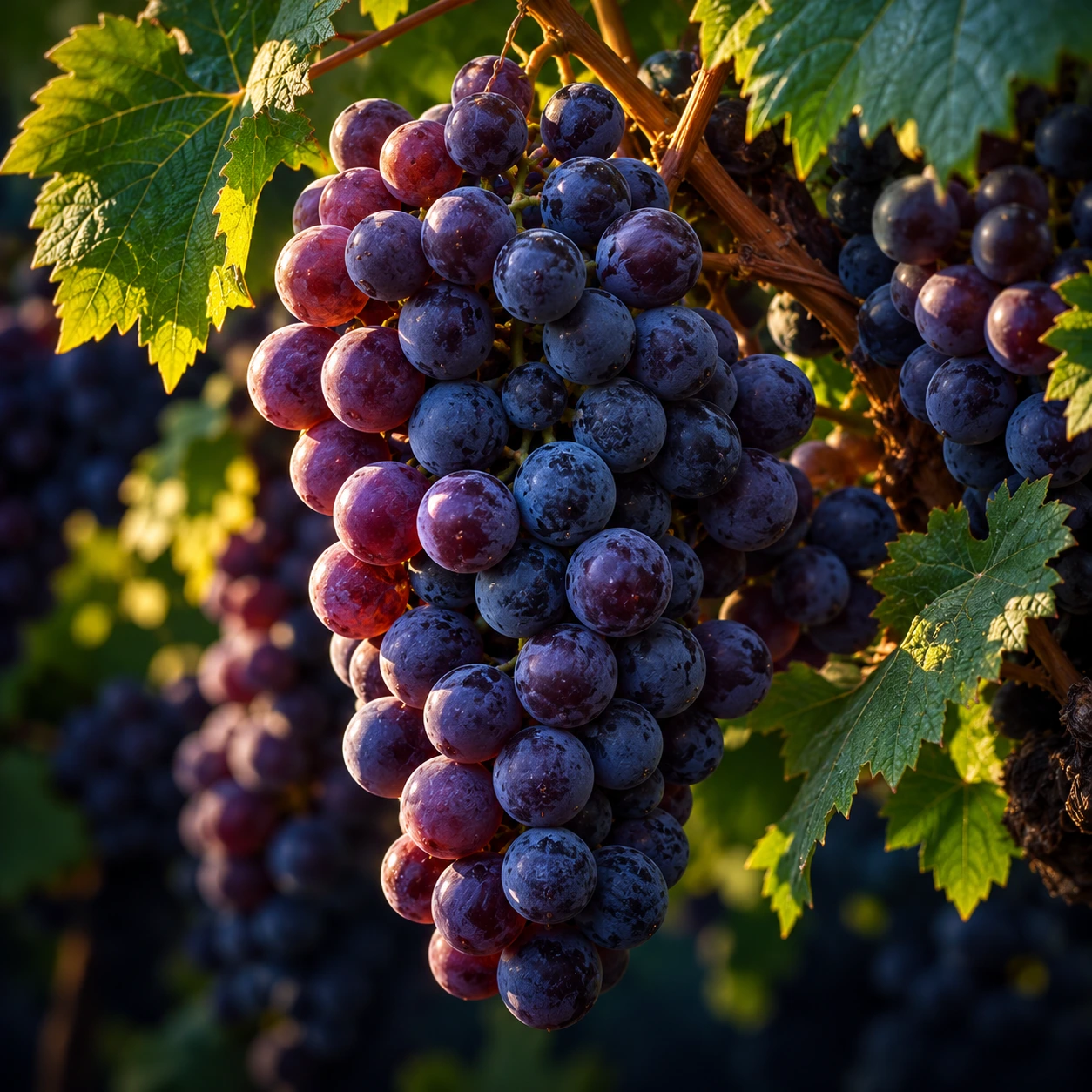
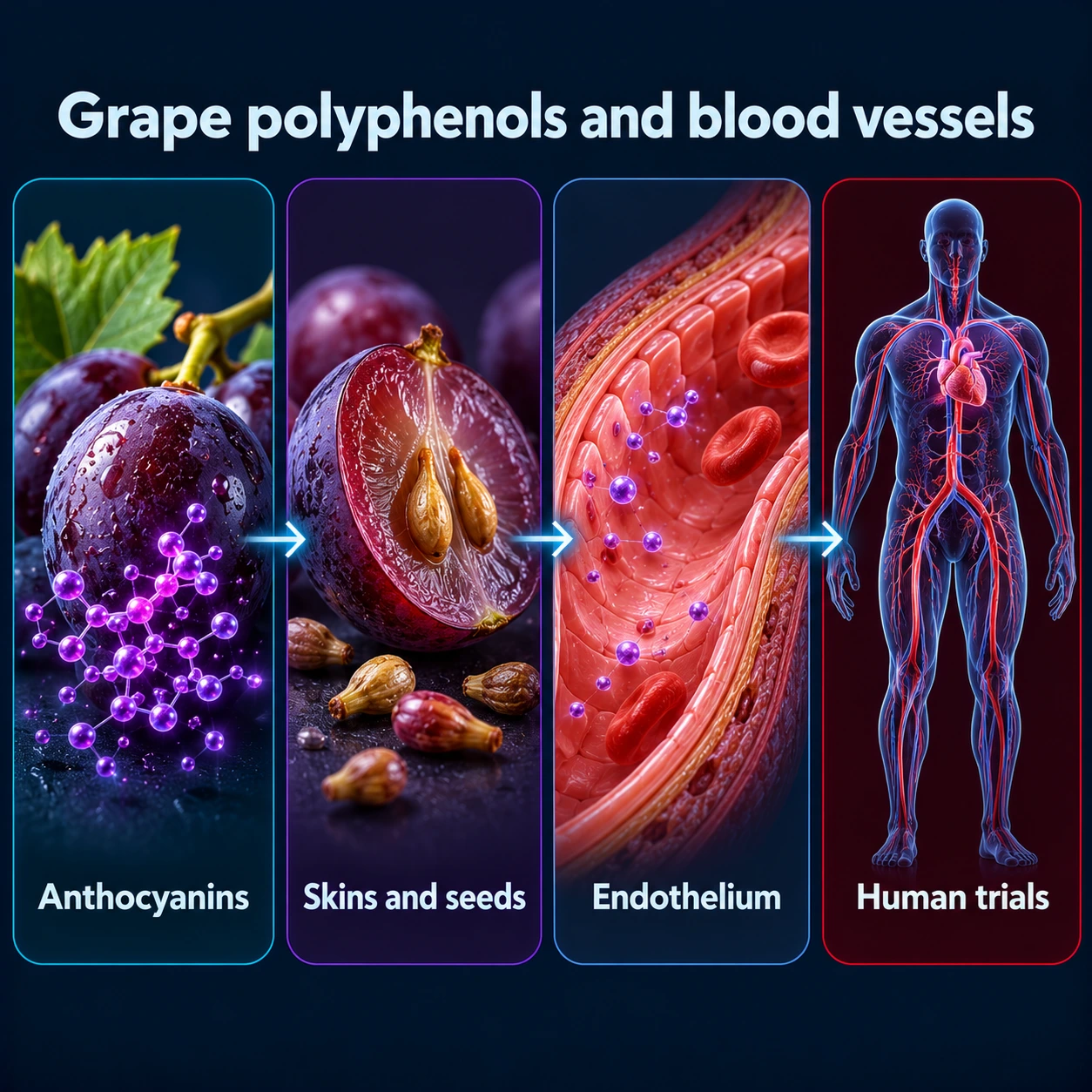
Resveratrol gets the headlines, but it is a rounding error in a grape. The compounds that are actually abundant — the anthocyanins that make dark grapes purple and the flavan-3-ols and proanthocyanidins concentrated in the skins and seeds — are present in hundreds of milligrams per serving rather than fractions of a milligram, and they have something resveratrol lacks: a real body of controlled human trials, including measurements taken inside living blood vessels. The picture that emerges is neither miraculous nor empty. Grape polyphenols reliably move short-term measures of blood-vessel function, they move blood pressure by a small but real amount in people whose blood pressure is raised, and they do very little in people who are already healthy. This page explains the mechanism, walks through the human trials one by one, and is honest about what the effect sizes mean in practice.
Table of Contents
- The Compounds That Are Actually There
- What the Endothelium Does and Why It Matters
- How Polyphenols Reach a Blood Vessel
- The Grape Juice Trials
- Whole Grapes and Grape Powder in Humans
- Grape Seed Extract: Reading the Trials Honestly
- Anthocyanins in Large Populations
- The First Dietary Guideline for a Bioactive
- What This Evidence Cannot Tell You
- Where the Polyphenols Are in Food
- Key Research Papers
- Connections
- Featured Videos
The Compounds That Are Actually There
Open a grape and you are holding three different chemical environments.
The skin carries the anthocyanins — water-soluble pigments in the flavonoid family, responsible for every red, purple and near-black colour in the fruit world. In grapes the dominant forms are malvidin, peonidin, delphinidin, cyanidin and petunidin glucosides, with malvidin usually the most abundant in Vitis vinifera. Green and white grapes contain essentially none; the mutation that produced white grapes disabled the regulatory genes that switch anthocyanin synthesis on. This is the one case where the colour of a food is a direct and reliable readout of one of its active compounds.
The seeds carry the flavan-3-ols — catechin, epicatechin, and above all their polymers, the proanthocyanidins (also called condensed tannins, or oligomeric proanthocyanidins (OPCs) in supplement marketing). These are the astringent compounds you taste as the drying, puckering quality of a seeded grape chewed through, or of a tannic red wine. Grape seed is one of the richest dietary sources of proanthocyanidins there is, which is why grape seed extract exists as a commercial product at all.
The pulp carries sugar, water, potassium and organic acids, and very little else of interest. This is the practical heart of the matter: the nutritionally interesting part of a grape is the part people are most tempted to discard. Peel a grape and you have thrown away the anthocyanins. Spit out the seeds and you have thrown away the proanthocyanidins. Drink filtered white grape juice and you have neither.
Quantitatively, the gap between these compounds and resveratrol is not close. A serving of dark grapes delivers anthocyanins and flavan-3-ols in the tens to hundreds of milligrams. It delivers resveratrol in fractions of a milligram. When you read that "grapes are good for your heart", the compounds doing the work in any plausible mechanism are these, not the famous one.
What the Endothelium Does and Why It Matters
To follow the trial evidence you need one piece of physiology.
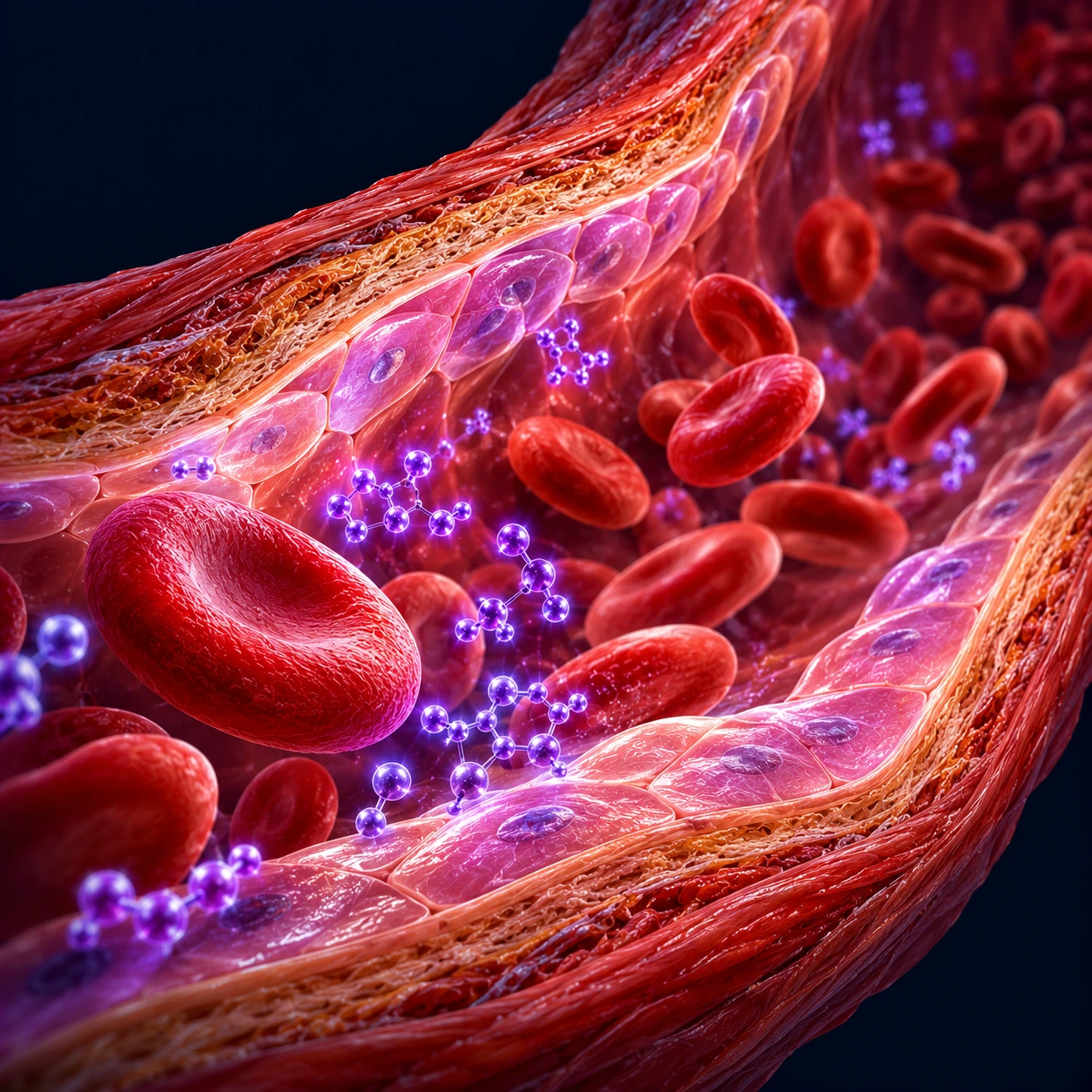
Every blood vessel in your body is lined with a single layer of cells called the endothelium. It is not passive plumbing. It is a continuously active organ that senses blood flow and chemistry and responds by telling the muscular wall of the artery to relax or tighten. Its main relaxing signal is nitric oxide, a short-lived gas made by the enzyme endothelial nitric oxide synthase from the amino acid arginine. Nitric oxide diffuses into the smooth muscle of the vessel wall, the muscle relaxes, the vessel widens, and blood flows more easily.
When the endothelium is working poorly — the state called endothelial dysfunction — it makes less nitric oxide, vessels stay stiffer than they should, and the vessel wall becomes stickier to white blood cells and more permeable to low-density lipoprotein (LDL) particles. Endothelial dysfunction shows up early in the development of atherosclerosis, often decades before any narrowing is visible, and it is worsened by high blood pressure, high blood sugar, smoking and oxidised low-density lipoprotein.
This is measurable non-invasively. The standard method is flow-mediated dilation: a blood-pressure cuff is inflated on the forearm to block flow for five minutes, then released. The rush of returning blood shears the endothelium, which releases nitric oxide, and the brachial artery widens. An ultrasound measures how much, as a percentage of its starting diameter. A larger response means a healthier endothelium. Nearly every grape polyphenol trial you will read about uses this measurement, so when a study reports "improved flow-mediated dilation", that is what happened.
How Polyphenols Reach a Blood Vessel
The old explanation was that polyphenols are antioxidants that mop up free radicals in the bloodstream. That explanation is now considered largely wrong, and it is worth understanding why, because the replacement is more interesting.
Polyphenols are absorbed poorly and metabolised fast. As Kay summarised for anthocyanins in Nutrition Research Reviews, only a small percentage of ingested anthocyanin appears in plasma as the intact parent compound, and what does appear is largely conjugated — methylated, glucuronidated, sulfated — within minutes. Plasma concentrations peak in the low nanomolar range, far below the micromolar concentrations at which these compounds show antioxidant activity in a test tube. The direct free-radical-scavenging story simply cannot work at the concentrations the human body actually achieves.
Two better explanations have taken its place. The first is signalling: at nanomolar concentrations, polyphenols and their metabolites interact with cellular enzymes and receptors rather than with free radicals. They appear to influence reduced nicotinamide adenine dinucleotide phosphate (NADPH) oxidase (a major source of vascular superoxide), to affect the expression and activity of endothelial nitric oxide synthase, and to modulate inflammatory transcription factors. A little more nitric oxide, a little less superoxide destroying it, and the net effect on vessel tone is real even though the concentrations are tiny.
The second is the gut microbiome. Most ingested polyphenol never gets absorbed in the small intestine at all — the large polymeric proanthocyanidins in particular are far too big. They travel to the colon, where bacteria break them into small phenolic acids that are absorbable and that circulate for many hours. Some of the measurable effects of a grape polyphenol dose are probably the effects of bacterial metabolites, not of the compound you ate, and they depend on which bacteria you happen to be carrying. This is one reason the same dose produces different results in different people.
The Grape Juice Trials
The oldest and cleanest human work used purple grape juice, which allowed researchers to test grape polyphenols without alcohol as a confounder.
Stein and colleagues, in Circulation, 1999, gave purple grape juice to patients with established coronary artery disease and measured flow-mediated dilation before and after. Fifteen adults with coronary artery disease drank 7.7 mL of purple grape juice per kilogram of body weight a day for 14 days. Flow-mediated dilation rose from 2.2% to 6.4% (P=0.003), and low-density lipoprotein cholesterol taken from the same patients was more resistant to oxidation in the laboratory afterwards: the lag time before it oxidised increased by 34.5% (P=0.015). This was a small study in a specific patient group, but it is the paper that established that a non-alcoholic grape product could measurably change vascular function in people who already had vascular disease.
Dohadwala and colleagues, in the American Journal of Clinical Nutrition, 2010, ran a more demanding test: Concord grape juice against a matched control, with 24-hour ambulatory blood pressure monitoring in people with prehypertension and stage 1 hypertension. Ambulatory monitoring is much harder to fool than a single clinic reading, because it averages dozens of measurements across a full day and night and is not subject to white-coat effects. This is a well-designed trial: 64 people with no blood-pressure medication drank grape juice (7 mL per kilogram a day) and a matched placebo drink for 8 weeks each, in a double-blind crossover. It found no effect on its primary endpoint: 24-hour mean systolic and diastolic blood pressure and stress-induced changes in blood pressure did not change, and the authors concluded that they “observed no effect of grape juice on ambulatory blood pressure”. Two secondary measures moved: the normal night-time dip in systolic pressure increased 1.4 percentage points after grape juice and decreased 2.3 percentage points after placebo (P = 0.005), and fasting glucose fell 2 mg/dL after grape juice against a 1 mg/dL rise after placebo (P = 0.03).
The pattern across these two juice trials: a measurable short-term improvement in endothelial function in people with coronary artery disease, and no change in 24-hour blood pressure in people with raised readings. Set against that, grape juice is a concentrated sugar delivery vehicle: it delivers the fruit's sugar without the fibre of the whole fruit — see the discussion in Raisins, Blood Sugar and Teeth.
Whole Grapes and Grape Powder in Humans
Trials using whole grapes are harder to run — you cannot blind someone to a bowl of grapes — so researchers use freeze-dried whole grape powder reconstituted into a drink, with a colour- and sugar-matched placebo.
Barona and colleagues, in the Journal of Nutrition, 2012, gave freeze-dried grape polyphenols to men with metabolic syndrome in a randomised crossover design. The title reports the result plainly: blood pressure fell and flow-mediated vasodilation rose. Metabolic syndrome is precisely the population where endothelial function is impaired to begin with, which fits the general pattern — there was room to improve.
Zern and colleagues, in the Journal of Nutrition, 2005, tested a lyophilised grape powder in pre- and postmenopausal women and reported a cardioprotective effect operating through lipid and oxidative-stress measures rather than through blood pressure. Again a modest, mechanistically plausible effect in a group with something to gain.
Costabile and colleagues, in Clinical Nutrition, 2019, took a different angle, testing grape pomace polyphenols — the skins and seeds left after pressing — against a standard meal in healthy people, and reported an improved insulin response. That is an interesting result because it points at the same polyphenols acting on glucose handling rather than on vessels, and because it uses the part of the grape that the wine industry throws away.
Grape Seed Extract: Reading the Trials Honestly
Grape seed extract is the concentrated proanthocyanidin product, and it has been through enough randomised trials to be meta-analysed. This is where the evidence is strongest in quantity and weakest in effect size, and reading it honestly means holding both facts at once.
Feringa and colleagues pooled randomised controlled trials of grape seed extract on cardiovascular risk markers in the Journal of the American Dietetic Association in 2011: nine trials with 390 people. Grape seed extract lowered systolic blood pressure by 1.54 mm Hg (95% confidence interval -2.85 to -0.22) and heart rate by 1.42 beats per minute, with no significant effect on diastolic blood pressure, blood lipids or C-reactive protein. Zhang and colleagues pooled 16 randomised controlled trials specifically on blood pressure in Medicine in 2016: 810 people, with systolic pressure lower by 6.077 mm Hg and diastolic pressure by 2.803 mm Hg after grape seed extract; the falls were larger in younger subjects (mean age under 50), in obese subjects and in patients with metabolic syndrome. A later pooled analysis, by Foshati and colleagues in Pharmacological Research in 2022, included 19 controlled trials: grape seed extract lowered diastolic blood pressure by 2.20 mmHg (95% confidence interval -3.79 to -0.60) and heart rate by 1.25 beats per minute, but the effects on systolic blood pressure (-3.55 mmHg, 95% confidence interval -7.59 to 0.49) and on flow-mediated dilation were not significant, and the trials differed widely (I2 = 97.4% for systolic pressure). Individual trials sit underneath those pooled estimates: Sivaprakasapillai and colleagues in Metabolism in 2009 tested grape seed extract in people with metabolic syndrome; Ras and colleagues in the British Journal of Nutrition in 2013 gave 300 mg a day of grape seed extract or placebo for 8 weeks to 70 people with pre- and stage-1 hypertension and used daytime ambulatory monitoring; systolic pressure changed by -3.0 mmHg against placebo (95% confidence interval -6.5 to 0.5), which was not statistically significant, and the authors concluded that the extract “does not significantly lower” ambulatory blood pressure; and Schön and colleagues in Nutrients in 2021 ran a randomised double-blind trial reporting effects on blood pressure and on perceived stress.
Four points belong with these results, and any honest summary has to state them.
- The effect sizes are small. Blood-pressure reductions in this literature are typically of a few millimetres of mercury. That is not nothing — across a whole population a few millimetres of mercury translates into meaningfully fewer strokes — but for an individual it is a fraction of what a single antihypertensive medication does, and a fraction of what losing weight, reducing sodium or regular exercise does.
- The trials are short and small. Most run for weeks to a few months with dozens of participants. They measure risk markers, not heart attacks. No trial has shown that grape seed extract prevents a cardiovascular event, because no trial has been large enough or long enough to look.
- Heterogeneity is high. Grape seed extracts are not standardised across manufacturers; the proanthocyanidin content and polymer size distribution differ, and so do the doses. Pooling them assumes a comparability that may not exist.
- Publication bias was tested for. Feringa 2011 found a low likelihood of publication bias in every analysis except the one for diastolic blood pressure (P=0.046), and Zhang 2016 found no indication of publication bias.
Where does that leave a reader? Roughly here: the pooled analyses report small falls in blood pressure (in systolic pressure in Feringa 2011, in systolic and diastolic pressure in Zhang 2016, in diastolic but not systolic pressure in Foshati 2022), while the individual trial that used daytime ambulatory monitoring, Ras 2013, found no significant fall; grape seed extract has no demonstrated effect on hard outcomes; and it has not been shown to replace treatment of hypertension. On bleeding, the trial on this page that measured platelet aggregation, Ras 2013 (300 mg a day for 8 weeks), found that platelet aggregation was not affected by grape seed extract.
Anthocyanins in Large Populations
Trials measure markers over weeks. Cohort studies measure events over decades, in far more people, at the cost of not being able to prove causation. Both are needed.
Cassidy and colleagues, in Circulation, 2013, analysed anthocyanin intake and heart attack risk in a large cohort of young and middle-aged women followed prospectively. Higher anthocyanin intake was associated with a reduced risk of myocardial infarction. Most of the anthocyanin in that population came from blueberries and strawberries rather than grapes, but the compound class is the same one grapes deliver.
Wallace reviewed the anthocyanin and cardiovascular disease literature in Advances in Nutrition in 2011, and more recently Avendano and colleagues published a systematic review and meta-analysis of dietary anthocyanin intake and cardiometabolic health in the American Journal of Clinical Nutrition in 2026, limited to healthy participants. Across 18 cohorts in 27 publications, the highest compared with the lowest habitual anthocyanin intake was linked to 26% less cardiovascular disease (4 studies) and 18% less myocardial infarction (5 studies), while stroke risk was unaffected. Across 65 randomised trials, regular anthocyanin intake improved flow-mediated dilation (net change 1.41%), while blood lipids, blood pressure and glucose were unaffected — in line with the small blood-pressure changes seen in healthy people. On the flavan-3-ol side, Raman and colleagues published a systematic review and meta-analysis of randomised trials of flavan-3-ol intake and cardiometabolic health in the same journal in 2019.
The standard caution applies with full force. People who eat a lot of berries and dark grapes are not a random sample: they tend to eat more vegetables, smoke less, exercise more and have more money. Statistical adjustment reduces this confounding but cannot eliminate it. Cohort studies of fruit intake almost always look favourable for that reason alone. The reason to take this particular signal semi-seriously is that it points in the same direction as the mechanistic work and the short trials — three independent lines of evidence agreeing is worth more than any one of them.
The First Dietary Guideline for a Bioactive
In 2022 something genuinely new happened. An expert panel published, in Advances in Nutrition, what it described as the first-ever dietary bioactive guideline — an intake recommendation for flavan-3-ols aimed at cardiometabolic health. Until then, dietary guidance covered vitamins, minerals, macronutrients and fibre; plant bioactives had never been considered to have a strong enough evidence base to carry a numeric recommendation.
The panel's judgement was that the randomised trial evidence for flavan-3-ols on blood pressure, cholesterol, blood sugar and vascular function had reached a threshold where a target intake could be stated. Drawing on 157 randomised controlled trials and 15 cohort studies, it found moderate evidence supporting cardiometabolic protection from flavan-3-ol intake in the range of 400-600 mg/d, and it stated that “this is a food-based guideline and not a recommendation for flavan-3-ol supplements”. Flavan-3-ols come mainly from tea, cocoa, apples, berries and grapes, so this is directly relevant to anyone eating grapes with their seeds and skins, or drinking green tea, or eating dark chocolate.
It is worth being clear about what a guideline like this is and is not. It is a considered expert reading of a body of trials, published in a peer-reviewed journal by a professional nutrition society. It is not a government dietary recommendation, and it is not a claim that any particular person will benefit. But it does mark the point at which this class of compounds moved from "interesting laboratory chemistry" to "evidence base substantial enough to advise on" — a threshold resveratrol has never come close to.
What This Evidence Cannot Tell You
A page like this is only useful if it draws the line clearly.
- No trial of grapes or grape polyphenols has ever shown a reduction in heart attacks, strokes or deaths. Every positive result described above is a change in a marker — vessel diameter, blood pressure, an oxidation assay. Markers frequently move without outcomes following.
- The effects are small and they fade. Flow-mediated dilation improvements after a polyphenol dose are typically measured hours later and do not persist without repeated intake.
- Healthy people show the least. Almost every positive trial recruited people with metabolic syndrome, raised blood pressure or existing coronary disease. If your vascular function is already good, there is little headroom, and the trials in healthy volunteers reflect that.
- Grapes have not been tested as a treatment. No grape trial on this page measured heart attacks or strokes, and the blood-pressure changes measured in these trials are a few millimetres of mercury at most.
Where the Polyphenols Are in Food
Where the polyphenols sit in the fruit, and what handling does to them:
- Black, purple and deep red grapes carry the anthocyanins; green grapes do not. Concord, a seedless elongated table-grape variety, black seedless and red globes carry anthocyanin; green Thompson Seedless carries essentially none. Colour is the honest signal here.
- The skins and seeds hold the polyphenols. Peeling removes the anthocyanins and discarding the seeds removes the proanthocyanidins, which is why seeded varieties carry more. Whole seeds pass through undamaged unless they are chewed. They taste astringent because they are full of these compounds.
- Whole fruit keeps the fibre that juice loses. Juice keeps most of the anthocyanin and loses the fibre, which changes how fast the sugar arrives. USDA FoodData Central lists 0.9 g of fibre per 100 g of raw grapes; a glass of juice is drunk in seconds and carries the sugar without that fibre.
- Long cooking degrades anthocyanins. Anthocyanins are heat- and pH-sensitive; long cooking degrades them and shifts their colour. Fresh, frozen or lightly cooked grapes keep more than a long simmer does.
- Freezing keeps the polyphenols. Frozen grapes keep their polyphenols well; frozen black grapes have the texture of sorbet and keep their fibre and potassium.
- Many foods share these compounds. Grapes are one flavonoid source among many. Blueberries, blackberries, cherries, pomegranate, apples with the skin, red cabbage, green tea, cocoa and olive oil all contribute to the same pool of compounds.
- The sugar adds up. Grapes are dense, easy to eat by the handful and carry 15.5 g of total sugars per 100 g (USDA FoodData Central, raw red or green grapes); a whole bag eaten in front of a screen is a lot of sugar.
Key Research Papers
- Stein JH, Keevil JG, Wiebe DA, Aeschlimann S, Folts JD. Purple grape juice improves endothelial function and reduces the susceptibility of LDL cholesterol to oxidation in patients with coronary artery disease. Circulation. 1999;100(10):1050–1055. — doi:10.1161/01.CIR.100.10.1050
- Dohadwala MM, Hamburg NM, Holbrook M, et al. Effects of Concord grape juice on ambulatory blood pressure in prehypertension and stage 1 hypertension. The American Journal of Clinical Nutrition. 2010;92(5):1052–1059. — doi:10.3945/ajcn.2010.29905
- Barona J, Aristizabal JC, Blesso CN, Volek JS, Fernandez ML. Grape polyphenols reduce blood pressure and increase flow-mediated vasodilation in men with metabolic syndrome. The Journal of Nutrition. 2012;142(9):1626–1632. — doi:10.3945/jn.112.162743
- Zern TL, Wood RJ, Greene C, et al. Grape polyphenols exert a cardioprotective effect in pre- and postmenopausal women by lowering plasma lipids and reducing oxidative stress. The Journal of Nutrition. 2005;135(8):1911–1917. — doi:10.1093/jn/135.8.1911
- Costabile G, Vitale M, Luongo D, et al. Grape pomace polyphenols improve insulin response to a standard meal in healthy individuals: a pilot study. Clinical Nutrition. 2019;38(6):2727–2734. — doi:10.1016/j.clnu.2018.11.028
- Feringa HHH, Laskey DA, Dickson JE, Coleman CI. The effect of grape seed extract on cardiovascular risk markers: a meta-analysis of randomized controlled trials. Journal of the American Dietetic Association. 2011;111(8):1173–1181. — doi:10.1016/j.jada.2011.05.015
- Zhang H, Liu S, Li L, et al. The impact of grape seed extract treatment on blood pressure changes: a meta-analysis of 16 randomized controlled trials. Medicine. 2016;95(33):e4247. — doi:10.1097/MD.0000000000004247
- Ras RT, Zock PL, Zebregs YE, Johnston NR, Webb DJ, Draijer R. Effect of polyphenol-rich grape seed extract on ambulatory blood pressure in subjects with pre- and stage I hypertension. British Journal of Nutrition. 2013;110(12):2234–2241. — doi:10.1017/S000711451300161X
- Sivaprakasapillai B, Edirisinghe I, Randolph J, Steinberg F, Kappagoda T. Effect of grape seed extract on blood pressure in subjects with the metabolic syndrome. Metabolism. 2009;58(12):1743–1746. — doi:10.1016/j.metabol.2009.05.030
- Schön C, Allegrini P, Engelhart-Jentzsch K, Riva A, Petrangolini G. Grape seed extract positively modulates blood pressure and perceived stress: a randomized, double-blind, placebo-controlled study. Nutrients. 2021;13(2):654. — doi:10.3390/nu13020654
- Foshati S, Nouripour F, Sadeghi E, Amani R. The effect of grape (Vitis vinifera) seed extract supplementation on flow-mediated dilation, blood pressure, and heart rate: a systematic review and meta-analysis of controlled trials with duration- and dose-response analysis. Pharmacological Research. 2022;175:105905. — doi:10.1016/j.phrs.2021.105905
- Cassidy A, Mukamal KJ, Liu L, Franz M, Eliassen AH, Rimm EB. High anthocyanin intake is associated with a reduced risk of myocardial infarction in young and middle-aged women. Circulation. 2013;127(2):188–196. — doi:10.1161/CIRCULATIONAHA.112.122408
- Wallace TC. Anthocyanins in cardiovascular disease. Advances in Nutrition. 2011;2(1):1–7. — doi:10.3945/an.110.000042
- Kay CD. Aspects of anthocyanin absorption, metabolism and pharmacokinetics in humans. Nutrition Research Reviews. 2006;19(1):137–146. — doi:10.1079/NRR2005116
- Raman G, Avendano EE, Chen S, Wang J, et al. Dietary intakes of flavan-3-ols and cardiometabolic health: systematic review and meta-analysis of randomized trials and prospective cohort studies. The American Journal of Clinical Nutrition. 2019;110(5):1067–1078. — doi:10.1093/ajcn/nqz178
- Crowe-White KM, Evans LW, Kuhnle GGC, et al. Flavan-3-ols and cardiometabolic health: first ever dietary bioactive guideline. Advances in Nutrition. 2022;13(6):2070–2083. — doi:10.1093/advances/nmac105
- Avendano EE, Ellingson H, Digga E, et al. Dietary intakes of anthocyanins and cardiometabolic health: a systematic review and meta-analysis. The American Journal of Clinical Nutrition. 2026;124(2):101304. — doi:10.1016/j.ajcnut.2026.101304
- Live literature search — grape polyphenols and endothelial function: PubMed: grape polyphenols and endothelial function
- Live literature search — proanthocyanidins and blood pressure: PubMed: proanthocyanidins and blood pressure
Connections
- Grapes — the main topic page.
- Grapes — Benefits Deep Dive — the hub for this set of articles.
- Resveratrol Honestly — why the famous compound is the wrong one to focus on.
- Anthocyanins — the pigment class in detail.
- Grape Seed Extract — the proanthocyanidin concentrate.
- Catechins — the flavan-3-ol monomers that build proanthocyanidins.
- French Maritime Pine Bark — pine bark OPCs, chemically the closest relative of grape seed extract.
- Hypertension — where the small blood-pressure effects would matter.
- Atherosclerosis — the disease endothelial dysfunction precedes.
- Metabolic Syndrome — the population most of these trials recruited.
- Blueberries and Pomegranate — other anthocyanin-rich fruits.
- Green Tea and Dark Chocolate — the other major flavan-3-ol sources.
- History