Apple Polyphenols and the Peel
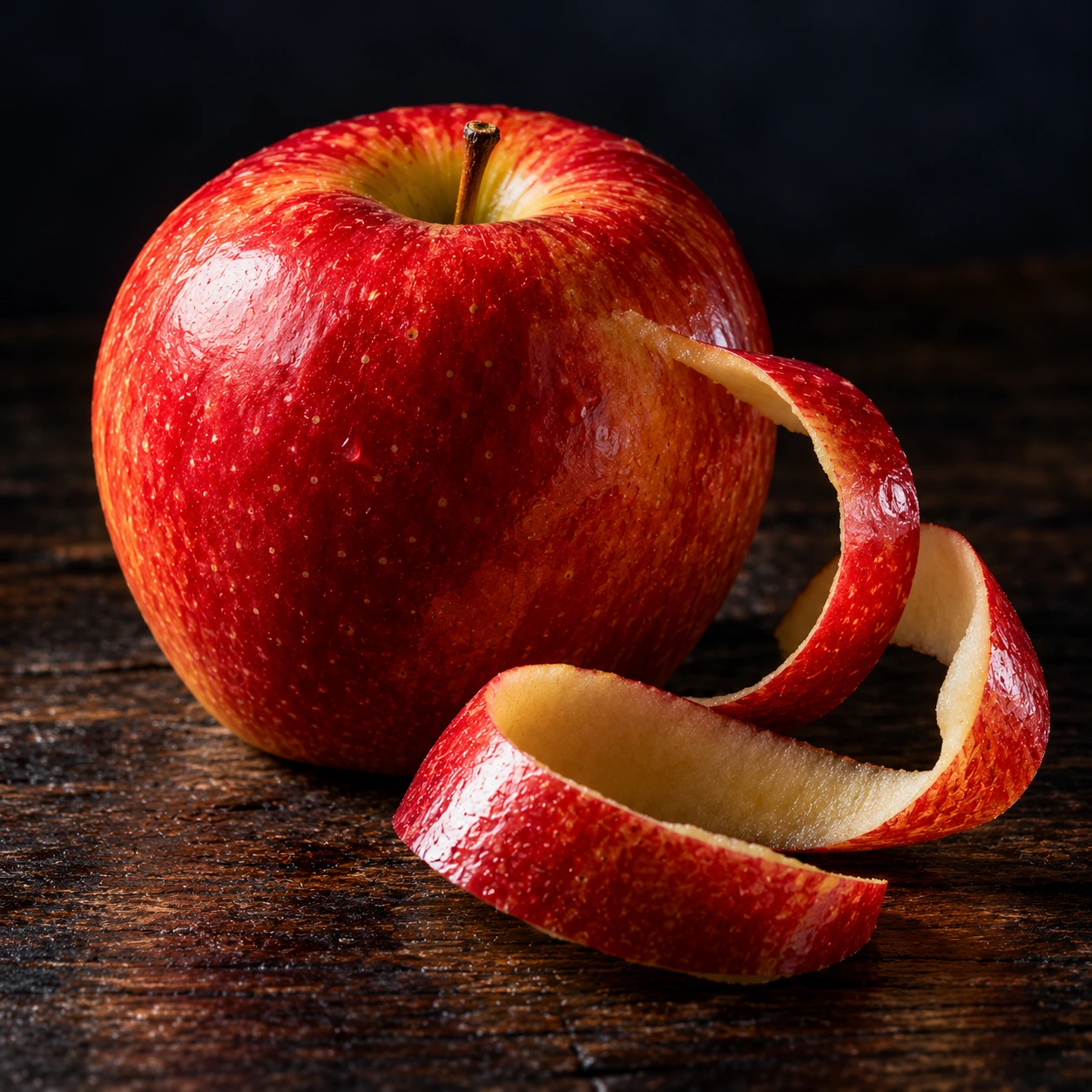
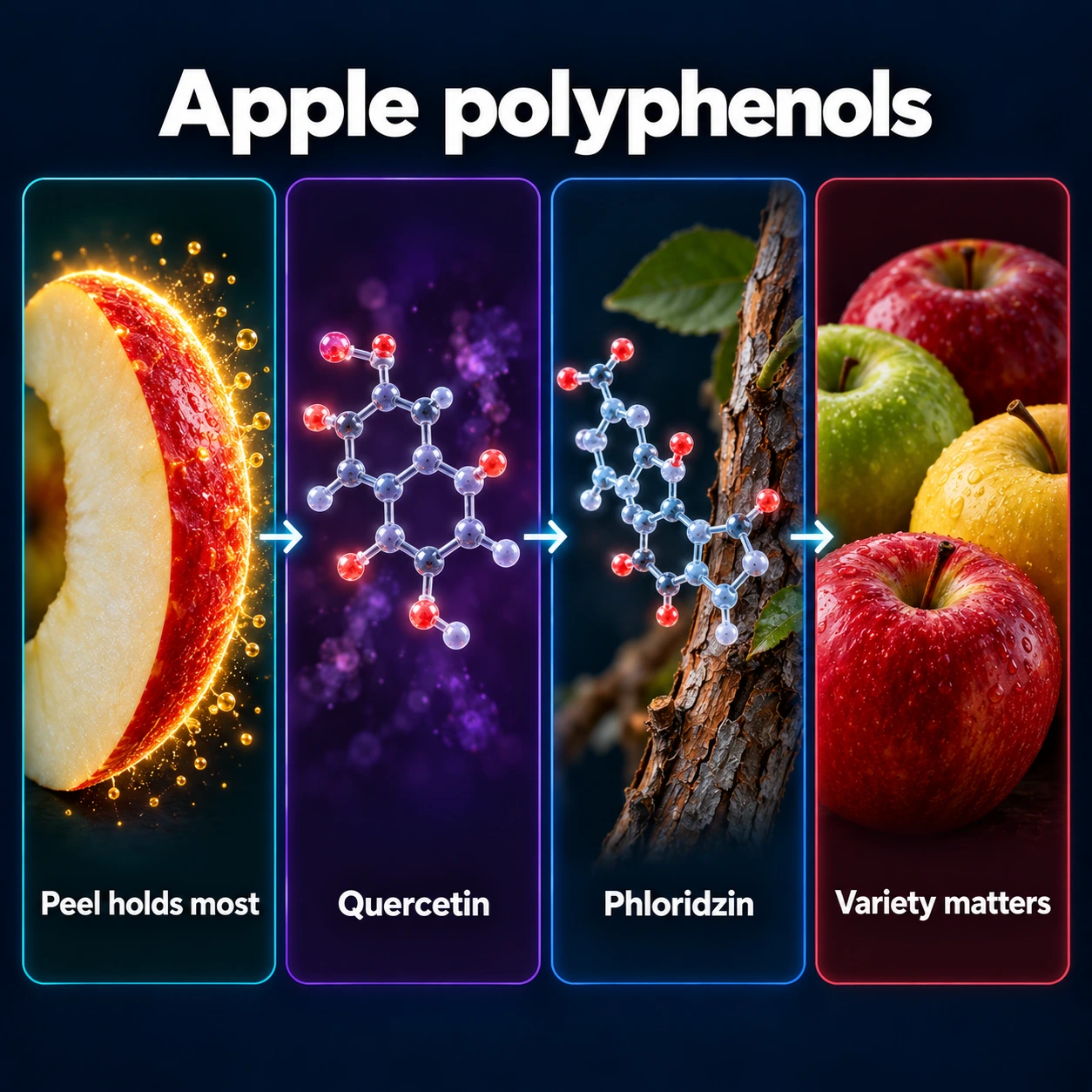
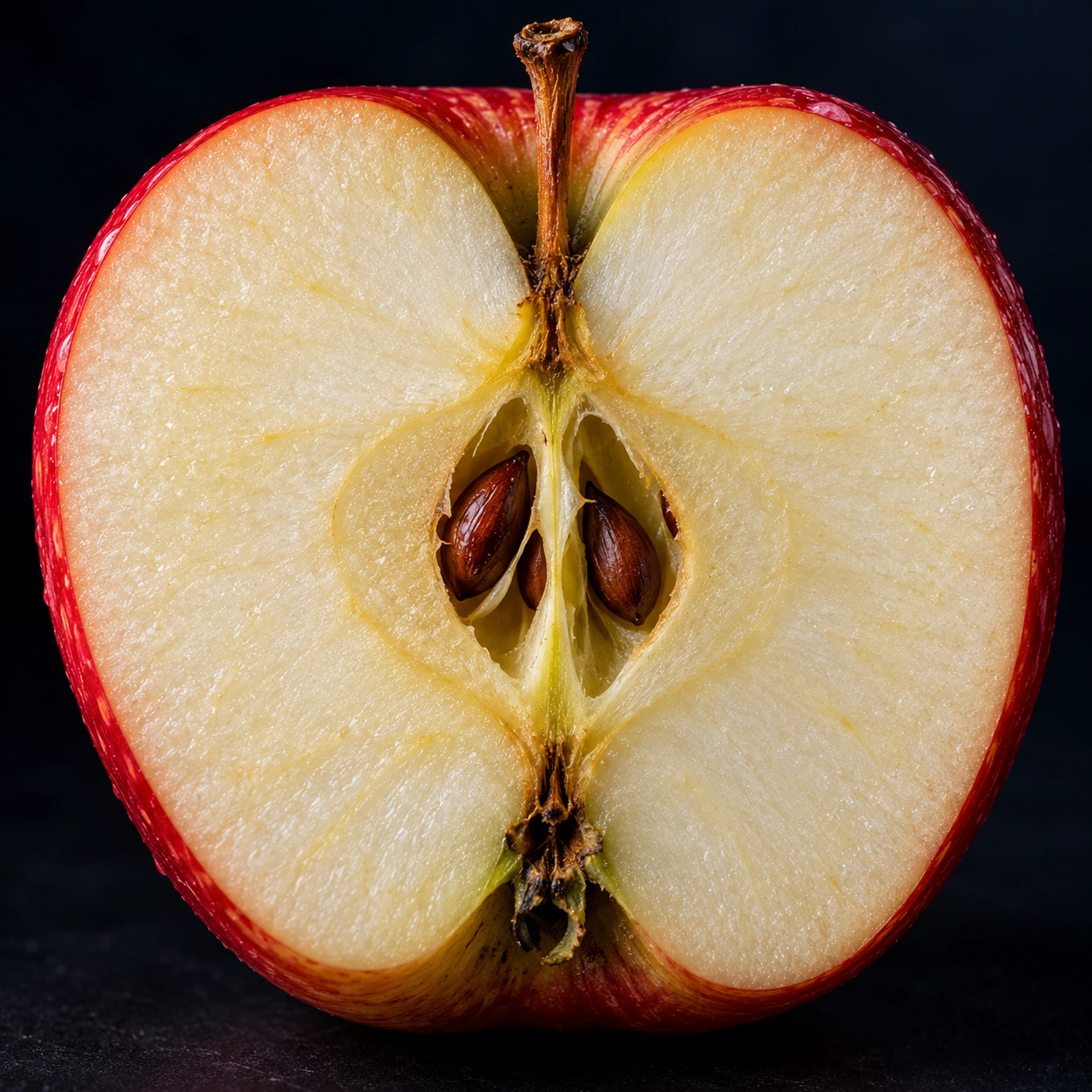
Everything nutritionally distinctive about an apple — the part that does not show up on a nutrition label — is a family of plant compounds called polyphenols, and they are concentrated overwhelmingly in and just beneath the skin. An apple's peel can carry several times the polyphenol concentration of its flesh, which is why peeling an apple throws away most of what makes it worth eating. Apples are also one of the leading dietary sources of quercetin in Western diets, and the only common food containing meaningful amounts of phloridzin — a compound isolated from apple bark in 1835 that turned out, nearly two centuries later, to be the structural ancestor of an entire class of modern diabetes drugs. This page covers what those compounds are, why variety and colour matter far more than most people expect, how much of them your body actually absorbs, and what browning, cooking, storage and juicing do to the lot.
Table of Contents
- The Five Polyphenol Families in an Apple
- Why the Peel Holds Most of It
- Variety Matters More Than You Expect
- Quercetin: Apples Are a Leading Source
- Phloridzin: The Compound That Became a Drug Class
- What Happens in People
- Browning, Cooking, Storage and Juice
- Washing Compared With Peeling
- Getting the Most From Apple Polyphenols
- Key Research Papers
- Connections
- Featured Videos
The Five Polyphenol Families in an Apple
"Polyphenol" is a structural label covering thousands of plant compounds built around phenol rings. Plants make them for their own purposes — defence against insects and fungi, ultraviolet (UV) protection, pigmentation, and the astringency that discourages animals from eating unripe fruit. An apple's polyphenol profile is unusually well characterised, and it sorts into five groups:
- Flavan-3-ols and procyanidins — usually the largest fraction by mass. These are catechin and epicatechin and the chains they form (procyanidins, also called condensed tannins). They are what makes an unripe or a cider apple astringent — that drying, puckering mouthfeel. The proanthocyanidin-rich Renetta Canada variety was chosen for the Reading cholesterol trial precisely because of this fraction.
- Hydroxycinnamic acids, principally chlorogenic acid — the same compound that makes coffee a major polyphenol source. Unlike most apple polyphenols, chlorogenic acid is found substantially in the flesh as well as the skin.
- Flavonols, principally quercetin and its sugar-attached forms (quercetin glycosides: rutin, hyperoside, isoquercitrin, quercitrin, avicularin). These are almost entirely in the skin. Peel an apple and you remove essentially all of its quercetin.
- Dihydrochalcones, principally phloridzin (phlorizin) and its aglycone phloretin. This family is effectively unique to apples among common foods — a genuine chemical signature. It has its own section below.
- Anthocyanins — the red pigments, found only in red-skinned varieties and only in the skin. Cyanidin-3-galactoside is the main one.
Total polyphenol content in apples is highly variable — it depends on the cultivar, on ripeness, on growing conditions, on sun exposure, and on how long the fruit has been stored. That variability is not noise to be averaged away; it is one of the most practically useful facts on this page, and the section on varieties returns to it.
Why the Peel Holds Most of It
Wolfe, Wu and Liu at Cornell published a direct comparison in the Journal of Agricultural and Food Chemistry in 2003, separating apple peel from flesh and measuring both. The peel carried substantially higher concentrations of total phenolics and total flavonoids, and correspondingly higher antioxidant activity in laboratory assays. Peels also inhibited the growth of a cultured human liver cancer cell line (HepG2) more effectively than the other apple components — a cell-culture result, worth stating plainly as such, since a compound acting on cells in a dish is a long way from a compound acting in a person.
Why is it concentrated there? Because that is where the plant needs it. The skin is the interface with insects, fungi, and ultraviolet light. Flavonols and anthocyanins are made in the epidermis in direct response to sun exposure, which is also why the reddest, most sun-exposed side of an apple carries the highest polyphenol load.
The practical consequences are concrete:
- Peeling an apple removes most of its quercetin and all of its anthocyanins, plus a large share of its total polyphenols and a meaningful part of its fibre.
- Applesauce made without skins is a fundamentally different food from applesauce made with them.
- Clear apple juice loses both the peel compounds and the pectin, which is why it performed so badly in the trial described on the cholesterol page.
- The most sun-exposed fruit from the outside of the tree carries more than the shaded fruit from inside the canopy — one small reason a farmers-market apple can genuinely differ from a commodity one.
Variety Matters More Than You Would Expect
Vrhovsek and colleagues quantified polyphenols across different apple varieties in the Journal of Agricultural and Food Chemistry in 2004 and found large differences between cultivars — the range across varieties was severalfold, not a few percent. Kschonsek and colleagues extended this in Antioxidants in 2018 by comparing old and new apple cultivars directly, and found that older varieties tended to carry higher polyphenol contents and higher in-vitro antioxidant capacity than modern commercial ones. Across their 15 cultivars, quercetin glycosides (203 mg per 100 g) were the main polyphenols in the peel; the flesh of old cultivars held 29 mg of polyphenols per 100 g against 13 mg per 100 g in new ones, and the antioxidant capacity of old cultivars was up to 30% stronger in laboratory tests.
A 2020 Australian study by Bondonno and colleagues in Food & Function measured the skin and flesh of 19 apple varieties and 72 breeding selections and found the same wide spread: quercetin ranged from 5.8 to 30.1 mg per 100 g, procyanidin B2 from 0.5 to 26.5 mg per 100 g and chlorogenic acid from 0.4 to 56.0 mg per 100 g. Every compound they measured except chlorogenic acid was more concentrated in the skin than in the flesh.
That result is not a coincidence, and it connects directly to the history of the apple. Twentieth-century commercial breeding selected hard for appearance, uniformity, storage life, shipping tolerance, and low astringency — and astringency is procyanidin content. Breeding the pucker out of an apple means breeding out a polyphenol fraction. Selecting against browning means selecting against the substrates that brown. The blandly sweet, uniformly red, indefinitely storable commodity apple is, on average, the polyphenol-poor one.
Some useful rules of thumb follow, offered as tendencies rather than laws, because growing conditions and storage shift the numbers:
- Red skin beats green or yellow skin for anthocyanins, by definition — a green apple has none.
- Tart, astringent, "old-fashioned" varieties generally carry more procyanidins than sweet modern ones. Russets, heritage varieties, and true cider apples sit at the high end.
- Cider apples are the extreme case — bred for tannin, and largely inedible raw for exactly that reason.
- A crab apple carries a very high polyphenol concentration for its size.
- Long controlled-atmosphere storage gradually reduces polyphenol content. A freshly picked local apple in September genuinely differs from the same variety pulled out of storage the following July.
The honest bottom line: eating a mix of varieties, favouring tart and heritage ones when you can get them, and buying in season, will get you more of these compounds than optimising within the supermarket's four options. But any apple with its skin on is far better than no apple, and the differences between varieties matter much less than the difference between whole fruit and juice.
Quercetin: Apples Are a Leading Source
Quercetin is one of the most-studied dietary flavonoids, and apples, onions and tea are its principal sources in most Western diets. The quercetin page covers the compound in depth; this section covers what is specific to apples.
The first thing to know is that apples do not contain much free quercetin. They contain quercetin glycosides — quercetin with a sugar attached — and which sugar it is changes how much you absorb. Hollman and colleagues demonstrated this in an elegant 1995 study in the American Journal of Clinical Nutrition using volunteers with ileostomies, which allowed the researchers to measure exactly how much of each form disappeared before reaching the end of the small intestine. In the nine volunteers, 52% of the quercetin glucosides from fried onions was absorbed; the free aglycone was absorbed less well (24%); and the rutinoside form, the main quercetin compound in tea, was absorbed least (17%). Apple quercetin is largely bound to galactose, arabinose, xylose and rhamnose rather than glucose, and is therefore absorbed less efficiently than onion quercetin.
What is not absorbed in the small intestine is not wasted. It travels to the colon, where bacteria cleave the sugars and metabolise the flavonoid into smaller phenolic acids, which are then absorbed. Some of the biological activity attributed to dietary polyphenols is probably the activity of these microbial metabolites, not of the parent compounds — a theme picked up on the gut microbiome page.
A caution about dose. Quercetin supplements sell in 500–1000 mg capsules. Total dietary flavonol intake in Western populations is typically measured in tens of milligrams a day. Whatever an apple is doing, it is not doing it at supplement doses — and the epidemiology linking flavonoid intake to lower mortality is based on food intake, not on capsules. A supplement trial is not evidence about apples, or the reverse.
Phloridzin: The Apple Compound That Became a Drug Class
This is the most remarkable story in apple chemistry, and it is entirely documented.
In 1835, Belgian chemists isolated a bitter white crystalline compound from the root bark of the apple tree and named it phlorizin (phloridzin). It was studied for decades as a curiosity. Then, in 1886, the physiologist Josef von Mering observed something strange: giving phlorizin to animals made them excrete large amounts of glucose in their urine, mimicking the appearance of diabetes, without the underlying disease. For a long time that made phlorizin a research tool for producing experimental glycosuria.
The mechanism took another century to nail down. Phlorizin is a competitive inhibitor of the sodium-glucose cotransporters, sodium-glucose cotransporter-1 (SGLT1) in the intestine and sodium-glucose cotransporter-2 (SGLT2) in the kidney. Sodium-glucose cotransporter-2 is responsible for reabsorbing most of the glucose the kidney filters out of the blood. Block it and glucose is excreted rather than reclaimed, and blood glucose falls.
Phlorizin itself was never usable as a drug — it is poorly absorbed orally, is rapidly broken down, and inhibits intestinal SGLT1 as well, causing gastrointestinal trouble. But it was the structural lead. Medicinal chemists used it as the starting scaffold to design selective, orally stable sodium-glucose cotransporter-2 inhibitors, and the result is the modern drug class that includes dapagliflozin, canagliflozin and empagliflozin — medicines that turned out to do far more than lower blood glucose, with major trial benefits in heart failure and chronic kidney disease. Ehrenkranz and colleagues' 2005 review in Diabetes/Metabolism Research and Reviews traces the whole arc.
Now the essential caveat, and it must not be skipped. This history does not mean eating apples has a drug-like effect on blood sugar. Phloridzin is concentrated in the tree's root bark, in the leaves, and in unripe fruit and seeds — not in the flesh you eat. The amount in a dessert apple is small, its oral bioavailability is poor, and it is nowhere near a pharmacological dose. Anyone selling apple-peel extract as a natural sodium-glucose cotransporter-2 inhibitor is trading on a genuine piece of pharmacological history to imply an effect that has not been shown at food doses. Apples appear in the diabetes epidemiology for reasons that are much more likely to involve fibre, satiety and displacement of worse foods — see the blood sugar section.
The food-level numbers bear this out. A 2020 estimate in the British Journal of Nutrition (Niederberger and colleagues) found that people in Europe eat on average 0.7 to 7.5 mg of phloridzin a day, mainly from apples and apple juice, with high consumers reaching up to 52 mg a day; the clinical trials that showed blood-sugar effects used phloridzin-enriched apple extract at doses above what normal food supplies. One such trial (Prpa and colleagues, 2020) was a randomised, double-blind crossover study in healthy adults: drinks containing 0.9, 1.35 or 1.8 g of a phlorizin-rich apple extract, taken before a meal of 75 g of starch and sugar, lowered blood glucose in the first 30 minutes and moved the glucose peak from 30 to 45 minutes, but did not lower the peak itself or the total glucose response.
What the story genuinely illustrates is how often plant chemistry seeds pharmacology: aspirin from willow, metformin from goat's rue, digoxin from foxglove, and sodium-glucose cotransporter-2 inhibitors from apple bark. That is a real and interesting lineage. It is not a dosing recommendation.
What Happens in People
Laboratory antioxidant assays are easy to run and mean very little on their own. The measurements that matter are the ones taken in people.
Endothelial function. Bondonno and colleagues at the University of Western Australia ran a randomised controlled trial published in Free Radical Biology and Medicine in 2012, testing flavonoid-rich apples and nitrate-rich spinach, alone and together, in 30 healthy men and women in a crossover design. Compared with a control meal, apples augmented nitric oxide status, improved endothelial function (measured as flow-mediated dilatation of the brachial artery in the arm) — the ability of blood vessels to dilate appropriately, an early and meaningful marker of vascular health — and lowered systolic blood pressure. Eating apple and spinach together did not add to the effect of either alone. This is a genuine acute human effect from a whole food.
Vascular markers over eight weeks. The Reading trial described on the cholesterol page used a proanthocyanidin-rich variety and found improved endothelium-dependent microvascular vasodilation and lower intercellular adhesion molecule-1 (ICAM-1), one of the blood-vessel and inflammation markers the trial measured, against a sugar-matched control drink. Because the control was matched for sugar and energy, that result cannot be attributed to calories — the fibre, the polyphenols, or both are doing it.
Long-term flavonoid epidemiology. Bondonno and colleagues' 2019 analysis of the Danish Diet, Cancer and Health Cohort in Nature Communications found that higher total flavonoid intake was associated with lower all-cause mortality, with the association strongest in smokers and heavy drinkers. Knekt's earlier Finnish cohort work in the American Journal of Clinical Nutrition in 2002 found flavonoid intake — and apple intake specifically — inversely associated with several chronic disease outcomes. Hodgson and colleagues reported an inverse association between apple intake and all-cause mortality in elderly Australian women in the British Journal of Nutrition in 2016: among 1,456 women over 70 followed for 15 years, those eating more than 100 g of apple a day had a hazard ratio of 0.65 for death from any cause compared with those eating less than 5 g a day.
These are observational associations, and they must be read as such. People who eat more apples differ systematically from people who do not — in education, smoking, exercise, and overall diet quality. Statistical adjustment helps and never fully solves it. The history page covers the study that makes this point most memorably: a nationally representative US survey found daily apple eaters visited doctors less often in the raw comparison, and the association vanished once education and smoking were accounted for.
The trial evidence as a whole. A 2026 systematic review in Food & Function (Del Bo' and colleagues) gathered 38 human intervention studies of apples and apple products. Apples and apple products appeared to improve blood sugar, antioxidant capacity and blood-vessel function mainly in short-term studies, while medium- and long-term studies reported an apparent improvement in gut bacteria. The reviewers judged the evidence still insufficient for definitive conclusions, noting that study designs, populations and products differed widely.
Ursolic acid deserves a brief, carefully bounded mention. It is a triterpenoid concentrated in apple peel wax, and a 2011 study in Cell Metabolism identified it by screening for compounds that reverse the gene-expression signature of muscle atrophy, then showed it increased muscle mass in mice. That is genuinely interesting mouse work. It is not evidence that eating apple skins builds muscle, and it is regularly misrepresented as such in supplement marketing.
Browning, Cooking, Storage and Juice
The brown colour a cut apple turns is a direct visual readout of polyphenol chemistry. When you cut the fruit you rupture cells and bring the enzyme polyphenol oxidase into contact with polyphenols that were previously kept separate from it. With oxygen present, the enzyme oxidises those polyphenols into quinones, which polymerise into brown pigments. In short: browning consumes the polyphenols.
Practical consequences:
- Cut apples keep oxidising. A sliced apple left out for hours has oxidised part of its polyphenols.
- Lemon juice works — vitamin C is a competing substrate for oxidation and the acid slows the enzyme. It genuinely preserves polyphenol content, not just appearance.
- Heat destroys the enzyme. Blanching or cooking inactivates polyphenol oxidase, which is why cooked apple does not keep browning. Cooking loses some polyphenols to heat and leaching, but stops the enzymatic destruction.
- Non-browning apples exist. A genetically engineered non-browning apple suppresses polyphenol oxidase expression. It resists browning because there is less enzyme, not because there are fewer polyphenols — a distinction worth stating accurately either way you feel about the technology.
On processing:
- Whole raw apple with skin — the reference standard.
- Baked or stewed with the skin on — some heat-sensitive loss, but the peel compounds are still in the dish rather than in the bin. Cooked apple is a form many people whose mouths itch from raw apples can eat (see the allergy section).
- Applesauce with skins — retains much of the polyphenol content; loses the physical structure that produces satiety.
- Cloudy juice — retains more polyphenols than clear juice, because the particulate matter it keeps is partly peel-derived.
- Clear juice — commercially clarified specifically to remove the cloud, and much of the polyphenol content goes with it. Combined with the loss of pectin, this is why clear juice behaves so differently from fruit.
- Apple pomace — the pressing residue, rich in both fibre and peel polyphenols. It is largely a by-product fed to livestock; it performed best of all in the Danish low-density lipoprotein (LDL) trial, which is a small indictment of how apples are processed.
- Dried apple — retains a good deal, though heat and long air-drying oxidise some. Fine in small quantities; concentrated sugar makes it easy to overeat.
Washing Compared With Peeling
The commonest reason people peel apples is worry about pesticide residue. Peeling does remove surface residue, but it also removes the peel's polyphenols, part of the fibre, and every anthocyanin in the fruit — a well-documented benefit given up against a poorly quantified risk.
The safety page works through what the residue monitoring data actually show, but the summary for this page is short: rubbing apples under running water, by hand or with a brush, for twenty to thirty seconds removes a large fraction of surface residue and, importantly, most surface microbes. Commercial produce washes have not been shown to outperform this meaningfully. Baking soda solution has been shown in laboratory work to remove certain surface pesticides more effectively than plain water. Organic apples lower pesticide exposure while keeping the peel and its compounds; peeling conventional apples lowers it by discarding them.
The other common reasons for peeling are an oral allergy syndrome reaction driven by peel-concentrated allergens, and cooking recipes that genuinely need it. Neither is a nutritional reason.
Getting the Most From Apple Polyphenols
- The skin holds most of it. This is the whole page in one line.
- Whole fruit keeps what juice loses. Clear juice loses both the pectin and much of the polyphenol content.
- Varieties differ: tart, astringent, heritage and red-skinned apples tend to carry the most.
- Storage time costs polyphenols. Freshly harvested, in-season fruit has had less storage time to lose them.
- Cutting starts the loss; lemon juice on cut slices slows it.
- Supplements are a different thing. Apple polyphenol extracts and quercetin capsules deliver a dose the epidemiology says nothing about, without the fibre, water or bulk.
- Together worked better than apart. An animal study of apple pectin and apple polyphenol concentrate found the two together outperformed either alone on lipids and cecal fermentation — a rat-level result that nevertheless fits the general pattern that whole foods beat their fractions.
- Other foods carry the same families. Onions for quercetin, green tea for catechins, blueberries and cranberries for anthocyanins and proanthocyanidins. Apples are a good contributor to a varied intake, not a category unto themselves.
Key Research Papers
Author names, titles and journals are plain text; only the DOI or PMID is a link. Every DOI below was verified against Crossref before publication. Animal and cell-culture studies are labelled as such.
- Wolfe K, Wu X, Liu RH. Antioxidant activity of apple peels. Journal of Agricultural and Food Chemistry. 2003;51(3):609-614. — doi:10.1021/jf020782a
- Boyer J, Liu RH. Apple phytochemicals and their health benefits. Nutrition Journal. 2004;3:5. — doi:10.1186/1475-2891-3-5
- Vrhovsek U, Rigo A, Tonon D, Mattivi F. Quantitation of polyphenols in different apple varieties. Journal of Agricultural and Food Chemistry. 2004;52(21):6532-6538. — doi:10.1021/jf049317z
- Kschonsek J, Wolfram T, Stöckl A, Böhm V. Polyphenolic compounds analysis of old and new apple cultivars and contribution of polyphenolic profile to the in vitro antioxidant capacity. Antioxidants. 2018;7(1):20. — doi:10.3390/antiox7010020
- Wojdyło A, Oszmiański J, Laskowski P. Polyphenolic compounds and antioxidant activity of new and old apple varieties. Journal of Agricultural and Food Chemistry. 2008;56(15):6520-6530. — doi:10.1021/jf800510j
- Hollman PCH, de Vries JHM, van Leeuwen SD, Mengelers MJB, Katan MB. Absorption of dietary quercetin glycosides and quercetin in healthy ileostomy volunteers. The American Journal of Clinical Nutrition. 1995;62(6):1276-1282. — doi:10.1093/ajcn/62.6.1276
- Boots AW, Haenen GRMM, Bast A. Health effects of quercetin: from antioxidant to nutraceutical. European Journal of Pharmacology. 2008;585(2-3):325-337. — doi:10.1016/j.ejphar.2008.03.008
- Guo Y, Bruno RS. Endogenous and exogenous mediators of quercetin bioavailability. The Journal of Nutritional Biochemistry. 2015;26(3):201-210. — doi:10.1016/j.jnutbio.2014.10.008
- Ehrenkranz JRL, Lewis NG, Kahn CR, Roth J. Phlorizin: a review. Diabetes/Metabolism Research and Reviews. 2005;21(1):31-38. — doi:10.1002/dmrr.532
- Bondonno CP, Yang X, Croft KD, et al. Flavonoid-rich apples and nitrate-rich spinach augment nitric oxide status and improve endothelial function in healthy men and women: a randomized controlled trial. Free Radical Biology and Medicine. 2012;52(1):95-102. — doi:10.1016/j.freeradbiomed.2011.09.028
- Bondonno NP, Dalgaard F, Kyrø C, et al. Flavonoid intake is associated with lower mortality in the Danish Diet Cancer and Health Cohort. Nature Communications. 2019;10:3651. — doi:10.1038/s41467-019-11622-x
- Knekt P, Kumpulainen J, Järvinen R, et al. Flavonoid intake and risk of chronic diseases. The American Journal of Clinical Nutrition. 2002;76(3):560-568. — doi:10.1093/ajcn/76.3.560
- Hodgson JM, Prince RL, Woodman RJ, et al. Apple intake is inversely associated with all-cause and disease-specific mortality in elderly women. British Journal of Nutrition. 2016;115(5):860-867. — doi:10.1017/S0007114515005231
- Kunkel SD, Suneja M, Ebert SM, et al. mRNA expression signatures of human skeletal muscle atrophy identify a natural compound that increases muscle mass. Cell Metabolism. 2011;13(6):627-638. — doi:10.1016/j.cmet.2011.03.020 (mouse study)
- Aprikian O, Duclos V, Guyot S, et al. Apple pectin and a polyphenol-rich apple concentrate are more effective together than separately on cecal fermentations and plasma lipids in rats. The Journal of Nutrition. 2003;133(6):1860-1865. — doi:10.1093/jn/133.6.1860 (rat study)
- Cicero AFG, Caliceti C, Fogacci F, et al. Effect of apple polyphenols on vascular oxidative stress and endothelium function: a translational study. Molecular Nutrition & Food Research. 2017;61(11). — PubMed PMID: 28755406
- Bondonno CP, Bondonno NP, Shinde S, et al. Phenolic composition of 91 Australian apple varieties: towards understanding their health attributes. Food & Function. 2020;11(8):7115-7125. — PubMed PMID: 32744555
- Niederberger KE, Tennant DR, Bellion P. Dietary intake of phloridzin from natural occurrence in foods. British Journal of Nutrition. 2020;123(8):942-950. — PubMed PMID: 31910912
- Prpa EJ, Corpe CP, Atkinson B, et al. Apple polyphenol-rich drinks dose-dependently decrease early-phase postprandial glucose concentrations following a high-carbohydrate meal: a randomized controlled trial in healthy adults and in vitro studies. The Journal of Nutritional Biochemistry. 2020;85:108466. — PubMed PMID: 32739411
- Del Bo' C, Martini D, Giancristofaro A, et al. Apples and apple-based products in the modulation of cardiometabolic and functional markers: a systematic review of human intervention studies. Food & Function. 2026;17(13):5858-5879. — PubMed PMID: 42306828
- Quercetin glycoside bioavailability from food sources — PubMed: quercetin glycoside bioavailability