Apple Seeds, Pesticides, and Allergy
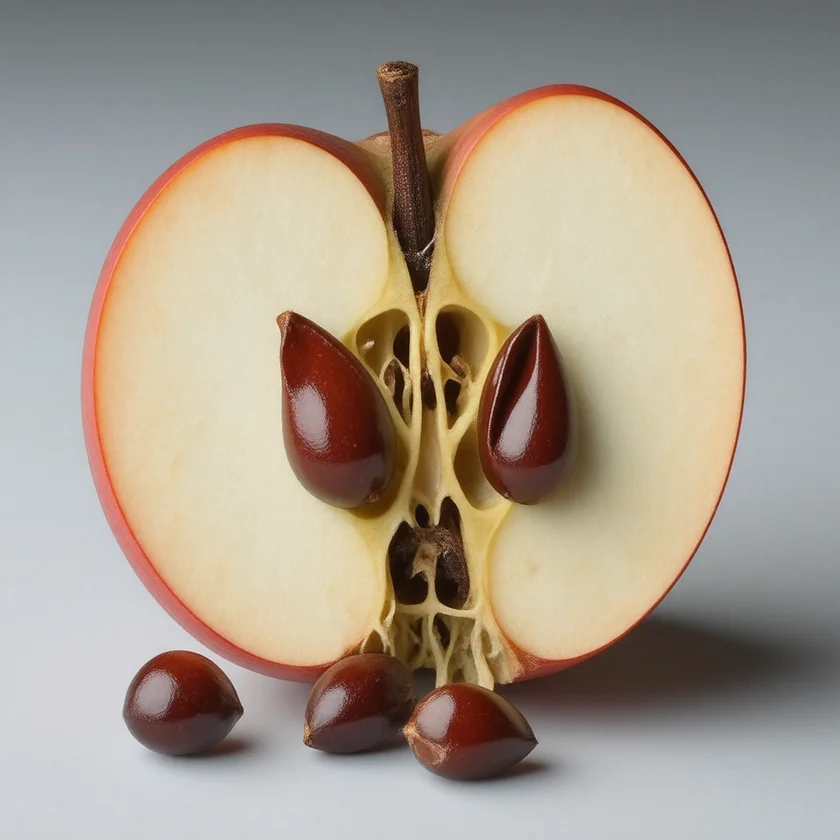

Three worries attach themselves to apples, and they deserve three different answers rather than one blanket reassurance. Apple seeds contain amygdalin, which really does release cyanide — the chemistry is genuine, and the reason casually swallowing a few pips is not dangerous is quantitative, not dismissive, so this page does the arithmetic instead of waving it away. Pesticide residue on apples is real and measurable, and apples sit near the top of an advocacy group's annual pesticide-residue ranking every year; what that ranking does and does not measure is worth understanding, and the honest answer sits between "it is poison" and "it is nothing." And oral allergy syndrome — the itchy mouth many people get from raw apples because their immune system confuses an apple protein with birch pollen — is by far the most likely of the three to actually affect you, is genuinely common, and is the one nobody warns you about.
Table of Contents
- Three Worries, Three Different Answers
- Apple Seeds: The Chemistry Is Real
- Doing the Arithmetic Properly
- Where Real Cyanide Harm Comes From
- Pesticide Residues: The Monitoring Data
- Reading a Pesticide-Residue Ranking Fairly
- Storage Chemicals and Wax
- What Washing Actually Does
- Oral Allergy Syndrome: The Common One
- When It Is Not Just Oral Allergy Syndrome
- Key Research Papers
- Connections
- Featured Videos
Three Worries, Three Different Answers
Short version, before the detail:
- Seeds: the chemistry is real, the dose is not. Swallowing the pips in an apple, or several apples, is not a poisoning risk. Deliberately grinding and eating large quantities of seeds — or apricot kernels, or laetrile — is a different matter, and people have been seriously harmed doing it.
- Pesticides: residues are detected on most conventional apples. Measured exposures sit far below regulatory reference doses. Organic diets do measurably lower urinary pesticide metabolites in children. Both statements are true, and they are usually presented as if only one could be.
- Allergy: if raw apples make your mouth itch, that is a real, well-characterised immune reaction affecting a large number of people, particularly if you also have spring hay fever. It is usually mild and manageable — and cooked apple is usually fine.
Apple Seeds: The Chemistry Is Real
Apple seeds contain amygdalin, a cyanogenic glycoside — a sugar-bound molecule that releases hydrogen cyanide when broken apart. It is not unique to apples. Amygdalin is found across the Rosaceae family: in apricot, peach, plum and cherry kernels, and in bitter almonds. In the plant it is a defence system. The amygdalin and the enzyme that cleaves it are kept in separate compartments; crush the tissue and they mix, releasing cyanide into the mouth of whatever is chewing.
The chemistry runs as follows. The enzyme β-glucosidase (also called emulsin) strips the sugars from amygdalin, yielding mandelonitrile, which spontaneously decomposes into benzaldehyde — the bitter-almond smell — and hydrogen cyanide. Cyanide blocks cytochrome c oxidase in the mitochondria, halting the cell's ability to use oxygen. That is a genuine and serious mechanism of toxicity, and none of what follows disputes it.
The question is entirely one of quantity, and a chemical being toxic at some dose tells you nothing useful until you know how much of it is in front of you.
Doing the Arithmetic Properly
Here are the numbers, with each assumption pushed deliberately in the direction that makes apple seeds look worse, so that the conclusion holds with room to spare.
How much amygdalin is in a seed? Bolarinwa, Orfila and Morgan measured amygdalin across commercially available seeds and kernels and published the results in Food Chemistry in 2014. Seeds from Rosaceae species — the family containing apple, apricot, cherry, peach and almond — contained 0.1 to 17.5 mg of amygdalin per gram, against 0.01 to 0.2 mg/g for non-Rosaceae seeds. Processed food products contained very little. The top of that range belongs to the high-amygdalin kernels, well above apple, but we will use it anyway as a worst case. The same group later measured apple seeds directly: seeds from fifteen apple varieties held 1 to 4 mg of amygdalin per gram, so the 17.5 mg/g worst case used here lies well above the measured apple range. Commercially available pressed apple juice held 0.01 to 0.04 mg per millilitre, and long-life apple juice 0.001 to 0.007 mg per millilitre; the authors concluded that the amygdalin contents of commercially available apple juices are unlikely to present health problems to consumers.
How much cyanide does amygdalin yield? One molecule of amygdalin releases one molecule of hydrogen cyanide. Working from the molecular weights, complete hydrolysis of amygdalin yields roughly 6% of its mass as hydrogen cyanide. In practice hydrolysis is never complete.
How much seed is in an apple? An apple has five carpels, each holding up to two seeds — so five to ten seeds, and their combined mass is well under a gram. Call it one gram, generously.
Putting it together. One gram of seed, at the very top of the whole-family amygdalin range (17.5 mg/g), completely hydrolysed, gives about 1 mg of hydrogen cyanide from a whole apple's worth of seeds.
What does 1 mg mean? The European Food Safety Authority derived an acute reference dose for cyanide of 20 micrograms per kilogram of body weight — 1.4 mg for a 70 kg adult. That reference dose is not a poisoning threshold; it is a conservative level, with safety factors built in, below which no acute health effect is expected. Doses associated with actual acute cyanide poisoning in humans are far higher — conventionally cited in the range of hundreds of micrograms to a few milligrams per kilogram, that is tens to hundreds of milligrams for an adult.
So the worst-case arithmetic for an entire apple's seeds lands below a conservative reference dose that itself sits far below any harmful level. And that calculation assumed the highest amygdalin concentration in the family, a generous seed mass, and complete conversion.
Two more facts push the real-world figure lower still. First, apple seeds have a tough, waxy coat; swallowed whole they largely pass through the digestive tract intact and undigested, releasing little or nothing. The amygdalin has to be liberated by crushing, which means chewing the seeds thoroughly — and apple seeds are bitter, which is precisely the plant's warning system doing its job. Second, the body detoxifies small amounts of cyanide continuously, converting it to thiocyanate via the enzyme rhodanese for excretion. A trickle is handled; a bolus is not.
The honest conclusion: if you swallow the seeds in an apple, or absent-mindedly eat the whole core, nothing will happen to you. There is no case series in the medical literature of cyanide poisoning from ordinary apple eating. That is not because the chemistry is fake — it is because the dose is nowhere near the threshold. You would have to deliberately collect, crush and eat the seeds from a very large number of apples in a single sitting, and there is no reason on earth to do that.
Children are lighter and therefore have a lower absolute threshold, so the same reasoning applies with less margin. Toddlers therefore have a smaller margin of safety, and whole apple seeds are also a choking hazard, which is the more realistic risk.
Where Real Cyanide Harm Comes From
People genuinely do get cyanide poisoning from cyanogenic glycosides. It just does not come from apples.
Apricot kernels. European Food Safety Authority (EFSA) assessed these specifically in 2016 because they are marketed as a health food. Their conclusion was concrete: adults could eat three small raw apricot kernels (370 mg) without exceeding the acute reference dose, while less than half of one large kernel could already exceed it; for toddlers the amount would be 60 mg, which is about half of one small kernel. That is a warning about a food that is actively sold in bags, and it stands in sharp contrast to apple seeds.
Laetrile / "vitamin B17." Amygdalin, and a semi-synthetic derivative marketed as laetrile, has been sold for decades as an alternative cancer treatment. It is not a vitamin; the "B17" name was invented for marketing. A Cochrane systematic review by Milazzo and Horneber, updated in 2015, found no reliable evidence that laetrile or amygdalin has any beneficial effect in cancer, and documented a real risk of serious adverse effects from cyanide toxicity, particularly with oral use and particularly when combined with vitamin C or with foods containing β-glucosidase. Their conclusion was that the risk-benefit balance is unambiguously unfavourable. This is the context in which cyanide from cyanogenic glycosides actually hurts people.
Cassava. Globally, the great majority of cyanogenic-glycoside poisoning comes from improperly processed bitter cassava, a staple crop in parts of Africa, South America and Asia. Traditional processing — soaking, fermenting, prolonged cooking — removes the glycosides; where those steps are shortened during famine, outbreaks of the paralytic disease konzo follow. Barceloux's review in Disease-a-Month covers the clinical picture across cassava, fruit kernels and cycad seeds.
Keeping these three in view is what makes the apple-seed answer credible rather than complacent. The chemistry is taken seriously here. It simply does not reach a harmful dose in an apple.
Pesticide Residues: What the Monitoring Data Show
Apples are among the most intensively sprayed fruit crops. The reason is on the history page: every commercial apple variety is a clone, so an orchard is genetically uniform against pests and pathogens — scab, fire blight, codling moth, aphids. Uniformity plus a perennial crop equals heavy pest pressure.
Residues are therefore commonly detected. The U.S. Department of Agriculture's Pesticide Data Program and European Food Safety Authority's European monitoring both find measurable residues on a majority of conventional apple samples. That is not in dispute.
What is disputed is what it means. Two findings, both from the peer-reviewed literature, and both true:
1. Measured dietary exposures sit far below regulatory reference doses. Winter and Katz analysed exactly the twelve commodities that a U.S.-based environmental advocacy group had ranked as having the greatest potential for pesticide-residue contamination, and published in the Journal of Toxicology in 2011. Using the actual residue monitoring data and realistic consumption figures, they found that exposures to the most commonly detected pesticides on those twelve commodities were at levels dramatically below the chronic reference doses set by the US EPA — typically a small fraction of a percent. They also concluded that substituting organic for conventional forms of those twelve foods would not produce an appreciable reduction in consumer risk, and criticised the ranking methodology for being based on residue detection frequency rather than on dose or toxicity. Winter's later analysis of chronic US dietary exposure, in the International Journal of Food Contamination in 2015, reached the same conclusion across a wider set of foods.
2. Eating organic measurably lowers pesticide biomarkers in the body. Curl, Fenske and Elgethun measured urinary organophosphate metabolites in Seattle preschool children and published in Environmental Health Perspectives in 2003. The median total dimethyl metabolite concentration was roughly six times higher in children eating conventional diets than in children eating organic ones (0.17 versus 0.03 µmol/L). It was a small study — 18 children on organic diets, 21 on conventional — but the direction has been replicated. Bradman and colleagues ran an organic-diet intervention in 40 Mexican-American children aged 3 to 6 living in low-income urban and agricultural communities in California, and reported in the same journal in 2015 that during 7 days of organic food, urinary total dialkylphosphates, dimethyl dialkylphosphates (both breakdown products of organophosphate insecticides) and the herbicide 2,4-D fell by 40%, 49% and 25% respectively (p < 0.01), while metabolites of several other organophosphate, pyrethroid and herbicide compounds were either infrequently detected or not significantly affected by diet. Barański and colleagues' 2014 meta-analysis in the British Journal of Nutrition found organic crops had a roughly fourfold lower frequency of pesticide residue detection, along with higher antioxidant concentrations and lower cadmium.
How to hold both at once. Organic produce genuinely does reduce measured pesticide exposure. Whether that reduction translates into a health benefit at the exposure levels found in ordinary diets has not been demonstrated — the biomarker moves, the outcome studies are not there. Buying organic apples lowers measured exposure, and the biomarker studies above were done in young children; not buying organic has no demonstrated health cost either. The evidence that eating fruit is good for health is far stronger than the evidence that trace residues are harmful, so on the balance of what is actually known, eating fewer apples out of fear of residues is a net loss.
Reading a Pesticide-Residue Ranking Fairly
Apples appear near the top of an advocacy group's annual list of the most pesticide-contaminated produce, and that is the single reason most people worry about them.
The list is compiled from U.S. Department of Agriculture (USDA) and U.S. Food and Drug Administration (FDA) residue monitoring data, and it ranks produce primarily by how often residues are detected and how many different pesticides are found — not by how much residue is present relative to a toxicological threshold, and not by the toxicity of the compounds involved. A crop can rank badly for carrying many different residues, all at trace levels, all far below reference doses. Winter and Katz's critique is that this makes the ranking a measure of detection, not of risk.
What the list gets right: apples are heavily sprayed, residues are frequently detected, and multiple residues on one apple is the norm. Those are facts, and a consumer group publicising them is doing something useful.
What it leaves out: the amounts and the comparison to reference doses. Winter and Katz concluded that the methodology used to rank the commodities with respect to pesticide risks lacks scientific credibility.
What the evidence on this page shows, in order of how much it matters:
- The benefit of eating apples outweighs the measured residue risk. On the evidence this is the highest-value point on the list.
- Washing with friction removes surface residue — described below.
- Organic apples lower measured pesticide exposure. The biomarker studies were done in young children; whether the lower exposure brings a health benefit has not been demonstrated.
- Peeling removes polyphenols and fibre along with a little residue. The peel carries the polyphenols and fibre described on the peel page, while the monitoring data put its residue far below levels of concern; organic apples eaten with the peel keep both advantages.
Storage Chemicals and Wax
Two things get applied to apples after harvest, and both are worth knowing about accurately.
Diphenylamine (DPA) is an antioxidant applied to apples destined for long cold storage. It prevents "superficial scald," a brown blotching of the skin that develops over months in storage. It is a genuine case of regulatory divergence: the European Union did not renew DPA's approval in 2012, and subsequently lowered permitted residue levels to a default minimum, which in practice keeps DPA-treated apples out of the EU market. It remains permitted in the United States. The stated basis for the EU decision was incomplete data — specifically, unresolved questions about whether nitrosamines could form from DPA breakdown products — rather than a demonstration of harm. That distinction is worth stating in both directions: it is not evidence that DPA is dangerous, and it is not evidence that it is safe. It is a data gap that two regulators resolved differently, and the EU applied the more precautionary reading.
Wax. Apples make their own natural wax coating. Commercial washing removes it, so packers apply a food-grade replacement to prevent moisture loss and restore shine — typically carnauba wax (from a palm), shellac (from an insect), or beeswax. These are approved food additives with long histories of use. Shellac and beeswax are animal products, which matters to vegans; that is the substantive objection. Wax cannot be scrubbed off entirely with water, and there is no health reason to try.
What Washing Actually Does
The FDA's food-safety guidance describes gently rubbing produce while holding it under plain running water, and scrubbing firm produce with a clean vegetable brush. Rubbing an apple this way for twenty to thirty seconds does two things: it removes a meaningful share of surface residue, and it removes soil and surface microbes — the food-safety benefit, which is the more immediate one.
Details worth having:
- Friction matters more than the liquid. Rubbing removes more than a passive rinse.
- Baking soda solution outperforms plain water for surface residues. Yang and colleagues tested commercial and homemade washing agents on apples in the Journal of Agricultural and Food Chemistry in 2017 and found a sodium bicarbonate solution more effective than tap water or bleach at removing certain surface pesticides — though in their laboratory test, with pesticide applied at 125 ng/cm2 and left for 24 hours, a 10 mg/mL baking-soda solution took 12 minutes to remove thiabendazole and 15 minutes to remove phosmet from the surface completely, and the residues that had penetrated into the fruit (20% of the applied thiabendazole and 4.4% of the applied phosmet) could not be washed away.
- Commercial produce washes are not clearly better than water; the FDA's guidance states that there is no need to use soap or a produce wash.
- Soap, detergent and bleach are not produce washes. Apple skin is porous, so detergent left on the skin is eaten with the fruit; the FDA's guidance calls for plain running water.
- Nothing removes systemic residues — compounds taken up into the fruit's tissue rather than sitting on the surface. Washing addresses the surface only. Peeling would address a little more, at the cost described above.
Oral Allergy Syndrome: The Common One
This is the section that will matter to the most readers, and it is the one apples are almost never discussed in terms of.
If eating a raw apple makes your lips, tongue, palate or throat itch, tingle or feel slightly swollen — starting within minutes and settling within an hour, and only with raw apple — you very likely have oral allergy syndrome, also called pollen-food allergy syndrome. You are not imagining it, you are not being fussy, and it is not a sensitivity to sugar or acid. It is a genuine, well-characterised, immunoglobulin E-mediated immune reaction, and apple is one of its commonest triggers.
The mechanism is a case of mistaken identity. The major birch pollen allergen is a protein called Bet v 1. Apples contain a protein called Mal d 1 which is structurally very similar to it — Vanek-Krebitz and colleagues cloned and sequenced Mal d 1 in 1995 and demonstrated exactly that immunological relationship. If your immune system has learned to recognise birch pollen, it recognises the apple protein too, and reacts where the apple touches: the mouth and throat.
This is why oral allergy syndrome tracks spring hay fever. Approximately 2% of the Northern and Central European population is allergic to apples, according to Kootstra and colleagues. In northern and central Europe, where birch pollen allergy is widespread, a large proportion of birch-allergic people react to raw apple — figures commonly reported run from roughly half to three-quarters of birch-sensitised patients. The same cross-reactivity explains why the same people often react to raw cherries, peaches, pears, plums, carrots, celery, hazelnuts and almonds. Vieths and colleagues' review in the Annals of the New York Academy of Sciences mapped these cross-reactivity clusters; Price and colleagues' 2015 review in Dermatitis is a good clinical overview.
The single most useful fact: Mal d 1 is fragile. It is destroyed by heat and broken down readily by digestion. That is why the reaction stays in the mouth — the protein does not survive the stomach — and why cooked apple is almost always tolerated by people who cannot eat raw apple. Apple pie, stewed apple, baked apple, applesauce and pasteurised juice are usually fine. If raw apples make your mouth itch, you have not lost apples; you have lost raw apples.
Other things that reduce reactions, with varying evidence:
- Variety matters, substantially. Mal d 1 content varies several-fold between cultivars. Kootstra and colleagues assessed the Santana apple specifically and reported in Annals of Allergy, Asthma & Immunology in 2007 that a proportion of apple-allergic patients tolerated it: of 15 apple-allergic individuals challenged during the birch pollen season, 8 of 15 (53%) developed no symptoms with Santana, against 1 participant each with Golden Delicious and Topaz — low-allergen cultivars are a real thing, not marketing. Some apple-allergic people tolerate low-allergen varieties; reactions that have ever gone beyond the mouth carry a risk of a systemic reaction.
- Freshness and storage. Mal d 1 levels tend to rise during long storage, so a freshly picked apple may be better tolerated than one out of a controlled-atmosphere store.
- Peeling helps some people, because allergen concentration is higher in and near the skin.
- Birch pollen immunotherapy. Bolhaar and colleagues showed in Clinical & Experimental Allergy in 2004 that birch-pollen immunotherapy improved cross-reactive apple allergy, confirmed by skin testing and double-blind food challenge: among 25 adults allergic to birch pollen and apple, symptom scores at the apple challenge fell more than 10-fold in 9 of 13 patients given immunotherapy, three of whom converted to negative, while no decrease was seen in the control group. If you are already having immunotherapy for birch allergy, the apple reaction may improve as a side benefit.
- Seasonality. Many people find reactions worse during and just after birch pollen season, when their immune system is already primed.
When It Is Not Just Oral Allergy Syndrome
Oral allergy syndrome is usually mild and self-limiting. But apples carry a second, more serious allergen, and telling them apart matters.
Mal d 3 is a non-specific lipid transfer protein. Unlike Mal d 1 it is heat-stable and digestion-stable, so it survives cooking and reaches the gut and the bloodstream intact — and it can cause systemic reactions, including anaphylaxis. It is concentrated in the peel.
Fernández-Rivas and colleagues demonstrated the geography of this clearly in the Journal of Allergy and Clinical Immunology in 2006, comparing 389 apple-allergic patients in the Netherlands, Austria, Italy and Spain. In the Netherlands, Austria and Italy, apple allergy was mild (more than 90% isolated oral symptoms) and related to birch pollen allergy and sensitisation to Mal d 1. In Spain, where birch is not a major allergen, sensitisation was to Mal d 3, associated with peach allergy, and apple allergy was severe (more than 35% systemic reactions). Same fruit, two different allergies, two different prognoses.
The following signs are not oral allergy syndrome; they point to a reaction beyond the mouth, which can include anaphylaxis, a reaction hospitals treat as urgent:
- Hives or swelling away from the mouth — face, hands, body
- Wheezing, coughing, chest tightness, or any difficulty breathing
- Vomiting, cramping abdominal pain, or diarrhoea
- Throat tightness or difficulty swallowing beyond a mild tickle
- Dizziness, faintness, or a feeling of impending doom
- Any reaction to cooked apple — this is the key differentiator, since Mal d 1 does not survive cooking
- Reactions that are getting worse over time rather than staying stable
Two cofactors are worth knowing about because they turn a tolerable food into a dangerous one: exercise shortly after eating, and nonsteroidal anti-inflammatory drugs (NSAIDs) such as ibuprofen or aspirin, both of which can amplify lipid-transfer-protein reactions substantially. For people who have had a systemic reaction to fruit, component-resolved allergy testing can distinguish Mal d 1 from Mal d 3 sensitisation, and the result bears on whether adrenaline is carried.
The reassuring version, which applies to most people: an itchy mouth from raw apple is common, mild, and manageable. The version that requires attention is anything beyond the mouth, and anything at all from a cooked apple.
Key Research Papers
Author names, titles and journals are plain text; only the DOI or PMID is a link. Every DOI below was verified against Crossref before publication.
- Bolarinwa IF, Orfila C, Morgan MRA. Amygdalin content of seeds, kernels and food products commercially-available in the UK. Food Chemistry. 2014;152:133-139. — doi:10.1016/j.foodchem.2013.11.002 · PubMed PMID: 24444917
- Bolarinwa IF, Orfila C, Morgan MR. Determination of amygdalin in apple seeds, fresh apples and processed apple juices. Food Chemistry. 2015;170:437-442. — doi:10.1016/j.foodchem.2014.08.083 · PubMed PMID: 25306368
- EFSA Panel on Contaminants in the Food Chain (CONTAM). Acute health risks related to the presence of cyanogenic glycosides in raw apricot kernels and products derived from raw apricot kernels. EFSA Journal. 2016;14(4):4424. — doi:10.2903/j.efsa.2016.4424
- Milazzo S, Horneber M. Laetrile treatment for cancer. Cochrane Database of Systematic Reviews. 2015;(4):CD005476. — doi:10.1002/14651858.CD005476.pub4
- Barceloux DG. Cyanogenic foods (cassava, fruit kernels, and cycad seeds). Disease-a-Month. 2009;55(6):336-352. — doi:10.1016/j.disamonth.2009.03.010
- Winter CK, Katz JM. Dietary exposure to pesticide residues from commodities alleged to contain the highest contamination levels. Journal of Toxicology. 2011;2011:589674. — doi:10.1155/2011/589674 · PubMed PMID: 21776262
- Winter CK. Chronic dietary exposure to pesticide residues in the United States. International Journal of Food Contamination. 2015;2:11. — doi:10.1186/s40550-015-0018-y
- Curl CL, Fenske RA, Elgethun K. Organophosphorus pesticide exposure of urban and suburban preschool children with organic and conventional diets. Environmental Health Perspectives. 2003;111(3):377-382. — doi:10.1289/ehp.5754 · PubMed PMID: 12611667
- Bradman A, Quirós-Alcalá L, Castorina R, et al. Effect of organic diet intervention on pesticide exposures in young children living in low-income urban and agricultural communities. Environmental Health Perspectives. 2015;123(10):1086-1093. — doi:10.1289/ehp.1408660 · PubMed PMID: 25861095
- Barański M, Średnicka-Tober D, Volakakis N, et al. Higher antioxidant and lower cadmium concentrations and lower incidence of pesticide residues in organically grown crops: a systematic literature review and meta-analyses. British Journal of Nutrition. 2014;112(5):794-811. — doi:10.1017/S0007114514001366
- Yang T, Doherty J, Zhao B, Kinchla AJ, Clark JM, He L. Effectiveness of commercial and homemade washing agents in removing pesticide residues on and in apples. Journal of Agricultural and Food Chemistry. 2017;65(44):9744-9752. — doi:10.1021/acs.jafc.7b03118
- Vanek-Krebitz M, Hoffmann-Sommergruber K, Laimer da Camara Machado M, et al. Cloning and sequencing of Mal d 1, the major allergen from apple (Malus domestica), and its immunological relationship to Bet v 1, the major birch pollen allergen. Biochemical and Biophysical Research Communications. 1995;214(2):538-551. — doi:10.1006/bbrc.1995.2320
- Fernández-Rivas M, Bolhaar S, González-Mancebo E, et al. Apple allergy across Europe: how allergen sensitization profiles determine the clinical expression of allergies to plant foods. Journal of Allergy and Clinical Immunology. 2006;118(2):481-488. — doi:10.1016/j.jaci.2006.05.012
- Vieths S, Scheurer S, Ballmer-Weber B. Current understanding of cross-reactivity of food allergens and pollen. Annals of the New York Academy of Sciences. 2002;964:47-68. — doi:10.1111/j.1749-6632.2002.tb04132.x
- Price A, Ramachandran S, Smith GP, Stevenson ML, Pomeranz MK, Cohen DE. Oral allergy syndrome (pollen-food allergy syndrome). Dermatitis. 2015;26(2):78-88. — doi:10.1097/DER.0000000000000087
- Kootstra HS, Vlieg-Boerstra BJ, Dubois AEJ. Assessment of the reduced allergenic properties of the Santana apple. Annals of Allergy, Asthma & Immunology. 2007;99(6):522-525. — doi:10.1016/S1081-1206(10)60381-X
- Bolhaar STHP, Tiemessen MM, Zuidmeer L, et al. Efficacy of birch-pollen immunotherapy on cross-reactive food allergy confirmed by skin tests and double-blind food challenges. Clinical & Experimental Allergy. 2004;34(5):761-769. — doi:10.1111/j.1365-2222.2004.1939.x
- Ma S, Sicherer SH, Nowak-Wegrzyn A. A survey on the management of pollen-food allergy syndrome in allergy practices. Journal of Allergy and Clinical Immunology. 2003;112(4):784-788. — doi:10.1016/S0091-6749(03)02008-6
- Amygdalin and cyanogenic glycoside toxicity — PubMed: amygdalin and cyanogenic glycoside toxicity
- Pesticide residues on apples and dietary risk assessment — PubMed PMID: 41828764
- Apple allergy, Mal d 1 and Mal d 3 — PubMed: apple allergy, Mal d 1 and Mal d 3