Adrenal Insufficiency
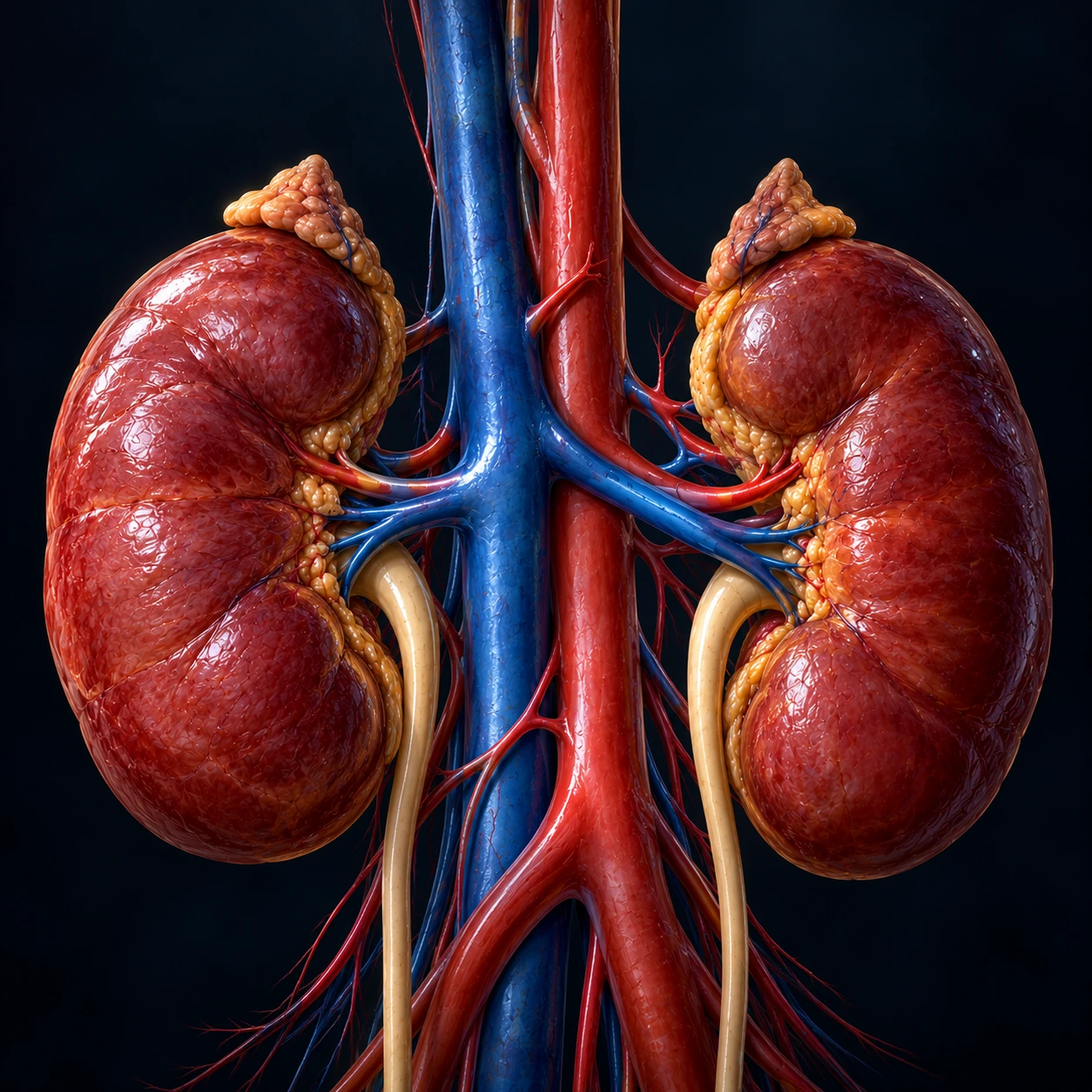
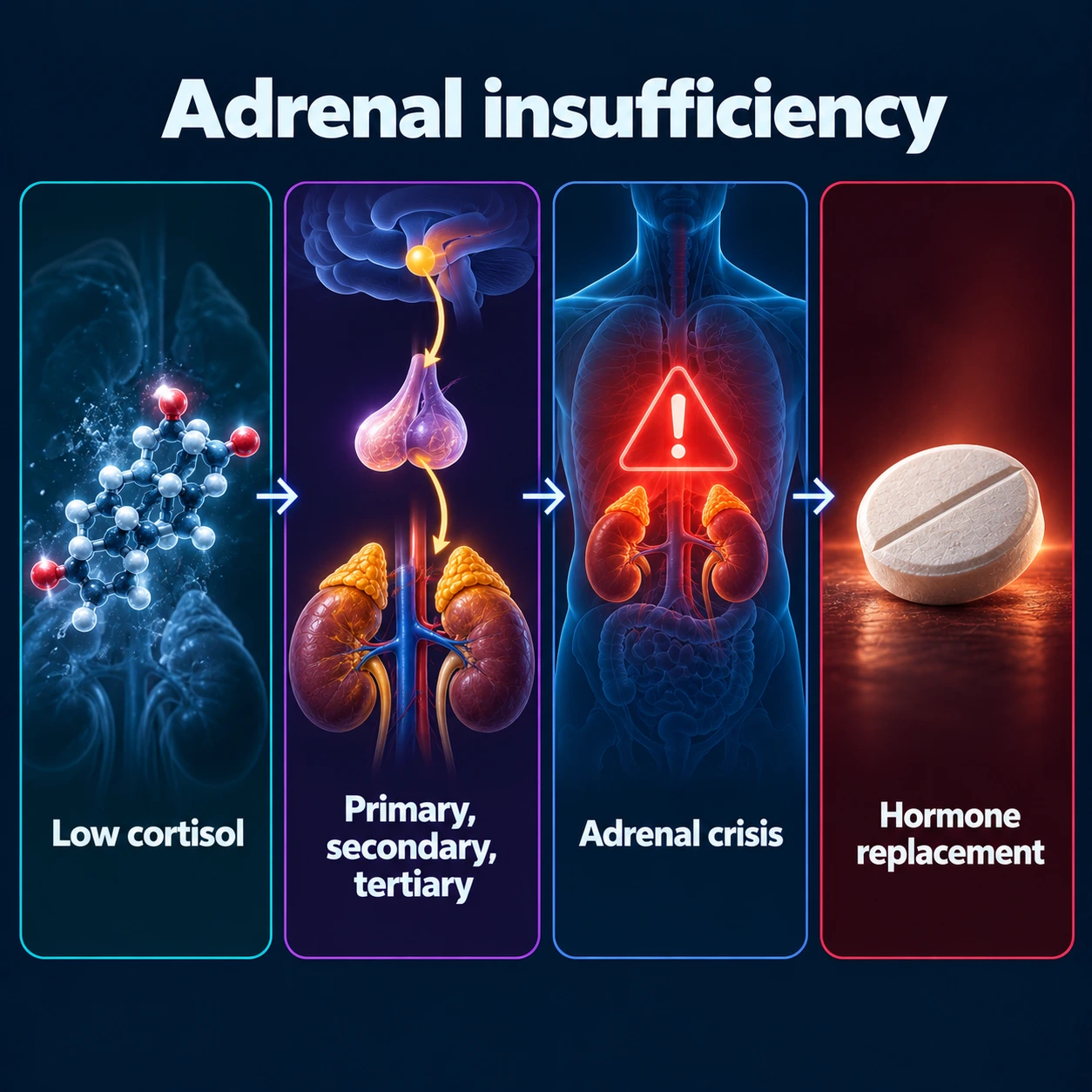
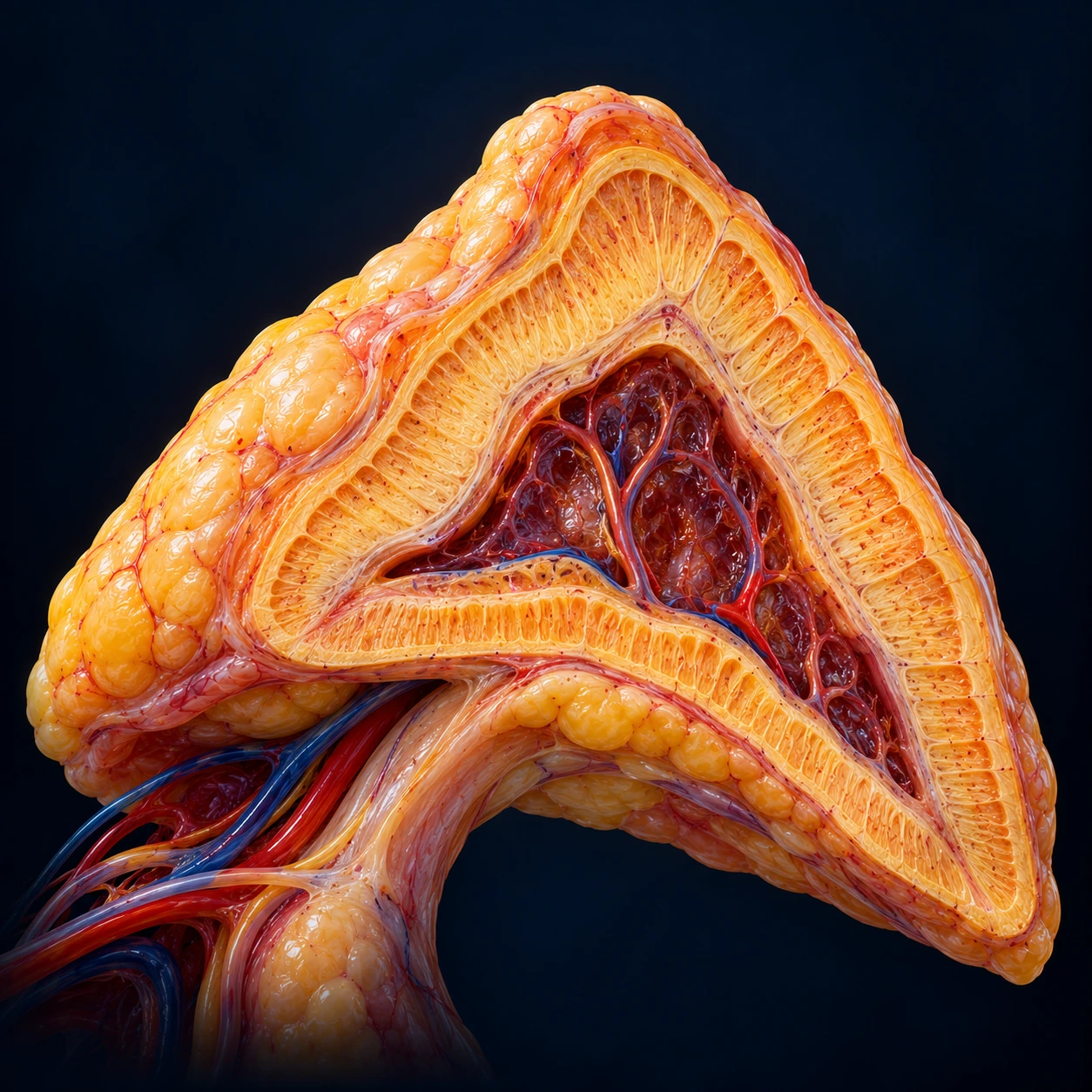
Adrenal insufficiency is a condition in which your adrenal glands — two walnut-sized glands that sit atop each kidney — cannot produce enough of the steroid hormones your body depends on, chiefly cortisol and, in primary forms, aldosterone. Cortisol governs your stress response, keeps blood pressure stable, regulates blood sugar, and quiets inflammation; without it, the body's ability to cope with even ordinary daily demands breaks down. The condition affects roughly 1 in 10,000 people in developed countries, and it spans a wide spectrum — from the rare, life-threatening autoimmune destruction of the adrenal cortex (Addison's disease) to the far more common gradual suppression of the adrenal axis caused by long-term steroid medication use. The key message: adrenal insufficiency is serious but entirely manageable with the right replacement therapy, and people who are correctly diagnosed and properly treated live full, active lives.
Table of Contents
- What Adrenal Insufficiency Is
- Primary vs Secondary vs Tertiary
- Symptoms and the Classic Triad
- Underlying Causes
- Diagnosis — Lab Tests and Stimulation Testing
- Addisonian Crisis — The Emergency
- Treatment and Maintenance Therapy
- Sick-Day Rules and Stress Dosing
- Key Research Papers
- Connections
- Featured Videos
What Adrenal Insufficiency Is
The adrenal cortex — the outer layer of each adrenal gland — produces three families of steroid hormones: glucocorticoids (chiefly cortisol), mineralocorticoids (chiefly aldosterone), and adrenal androgens (chiefly DHEA-S). Cortisol is arguably the most critical: it is the master stress hormone, released in a surge whenever the body faces illness, surgery, trauma, or even a hard workout. It raises blood glucose to fuel muscles and the brain, tightens blood vessels to maintain pressure, and modulates immune responses. Aldosterone regulates salt and water balance, directly controlling blood pressure and potassium levels. When either or both of these hormones fall short, the physiological consequences cascade quickly.
The control system works through a feedback loop called the hypothalamic-pituitary-adrenal (HPA) axis. The hypothalamus releases corticotropin-releasing hormone (CRH), which prompts the pituitary to release adrenocorticotropic hormone (ACTH), which in turn tells the adrenal cortex to make cortisol. When cortisol levels are adequate, they feed back to suppress both CRH and adrenocorticotropic hormone — a elegant off-switch. Adrenal insufficiency disrupts this loop at one of three levels, which defines its classification into primary, secondary, or tertiary types.
Primary vs Secondary vs Tertiary
Understanding where the breakdown occurs is clinically important because it determines which hormones need replacing and what tests to order.
- Primary adrenal insufficiency (Addison's disease) — the problem is in the adrenal gland itself. The cortex is damaged or destroyed and cannot respond even when adrenocorticotropic hormone is high. Both cortisol and aldosterone are deficient. Because the pituitary is intact and senses low cortisol, it produces large amounts of adrenocorticotropic hormone in a futile effort to stimulate the failing gland. The result is a high adrenocorticotropic hormone + low cortisol pattern. Excess adrenocorticotropic hormone also drives up melanocyte-stimulating hormone (MSH), which cross-reacts at the skin's MC1R receptor and causes the characteristic hyperpigmentation seen only in primary AI — darkening of the skin, gums, creases, and scars.
- Secondary adrenal insufficiency — the adrenal glands are structurally normal, but the pituitary is not secreting enough adrenocorticotropic hormone to drive them. Both adrenocorticotropic hormone and cortisol are low or inappropriately normal. Because the mineralocorticoid axis (aldosterone) is controlled largely by the renin-angiotensin system rather than adrenocorticotropic hormone, aldosterone production is usually preserved — so the severe salt-wasting and hyperkalemia typical of primary AI do not occur. There is no hyperpigmentation, because adrenocorticotropic hormone levels are actually low.
- Tertiary adrenal insufficiency — the hypothalamus fails to produce enough CRH, so the pituitary never gets the signal to make adrenocorticotropic hormone, and the adrenal gland atrophies from disuse. The most common cause by far is exogenous glucocorticoid use: prolonged treatment with prednisone, dexamethasone, or any corticosteroid suppresses the hypothalamic-pituitary-adrenal axis, and when those drugs are stopped abruptly — or when the patient faces a major stressor while still on them — the axis cannot recover fast enough to meet demand. This is the most common cause of adrenal insufficiency overall, affecting far more people than autoimmune Addison's disease.
Symptoms and the Classic Triad
Adrenal insufficiency is notorious for a slow, insidious onset. Symptoms often accumulate over months or years, and because they are nonspecific — fatigue, weight loss, nausea — the diagnosis is frequently delayed. The classic triad of primary adrenal insufficiency is:
- Profound fatigue — not ordinary tiredness, but an exhaustion that does not improve with rest, and that worsens markedly during minor illness or stress.
- Hyperpigmentation (primary AI only) — a distinctive bronze or tan darkening of the skin even on sun-unexposed areas: palmar creases, knuckles, buccal mucosa (inside the cheeks and gums), surgical scars, pressure points, and the areolae. This is caused by excess ACTH/MSH stimulation of melanocytes. It does not occur in secondary or tertiary AI, where adrenocorticotropic hormone is low.
- Orthostatic hypotension — a drop in blood pressure on standing, causing dizziness, lightheadedness, or fainting. In primary AI this is compounded by aldosterone deficiency causing salt and volume depletion; in secondary/tertiary AI it is driven primarily by cortisol deficiency alone.
Other common symptoms include:
- Anorexia, nausea, vomiting, and weight loss — often the presenting complaint in gradual-onset primary AI.
- Salt craving — a striking feature of primary AI driven by aldosterone deficiency and sodium loss in the urine.
- Hypoglycemia — especially fasting hypoglycemia, because cortisol is a key counter-regulatory hormone that raises blood glucose between meals.
- Muscle weakness, joint pain, and myalgias.
- Depression, irritability, and cognitive slowing — psychiatric symptoms are common enough that adrenal insufficiency can mimic a primary mood disorder.
- Loss of body hair and decreased libido — from adrenal androgen (DHEA-S) deficiency, more noticeable in women.
- Electrolyte abnormalities (primary AI): hyponatremia (low sodium from aldosterone deficiency plus increased vasopressin) and hyperkalemia (high potassium from aldosterone deficiency).
Underlying Causes
The causes differ markedly between primary and central (secondary/tertiary) forms.
Primary Adrenal Insufficiency
- Autoimmune adrenalitis — in developed countries, this accounts for 70–90% of primary AI cases. The immune system produces antibodies against adrenal cortex antigens, especially 21-hydroxylase antibodies (21-OH Abs) and adrenal cortex antibodies (ACA). The 21-OH Ab is the most sensitive and specific marker, present in roughly 90% of autoimmune Addison's. It often occurs as part of autoimmune polyglandular syndrome (APS) — particularly APS type 2 (with type 1 diabetes and autoimmune thyroid disease) or APS type 1 (with hypoparathyroidism and mucocutaneous candidiasis). It is more common in women and has HLA-DR3/DR4 genetic associations.
- Tuberculosis — the leading cause worldwide historically, and still the most common cause in parts of Africa and Asia. Mycobacterium tuberculosis infects both adrenal glands (both must be destroyed before insufficiency appears, since the adrenals have large functional reserve). Calcified adrenal glands on imaging are a radiological clue.
- Bilateral adrenal hemorrhage — acute destruction of both adrenal glands from hemorrhage. Causes include: anticoagulation therapy, major surgery, sepsis (especially Waterhouse-Friderichsen syndrome — bilateral adrenal hemorrhage in the setting of meningococcal septicemia, a catastrophic complication of Neisseria meningitidis bacteremia), antiphospholipid syndrome, and heparin-induced thrombocytopenia. This presents as sudden, acute adrenal crisis.
- Infiltrative and granulomatous diseases — sarcoidosis, histoplasmosis, blastomycosis, and cryptococcosis can replace adrenal tissue. Metastatic cancer (particularly lung, breast, renal cell, and melanoma) and lymphoma can cause bilateral adrenal infiltration.
- Genetic/rare causes — congenital adrenal hypoplasia (DAX-1 mutations), adrenoleukodystrophy (X-linked, accumulating very-long-chain fatty acids that destroy the adrenal cortex and brain white matter), and familial glucocorticoid deficiency.
Secondary and Tertiary Adrenal Insufficiency
- Exogenous glucocorticoid withdrawal (tertiary) — by far the most common cause overall. Any patient who has taken the equivalent of prednisone 5 mg/day for more than 3–4 weeks is at risk. The hypothalamic-pituitary-adrenal axis is suppressed and must recover gradually; abrupt cessation or failure to increase doses during illness can precipitate an adrenal crisis.
- Pituitary causes (secondary) — pituitary adenomas (including non-functioning macro-adenomas that compress the corticotroph cells), pituitary surgery or radiotherapy, Sheehan's syndrome (pituitary infarction following postpartum hemorrhage), autoimmune hypophysitis (increasingly recognized with checkpoint inhibitor immunotherapy), head trauma, and infiltrative diseases (sarcoidosis, hemochromatosis, histiocytosis).
- Hypothalamic causes (tertiary) — craniopharyngioma, cranial irradiation involving the hypothalamus, traumatic brain injury.
Diagnosis — Lab Tests and Stimulation Testing
The diagnosis requires both identifying low cortisol production and — in most cases — confirming it with dynamic testing.
Basal Morning Cortisol
Cortisol peaks in the early morning (roughly 8 AM) due to the circadian rhythm of adrenocorticotropic hormone. A morning serum cortisol drawn at 8–9 AM provides a useful screening result:
- <3 µg/dL (83 nmol/L) — strongly diagnostic of adrenal insufficiency; further stimulation testing may still be done to confirm.
- >18 µg/dL (500 nmol/L) — effectively rules out adrenal insufficiency in a non-acutely ill patient; no further testing needed.
- 3–18 µg/dL — indeterminate; proceed to stimulation testing.
The Standard (High-Dose) Cosyntropin (Adrenocorticotropic Hormone) Stimulation Test
This is the gold-standard dynamic test. Synthetic adrenocorticotropic hormone (cosyntropin) 250 µg is given intravenously or intramuscularly, and serum cortisol is measured at 30 and 60 minutes after injection. In a normal adrenal gland, this supraphysiological adrenocorticotropic hormone dose produces a robust cortisol surge.
- Peak cortisol <18 µg/dL (500 nmol/L) at 30 or 60 minutes = adrenal insufficiency confirmed.
- Peak cortisol ≥18 µg/dL = normal adrenal reserve; primary AI is excluded.
An important caveat: the high-dose test can miss early or recent secondary AI (where the adrenal gland has not yet atrophied). In this setting, a low-dose cosyntropin test (1 µg) is more sensitive and is preferred by some endocrinologists for evaluating suspected secondary AI.
Distinguishing Primary from Secondary/Tertiary
- Plasma adrenocorticotropic hormone — measured simultaneously with morning cortisol. A high adrenocorticotropic hormone (>2× upper limit of normal, typically >100 pg/mL) with low cortisol = primary AI. A low or inappropriately normal adrenocorticotropic hormone with low cortisol = secondary or tertiary AI.
- Renin and aldosterone — in primary AI, aldosterone is low and plasma renin activity is high (reflecting sodium depletion). In secondary/tertiary AI, the renin-aldosterone axis is intact.
- 21-hydroxylase antibodies — positive in autoimmune Addison's disease. Their presence confirms the etiology without need for adrenal biopsy.
- Adrenal computed tomography (CT) or magnetic resonance imaging (MRI) — computed tomography of the adrenal glands is indicated in all cases of primary AI to look for bilateral enlargement (tuberculosis (TB), metastases, hemorrhage), calcification (tuberculosis), or atrophy (autoimmune). Magnetic resonance imaging of the pituitary is indicated when secondary AI is suspected.
- Electrolytes — hyponatremia + hyperkalemia point strongly toward primary AI (aldosterone deficiency).
Addisonian Crisis — The Emergency
An adrenal (Addisonian) crisis is an acute, life-threatening state of absolute glucocorticoid (and often mineralocorticoid) deficiency, usually triggered by a physiological stressor in a person with underlying adrenal insufficiency. It kills if not treated immediately and kills even in modern intensive care if treatment is delayed. Studies of patients on long-term replacement therapy have found about 5–10 crises per 100 patient-years (a 2015 review), with a prospective German study counting 8.3 per 100 patient-years even in educated patients, and it remains a significant cause of preventable death.
Precipitating Triggers
- Febrile illness, gastrointestinal infection, or any acute illness
- Major surgery or trauma
- Failure to increase ("stress-dose") steroid during illness
- Abrupt discontinuation of long-term corticosteroids
- Vomiting or diarrhea preventing oral steroid absorption
- Bilateral adrenal hemorrhage (Waterhouse-Friderichsen syndrome in meningococcal septicemia)
Clinical Features of Crisis
- Severe hypotension — often profound, not responsive to fluids and vasopressors alone until hydrocortisone is given
- Hyponatremia (primary AI) — sometimes life-threatening; serum sodium can fall below 120 mmol/L
- Hyperkalemia (primary AI) — from aldosterone deficiency; can cause cardiac arrhythmias
- Hypoglycemia — particularly in children and in patients who have been vomiting and unable to eat
- Severe abdominal pain, nausea, and vomiting — can mimic a surgical abdomen, leading to dangerous diagnostic delays
- Altered consciousness, confusion, or coma in severe cases
- Fever — both from any precipitating infection and from the crisis itself
Emergency Treatment
When clinical suspicion is high, the standard protocol starts treatment immediately, without waiting for confirmatory tests. The standard protocol is:
- Hydrocortisone 100 mg intravenous (IV) bolus immediately — this single dose is life-saving; a cortisol level is drawn first if that takes less than 5 minutes, but treatment is not delayed to wait for results.
- Continuing hydrocortisone — 200 mg/24h by continuous infusion, or 50–100 mg every 6–8 hours by IV/IM injection, for the first 24 hours.
- Intravenous saline (0.9% NaCl) — aggressive volume resuscitation (1–2 liters rapidly, then guided by clinical response) to correct hypovolemia and hyponatremia.
- Dextrose (5% or 10% glucose in saline) — added if hypoglycemia is present or suspected.
- Identify and treat the precipitating cause — antibiotics for infection; no mineralocorticoid (fludrocortisone) is needed acutely because supraphysiological doses of hydrocortisone have sufficient mineralocorticoid activity at these doses.
- Taper to maintenance — as the crisis resolves, gradually taper hydrocortisone back to maintenance doses and restart fludrocortisone once oral medication is tolerated.
Waterhouse-Friderichsen Syndrome
Waterhouse-Friderichsen syndrome is a specific, catastrophic cause of bilateral adrenal hemorrhage caused by fulminant meningococcal septicemia (Neisseria meningitidis). It presents with the classic features of meningococcemia — rapidly spreading petechial or purpuric rash, high fever, and cardiovascular collapse — complicated by acute primary adrenal insufficiency from bilateral adrenal gland hemorrhagic infarction. The mechanism is disseminated intravascular coagulation (DIC) and direct bacterial endothelial damage. Mortality is extremely high without immediate combined treatment with antibiotics and high-dose corticosteroids. See our page on Meningitis for the broader context of meningococcal disease.
Treatment and Maintenance Therapy
The goal of maintenance therapy is to replace, as physiologically as possible, the hormones that the adrenal gland can no longer produce. This means mimicking the normal cortisol circadian rhythm and adjusting doses to match physiological demand.
Glucocorticoid Replacement
Hydrocortisone is the preferred glucocorticoid for daily replacement because its short half-life and pharmacokinetics most closely match the natural cortisol rhythm. The Endocrine Society guideline gives the adult dose as 15–25 mg/day in two to three divided doses:
- Two-thirds (10–15 mg) in the morning, immediately on waking — to replicate the early-morning cortisol peak.
- One-third (5–10 mg) in the early afternoon (around noon to 2 PM) — to sustain levels through the active day without causing insomnia from an evening dose.
- Some patients benefit from a small third dose in the late afternoon (2.5–5 mg around 4–5 PM) if afternoon fatigue is a significant problem, but this must be weighed against potential sleep disruption.
Alternative glucocorticoids (prednisolone, dexamethasone) have longer half-lives and cover the day with once-daily or twice-daily dosing, but their pharmacodynamics make it harder to replicate the normal peak-trough pattern. Novel once-daily modified-release hydrocortisone formulations deliver a controlled morning peak and are available in some countries, with evidence of slightly better metabolic and quality-of-life profiles. Clinicians aim for the lowest effective dose because over-replacement causes weight gain, osteoporosis, glucose intolerance, and the other well-known consequences of chronic glucocorticoid excess.
Mineralocorticoid Replacement (Primary AI Only)
Fludrocortisone — a synthetic mineralocorticoid — is required in primary adrenal insufficiency to replace the absent aldosterone. The standard dose is 0.05–0.2 mg/day as a single morning dose. Patients on fludrocortisone are encouraged to maintain a liberal salt intake (the opposite of the usual cardiovascular advice). The dose is titrated based on blood pressure, serum sodium and potassium, and plasma renin activity — the target is renin in the mid-normal range. Fludrocortisone is not needed in secondary or tertiary AI because the mineralocorticoid axis, controlled by the renin-angiotensin system rather than by adrenocorticotropic hormone, remains intact.
DHEA Replacement (Selected Cases)
Adrenal androgens (DHEA-S) are also deficient in adrenal insufficiency. DHEA supplementation (25–50 mg/day) is not universally recommended by guidelines but may be considered in women with primary AI who have persistent fatigue, low mood, or reduced libido despite optimal glucocorticoid and mineralocorticoid replacement. Evidence for benefit in men is less compelling.
Monitoring on Treatment
- No single laboratory test reliably guides glucocorticoid dose in adrenal insufficiency — cortisol day-curves are used in specialist centers but not routine practice; clinical well-being and absence of under-/over-replacement signs guide dosing.
- For fludrocortisone: serum sodium, potassium, blood pressure, and plasma renin activity (target: mid-normal range).
- Annual review: bone density screening (given glucocorticoid exposure), cardiovascular risk, adrenal crisis history, and education reinforcement.
Sick-Day Rules and Stress Dosing
This section is arguably the most practically important for patients living with adrenal insufficiency. Guidelines call for every patient to be taught these rules and to carry a steroid card and an emergency injection kit, because the inability to mount a cortisol stress response means that what is a minor illness for a healthy person can be life-threatening.
The Core Rule: When in Doubt, Double
- Minor illness (fever ≥38°C / 100.4°F, moderate nausea, mild diarrhea, dental procedures, minor injuries) — double the usual daily hydrocortisone dose for the duration of the illness. Resume normal dosing once the illness has resolved for 24–48 hours.
- Moderate to major illness or surgery — triple the dose or follow surgical stress-dosing protocols. Major surgery typically requires hydrocortisone 50–100 mg intravenous at induction, then 200 mg/24h intravenously, tapering back to double oral doses over 2–3 days and to maintenance within 5–7 days, depending on the procedure and recovery.
- Physical exhaustion or extreme emotional stress — some patients benefit from doubling the dose on days of exceptionally heavy physical exertion (e.g., a marathon or very heavy manual labor) or extreme psychological stress. This is individualized based on experience.
When to Inject and When to Call Emergency Services
A 2015 review of adrenal crisis states that every patient should be provided with an emergency hydrocortisone injection kit (typically hydrocortisone 100 mg vial with syringe, or a pre-filled auto-injector where available) for self-injection. The sick-day rules describe when it is used:
- Inability to keep oral medication down due to vomiting or severe diarrhea — the rules call for 100 mg hydrocortisone injected into a muscle (IM) at once and a call to emergency services.
- Rapidly worsening symptoms of crisis (severe weakness, confusion, collapse) — the rules call for an injection at once and a call to emergency services, without waiting.
- Rectal hydrocortisone suppositories are an alternative when IV/IM is unavailable and vomiting precludes oral absorption.
Guidelines call for patients to carry a medical alert card or wear a medical ID bracelet stating their diagnosis and the emergency treatment protocol, so that any healthcare provider treating them in an emergency knows to give hydrocortisone immediately. Emergency physicians unfamiliar with adrenal insufficiency may not recognize a crisis in time.
Common Mistakes Described in the Research
- Stopping hydrocortisone abruptly can trigger a crisis — the adrenal gland cannot resume normal function instantly.
- Delaying emergency care out of concern about "over-treating" is dangerous — adrenal crisis kills, while the treatment of a crisis is described as simple and highly effective.
- Raising the dose routinely for ordinary emotional stress, minor discomforts, or travel fatigue leads to glucocorticoid over-replacement and its own serious complications.
Key Research Papers
- Bornstein SR, Allolio B, Arlt W, et al. (2016). Diagnosis and Treatment of Primary Adrenal Insufficiency: An Endocrine Society Clinical Practice Guideline. J Clin Endocrinol Metab, 101(2):364–389. — The authoritative Endocrine Society guideline covering diagnosis, replacement regimens, sick-day rules, and crisis management for primary adrenal insufficiency. — PubMed PMID: 26760044 · doi:10.1210/jc.2015-1710
- Charmandari E, Nicolaides NC, Chrousos GP. (2014). Adrenal insufficiency. Lancet, 383(9935):2152–2167. — A comprehensive, clinically oriented review of all three types of adrenal insufficiency, including epidemiology, pathophysiology, and long-term management challenges. — PubMed PMID: 24503135 · doi:10.1016/s0140-6736(13)61684-0
- Barthel A, Benker G, Berens K, et al. (2019). An Update on Addison's Disease. Exp Clin Endocrinol Diabetes, 127(2-03):165–175. — A review of primary adrenal insufficiency covering recognition, laboratory work-up, and the importance of patient education on emergency procedures. — PubMed PMID: 30562824
- Oelkers W. (1996). Adrenal Insufficiency. N Engl J Med, 335(16):1206–1212. — A landmark review that remains a foundational reference, covering the biochemical basis of primary vs secondary AI, diagnostic algorithms, and mineralocorticoid replacement. — PubMed PMID: 8815944
- Rushworth RL, Torpy DJ, Falhammar H. (2019). Adrenal Crisis. N Engl J Med, 381(9):852–861. — A focused review of adrenal crisis — triggers, recognition, emergency treatment protocol, and preventive strategies including patient education and sick-day rules. — PubMed PMID: 31461595
- Arlt W. (2009). The approach to the adult with newly diagnosed adrenal insufficiency. J Clin Endocrinol Metab, 94(4):1059–1067. — A step-by-step practical guide to the diagnostic work-up, distinguishing primary from secondary causes and initiating replacement therapy in the newly diagnosed patient. — Search PubMed · doi:10.1210/jc.2009-0032
- Allolio B. (2015). Extensive expertise in endocrinology. Adrenal crisis. Eur J Endocrinol, 172(3):R115–R124. — A review reporting 5–10 adrenal crises per 100 patient-years in patients on long-term replacement and a crisis mortality of about 0.5 per 100 patient-years; it describes crisis treatment as simple and highly effective and states that every patient should carry an emergency card and an emergency kit for self-injection. — PubMed PMID: 25288693
- Hahner S, Spinnler C, Fassnacht M, et al. (2015). High incidence of adrenal crisis in educated patients with chronic adrenal insufficiency: a prospective study. J Clin Endocrinol Metab, 100(2):407–416. — A 2-year prospective study of 423 patients that documented 8.3 crises per 100 patient-years; gastrointestinal infection, fever and emotional stress were the main precipitating causes. — PubMed PMID: 25419882
- Reisch N, Arlt W, Krone N. (2011). Health problems in congenital adrenal hyperplasia due to 21-hydroxylase deficiency. Horm Res Paediatr, 76(2):73–85. — Reviews the health problems of congenital adrenal hyperplasia, an inherited deficiency of the 21-hydroxylase enzyme that blocks cortisol production (a different condition from autoimmune adrenal insufficiency). — PubMed PMID: 21597280 · doi:10.1159/000327794
- Puar TH, Stikkelbroeck NM, Smans LC, Zelissen PM, Hermus AR. (2016). Adrenal crisis: still a deadly event in the 21st century. Am J Med, 129(3):339.e1–9. — Documents that adrenal crisis mortality remains significant even in contemporary medicine, and identifies failure to stress-dose during illness as the predominant preventable cause. — Search PubMed · doi:10.1016/j.amjmed.2015.08.021
- Grossman AB. (2010). The Diagnosis and Management of Central Hypoadrenalism. J Clin Endocrinol Metab, 95(11):4855–4863. — A detailed review of secondary and tertiary adrenal insufficiency, including the often-missed diagnostic challenge of central AI after pituitary surgery and from exogenous steroid withdrawal. — Search PubMed · doi:10.1210/jc.2010-0982
- Arlt W, Allolio B. (2003). Adrenal insufficiency. Lancet, 361(9372):1881–1893. — A comprehensive seminal Lancet review covering all aspects of adrenal insufficiency from epidemiology and autoimmune mechanisms through long-term quality of life on replacement therapy. — Search PubMed · doi:10.1016/s0140-6736(03)13492-7
- Smans LC, Van der Valk ES, Hermus AR, Zelissen PM. (2016). Incidence of adrenal crisis in patients with adrenal insufficiency. Clin Endocrinol (Oxf), 84(1):17–22. — A retrospective review of 30 years of medical records at one Dutch university hospital, finding 5.2 crises per 100 patient-years in primary, 3.6 in secondary and 15.1 in tertiary (glucocorticoid-induced) adrenal insufficiency; other illnesses (comorbidity) were the most important risk factor, and gastroenteritis and other infections the most common triggers. — PubMed PMID: 26208266 · doi:10.1111/cen.12865
Connections
- Endocrinology
- Cushing's Syndrome
- Pheochromocytoma
- Primary Hyperaldosteronism
- Sodium
- Potassium
- Cortisol Test
- Meningitis
- Adrenocorticotropic Hormone Stimulation Test — the cosyntropin challenge that confirms the diagnosis and distinguishes primary from secondary disease.