H. pylori Treatment and Eradication — Overview
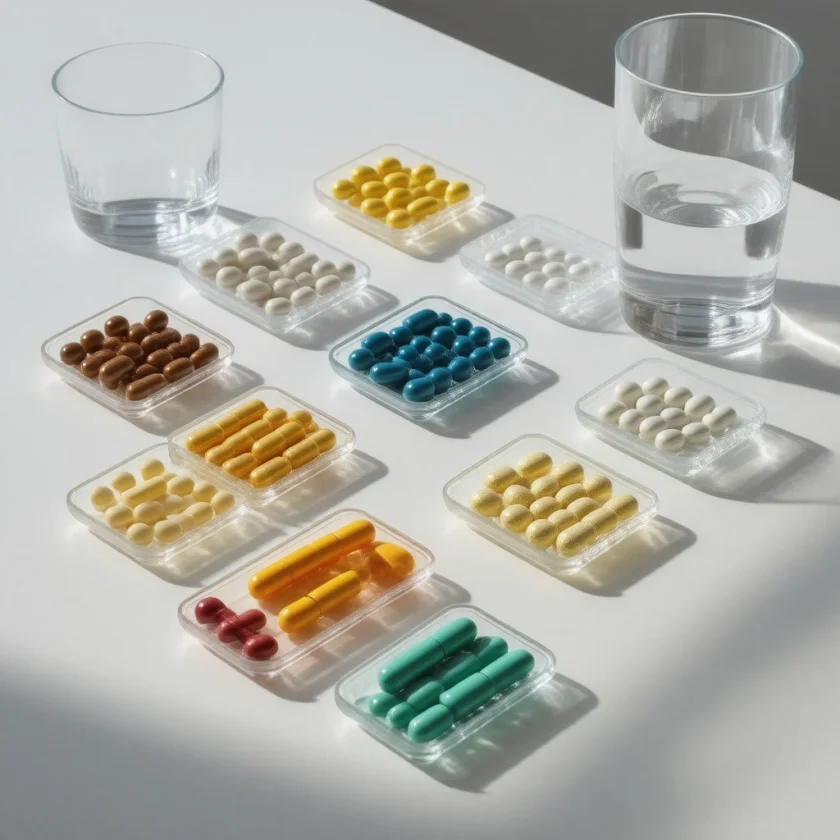
Getting rid of Helicobacter pylori is one of the most satisfying things medicine can do — a curable chronic infection that, left alone, quietly raises your lifetime risk of stomach ulcers and even stomach cancer. The catch is that H. pylori lives in a remarkably hostile place (the stomach lining) and has an impressive ability to develop resistance to antibiotics. For those reasons, eradication always involves a combination of drugs taken together, for long enough, with no missed doses. This overview explains the logic behind that approach, introduces the main drug regimens, covers the new acid blockers that are changing the field, and walks through what happens when a first attempt fails.
Table of Contents
- Why H. pylori Is Never Treated With One Antibiotic
- The Essential Role of Acid Suppression
- Overview of Available Regimens
- Vonoprazan — The New Acid Blocker
- Duration of Therapy: Why 14 Days Wins
- The Single Most Important Thing Patients Can Do
- Confirming Eradication — Test of Cure
- What to Do When Treatment Fails
- Deep-Dive Sub-Articles in This Section
- Key Research Papers
- Connections
- Featured Videos
Why H. pylori Is Never Treated With One Antibiotic
When a single antibiotic is aimed at H. pylori, the results are poor — eradication rates below 50% in most studies. The bacteria are naturally resistant to many drug classes, and even to the antibiotics that should work, a small subpopulation of naturally resistant organisms can survive a solo course and repopulate the stomach within weeks.
Combination therapy tackles this in two ways. First, two antibiotics with different mechanisms of action are used simultaneously; a bacterium that survives one drug is still killed by the other. Second, acid suppression is added — H. pylori is far more vulnerable to antibiotics in a neutral pH environment than in the acidic stomach it normally inhabits. Raise the stomach pH to 5 or higher, and antibiotic concentrations in the gastric mucus rise substantially while the bacteria become more metabolically active (and therefore more antibiotic-susceptible).
This is not a theoretical concern. Studies consistently show that adding a proton pump inhibitor to a two-antibiotic regimen raises eradication rates by 10–20 percentage points compared with antibiotics alone.
The Essential Role of Acid Suppression
Proton pump inhibitors — omeprazole, lansoprazole, pantoprazole, esomeprazole, rabeprazole — are prescribed twice daily throughout every standard H. pylori regimen. They are not treating the infection directly; they are engineering a better environment for the antibiotics to work.
H. pylori burrows into the mucous layer of the stomach and divides relatively slowly. Acid keeps the bacteria in a near-dormant state and degrades many antibiotics (especially amoxicillin, which is most active at neutral pH) before they reach adequate tissue concentrations. By raising stomach pH above 6, twice-daily high-dose proton pump inhibitors:
- Increase the concentration of active antibiotic in gastric secretions and mucus
- Push H. pylori into a more actively dividing — and therefore more antibiotic-susceptible — state
- Protect acid-labile antibiotics (amoxicillin, clarithromycin) from degradation
The choice of which proton pump inhibitor matters somewhat: rabeprazole and esomeprazole are less dependent on a liver enzyme (CYP2C19) that varies between individuals and can make standard-dose omeprazole less effective in "fast metabolizer" patients. In practice, doubling the proton pump inhibitor dose (e.g., omeprazole 40 mg twice daily rather than 20 mg) often compensates for this variability.
Overview of Available Regimens
Four main regimen families cover most real-world prescribing situations. The right choice depends on local antibiotic resistance rates, which your doctor should know for your region.
- Standard triple therapy — proton pump inhibitor + amoxicillin + clarithromycin for 14 days. Once the global workhorse; now failing in high-clarithromycin-resistance areas (many of Europe, East Asia).
- Bismuth quadruple therapy (BQT) — proton pump inhibitor + bismuth + tetracycline + metronidazole (or tinidazole) for 10–14 days. More complex to take but highly effective even where clarithromycin resistance is high; often preferred first-line in Europe.
- Concomitant (non-bismuth quadruple) therapy — proton pump inhibitor + amoxicillin + clarithromycin + metronidazole, all four taken together. Reaches 85–90% eradication and largely overcomes clarithromycin resistance by pairing it with metronidazole.
- Sequential therapy — proton pump inhibitor + amoxicillin for 5–7 days, then proton pump inhibitor + clarithromycin + metronidazole for 5–7 days. Was popular as a "smarter" resistance-beater but has largely been superseded by concomitant therapy.
For a detailed breakdown of each regimen's doses, timing, and clinical evidence, see the Antibiotic Therapy sub-article.
Vonoprazan — The New Acid Blocker
Vonoprazan is a potassium-competitive acid blocker (P-CAB) — a newer class that suppresses stomach acid more powerfully, more quickly, and more consistently than proton pump inhibitors. Where a proton pump inhibitor needs to bind to an actively secreting pump and takes several days to reach full effect, vonoprazan blocks the pump regardless of its secretory state and reaches maximum acid suppression within hours of the first dose.
In clinical trials, vonoprazan-based dual therapy (vonoprazan + amoxicillin) and triple therapy (vonoprazan + amoxicillin + clarithromycin) have matched or outperformed proton pump inhibitor-based regimens, with dual therapy achieving over 80% eradication even in clarithromycin-resistant strains in some Japanese trials. Vonoprazan is now approved in Japan and the United States (FDA approved in 2022 under the brand name Voquezna) and is increasingly used in Canada, South Korea, and parts of Europe.
For patients who have failed proton pump inhibitor-based regimens or who have clarithromycin resistance confirmed by testing, vonoprazan-based rescue therapy is a growing option. It is also more convenient — vonoprazan is dosed once daily rather than twice, which can improve adherence.
The main limitation is cost and availability: vonoprazan is still significantly more expensive than generic proton pump inhibitors in markets where it is available, and it remains unavailable in many lower-income countries.
Duration of Therapy: Why 14 Days Outperforms 7–10 Days
A landmark 2017 meta-analysis pooling data from over 50 randomized trials found that 14-day courses of triple therapy raised eradication rates by roughly 5 percentage points over 10-day courses and nearly 10 percentage points over 7-day courses — a clinically meaningful difference when you are trying to cross the 90% eradication threshold that guidelines consider adequate.
The mechanism makes sense: H. pylori populations are not uniform. Some organisms are in slow-dividing states when therapy begins; a longer course catches them as they cycle back into active division. Shorter courses can leave a residual population that rebounds after treatment ends.
Most international guidelines (American College of Gastroenterology, European Helicobacter Study Group) now recommend 14 days as the standard duration for first-line therapy. Ten-day courses may be acceptable for bismuth quadruple therapy in regions with high metronidazole resistance, but the trend across all regimen types is toward longer treatment.
The practical implication: if your prescription is written for 7 days, it is reasonable to ask your doctor whether 14 days is appropriate for your situation — especially if you live in an area with known high clarithromycin resistance.
The Single Most Important Thing Patients Can Do: Finish the Full Course
Side effects are common with H. pylori regimens. The combination of two antibiotics and a proton pump inhibitor — sometimes plus bismuth — predictably causes nausea, a metallic taste, loose stools, and general GI upset in a significant minority of patients. Clarithromycin can cause a bitter taste so strong that patients describe it as tasting like chemicals. Bismuth turns stools black and can cause temporary darkening of the tongue.
None of these side effects are dangerous. All of them are temporary. The problem is that they lead many patients to stop early — and stopping H. pylori therapy early is worse than not starting it at all, because it selectively kills susceptible bacteria while leaving resistant ones to repopulate and potentially become permanently harder to eradicate.
Strategies that help patients complete treatment:
- Taking antibiotics with food (dramatically reduces nausea for most people)
- Knowing in advance that the metallic taste is normal and will pass
- Understanding that the black stools from bismuth are not blood and are harmless
- Using a pill organizer — the number of tablets per day (often 6–12) is the main confusion point
- Adding a probiotic (Lactobacillus or Saccharomyces boulardii) — modest evidence suggests it reduces antibiotic-associated diarrhea and may modestly improve eradication rates
Confirming Eradication — Test of Cure
Completing treatment does not mean the infection is gone. Eradication rates even with optimal therapy are 85–95%, not 100%. A test of cure is essential to confirm the bacteria have been eliminated — particularly because untreated or incompletely treated H. pylori continues to damage the stomach lining silently.
Two non-invasive tests are recommended for confirming eradication:
- Urea breath test (UBT) — the gold standard. You swallow a small amount of carbon-labeled urea; if H. pylori is still present, its urease enzyme breaks the urea down and the labeled carbon appears in exhaled breath within minutes. Sensitivity and specificity both exceed 95%.
- Stool antigen test (SAT) — detects H. pylori proteins in a stool sample. Nearly as accurate as the breath test and more widely available in some settings.
Critical timing rule: both tests must be done at least 4 weeks after completing antibiotics and at least 2 weeks after stopping any proton pump inhibitor. Proton pump inhibitors suppress H. pylori's urease activity and can produce false-negative results if the test is done while the patient is still taking them. This timing is where many test-of-cure attempts go wrong — patients are sometimes tested while still on their proton pump inhibitor, receive a false-negative, and are incorrectly told they are cured.
Blood antibody tests are not appropriate for test of cure — antibodies persist for months to years after eradication and cannot confirm that the bacteria are gone.
What to Do When Treatment Fails
A failed course of H. pylori therapy is defined as a positive test of cure 4+ weeks after completing treatment. It happens in roughly 10–20% of first-line treatment attempts, most commonly because of antibiotic resistance — either pre-existing resistance that was not tested for, or resistance that emerged during the course.
The most important principle after failure: do not repeat the same regimen. The bacteria that survived are, by definition, resistant to at least one drug in the original combination. Repeating the same drugs is unlikely to succeed and risks consolidating resistance further.
Second-line options depend on what was used first:
- If first-line was clarithromycin-based triple therapy → switch to bismuth quadruple therapy (which does not rely on clarithromycin)
- If first-line was bismuth quadruple → switch to a levofloxacin-based regimen (proton pump inhibitor + amoxicillin + levofloxacin), though levofloxacin resistance is rising in many regions
- If two courses have failed → susceptibility testing (culture and sensitivity or molecular PCR resistance testing) is strongly recommended before choosing a third regimen
- Vonoprazan-based dual or triple therapy is an emerging rescue option with a different mechanism of acid suppression
Rifabutin-based rescue therapy (proton pump inhibitor + amoxicillin + rifabutin) is reserved for patients who have failed multiple prior regimens, as rifabutin resistance is rare but expensive to create. For full details on resistance mechanisms and rescue options, see the Antibiotic Resistance sub-article.
Deep-Dive Sub-Articles in This Section
This Treatments section covers H. pylori eradication in depth across four focused pages:
- Treatment Overview — this page; the logic of combination therapy, regimen families, vonoprazan, duration, test of cure, and treatment failure.
- Antibiotic Therapy — full dosing details, schedules, and clinical evidence for triple, bismuth quadruple, concomitant, and sequential regimens; how to pick the right one for your situation.
- Diet & Prevention — foods and nutrients that may support eradication or protect the stomach lining; probiotic evidence; lifestyle factors in reinfection risk.
- Antibiotic Resistance — how resistance develops, which regions have the highest rates, molecular testing options, and the full hierarchy of second- and third-line rescue strategies.
Key Research Papers
These peer-reviewed studies underpin the treatment recommendations described on this page. PMID links open the abstract on PubMed.
- Malfertheiner P et al. Management of Helicobacter pylori infection — the Maastricht V/Florence Consensus Report. Gut. 2017. — Search PubMed
- Fallone CA et al. The Toronto Consensus for the Treatment of Helicobacter pylori Infection in Adults. Gastroenterology. 2016. — PubMed PMID: 27102658
- Chey WD et al. ACG Clinical Guideline: Treatment of Helicobacter pylori Infection. Am J Gastroenterol. 2017;112(2):212–239. — PubMed PMID: 28071659
- Liou JM et al. Levofloxacin sequential therapy vs triple therapy in the second-line treatment of Helicobacter pylori. Gut. 2016. — PubMed PMID: 26832653
- Liao J et al. Vonoprazan versus proton-pump inhibitor-based first-line eradication for Helicobacter pylori: a systematic review and meta-analysis. J Gastroenterol Hepatol. 2022. — Search PubMed
- Gatta L et al. Global eradication rates for Helicobacter pylori infection: systematic review and meta-analysis of sequential therapy. BMJ. 2013. — PubMed PMID: 23926315
- Song ZQ et al. Standard triple, bismuth pectin quadruple and sequential therapies for Helicobacter pylori eradication. World J Gastroenterol. 2018. — Search PubMed
- Nyssen OP et al. Meta-analysis of bismuth quadruple therapy versus clarithromycin triple therapy for empirical primary treatment of Helicobacter pylori infection. J Clin Gastroenterol. 2016. — Search PubMed
- Wu DC et al. Sequential and concomitant therapy with four drugs is equally effective for eradication of H pylori infection. Clin Gastroenterol Hepatol. 2010. — Search PubMed
- Ford AC et al. Eradication therapy for peptic ulcer disease in Helicobacter pylori positive patients. Cochrane Database Syst Rev. 2016. — Search PubMed
- Megraud F et al. Helicobacter pylori resistance to antibiotics in Europe and its relationship to antibiotic consumption. Gut. 2013. — PubMed PMID: 22580412
- Molina-Infante J et al. Optimized nonbismuth quadruple therapies cure most patients with Helicobacter pylori infection in populations with high rates of antibiotic resistance. Gastroenterology. 2013. — PubMed PMID: 23562754
Connections
- All Bacteria
- H. pylori Hub
- H. pylori Symptoms & Diagnosis
- Antibiotic Therapy — Triple & Quadruple Regimens
- Diet & Prevention
- Antibiotic Resistance
- Peptic Ulcer Disease