TMJ Disorder (Temporomandibular Joint Dysfunction)
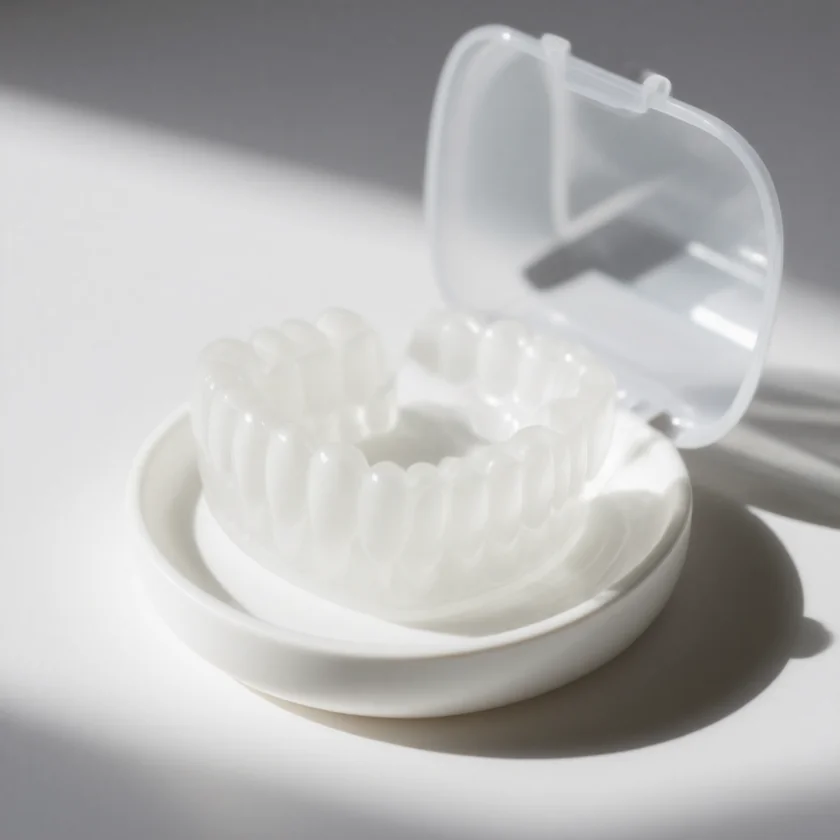
Table of Contents
What TMJ Disorder Is
TMJ disorder (temporomandibular joint disorder, or TMD) is an umbrella term covering pain and dysfunction of the temporomandibular joint (the jaw joint in front of each ear) and the muscles of mastication (chewing muscles). The temporomandibular joint is one of the most complex joints in the body — it performs both hinge and sliding motions simultaneously, allowing the jaw to open, close, and move side to side for chewing, speaking, and swallowing.
TMD is extremely common, affecting approximately 5–12% of the population. It has a strong female predominance: a 1997 epidemiology review (LeResche) found pain in the jaw-joint region about twice as common in women as in men, which is thought to reflect differences in estrogen receptor distribution in joint tissue, differences in pain sensitivity, and psychosocial factors. Onset is most common in adults aged 20–40.
The good news is that most cases of TMD are self-limiting. The majority of patients improve significantly within 6–12 months with conservative management, and severe or progressive disease is relatively uncommon. Only about 5% of patients require surgical intervention. The challenge is avoiding overtreatment of a condition that often resolves on its own.
Subtypes (DC/TMD Classification)
The Diagnostic Criteria for Temporomandibular Disorders (DC/TMD) is the internationally accepted classification system. The main subtypes:
- Myalgia (muscle pain): Pain in the jaw muscles (masseter, temporalis, medial pterygoid, lateral pterygoid) that is reproduced by palpation. The most common TMD presentation. Often described as aching, tightness, or soreness in the cheeks and temples.
- Myofascial pain with referral: Muscle pain that spreads beyond the jaw muscles to the head, neck, or ear. The most common cause of TMD-related headache.
- Arthralgia (joint pain): Pain arising from the TMJ capsule or surrounding structures, reproduced by palpation or loading of the joint. The preauricular region (just in front of the ear) is characteristically tender.
- Disc displacement with reduction: The articular disc is displaced from its normal position between the condyle and fossa but returns to normal position on wide opening, producing a click. The most common disc displacement type. The click (often audible or palpable) occurs as the condyle "pops" back under the disc on opening and off it on closing.
- Disc displacement without reduction: The disc is permanently displaced and does not reduce. This causes restricted mouth opening (often <25 mm) in the acute phase — the jaw "locks" closed. Over time, mouth opening can improve as the disc perforates or the patient stretches the ligaments.
- Degenerative joint disease (osteoarthritis of the TMJ): Crepitus (grinding, crunching sounds) without clicking, limited opening, and joint pain. Radiographically shows bony changes (flattening, erosions, osteophytes) of the condyle.
Symptoms
TMD produces a characteristic cluster of symptoms centered around the jaw and ear:
- Jaw pain: Preauricular pain (in front of the ear), masseteric pain (cheek/jaw), and temporal pain (temple). Pain typically worsens with chewing, yawning, or prolonged mouth opening. Can be unilateral or bilateral.
- Joint sounds: Clicking, popping, or grating (crepitus) of the jaw on opening or closing. Note: joint sounds alone without pain are extremely common in the general population and do not require treatment.
- Limited mouth opening: Normal maximum interincisal opening (MIO) is approximately 40–50 mm. Opening <35 mm suggests restriction. Acute disc displacement without reduction can cause sudden "locked jaw" with <25 mm opening.
- Jaw deviation: The jaw deviates to one side on opening (toward the affected side in disc displacement). A "C-curve" of opening is characteristic of unilateral restriction.
- Headache: Temporal headaches from referred pain from the temporalis and masseter muscles. TMD is now recognized as a specific secondary headache disorder in the ICHD-3 classification.
- Ear symptoms: Ear pain (otalgia), ear fullness, and tinnitus — all without any intrinsic ear disease. The proximity of the TMJ to the external ear canal means TMJ inflammation can be perceived as ear pain. This leads to many patients being misdiagnosed with "recurrent ear infections."
- Neck and shoulder pain: Often accompanies TMD. Upper trapezius and sternocleidomastoid trigger points are common. Addressing the neck component is often necessary for full TMD resolution.
- Bruxism: Teeth grinding (nocturnal) or clenching (diurnal) causes masseter and temporalis hypertrophy, tooth wear, and worsened TMD. The relationship is bidirectional — bruxism can cause TMD, and TMD pain can increase clenching behavior.
Diagnosis
TMD is primarily a clinical diagnosis — your dentist, oral and maxillofacial surgeon, or an orofacial pain specialist can diagnose most cases without advanced imaging:
- History: Location, onset, quality, and triggers of pain; presence of joint sounds; functional limitations (eating, talking, yawning); bruxism history; psychological factors (stress, anxiety, depression).
- Physical examination: Measurement of maximum mouth opening; jaw deviation on opening; palpation of the masseter, temporalis, and medial pterygoid muscles; palpation of the TMJ (preauricular); auscultation or palpation for joint sounds during opening/closing; assessment of cervical range of motion and trigger points.
- Panoramic radiograph (OPG): First-line imaging — a single X-ray that shows both TMJs, all teeth, and the jaw. Detects gross bony pathology, fractures, and severe degenerative changes. Widely available and inexpensive.
- Magnetic resonance imaging (MRI) of the TMJ: Gold standard for visualizing disc position. Shows disc displacement, disc morphology, effusion, and retrodiscal tissue status. Recommended when disc displacement is suspected and will change management, or before surgery.
- Computed tomography (CT) of the TMJ: Best for bony detail — degenerative changes (erosions, osteophytes, flattening), fibrous ankylosis, condyle fractures. Cone-beam CT (CBCT) gives a lower radiation dose than conventional computed tomography.
Conservative Treatment (First-Line)
Approximately 85% of TMD patients respond to conservative management. The guiding principle is to do the least invasive thing that works — irreversible treatments (surgery, permanent occlusal changes) are rarely justified for a largely self-limiting condition:
- Soft diet: A soft diet leaves out hard, crunchy, or chewy foods (bagels, tough meats, carrots, nuts). This reduces the mechanical loading on an inflamed joint.
- Moist heat: A moist warm compress on the jaw for 15–20 minutes, 2–3 times daily, is the usual home method. Heat reduces muscle spasm and improves circulation. Ice packs are used for acute swelling or injury.
- Nonsteroidal anti-inflammatory drugs (NSAIDs): Ibuprofen or naproxen, often for 1–2 weeks, as an anti-inflammatory and analgesic. More effective than acetaminophen for joint-based TMD pain. A 2010 pharmacology review (Cairns) lists NSAIDs and muscle relaxants among the drugs most commonly used for TMD pain, while noting that evidence for the effectiveness of these drugs is lacking. The over-the-counter ibuprofen label sets a limit of 1,200 mg (six 200 mg tablets) in 24 hours and warns that NSAIDs can cause severe stomach bleeding and raise the risk of heart attack, heart failure and stroke, more so above the directed dose or duration.
- Jaw exercises (physiotherapy): Specific jaw-stretching and strengthening exercises prescribed by a physiotherapist. Evidence-based for improving mouth opening, reducing pain, and preventing recurrence. Includes "active opening" exercises, lateral excursion, and proprioceptive exercises. Posture correction (for forward head posture) is often included.
- Occlusal splints (nightguards): Hard acrylic splints worn over the upper or lower teeth during sleep. Reduce bruxism forces transmitted to the TMJ and muscles. Evidence shows they reduce pain — the mechanism is debated (reduced bruxism? Increased joint space? Placebo?) The hard splints studied are made by a dentist from impressions — over-the-counter (OTC) nightguards are softer, and soft guards may worsen bruxism.
- Stress reduction and cognitive behavioral therapy (CBT): Anxiety and psychological distress are strong predictors of TMD chronification. Cognitive behavioral therapy (CBT) addresses pain catastrophizing, clenching behavior, and hypervigilance. Mindfulness-based stress reduction also shows benefit.
- Sleep hygiene: Improving sleep quality reduces nocturnal bruxism frequency and breaks the pain-sleep-disturbance cycle.
- Muscle relaxants: Cyclobenzaprine, taken at bedtime for 1–2 weeks, is used for acute myofascial pain and bruxism. Its label limits use to short periods (up to two or three weeks) because evidence of effectiveness for longer use is not available, and warns of a potentially life-threatening serotonin syndrome when it is combined with drugs such as selective serotonin reuptake inhibitor (SSRI) antidepressants.
Botulinum Toxin Therapy
Botulinum toxin (onabotulinumtoxinA and related products) injection into the masseter and/or temporalis muscles is used for refractory TMD with a strong myofascial or bruxism component:
- Mechanism: Botulinum toxin blocks the release of acetylcholine at the neuromuscular junction, causing temporary weakness and atrophy of the injected muscle. Reduces bite force, masseter and temporalis hyperactivity, and bruxism-related loading of the TMJ.
- Sites: Masseter (for jaw pain and bruxism), temporalis (for temporal headache), and occasionally medial pterygoid.
- Efficacy: Multiple randomized controlled trials (RCTs) show significant reduction in pain and jaw muscle tenderness for 3–4 months. With repeated treatments, muscle atrophy reduces the dose needed over time. A bonus side effect: masseter reduction slims the lower face — botulinum toxin masseter injections are now a common cosmetic procedure for face slimming.
- U.S. Food and Drug Administration (FDA) status: Not U.S. Food and Drug Administration-approved for TMD but widely used off-label. Insurance coverage is inconsistent. Cash-pay costs vary from $400–800 per treatment session.
- Side effects: Temporary weakness of bite (affects eating tough foods), smile asymmetry if the zygomatic arch is involved, headache from diffusion, temporary bruising at injection sites.
Surgical Treatment
Fewer than 5% of TMD patients require surgical intervention. Surgery is reserved for patients who have failed prolonged conservative management:
- Arthrocentesis: The simplest procedure — two needles are placed into the TMJ under local anesthesia, and sterile saline is lavaged through the joint. Breaks adhesions, removes inflammatory cytokines, and can improve disc mobility. Can be done in clinic. Good evidence for reducing pain and improving opening in disc displacement and early osteoarthritis.
- Arthroscopy: A small arthroscope (0.1 inch diameter) is inserted into the TMJ, allowing direct visualization, irrigation, and minor procedures (lysis of adhesions, disc repositioning). Better visualization than arthrocentesis but requires operating room and general anesthesia.
- Disc repositioning surgery (open joint): For chronic disc displacement without reduction with significant functional limitation and failed conservative treatment. The disc is sutured back into anatomical position. Long-term results show improvement but recurrence is possible.
- Condylectomy with or without reconstruction: For severe condyle pathology — condylar hyperplasia, condyle resorption, or severe osteoarthritis. Removal of part or all of the condyle with or without TMJ replacement.
- Total Joint Replacement (TJR): For end-stage TMJ disease — severe bilateral osteoarthritis, multiple failed previous surgeries, or ankylosis (frozen jaw). Custom and stock total joint prostheses (titanium-alloy alloplastic joints) replace the condyle and fossa. Produces significant pain reduction and improved function in properly selected patients.
Connection to Sleep and Stress
The relationship between TMD, sleep, and psychological stress is bidirectional and central to understanding this condition:
- Bruxism and REM sleep: Teeth grinding (bruxism) primarily occurs during sleep, with episodes most frequent during the lighter sleep stages (NREM stage 2 and REM). It is not related to dreaming content. The mechanism involves transient arousals triggering rhythmic masticatory muscle activity (RMMA). Stress increases arousal frequency during sleep, worsening bruxism.
- Sleep apnea and bruxism: People with obstructive sleep apnea (OSA) have significantly higher rates of bruxism — each apnea event triggers an arousal that can precipitate bruxism. Treating obstructive sleep apnea with continuous positive airway pressure (CPAP) often reduces nocturnal bruxism.
- Chronic pain sensitization: Prolonged TMD pain can lead to central sensitization — the pain processing system becomes sensitized so that stimuli that were previously not painful (like light jaw palpation) become painful. This explains why some TMD patients have widespread pain sensitivity and overlap with fibromyalgia and other chronic pain syndromes.
- Comorbid conditions: TMD frequently coexists with fibromyalgia, chronic fatigue syndrome, irritable bowel syndrome, vulvodynia, and tension-type headache — all conditions now grouped under the "Chronic Overlapping Pain Conditions" (COPCs) category. These share common neurobiological mechanisms involving central sensitization and autonomic nervous system dysregulation.
- Psychological factors: Depression, anxiety, and somatization predict worse TMD outcomes and are independently associated with TMD chronification. This makes mental health as central to TMD outcomes as the jaw itself.
Key Research Papers
Key peer-reviewed studies on TMJ disorder diagnosis, pathophysiology, and treatment. Each PMID link opens the study on PubMed.
- Dworkin SF, LeResche L. Research diagnostic criteria for temporomandibular disorders: review, criteria, examinations and specifications, critique. J Craniomandib Disord. 1992;6(4):301-355. — PubMed PMID: 1298767
- Schiffman E, et al. Diagnostic criteria for temporomandibular disorders (DC/TMD) for clinical and research applications: recommendations of the International RDC/TMD Consortium Network. J Oral Facial Pain Headache. 2014;28(1):6-27. — PubMed PMID: 24482784
- Lobbezoo F, et al. Bruxism defined and graded: an international consensus. J Oral Rehabil. 2013;40(1):2-4. — PubMed PMID: 23121262
- Cairns BE. Pathophysiology of TMD pain — basic mechanisms and their implications for pharmacotherapy. J Oral Rehabil. 2010;37(6):391-410. — PubMed PMID: 20337865
- List T, Jensen RH. Temporomandibular disorders: old ideas and new concepts. Cephalalgia. 2017;37(7):692-704. — PubMed PMID: 28068790
- Guarda-Nardini L, Manfredini D, Salamone M, Salmaso L, Tonello S, Ferronato G. Efficacy of botulinum toxin in treating myofascial pain in bruxers: a controlled placebo pilot study. Cranio. 2008;26(2):126-135. — PubMed PMID: 18468272
- Svensson P, Graven-Nielsen T. Craniofacial muscle pain: review of mechanisms and clinical manifestations. J Orofac Pain. 2001;15(2):117-145. — PubMed PMID: 11443825
- LeResche L. Epidemiology of temporomandibular disorders: implications for the investigation of etiologic factors. Crit Rev Oral Biol Med. 1997;8(3):291-305. — PubMed PMID: 9260045
- Nitzan DW, Dolwick MF, Martinez GA. Temporomandibular joint arthrocentesis: a simplified treatment for severe, limited mouth opening. J Oral Maxillofac Surg. 1991;49(11):1163-1167. — PubMed PMID: 1941330
- Schmitter M, Rammelsberg P, Hassel A. The prevalence of signs and symptoms of temporomandibular disorders in very old subjects. J Oral Rehabil. 2005;32(7):467-473. — PubMed PMID: 15975125
Curated PubMed topic searches: