Vitamin D3: Food Sources & Daily Intake
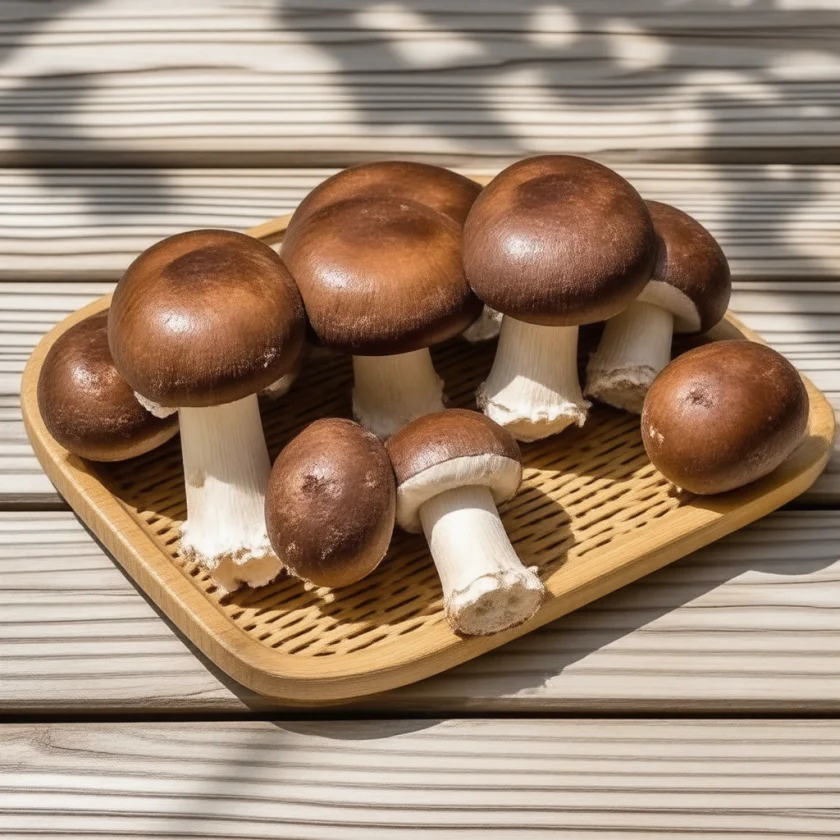
Vitamin D3 (cholecalciferol) is made in the skin from 7-dehydrocholesterol on exposure to ultraviolet-B light, and it can also come from food or supplements (Linus Pauling Institute). The Institute lists only a few foods as natural sources: some fatty fish (mackerel, salmon, sardines), fish liver oils, eggs from hens fed vitamin D, and mushrooms exposed to sunlight or ultraviolet (UV) light. Vitamin D3 is the most common form in animal foods, while ultraviolet-exposed mushrooms make mostly D2 (ergocalciferol) (Cardwell 2018 review). In the US, milk and infant formula are fortified with vitamin D, and some cereals, breads and fruit juices may be (Linus Pauling Institute).
| Vitamin D3: Food Sources & Daily IntakeU.S. Department of Agriculture (USDA) FoodData Central (SR Legacy), amounts per 100 g; “—” = no value in FDC | ||||||
|---|---|---|---|---|---|---|
| Rank | Food (FDC portion weight) | Per 100 g | %DV / 100g | Glucose (g/100 g) | Fructose (g/100 g) | Notes |
| 1 | Cod Liver Oil 1 tsp / 4.5 g | 250 mcg | 🟢 1,250% | — | — | Per 100 g of oil. FDC lists one teaspoon as 4.5 g and one tablespoon as 13.6 g. |
| 2 | Portabella Mushroom, ultraviolet-Exposed, Raw 1 cup diced / 86 g | 28.4 mcg | 🟢 142% | 2.0 | 0.5 | Vitamin D2. FDC lists raw portabella not exposed to ultraviolet light at 0.3 mcg per 100 g. |
| 3 | Maitake Mushroom, Raw 1 cup diced / 70 g | 28.1 mcg | 🟢 141% | 1.7 | 0 | Vitamin D2 (SR Legacy). The newer FDC Foundation Foods entry for maitake lists 1.6 mcg per 100 g. |
| 4 | Rainbow Trout, Farmed, Cooked 3 oz / 85 g | 19 mcg | 🟢 95% | — | — | Dry heat. FDC lists 15.9 mcg per 100 g for raw farmed rainbow trout. |
| 5 | Salmon (Sockeye), Cooked 3 oz / 85 g | 16.7 mcg | 🟢 84% | 0 | 0 | Dry heat. FDC lists 14.1 mcg per 100 g raw. |
| 6 | Mackerel (Atlantic), Raw 3 oz / 85 g | 16.1 mcg | 🟢 81% | — | — | FDC gives no vitamin D value for cooked Atlantic mackerel. |
| 7 | Salmon (Atlantic, Farmed), Cooked 3 oz / 85 g | 13.1 mcg | 🟢 66% | — | — | Dry heat. FDC lists 11 mcg per 100 g raw. |
| 8 | Herring (Atlantic), Cooked 3 oz / 85 g | 5.4 mcg | 🟡 27% | — | — | Dry heat. FDC lists 4.2 mcg per 100 g raw. |
| 9 | Egg Yolk, Raw 1 large yolk / 17 g | 5.4 mcg | 🟡 27% | 0.2 | 0.1 | FDC lists 0 mcg for raw egg white. |
| 10 | Sardines (Atlantic), Canned In Oil 1 can (3.75 oz) / 92 g | 4.8 mcg | 🟡 24% | — | — | Drained solids with bone. |
| 11 | Egg, Whole, Raw 1 large / 50 g | 2.0 mcg | ⚪ 10% | 0.4 | 0 | FDC Foundation Foods lists 2.46 mcg per 100 g for a Grade A large whole egg. |
| 12 | Tuna (Light), Canned In Water 3 oz / 85 g | 1.2 mcg | ⚪ 6% | — | — | Drained solids. |
| 13 | Beef Liver, Cooked 3 oz / 85 g | 1.2 mcg | ⚪ 6% | — | — | Braised. FDC lists 9,442 mcg RAE of vitamin A per 100 g. |
| 14 | Beef Kidneys, Cooked 3 oz / 85 g | 1.1 mcg | ⚪ 6% | — | — | Simmered. |
Table of Contents
How to Read These Tables
- Fat-soluble. Vitamin D is a fat-soluble vitamin; once made in the skin or eaten, it can be sequestered in body fat stores (Linus Pauling Institute).
- %DV vs Recommended Dietary Allowance (RDA). The %DV column is each food’s per-100 g amount divided by the U.S. Food and Drug Administration (FDA) Daily Value of 20 mcg for adults and children 4 years and older (21 CFR 101.9). The Recommended Dietary Allowance set by the Institute of Medicine is 15 mcg (600 international units (IU)) a day from age 1 to 70 and 20 mcg (800 international units) from age 71 — see the second table. The Linus Pauling Institute tables list 10 mcg as 400 international units and 15 mcg as 600 international units (1 mcg = 40 international units).
- Per 100 g vs per serving. Every amount and %DV in the table is per 100 g of the food as listed in U.S. Department of Agriculture FoodData Central. The portion under each food name is FDC’s gram weight for that portion, shown for reference; the amounts are not per portion.
Recommended Intakes & Upper Limits
The Recommended Dietary Allowance varies by age and life stage. The Daily Value used for the %DV column above is a single label figure; the table below lists the age-specific values.
| Life stage | Recommended Dietary Allowance / Adequate Intake (mcg/day) | Upper limit (mcg/day) |
|---|---|---|
| Infants 0–6 mo | 10* (Adequate Intake) | 25 |
| Infants 6–12 mo | 10* (Adequate Intake) | 37.5 |
| Children 1–3 y | 15 | 62.5 |
| Children 4–8 y | 15 | 75 |
| Children 9–13 y | 15 | 100 |
| Males 14–18 y | 15 | 100 |
| Males 19–70 y | 15 | 100 |
| Males 71+ y | 20 | 100 |
| Females 14–18 y | 15 | 100 |
| Females 19–70 y | 15 | 100 |
| Females 71+ y | 20 | 100 |
| Pregnancy | 15 | 100 |
| Lactation | 15 | 100 |
Bioavailability & Absorption
Vitamin D is fat-soluble. In a one-day randomized trial in 50 healthy older adults (Dawson-Hughes 2015), peak plasma vitamin D3 after a single 50,000 international units supplement was 32% higher when it was taken with a meal containing fat than with a fat-free meal; the ratio of monounsaturated to polyunsaturated fat in the meal made no significant difference. Both D3 and D2 raise blood 25-hydroxyvitamin D. A 2012 meta-analysis of randomized trials that compared them directly (Tripkovic) found D3 more effective at raising serum 25-hydroxyvitamin D overall; the difference was significant for large single (bolus) doses and was lost with daily dosing. Both forms are biologically inactive precursors that the liver and kidneys convert to active forms, and the Linus Pauling Institute notes that magnesium regulates the activity of critical enzymes in vitamin D metabolism.
Cooking & Storage
How much vitamin D survives cooking depends on the food and the method. In household-cooking experiments (Ložnjak and Jakobsen 2018), vitamin D3 retention in rainbow trout was 85–114% — not significantly different from 100% except for pan-frying, at 85% — while vitamin D2 retention in button mushrooms was 62–88%. In eggs and margarine (Jakobsen and Knuthsen 2014), 40 minutes in an oven retained 39–45%, frying retained 82–84%, and boiled eggs retained 86–88%. For mushrooms, the larger factor is light: a 2018 review (Cardwell) reports that commonly eaten species exposed to ultraviolet radiation, such as sunlight or an ultraviolet lamp, can generate nutritionally relevant amounts of vitamin D2, and that the level may fall with storage and cooking. FoodData Central lists 0.3 mcg per 100 g for raw portabella and 28.4 mcg per 100 g for ultraviolet-exposed raw portabella. A 2023 study of ultraviolet-irradiated button mushrooms that were air-dried and rehydrated found at least 95% of the D vitamers retained after frying, baking or boiling.
Vegetarian & Vegan Sources
Of the few natural food sources the Linus Pauling Institute lists — fatty fish, fish liver oils, eggs and ultraviolet-exposed mushrooms — only the mushrooms are free of animal products. A 2018 review (Cardwell) describes ultraviolet-exposed mushrooms as having the potential to be the only non-animal, unfortified food source that can provide a substantial amount of vitamin D2 in a single serving. The other routes the Institute describes are fortified foods (some cereals, breads and fruit juices), whose vitamin D content it calls highly variable, and supplements: most non-prescription vitamin D supplements contain D3, and multivitamins generally provide 400–1,000 international units (10–25 mcg) of D2 or D3. Decisions about supplements belong with a clinician.
Groups at Higher Risk of Low Vitamin D
The Linus Pauling Institute lists these risk factors for vitamin D deficiency: older age (reduced capacity to make vitamin D in the skin; the Recommended Dietary Allowance rises to 20 mcg from age 71), darker skin, high latitude, season and air conditions that reduce ultraviolet B (UVB), clothing that covers most of the skin, sun-protection practices, exclusively breastfed infants who receive no vitamin D supplement (human milk generally provides 10–80 international units per liter, and the American Academy of Pediatrics recommends an oral supplement of 400 international units a day for all breastfed and partially breastfed infants), fat-malabsorption conditions such as cystic fibrosis and liver disease, inflammatory bowel disease such as Crohn’s disease (especially after small-bowel resection), obesity, and chronic kidney disease. Severe deficiency causes rickets in children and osteomalacia (softened bones and bone pain, with a higher risk of osteoporosis) in adults. Vitamin D toxicity has not been observed from sun exposure; it causes high blood calcium (hypercalcemia), which, if untreated for a long time, can lead to bone loss, kidney stones and calcification of the heart and kidneys. The Institute reports hypercalcemia after daily doses above 50,000 international units, sets out the 4,000 international units (100 mcg) adult Tolerable Upper Intake Level, and lists primary hyperparathyroidism, sarcoidosis, tuberculosis and lymphoma as conditions that raise the risk of hypercalcemia in response to vitamin D.
Key Research Papers
- NIH Office of Dietary Supplements — Vitamin D Fact Sheet (DV, RDA, UL, IU conversion)
- Linus Pauling Institute — Vitamin D Micronutrient Information Center
- Burdette CQ, Yen JH, Kuszak AJ, Wise SA. Value Assignment of Vitamin D and 25-Hydroxyvitamin D in Food-Matrix Standard Reference Materials (SRMs) Using Isotope Dilution Liquid Chromatography-Tandem Mass Spectrometry (ID LC-MS/MS). J Agric Food Chem. 2026;74(18):14607-14618. PubMed PMID: 41934645
- USDA FoodData Central — SR Legacy and Foundation Foods (vitamin D per 100 g and portion weights for every food in the table)
- 21 CFR 101.9 — Nutrition labeling of food (vitamin D Daily Value, 20 mcg for adults and children 4 years and older)
- Dawson-Hughes B, Harris SS, Lichtenstein AH, Dolnikowski G, Palermo NJ, Rasmussen H. Dietary fat increases vitamin D-3 absorption. J Acad Nutr Diet. 2015;115(2):225-230. PubMed PMID: 25441954
- Tripkovic L, Lambert H, Hart K, Smith CP, Bucca G, Penson S, Chope G, Hyppönen E, Berry J, Vieth R, Lanham-New S. Comparison of vitamin D2 and vitamin D3 supplementation in raising serum 25-hydroxyvitamin D status: a systematic review and meta-analysis. Am J Clin Nutr. 2012;95(6):1357-1364. PubMed PMID: 22552031
- Ložnjak P, Jakobsen J. Stability of vitamin D3 and vitamin D2 in oil, fish and mushrooms after household cooking. Food Chem. 2018;254:144-149. PubMed PMID: 29548435
- Jakobsen J, Knuthsen P. Stability of vitamin D in foodstuffs during cooking. Food Chem. 2014;148:170-175. PubMed PMID: 24262542
- Cardwell G, Bornman JF, James AP, Black LJ. A Review of Mushrooms as a Potential Source of Dietary Vitamin D. Nutrients. 2018;10(10):1498. PubMed PMID: 30322118
- Cardwell G, Bornman JF, James AP, Daly A, Dabos G, Adorno P, Jakobsen J, Dunlop E, Black LJ. Effect of household cooking on the retention of vitamin D2 and 25-hydroxyvitamin D2 in pulse UV-irradiated, air-dried button mushrooms (Agaricus bisporus). Food Chem. 2023;424:136387. PubMed PMID: 37224637