Triclosan
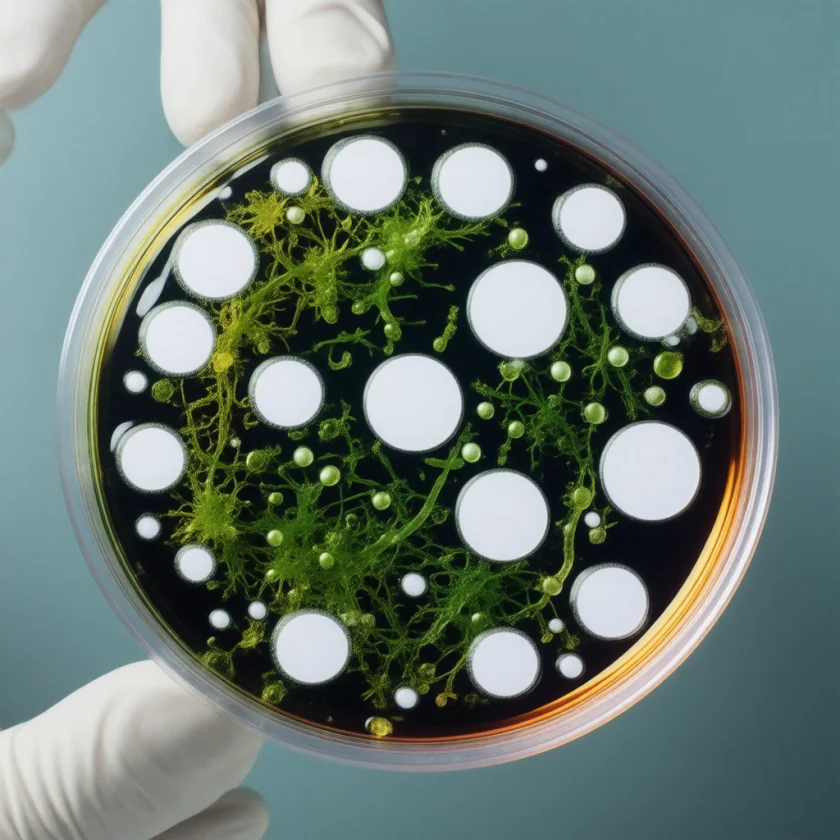
Triclosan is a synthetic antibacterial and antifungal chemical that, for about forty years, was added to a remarkable range of everyday products — antibacterial hand soaps, some toothpastes, deodorants, cosmetics, and even antimicrobial-treated plastics and fabrics. Anyone who washed with antibacterial soap in the 1990s or 2000s almost certainly used it. This page tells a genuinely encouraging story: after decades of daily, whole-body exposure, regulators asked a simple question — is this actually helping, and is it safe? — and when the answer turned out to be "we can't show either," the chemical was pulled from the products most people used. This page explains what triclosan is, where it was and still is found, the landmark 2016 U.S. Food and Drug Administration (FDA) rule that removed it from consumer antibacterial washes, why plain soap and water works just as well, the health and environmental concerns that remain, and the low-cost ways people reduce whatever exposure is left. The tone here is deliberate: careful about the evidence, honest about what is not known, and reassuring where reassurance is warranted.
Table of Contents
- What Triclosan Is
- Where It Has Been Used
- The 2016 U.S. Food and Drug Administration Rule: A Turning Point
- Why Plain Soap and Water Works Just as Well
- Endocrine and Thyroid Concerns
- Antimicrobial Resistance
- Environmental and Aquatic Effects
- How Much Ends Up in Our Bodies
- Where Triclosan Is Still Found
- How People Reduce Exposure
- The Honest Bottom Line
- Key Research Papers
- Connections
- Featured Videos
What Triclosan Is
Triclosan is a man-made chemical — chemically, a chlorinated diphenyl ether — first developed in the 1960s to kill or slow the growth of bacteria and fungi. It is not a natural substance and it is not a nutrient; its entire purpose is to be an antimicrobial "preservative" or "active ingredient." You will sometimes see it on ingredient labels under trade names or its close cousin triclocarban, a related antibacterial with much the same history.
At the molecular level, triclosan works by blocking a specific bacterial enzyme called enoyl-acyl carrier protein reductase (often abbreviated FabI), which bacteria need to build the fatty acids in their cell membranes. British researchers pinned down this precise target in the late 1990s. That matters for two reasons. First, it explains why triclosan is genuinely good at killing bacteria in a laboratory dish. Second, and more troubling, hitting one specific enzyme is exactly the kind of narrow attack that bacteria can learn to dodge — a point we return to under antimicrobial resistance. Understanding the mechanism helps make sense of both triclosan's appeal to manufacturers and the concerns that eventually caught up with it.
Where It Has Been Used
Triclosan's reach was enormous. For decades it turned up in:
- Antibacterial hand and body washes — the "kills 99.9% of germs" liquid soaps that lined supermarket shelves.
- Some toothpastes — most famously a leading triclosan-containing toothpaste (since reformulated), where it was added to fight gum inflammation (gingivitis).
- Deodorants and antiperspirants, along with a variety of cosmetics and skin-care products.
- Household and consumer goods impregnated with it as an antimicrobial — cutting boards, kitchenware, toys, gym mats, shoe insoles, socks and other textiles, and various plastics, frequently sold as antimicrobial-treated plastics and textiles.
This is the key thing to grasp about triclosan: it was not one product but a whole design philosophy — the idea that building a germ-killer into everything we touch would make us healthier. That idea sounds sensible on its face, which is exactly why it spread so far before anyone rigorously checked whether it delivered.
The 2016 U.S. Food and Drug Administration Rule: A Turning Point
Here is the heart of the story, and it is a hopeful one. In September 2016, the U.S. Food and Drug Administration issued a final rule stating that over-the-counter consumer antiseptic wash products — the antibacterial hand and body soaps — could no longer contain triclosan or 18 other antiseptic active ingredients (triclocarban among them). Manufacturers were given a year to reformulate or pull the products: the rule was published on September 6, 2016 and took effect on September 6, 2017. FDA deferred its decision on three other ingredients — benzalkonium chloride, benzethonium chloride and chloroxylenol — to allow time for new safety and effectiveness data, which is why antibacterial soaps made with those ingredients are still sold.
The reasoning was refreshingly straightforward. The U.S. Food and Drug Administration had asked companies to provide data showing two things: that these ingredients were safe for daily, long-term use, and that they were more effective at preventing illness than simply washing with plain soap and water. The manufacturers could not demonstrate either. As the agency put it, consumers may think antibacterial washes are more effective, but there was no evidence they were — and some data raised safety questions. When a product that hundreds of millions of people use every single day cannot clear that basic bar, removing it is not alarmism; it is the system working as intended.
A second rule followed for hospitals and clinics. On December 20, 2017, FDA issued a final rule finding that 24 active ingredients were not generally recognized as safe and effective for over-the-counter health care antiseptics (the hand washes, hand rubs, surgical scrubs and patient skin preparations used by health care professionals); it took effect on December 20, 2018. FDA noted that triclosan was the only one of the 24 then found in marketed health care antiseptic products, and estimated that the rule would cut triclosan exposure by about 88,000 kilograms a year. A triclosan health care antiseptic now needs an approved new-drug application to be marketed.
The toothpaste chapter closed a few years later. The leading triclosan toothpaste had kept triclosan longer because there the maker did have data showing a benefit against gingivitis, and the U.S. Food and Drug Administration had reviewed that specific use. But in 2019, the toothpaste was reformulated to remove triclosan anyway, moving to other active ingredients. With that, triclosan largely disappeared from the two everyday products — hand soap and toothpaste — through which most people had encountered it.
It is worth sitting with how reassuring this outcome is. Decades of exposure ended not because of a single scary study, but because regulators insisted on a simple standard — prove it helps and prove it's safe — and acted when the proof did not come.
Why Plain Soap and Water Works Just as Well
If antibacterial soap did not outperform plain soap, many people reasonably wonder how plain soap can possibly be enough. The answer lies in how handwashing actually works. The point of handwashing is not primarily to kill germs where they sit — it is to physically lift them off the skin and rinse them down the drain.
Ordinary soap molecules are wonderfully suited to this. One end of each molecule grips water; the other end grips oils, grime, and the fatty coats of many microbes. During lathering and rubbing, soap loosens dirt and germs from the skin and traps them so that running water carries them away. Twenty seconds of thorough scrubbing with plain soap removes the vast majority of what matters — and it does so within seconds, whereas an antibacterial agent like triclosan needs far longer contact time than a normal hand-wash allows to chemically kill bacteria. Reviews of consumer antibacterial soaps concluded they were no better than plain soap at preventing illness in ordinary home use, while adding potential downsides. So the humble bar or bottle of plain soap is not a compromise. For everyday life it is the whole answer.
Endocrine and Thyroid Concerns
One reason regulators grew cautious is a body of laboratory and animal research suggesting triclosan can interfere with hormones — especially thyroid hormones, which govern metabolism, growth, and brain development.
In controlled studies, rats given triclosan showed lowered levels of thyroxine (T4), a key thyroid hormone. Researchers traced part of the effect to the liver ramping up its clearance of the hormone. Other rodent studies reported effects on the timing of puberty and on reproductive hormones. There is also evidence from cell studies that triclosan can nudge estrogen- and androgen-related pathways, which is why it is often grouped with the "endocrine disruptors."
Two honest caveats belong here. First, most of this evidence is from animals and cells, often at doses higher than typical human exposure, and animals do not always predict humans. Second, the human data are mixed and far from settled — some population studies have found associations between triclosan levels and thyroid measures or allergies, others have not. What can be said fairly is that the endocrine signal was strong enough, and the everyday exposure widespread enough, to make "we can't show it's safe for daily long-term use" a responsible conclusion rather than a fearful one.
Antimicrobial Resistance
Perhaps the most important long-term concern is that triclosan may contribute to antibiotic and antimicrobial resistance — the growing crisis in which bacteria evolve to survive the drugs and chemicals meant to control them.
Recall that triclosan works by blocking one specific bacterial enzyme. In the laboratory, bacteria exposed to sub-lethal amounts of triclosan can develop mutations in that enzyme and become resistant — and, worryingly, some of the same defense mechanisms bacteria use against triclosan (such as pumps that push chemicals back out of the cell) can also blunt certain antibiotics. This raises the possibility of cross-resistance, where routine exposure to an antibacterial soap ingredient could, in principle, help select for bugs that are harder to treat with real medicines.
How large this effect is in the messy real world — as opposed to a controlled dish — remains debated, and the science does not support panic. But given how little antibacterial soaps benefited ordinary users in the first place, adding any plausible push toward resistance tilts the risk-versus-reward calculation firmly against them. This is a case where "not clearly helpful, possibly harmful" was reason enough to step back.
Environmental and Aquatic Effects
Triclosan does not stay on our hands. Because so much of it was rinsed down drains, it became one of the more commonly detected chemicals in wastewater, rivers, and streams. Sewage treatment removes a good deal of it, but not all, and it can persist in sediments and build up in some aquatic organisms.
This matters because triclosan is toxic to aquatic life at levels found in some waterways — it is particularly hard on algae and other tiny organisms at the base of the food web, and can disturb hormone systems in fish and amphibians. It has also turned up in unexpected places, including human breast milk and the environment, underscoring how thoroughly a "convenient" additive can spread once it is used at massive scale. The environmental case is a quiet but real part of why regulators and scientists concluded that the costs of ubiquitous triclosan use outweighed its thin benefits.
How Much Ends Up in Our Bodies
One of the most striking facts about triclosan is just how many of us carried it. In the large U.S. national biomonitoring program (NHANES), researchers at the Centers for Disease Control and Prevention (CDC) measured triclosan in the urine of a representative sample of Americans and detected it in 74.6% of 2,517 urine samples collected in 2003–2004 — about three out of four. In other words, at the height of its use, triclosan was not a rare contaminant — it was a near-universal feature of American bodies.
Triclosan is absorbed both through the skin and, from toothpaste, across the lining of the mouth. The good news embedded in this story is that triclosan does not build up indefinitely: the body clears it within hours to days, so it is not stored long-term the way some persistent pollutants are. That is precisely why removing it from soaps and toothpaste is expected to translate fairly quickly into lower body levels — cut off the daily source, and the burden falls. Biomonitoring is not a reason for dread; it is the measuring stick that shows whether pulling triclosan from products actually works.
A measured trend points the same way. In 6,483 urine samples given between 2000 and 2017 by 996 men and 819 women seeking fertility treatment in Boston, triclosan concentrations fell by about 18.8% per year.
Where Triclosan Is Still Found
Triclosan is far less common than it was, but it has not vanished entirely. It can still turn up in:
- Some toothpastes sold outside the United States, where regulations and product lines differ. The ingredient list shows whether a product contains it.
- Textiles and plastics marketed as odor-resistant or antimicrobial — certain athletic wear, socks, shoe insoles, and other antimicrobial-treated consumer goods, though many manufacturers have moved to other agents.
- Some cosmetics and personal-care products, where it may appear as a preservative rather than an advertised "antibacterial" feature.
- Legitimate medical and clinical settings. In a hospital or surgical context, professional antiseptic products — more often now agents like chlorhexidine — have a real, evidence-based role in infection control. The 2016 rule covered everyday consumer washes for the general public; FDA's December 2017 rule, effective December 20, 2018, then found triclosan not generally recognized as safe and effective for over-the-counter health care antiseptics, so a triclosan product for hospital or clinic use now needs an approved new-drug application.
How People Reduce Exposure
The ways people minimize contact with triclosan are easy, cheap, and low-stress:
- Plain soap and water. For handwashing at home, work, and school, plain soap is, as above, just as effective for everyday germs. Alcohol-based hand sanitizer is the usual backup when soap and water are not available.
- Ingredient labels. Ingredient lists on toothpaste, deodorant, and cosmetics name "triclosan" (or "triclocarban") when it is present, and a triclosan-free alternative is usually one shelf over.
- "Antibacterial" and "antimicrobial" claims on consumer soaps, cutting boards, textiles, and gadgets: for most households these labels add cost without meaningful benefit.
- No cause for alarm. Because triclosan clears the body quickly and is now largely gone from mainstream soaps and toothpaste, the average person's exposure has already dropped substantially. Many people simply switch to plain products as things run out rather than discarding what they have.
The Honest Bottom Line
Triclosan is a genuinely useful antibacterial chemical that was used far more broadly than the evidence ever justified. For everyday handwashing it offered no proven advantage over plain soap and water, while carrying real questions about hormone effects in animals, a plausible contribution to antimicrobial resistance, and clear harm to aquatic ecosystems — all against a backdrop of near-universal human exposure.
The reassuring part is how the story ended. In 2016 the U.S. Food and Drug Administration removed triclosan from consumer antibacterial washes because the benefits could not be shown and the safety could not be proven; in 2017 FDA extended the finding to over-the-counter health care antiseptics (effective December 20, 2018); by 2019 it was gone from the leading triclosan toothpaste too. The practical picture is simple and calming: plain soap and water works as well, ingredient labels show where triclosan remains, and measured body levels have been falling. This is one of the cleaner examples of the public-health system catching up with a widely used chemical and quietly making everyday household products a little safer.
Key Research Papers
- Calafat AM, Ye X, Wong LY, Reidy JA, Needham LL. Urinary concentrations of triclosan in the U.S. population: 2003–2004. Environmental Health Perspectives. 2008;116(3):303–307. — CDC NHANES biomonitoring; triclosan detected in 74.6% of 2,517 U.S. urine samples. doi:10.1289/ehp.10768 — PubMed PMID: 18335095
- Paul KB, Hedge JM, DeVito MJ, Crofton KM. Short-term exposure to triclosan decreases thyroxine in vivo via upregulation of hepatic catabolism in young Long-Evans rats. Toxicological Sciences. 2010;113(2):367–379. — showed triclosan lowered the thyroid hormone T4 in rats, partly by speeding its breakdown in the liver. — doi:10.1093/toxsci/kfp271
- Zorrilla LM, Gibson EK, Jeffay SC, et al. The effects of triclosan on puberty and thyroid hormones in male Wistar rats. Toxicological Sciences. 2009;107(1):56–64. — found triclosan altered thyroid hormones and pubertal timing in male rats. — doi:10.1093/toxsci/kfn225
- Aiello AE, Larson EL, Levy SB. Consumer antibacterial soaps: effective or just risky? Clinical Infectious Diseases. 2007;45(Suppl 2):S137–S147. — review concluding triclosan soaps were no better than plain soap while raising resistance concerns. — doi:10.1086/519255
- Yazdankhah SP, Scheie AA, Høiby EA, et al. Triclosan and antimicrobial resistance in bacteria: an overview. Microbial Drug Resistance. 2006;12(2):83–90. — overview of how triclosan exposure may select for resistant bacteria and cross-resistance to antibiotics. — doi:10.1089/mdr.2006.12.83
- Levy CW, Roujeinikova A, Sedelnikova S, et al. Molecular basis of triclosan activity. Nature. 1999;398(6726):383–384. — identified the specific bacterial enzyme (enoyl-ACP reductase, FabI) that triclosan blocks. — doi:10.1038/18803
- Dann AB, Hontela A. Triclosan: environmental exposure, toxicity and mechanisms of action. Journal of Applied Toxicology. 2011;31(4):285–311. — comprehensive review of triclosan's environmental spread, toxicity, and biological effects. — doi:10.1002/jat.1660
- Halden RU. On the need and speed of regulating triclosan and triclocarban in the United States. Environmental Science & Technology. 2014;48(7):3603–3611. — weighed the accumulating evidence and argued for tighter U.S. regulation. — doi:10.1021/es500495p
- Yueh MF, Taniguchi K, Chen S, et al. The commonly used antimicrobial additive triclosan is a liver tumor promoter. Proceedings of the National Academy of Sciences. 2014;111(48):17200–17205. — long-term high-dose exposure promoted liver damage and tumors in mice. — doi:10.1073/pnas.1419119111
- Adolfsson-Erici M, Pettersson M, Parkkonen J, Sturve J. Triclosan, a commonly used bactericide found in human milk and in the aquatic environment in Sweden. Chemosphere. 2002;46(9–10):1485–1489. — early detection of triclosan in human breast milk and in surface waters. — doi:10.1016/S0045-6535(01)00255-7
- Allmyr M, Adolfsson-Erici M, McLachlan MS, Sandborgh-Englund G. Triclosan in plasma and milk from Swedish nursing mothers and their exposure via personal care products. Science of the Total Environment. 2006;372(1):87–93. — linked higher body levels of triclosan to use of triclosan-containing personal-care products. — doi:10.1016/j.scitotenv.2006.08.007
- Rodricks JV, Swenberg JA, Borzelleca JF, Maronpot RR, Shipp AM. Triclosan: a critical review of the experimental data and development of margins of safety for consumer products. Critical Reviews in Toxicology. 2010;40(5):422–484. — detailed toxicology review assessing safety margins for consumer exposure. — doi:10.3109/10408441003667514
- Jiang VS, Calafat AM, Williams PL, Chavarro JE, Ford JB, Souter I, Hauser R, Mínguez-Alarcón L. Temporal trends in urinary concentrations of phenols, phthalate metabolites and phthalate replacements between 2000 and 2017 in Boston, MA. Science of the Total Environment. 2023;898:165353. — urinary triclosan fell about 18.8% per year in 6,483 samples. — PubMed PMID: 37437643
- U.S. Food and Drug Administration. Safety and Effectiveness of Consumer Antiseptics; Topical Antimicrobial Drug Products for Over-the-Counter Human Use. Final rule. Federal Register. 2016;81:61106–61130 (effective September 6, 2017). — 81 FR 61106
- U.S. Food and Drug Administration. Safety and Effectiveness of Health Care Antiseptics; Topical Antimicrobial Drug Products for Over-the-Counter Human Use. Final rule. Federal Register. 2017;82:60474–60503 (effective December 20, 2018). — 82 FR 60474