⚠ Evidence warning: Clinical trials or other evidence do not support the claims that supportive cancer care is where art therapy has its strongest evidence base, that earlier work in newly diagnosed breast cancer patients showed benefit, and that art therapy is a modestly effective part of cancer supportive care. This page keeps it as a report of what people, websites or other media say.
Art Therapy
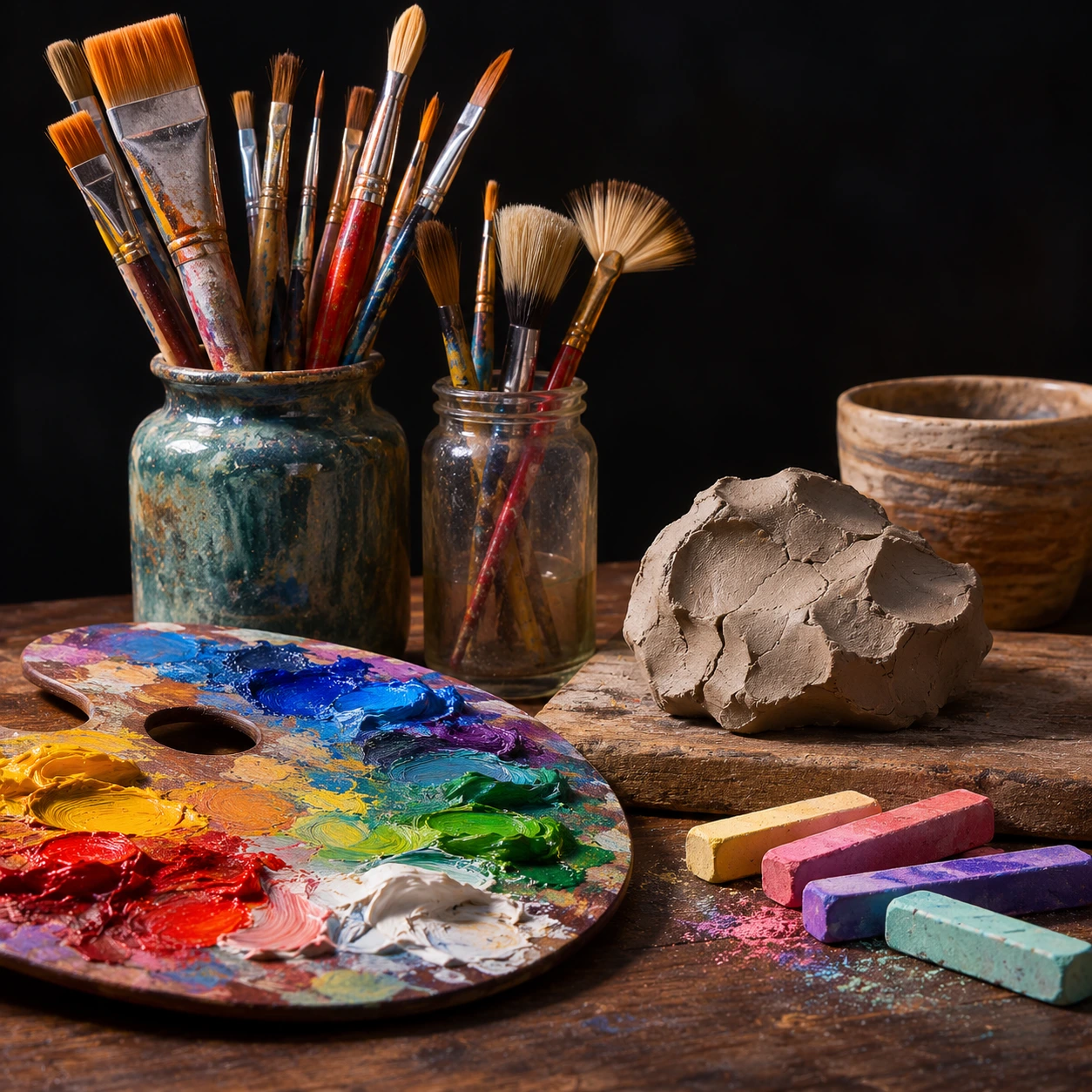
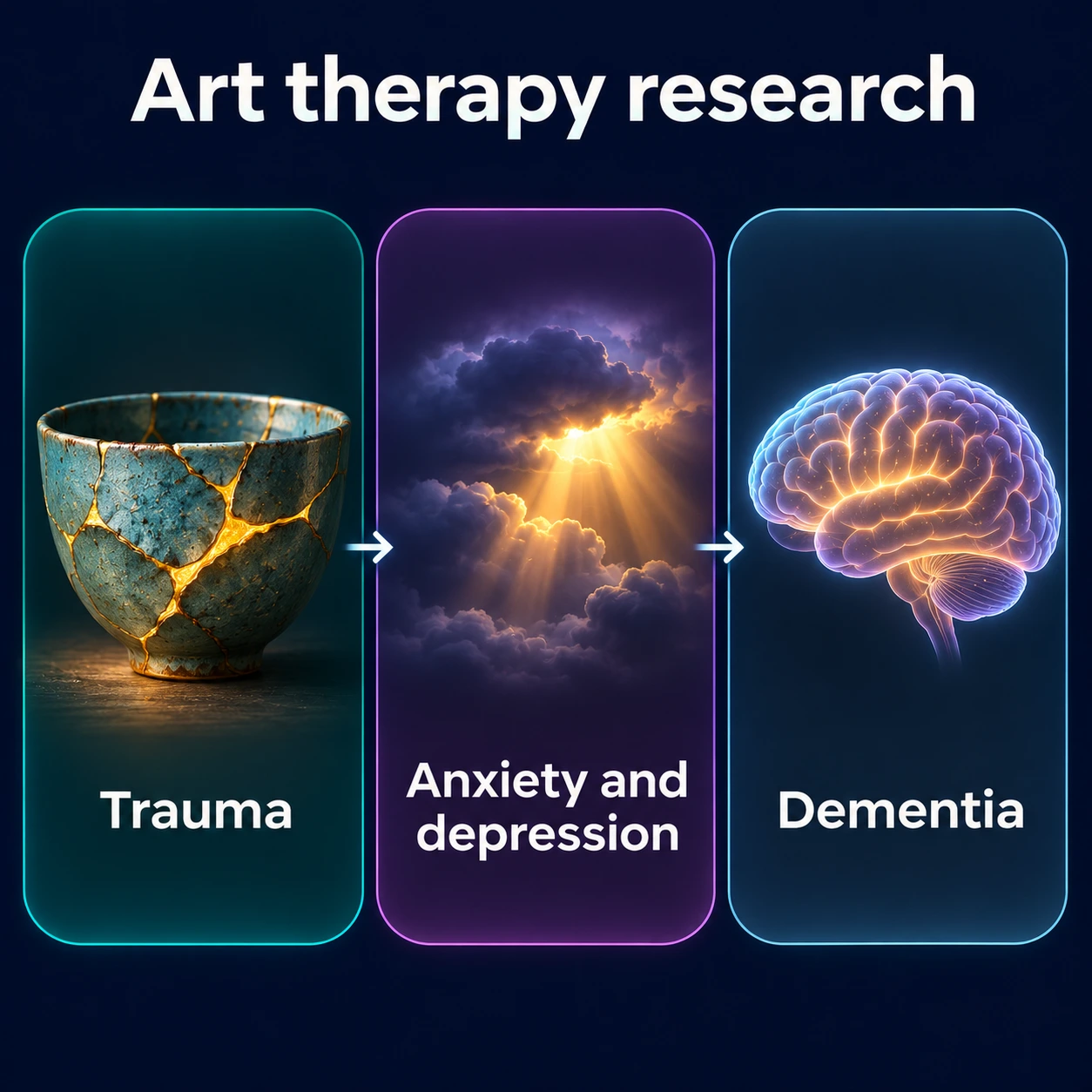
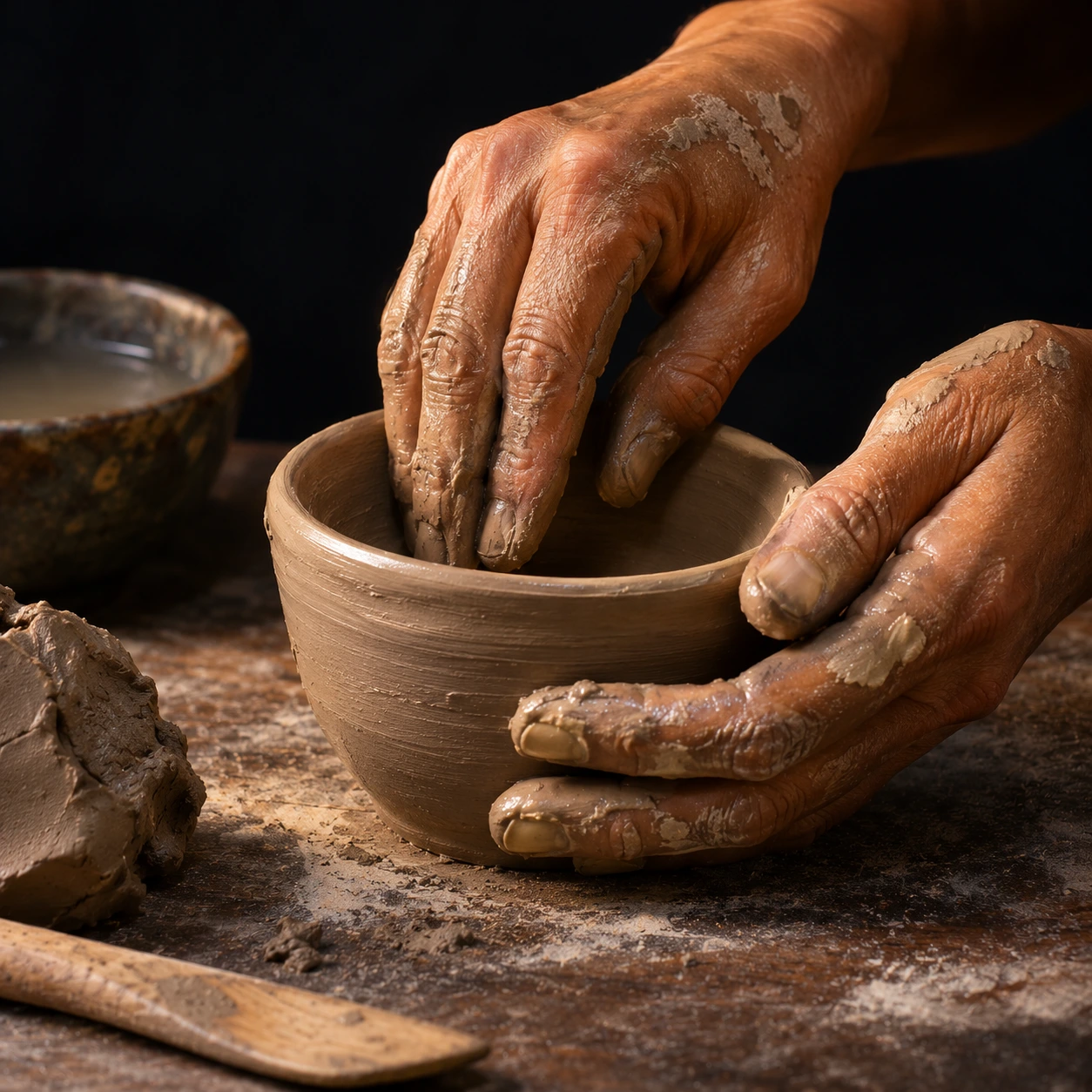
Art therapy is a recognized mental-health profession in which a trained, credentialed therapist uses art-making — drawing, painting, collage, clay, and other media — as a way to help people process feelings, communicate, and cope with illness or distress. It is not a drawing class, and you do not need any artistic skill to benefit. The point is not the picture; it is what happens in the person making it, and in the relationship with the therapist who helps them make sense of it. This page explains what art therapy actually is, who it tends to help, and — honestly — how strong the evidence is. The short version: the research is encouraging in a few areas, especially anxiety in cancer care and depression, with smaller and more mixed results in trauma and dementia, while still being mostly small, varied, and hard to blind. Alongside that, there is a simpler, well-supported truth: for most of us, the plain act of making something with our hands can lower stress and lift mood, whether or not a therapist is involved.
Table of Contents
- What Art Therapy Really Is
- How It Helps and Who It's For
- Trauma and Post-Traumatic Stress Disorder
- Anxiety and Depression
- Cancer and Serious Illness
- Dementia
- Children and Adolescents
- The Everyday Stress Relief of Making Art
- How Art Therapy May Work
- Honest Caveats About the Evidence
- Getting Started, Safety, and the Bottom Line
- Key Research Papers
- Connections
- Featured Videos
What Art Therapy Really Is
Art therapy is a regulated clinical profession, not a hobby with a nice name. In most countries a practicing art therapist has completed a graduate degree, supervised clinical hours, and a credentialing or licensing process. In the United States the credential is the Registered Art Therapist (ATR) and, with an added exam, the Board Certified (ATR-BC) designation, overseen by the Art Therapy Credentials Board; in the United Kingdom, "art therapist" is a protected title regulated by the Health and Care Professions Council. These practitioners are trained in both psychology and studio art, and they use the art-making itself as part of the treatment.
The everyday tools are ordinary: pencils, paint, pastels, magazine collage, clay, sometimes digital drawing. What makes it therapy is not the material but the therapeutic relationship and the goals. A therapist might invite someone to draw "how your week felt," notice what appears on the page, and gently talk it through — using the image as a bridge to feelings that are hard to say out loud.
It helps to be clear about what art therapy is not. It is not an art class, where the goal is a good painting and skill matters. It is also distinct from simply doing crafts at home — though, as you will see below, that kind of self-directed creativity genuinely helps wellbeing too. Both things are real and both are covered on this page: clinical art therapy delivered by a credentialed professional for a specific difficulty, and the broader, gentler benefit of making art that almost anyone can reach on their own.
How It Helps and Who It's For
The core idea is simple and humane: some things are hard to put into words. A frightening memory, a grief that feels shapeless, a worry a child cannot yet name — these can sometimes be shown before they can be spoken. An image gives a person a way to externalize what is inside, to point at it, and to look at it together with someone safe. That is why art therapy is so often used exactly where words run out.
Common settings and groups include:
- Trauma survivors, for whom describing an event directly can be overwhelming, but drawing around it can feel more tolerable.
- Children and teens, who often communicate more naturally through play and images than through adult-style talk therapy.
- People with dementia, where language may be fading but the pleasure of color, texture, and creating remains reachable.
- People in medical settings — cancer wards, hospices, rehabilitation units — where art offers a sense of agency and expression during a frightening, passive time.
- Anyone facing anxiety, low mood, or high stress who finds a nonverbal outlet a useful complement to talking.
In nearly all of these cases, art therapy is used as an adjunct — a helpful addition alongside standard care such as medical treatment, talking therapy, or medication — rather than a replacement for them.
Trauma and Post-Traumatic Stress Disorder
Trauma is one of the oldest and most intuitive uses of art therapy. When a memory is stored more as sensation and image than as an ordered story, a nonverbal medium can offer a way in. Art therapy has been used with combat veterans, survivors of abuse, refugees, and communities recovering from disasters.
The honest picture of the evidence is supportive but still limited. A systematic review by Schouten and colleagues found six controlled studies; in half of them trauma symptoms fell significantly in the art therapy groups, and one reported a significant drop in depression, but the studies were small and varied enough that firm conclusions were not yet possible. A randomized controlled trial by Campbell and colleagues in 11 veterans with combat-related post-traumatic stress disorder (PTSD) tested art therapy added to Cognitive Processing Therapy, a standard trauma-focused therapy. PTSD and depression scores improved in both groups, with no significant difference between them; the veterans described art therapy as an important part of their treatment that helped them process the trauma. This illustrates both the promise and the difficulty of studying this work rigorously. In plain terms: many clinicians and patients find it valuable, early trials are small and mixed, and the field still needs larger, better-controlled studies before anyone can claim it works as reliably as first-line trauma treatments.
Anxiety and Depression
For anxiety and depression, art therapy is best understood as a modest, adjunctive help — something that can add to standard care rather than stand in for it. Several trials and reviews report improvements, though the effects are generally moderate and the studies uneven.
On the anxiety side, a randomized controlled trial by Abbing and colleagues in adult women found that a course of art therapy reduced anxiety compared with a waitlist, and the same group's systematic review concluded that the existing trials point in a positive direction while calling the overall certainty low. For depression, a randomized controlled trial by Nan and Ho found that clay-based art therapy improved depressive symptoms and general wellbeing in outpatients with major depressive disorder more than a comparison activity. Broader reviews of art therapy for non-psychotic mental-health difficulties reach a familiar, balanced verdict: encouraging signals, real-world appeal, but a body of evidence that is not yet large or consistent enough to be definitive.
A 2026 meta-analysis by Joschko and colleagues pooled 19 randomized studies with 997 patients and found art therapy was linked to fewer depressive symptoms (standardized mean difference 0.53, 95% confidence interval 0.30 to 0.76). The results varied with the type of comparison group, study quality and the patients studied.
Cancer and Serious Illness
Supportive cancer care is one of the most-studied areas for art therapy. Supportive cancer care is arguably where art therapy has its strongest evidence base. Here the goal is not to treat the cancer — it is to help people live better while they go through treatment: less anxiety, less distress, and a better quality of life during a frightening time.
A systematic review by Wood and colleagues found that art therapy could help with a range of symptoms and emotional challenges in adults with cancer. A meta-analysis by Boehm and colleagues pooled 13 trials with 606 breast cancer patients, covering music, dance and art therapies together; it found less anxiety (standardized mean difference −1.10) but no clear change in depression or quality of life. A more recent systematic review by Bosman and colleagues found seven studies (four randomized); four described positive effects on anxiety, depression, or quality of life, and the authors concluded art therapy “could possibly help” but that the varied interventions and limited study quality call for more rigorous research. Earlier work, such as a study in newly diagnosed breast cancer patients, pointed the same way on emotional expression and wellbeing. Taken together, the reviews describe possible benefits, clearest for anxiety, from art therapy as part of cancer supportive care. Taken together, this is a genuinely reassuring area: art therapy appears to be a safe, humane, and modestly effective part of cancer supportive care.
Dementia
In dementia, the value of art is easy to see even when the data are thin. As language and memory decline, the ability to enjoy color, texture, and the act of creating often persists. Art sessions can offer engagement, moments of pleasure, calmer mood, and sometimes reduced agitation — and, importantly, a way for a person to remain expressive and connected when conversation has become hard.
A Cochrane systematic review by Deshmukh and colleagues looked specifically at art therapy for people with dementia and found that the existing trials were too few and too small to draw firm conclusions about benefit or harm. A 2026 meta-analysis by Guseva and colleagues of 11 studies of art therapy delivered by credentialed art therapists found no significant pooled effect on depression (g = −0.11); six studies described improvements in agitation, anxiety and wandering during sessions, and the authors called the evidence on depression inconclusive. This is a case where clinical experience and common sense run ahead of the formal evidence: the practice is widely used and well-regarded in dementia care, the risks are minimal, and researchers are candid that better studies are still needed. For families, art can be a gentle, low-pressure way to spend time together that does not depend on memory or words.
Children and Adolescents
Children often say through images what they cannot yet say in sentences. For that reason art therapy has long been used with young people facing trauma, loss, illness, behavioral difficulties, or the ordinary but real stresses of growing up. Drawing can feel like play rather than an interrogation, which lowers the pressure and lets feelings surface at the child's own pace.
A systematic review by Cohen-Yatziv and Regev examining art therapy with children reported encouraging results across a range of difficulties, while — as with the adult literature — pointing to the need for larger and more rigorous trials. Practitioners describe art therapy delivered by a qualified professional as a developmentally friendly, low-risk option that many children take to easily, especially when talking directly feels too hard.
The Everyday Stress Relief of Making Art
Set the clinic aside for a moment, because there is a simpler and very encouraging finding: making art appears to lower stress for ordinary people, regardless of talent. In a well-known study by Kaimal and colleagues, 39 healthy adults gave saliva samples before and after 45 minutes of making art; the study had no comparison group. Afterward, the group had significantly lower levels of cortisol, the body's main stress hormone — and, strikingly, the results did not differ by prior experience with art making, choice of materials, or gender. Beginners did as well as experienced makers.
That is a genuinely liberating result. It means the common worry — "but I can't draw" — misses the point entirely. The stress relief seems to come from the doing: focusing your hands and attention, entering a state of absorption, and producing something that is simply yours. You do not need a diagnosis, a therapist, or any skill to reach this benefit. A sketchbook, a coloring page, some clay, or a collage on a hard evening is how many people describe a small act of self-care. This is separate from clinical art therapy, and it is available to nearly everyone.
How Art Therapy May Work
No single mechanism explains the effects, but several plausible ideas overlap:
- Nonverbal expression. Feelings that resist words — especially traumatic or overwhelming ones — can sometimes be shown on paper before they can be spoken, giving a person a first foothold on them.
- Symbolic distance. Putting a fear or grief "out there" in an image lets someone look at it from a slightly safer vantage point, rather than being flooded by it inside.
- Flow and absorption. Losing yourself in a creative task quiets rumination and anxious thought, much as the cortisol findings suggest.
- Mastery and agency. Making something — finishing it, choosing the colors, controlling the outcome — restores a sense of competence and control, which is precious when illness or trauma has stripped it away.
- The therapeutic relationship. In clinical art therapy, the trained therapist — the safety, attention, and skilled reflection they bring — is likely as important as the art itself.
These mechanisms are complementary, and they help explain why the same activity can serve both a veteran processing trauma and a tired parent unwinding on a Sunday afternoon.
Honest Caveats About the Evidence
It would be misleading to present art therapy as a proven cure for anything, so here are the honest limits:
- Many studies are small. Sample sizes are often modest, which makes results less certain and harder to generalize.
- Methods vary widely. "Art therapy" covers many formats, media, session lengths, and populations, so studies are hard to compare or pool.
- Blinding is nearly impossible. You cannot give someone a "placebo painting"; people know whether they are making art, which can inflate reported benefits.
- Comparison groups differ. Some trials compare art therapy with nothing, others with an active activity, and that choice strongly shapes the result.
- Many studies are not randomized. A 2026 updated meta-analysis by Dang and colleagues (29 studies, 2,077 people aged 13–90) linked art therapy with better wellbeing, depression, anxiety and thinking (cognitive) scores, but 18 of the 29 studies were not randomized; the trend for loneliness was not significant.
- Reviews are cautious for good reason. Across trauma, dementia, cancer, and general mental health, systematic reviews repeatedly describe the evidence as "promising" but of "low certainty."
None of this means art therapy does not help — the pattern of gentle, consistent, positive signals is meaningful, and the safety is excellent. It means the honest description is: this is a promising, humane, low-risk adjunct, not a substitute for medical or psychological treatment, and the science is still maturing.
Getting Started, Safety, and the Bottom Line
Finding the right kind of help
For a clinical concern — trauma, significant depression or anxiety, a child struggling, coping with a serious diagnosis — art therapy is delivered by a credentialed art therapist (in the U.S., an ATR or ATR-BC; elsewhere, a nationally registered art therapist). Professional associations keep searchable directories, and cancer centers, hospices, hospitals, and community mental-health services increasingly offer art therapy as part of supportive care. For everyday stress, many people simply start on their own: a cheap sketchbook, some pastels or clay, an adult coloring book, or collage from old magazines is enough. And to say it once more, plainly: you do not need to be "good at art." Skill is irrelevant to the benefit.
Safety
Art therapy is very safe — there are no drugs, no physical risks, and few ways for it to go wrong. The one real caution is emotional: deliberately revisiting a trauma or a raw grief through images can stir up strong, distressing feelings. That is why serious trauma work is usually done with a trained professional who can hold the space, pace the work, and help the person come back to steady ground. For ordinary stress relief, there is essentially nothing to worry about.
The honest bottom line
Art therapy is a safe, humane, and evidence-promising adjunct to standard care. It is most studied in cancer and serious-illness care, where reviews found the clearest effect on anxiety, with small, mixed and limited evidence in trauma and dementia, and modest, adjunctive benefit for anxiety and depression and with children. Layered on top of all that is a simpler, well-supported gift available to nearly everyone: the plain act of creating something can lower stress and lift the spirit, no talent required. It is described not as a cure, but as a worthwhile companion — to good medicine, to talking therapy, and to an ordinary hard day.
Key Research Papers
- Kaimal G, Ray K, Muniz J. Reduction of Cortisol Levels and Participants' Responses Following Art Making. Art Therapy. 2016;33(2):74-80. — in 39 healthy adults with no comparison group, 45 minutes of art-making was followed by significantly lower cortisol, with no difference by prior art experience, materials, or gender. — doi:10.1080/07421656.2016.1166832
- Schouten KA, de Niet GJ, Knipscheer JW, Kleber RJ, Hutschemaekers GJM. The Effectiveness of Art Therapy in the Treatment of Traumatized Adults: A Systematic Review on Art Therapy and Trauma. Trauma, Violence, & Abuse. 2015;16(2):220-228. — six controlled studies; trauma symptoms fell significantly in half of them, but the evidence was judged still limited and heterogeneous. — doi:10.1177/1524838014555032
- Campbell M, Decker KP, Kruk K, Deaver SP. Art Therapy and Cognitive Processing Therapy for Combat-Related PTSD: A Randomized Controlled Trial. Art Therapy. 2016;33(4):169-177. — in 11 veterans, adding art therapy to Cognitive Processing Therapy made no significant difference to PTSD or depression scores (both groups improved); veterans valued it for trauma processing. — doi:10.1080/07421656.2016.1226643
- Wood MJM, Molassiotis A, Payne S. What research evidence is there for the use of art therapy in the management of symptoms in adults with cancer? A systematic review. Psycho-Oncology. 2011;20(2):135-145. — a foundational review finding art therapy can ease a range of symptoms and emotional challenges in adults with cancer. — doi:10.1002/pon.1722
- Boehm K, Cramer H, Staroszynski T, Ostermann T. Arts Therapies for Anxiety, Depression, and Quality of Life in Breast Cancer Patients: A Systematic Review and Meta-Analysis. Evidence-Based Complementary and Alternative Medicine. 2014;2014:103297. — 13 trials, 606 patients (music, dance and art therapies): less anxiety, but not depression or quality of life. — doi:10.1155/2014/103297
- Bosman JT, Bood ZM, Scherer-Rath M, et al. The effects of art therapy on anxiety, depression, and quality of life in adults with cancer: a systematic literature review. Supportive Care in Cancer. 2021;29(5):2289-2298. — a recent review again finding positive effects, while noting limits in study quality. — doi:10.1007/s00520-020-05869-0
- Nan JKM, Ho RTH. Effects of clay art therapy on adults outpatients with major depressive disorder: A randomized controlled trial. Journal of Affective Disorders. 2017;217:237-245. — clay-based art therapy improved depressive symptoms and wellbeing more than a comparison activity. — doi:10.1016/j.jad.2017.04.013
- Abbing A, Baars EW, de Sonneville L, Ponstein AS, Swaab H. The Effectiveness of Art Therapy for Anxiety in Adult Women: A Randomized Controlled Trial. Frontiers in Psychology. 2019;10:1203. — a course of art therapy reduced anxiety compared with a waitlist control. — doi:10.3389/fpsyg.2019.01203
- Abbing A, Ponstein A, van Hooren S, de Sonneville L, Swaab H, Baars E. The effectiveness of art therapy for anxiety in adults: A systematic review of randomised and non-randomised controlled trials. PLoS ONE. 2018;13(12):e0208716. — concluded trials point toward benefit for anxiety, while rating overall certainty as low. — doi:10.1371/journal.pone.0208716
- Deshmukh SR, Holmes J, Cardno A. Art therapy for people with dementia. Cochrane Database of Systematic Reviews. 2018;9:CD011073. — found too few, too small trials to draw firm conclusions, underscoring the evidence gap in dementia. — doi:10.1002/14651858.CD011073.pub2
- Uttley L, Scope A, Stevenson M, et al. Systematic review and economic modelling of the clinical effectiveness and cost-effectiveness of art therapy among people with non-psychotic mental health disorders. Health Technology Assessment. 2015;19(18):1-120. — a large HTA review finding promising but low-certainty evidence across mental-health conditions. — doi:10.3310/hta19180
- Cohen-Yatziv L, Regev D. The effectiveness and contribution of art therapy work with children in 2018 — what progress has been made so far? A systematic review. International Journal of Art Therapy. 2019;24(3):100-112. — encouraging results with children across varied difficulties, with a call for more rigorous trials. — doi:10.1080/17454832.2019.1574845
- Joschko R, Roll S, Grabowska WA, Willich SN, Berghöfer A. Art therapy for depression: a systematic review and meta-analysis. Frontiers in Psychiatry. 2026;17:1789633. — 19 randomized studies, 997 patients: fewer depressive symptoms (SMD 0.53, 95% CI 0.30 to 0.76). — doi:10.3389/fpsyt.2026.1789633
- Guseva E, Vedel I, Gore G, Lungu O, Ismail Z, Wittich W, Wilchesky M. Credentialed art therapy as a non-pharmacological intervention for neuropsychiatric symptoms reduction in persons living with dementia-a systematic review and meta-analysis. International Psychogeriatrics. 2026;38(5):100218. — 11 studies: no significant pooled effect on depression; in-session improvements in agitation, anxiety and wandering described. — doi:10.1016/j.inpsyc.2026.100218
- Dang Z, Feng Y, Mo Y, Jiang L. Art therapy and mental health outcomes: an updated systematic review and meta-analysis. Arts & Health. 2026:1-22. — 29 studies (11 randomized), 2,077 participants: better wellbeing, depression, anxiety and cognitive scores. — doi:10.1080/17533015.2026.2720128