Cold Therapy for Injuries: Ice, RICE and PEACE and LOVE
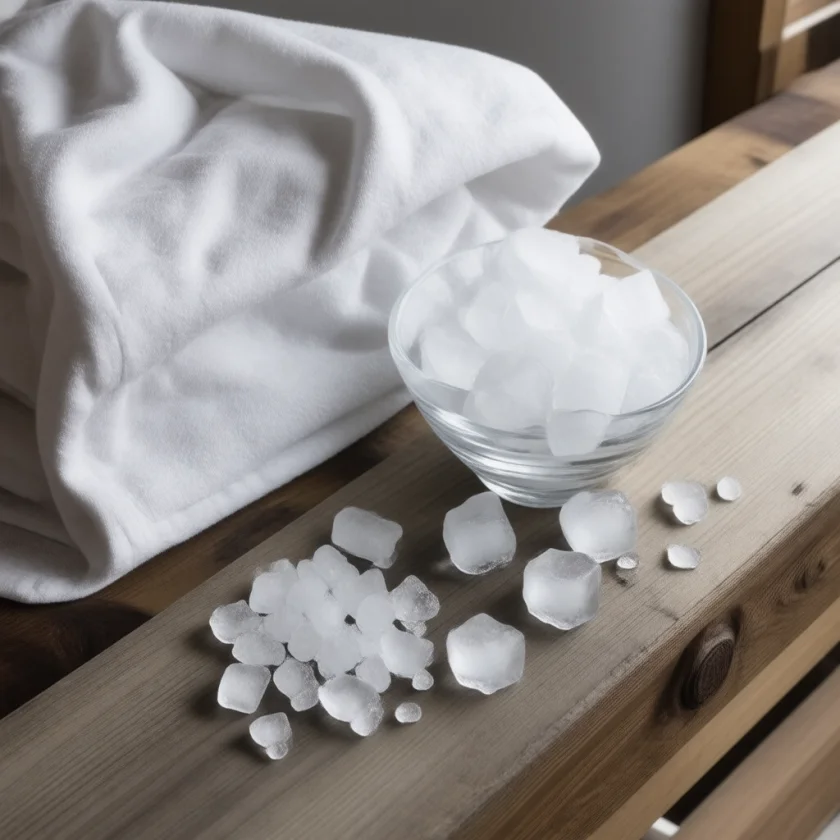
You rolled your ankle, tweaked a hamstring, or caught a knee on the corner of the coffee table. The first instinct most of us have is to reach for a bag of frozen peas — and for generations the advice was simple and universal: ice it. That advice has become a good deal more interesting in the last decade. The truth is that cold genuinely and reliably does two useful things for a fresh injury: it numbs pain and it can calm early swelling. What it almost certainly does not do is speed up the actual repair of the tissue — and there is now real scientific reason to think that heavy, prolonged icing might slightly get in healing's way. This page describes how ice is usually applied to an acute injury, why the classic RICE formula evolved into the newer PEACE & LOVE framework, why the very doctor who invented "RICE" later took the ice part back, and — most usefully — when cold helps and when its benefit runs out.
Table of Contents
- What Cold Actually Does for an Injury
- How Ice Is Applied Safely
- When Ice Helps and When Its Benefit Runs Out
- From RICE to PEACE and LOVE
- The Doctor Who Coined RICE Took the Ice Back
- The Real Debate Over Icing and Healing
- Ice vs. Heat: Which and When
- How Cold Is Used for Common Injuries
- A Myth Worth Correcting
- Warning Signs Beyond a Minor Injury
- Key Research Papers
- Connections
- Featured Videos
What Cold Actually Does for an Injury
When you press something cold against injured tissue, a few concrete things happen — and it helps to separate what is genuinely useful from what is wishful.
It slows the nerves that carry pain. Cold reduces the speed at which pain signals travel along nerves and raises the threshold at which they fire, so the ache dulls. This is a real, immediate, and reliable effect — the same reason a numb, cold hand feels less. Part of the relief also comes from the way a strong cold sensation competes with pain for your attention in the spinal cord, a mechanism you can explore in the pain-gate animation. For pure comfort, cold works.
It narrows blood vessels. Cold makes the small vessels near the surface clamp down (vasoconstriction). In the first hours after an injury, when a torn or bruised area is leaking fluid into the surrounding tissue, less blood flow can mean modestly less early swelling and bruising. The effect is real but easy to overstate — cold does not make a swollen ankle drain, and once you warm back up the vessels reopen.
It temporarily calms local inflammation. By slowing metabolism and blood flow in the cooled tissue, cold quiets the warmth, throbbing, and tenderness of the early inflammatory response. This is exactly why it feels soothing on an angry sprain — and, as you will see, it is also the crux of the modern debate, because that same inflammation is part of how the body heals. You can see the full cold-response cascade play out in the cold-response animation.
Notice what is not on that list: cold does not knit a torn ligament back together, does not rebuild muscle fibers, and does not accelerate the biological repair timeline. Its honest job is symptom control — making a fresh injury hurt less and swell less — not healing.
How Ice Is Applied Safely
Ice is often applied badly, and a couple of the common mistakes can cause harm of their own. The method below is the one first-aid guidance usually describes for an acute soft-tissue injury such as a sprained ankle, a pulled muscle, or a bad bruise. Its timings are convention rather than trial results: a 2004 review of 22 randomized trials of ice for acute soft-tissue injury found “no evidence of an optimal mode or duration of treatment” (Bleakley and colleagues, see Key Research Papers).
- A barrier between the ice and the skin. The usual method wraps the ice pack, gel pack, or bag of frozen vegetables in a thin damp towel or cloth. Ice placed directly on bare skin carries a real risk: direct, prolonged contact with something below freezing can cause a genuine cold burn or even frostbite, and it does so without much warning once the skin goes numb.
- Sessions of about 10 to 20 minutes. First-aid guidance usually gives 10 to 20 minutes at a time, often around 15 minutes for most areas. Longer sessions do not "work better"; past about 20 minutes the benefit shrinks and the risk of a cold injury rises, and there is even a rebound response where blood vessels reopen. Over a bony or thinly-covered spot (like the top of the foot or the elbow) the shorter end of that range is the usual choice.
- A gap before the next session. The usual guidance lets the skin fully return to normal temperature and color — usually at least an hour or two — before icing again. A common rhythm in the first day or two is 10–20 minutes every couple of hours while awake, as needed for pain and swelling.
- Mostly in the first 24 to 48 hours. The early phase is when swelling and pain peak and when cold has the most to offer for comfort. There is little evidence that aggressively icing the same injury for a week speeds recovery — that is precisely the habit the science below calls into question.
- Elevation and gentle compression alongside. Propping the injured part above heart level and adding a light elastic wrap does more for swelling than cold does. Cold is the comfort layer on top of those.
- Skin checks. Skin that turns white, waxy, or blotchy, or a burning or stinging pain rather than a dull ache, are signs of cold injury; first-aid guidance has the ice removed at that point. Numbness that does not fade after the ice comes off is a warning sign.
- Extra risk with reduced sensation or circulation. People with diabetes, nerve damage, Raynaud's phenomenon, or poor circulation can be harmed by cold they cannot feel.
In summary, the usual technique is a cloth barrier, 10–20 minutes, a real gap between sessions, mostly in the first day or two, and watching the skin.
When Ice Helps and When Its Benefit Runs Out
Cold therapy serves one goal well and another poorly.
Ice for comfort works. If the injury hurts, if the swelling is fresh and uncomfortable, if you cannot sleep because of a throbbing ankle — cold is a legitimate, cheap, drug-free way to take the edge off. Using ice for pain relief is not the thing the experts are pushing back on. If a 15-minute session lets a person rest or move a little more comfortably, that is a real benefit.
Ice to "heal faster" has no support. There is no good evidence that continuing to ice an injury for days on end speeds up tissue repair, and there is a reasonable mechanistic case that heavy, round-the-clock icing may slightly blunt it (see the debate below). Ice is not a healing accelerator, and more is not better. Once the first day or two has passed and the sharpest pain and swelling have settled, the PEACE and LOVE framework described below favors letting the body's repair process run — with gentle, pain-guided movement — over continued aggressive cooling of the area.
In short: ice helps how an injury feels; it does not fix the tissue. It eases pain and early swelling, and no good evidence shows that icing for a week speeds healing.
From RICE to PEACE and LOVE
For decades the standard first-aid recipe for a sprain or strain was RICE: Rest, Ice, Compression, Elevation. It was easy to remember, taught in every first-aid course, printed on every gym poster. It was also, in hindsight, incomplete — two of its four pillars (aggressive rest and aggressive ice) have since been questioned, and it said nothing about the weeks of recovery that matter most.
In 2019, sports-medicine researchers B. Dubois and J.-F. Esculier proposed an updated, fuller framework in the British Journal of Sports Medicine (“Soft-tissue injuries simply need PEACE and LOVE”, published online in August 2019 and in print in January 2020), built around two acronyms that cover the whole arc of recovery rather than just the first afternoon. The immediate care after injury is PEACE, and the ongoing rehabilitation is LOVE.
PEACE — the first days:
- P — Protect. Unloading or restricting movement for a short time (typically the first day or two) so the damage does not get worse — but only briefly, because too much rest weakens tissue.
- E — Elevate. Raising the injured limb above the heart to help fluid drain.
- A — Avoid anti-inflammatory modalities. This is the headline change: it advises being cautious with things that suppress inflammation — including routine anti-inflammatory drugs and heavy icing — on the grounds that inflammation is part of healing. (Cold for pain relief is still allowed; the caution is about using it specifically to shut down inflammation.)
- C — Compress. An elastic bandage or taping to limit swelling.
- E — Educate. Understanding the injury and setting realistic expectations — the framework argues against needless scans, injections, and passive treatments and for letting the body do its work.
LOVE — the days and weeks after:
- L — Load. A return to gentle movement and gradual loading as soon as pain allows; the framework holds that controlled stress helps tissue rebuild stronger.
- O — Optimism. The framework holds that mindset affects recovery, and that fear and catastrophizing slow it down.
- V — Vascularization. Pain-free cardio (walking, cycling) boosts blood flow to the injured area — the opposite of what ice does, and arguably more useful for repair.
- E — Exercise. Restoring strength, mobility, and balance to prevent re-injury.
Notice that ice is no longer one of the letters. That is not because cold is useless — it is because the framework's authors decided that pain-guided movement and blood flow deserve top billing over a passive cooling ritual, and that inflammation should be respected rather than reflexively stamped out. Ice quietly moved from "a pillar of treatment" to "an optional tool for comfort."
The Doctor Who Coined RICE Took the Ice Back
Here is the detail that surprises almost everyone. The word "RICE" was coined by Dr. Gabe Mirkin, an American sports-medicine physician, in his popular 1978 Sportsmedicine Book. For a generation, "Rest, Ice, Compression, Elevation" was his phrase.
Decades later, Mirkin publicly walked back the "Ice" part of his own advice. After reviewing the accumulating research, he wrote that he now believed both the ice and the prolonged rest he had recommended likely delay healing rather than help it — because both interfere with the inflammatory response the body uses to repair tissue. When the person who invented the acronym says the "I" was probably a mistake, it is worth taking seriously.
It is important not to overcorrect from this into "ice is bad." Mirkin's revised view, and the mainstream position it helped shift, is more specific: using ice (and enforced rest) as a tool to suppress inflammation in order to speed healing is misguided, because that inflammation is doing a job. Using ice briefly for pain is a different question. The nuance — comfort yes, healing accelerator no — is the whole point.
The Real Debate Over Icing and Healing
To understand why the advice changed, you have to understand that inflammation is not the enemy — it is the repair crew arriving on site.
When you tear or bruise tissue, the body deliberately floods the area with blood, immune cells, and signaling molecules. That is what produces the classic swelling, heat, redness, and pain. It looks and feels like the problem, but it is actually the beginning of the solution: those immune cells clear out damaged debris and then release signals that trigger the rebuilding phase. Muscle, in particular, relies on this inflammatory wave to recruit the repair cells that regenerate fibers.
Cold does the opposite of what that process wants. By constricting blood vessels and slowing metabolism, aggressive icing reduces the very blood flow and immune-cell traffic that carries the repair crew in. Laboratory and animal studies of injured muscle suggest that heavy cooling can delay and blunt this response, potentially slowing regeneration and, in some experiments, leading to slightly weaker or more scarred repair. This is the same "inflammation is part of adaptation" principle seen when athletes ice after strength training and partly mute their muscle gains — a theme explored on the companion page Cryotherapy for Pain and Inflammation.
Two rat studies show what this looks like. In a 2026 rat study of crushed muscle, icing applied immediately after the injury briefly cut an early immune signal (monocyte chemoattractant protein 1, MCP-1) and fewer repair cells were recruited; the build-up of repair cells (monocytes and macrophages) peaked at 72 hours instead of 48 hours, while rats iced only later, after this very early phase, kept the normal pattern (Tamari and colleagues). In a 2017 rat study of bruised (contused) muscle, icing reduced or delayed the arrival of immune cells and some signs of blood-vessel repair in the first 7 days; by day 28, capillary density and muscle-fiber size did not differ from un-iced rats, although a larger share of the fibers in the iced muscle were still immature (Singh and colleagues). Both are animal results; how much this happens in an injured person is not known.
Now the honest caveats, because this is where the field is genuinely uncertain:
- Much of the strongest evidence that ice impairs repair comes from animal and cell studies, not from large trials in injured humans. The effect in a person icing a sprained ankle a few times may be small.
- What is well established is the absence of the opposite: there is no solid evidence that icing an injury makes it heal faster or return to function sooner. The classic promise — "ice it to speed recovery" — simply is not supported.
- The human trials themselves are weak. A 2004 systematic review found 22 randomized trials of ice for acute soft-tissue injuries, with an average quality score of 3.4 out of 10 on the PEDro (Physiotherapy Evidence Database) scale. It found only marginal evidence that ice plus exercise works best after ankle sprain and after surgery, little evidence that adding ice to compression made any significant difference (in hospital inpatients), and “no evidence of an optimal mode or duration of treatment” (Bleakley and colleagues).
- Cold's pain-relieving effect, by contrast, is real and uncontested.
So the fair, evidence-based summary is this: ice reliably relieves pain and calms early swelling; it does not accelerate healing; and using it heavily and continuously to suppress inflammation may modestly interfere with repair. In this reading, ice is a comfort measure for the early days, not a medicine that fixes the tissue.
Ice vs. Heat: Which and When
People constantly mix these up, and using the wrong one at the wrong time is a common mistake. The usual rule of thumb:
- Cold is for fresh, acute injuries. In the first day or two after a sprain, strain, bruise, or new swelling, cold helps with pain and early swelling. Heat here can actually make swelling worse by opening blood vessels wide.
- Heat is for stiff, tight, chronic, or slowly-nagging problems. For a stiff neck, an aching lower back, tight muscles before activity, menstrual cramps, or long-standing joint stiffness such as osteoarthritis, warmth relaxes muscle, eases stiffness, and increases blood flow. On a fresh, swelling injury, heat can add to the swelling.
- Some people alternate the two. Contrast therapy — switching between cold and warm — is used for subacute injuries and stiffness on the theory that the alternating vessel constriction and dilation acts as a pump for circulation. The evidence is modest, but many people find it comfortable; Contrast Therapy describes how it is done. Broader deliberate-cold practices for wellness and recovery (cold showers, plunges) are covered on Cold Exposure.
A common shortcut: cold for the new and swollen; warmth for the old and stiff. Where there is no fresh swelling, gentle heat and gentle movement are the usual default.
How Cold Is Used for Common Injuries
How the points above apply to everyday scrapes and strains:
- Sprained ankle. The classic. The usual approach is protection and keeping harmful weight off it for a day or two, elevation, light compression, and ice for 10–20 minutes as needed for pain in the first 24–48 hours. The key step after that is gentle movement within pain limits — ankles recover better with early controlled loading than with prolonged rest.
- Pulled or strained muscle (hamstring, calf, groin). The same early approach is used for comfort. Because muscle repair leans heavily on the inflammatory response, the newer thinking favors gentle, progressive loading as it settles over marathon icing sessions.
- Bruise (contusion). Cold in the first hours can limit how much the bruise spreads and dull the ache. Beyond the first day, there is little to gain from continued icing.
- Tendon flare-ups. For an angry Achilles tendon or similar overuse tendon problem, cold can relieve pain after activity, but the real fix is a graded loading program, not ice. Cold here is pain relief, not the treatment.
- Minor jams and knocks. A cloth-wrapped ice pack for 15 minutes is a common response to a jammed finger or a banged shin — for comfort.
The common thread: cold for the first day or two of pain and swelling, then a shift toward gentle, pain-guided movement.
A Myth Worth Correcting
Myth: "The more you ice an injury, and the longer, the faster it heals."
This is the single most persistent misconception about cold therapy, and it is wrong on both counts. More is not better, and ice does not speed healing at all. Icing an injury for hours, or continuing for a week to "help it heal," gains you nothing beyond pain relief and risks two real downsides: a cold burn or nerve irritation from over-exposure, and — if you are truly aggressive about it — a modest interference with the inflammatory repair process. In the current understanding, cold is a painkiller and a swelling-limiter for the early days, used in short 10–20 minute sessions with gaps, not a healing accelerator you apply as much as possible.
The flip side is also a myth worth naming: "the new science means you should never ice anything." That overcorrects. The newer frameworks still leave room for cold for genuine pain and early swelling. What changed is the reason for using it — comfort, not cure — and a warning against heavy, prolonged icing meant to stamp out inflammation.
Warning Signs Beyond a Minor Injury
Ice and rest are for minor, self-limited injuries. The following are signs of something more serious — a possible fracture, torn ligament, nerve or blood-vessel injury, or infection — that home icing does not treat and that clinics assess in person:
- You cannot bear weight on the limb, or cannot use the joint at all.
- There is obvious deformity, a joint that looks out of place, or you heard or felt a pop or snap at the moment of injury.
- Numbness, tingling, coldness, or a bluish color beyond the injury — possible nerve or blood-vessel involvement (this is different from the temporary numbness of the ice itself).
- Severe or rapidly worsening swelling, or pain that is out of proportion and not easing.
- Signs of infection in a wound: spreading redness, heat, pus, red streaks, or fever.
- The injury has not meaningfully improved in a couple of weeks of sensible self-care, or keeps recurring.
- You have diabetes, poor circulation, or a bleeding/clotting disorder, conditions in which both injuries and cold carry extra risk.
For a joint that cannot be used or a pain that will not settle, an X-ray or an exam can find a fracture or tear that ice does not treat.
Key Research Papers
- Dubois B, Esculier JF (2020). Soft-tissue injuries simply need PEACE and LOVE. British Journal of Sports Medicine 54(2):72-73 (online 2019) — PubMed PMID: 31377722
- Bleakley C, McDonough S, MacAuley D (2004). The use of ice in the treatment of acute soft-tissue injury: a systematic review of randomized controlled trials. American Journal of Sports Medicine 32(1):251-61 — PubMed PMID: 14754753
- Singh DP, Barani Lonbani Z, Woodruff MA, Parker TJ, Steck R, Peake JM (2017). Effects of topical icing on inflammation, angiogenesis, revascularization, and myofiber regeneration in skeletal muscle following contusion injury. Frontiers in Physiology 8:93 — PubMed PMID: 28326040
- Tamari A, Nitta E, Terada E, Nagata I, Kawashima M, Sakuraya T, Sonomura T, Maeshige N, Nitta R, Arakawa T (2026). Immediate icing disrupts the very early MCP-1/CCR2 recruitment window and delays muscle regeneration in rats. American Journal of Physiology — Cell Physiology 331(1):C222-C235 — PubMed PMID: 42284081
PubMed Topic Searches
- PubMed: PEACE and LOVE soft-tissue injury management — the modern acute-injury framework that replaced RICE and dropped ice as a core pillar.
- PubMed: cryotherapy for acute soft-tissue injury — reviews of icing for sprains and strains, including how limited the evidence for faster recovery actually is.
- PubMed: icing, inflammation and muscle regeneration — the mechanistic and animal studies behind the concern that heavy cooling may blunt repair.
- PubMed: cold therapy and pain relief — the well-supported, uncontested side of ice: its effect on pain.
- PubMed: ankle sprain early mobilization vs. immobilization — why gentle early movement (the "Load" in LOVE) tends to beat prolonged rest.
- PubMed: cold injury and frostbite from cryotherapy — the real risk of applying ice directly or for too long.