Gerson Diet: Foods Allowed and Forbidden
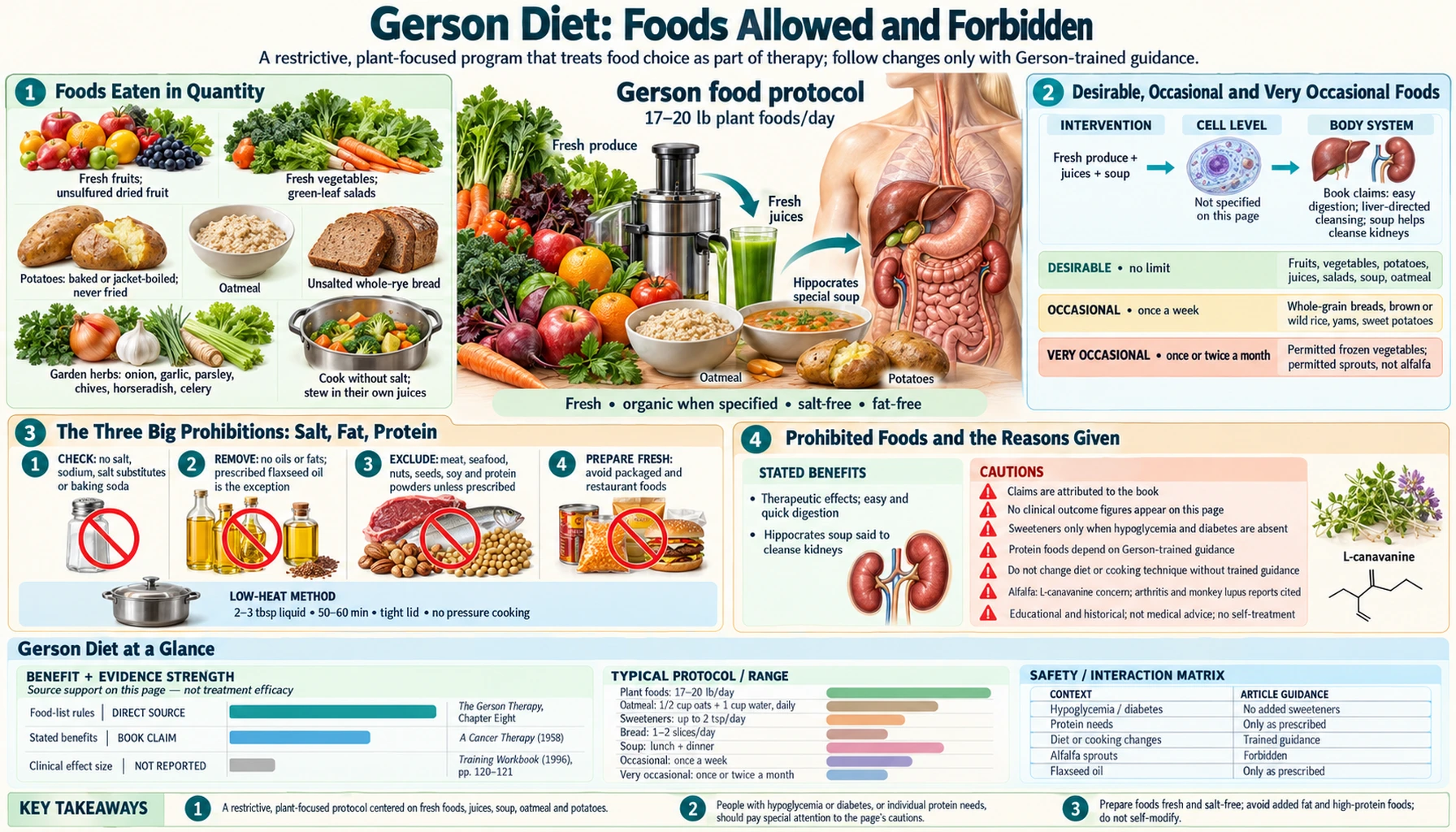
This page sets out, in plain language, the detailed food lists from Chapter Eight of The Gerson Therapy by Charlotte Gerson and Morton Walker, D.P.M. — what a person on the Gerson program eats freely, what is allowed once a week or once a month, and what is forbidden, together with the reasons the book gives for each rule. The book explains that these guidelines follow the original instructions Dr. Max Gerson set down in 1958 in his book A Cancer Therapy.
For the overall daily structure of the program (juices, meals and schedule), see the sibling Diet Protocol page. Here the focus is the food lists themselves, how the book says foods should be prepared, the Hippocrates special soup, and the sample menus. The book states that, because of the extensive juicing, a follower of the Gerson eating plan takes in between 17 and 20 pounds of plant foods each day.
Table of Contents
- 1. Foods Eaten in Quantity
- 2. Desirable, Occasional and Very Occasional Foods
- 3. The Three Big Prohibitions: Salt, Fat, Protein
- 4. Prohibited Foods and the Reasons Given
- 5. Drinks: Teas, Coffee, Alcohol and Water
- 6. Herbs and Spices
- 7. How Foods Are Prepared and Cooked
- 8. Salads and Salad Dressing
- 9. Hippocrates Special Soup
- 10. Potatoes, Oatmeal, Bread and Sweeteners
- 11. Sample Menus
- 12. Why the Book Says to Follow the Lists Exactly
- Key Research Papers
- Connections
- Featured Videos
1. Foods Eaten in Quantity
The book lists the foods Dr. Gerson described as suitable to eat in quantity:
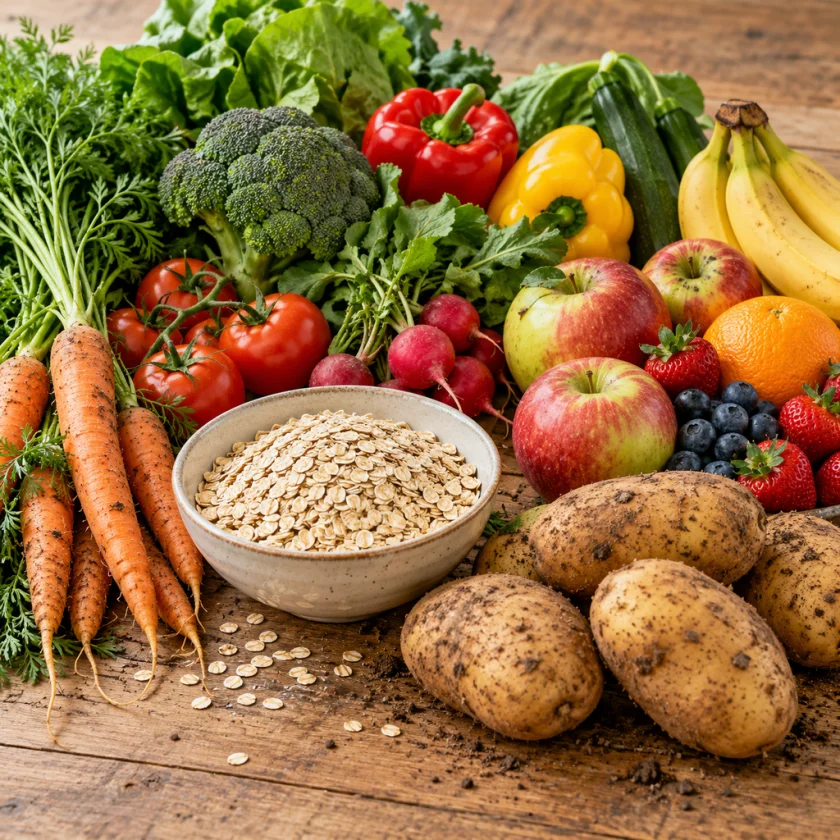
- Fruits of all kinds, mostly fresh and some prepared in different ways — fruit salads, cold fruit soups, mashed bananas, raw grated apples and applesauce. Recommended fruits include apples, grapes, cherries, mangoes, peaches, oranges, apricots, grapefruit, bananas, tangerines, pears, plums, melons, papayas and persimmons, none from cans or frozen packages. Pears and plums are more easily digested stewed, and any fruit may be stewed.
- Dried fruit if unsulfured — apricots, peaches, raisins, prunes or mixed fruit — washed, soaked and stewed.
- Freshly prepared vegetables, some stewed in their own juices and others raw or finely grated, such as organically grown carrots, cauliflower or celery; vegetable salads and soups. No frozen vegetables in this category.
- Potatoes, best baked; the contents may be mashed with yogurt or soup. They should never be fried but may be boiled in their jackets.
- Green-leaf salads mixed with tomatoes, fruits, vegetables and other organically grown plant foods.
- Unsalted bread of whole rye with only a small percentage of whole wheat flour, from organically grown grain.
- Oatmeal, to be used freely.
- Fresh garden herbs for regular use: onions, garlic, parsley leaves, chives, horseradish and celery.
The book singles out vegetables especially recommended for their mineral content: carrots, peas, tomatoes, broccoli, Swiss chard, spinach, string beans, brussels sprouts, artichokes, beets cooked with apples, cauliflower with tomatoes, red cabbage with apples, and raisins — all prepared without salt and stewed in their own juices to avoid losing minerals that dissolve easily in cooking water.
Buckwheat cakes and potato pancakes are described as optional, as are brown sugar (dried cane juice), honey, maple sugar and pure maple syrup, with no fats or baking soda used in baking. Churned buttermilk, nonfat unflavored yogurt and nonfat unsalted pot (cottage) cheese appear in Dr. Gerson’s original list; the book notes that for the first year and a half no eggs, fish, meat, butter, cheese or milk are eaten, and that after two years on a strict program cream and ice cream may be used sparingly or kept for holidays. Dr. Gerson is quoted as saying, “Ice cream is ‘poison’ for children.”
After recovery — two years or more in some cases — the book describes a remaining 10 percent of the diet left to personal choice, which may include meat, fish, eggs, nuts, candies, cakes or whatever one likes best. Nicotine is to be avoided under any circumstances.
2. Desirable, Occasional and Very Occasional Foods
Desirable foods (no limit)
The book calls these excellent sources of nourishment, “sick or well”, to be eaten without limitation:
- All fruits and vegetables plus potatoes, except those on the prohibited list
- Fresh fruit and vegetable juices
- Raw fruit and vegetable salads
- Hippocrates special soup
- Oatmeal
According to the book these foods are necessary for their therapeutic effects and are easily and quickly digested. Large and frequent portions are encouraged, even during the night when waking hungry. As the body restores itself, many people become ravenous, and the authors recommend keeping fruit, fruit salad or applesauce at the bedside for nighttime snacking.
Occasionally allowed (once a week)
Unless a Gerson-trained health professional prescribes otherwise, these foods — free of salt, salt derivatives, oils and fats — may be eaten once per week:
- Breads made from whole rye, oat or rice flour
- Organic popcorn, dry-popped, unsalted and without fat
- Brown or wild rice
- Yams and sweet potatoes
- Maple syrup, honey, raw brown sugar and unsulfured blackstrap molasses, up to a combined daily maximum of 2 teaspoonfuls of all sweeteners
Very occasionally allowed (once or twice a month)
- Organically grown frozen vegetables, prepared without added salt, fat or other prohibited ingredients
- Sprouted beans or seeds (such as lentils or beans) — but not alfalfa sprouts, which are forbidden
3. The Three Big Prohibitions: Salt, Fat, Protein
The book, citing the Gerson practitioner’s training workbook, names three categories that every Gerson food must be prepared without.
Salt and sodium
Salt and sodium in all forms are forbidden: table salt, sea salt, celery salt, vegetable salt, liquid amino seasonings, tamari, soy sauce, “lite salt”, baking soda, sodium-based baking powders, anything with “sodium” in its name, and salt substitutes. Skin contact with Epsom salts should be avoided. Salt-free herb seasoning blends may be used in small quantities if they contain only permitted herbs with no added salt or salt substitute. The book gives a fuller explanation of salt in its Chapter 10.
Oils and fats
All oils and fats and foods containing them are prohibited — corn, olive, canola and all other vegetable oils except flaxseed oil as specifically prescribed; butter, cheese, cream and other dairy fats; all animal fats; margarines and oil-based spreads; coconuts and avocados; hydrogenated or partially hydrogenated oils; “fat substitutes”; nut butters; and any other source of dietary fat except as it occurs naturally in allowed foods.
Proteins and high-protein foods
Disallowed: all meats, seafoods and other animal proteins; nuts and seeds; soy and other legume-based products; and all protein powders or supplements, including barley- or algae-based powders, unless prescribed for protein supplementation.
Beyond these three, the book places almost all packaged convenience foods — frozen, canned, bottled or boxed — off-limits until the person is completely healed, and in some cases even after recovery. Restaurant food is described as almost always unacceptable, because it is rarely organic and almost always cooked with added salt, fats or other additives.
4. Prohibited Foods and the Reasons Given
The book gives a short explanation for each item on the prohibited list:
- Processed foods — bottled, canned, frozen, preserved, refined, salted, smoked or sulfured foods are forbidden (except where specifically allowed).
- Dairy products, including goat’s milk, cheese, cream, ice cream, ice milk, butter and buttermilk — generally extremely high in fat; the book states cheeses may be 65 percent fat and high in sodium, and that commercial cultured buttermilks contain fat and sodium. When protein is prescribed, fresh churned buttermilk without additives may be taken after the sixth to twelfth week, and unsalted nonfat quark is permitted when available.
- Pineapples and berries — may cause an allergic reaction to the aromatic acids present.
- Avocados — too high in fats.
- Cucumbers — difficult to digest in combination with the daily juices.
- Soybeans and soy products (tofu, tempeh, miso, tamari, soy sauces, textured vegetable protein, soy milk) — avoided for reasons the book lists as high fat, high sodium, inhibition of nutrient absorption and/or elevated protein content.
- Dried beans and legumes — should not be used.
- Alfalfa and other bean or seed sprouts — the book states they are high in L-canavanine, which it links to immune suppression; it reports people developing sudden arthritic symptoms after eating alfalfa sprouts, and monkeys developing lupus erythematosus from alfalfa sprouts in their diet.
- Oils and fats of all kinds, except fresh, raw, organic flaxseed oil.
- Refined white and brown sugars.
- Wheat flour (including whole wheat) and all types of pasta.
- Beef, pork, poultry, eggs, fish, seafood and other animal flesh — described as high in protein, chemicals, preservatives, hormones and salt, difficult to digest, often too fatty, and extra work for the liver and excretory systems.
- Candy, cakes, muffins and pastries — containing fats, oils, refined sugars or flours, salt, soda, baking powder or dairy. Breads and pastries baked from permitted ingredients can add interest but are not for regular use.
- Mushrooms — described as fungi rather than vegetables, containing complex proteins, difficult to digest and offering little nutrition.
- Nuts and seeds (almonds, apricot kernels, sunflower seeds, flaxseeds, peanuts, cashews and others) — too high in protein and fat; roasting adds salt and alters the fat.
- Hot peppers such as jalapeños — strong aromatics said to inhibit healing. Green, yellow and sweet red peppers may be used without limitation.
- Mustard and carrot greens.
- Baking powder and baking soda — contain sodium and alum (aluminum), described as highly toxic. Aluminum-free, sodium-free potassium-based baking powders may be used occasionally.
- Fluoride in any item — water, toothpaste, mouth rinse, hair dyes, permanents, cosmetics, underarm deodorants, lipstick and lotions — to be avoided under any conditions.
The book also states that aluminum cooking equipment is absolutely forbidden, as are microwave ovens, pressure cookers and steam cookers.
5. Drinks: Teas, Coffee, Alcohol and Water
- Alcohol — the book says it should not be drunk because it limits the blood’s ability to carry oxygen and strains the liver, which must detoxify and remove it. Dr. Gerson’s original list asked that liquors, wine and beer be reduced to a minimum in favor of fresh fruit juices.
- Black, green and other caffeinated teas — forbidden because of their aromatic acids and caffeine; Dr. Gerson cited aromatics as interfering with healing by producing allergic reactions.
- Herbal teas — allowed and encouraged. The book says peppermint tea helps digestion, chamomile is soothing, and valerian can help sleep; linden flower and orange flower teas are also named. It describes pau d’arco (taheebo) as a valuable anti-cancer tea that can be taken in any quantity at night.
- Coffee by mouth, caffeinated or decaffeinated, and coffee substitutes — said to overstimulate the digestive system and central nervous system, with the essential oils disturbing digestion. The book contrasts this with coffee taken rectally, which it says benefits the liver and increases production of the enzyme glutathione S-transferase (see Coffee Enemas).
- Water — drinking water is not encouraged. Dr. Gerson believed it dilutes stomach acid and leaves less capacity for nutrition from fresh foods and juices; the juices provide adequate fluids.
6. Herbs and Spices
Because the aromatics in herbs and spices — like those in pineapples and berries — are said to interfere with the healing response, Dr. Gerson limited them to small quantities of relatively mild ones:
- Allspice, anise, bay leaf, coriander, dill, fennel, mace, marjoram, rosemary, sage, saffron, tarragon, thyme, sorrel and summer savory — small quantities
- Chives, onions, garlic and parsley — larger quantities
Sharp condiments such as black pepper, paprika and ginger are eliminated as irritants. Basil and oregano are avoided for their high aromatic-acid content, and cayenne and jalapeños are described as irritants that “can stop the healing.” Garlic, the book says, is healthful and may be used any time in any amount.
7. How Foods Are Prepared and Cooked
The authors acknowledge that, by modern standards, Gerson meals are considered overcooked. Dr. Gerson believed foods should be well done — tender, easy to chew and digestible — so a weakened digestive system could obtain soft bulk and nutrition in the most accessible form, with the cooked food acting as a buffer for the large volume of juices and raw foods. The book states that all enzymes are dead at 140 degrees Fahrenheit, and that ample enzymes come from the raw juices, salads and fruit.
- All food is prepared fresh; canned, bottled, boxed or frozen foods are said to contain additives and inhibit restoration of the body.
- No salt, soy sauces or other sodium sources are added; salted prepared foods such as most breads are eliminated.
- Vegetables are cooked slowly on low heat, just at boiling, with a minimum of water or soup stock (perhaps 2 or 3 tablespoonfuls), until well done — usually fifty to sixty minutes. A metal mat or ring under the pot spreads heat and prevents burning; a tight-fitting lid holds in moisture. Baking in covered glass dishes is an alternative. No pressure cooking.
- Onions, tomatoes and squash contain a lot of water, generally need no added liquid and add flavor; celery is also good for flavoring.
- Beets and potatoes can be boiled whole, unpeeled, and peeled when done, or baked.
- Spinach releases much water and oxalic acid in cooking, so its bitter cooking water is discarded.
- Corn can be boiled or eaten raw.
Raw fruit and salads with celery, green onions and radishes provide crisp variation. As a patient progresses, some foods cooked al dente may be possible for variety, but because the book treats food as medication, any change in diet or cooking technique should be discussed with a trained Gerson Therapy health professional.
8. Salads and Salad Dressing
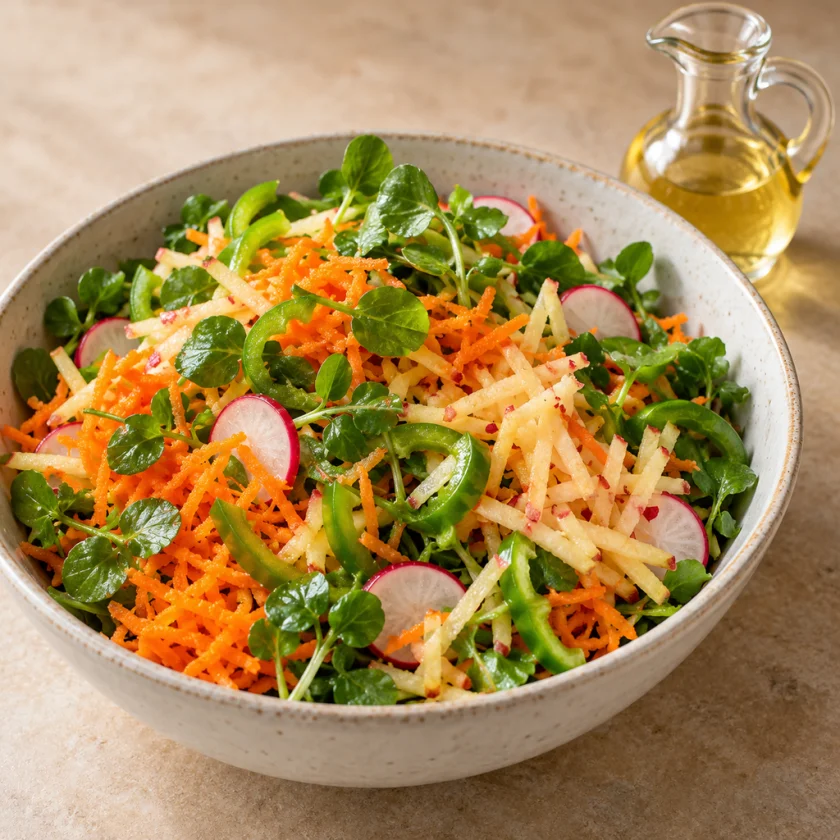
The book calls it essential that the patient eat as many raw vegetable salads as possible. These ingredients can be finely grated, chopped or minced and mixed together or eaten separately:
- Apples, carrots, watercress, green onions, knob or branch celery
- Lettuce greens, cauliflower, endive, chives, chicory
- Radishes, green peppers, tomatoes
Dressing: never bottled dressing. Organic red wine or apple cider vinegar is diluted with water to taste, with a little dried cane juice, some herbs, onion or garlic for variety. Lemon juice may replace vinegar, and the prescribed flaxseed oil can be part of the dressing.
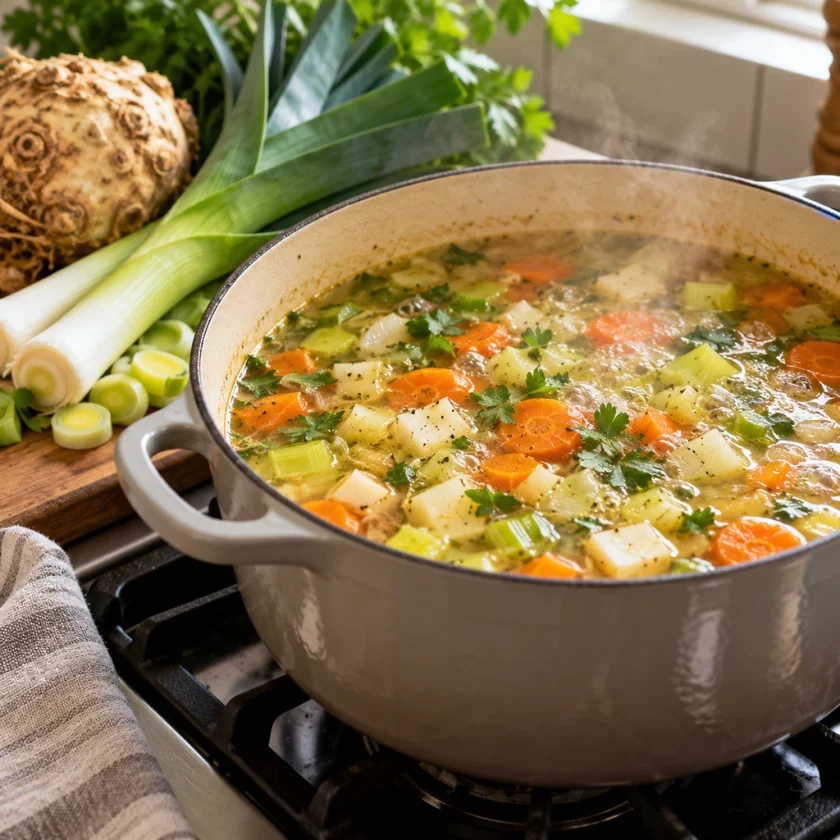
9. Hippocrates Special Soup
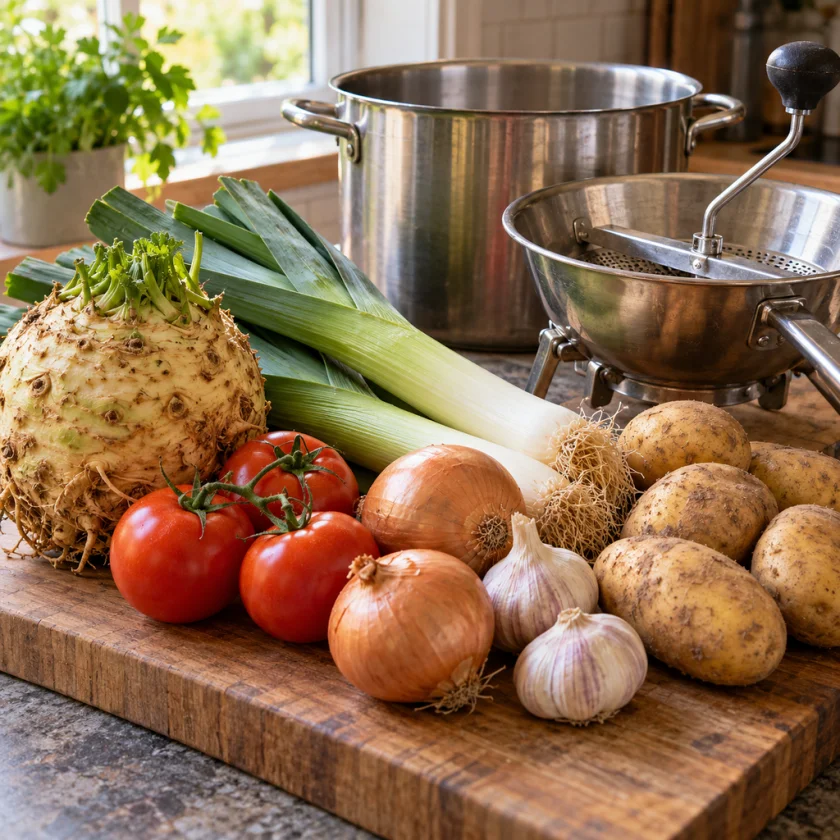
Dr. Gerson considered this soup, attributed to Hippocrates, extremely important at both lunch and dinner for nearly all his degenerative-disease patients. The book explains that while much of the therapy is directed at cleansing the liver, the Hippocrates soup helps cleanse the kidneys. Once patients are used to eating without salt — usually within one to two weeks — it becomes a tasty start to every meal.
Ingredients
- 1 medium celery knob (root), or 3 or 4 stalks of branch celery when out of season
- A small amount of parsley
- 1½ pounds of tomatoes (more in summer if desired)
- 2 medium onions
- 1 medium parsley root (omit if unavailable)
- 2 small leeks (or 2 more medium onions)
- Several cloves of garlic
- 1 pound of potatoes
Method
- Wash the vegetables thoroughly; do not peel them. Cut into cubes and cover with water.
- Cook for two hours.
- Put everything through a food mill, leaving only fibers and peels behind, to give a thick, creamy soup.
- Cool before refrigerating. Make only enough for about two days, since the book says the excess loses its nutritional value after that.
Until the person is used to salt-free eating, raw pressed garlic may be added for a “kick” to the soup, vegetables and salads.
10. Potatoes, Oatmeal, Bread and Sweeteners
Potatoes
Described as high in plant proteins and a nutritional boon, potatoes are recommended at both lunch and dinner, only rarely replaced by organic brown or wild rice. They are of most value baked, but may be boiled in their jackets, mashed with a little soup, peeled after boiling, made into potato salad, or baked in a casserole with onion, tomatoes and celery. If nonfat yogurt is prescribed after six to ten weeks, onions, chives or garlic stirred into it make a dressing. Sweet potatoes may be served once a week.
Oatmeal
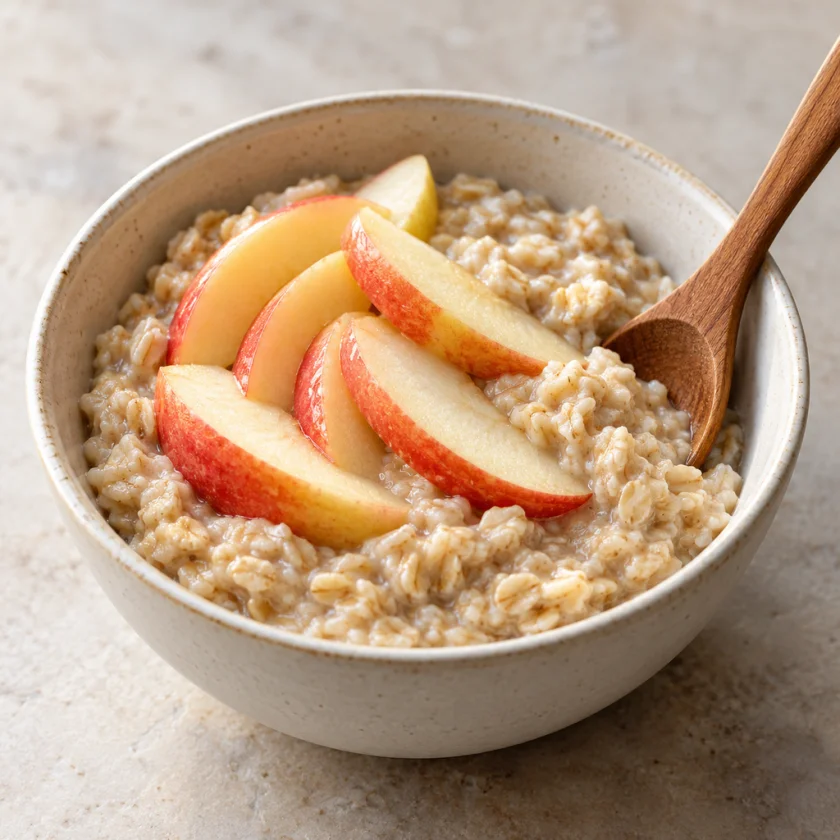
A large portion every day at breakfast, cooked slowly from ½ cup organic rolled oats and 1 cup (or a little more) of purified water. Other cereals should not be used. The book says oats supply B-complex vitamins and protein and, most importantly, provide a soft cushion in the intestinal tract for the raw juices that follow. Variety comes from raw grated apple, papaya or other fruit; honey, pure maple syrup or unsulfured blackstrap molasses; raisins, stewed prunes or other stewed fruit.
Bread and other starches
Salt-free, fat-free rye bread may be eaten only after the full required meal and should never be the main part of a meal — limited to one or two slices a day. Dry bread can be grated for bread crumbs. Potato flour, tapioca or cornstarch may occasionally be used.
Sugars and sweeteners
Only organic brown sugar, maple syrup, organic light honey or unsulfured molasses, up to 2 teaspoons a day of all sweeteners combined — and only when hypoglycemia and/or diabetes are not present.
11. Sample Menus
Breakfast
- 8 ounces of orange juice
- A large portion of oatmeal with a choice of fruit sauce
- Organic 100 percent rye bread, unsalted and fat-free, toasted and spread with honey
Lunch
- A salad of many mixed raw ingredients
- 8 ounces or more of warm Hippocrates special soup
- 8 ounces of apple-carrot juice
- Baked potato (with yogurt dressing when permitted)
- Freshly cooked vegetables
- Raw or stewed fruit
Dinner
The same as lunch. The book suggests varying meals with different vegetables, potato preparations and salads; organic brown rice and organic sweet potatoes may each be served once a week. The hour-by-hour patient schedule appears in the book’s appendixes.
12. Why the Book Says to Follow the Lists Exactly
The authors explain that the Gerson approach looks at everything that goes into, or on, the body as part of the healing process, which is why it may appear more restrictive than other natural approaches. They state that through this attention to detail the therapy achieves healing even in some extremely advanced cases.
The book cautions against thinking that a less advanced illness allows a looser diet, and against well-meaning but uninformed advice from friends, relatives or practitioners unfamiliar with how the diet, medications and detoxification interact. It strongly recommends not adding to or changing the dietary guidelines without the advice of a certified Gerson Therapy practitioner, stating that the program, used exactly as presented, has repeatedly achieved remission or cure of cancer and nearly every other chronic degenerative disease.
The book also notes that the proportions in Dr. Gerson’s original lists were modified (as explained in its Chapter 7) to reflect modern growing and processing methods, and that the prescriptions for protein foods such as yogurt and buttermilk depend on the individual’s Gerson-trained health professional.
Key Research Papers
- Gerson C, Walker M. The Gerson Therapy. Chapter Eight, “Foods on the Gerson Diet Plan” — primary source for every list and reason on this page.
- Gerson M (1958). A Cancer Therapy: Results of Fifty Cases. — the original dietary instructions the chapter follows.
- The Gerson Institute (1996). Gerson Therapy Practitioner’s Training Seminar Workbook, pp. 120–121. — cited by the book for the prohibited-food categories.
PubMed Topic Searches
Connections
Featured Videos