Zinc Toxicity (Excess Zinc): Nausea and Stomach Upset
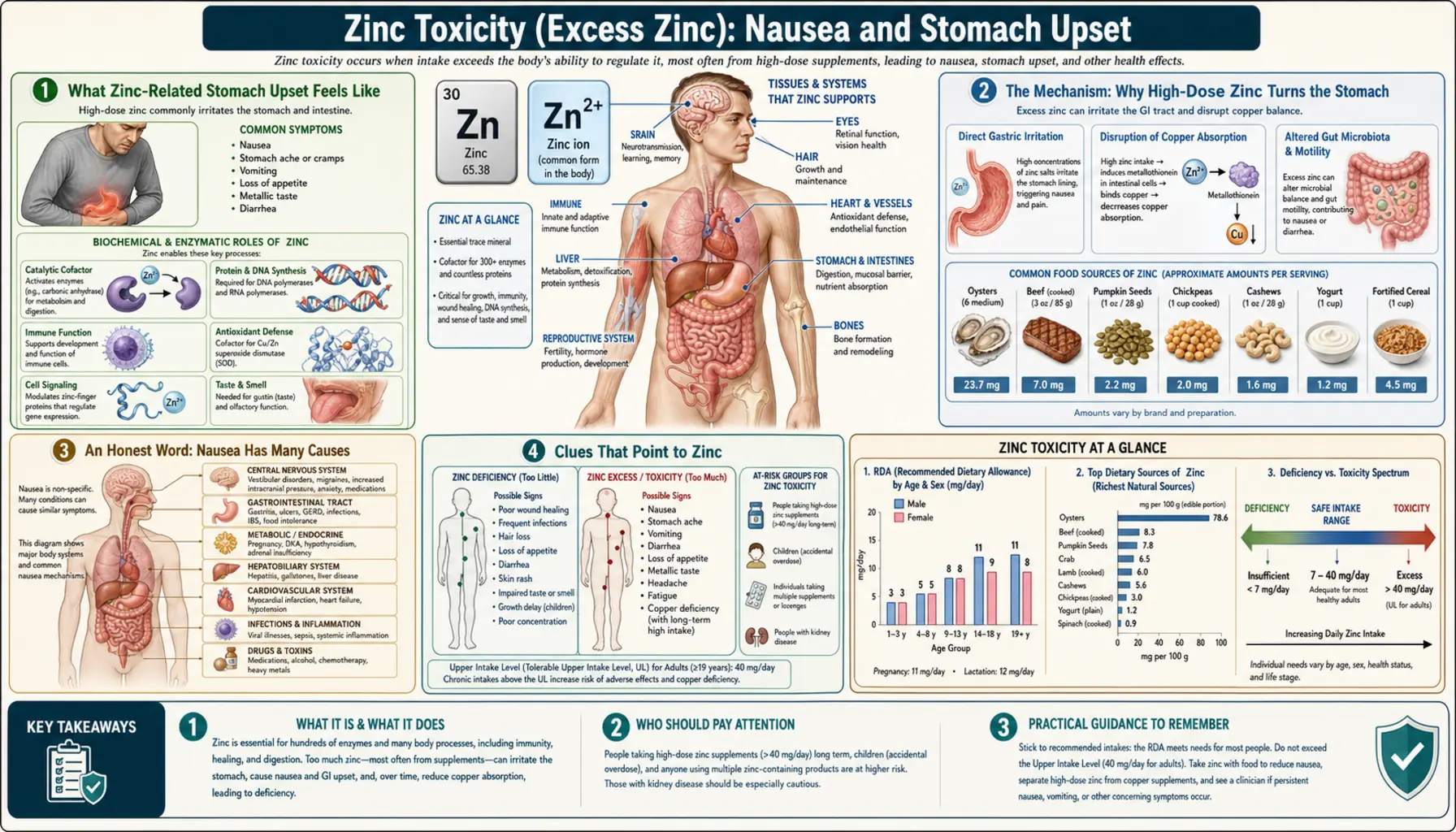
The most immediate harm from too much zinc is a bout of nausea, queasiness, cramping, and sometimes vomiting soon after a large dose — in the trials and case reports, from zinc lozenges, cold remedies, or high-dose supplements. Reviews describe zinc taken by mouth as relatively nontoxic, with overt symptoms (nausea, vomiting, stomach pain, lethargy and fatigue) appearing at very high intakes: the stomach is reacting to a concentrated dose of an irritating metal salt. The caveat runs the other way, though — nausea is a very non-specific symptom, and zinc is far down the list of its usual causes. This page covers the stomach upset specifically: what it feels like, why high-dose zinc irritates the gut, why zinc is often not the culprit, the clues that point to it, and the rare situations where vomiting after zinc is a genuine emergency.
Table of Contents
- What Zinc-Related Stomach Upset Feels Like
- The Mechanism: Why High-Dose Zinc Turns the Stomach
- An Honest Word: Nausea Has Many Causes
- Clues That Point to Zinc
- Common Causes of a Zinc Overdose
- Getting Checked
- Easing and Preventing It: What Is Reported
- Red Flags: When It Is More Than Irritation
- Key Research Papers
- Connections
- Featured Videos
What Zinc-Related Stomach Upset Feels Like
Zinc-related stomach upset is an acute event — it comes on quickly and is tied to a specific dose, not to weeks of taking a sensible supplement. In a 1996 randomized trial of zinc gluconate lozenges (13.3 mg of zinc every 2 hours while awake), 20% of the zinc group reported nausea versus 4% on placebo. In a 1987 trial in which healthy volunteers took 50 mg of zinc three times a day for six weeks, symptoms including abdominal cramps, nausea, loss of appetite and vomiting were registered by 84% of the women and 18% of the men. In a published case of a 570 mg overdose, severe nausea and vomiting began within 30 minutes.
The sensations reported in these studies and reviews include:
- Nausea and queasiness. A rising, seasick feeling in the upper abdomen, sometimes with loss of appetite.
- A bad or metallic taste. Mostly a lozenge effect: in the 1996 lozenge trial, 80% of the zinc group reported bad-taste reactions versus 30% on placebo.
- Stomach cramps and upper-abdominal pain. An ache high in the belly (the epigastrium), which reviews of zinc toxicity list among its overt symptoms.
- Vomiting. With a large enough dose the nausea tips over into vomiting, as in the 570 mg overdose case.
- Loose stools or diarrhea. Diarrhea is among the adverse events the 2024 Cochrane review of zinc for colds tracked as potentially due to zinc.
The defining feature is the timing and the dose. The episodes described are reactions to an identifiable large amount of zinc, not a slow, day-after-day nausea; the 570 mg overdose case recorded no further complications (no gastric erosions, esophageal burns or other sequelae). Queasiness that drags on for days or weeks without such a dose fits zinc much less well — and other causes, covered below, become more likely.
The Mechanism: Why High-Dose Zinc Turns the Stomach
The usual explanation for why zinc upsets the stomach separates two things that happen at once: a local chemical irritation of the gut lining, and a central nausea reflex that the brain triggers in response.
The local part comes first. Zinc reaches the stomach not as a tidy nutrient but as a metal salt — zinc sulfate, zinc gluconate, zinc acetate, zinc oxide. When a concentrated dose dissolves in stomach acid, it releases a high local burst of zinc ions right against the delicate cells of the stomach lining. Concentrated zinc salts are irritating to the mucosa, and in large amounts corrosive — case reports of people who swallowed many zinc-cored coins describe coins corroded by stomach acid and local corrosive injury. The irritation is registered as cramping, burning, and queasiness.
An analogy. Think of the stomach lining as bare skin and a high-dose zinc tablet as a drop of undiluted antiseptic: the same chemical irritates more when it arrives concentrated than when it is diluted. That is the reasoning behind the common practice of taking zinc supplements right after meals — a 2025 absorption study notes that zinc is generally recommended immediately after meals to minimize gastric irritation. The same study found the trade-off: taken with most of the foods tested, a 25 mg dose of zinc acetate was absorbed less than when taken alone. No controlled trial comparing stomach upset with and without food was found for this page.
The central part follows. The gut is wired to the brain's vomiting center through the vagus nerve and through chemical sensors in the gut wall and bloodstream. When the stomach lining is irritated, those sensors fire, and the brain interprets the signal the way it interprets a swallowed toxin: with nausea and, if the signal is strong enough, with the vomiting reflex — a reflex that discourages swallowing more and ejects what is already there. The bad taste is most prominent with lozenges, where the zinc salt is held in the mouth.
Two consequences follow from this explanation. First, the concentration reaching the lining at one time matters, not only the daily total — although no trial comparing one large dose with the same amount split was found for this page. Second, the upset is generally self-limiting: in people taking zinc acetate long term for Wilson disease, initial gastric irritation was reported in about 10% of patients and usually decreased over time. Unlike the slow, systemic harms of chronic zinc excess (which quietly drains the body of copper — see zinc-induced copper deficiency), acute stomach upset is a short, local event.
An Honest Word: Nausea Has Many Causes
Nausea and stomach upset are about as non-specific as symptoms get. They accompany an enormous range of ordinary, everyday conditions, most of which have nothing to do with zinc. In the cold trials, nausea and other side effects were also reported by people taking placebo. Attributing the symptom to zinc can miss the real cause.
Far more common explanations for nausea and an upset stomach include:
- Viral gastroenteritis (“stomach flu”) and food poisoning — the single most common reasons for sudden nausea and vomiting.
- Other medications and supplements taken on an empty stomach. Iron supplements, metformin, many antibiotics, NSAIDs such as ibuprofen, and others routinely cause nausea — sometimes the real culprit when zinc is in a multi-ingredient pill.
- Acid-related conditions — acid reflux/GERD, gastritis, and peptic ulcers cause queasiness and upper-belly burning that can mimic zinc irritation exactly.
- Pregnancy — morning sickness is an extremely common cause of nausea in anyone who could be pregnant.
- Migraine, motion sickness, and inner-ear problems — nausea driven by the brain and balance system rather than the gut.
- Anxiety and stress, alcohol, overeating, and simple indigestion.
- Serious abdominal conditions — appendicitis, gallstones, pancreatitis, and bowel obstruction can all begin with nausea and pain.
So acute stomach upset is a recognized and genuine effect of a large zinc dose — but it is a common symptom with an uncommon cause. Zinc fits only when the timing fits, and a zinc dose does not explain pain that is severe, persistent, or accompanied by the red flags listed further down.
Clues That Point to Zinc
Because nausea is so non-specific, the case for zinc rests almost entirely on the history — the relationship between what was taken and when the symptoms began. The pattern described in the trials and case reports looks like this:
- A clear, recent, large dose. A substantial amount of zinc — repeated lozenges, high-dose tablets, or several zinc-containing products — shortly before the nausea began.
- Empty stomach. The dose was taken without food; zinc supplements are commonly taken after meals specifically to reduce gastric irritation.
- Tight timing. The queasiness started soon after the dose, not days later (within 30 minutes in the published overdose case).
- A bad or metallic taste alongside the nausea — reported mainly with lozenges.
- It settles as the dose clears, and it tracks the dose — symptoms in the trials came with high or repeated doses and were more frequent than on placebo.
Zinc lozenge trials for the common cold show this pattern. The 2024 Cochrane review of 34 placebo-controlled trials found that zinc used to treat colds probably increases non-serious side effects, and that irregularities in taste and stomach upset were the most common; in the 1996 lozenge trial, nausea was reported by 20% on zinc versus 4% on placebo. By contrast, if the queasiness is unrelated to any zinc dose, persists for days, or comes with fever, severe pain, or other systemic symptoms, the clues are pointing somewhere else — toward the common causes above, or toward the slow harms of chronic overuse such as the fatigue and frequent infections of zinc-driven weakened immunity and copper depletion, which feel nothing like an acute stomach ache.
Common Causes of a Zinc Overdose
In the trials and case reports cited on this page, acute stomach upset came from concentrated supplemental or non-food zinc, not from zinc-rich foods such as oysters and beef. For reference, the U.S. Tolerable Upper Intake Level (UL) for adults is 40 mg of zinc per day from food and supplements combined; the Food and Nutrition Board set it on the basis of intakes that have an adverse effect on copper status, and it does not apply to people receiving zinc as medical treatment. The sources described are:
- Cold lozenges and remedies. Zinc lozenges are taken repeatedly through the day; the cold trials used gluconate doses between 45 and 276 mg/day, and taste disturbance and stomach upset were the most common side effects the 2024 Cochrane review found.
- High-dose supplements. In the 1987 volunteer trial of 50 mg of zinc three times a day, six women dropped out, five of them because of gastric irritation; symptoms were reported mostly by the lower-weight volunteers.
- Several products at once. A multivitamin, a separate zinc pill, a zinc-containing cold remedy, and zinc lozenges add together toward the daily total.
- Denture creams and other hidden sources. Case reports describe chronic zinc excess in people who used very large amounts of zinc-containing denture cream for years (a 2008 series of four patients with low copper and neurologic disease); that is a long-term copper-depletion problem rather than acute nausea.
- Ingestion of non-supplement zinc. Case reports describe adults who swallowed large numbers of coins (U.S. pennies made after 1981 are mostly zinc) presenting with nausea, vomiting and loss of appetite, corrosion of the coins in the stomach, and in one case hepatitis, pancreatitis, severe anemia and acute kidney failure. Industrial products with concentrated zinc salts can also cause corrosive injury — a true poisoning, not the everyday upset described above, and the kind of exposure poison control centers handle.
The thread tying the everyday causes together is a large amount, taken at once, usually without food.
Getting Checked
For ordinary, short-lived stomach upset after a known zinc dose, no testing is needed — the diagnosis is made from the story, and the symptom resolves on its own. Medical evaluation matters in two situations: when the reaction is severe (large accidental ingestion, relentless vomiting, signs of corrosive injury), and when nausea is persistent and zinc is only a guess.
When evaluation is warranted, a clinician starts with history and examination — what was taken, how much, when, with or without food, and a careful abdominal exam to exclude the serious causes (appendicitis, gallbladder disease, pancreatitis, obstruction). Routine blood tests such as a Comprehensive Metabolic Panel check kidney and liver function, electrolytes, and hydration after vomiting, and help point to other explanations.
A serum zinc level can be measured, but it is of limited use for acute upset and is not part of routine care: levels fluctuate with recent meals and the time of day, the lab result lags well behind the symptom, and a single number rarely changes the management of a transient stomach ache. Zinc levels — usually paired with a copper level — become genuinely useful only when chronic excess is suspected, where the real concern is copper depletion (anemia, low white-cell counts, or neurological signs), covered on the copper deficiency page. In a major accidental ingestion, evaluation is driven by the clinical picture and Poison Control guidance rather than by a zinc level.
Easing and Preventing It: What Is Reported
For the everyday version — queasiness after a large lozenge or tablet dose — the reports describe a short-lived, self-limiting problem. What the sources cited here say:
- It is tied to the dose. Symptoms in the trials came with high or repeated doses and were more common than on placebo; in the 1987 volunteer trial five of the six volunteers who dropped out did so because of gastric irritation.
- Food and timing. Zinc supplements are generally taken immediately after meals to minimize gastric irritation, according to a 2025 absorption study — which also found that most of the foods it tested lowered how much of the zinc was absorbed.
- Fluids after vomiting. Persistent vomiting with dehydration is one of the red flags below.
- It tends to lessen. In long-term zinc acetate treatment for Wilson disease, initial gastric irritation was reported in about 10% of patients and usually decreased and became insignificant over time.
- The daily amount. The adult UL is 40 mg/day from all sources combined; it does not apply to people receiving zinc as medical treatment under a clinician.
- Intranasal zinc is a separate harm. A 2006 case series described 17 patients with loss of smell (anosmia) or reduced smell after using an intranasal zinc gluconate gel, typically after an immediate burning sensation. The 2024 Cochrane review notes that its included intranasal-zinc trials reported no cases of anosmia, while calling the information on specific side effects uncertain.
Dietary zinc from foods was not the source of acute stomach upset in any of the reports cited here. Who benefits from zinc and the amounts studied are covered in the Zinc overview; decisions about supplements belong with a clinician.
Red Flags: When It Is More Than Irritation
Most zinc-related stomach upset in the reports is short-lived. Certain features, though, mean the situation is not a simple irritation and are reasons for prompt medical assessment — the first is a poisoning emergency:
- A large accidental or intentional ingestion of zinc — swallowed zinc objects, industrial or cleaning products containing zinc salts, or a massive supplement overdose. Concentrated zinc can cause corrosive injury to the throat and stomach. In the U.S., the Poison Control number is 1-800-222-1222; emergency services handle a person who is very unwell.
- Vomiting blood, or vomit that looks like coffee grounds, or black, tarry stools — signs of bleeding in the stomach or gut that need urgent assessment.
- Severe, persistent, or worsening abdominal pain — particularly pain that localizes, comes with fever, or is far out of proportion to a passing upset. This can signal appendicitis, gallbladder disease, pancreatitis, or obstruction, none of which a zinc dose explains.
- Persistent vomiting and dehydration — inability to keep fluids down, very little urine, dizziness on standing, or marked weakness.
- Nausea that lasts for days or keeps recurring without a clear, repeated zinc trigger — this points away from zinc and toward another cause that deserves a proper look.
- Signs of chronic zinc excess rather than acute upset — ongoing fatigue, recurrent infections, easy bruising, numbness or unsteady walking — which can reflect copper depletion from long-term high-dose zinc (see zinc-induced copper deficiency).
In short: a brief bout of nausea after a known large dose of zinc that settles is the pattern the trials describe. Severe pain, bleeding, an inability to stay hydrated, a true overdose, or nausea that will not settle fall outside that pattern, whether or not zinc was involved.
Key Research Papers
- Fosmire GJ (1990). Zinc toxicity. The American Journal of Clinical Nutrition;51(2):225-227. — DOI: 10.1093/ajcn/51.2.225. — doi:10.1093/ajcn/51.2.225
- Maret W, Sandstead HH (2006). Zinc requirements and the risks and benefits of zinc supplementation. Journal of Trace Elements in Medicine and Biology;20(1):3-18. — DOI: 10.1016/j.jtemb.2006.01.006. — doi:10.1016/j.jtemb.2006.01.006
- Sandstead HH (1995). Requirements and toxicity of essential trace elements, illustrated by zinc and copper. The American Journal of Clinical Nutrition;61(3):621S-624S. — DOI: 10.1093/ajcn/61.3.621s. — doi:10.1093/ajcn/61.3.621s
- Singh M, Das RR (2015). WITHDRAWN: Zinc for the common cold. Cochrane Database of Systematic Reviews;(4):CD001364. — DOI: 10.1002/14651858.cd001364.pub5. — doi:10.1002/14651858.cd001364.pub5 — Withdrawn (this record is the withdrawal notice for the 2013 review, withdrawn by Cochrane in April 2015 over concerns about the calculation and analysis of its data, and kept withdrawn in 2016 after an editorial investigation of how some means and standard deviations were derived; superseded by Nault et al. 2024, below; withdrawal notice: PubMed PMID: 25924708)
- Nault D, Machingo TA, Shipper AG, Antiporta DA, Hamel C, Nourouzpour S, Konstantinidis M, Phillips E, Lipski EA, Wieland LS (2024). Zinc for prevention and treatment of the common cold. Cochrane Database of Systematic Reviews;5(5):CD014914. — DOI: 10.1002/14651858.CD014914.pub2. — PubMed PMID: 38719213
- Das RR, Singh M (2011). Zinc lozenges for the common cold: Should we ignore the side-effects? [Letter] Medical Hypotheses;77(2):308-309. — DOI: 10.1016/j.mehy.2011.04.026. — doi:10.1016/j.mehy.2011.04.026
- Hemilä H (2017). Zinc lozenges and the common cold: a meta-analysis comparing zinc acetate and zinc gluconate, and the role of zinc dosage. JRSM Open;8(5):2054270417694291. — DOI: 10.1177/2054270417694291. — doi:10.1177/2054270417694291
- Alexander TH, Davidson TM (2006). Intranasal Zinc and Anosmia: The Zinc-Induced Anosmia Syndrome. The Laryngoscope;116(2):217-220. — DOI: 10.1097/01.mlg.0000191549.17796.13. — doi:10.1097/01.mlg.0000191549.17796.13
- Patterson WP, Winkelmann M, Perry MC (1985). Zinc-Induced Copper Deficiency: Megamineral Sideroblastic Anemia. Annals of Internal Medicine;103(3):385-386. — DOI: 10.7326/0003-4819-103-3-385. — doi:10.7326/0003-4819-103-3-385
- Wahab A, Mushtaq K, Borak SG, Bellam N (2020). Zinc-induced copper deficiency, sideroblastic anemia, and neutropenia: A perplexing facet of zinc excess. Clinical Case Reports;8(9):1666-1671. — DOI: 10.1002/ccr3.2987. — doi:10.1002/ccr3.2987
- Nutrition Reviews (1985). Copper Deficiency Induced By Megadoses Of Zinc. Nutrition Reviews;43(5):148-149. — DOI: 10.1111/j.1753-4887.1985.tb06895.x. — doi:10.1111/j.1753-4887.1985.tb06895.x
- Mossad SB, Macknin ML, Medendorp SV, Mason P (1996). Zinc gluconate lozenges for treating the common cold. A randomized, double-blind, placebo-controlled study. Annals of Internal Medicine;125(2):81-88. — DOI: 10.7326/0003-4819-125-2-199607150-00001. — PubMed PMID: 8678384
- Lewis MR, Kokan L (1998). Zinc gluconate: acute ingestion. Journal of Toxicology: Clinical Toxicology;36(1-2):99-101. — DOI: 10.3109/15563659809162595. — PubMed PMID: 9541053
- Samman S, Roberts DC (1987). The effect of zinc supplements on plasma zinc and copper levels and the reported symptoms in healthy volunteers. Medical Journal of Australia;146(5):246-249. — DOI: 10.5694/j.1326-5377.1987.tb120232.x. — PubMed PMID: 3547053
- Shibasaki M, Kodama H, Matsuda Y, Noguchi R, Ueno H, Nakao Y (2025). Effect of Foods, Including Rice, Miso Soup, and Japanese Tea, on the Absorption of Zinc. Journal of Nutritional Science and Vitaminology;71(6):544-551. — DOI: 10.3177/jnsv.71.544. — PubMed PMID: 41485970
- Brewer GJ (2001). Zinc acetate for the treatment of Wilson's disease. Expert Opinion on Pharmacotherapy;2(9):1473-1477. — DOI: 10.1517/14656566.2.9.1473. — PubMed PMID: 11585025
- Pawa S, Khalifa AJ, Ehrinpreis MN, Schiffer CA, Siddiqui FA (2008). Zinc toxicity from massive and prolonged coin ingestion in an adult. The American Journal of the Medical Sciences;336(5):430-433. — DOI: 10.1097/MAJ.0b013e31815f2c05. — PubMed PMID: 19011402
- Dhawan SS, Ryder KM, Pritchard E (2008). Massive penny ingestion: the loot with local and systemic effects. The Journal of Emergency Medicine;35(1):33-37. — DOI: 10.1016/j.jemermed.2007.11.023. — PubMed PMID: 18180130
- Nations SP, Boyer PJ, Love LA, Burritt MF, Butz JA, Wolfe GI, Hynan LS, Reisch J, Trivedi JR (2008). Denture cream: an unusual source of excess zinc, leading to hypocupremia and neurologic disease. Neurology;71(9):639-643. — DOI: 10.1212/01.wnl.0000312375.79881.94. — PubMed PMID: 18525032
- National Institutes of Health, Office of Dietary Supplements. Zinc: Fact Sheet for Health Professionals (updated September 28, 2022). — ods.od.nih.gov