Pelargonium: Acute Bronchitis Trials

Acute bronchitis is where pelargonium root has its largest body of clinical evidence. Between 2003 and 2012 a series of randomised, double-blind, placebo-controlled trials tested a standardised Pelargonium sidoides root extract in adults and children, and they reported, almost without exception, that symptoms improved faster on the extract than on placebo. Several meta-analyses pooled them. Then the European Medicines Agency examined the same trials and concluded that they did not prove efficacy, and in 2026 a Swiss trial in ordinary family practice found no significant benefit.
This article goes through the trials one by one with their own numbers, explains the symptom score they used, and sets out why reviewers and regulators read the same data differently.
Table of Contents
- What Acute Bronchitis Is
- The Bronchitis Severity Score
- The Adult Placebo-Controlled Trials
- The Tablet Dose-Finding Trial
- Trials in Children and Adolescents
- What the Meta-Analyses Pooled
- The 2026 Swiss Pragmatic Trial
- Head-to-Head Comparisons
- Why the European Medicines Agency Did Not Accept the Trials as Proof
- Where the Trials Came From
- Where the Bronchitis Evidence Stands
- Key Research Papers
- Connections
- Featured Videos
What Acute Bronchitis Is
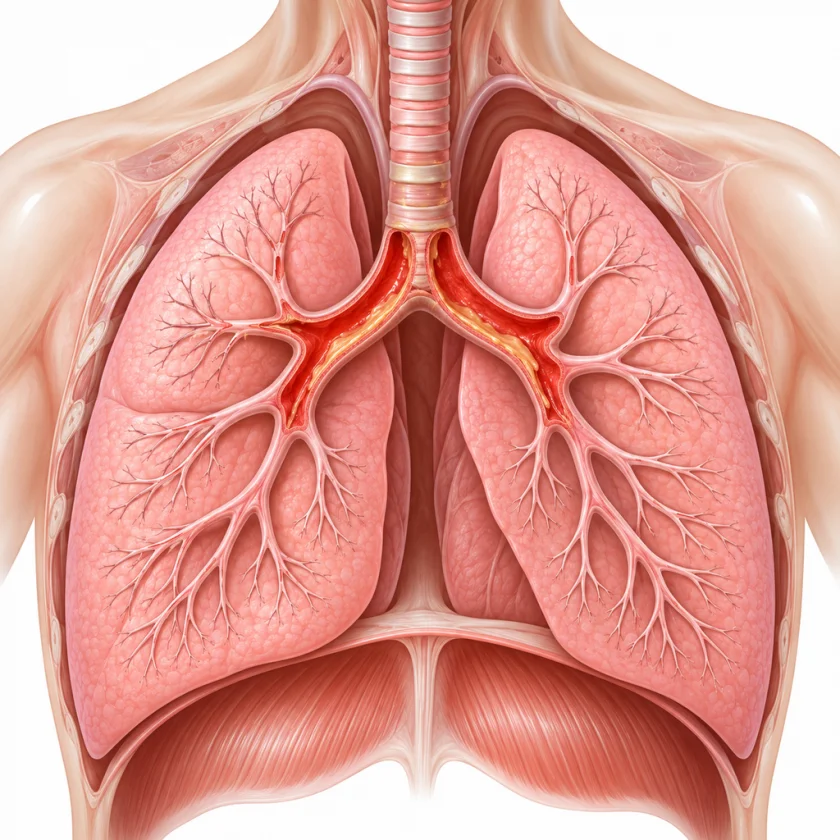
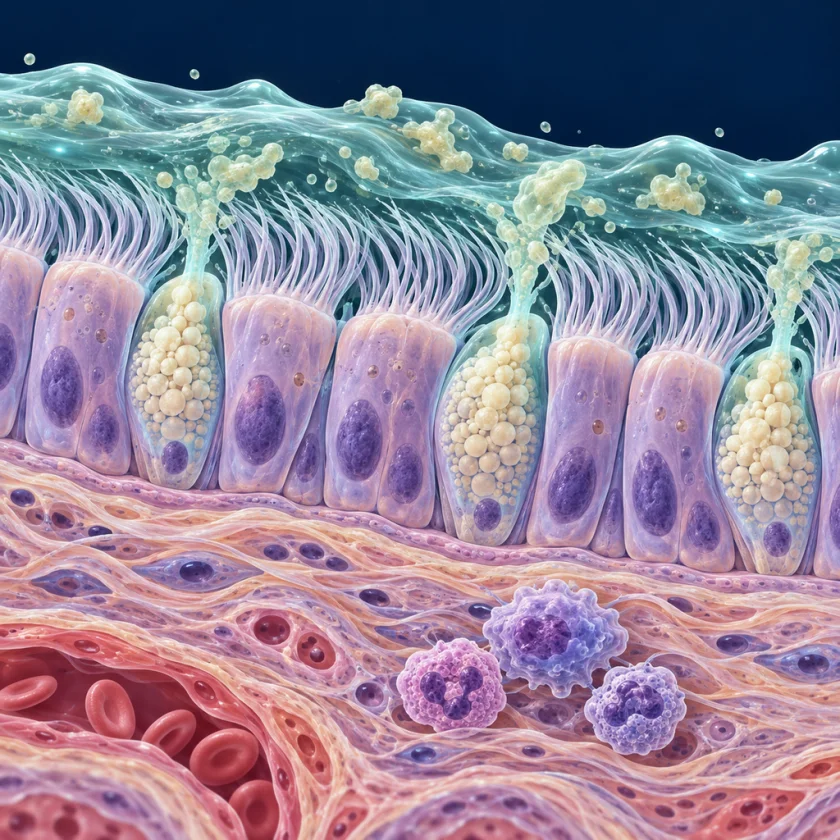
Acute bronchitis is an infection and inflammation of the larger airways in the chest. Its main symptom is cough, often with sputum (phlegm), and sometimes chest pain on coughing, wheezing sounds a doctor can hear with a stethoscope, and breathlessness. As the trial papers themselves note, it is predominantly caused by viruses, yet antibiotics are still often prescribed for it.
That last point shaped the whole research programme. Most pelargonium bronchitis trials enrolled patients "outside the strict indication for antibiotics" — people whose illness was not expected to need an antibiotic — and framed the extract as a possible alternative symptomatic treatment. The European Medicines Agency's assessment report describes acute bronchitis as a self-limiting disease, meaning it usually resolves on its own, which matters a great deal when judging how large a benefit has to be to count.
The Bronchitis Severity Score
Most of the trials used the Bronchitis Severity Score (BSS) as their main outcome. As the European Medicines Agency (EMA) describes it, the score adds up five symptoms — coughing, sputum production, rales or rhonchi heard through a stethoscope, chest pain while coughing, and breathlessness — each rated from 0 (not present) to 4 (very severe), for a maximum of 20 points. The usual primary outcome was the fall in the total score from the first visit to day 7.
The score had a regulatory history of its own. In the first EU assessment (2012) the trials were not evaluated as evidence of efficacy because the BSS had not been validated. After a retrospective validation was submitted, the European Medicines Agency's herbal committee accepted the BSS as a valid instrument in June 2013, while stating that this did not mean automatic acceptance of every study that used it. The children's trials used a shorter version that scores only coughing, chest sounds heard through a stethoscope (rales) and breathlessness, for a maximum of 12 points; the 2024 assessment report states that this short score “has been validated and the validation has been published (Lehrl et al., 2018)”.
A practical point for readers: because every patient's score falls over a week as the illness runs its course, both groups in every trial improved. What the trials measure is the extra fall on the extract compared with placebo.
The Adult Placebo-Controlled Trials
Three placebo-controlled trials tested the liquid extract (30 drops three times a day for seven days) in adults; the 2003 and 2005 trials required symptoms to have started no more than 48 hours earlier.
The 468-patient trial (published 2003)
Run by 36 primary care physicians, this trial randomised 468 adults with a BSS of at least 5 points. The score fell by 5.9 points on the extract (233 patients) and 3.2 points on placebo (235 patients). Inability to work fell to 16 per cent versus 43 per cent, illness duration was shorter, and onset of effect within four days was recognised in 53.6 versus 36.2 per cent. Adverse events occurred in 20 of 233 patients on the extract and 16 of 235 on placebo, all non-serious.
The 124-patient trial (published 2005)
In six outpatient clinics, the score fell by 7.2 points on the extract (64 patients) and 4.9 on placebo (60 patients). Onset of effect within four days was recognised in 68.8 versus 33.3 per cent. Adverse events occurred in 15 of 64 and 10 of 60 patients, all non-serious.
The 217-patient trial (published 2007, re-analysed 2008)
Adults aged 18 to 66 received the extract (108) or placebo (109). The score fell by 7.6 versus 5.3 points, with improvements in each component symptom. A second paper in 2008 presented further analyses of the same trial, reporting that patients on the extract returned to work sooner and spent less time in bed. The two papers describe one trial, not two.
Across the three trials the difference between groups was 2.3 to 2.7 points on the 20-point scale.
The Tablet Dose-Finding Trial
A 406-patient trial compared three tablet doses with placebo: 10 mg, 20 mg or 30 mg three times a day (30, 60 or 90 mg a day) for seven days. The score fell by 2.7 points on placebo, and by 4.3, 6.1 and 6.3 points on the three doses — all statistically significant compared with placebo. Adverse events were mild to moderate and their frequency rose with dose; none were serious. The authors concluded that 20 mg three times a day gave the best balance of benefit and risk.
This trial matters for a reason beyond its own result. In both Cochrane reviews, the pooled analysis found the liquid preparation effective for most outcomes but not the tablets. The type of preparation was the main source of disagreement between trials, which is why the Cochrane team did not combine them into a single overall estimate. The European Medicines Agency's own review added that the tablet study did not evaluate age groups separately and did not adapt the dose to age.
Trials in Children and Adolescents
Two placebo-controlled trials enrolled children and adolescents aged 1 to 18 with acute bronchitis outside the strict indication for antibiotics. Both used the liquid extract at 10 drops three times a day (ages 1–6), 20 drops (over 6–12) or 30 drops (over 12–18) for seven days. Because children aged 1 to 6 cannot reliably report sputum or chest pain while coughing, the European Medicines Agency notes that both trials left those two items out, so their scores had a maximum of 12 points instead of 20; the figures below are on that 12-point short score.
- 200 children (published 2010): the score improved by 3.4 points on the extract versus 1.2 on placebo. Satisfaction with treatment was 77.6 versus 25.8 per cent, onset of effect was faster and bed rest shorter. Tolerability was similar and all adverse events non-serious.
- 220 children (published 2012): the score fell by 4.4 versus 2.9 points, with the largest improvements in coughing and in chest sounds. Tolerability was similar in both groups.
A 2018 analysis of seven studies that included 1,067 children under six reported superiority over placebo in two randomised bronchitis trials and similar symptom courses in uncontrolled observational studies.
A 2023 open-label trial gave 591 children aged 1 to 5 with acute bronchitis the extract as a syrup (403 children) or as a solution (188) for seven days, with no placebo group. Side effects were similarly low in both groups; the most frequent were infections (7.2% and 7.4%) and digestive complaints (2.7% and 3.2%). The trial was designed to study safety and tolerability.
The European Medicines Agency was critical of the children's trials: it judged them not properly planned because the different age groups should have been investigated separately. The Cochrane review rated the evidence in children as low quality.
What the Meta-Analyses Pooled
- Agbabiaka, Guo and Ernst (2008). Six randomised trials of the extract alone met the inclusion criteria, most of good methodological quality. One compared the extract with acetylcysteine, a conventional non-antibiotic treatment; five used placebo. Pooling the four placebo-controlled trials suggested the extract significantly reduced symptom scores by day 7. No serious adverse events were reported. The authors called the evidence "encouraging".
- Cochrane (2008, updated 2013). Three adult trials (746 patients) and three children's trials (819 children) showed effectiveness for most outcomes with the liquid but not the tablets. Evidence quality was rated low. The reviewers noted unvalidated outcome assessment, minor attrition problems and suspected publication bias, and concluded that the extract "may be effective" for symptoms of acute bronchitis in adults and children.
- Wagner and colleagues (2015). In a meta-analysis of herbal medicines for cough, 11 trials of pelargonium gave a risk ratio of 4.60 for cough improvement versus placebo, rated as moderate evidence.
- Anheyer and colleagues (2018). In children, six placebo-controlled trials gave a responder-rate risk ratio of 2.56, rated as moderate evidence of efficacy and safety.
- Kardos and colleagues (2022). Pooling 11 placebo-controlled trials (2,195 people) to look at cough itself: in adults with acute bronchitis, 88.7% on the extract versus 47.6% on placebo had their cough intensity at least halved by day 7, and 26.0% versus 6.3% no longer coughed.
- Matthys and colleagues (2023). Pooling four placebo-controlled adult trials (1,011 people): after a week, between 19 and 14% of people on the extract were still unable to work, against between 41 and 55% on placebo (risk ratio 0.35), and the extract group had on average 1.73 fewer sick days.
The 2026 Swiss Pragmatic Trial
PHYTOBRONCH was designed to answer a different question: does the extract help in ordinary care, compared with what doctors normally do? It enrolled adults seeing a general practitioner for the first time with a new episode of acute bronchitis and a cough of up to eight days, in 36 primary care practices and five walk-in clinics in Switzerland. 155 were randomised to the extract and 177 to usual care, with no placebo and no blinding.
Results:
- Time to a 50 per cent reduction in symptoms: no significant difference between groups.
- Antibiotic use: 17.4 per cent with the extract versus 25.2 per cent with usual care — a 31 per cent relative reduction that was not statistically significant.
- Adverse events: more frequent with the extract (32.3 versus 21.5 per cent), all mild and of types previously described.
The authors concluded that the extract did not significantly reduce symptom duration or antibiotic use, and that the lower antibiotic use deserves study in larger trials. An open-label design differs from the double-blind placebo trials, so the results are not directly comparable.
Head-to-Head Comparisons
Two Korean trials used pelargonium extract as an active comparator rather than testing it against placebo:
- In a 220-patient trial (2024), a syrup combining ivy leaf extract with coptis rhizome was compared with pelargonium tablets for seven days. Symptom scores fell by similar amounts (−4.10 versus −4.24 points), and the ivy-coptis syrup was judged non-inferior. Overall improvement rates were 91.7 and 89.7 per cent.
- In a 204-patient trial (2022), a fixed-dose combination syrup containing pelargonium was compared with each of its components alone. At day 4 the combination lowered the score more than pelargonium alone (−3.56 versus −2.64 points).
Neither trial had a placebo arm, so neither shows how pelargonium compares with no active treatment. The older acetylcysteine comparison included in the 2008 meta-analysis is described there as reporting findings in the extract's favour.
Why the European Medicines Agency Did Not Accept the Trials as Proof
In the EU, a herbal medicine can be authorised under "well-established use" if published studies demonstrate efficacy, or registered under "traditional use" on the basis of long use. The European Medicines Agency's herbal committee reviewed the adult and child bronchitis trials for well-established use and declined. Its 2024 assessment report gives the reasons:
- None of the trial authors stated in advance what difference in the BSS would be clinically relevant.
- For a self-limiting illness the committee considered that a strong effect is needed: “one grade of better improvement” in the treatment group than in the placebo group, which it set at a difference of at least 4 points between groups in adults (3 points in children on the 12-point short score). None of the studies reached that.
- The children's trials did not analyse age groups separately; the tablet trial did not adapt the dose to age.
- In the older comparison with acetylcysteine in children, the two groups differed in their proportion of boys and girls and in how severe their cough and sputum were, and the dosing was not in line with the product information.
- The studies were performed mainly outside the EU.
The committee did accept that the liquid extract had been on the market for more than 30 years, which met the traditional-use requirement. Because bronchitis needs medical diagnosis, the indication it accepted was narrower: "symptomatic treatment of common cold".
Where the Trials Came From
The European Medicines Agency states that the studies discussed in the meta-analyses "were performed by all the same investigators (the manufacturer) and in the same region (Ukraine and Russia)". That does not by itself mean the results are wrong, but it does mean independent confirmation is thin, and the Cochrane team's funnel-plot analysis raised a suspicion that some unfavourable results may be unpublished.
The Cochrane reviewers listed other limitations as well: outcome assessment with an unvalidated instrument at the time of their review, and minor problems with patients dropping out.
Where the Bronchitis Evidence Stands
- Consistent direction: the double-blind placebo-controlled trials, almost all from one programme, report a modest extra fall in symptom scores over seven days, roughly 1.5 to 3.6 points (on a 20-point scale in adults, a 12-point short version in children; the 1.5-point low end is a children's figure).
- Low-quality evidence: the Cochrane review grades the bronchitis evidence as low quality; tablets did not show benefit in its pooled analysis.
- Regulatory view: not accepted by the European Medicines Agency as proof of efficacy; registered only for traditional use in common-cold symptoms.
- Pragmatic test: one open-label trial in Swiss family practice found no significant effect on symptom duration or antibiotic use.
For people living with a cough, the practical facts are that acute bronchitis is usually self-limiting, and that questions about a cough that is severe, persistent or accompanied by breathlessness, chest pain or high fever are for a clinician.
Key Research Papers
- Matthys H, Eisebitt R, Seith B, et al. Efficacy and safety of an extract of Pelargonium sidoides (EPs 7630) in adults with acute bronchitis. A randomised, double-blind, placebo-controlled trial. Phytomedicine : international journal of phytotherapy and phytopharmacology. 2003;10 Suppl 4:7-17. PubMed PMID: 12807337
- Chuchalin AG, Berman B, Lehmacher W. Treatment of acute bronchitis in adults with a pelargonium sidoides preparation (EPs 7630): a randomized, double-blind, placebo-controlled trial. Explore (New York, N.Y.). 2005;1(6):437-45. PubMed PMID: 16781588
- Matthys H, Heger M. Treatment of acute bronchitis with a liquid herbal drug preparation from Pelargonium sidoides (EPs 7630): a randomised, double-blind, placebo-controlled, multicentre study. Current medical research and opinion. 2007;23(2):323-31. PubMed PMID: 17288687
- Matthys H, Funk P. EPs 7630 improves acute bronchitic symptoms and shortens time to remission. Results of a randomised, double-blind, placebo-controlled, multicentre trial. Planta medica. 2008;74(6):686-92. PubMed PMID: 18449849
- Matthys H, Lizogub VG, Malek FA, et al. Efficacy and tolerability of EPs 7630 tablets in patients with acute bronchitis: a randomised, double-blind, placebo-controlled dose-finding study with a herbal drug preparation from Pelargonium sidoides. Current medical research and opinion. 2010;26(6):1413-22. PubMed PMID: 20387996
- Kamin W, Maydannik V, Malek FA, et al. Efficacy and tolerability of EPs 7630 in children and adolescents with acute bronchitis - a randomized, double-blind, placebo-controlled multicenter trial with a herbal drug preparation from Pelargonium sidoides roots. International journal of clinical pharmacology and therapeutics. 2010;48(3):184-91. PubMed PMID: 20197012
- Kamin W, Ilyenko LI, Malek FA, et al. Treatment of acute bronchitis with EPs 7630: randomized, controlled trial in children and adolescents. Pediatrics international : official journal of the Japan Pediatric Society. 2012;54(2):219-26. PubMed PMID: 22360575
- Bourqui A, Corpataux O, Bonofiglio F, et al. Pelargonium sidoides extract (EPs® 7630) versus usual care for acute bronchitis in Swiss primary care (PHYTOBRONCH): a pragmatic, open-label, randomised controlled trial. NPJ primary care respiratory medicine. 2026;36(1):41. PubMed PMID: 42014704
- Han KI, Kim TH, Ra SW, et al. Efficacy and safety of mixture of ivy leaf extract and coptidis rhizome in the treatment of acute bronchitis: multicenter, randomized, double-blinded, active-controlled, parallel, therapeutic confirmatory clinical trial. Current medical research and opinion. 2024;40(7):1235-1243. PubMed PMID: 38889376
- Lee YS, Lim SY, Min KH, et al. The efficacy and safety of DW1601 in patients with acute bronchitis: a multi-center, randomized, double-blind, phase III clinical trial. The Korean journal of internal medicine. 2022;37(6):1195-1204. PubMed PMID: 36153858
- Agbabiaka TB, Guo R, Ernst E. Pelargonium sidoides for acute bronchitis: a systematic review and meta-analysis. Phytomedicine : international journal of phytotherapy and phytopharmacology. 2008;15(5):378-85. PubMed PMID: 18222667
- Timmer A, Günther J, Motschall E, et al. Pelargonium sidoides extract for treating acute respiratory tract infections. The Cochrane database of systematic reviews. 2013;2013(10):CD006323. PubMed PMID: 24146345
- Timmer A, Günther J, Rücker G, et al. Pelargonium sidoides extract for acute respiratory tract infections. The Cochrane database of systematic reviews. 2008;(3):CD006323. PubMed PMID: 18646148
- Wagner L, Cramer H, Klose P, et al. Herbal Medicine for Cough: a Systematic Review and Meta-Analysis. Forschende Komplementarmedizin (2006). 2015;22(6):359-68. PubMed PMID: 26840418
- Anheyer D, Cramer H, Lauche R, et al. Herbal Medicine in Children With Respiratory Tract Infection: Systematic Review and Meta-Analysis. Academic pediatrics. 2018;18(1):8-19. PubMed PMID: 28610802
- Kamin W, Funk P, Seifert G, et al. EPs 7630 is effective and safe in children under 6 years with acute respiratory tract infections: clinical studies revisited. Current medical research and opinion. 2018;34(3):475-485. PubMed PMID: 29119837
- Kamin W, Behre U, Helm K, et al. Safety of Pelargonium extract EPs 7630 in young children with acute bronchitis. Frontiers in pediatrics. 2023;11:1107984. PubMed PMID: 36865690
- Kardos P, Lehmacher W, Zimmermann A, et al. Effects of Pelargonium sidoides extract EPs 7630 on acute cough and quality of life - a meta-analysis of randomized, placebo-controlled trials. Multidisciplinary respiratory medicine. 2022;17:868. PubMed PMID: 36051888
- Matthys H, Funk P, Zimmermann A, et al. Effects of EPs 7630 on the duration of inability to work in acute bronchitis - a meta-analysis. Multidisciplinary respiratory medicine. 2023;18(1):914. PubMed PMID: 37476531
PubMed Topic Searches
- PubMed: EPs 7630 and acute bronchitis
- PubMed: Bronchitis Severity Score validation
- PubMed: Pelargonium sidoides in children with bronchitis
Regulatory Source
- European Medicines Agency, Committee on Herbal Medicinal Products. Assessment report on Pelargonium sidoides DC; Pelargonium reniforme Curt., radix. Revision 2. EMA/HMPC/765656/2022, 2024. EMA assessment report (PDF)
Connections
- All Herbs
- Pelargonium (Pelargonium sidoides) — the main topic page
- Pelargonium Benefits Deep Dive — the hub for all four articles
- Sinusitis, Sore Throat and Colds — the evidence beyond bronchitis
- Liver Injury Reports and Safety — side effects and liver reports
- Umckaloabo History and Wild Harvest — where the extract came from
- Respiratory and Lung Herbs — the category hub
- Bronchitis — the condition itself
- Chronic Cough — when a cough does not go away
- Thyme: Respiratory Health and Cough — another herb in the cough meta-analysis
- Elecampane: Cough, Bronchitis and Expectorant Use — a traditional bronchitis root
- Mullein: Cough, Bronchitis and Congestion — a traditional cough herb
- N-Acetylcysteine — the conventional comparator in one early trial
- Antibiotic Resistance — why avoiding unnecessary antibiotics matters