Shallot (Allium ascalonicum)
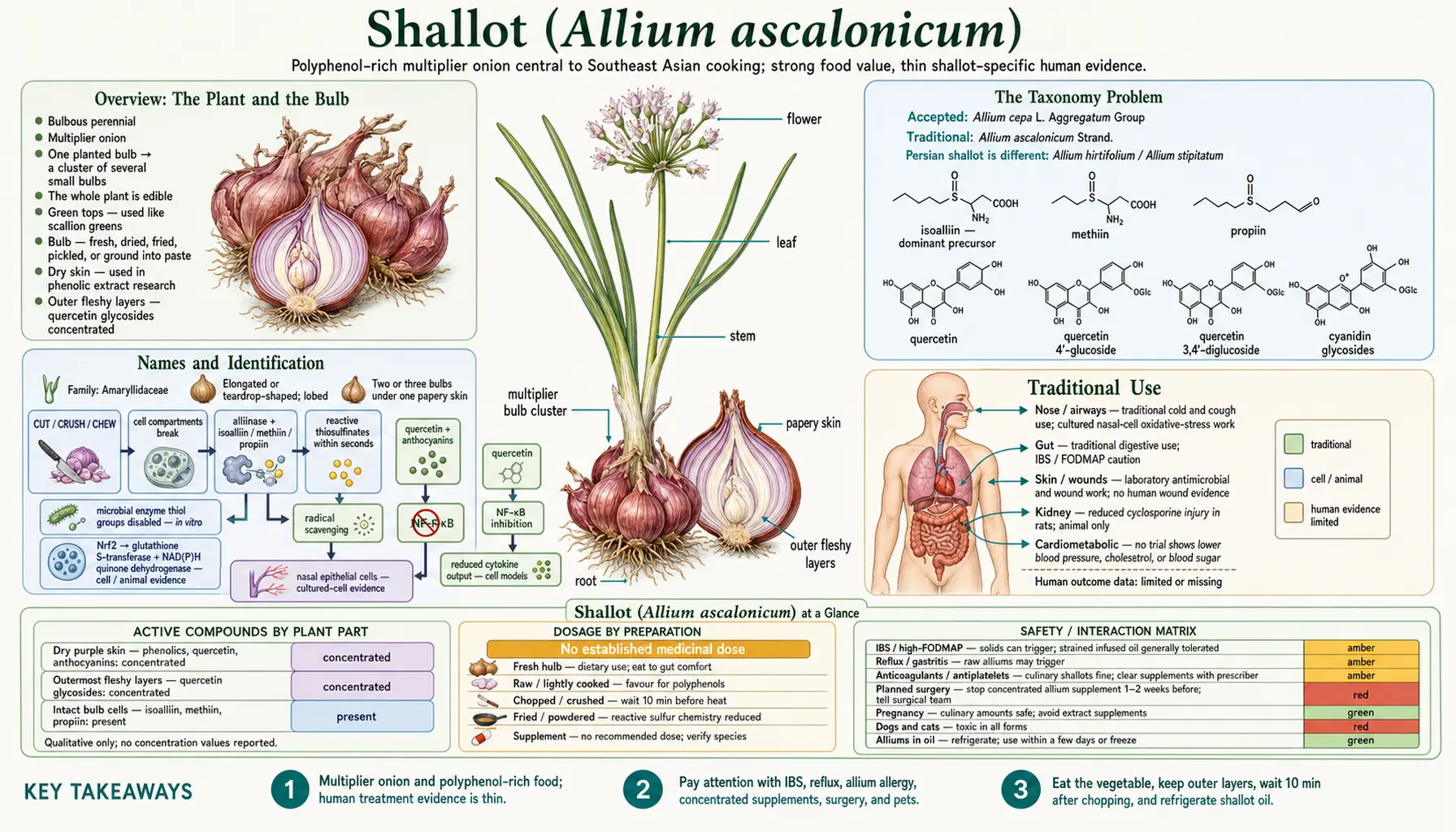
The shallot is the small, clustered, purple-skinned allium that sits at the base of almost every Southeast Asian curry paste and sambal, and that becomes the crisp fried shallots scattered over noodles, rice porridge and salads from Hanoi to Jakarta. In the West it is better known as the refined onion of French sauce-making. It is milder and sweeter than a common onion raw, and more complex when cooked.
Two caveats frame this page. First, the taxonomy: many botanical and food-science treatments class the shallot with the common onion — Allium cepa Aggregatum Group, also written A. cepa var. aggregatum — rather than as a separate species, though the older name Allium ascalonicum persists in the literature, in seed catalogues and on supplement labels. Second, the evidence: the health literature on alliums is overwhelmingly about garlic and common onion. Human data on the shallot itself are thin — one 16-patient randomised trial in allergic rhinitis and one 9-volunteer quercetin absorption study are the main examples. Garlic's clinical trials are not evidence about shallots, and this page keeps the two apart.
Table of Contents
- Overview: The Plant and the Bulb
- The Taxonomy Problem
- Names and Identification
- Traditional Use
- Active Compounds
- Polyphenols: Where Shallots Genuinely Differ From Onions
- Antimicrobial Activity
- Cardiovascular and Metabolic Evidence — and Its Limits
- Antioxidant and Anti-Inflammatory Effects
- Culinary Use
- Forms and Preparations
- Dosage
- Cautions and Contraindications
- Key Research Papers
- Connections
- Featured Videos
Overview: The Plant and the Bulb
The shallot is a bulbous perennial in the family Amaryllidaceae, subfamily Allioideae — the same family as onion, garlic, leek and chive. Its defining habit is that it is a multiplier onion: plant one bulb and instead of swelling into a single large onion, it divides underground into a cluster of several small bulbs, each sharing a papery outer skin. That is why shallots come in lobed clusters and why a single "shallot" often separates into two or three cloves the way garlic does.
Because they multiply vegetatively, shallots have traditionally been propagated by replanting bulbs rather than by seed. In practice this means many local shallot populations are clonal landraces — regional strains maintained by generations of farmers — which explains a great deal of the variation between "shallots" from different countries.
Two rather different products travel under the name. The Southeast Asian shallot is small, often no bigger than a large marble, with a deep red-purple skin, dense flesh and a sharp, concentrated flavour. It is grown at enormous scale in Indonesia, Vietnam, Thailand and the Philippines and is a daily staple — a genuine dietary foundation rather than a garnish. The European shallot is larger, more elongated, with a coppery-brown or greyish skin and a milder, sweeter character; the French grey shallot (échalote grise) is a separate, more strongly flavoured type prized in French kitchens.
The whole plant is edible. The green tops are used like scallion greens. The bulbs are used fresh, dried, fried, pickled and ground into pastes. In Southeast Asia the crop is harvested, cured in the sun until the skins rustle, and then plaited or bagged for storage; well-cured shallots keep for months, which is one reason they became a year-round backbone of the regional kitchen.
The Taxonomy Problem
Shallot nomenclature is genuinely unsettled; there is no single name every database agrees on.
The old name: Allium ascalonicum (the author is cited as Strand in some sources and as L. in others). It refers to Ascalon (modern Ashkelon, on the coast of the Levant), which classical and medieval writers believed was the plant's origin. The English word "shallot" descends from the same root — Latin ascalonia caepa, "onion of Ascalon," through Old French eschalotte. The etymology is charming and the geography is almost certainly wrong; the shallot's actual origins are in Central and Southwest Asia along with the rest of the cultivated onions.
The modern treatment: most contemporary botanical and horticultural sources treat the shallot as Allium cepa L., Aggregatum Group — a cultivar group of the ordinary onion, sometimes written Allium cepa var. aggregatum. On that view the shallot is not a separate species at all; it is an onion that multiplies instead of bulking up. The potato onion and the multiplier onion belong to the same group. A 2022 study of 34 shallot accessions describes shallots as "classified with the common onion under the name of the Allium cepa Aggregatum group" (Major 2022), and a 2008 human study names its shallots Allium cepa L. var. aggregatum (Wiczkowski 2008). Databases still disagree: the GBIF backbone taxonomy, for example, lists Allium ascalonicum L. as an accepted name.
Why the old name survives. Seed catalogues, agricultural extension documents, supplement labels and a large slice of the published research still say Allium ascalonicum; most of the shallot studies cited on this page use it. A literature search on one name alone misses much of the other. This page uses the traditional binomial in its title for that reason, while stating the modern classification.
Further complications:
- The French grey shallot is sometimes assigned to a different species, Allium oschaninii, rather than to the A. cepa Aggregatum Group. Its status is debated.
- Other "shallots" are hybrids. Major and colleagues, working on Croatian coastal landraces and publishing in Antioxidants in 2022, compared Allium × cornutum, Allium × proliferum and A. cepa Aggregatum Group — all sold locally as shallots — and found their phytochemical and nutritional composition to be both genetically and environmentally determined. In other words, "shallot" on a label does not fix the chemistry.
- "Persian shallot" is a different plant entirely. Iranian moosir — Allium hirtifolium, which the GBIF backbone taxonomy treats as a synonym of Allium stipitatum — is a wild allium harvested in the Zagros mountains, and it appears in several clinical trials published as trials of "shallot." It is not A. cepa Aggregatum Group, so a published "shallot" trial needs checking for which plant was actually used.
- In Australia and New Zealand, "shallot" has often been used colloquially for spring onions or scallions, which is why Australian recipes sometimes bewilder cooks elsewhere. The cluster-forming bulb is usually sold there as "eschalot" or "French shallot."
Names and Identification
Accepted name: Allium cepa L. Aggregatum Group. Traditional binomial: Allium ascalonicum Strand. Family: Amaryllidaceae.
- Vietnamese: hành tím (literally "purple onion"); fried shallots are hành phi
- Malay / Indonesian: bawang merah; fried shallots are bawang goreng
- Thai: hom daeng (หอมแดง), also hom lek
- Filipino: sibuyas na pula, lasona
- Khmer: ktem krahom
- Hindi: chhota pyaz
- French: échalote; the grey type is échalote grise
- Chinese: hong cong tou (红葬头)
A translation trap
Indonesian and Malay bawang merah translates literally as "red onion," and English recipe translations routinely render it that way. In an Indonesian, Malaysian or Singaporean recipe, bawang merah means shallot, not the large red salad onion. Substituting red onion in a rempah or sambal gives a wetter, sweeter, less concentrated paste. The parallel terms: bawang putih ("white onion") is garlic, and bawang bombay is the large common onion.
Telling shallots apart in the shop
A shallot has a papery skin like an onion but the bulb is elongated or teardrop-shaped rather than round, usually lobed, and cutting it lengthwise reveals two or three distinct bulbs sharing one skin. The flesh is denser and tighter-ringed than an onion's, often with a violet flush. Southeast Asian shallots are small and deep red-purple; European ones are bigger and browner. Pearl onions and small red onions are the usual imposters — both are single-bulbed with concentric rings all the way through.
Traditional Use
The shallot's traditional identity is overwhelmingly culinary. Its medicinal reputation is mostly inherited from the alliums as a class rather than earned separately, and it is usually described in the same breath as onion and garlic.
Southeast Asia. In Indonesian jamu and Malay traditional practice, shallot is a warming, digestive ingredient and appears in preparations for colds and fevers. A reported Indonesian home practice is to rub a mixture of grated shallot and coconut oil onto a feverish child's body — a comforting ritual with no evidence of any antipyretic effect. In Vietnamese folk practice, shallot appears in preparations for colds, coughs and digestive complaints, and in the New Year tradition of pickled shallots (dưa hành) eaten with rich Tết food, a use that is at least partly digestive in intent.
Thailand. Shallot is one of the standard components of Thai traditional medicine formulas for cold and respiratory symptoms, generally in combination rather than alone.
South Asia and the Middle East. Small onions and shallots are used in Ayurvedic and Unani preparations, again largely interchangeably with onion, for digestion, cough and topical application to boils and stings.
Europe. Shallots were grown in medieval European gardens and appear in herbals as a milder alternative to onion, with the same general reputation: digestive, warming, applied to bites and swellings.
All of this is history. None of it is evidence that the shallot treats anything.
Active Compounds
Organosulfur compounds
Like all alliums, shallots store their sulfur chemistry in an inactive form and detonate it on damage. Intact cells hold non-volatile cysteine sulfoxides in the cytoplasm and the enzyme alliinase in the vacuole, kept apart. Cutting, crushing or chewing breaks the compartments, alliinase meets its substrates, and reactive thiosulfinates form rapidly, along with the smell.
An accuracy point that matters. Garlic's dominant cysteine sulfoxide is alliin, which converts to allicin. Onion-type alliums — including shallots — are dominated instead by isoalliin (trans-S-1-propenyl-L-cysteine sulfoxide), along with methiin and propiin. Kubec and Dadáková, measuring these sulfur amino acids in 12 vegetables in 2008, found alliin only in garlic and isoalliin as the major cysteine sulfoxide in onion, leek, chive and shallot. Isoalliin yields propenyl-derived thiosulfinates and also feeds a second enzyme, lachrymatory factor synthase, described in onion by Imai and colleagues in 2002, which produces the volatile compound that makes eyes water. Because allicin forms from alliin, allicin content is not a meaningful measure for a shallot product.
Downstream of the thiosulfinates come further sulfides and polysulfides. The best-known of these — diallyl sulfides, ajoene and vinyldithiins — are breakdown products of allicin and are therefore characteristic of garlic, not of onion-type alliums such as shallot, whose sulfur compounds are mainly propyl- and propenyl-derived. All of them are unstable. Heat inactivates enzymes such as alliinase, so how a shallot is cut and cooked changes which sulfur compounds form; this has been studied far more in garlic than in shallot.
Flavonoids
- Quercetin — present mainly as glycosides, principally quercetin 4′-glucoside and quercetin 3,4′-diglucoside (Arpornchayanon 2022; Pobłocka-Olech 2016). Phenol-Explorer's single analysed sample of raw shallot lists 74.62 mg/100 g of quercetin 3,4′-diglucoside, 35.60 mg/100 g of quercetin 4′-glucoside and 2.00 mg/100 g of free quercetin (fresh weight, expressed as the glycosides). In a 2016 analysis, two shallot cultivars held 209 and 523 mg/kg of flavonols in the edible bulb, within the 123 to 1079 mg/kg range reported for the onion cultivars tested, and 5426 and 8916 mg/kg in the outer scales (Pobłocka-Olech 2016). The USDA Flavonoid Database (Release 3.3, 2018) has no shallot entry.
- Anthocyanins — in red onions the anthocyanins are mainly cyanidin glucosides (Slimestad 2007), and cyanidin was found in the anthocyanin fraction of a shallot-peel extract (Mobin 2022). No published figure for shallot anthocyanin content was found for this page. For comparison, the USDA Flavonoid Database lists 3.19 mg/100 g of cyanidin in raw red onions and 0.00 mg in raw sweet and raw white onions.
- Other phenolics — kaempferol and isorhamnetin derivatives, phenolic acids such as protocatechuic and ferulic acid (Ratseewo 2025), and a substantial load of phenolics in the papery skin, which is discarded in cooking but is where several published extract studies source their material.
Nutrients and fibre
Shallots supply modest amounts of vitamin C, vitamin B6, folate, potassium and manganese, and a meaningful quantity of fructans — inulin-type fibres that are not digested in the small intestine and are fermented by colonic bacteria. Those fructans are also, as the Cautions section explains, why shallots are a high-FODMAP food.
| Nutrient | Amount per 100 g |
|---|---|
| Energy | 72 kcal |
| Water | 79.8 g |
| Carbohydrate (by difference) | 16.8 g |
| Total sugars | 7.87 g |
| Dietary fibre | 3.2 g |
| Protein | 2.5 g |
| Fat | 0.1 g |
| Potassium | 334 mg |
| Iron | 1.2 mg |
| Manganese | 0.292 mg |
| Vitamin C | 8.0 mg |
| Vitamin B6 | 0.345 mg |
| Folate | 34 µg |
Polyphenols: Where Shallots Genuinely Differ From Onions
Claims that one food is "healthier" than another often rest on little evidence. This comparison rests on direct measurements, with the limits set out below.
The finding. Yang, Meyers, van der Heide and Liu, publishing in the Journal of Agricultural and Food Chemistry in 2004, compared shallots with 10 onion varieties sold in the United States. Shallots had the highest total phenolic content (114.7 mg/100 g), with a 6-fold difference from the lowest variety (Vidalia), and the highest total antioxidant activity in the study's chemical assay. Total flavonoid content was highest not in shallots but in the Western Yellow onion (69.2 mg/100 g). A 2022 Croatian study of 34 accessions likewise described A. cepa Aggregatum shallots as "abundant in phenolic compounds, especially quercetin and isorhamnetin glycosides" (Major 2022).
A note on test-tube antioxidant scores. "Antioxidant activity" in such studies is a test-tube assay, the same kind of measurement as ORAC (oxygen radical absorbance capacity). The USDA published an ORAC table for foods and withdrew it in 2012, stating that there is no evidence the beneficial effects of polyphenol-rich foods can be attributed to their antioxidant properties, that test-tube antioxidant values cannot be extrapolated to effects in people, and that ORAC values were routinely misused to promote foods and supplements. A test-tube antioxidant number is therefore not evidence of a health effect.
Where the flavonols sit. Flavonols are concentrated in the outer layers: in the 2016 analysis the outer scales of two shallot cultivars held 5426 and 8916 mg/kg of flavonols against 209 and 523 mg/kg in the edible bulb (Pobłocka-Olech 2016), and a review of onion flavonoids reports that the outer dry layers also contain oligomeric quercetin structures (Slimestad 2007). The papers cited here do not test why shallots score higher than sweet onions in total phenolics.
Bioavailability. Onion quercetin is comparatively well absorbed for a flavonoid. In a 1997 study in nine people, quercetin from apples and pure quercetin rutinoside (the major quercetin glycoside in tea) were each 30% as bioavailable as quercetin from onions, which carry glucose conjugates; the authors concluded that conjugation with glucose enhances absorption from the small gut (Hollman 1997). In a 2012 trial in healthy volunteers (eight women and eight men), onion powder gave faster absorption and higher plasma quercetin than apple-peel powder (Lee and Mitchell 2012). Mullen and colleagues fed lightly fried onions and recovered quercetin metabolites in urine equal to 4.7% of intake, as conjugated metabolites (Mullen 2006). Nemeth and Piskula's 2007 review notes that quercetin is extensively metabolised after ingestion, so effects seen with the pure compound in vitro cannot be directly extrapolated to the body.
Wiczkowski and colleagues, publishing in the Journal of Nutrition in 2008, worked specifically with shallots (which they identified as Allium cepa L. var. aggregatum). In a randomised crossover study, 9 volunteers ate either shallot flesh (99.2% of its quercetin as glucosides) or dry shallot skin (83.3% as quercetin aglycone), each providing 1.4 mg quercetin per kg of body weight. Peak plasma quercetin was 1.02 µmol/L after the flesh and 3.95 µmol/L after the skin, and the area under the plasma curve was 22.23 after the flesh against 47.23 after the skin. In this food matrix, the aglycone in the skin was more bioavailable than the glucosides in the flesh, and the authors point to the food matrix as a key factor.
What this does and does not mean. Shallots carried more total phenolics than any of the ten onion varieties in the 2004 comparison, and quercetin from shallot reaches the bloodstream. Neither finding shows that shallots prevent any disease. Observational nutrition research links higher polyphenol intake with cardiovascular outcomes, but that is a population-level association across whole dietary patterns, not a demonstrated effect of shallots.
Antimicrobial Activity
Mechanism. For garlic, antimicrobial action is usually attributed to thiosulfinates such as allicin, which are electrophilic and react with thiol groups on microbial enzymes. For shallot the picture is less clear: in one study the antimicrobial component of a shallot extract survived autoclaving at 121°C, and the authors took this as a sign that it differs from the antimicrobial compounds of onion and garlic (Amin and Kapadnis 2005).
Evidence: laboratory (in vitro) and animal studies only.
- Dankert and colleagues, 1979 (in vitro). In an agar diffusion test of crude juices against eight bacterial and two yeast species, garlic juice inhibited every organism, while onion and shallot juice showed no effect on the gram-negative bacteria.
- Amin and Kapadnis, 2005 (in vitro). Against 23 strains of fungi and bacteria, fresh garlic extract was more active than fresh onion or shallot extract, but dried and autoclaved shallot extracts were more active than the matching onion and garlic extracts. Fungi were more sensitive than bacteria; among bacteria, B. cereus was most sensitive (MIC 5 mg/mL).
- Saenthaweesuk and colleagues, 2015 (in vitro and rats). An ethanolic shallot extract inhibited the gram-positive bacteria Staphylococcus epidermidis and Bacillus subtilis (MIC 25–50 mg/mL). In a rat wound model, wound contraction at 14 days was 78.61% and 78.55% in the two extract groups, 100% with the standard treatment and 64.90% in untreated controls.
- Mobin and colleagues, 2022 (in vitro). All phenolic fractions of a peel extract, labelled Allium ascalonicum (onion) in the paper's title, showed antimicrobial activity against the strains tested — a reminder that a good deal of allium research is done on the part that is thrown away.
- Surasorn and colleagues, 2024 (chickens). In 120 broiler chicks over 42 days, 4 g of shallot powder per kg of feed improved weight gain and reduced intestinal coliform counts; in vitro, an ethanolic extract inhibited E. coli O157:H7 at 62.50 mg/mL.
What is missing. Human trials. No study was found that tested eating shallots as a treatment for an infection, or shallot preparations on human wounds. The concentrations active in these laboratory tests were milligrams of extract per millilitre, and the papers do not show that such levels are reached in the body.
Cardiovascular and Metabolic Evidence — and Its Limits
This is where the temptation to borrow is strongest, so this section says clearly what belongs to which plant.
What the allium literature actually contains. There is a large body of human research — including randomised trials and meta-analyses — on garlic and blood pressure, lipids and platelet function, with generally modest effects. There is a smaller but real human literature on common onion and on isolated quercetin supplementation, again with modest and inconsistent effects on blood pressure and lipid markers. Observational studies of overall allium consumption and cardiovascular or cancer risk exist and mostly point in a favourable direction, with all the usual confounding that dietary epidemiology carries.
What exists specifically for shallots. Very little in humans. Most shallot-specific work is animal or cell-based. Wongmekiat and colleagues gave rats cyclosporine (25 mg/kg) with or without shallot extract (1 g/kg) for 21 days and reported that the extract counteracted the drug's kidney injury and oxidative-stress markers — an animal result. Chuljerm and colleagues reported that an ethanolic shallot extract (1.25–5 µg/mL) reduced reactive oxygen species and lipid peroxidation in cultured human nasal epithelial cells exposed to polycyclic aromatic hydrocarbons — cell culture.
The one randomised trial of the shallot itself found for this page is not cardiometabolic. Arpornchayanon and colleagues randomised 16 adults with allergic rhinitis in Thailand to cetirizine 10 mg a day plus either placebo capsules or 3 g of oral shallot a day (described as equivalent to 1½ bulbs) for 4 weeks. Total nasal symptom scores fell in both groups with no difference between them (P = 0.18); ocular symptom scores improved significantly only in the shallot group (P = 0.01); adverse events did not differ from placebo. In the same paper's laboratory work, shallot extract at 200 µg/mL inhibited β-hexosaminidase release (a marker of degranulation) in RBL-2H3 cells by an average of 97%, against 73% for onion extract. With 16 patients split equally between two arms, the trial is small.
A species mix-up. A double-blind randomised trial published in 2025 gave 50 patients with metabolic syndrome either "Persian shallot" extract or placebo for three months and reported lower fasting blood glucose, total cholesterol, triglycerides, LDL and systolic and diastolic blood pressure, and higher HDL, in the extract group (Naimipoor 2025). A 2022 trial in adults with high blood lipids gave 500 mg of Allium hirtifolium bulb twice daily (25 patients) or placebo (24 patients) for 6 weeks and reported lower total and LDL cholesterol, with no change in other measures (Heshmat-Ghahdarijani 2022). These are genuine trials, but Persian shallot (moosir, Allium hirtifolium / A. stipitatum) is a different species from the culinary shallot, and its results do not transfer. This kind of species substitution is a common reason allium claims are unreliable.
Where the evidence stands. No trial was found showing that eating the culinary shallot (A. cepa Aggregatum Group) lowers blood pressure, cholesterol or blood sugar. Shallot products marketed on the strength of the garlic or Persian-shallot literature rest on evidence from other plants.
Antioxidant and Anti-Inflammatory Effects
Mechanism. Quercetin and the anthocyanins are radical scavengers in chemical assays. A 2025 review of allium vegetables states that mechanistic studies indicate allium-derived compounds modulate oxidative-stress and inflammatory pathways through NF-κB and Nrf2 signalling — Nrf2 being the switch for the cell's own antioxidant and detoxifying enzymes — while noting low bioavailability and limited clinical validation (Ahmed 2025). Nemeth and Piskula's review makes the related point that quercetin, once extensively metabolised, may still act by inducing antioxidative and detoxifying enzymes rather than by scavenging radicals directly.
Evidence level: cell culture and animal. The nasal epithelial cell work by Chuljerm and colleagues is a typical example — a protective effect against an environmental toxin, shown in cultured human cells. The rat kidney study by Wongmekiat and colleagues measured oxidative-stress markers in animals. No human outcome data were found.
Processing changes the chemistry. Ratseewo and colleagues, in Food Chemistry: X in 2025, compared freeze drying, sun drying and hot-air drying at 40, 60 and 80°C. Hot-air drying at 80°C gave the highest total phenolic and flavonoid contents, quercetin was highest after freeze drying, and eucalyptol was the predominant volatile in fresh shallot, best preserved by freeze drying. Frying was not part of that study, and no measurement of fried shallots (bawang goreng) was found for this page; chemically, a fried shallot is not the same food as a raw one.
Culinary Use
The shallot's main role, by a wide margin, is culinary.
Southeast Asia: the base of everything
Shallot is the first ingredient in the mortar across the region. Thai curry pastes (krueang gaeng) begin with shallot, garlic, galangal, lemongrass and chilli. Malay and Indonesian rempah — the pounded spice paste underlying rendang, gulai, laksa and countless sambals — is built on shallot. Indonesian sambal, in its hundreds of regional forms, is usually shallot, chilli and salt at minimum. Vietnamese cooking uses hành tím in marinades, braises, dipping sauces and pickles. Nyonya, Burmese, Cambodian and Filipino cooking all lean on it the same way.
The technique matters: the paste is fried slowly in oil until the raw sharpness cooks off and the mixture darkens and separates — tumis in Indonesian. This is where the flavour actually gets built, and it takes longer than most Western recipes suggest.
Fried shallots
Crisp fried shallots — hành phi, bawang goreng, hom jiao — are one of the great garnishes of world cooking, scattered over pho, congee, nasi goreng, laksa, salads and steamed vegetables. The usual method is to slice them thinly and evenly, start them in cool oil, fry slowly over moderate heat and lift them out while still golden rather than brown, because they keep cooking after they leave the pan. The shallot-flavoured oil is kept as a seasoning in its own right, and the crisps soften quickly in humid air.
Elsewhere
French cooking uses shallot where onion would be too coarse: minced raw in vinaigrette, in mignonette for oysters, reduced in wine for beurre blanc and sauce bordelaise, and in butter compounds. Shallots are also excellent roasted whole until sweet and collapsing, pickled in vinegar, or confited slowly in oil or duck fat.
Practical notes
- Substitution. Cooks commonly treat one medium European shallot as standing in for about a quarter of a medium onion, though the flavour is not identical — shallots are sweeter and less aggressive raw. Southeast Asian paste recipes are written for the small Asian shallot; European shallots are wetter and milder, so more of them are needed for the same effect.
- Storage. Cured shallots are traditionally stored cool, dark, dry and with air circulation rather than in sealed bags; well-cured bulbs keep for months.
- Preparation. Cutting starts the enzyme reaction that makes the pungent sulfur compounds; slow cooking turns the flavour sweet rather than sharp.
Forms and Preparations
- Fresh bulbs. The primary form and the only one with real dietary relevance. Good-quality bulbs are firm and dry-skinned, without soft spots or green shoots.
- Fried shallots. Sold ready-made in Asian groceries; the oil used and the salt content vary between products.
- Dried and powdered shallot. Used in seasoning blends. Aroma-dominated; most of the reactive sulfur chemistry is gone.
- Pickled shallots. A traditional Vietnamese and Thai preparation that keeps them close to raw.
- Shallot oil. The by-product of frying; see the botulism note in Cautions.
- Shallot extract supplements. Sold under either Latin name, and "shallot" products may also be made from Persian shallot, a different species. There is no established dose and no standardisation, and the only human trial of the culinary shallot found for this page is the 16-patient allergic rhinitis study above.
Dosage
There is no established medicinal dose of shallot, because no condition has been shown to respond to shallot in humans. No dose-ranging study was found, and no standardised shallot extract has an accepted potency measure.
What the studies used:
- Dietary use. Shallots are a frequent ingredient in East and Southeast Asian cooking, including curry pastes and condiments (Iacovou 2015); they are eaten as a vegetable and seasoning, not dosed.
- The allergic rhinitis trial used 3 g of oral shallot a day, described as equivalent to 1½ bulbs, for 4 weeks alongside cetirizine (Arpornchayanon 2022).
- The absorption study gave a single portion of shallot flesh or dry skin supplying 1.4 mg quercetin per kg of body weight (Wiczkowski 2008).
- Where the polyphenols are. The outer scales hold far more flavonols than the inner bulb (Pobłocka-Olech 2016), and drying method changes which phenolics survive (Ratseewo 2025).
- Persian shallot trials used 500 mg of A. hirtifolium bulb twice daily for 6 weeks (Heshmat-Ghahdarijani 2022) — a different species.
- For people with IBS, the relevant "dose" question runs the other way — see Cautions.
Cautions and Contraindications
1. FODMAPs and IBS. Shallots are high in fructans and are classified as a high-FODMAP food. In a measurement of 60 vegetables, garlic, artichoke, shallots, leek bulb and onions had the highest fructan contents (range 1.2–17.4 g/100 g fresh weight for that group) (Muir 2007). Fructans are not digested in the small intestine, and the low-FODMAP diet used for irritable bowel syndrome restricts them; a review of the diet in East and Southeast Asia lists shallots among the major high-FODMAP ingredients of the region's cooking (Iacovou 2015). The same review notes that garlic-infused oils may be used once the garlic has been discarded; fructans are water-soluble carbohydrates, and no measurement of strained shallot oil was found for this page. Fried shallot crisps are the solids themselves.
2. Reflux. In a 1990 study, adding a slice of raw onion to a meal significantly increased reflux episodes, acid exposure and heartburn in 16 people with heartburn, but not in 16 people without it (Allen 1990). Shallot itself was not tested.
3. Allergy and contact dermatitis. Onion handling can cause contact dermatitis, rhinoconjunctivitis and asthma, while allergic reactions to eating onion are reported only sporadically; one case report describes anaphylaxis after eating cooked onion (Albanesi 2019). No shallot-specific allergy series was found.
4. Bleeding and surgery. A 2001 JAMA review of herbal medicines in the perioperative period lists bleeding as a direct effect of garlic, one of eight herbs it identified as a potential concern around surgery (Ang-Lee 2001). No shallot-specific bleeding data were found, so applying this to shallot is an extrapolation from garlic, not evidence; the review concerns herbal medications, not food.
5. Anticoagulants and antiplatelets. On the same extrapolation from garlic, the research raises a concern about concentrated allium supplements for people taking warfarin, a direct oral anticoagulant, clopidogrel or aspirin. No interaction studies of shallot were found. Decisions about supplements alongside these medicines belong with a clinician.
6. Botulism risk from alliums in oil. This one is not theoretical. Alliums held in oil at room temperature provide the anaerobic, low-acid conditions Clostridium botulinum grows in. A case-control study traced 36 previously unrecognised cases of type B botulism, among people who had eaten at one restaurant in Vancouver, to commercial chopped garlic in oil (St Louis 1988). The documented outbreaks involve garlic; no shallot-in-oil outbreak was found, but home-made shallot oil and shallot confit create the same conditions when held at room temperature.
7. Toxic to dogs and cats. A 2016 veterinary review describes Allium poisoning in dogs and cats as oxidative haemolysis, with methaemoglobinaemia and Heinz bodies in the red blood cells. It reports that cooking, drying and processing do not eliminate the toxic effect, and that eating 5 g/kg of onion in cats and 15–30 g/kg in dogs is enough to cause clinically important blood changes — so cats are affected at lower doses (Cortinovis and Caloni 2016). The review covers the genus Allium, to which shallot belongs; by its account, cooked, dried and processed forms — which would include fried shallots, shallot powder and leftovers seasoned with them — remain toxic.
8. Pregnancy and breastfeeding. Shallots are a traditional food worldwide. No safety studies of concentrated shallot extracts in pregnancy or breastfeeding were found.
9. Species substitution in supplements. As covered above, "shallot" products may be made from Persian shallot (Allium hirtifolium/stipitatum), a different species with a different chemistry and a different (small) evidence base. A. ascalonicum and A. cepa Aggregatum Group refer to the same plant; A. hirtifolium does not.
10. What the evidence does not show. No trial has shown the culinary shallot to treat high blood pressure, high cholesterol, diabetes, infection or cancer. The evidence describes a phenolic-rich vegetable used mainly for flavour; its case is a food case, not a medical one.
Key Research Papers
- Yang J, Meyers KJ, van der Heide J, Liu RH. Varietal differences in phenolic content and antioxidant and antiproliferative activities of onions. Journal of Agricultural and Food Chemistry. 2004;52(22):6787–6793. — PubMed PMID: 15506817
- Wiczkowski W, Romaszko J, Bucinski A, et al. Quercetin from shallots (Allium cepa L. var. aggregatum) is more bioavailable than its glucosides. The Journal of Nutrition. 2008;138(5):885–888. — PubMed PMID: 18424596
- Major N, Perković J, Palčić I, et al. The phytochemical and nutritional composition of shallot species (Allium × cornutum, Allium × proliferum and A. cepa Aggregatum) is genetically and environmentally dependent. Antioxidants. 2022;11(8):1547. — PubMed PMID: 36009266
- Nemeth K, Piskula MK. Food content, processing, absorption and metabolism of onion flavonoids. Critical Reviews in Food Science and Nutrition. 2007;47(4):397–409. — PubMed PMID: 17457724
- Mullen W, Edwards CA, Crozier A. Absorption, excretion and metabolite profiling of methyl-, glucuronyl-, glucosyl- and sulpho-conjugates of quercetin in human plasma and urine after ingestion of onions. British Journal of Nutrition. 2006;96(1):107–116. — PubMed PMID: 16869998
- Lee J, Mitchell AE. Pharmacokinetics of quercetin absorption from apples and onions in healthy humans. Journal of Agricultural and Food Chemistry. 2012;60(15):3874–3881. — PubMed PMID: 22439822
- Chuljerm H, Nualsriwoa T, Iadnut A, et al. Protective effects of shallot (Allium ascalonicum) extracts against PAH-induced oxidative stress in human nasal epithelial cells. International Journal of Molecular Sciences. 2026;27(13):5855. — PubMed PMID: 42450126
- Arpornchayanon W, Klinprung S, Chansakaow S, et al. Antiallergic activities of shallot (Allium ascalonicum L.) and its therapeutic effects in allergic rhinitis. Asian Pacific Journal of Allergy and Immunology. 2022;40(4):393–400. — PubMed PMID: 31421664
- Wongmekiat O, Leelarugrayub N, Thamprasert K. Beneficial effect of shallot (Allium ascalonicum L.) extract on cyclosporine nephrotoxicity in rats. Food and Chemical Toxicology. 2008;46(5):1844–1850. — PubMed PMID: 18308444
- Ratseewo J, Chumroenphat T, Li H, et al. Changes in chemical composition, volatile compound, and bioactive compounds retention in shallots (Allium ascalonicum L.) under different drying methods. Food Chemistry: X. 2025;27:102419. — PubMed PMID: 40231128
- Mobin L, Haq MA, Ali R, et al. Antibacterial and antioxidant potential of the phenolic extract and its fractions isolated from Allium ascalonicum (onion) peel. Natural Product Research. 2022;36(12):3163–3167. — PubMed PMID: 34304656
- Amin M, Kapadnis BP. Heat stable antimicrobial activity of Allium ascalonicum against bacteria and fungi. Indian Journal of Experimental Biology. 2005;43(8):751–754. — PubMed PMID: 16121720
- Dankert J, Tromp TF, de Vries H, et al. Antimicrobial activity of crude juices of Allium ascalonicum, Allium cepa and Allium sativum. Zentralblatt für Bakteriologie, Parasitenkunde, Infektionskrankheiten und Hygiene. 1979;245(1–2):229–239. — PubMed PMID: 44616
- Hollman PC, van Trijp JM, Buysman MN, et al. Relative bioavailability of the antioxidant flavonoid quercetin from various foods in man. FEBS Letters. 1997;418(1–2):152–156. — PubMed PMID: 9414116
- Slimestad R, Fossen T, Vågen IM. Onions: a source of unique dietary flavonoids. Journal of Agricultural and Food Chemistry. 2007;55(25):10067–10080. — PubMed PMID: 17997520
- Pobłocka-Olech L, Głód D, Żebrowska ME, et al. TLC determination of flavonoids from different cultivars of Allium cepa and Allium ascalonicum. Acta Pharmaceutica. 2016;66(4):543–554. — PubMed PMID: 27749248
- Kubec R, Dadáková E. Quantitative determination of S-alk(en)ylcysteine-S-oxides by micellar electrokinetic capillary chromatography. Journal of Chromatography A. 2008;1212(1–2):154–157. — PubMed PMID: 18952220
- Imai S, Tsuge N, Tomotake M, et al. Plant biochemistry: an onion enzyme that makes the eyes water. Nature. 2002;419(6908):685. — PubMed PMID: 12384686
- Saenthaweesuk S, Jitvaropas R, Somparn N, Thuppia A. An investigation of antimicrobial and wound healing potential of Allium ascalonicum Linn. Journal of the Medical Association of Thailand. 2015;98(Suppl 2):S22–S27. — PubMed PMID: 26211100
- Surasorn B, Sukon P, Sornplang P. Effects of shallot (Allium ascalonicum) powder supplementation on growth, intestinal morphology, immune stimulation, and intestinal bacteria in broiler chickens. Veterinary World. 2024;17(10):2338–2346. — PubMed PMID: 39619926
- Naimipoor N, Bagheri-Hosseinabadi Z, Reza Hajizadeh M, et al. Promising effects of Persian shallot extract on the serum markers and blood pressure of patients with metabolic syndrome: a double-blinded randomized controlled trial. Journal of Traditional Chinese Medicine. 2025;45(1):100–106. — PubMed PMID: 39957163
- Heshmat-Ghahdarijani K, Soltani R, Ghanadian M, Soleymani H. The effect of Allium hirtifolium bulb on serum lipid profile in adult patients with hyperlipidemia: a randomized double-blind placebo-controlled clinical trial. Complementary Therapies in Clinical Practice. 2022;49:101654. — PubMed PMID: 36274534
- Ahmed HGMD, Yang J, Zhu T, et al. Beyond seasoning nutrients bioactive ingredients and healthcare effects of Allium vegetables. Frontiers in Nutrition. 2025;12:1597788. — PubMed PMID: 41425624
- Muir JG, Shepherd SJ, Rosella O, et al. Fructan and free fructose content of common Australian vegetables and fruit. Journal of Agricultural and Food Chemistry. 2007;55(16):6619–6627. — PubMed PMID: 17625872
- Iacovou M, Tan V, Muir JG, Gibson PR. The low FODMAP diet and its application in East and Southeast Asia. Journal of Neurogastroenterology and Motility. 2015;21(4):459–470. — PubMed PMID: 26350937
- Allen ML, Mellow MH, Robinson MG, Orr WC. The effect of raw onions on acid reflux and reflux symptoms. American Journal of Gastroenterology. 1990;85(4):377–380. — PubMed PMID: 2327378
- Albanesi M, Pasculli C, Giliberti L, et al. Immunological characterization of onion (Allium cepa) allergy. Postepy Dermatologii i Alergologii. 2019;36(1):98–103. — PubMed PMID: 30858787
- Ang-Lee MK, Moss J, Yuan CS. Herbal medicines and perioperative care. JAMA. 2001;286(2):208–216. — PubMed PMID: 11448284
- St Louis ME, Peck SH, Bowering D, et al. Botulism from chopped garlic: delayed recognition of a major outbreak. Annals of Internal Medicine. 1988;108(3):363–368. — PubMed PMID: 3341673
- Cortinovis C, Caloni F. Household food items toxic to dogs and cats. Frontiers in Veterinary Science. 2016;3:26. — PubMed PMID: 27047944
- U.S. Department of Agriculture, Agricultural Research Service. FoodData Central: Shallots, raw (SR Legacy, NDB 11677), published April 2019. — USDA FoodData Central, FDC ID 170499
- Phenol-Explorer database. Shallot, raw: polyphenol content (food 380). — Phenol-Explorer: Shallot, raw
- Haytowitz DB, Wu X, Bhagwat S. USDA Database for the Flavonoid Content of Selected Foods, Release 3.3. U.S. Department of Agriculture, Agricultural Research Service; March 2018 (no shallot entry; onion entries cited). — USDA ARS Flavonoid Database 3.3 (PDF)
- U.S. Department of Agriculture, Agricultural Research Service. Oxygen Radical Absorbance Capacity (ORAC) of Selected Foods, Release 2 (2010) — withdrawal notice, last modified 16 May 2012. — USDA ARS (archived copy)
- GBIF Backbone Taxonomy. Allium ascalonicum L. (accepted name in the backbone); Allium hirtifolium Boiss. listed as a synonym of Allium stipitatum Regel. — GBIF: Allium ascalonicum
PubMed Topic Searches
- PubMed: Allium ascalonicum
- PubMed: Allium cepa Aggregatum Group (shallot)
- PubMed: Shallot quercetin bioavailability
- PubMed: Onion flavonoids and cardiovascular outcomes
- PubMed: Allium organosulfur and thiosulfinate chemistry
- PubMed: Allium hirtifolium (Persian shallot)
- PubMed: Fructans, FODMAPs and IBS
- PubMed: Allium toxicity in dogs and cats
- PubMed: Anthocyanins in red onion and shallot
- PubMed: Allium compounds and Nrf2 induction
Connections
- All Herbs
- Garlic — the allium with the largest clinical literature, and the source of most claims wrongly transferred to shallots.
- Onions — the species the shallot is now considered a variety of.
- Quercetin — the main flavonol in shallots, present mostly as glucosides.
- Conditions on this site that reference this page: Helicobacter Pylori · Atherosclerosis · Irritable Bowel Syndrome