Nutmeg — Benefits Deep Dive
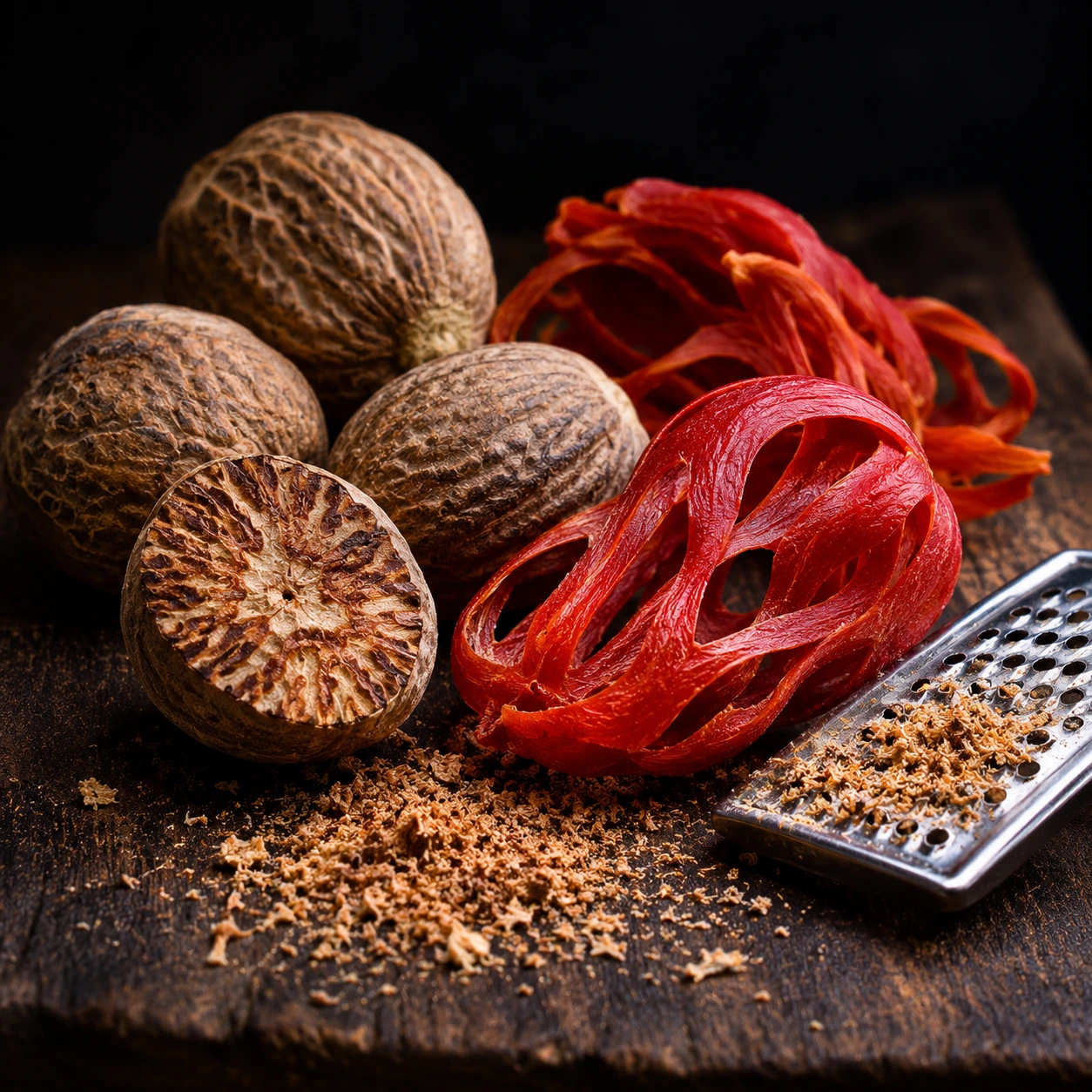
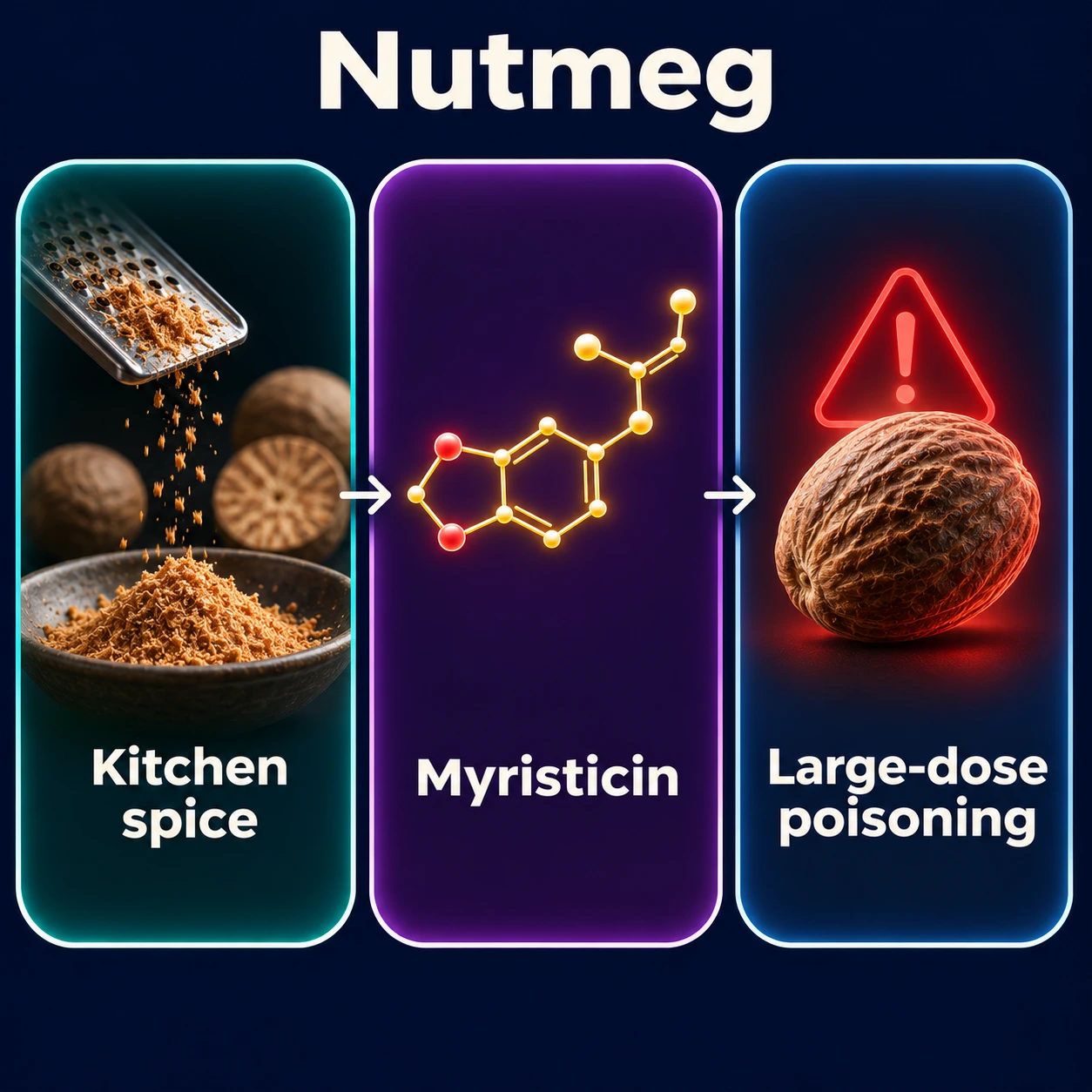
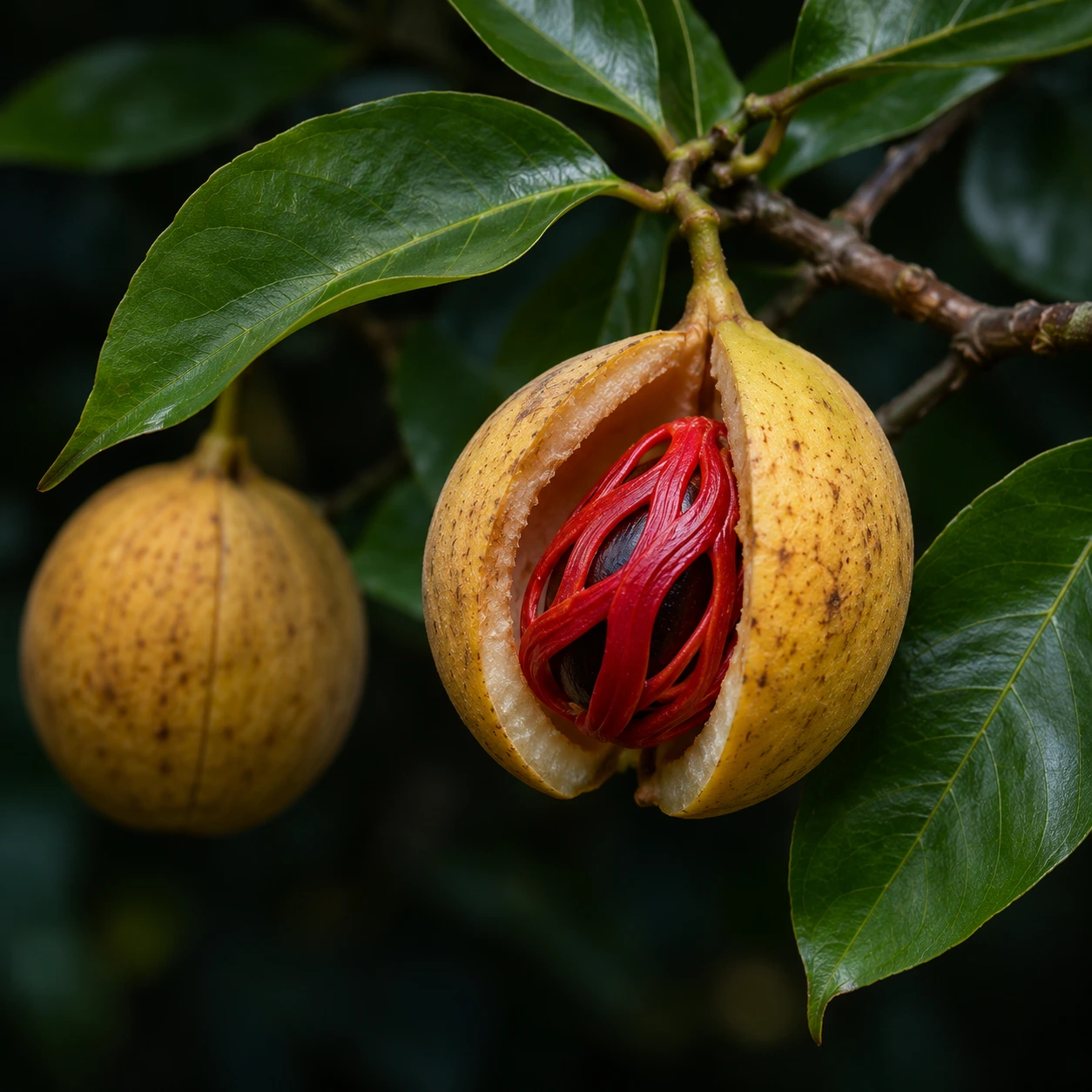
Nutmeg is the dried seed kernel of Myristica fragrans, and it occupies an unusual position among the spices this site covers. Almost every other kitchen aromatic — ginger, cinnamon, garlic, turmeric, peppermint — has at least a handful of randomised human trials behind its health claims, and essentially no meaningful acute toxicity at any dose a person could swallow. Nutmeg has the reverse profile. Its benefit literature is broad, energetic and almost entirely confined to cell cultures and rodents. Its harm literature is human, specific, and reported to poison-control centres every single year.
That asymmetry is the honest headline for this herb, and it shapes every page in this section. When you read that nutmeg is antibacterial, anti-inflammatory, hepatoprotective, sedative, analgesic and antidiabetic, every one of those statements traces back to a Petri dish or a mouse. When you read that nutmeg causes hallucinations, tachycardia, a sense of impending doom and two days of misery, that traces back to named patients in named emergency departments. Both bodies of evidence are real. They are not the same weight, and no honest page should present them as if they were.
The four deep dives below take nutmeg's three most persistent traditional claims — digestion, sleep, and pain — and examine each one down to the level of the actual studies, labelling the evidence tier for every claim as randomised clinical trial, preliminary (animal or in-vitro), or traditional use only. Spoiler: nothing in nutmeg's benefit column reaches the first tier. The fourth page is the safety and dose page, and it is deliberately the most rigorous of the set, because it is the only one of the four where the human data is genuinely strong.
The dose ceiling, stated once here and repeated on every page: ordinary culinary use — a pinch to a grate, roughly 0.1 to 0.5 g per dish — is safe and is what nutmeg is for. Traditional medicinal use has generally stayed under about 1 g a day for an adult. Reported poisoning begins in the region of 5 g of ground nutmeg in a single dose, which is one to two whole seeds or two to three heaped teaspoons, and severity climbs from there. See Nutmeg Safety, Dose and Myristicin Toxicity for the full picture, including the delayed onset that makes accidental escalation so common.
This section complements the main Nutmeg and Mace page rather than repeating it. That page covers botany, the one-fruit-two-spices distinction between nutmeg and mace, the Banda Islands history, culinary technique and the compound inventory. These pages go deeper on the three benefit claims and the toxicology.
Deep-Dive Articles
Nutmeg for Digestive Health and Gut Comfort
The oldest and most cross-cultural nutmeg claim: it settles the stomach and slows loose stools. Isolated-tissue and rodent work supports the mechanism; no controlled human trial has ever tested it. Covers the carminative story, the antidiarrhoeal data, mace versus seed, and why scaling the dose up is where the harm lies.
Read the deep dive →Nutmeg for Sleep and Relaxation
Warm milk with a scrape of nutmeg is genuine Ayurvedic practice with genuine popularity and zero trial data. This page separates the plausible low-dose sedation from the well-documented high-dose delirium, explains the biphasic problem, and is blunt about why nutmeg circulates online as a free high and why that ends badly.
Read the deep dive →Nutmeg for Pain and Inflammation
Nutmeg butter was a warming liniment long before anyone isolated macelignan. The cell-signalling data on NF-κB and inflammatory cytokines is real preclinical science; the leap to human joint pain has not been made. Covers topical versus oral use and why the oral route is chemically self-limiting.
Read the deep dive →Nutmeg Safety, Dose and Myristicin Toxicity
The most important page in this section. The dose threshold, the deceptive three-to-eight-hour onset, the full symptom picture, the 24-to-72-hour duration, the pregnancy contraindication, poison-centre case data, fatalities, what emergency treatment involves, and the safrole question for anyone considering daily supplementation.
Read the deep dive →Table of Contents
- Deep-Dive Articles
- The Evidence Map at a Glance
- Key Research: Human Toxicology and Case Reports
- Key Research: Phytochemistry and Analytical Methods
- Key Research: Digestive and Antimicrobial Activity
- Key Research: Anti-Inflammatory and Antioxidant Work
- Key Research: Neuropharmacology
- External Resources
- Connections
- Featured Videos
The Evidence Map at a Glance
Before the citation blocks, here is the whole field summarised in one list. Every entry is labelled with its highest available evidence tier, and the labels are not softened.
- Antidiarrhoeal and antispasmodic — preliminary (animal and isolated tissue) plus strong traditional use. Rodent models show reduced intestinal motility and reduced experimentally induced diarrhoea with nutmeg extracts. Ayurveda, traditional Chinese medicine and Unani all use nutmeg for chronic loose stools. No randomised human trial exists.
- Carminative, anti-bloating, appetite-stimulating — traditional use only, with a generic volatile-oil mechanism shared by most aromatic spices. Nothing nutmeg-specific has been trialled.
- Antibacterial, including against oral pathogens — preliminary (in vitro). Concentrated extracts inhibit organisms including Streptococcus mutans on a culture plate. There is no clinical caries or periodontal trial.
- Antioxidant — preliminary (chemical assay and cell culture). True in a test tube, as it is of most aromatic spices, and never translated into a measured human outcome.
- Anti-inflammatory — preliminary (cell culture and rodent). Macelignan and the malabaricone acylphenols dampen inflammatory signalling in cell models. No human inflammatory-disease trial.
- Analgesic — preliminary (rodent) plus traditional topical use. Nutmeg butter and nutmeg oil have a long liniment history. No controlled human pain trial.
- Sedative and sleep-promoting — traditional use only, with supportive rodent behavioural data. No human insomnia trial of any size.
- Anticonvulsant, antidepressant-like, memory-enhancing, hepatoprotective, lipid-lowering, antidiabetic — all preliminary (rodent), all at doses far above anything a person could safely eat. These appear frequently in review articles and they are hypotheses, not treatments.
- Acute neurotoxicity and anticholinergic-like poisoning — documented in humans, repeatedly. This is the one column where the evidence is human, consistent and clinically actionable. Deaths are very rarely reported: a 2001 German report described a death in which the sedative drug flunitrazepam was found in the blood alongside myristicin, attributed probably to the two together, and noted only one earlier fatal case in the literature. In the seven nutmeg poisonings recorded by a German poison information centre from 1996 to 1998, even 20–80 g of powder never caused a life-threatening situation.
The pattern in that list is not an accident of research funding: nutmeg is cheap, ubiquitous and unpatentable, so nobody has an incentive to run the trial — but it is also a spice with a narrow margin, which makes an oral dose-finding study genuinely difficult to design ethically. Both reasons are real, and neither converts preclinical data into a benefit you can rely on.
Key Research: Human Toxicology and Case Reports
Where a specific paper is named, the citation links to its PubMed record; where a body of literature is described, the link runs a PubMed topic search. Titles, journals and years are stated in the text.
- Ehrenpreis JE, DesLauriers C, Lank P, Armstrong PK, Leikin JB, Nutmeg poisonings: a retrospective review of 10 years experience from the Illinois Poison Center, 2001-2011, Journal of Medical Toxicology, 2014;10(2):148-51. Thirty-two exposures. Children are a large share: 17 (53.1%) were unintentional, and 10 of those 17 were children under 13, four of them with nutmeg in the eye. Fifteen (46.9%) were intentional; five of these (33.3%) involved other drugs as well, all in people aged 15 to 20, and one patient who had taken several drugs needed breathing support (a ventilator) in hospital. PubMed PMID: 24452991.
- Stein U, Greyer H, Hentschel H, Nutmeg (myristicin) poisoning — report on a fatal case and a series of cases recorded by a poison information centre, Forensic Science International, 2001;118(1):87-90. Reports the death of a 55-year-old woman in whose blood myristicin was found together with the sedative flunitrazepam; the authors judged the death probably due to the combined effect of both. It also reports seven non-fatal nutmeg poisonings recorded by the Erfurt Poison Information Centre from 1996 to 1998, none life-threatening even after 20–80 g of powder. PubMed PMID: 11343860.
- Demetriades AK, Wallman PD, McGuiness A, Gavalas MC, Low cost, high risk: accidental nutmeg intoxication, Emergency Medicine Journal, 2005;22(3):223-5. Argues that nutmeg should be on the differential for a recreational drug user presenting with acute psychosis and partly anticholinergic signs. PubMed PMID: 15735280.
- Marshall RD, Bailey J, Lin A, Sheridan DC, Hendrickson RG, Hughes A, Horowitz BZ, Impact of social media “challenges” on poison center case volume for intentional ingestions among school-aged children: an observational study, Clinical Toxicology, 2024;62(3):183-189. Using United States poison-centre data, the authors found that ingestions by school-aged children of four substances — diphenhydramine, laundry pods, nutmeg and cinnamon — rose around the times when online “challenges” for each substance peaked in Google searches. Of all 2,169 children in the analysis, 45 percent had a moderate and 6.35 percent a major health effect. The authors note that the study cannot show cause and effect. PubMed PMID: 38587109.
- The wider case-report literature, which is where most of what clinicians know about nutmeg comes from. Nutmeg intoxication case reports and nutmeg poisoning in the emergency department.
- Reports specific to pregnancy exposure and to paediatric exposure. Nutmeg in pregnancy; paediatric nutmeg ingestion.
Key Research: Phytochemistry and Analytical Methods
- Usui K, Kubota E, Kobayashi H, Fujita Y, Hatanaka K, Kamijo Y, Funayama M, Mimasaka S, Detection of major psychoactive compounds (safrole, myristicin, and elemicin) of nutmeg in human serum by gas chromatography–tandem mass spectrometry, with application in a nutmeg poisoning case, Journal of Pharmaceutical and Biomedical Analysis, 2023;234:115565. In one 75 g poisoning case — a man who swallowed 75 g of nutmeg powder in a suicide attempt — serum safrole, myristicin and elemicin were measured at admission (about 8 hours after ingestion) and again about 94 hours later, after fluid treatment. Shows that these compounds reach the human bloodstream after ingestion, and provides a forensic method. PubMed PMID: 37453146.
- Othman MA, Sivasothy Y, Acylphenols and dimeric acylphenols from the genus Myristica: a review of their phytochemistry and pharmacology, Plants (Basel), 2023;12(8). The reference catalogue for the malabaricones, and candid that the pharmacology is preclinical. PubMed PMID: 37111813.
- Luo J, Yang X, Bai M, Xie J, He Y, Gan Z, Huang H, Xu T, Zhang Y, Myristica fragrans: a comprehensive review of its botanical characterization, traditional uses, phytochemistry, and pharmacological properties, Journal of Ethnopharmacology, 2026;358:120916. The best single entry point to the whole literature. PubMed PMID: 41275940.
- Essential-oil composition studies, which is how the sabinene-dominant terpene profile and the few-percent myristicin content are established, and how seed oil is distinguished from mace oil. Nutmeg essential-oil composition; mace (aril) oil composition.
- The safrole toxicology literature, which is not nutmeg-specific but governs any suggestion of daily nutmeg supplementation. Safrole hepatocarcinogenicity and metabolism.
Key Research: Digestive and Antimicrobial Activity
- Shafiei Z, Shuhairi NN, Md Fazly Shah Yap N, Harry Sibungkil CA, Latip J, Antibacterial activity of Myristica fragrans against oral pathogens, Evidence-Based Complementary and Alternative Medicine, 2012;2012:825362. In-vitro inhibition of oral organisms including Streptococcus mutans. PubMed PMID: 23049613.
- The rodent and isolated-tissue antidiarrhoeal literature, which is the mechanistic basis for the oldest traditional claim. Nutmeg, intestinal motility and diarrhoea.
- Macelignan antimicrobial work, the lignan most often credited with nutmeg's activity against oral and skin organisms. Macelignan antibacterial activity.
- Activity against Helicobacter pylori and other gastric organisms, a live in-vitro question with no clinical eradication data. Nutmeg and Helicobacter pylori.
- Gastroprotective and anti-ulcer rodent models. Nutmeg gastroprotection in rodents.
Key Research: Anti-Inflammatory and Antioxidant Work
- Cell-model work on inflammatory signalling, chiefly NF-κB suppression and reduced TNF-α and interleukin-6 output. Nutmeg and inflammatory signalling.
- Macelignan as an anti-inflammatory and neuroprotective candidate. Macelignan anti-inflammatory research.
- The malabaricones, the acylphenol group concentrated in mace, as antioxidants. Malabaricones and antioxidant activity.
- Rodent analgesic and antinociceptive models of nutmeg and nutmeg oil. Nutmeg analgesic models.
- Rodent hepatoprotective and lipid work, which is where several popular internet claims originate. Nutmeg hepatoprotective and lipid studies.
Key Research: Neuropharmacology
- Myristicin metabolism and the long-standing hypothesis that it is converted to an amphetamine-like metabolite. Still unproven, and myristicin alone does not fully reproduce whole-nutmeg intoxication in animals. Myristicin metabolism.
- Myristicin's reported monoamine-oxidase-inhibiting activity in laboratory systems, which underlies the theoretical interaction with serotonergic drugs. Myristicin and MAO inhibition.
- Elemicin pharmacology and pharmacokinetics, the under-studied co-constituent that probably contributes as much as myristicin. Elemicin pharmacology.
- Rodent sedative, anxiolytic and anticonvulsant behavioural studies. Nutmeg sedative and anticonvulsant models.
- Rodent antidepressant-like and cognition studies, the source of the "nutmeg for memory" claim. Nutmeg behavioural and cognitive models.
External Resources
- PubMed — all Myristica fragrans literature. The whole field, unfiltered. Note how quickly you hit "in rats" and "in vitro."
- PubChem — myristicin. Structure, properties and cross-references for the compound at the centre of nutmeg's toxicity.
- PubChem — elemicin. Myristicin's close structural relative, present in similar or greater amounts.
- PubChem — safrole. The rodent hepatocarcinogen present in nutmeg in small quantities.
- Poison Help (United States). If a large amount of nutmeg has been swallowed, contact a poison centre without waiting for symptoms — onset is delayed by hours.
- LiverTox: Clinical and Research Information on Drug-Induced Liver Injury. The National Institute of Diabetes and Digestive and Kidney Diseases reference on liver injury caused by drugs, on NCBI Bookshelf.
Connections
- All Herbs
- Nutmeg and Mace (Myristica fragrans) — the main topic page: botany, the seed-versus-aril distinction, the Banda Islands history, culinary technique.
- Nutmeg Safety, Dose and Myristicin Toxicity — read this one first if you read only one.
- Nutmeg Oil — the steam-distilled essential oil, far more concentrated than the spice and with a correspondingly narrower margin.
- Clove — the other Maluku spice, another eugenol-rich aromatic with a real toxicity ceiling in concentrated form.
- Cinnamon — nutmeg's constant partner in baking blends, and a spice where human trial data actually exists.
- Cardamom — a carminative aromatic with a comparable traditional digestive role and a far wider safety margin.
- Ginger — Benefits — what a spice's benefits page looks like when randomised human trials do exist. Useful as a contrast.
- Peppermint — Benefits — enteric-coated peppermint oil for irritable bowel syndrome (IBS) is the best-evidenced aromatic-spice gut intervention.
Safety and disclaimer. Nutmeg is a food spice with a genuine toxic dose. Nothing in this section is medical advice, and nothing here recommends taking nutmeg as a medicine. Culinary amounts are safe for almost everyone. Large amounts are a different matter: symptoms begin three to eight hours after swallowing, in a 10-year poison-centre review 10 of the 17 accidental exposures were children under 13, and teenagers who mixed nutmeg with other drugs needed more treatment. The pregnancy concern is set out on the safety page, and myristicin's monoamine-oxidase-inhibiting activity in laboratory systems underlies a theoretical interaction with serotonergic drugs. If someone has swallowed a large quantity, contact a poison-control centre immediately rather than waiting for symptoms.