White Button Mushroom (Agaricus bisporus) — Benefits Deep Dive
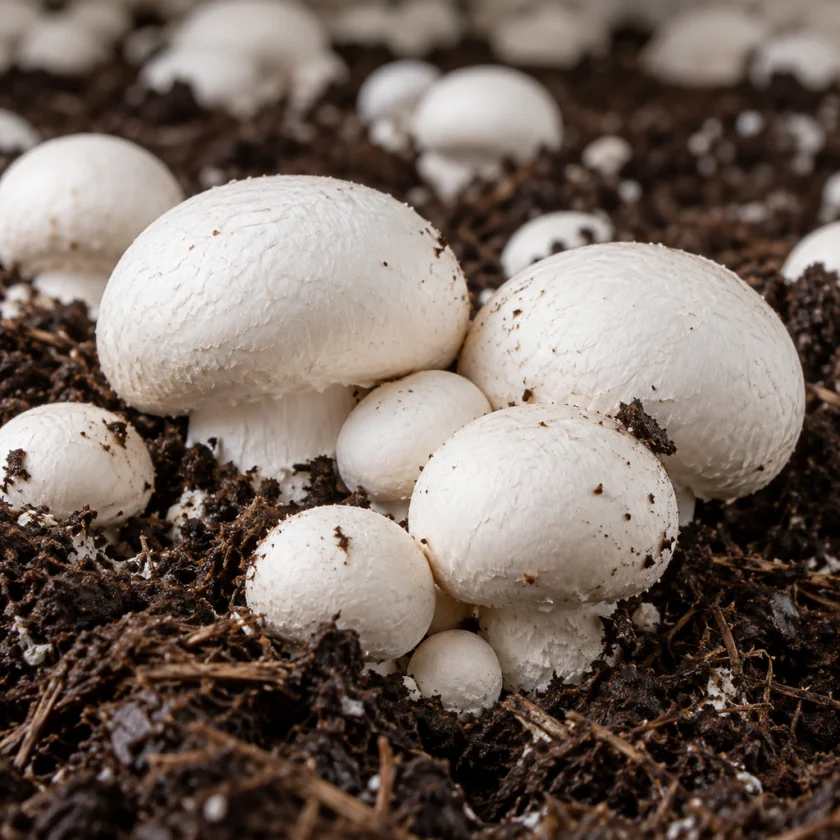
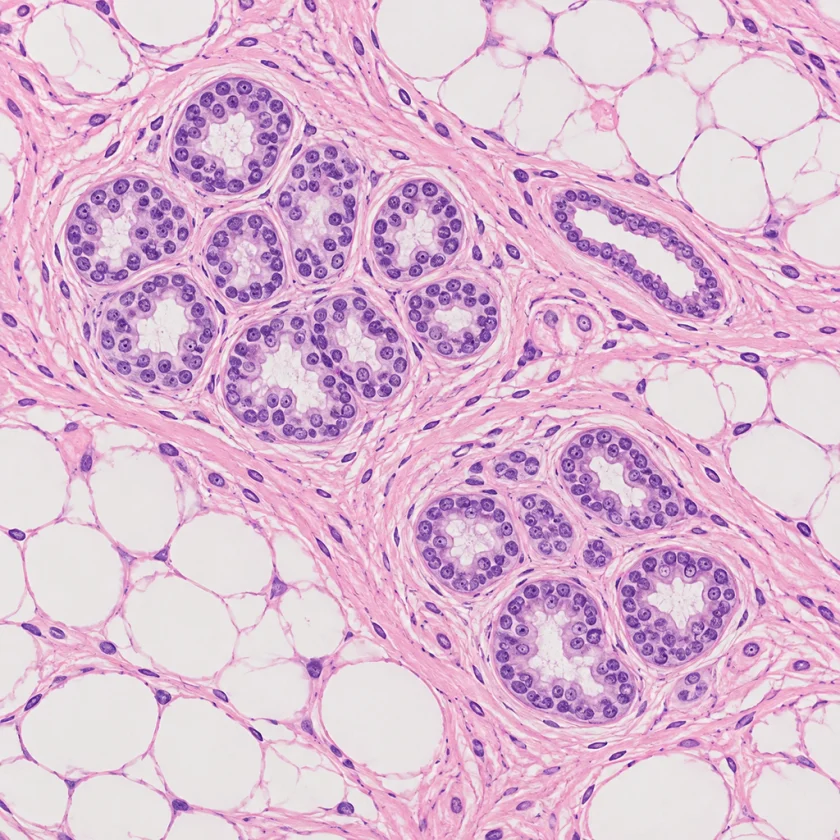
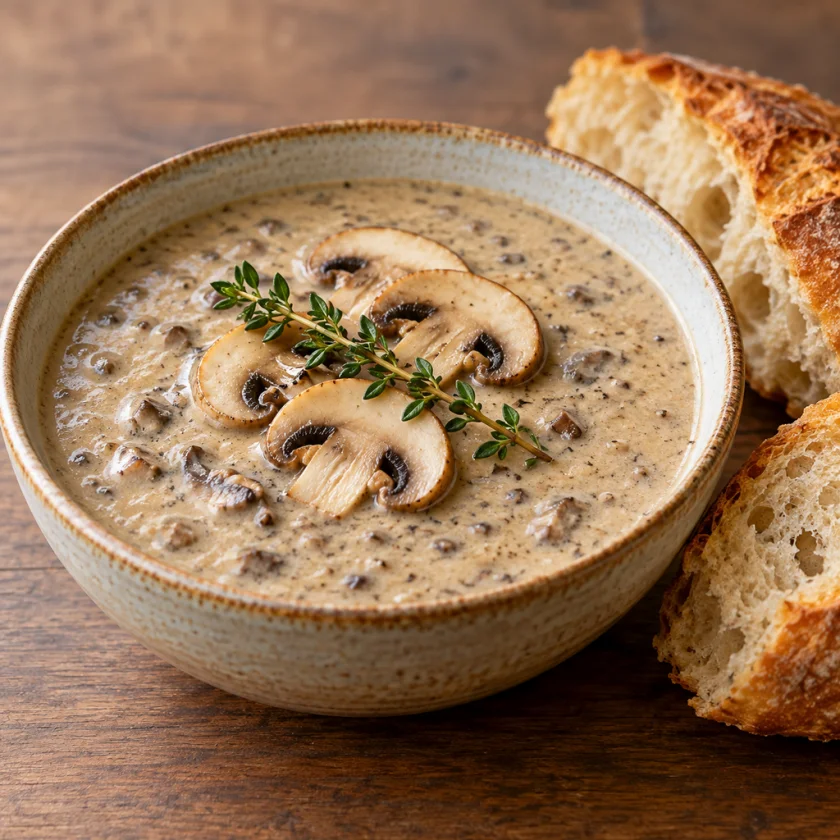
The white button is the most-eaten mushroom on Earth — the same species, Agaricus bisporus, that is sold brown and immature as cremini and fully mature as portobello. Because it is so familiar and inexpensive, it is easy to dismiss as nutritionally trivial next to reishi, lion's mane, or shiitake. That would be a mistake. This ordinary mushroom sits at the center of two genuinely interesting bodies of research: it is one of the only dietary items that manufactures real vitamin D when exposed to ultraviolet light, and in a 2001 laboratory screen of vegetable extracts, white button mushroom extract suppressed aromatase activity in a dose-dependent way — the same enzyme target that several breast-cancer drugs act on. It is also a leading dietary source of the unusual antioxidant amino acid ergothioneine. The four deep-dive pages below walk through each area honestly — distinguishing what is well-established human nutrition from what is still promising but unproven laboratory science.
Deep-Dive Articles
Immune Support
The beta-glucan and chitin cell-wall polysaccharides in Agaricus bisporus, how they engage the Dectin-1 receptor on immune cells, and the small human trials — including a controlled study reporting increased salivary immunoglobulin A (IgA) after a week of daily mushroom intake — alongside the mouse natural-killer-cell and dendritic-cell work from the Tufts group.
Read the deep dive →Antioxidant & Ergothioneine
Ergothioneine — a diet-derived antioxidant that humans absorb through a dedicated transporter (OCTN1/SLC22A4) and concentrate in tissues under oxidative stress — plus glutathione, polyphenols, and selenium. Mushrooms are the dominant dietary source, and researchers have proposed ergothioneine as a possible "longevity vitamin."
Read the deep dive →Breast Health & Aromatase
An honest look at the aromatase-inhibition research: cell-culture studies from City of Hope showing white button mushroom extract suppresses estrogen synthesis, and population studies linking higher mushroom intake to lower breast-cancer risk. Promising and biologically plausible — but not a proven treatment or prevention, and no substitute for screening or medical care.
Read the deep dive →Nutrition & Vitamin D
Why an ultraviolet-exposed mushroom can deliver a meaningful dose of vitamin D2 (the ergosterol-to-D2 photochemistry), the human bioavailability trials, an even-handed D2-versus-D3 comparison, and the whole nutrition picture — low calories, plant-free B vitamins, potassium, selenium, and copper.
Read the deep dive →Table of Contents
- Deep-Dive Articles
- Why the Everyday Mushroom Is Worth a Closer Look
- Research Papers: Immune Support & Beta-Glucans
- Research Papers: Antioxidants & Ergothioneine
- Research Papers: Breast Health & Aromatase
- Research Papers: Nutrition & Vitamin D
- External Authoritative Resources
- Connections
- Featured Videos
Why the Everyday Mushroom Is Worth a Closer Look
Fungi are not plants and not animals; they are their own kingdom, and their biochemistry reflects that. A white button mushroom is roughly 92% water, so gram for gram it looks unimpressive on a nutrition label. But three features make Agaricus bisporus genuinely distinctive as a food, and each one anchors one of the deep-dive pages above.
- A fungal cell wall built from beta-glucans and chitin. Plant fibre is mostly cellulose; the mushroom cell wall is instead built from beta-(1,3)/(1,6)-glucans and chitin. These polysaccharides are recognised by pattern-recognition receptors on human immune cells — principally Dectin-1 — which is why mushroom fibre is studied as an immune-active food component rather than simple roughage.
- Ergosterol that becomes vitamin D under ultraviolet (UV) light. The same molecule that fungi use in their membranes, ergosterol, is a provitamin: ultraviolet-B light converts it to vitamin D2 by exactly the photochemical reaction that turns 7-dehydrocholesterol into vitamin D3 in human skin. In one study, sliced white button mushrooms given 15 minutes of sun rose from 0.1 µg/g to 2.2 ± 0.5 µg/g dry weight of vitamin D2, which the authors give as equivalent to 17.6 µg (704 IU) of vitamin D2 per 100 g of fresh mushrooms — making it the only common plant-kingdom-adjacent source of real dietary vitamin D. Whether this raises blood vitamin D in people depends on the starting level: a 2016 meta-analysis of 6 randomized trials found that UV-exposed mushrooms did not significantly raise blood 25-hydroxyvitamin D overall; in the 3 European trials, where the average starting level was 38.6 nmol/L, they raised it by 15.2 nmol/L, while the 3 US trials, with an average starting level of 81.5 nmol/L, showed no significant effect.
- Ergothioneine, an antioxidant humans have a transporter for. Mushrooms are the richest dietary source of ergothioneine, an unusual sulphur-containing compound. The human body carries a specific transporter (OCTN1/SLC22A4) that actively pulls it out of food and concentrates it in tissues — strong circumstantial evidence that our physiology treats it as a beneficial dietary antioxidant.
The fourth research area — aromatase inhibition and breast health — is the most widely publicised and the one most in need of honest framing. Laboratory studies consistently show that white button mushroom extracts suppress aromatase, the enzyme that makes estrogen, and several population studies find lower breast-cancer rates among people who eat more mushrooms. That is a legitimately interesting signal. It is not evidence that eating mushrooms treats or prevents cancer, and this site does not make that claim. The breast-health page lays out exactly what the evidence does and does not support.
A whole-food feeding trial adds a human data point. In a 2024 randomized study, 60 adults classified as overweight or obese but with clinically normal heart and metabolic health ate a Mediterranean-style diet, with all food provided, for 8 weeks, either without mushrooms or with 84 g a day of mushrooms (white button 4 days a week, oyster 3 days a week). Fasting blood glucose changed by −2.9 mg/dL on the mushroom diet against +0.6 mg/dL without mushrooms; the other measured heart-and-metabolism risk factors did not change.
Throughout these pages the aim is the same: give ordinary people the real science in plain language, separate solid human nutrition (vitamin D, B vitamins, minerals, low energy density) from promising-but-preliminary laboratory findings (aromatase, longevity), and never oversell a common food into a cure.
Research Papers: Immune Support & Beta-Glucans
A human counterweight to the mouse immune studies: in a 2026 double-blind, placebo-controlled trial, 85 adults aged 60 or older took capsules of 5 g a day of Agaricus bisporus powder (42 people) or placebo (43 people) from about 4 weeks before to 4 weeks after a flu vaccination. Blood ergothioneine rose in the mushroom group, but vaccine antibody responses did not differ significantly from placebo, and there were no between-group differences in white-blood-cell counts or flu-like illness.
- Jeong SC, Koyyalamudi SR, Pang G (2012). Dietary intake of Agaricus bisporus white button mushroom accelerates salivary immunoglobulin A secretion in healthy volunteers. Nutrition. — PubMed PMID: 22113068
- Wu D, Pae M, Ren Z, Guo Z, Smith D, Meydani SN (2007). Dietary supplementation with white button mushroom enhances natural killer cell activity in C57BL/6 mice. Journal of Nutrition. — PubMed PMID: 17513409
- Ren Z, Guo Z, Meydani SN, Wu D (2008). White button mushroom enhances maturation of bone-marrow-derived dendritic cells and their antigen presenting function in mice. Journal of Nutrition. — PubMed PMID: 18287364
- Hess J, Wang Q, Gould T, Slavin J (2018). Impact of Agaricus bisporus mushroom consumption on gut health markers in healthy adults. Nutrients. — PubMed PMID: 30279332
- Brown GD, Gordon S (2001). Immune recognition: a new receptor for beta-glucans (Dectin-1). Nature. — PubMed PMID: 11544516
- Zwaan W, Mensink RP, Baars JJP, et al. (2026). The effects of Agaricus bisporus strain MES01706 on influenza vaccination responses: a double-blind, randomized, placebo-controlled intervention study in men and women aged 60 years or older. Food & Function. — PubMed PMID: 42475253
Research Papers: Antioxidants & Ergothioneine
- Kalaras MD, Richie JP, Calcagnotto A, Beelman RB (2017). Mushrooms: a rich source of the antioxidants ergothioneine and glutathione. Food Chemistry. — PubMed PMID: 28530594
- Cheah IK, Halliwell B (2012). Ergothioneine; antioxidant potential, physiological function and role in disease. Biochimica et Biophysica Acta. — PubMed PMID: 22001064
- Gründemann D, Harlfinger S, Golz S, et al. (2005). Discovery of the ergothioneine transporter. PNAS. — PubMed PMID: 15795384
- Beelman RB, Kalaras MD, Phillips AT, Richie JP (2020). Is ergothioneine a 'longevity vitamin' limited in the American diet? Journal of Nutritional Science. — PubMed PMID: 33244403
- Weigand-Heller AJ, Kris-Etherton PM, Beelman RB (2012). The bioavailability of ergothioneine from mushrooms and the acute effects on antioxidant capacity and biomarkers of inflammation. Preventive Medicine. — PubMed PMID: 22230474
Research Papers: Breast Health & Aromatase
These are laboratory (cell-culture) and observational (epidemiological) studies. None demonstrates that eating mushrooms treats or prevents breast cancer — see the deep-dive page for careful interpretation.
In the 2021 meta-analysis of 17 observational studies (Ba and colleagues), the highest compared with the lowest mushroom intake had a pooled relative risk of 0.66 for total cancer and 0.65 for breast cancer (10 studies). The authors note that 11 of the 17 studies were case-control designs, which are prone to recall and selection bias.
- Grube BJ, Eng ET, Kao YC, Kwon A, Chen S (2001). White button mushroom phytochemicals inhibit aromatase activity and breast cancer cell proliferation. Journal of Nutrition. — PubMed PMID: 11739882
- Chen S, Oh SR, Phung S, et al. (2006). Anti-aromatase activity of phytochemicals in white button mushrooms (Agaricus bisporus). Cancer Research. — PubMed PMID: 17178902
- Zhang M, Huang J, Xie X, Holman CD (2009). Dietary intakes of mushrooms and green tea combine to reduce the risk of breast cancer in Chinese women. International Journal of Cancer. — PubMed PMID: 19048616
- Ba DM, Ssentongo P, Beelman RB, et al. (2021). Higher mushroom consumption is associated with lower risk of cancer: a systematic review and meta-analysis. Advances in Nutrition. — PubMed PMID: 33724299
- Li J, Zou L, Chen W, et al. (2014). Dietary mushroom intake may reduce the risk of breast cancer: evidence from a meta-analysis of observational studies. PLoS ONE. — PubMed PMID: 24691133
Research Papers: Nutrition & Vitamin D
- Keegan RJ, Lu Z, Bogusz JM, Williams JE, Holick MF (2013). Photobiology of vitamin D in mushrooms and its bioavailability in humans. Dermato-Endocrinology. — PubMed PMID: 24494050
- Urbain P, Singler F, Ihorst G, Biesalski HK, Bertz H (2011). Bioavailability of vitamin D2 from UV-B-irradiated button mushrooms in healthy adults deficient in serum 25-hydroxyvitamin D: a randomized controlled trial. European Journal of Clinical Nutrition. — PubMed PMID: 21540874
- Cardwell G, Bornman JF, James AP, Black LJ (2018). A review of mushrooms as a potential source of dietary vitamin D. Nutrients. — PubMed PMID: 30322118
- Simon RR, Phillips KM, Horst RL, Munro IC (2011). Vitamin D mushrooms: comparison of composition of button mushrooms treated postharvest with UVB light or sunlight. Journal of Agricultural and Food Chemistry. — PubMed PMID: 21736377
- Tripkovic L, Lambert H, Hart K, et al. (2012). Comparison of vitamin D2 and vitamin D3 supplementation in raising serum 25-hydroxyvitamin D status: a systematic review and meta-analysis. American Journal of Clinical Nutrition. — PubMed PMID: 22552031
- Urbain P, Jakobsen J (2015). Dose-response effect of sunlight on vitamin D2 production in Agaricus bisporus mushrooms. Journal of Agricultural and Food Chemistry. — PubMed PMID: 26314311
- Cashman KD, Kiely M, Seamans KM, Urbain P (2016). Effect of ultraviolet light-exposed mushrooms on vitamin D status: liquid chromatography-tandem mass spectrometry reanalysis of biobanked sera from a randomized controlled trial and a systematic review plus meta-analysis. Journal of Nutrition. — PubMed PMID: 26865648
- Uffelman CN, Schmok JN, Campbell RE, et al. (2024). Consuming mushrooms when adopting a healthy Mediterranean-style dietary pattern does not influence short-term changes of most cardiometabolic disease risk factors in healthy middle-aged and older adults. Journal of Nutrition. — PubMed PMID: 38135005
External Authoritative Resources
- U.S. Department of Agriculture (USDA) FoodData Central — official nutrient composition for raw, cooked, and ultraviolet-exposed Agaricus bisporus (white, crimini, portobello)
- U.S. National Institutes of Health (NIH) Office of Dietary Supplements — Vitamin D Fact Sheet (Health Professionals) — context for the mushroom vitamin-D2 discussion
- Linus Pauling Institute Micronutrient Information Center — background on dietary phytochemicals and antioxidants
- PubMed — all research on Agaricus bisporus and health