White Button Mushroom: Antioxidants and Ergothioneine
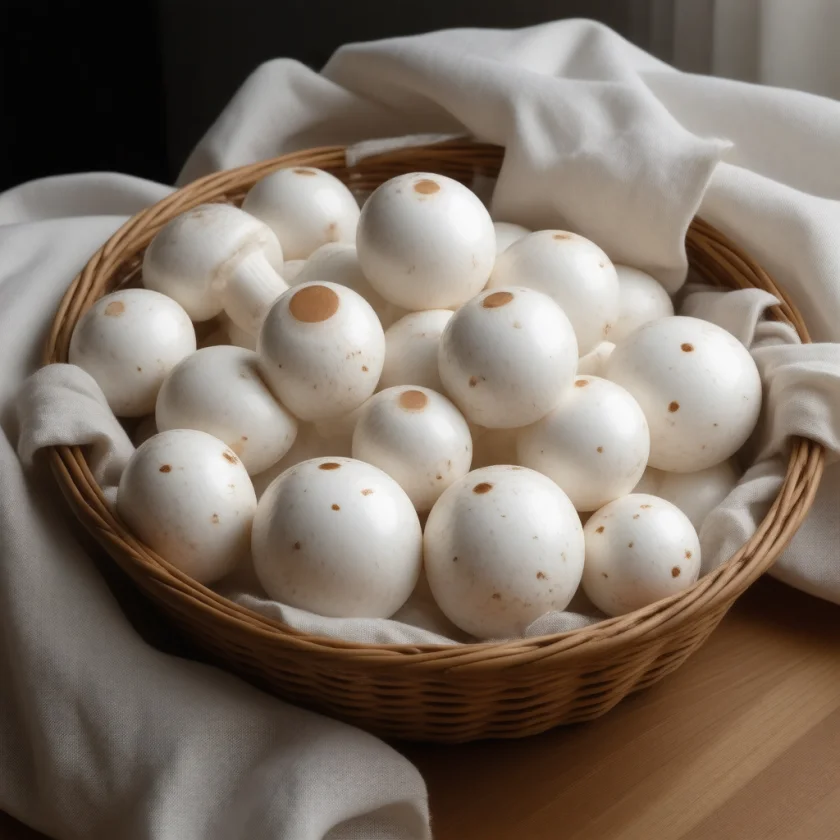
Most "antioxidant food" claims are weak, because the antioxidant capacity measured in a test tube rarely survives digestion. Ergothioneine is the striking exception. It is an unusual sulphur-containing compound that the human body actively pulls out of food using a dedicated transporter (OCTN1/SLC22A4) and stashes in the tissues most exposed to oxidative stress — the liver, kidneys, red blood cells, eyes, and brain. We do not build a transporter for a molecule we have no use for. Mushrooms are by far the richest dietary source, and researchers including Bruce Ames and Barry Halliwell have argued ergothioneine may be a "longevity vitamin." White button mushrooms carry meaningful amounts of it, plus glutathione, selenium, and polyphenols. This page explains what the evidence supports — and, honestly, what remains unproven.
Table of Contents
- What Ergothioneine Is
- Mushrooms as the Dominant Dietary Source
- The Transporter That Suggests a Real Role
- The "Longevity Vitamin" Hypothesis
- Glutathione and Other Antioxidants
- Selenium and Antioxidant Enzymes
- How Cooking and Storage Affect Content
- White Button vs Specialty Mushrooms
- Practical Takeaways
- Key Research Papers
- External Authoritative Resources
- Connections
- Featured Videos
What Ergothioneine Is
Ergothioneine (often abbreviated ERGO or ET) is a naturally-occurring amino-acid derivative — specifically a betaine of the amino acid histidine that carries a sulphur (thiol/thione) group on its imidazole ring; its chemical name is 2-mercaptohistidine trimethylbetaine. That sulphur group is the business end: it can neutralise reactive oxygen and nitrogen species, chelate certain metal ions, and help protect proteins, lipids, and DNA from oxidative damage.
What makes ergothioneine unusual among antioxidants is its stability. Many antioxidants are themselves reactive and are consumed quickly; ergothioneine exists mostly in a stable form at physiological pH and is remarkably resistant to auto-oxidation, so it persists in tissues rather than being spent immediately. It is sometimes described as a "stress-response" antioxidant that is mobilised where and when oxidative pressure is highest.
Crucially, humans (and animals generally) cannot synthesise ergothioneine. The biosynthetic pathway exists only in certain fungi and bacteria. Mushrooms make it; some soil bacteria make it; plants can take up small amounts from soil microbes. Everything in the human body ultimately traces back to the diet — which places fungi at the top of the food chain for this particular molecule.
What is not yet known. Cheah and Halliwell's 2012 review notes that many laboratory tests show antioxidant and cell-protective effects, "but an antioxidant role has yet to be fully verified in vivo" (in the living body). In a 2007 cell study, ergothioneine protected cells "only against copper(II)-induced toxicity but was far less potent than glutathione". And in a small pilot study of 10 healthy men who ate 8 g or 16 g of white button mushroom powder, ergothioneine was absorbed into red blood cells, yet blood antioxidant capacity, measured as total oxygen radical absorbance capacity (ORAC), decreased after both mushroom meals.
Mushrooms as the Dominant Dietary Source
Across food surveys, mushrooms are consistently the single richest dietary source of ergothioneine, dwarfing other foods. Analytical work by Robert Beelman's group at Penn State and by others has quantified ergothioneine across the food supply, and the pattern is clear: fungi carry far more than meats, beans, or grains, and vastly more than most fruits and vegetables (which contain only what they absorb from soil microbes).
Among culinary mushrooms there is a gradient. Specialty species — particularly oyster mushrooms, king oyster, and shiitake — tend to carry the most ergothioneine per gram. The white button (Agaricus bisporus) sits lower on that gradient than the specialty fungi but still far above non-fungal foods, and its browner, more mature forms (cremini and portobello) generally test somewhat higher than the immature white cap. Because white button mushrooms are cheap and eaten in large, frequent portions, they can be a major practical contributor to a person's total ergothioneine intake even though they are not the most concentrated source.
Studies of national diets have noted that ergothioneine intake varies widely between countries and correlates loosely with mushroom consumption — one reason researchers have looked at populations with high mushroom intake when exploring possible links to healthy aging. For the compound in its own right, see the Ergothioneine page.
The Transporter That Suggests a Real Role
The strongest single argument that ergothioneine matters to human physiology is not any clinical trial — it is the transporter. In 2005, Dirk Gründemann and colleagues published in PNAS that a previously-orphan membrane protein, OCTN1 (organic cation transporter novel type 1, gene SLC22A4), is in fact a highly specific, high-affinity transporter for ergothioneine. Because of that discovery OCTN1 is now often called the ergothioneine transporter (ETT).
This is biologically telling. The body does not usually build dedicated, selective transport machinery for a substance it has no use for — transporters are metabolically expensive to make and maintain. OCTN1 is expressed in the intestine (to absorb ergothioneine from food), in red and white blood cells, and in tissues under high oxidative load: liver, kidney, eye lens, and brain. Ergothioneine taken up through this transporter is concentrated in exactly the places you would expect an antioxidant defence to be stationed.
Genetic studies add a further hint: variants in the SLC22A4/OCTN1 gene have been associated in some analyses with inflammatory conditions such as rheumatoid arthritis and Crohn's disease, consistent with the idea that ergothioneine handling has physiological consequences. None of this proves ergothioneine is essential, and it has not been formally designated a vitamin. But the transporter is a strong circumstantial case that our bodies treat this fungal molecule as something worth acquiring and protecting.
The "Longevity Vitamin" Hypothesis
Barry Halliwell (a founding figure in free-radical biology) and collaborators, along with Robert Beelman's group, have advanced the idea that ergothioneine may be a "longevity vitamin" — a nutrient that is not strictly essential to prevent an acute deficiency disease, but whose long-term adequacy supports healthy aging and lowers the risk of chronic disease. The concept borrows from Bruce Ames's "triage theory" of micronutrients.
The supporting observations are intriguing but observational:
- A study by Cheah, Halliwell, and colleagues found that whole-blood ergothioneine levels decline with age, significantly beyond 60 years, and that a subset of elderly subjects with mild cognitive impairment had lower plasma levels than age-matched subjects. A separate study in Japan, of 19 frail and non-frail elderly patients, found ergothioneine among the blood metabolites that decrease in frailty.
- A five-year follow-up of 470 older adults attending memory clinics in Singapore found that lower plasma ergothioneine went with faster decline in daily function and in memory, executive function, attention, visuomotor speed and language. The link appeared only in people without dementia, and the authors found it "seemed to be largely explainable by" the severity of cerebrovascular disease, specifically white matter hyperintensities, and brain atrophy.
- Larger population studies have linked higher circulating ergothioneine to lower risk of cardiovascular disease and lower all-cause mortality — associations that persisted after adjustment for other factors. In one, 3,236 participants of the population-based Malmö Diet and Cancer study, free of cardiovascular disease and diabetes at the start, were followed for a median 21.4 years. Per 1-standard-deviation higher ergothioneine, the hazard ratio was 0.85 for coronary disease, 0.79 for cardiovascular death and 0.86 for death from any cause. Ergothioneine was the blood metabolite most strongly connected to a health-conscious food pattern.
- Beelman and colleagues have highlighted that average dietary ergothioneine intake is relatively low in some Western diets and argued that raising it (chiefly by eating more mushrooms) is a low-risk dietary strategy worth studying.
The honest caveat is essential here: these are associations. People with higher blood ergothioneine may simply eat more mushrooms, vegetables, and whole foods generally, and lead healthier lives in other ways that observational studies cannot fully separate out. No randomised trial has yet shown that supplementing ergothioneine, or eating more mushrooms specifically, extends life or prevents dementia in humans. The first small trial has begun to test it: in a 2024 double-blind pilot, 19 adults aged 60 or above with mild cognitive impairment took ergothioneine (25 mg per capsule, 3 times a week) or a placebo for one year. The ergothioneine group did better on a learning test and kept stable blood levels of neurofilament light chain, a marker linked to nerve-cell damage, while the placebo group's rose significantly; blood counts and kidney and liver function did not change. With 19 people it is a pilot, not proof. The hypothesis is serious, testable, and being actively investigated — but it is a hypothesis, not an established fact, and this page presents it as such.
Glutathione and Other Antioxidants
Ergothioneine is not the only antioxidant mushrooms carry. Beelman's analytical work (Kalaras et al., 2017) measured both ergothioneine and glutathione across mushroom species and found that fungi are unusually rich in both of these thiol antioxidants simultaneously. Glutathione is the body's master intracellular antioxidant, and while most dietary glutathione is broken down and reassembled rather than absorbed whole, food-borne glutathione and its building blocks still contribute to the body's redox economy.
Mushrooms also contain polyphenols and phenolic acids that contribute to their measured antioxidant capacity, along with the vitamin-like compounds and selenium discussed below. Dubost and colleagues showed that total antioxidant capacity across mushroom species correlates with their combined ergothioneine and polyphenol content, and that browner, more mature Agaricus tend to test higher. The overall picture is of a food that packs several complementary antioxidant systems into a very low-calorie package — the opposite of "empty" food. For the master antioxidant itself, see Glutathione.
Selenium and Antioxidant Enzymes
Some of a mushroom's antioxidant value is indirect. White button mushrooms are a useful dietary source of selenium, a trace mineral that the body incorporates into selenoproteins — most importantly the glutathione peroxidase enzymes and thioredoxin reductase, which are central to the cell's own antioxidant defences. In other words, part of the benefit is not the mushroom acting as an antioxidant in the gut, but the mushroom supplying a mineral the body needs to run its own antioxidant enzymes.
Mushrooms are notable because they take up selenium efficiently from their growing substrate, and selenium-enriched mushrooms have been studied specifically as a bioavailable food form of the mineral. Combined with copper (another mushroom mineral that is a cofactor for the antioxidant enzyme superoxide dismutase), the white button contributes to the trace-mineral base on which the body's endogenous antioxidant machinery depends. For detail, see Selenium and Copper.
How Cooking and Storage Affect Content
A practical worry with any antioxidant food is whether cooking destroys the good part. For ergothioneine, the news is reassuring: it is notably heat-stable. Unlike vitamin C or many polyphenols, ergothioneine survives ordinary cooking well — sauteing, roasting, grilling, and even boiling retain most of it (some leaches into cooking water when boiled, so using the liquid in soups or risottos recaptures it). Because cooking also improves the digestibility of the mushroom cell wall, cooking makes the antioxidant content more accessible.
Maturity and storage matter too. Ergothioneine content tends to rise as the mushroom matures, so cremini and portobello generally test higher than young white caps. Fresh mushrooms keep for only a few days; prolonged storage and the browning that comes with age reflect ongoing enzymatic activity. Drying mushrooms concentrates ergothioneine on a per-gram basis (the water is removed), which is one reason dried mushroom powders test high — though as always, that moves you from "food" toward "supplement."
White Button vs Specialty Mushrooms
For the most ergothioneine per gram, the white button is not the top choice — oyster and king oyster mushrooms, and to a lesser degree shiitake, generally carry more. But "per gram" is the wrong yardstick for most people. The white button's real advantage is that people actually eat it, in quantity, again and again, because it is cheap and available everywhere. A regular habit of ordinary mushrooms delivers more cumulative ergothioneine over a year than an occasional purchase of a pricey specialty variety.
Many kitchens blend both: white button (and its cremini/portobello siblings) as the everyday base, with oyster and shiitake mushrooms rotated in for higher concentrations and different flavours. The full mushroom collection covers the specialty species in depth.
Practical Takeaways
- Cooked, and eaten regularly. Ergothioneine is heat-stable, so cooking does not waste it — and cooking makes the mushroom easier to digest. Consistency over the year matters more than any single high-dose meal.
- Browner and more mature mushrooms (cremini, portobello) generally test higher in antioxidant content than young white caps.
- The cooking liquid holds some of it. Boiling or simmering leaches some ergothioneine out, so a broth or soup that is eaten keeps it.
- A food, not a drug. There is no established recommended intake for ergothioneine, no proven disease it treats, and no established case for high-dose supplements over food. The evidence supports mushrooms as a healthy, antioxidant-rich food — not as a therapy.
- Specialty mushrooms carry higher concentrations, while the affordable white button is the one most people can eat as a reliable base.
Key Research Papers
- Kalaras MD, Richie JP, Calcagnotto A, Beelman RB (2017). Mushrooms: a rich source of the antioxidants ergothioneine and glutathione. Food Chemistry. — PubMed
- Cheah IK, Halliwell B (2012). Ergothioneine; antioxidant potential, physiological function and role in disease. Biochimica et Biophysica Acta. — PubMed
- Gründemann D, Harlfinger S, Golz S, et al. (2005). Discovery of the ergothioneine transporter. PNAS. — PubMed PMID: 15795384
- Cheah IK, Feng L, Tang RMY, Lim KHC, Halliwell B (2016). Ergothioneine levels in an elderly population decrease with age and incidence of cognitive decline; a risk factor for neurodegeneration? Biochemical and Biophysical Research Communications. — PubMed PMID: 27444382
- Kameda M, Teruya T, Yanagida M, Kondoh H (2020). Frailty markers comprise blood metabolites involved in antioxidation, cognition, and mobility. PNAS. — PubMed PMID: 32295884
- Wu LY, Kan CN, Cheah IK, et al. (2022). Low Plasma Ergothioneine Predicts Cognitive and Functional Decline in an Elderly Cohort Attending Memory Clinics. Antioxidants. — PubMed PMID: 36139790
- Yau YF, Cheah IK, Mahendran R, et al. (2024). Investigating the efficacy of ergothioneine to delay cognitive decline in mild cognitively impaired subjects: A pilot study. Journal of Alzheimer's Disease. — PubMed PMID: 39544014
- Beelman RB, Kalaras MD, Phillips AT, Richie JP (2020). Is ergothioneine a 'longevity vitamin' limited in the American diet? Journal of Nutritional Science. — PubMed
- Weigand-Heller AJ, Kris-Etherton PM, Beelman RB (2012). The bioavailability of ergothioneine from mushrooms and the acute effects on antioxidant capacity and biomarkers of inflammation. Preventive Medicine. — PubMed
- Ey J, Schömig E, Taubert D (2007). Dietary sources and antioxidant effects of ergothioneine. Journal of Agricultural and Food Chemistry. — PubMed
- Dubost NJ, Ou B, Beelman RB (2007). Quantification of polyphenols and ergothioneine in cultivated mushrooms and correlation to total antioxidant capacity. Food Chemistry. — PubMed
- Halliwell B, Cheah IK, Tang RMY (2018). Ergothioneine – a diet-derived antioxidant with therapeutic potential. FEBS Letters. — PubMed
- Smith E, Ottosson F, Hellstrand S, et al. (2020). Ergothioneine is associated with reduced mortality and decreased risk of cardiovascular disease. Heart. — PubMed
PubMed Topic Searches
External Authoritative Resources
- U.S. Department of Agriculture (USDA) FoodData Central — mushroom nutrient and mineral (selenium, copper) composition
- Linus Pauling Institute Micronutrient Information Center — dietary phytochemicals and antioxidants
- Linus Pauling Institute — Selenium
- PubMed — all research on ergothioneine