Butterfly Pea for Cognition, Mood and Traditional Use
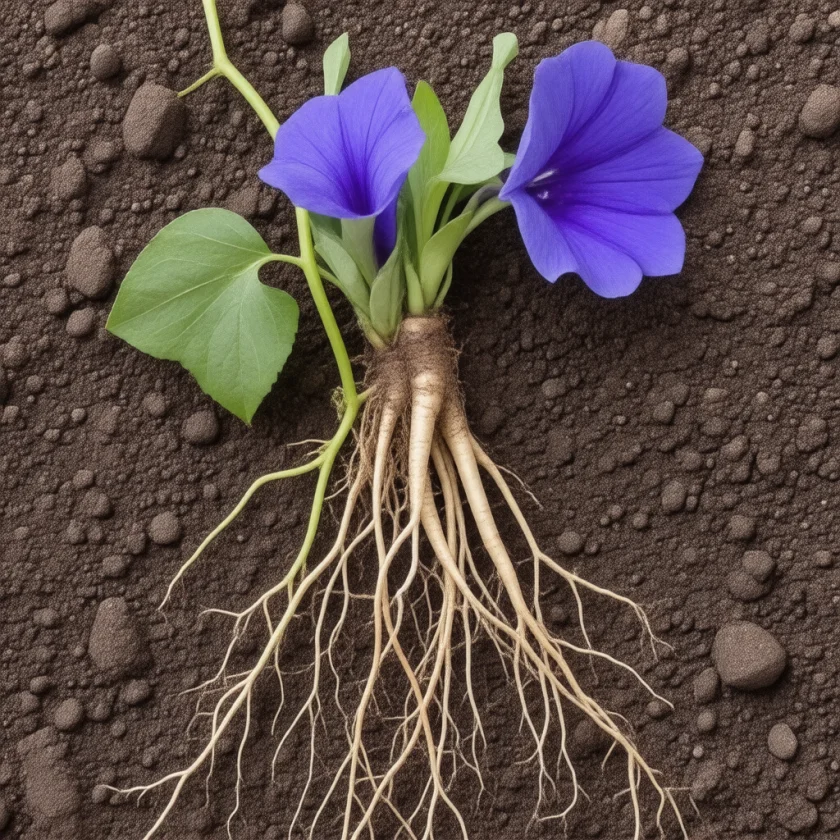
Butterfly pea is sold worldwide as a brain herb. "Nootropic", "memory support", "ancient Ayurvedic brain tonic" — the language is consistent across brands and continents, and it has been remarkably effective. It is also the least evidenced claim made for the plant, and understanding why requires unpicking two specific confusions rather than simply saying "there is no evidence".
The first confusion is botanical. Nearly every cognitive claim traces back to shankhpushpi, an Ayurvedic drug name for a mind-strengthening herb. But shankhpushpi is not the name of one plant — at least four unrelated species are sold under it in different parts of India, and the one behind most of the published shankhpushpi research is not Clitoria ternatea. When a butterfly-pea product cites shankhpushpi science, there is a real chance the science is about a morning glory.
The second confusion is anatomical. The rodent experiments that support a memory effect used the plant's root. Your tea is made from flowers. These are different materials with different chemistry, and the distinction is not a technicality — the flower's signature compounds are the anthocyanins, which are not what those studies were investigating.
Strip both confusions away and the human evidence for butterfly pea and cognition is: none. Not negative — absent. There is no published randomized controlled trial of this plant for memory, attention, mood or any cognitive outcome. That is worth stating clearly, and it is also worth saying what would change it.
Table of Contents
- The Claim on the Packet
- Shankhpushpi Is a Drug Name, Not a Species
- Medhya Rasayana: What the Category Asserts
- The Rodent Evidence, Read Carefully
- Acetylcholinesterase Inhibition: Real Mechanism, Wrong Scale
- Why Plant Part Matters More Here Than Anywhere Else
- Calm, Sleep and the Anxiolytic Claims
- Human Trials: The Empty Shelf
- Ritual, Expectation and Why It Still Feels Good
- What Would Settle It
- Better-Evidenced Cognitive Herbs, for Comparison
- Key Research Papers
- Connections
- Featured Videos
The Claim on the Packet
The cognitive claim for butterfly pea arrives in a fairly standard package, and it is useful to name the components because each one is doing a different kind of persuasive work.
- An ancient-authority appeal: "used for centuries in Ayurveda as a brain tonic." Tier: traditional use only — and, as the next section shows, attached to an ambiguous plant name.
- A named traditional category: medhya rasayana, or shankhpushpi. This sounds like a diagnosis-and-indication pair and is really a functional class within a different medical system.
- A modern mechanism: "supports acetylcholine" or "inhibits acetylcholinesterase". Tier: preliminary (rodent and in vitro), and the mechanism is real but the scale is not addressed.
- A colour argument by implication: the vivid blue reads as potency. It is a pH-dependent pigment; see the colour-change page.
- An antioxidant bridge: "protects brain cells from oxidative stress." This inherits every problem covered on the antioxidant claims page, plus the additional hurdle that a compound must cross the blood–brain barrier to protect a neuron — and anthocyanin penetration into human brain tissue at dietary doses is not established.
What is conspicuously absent from that package is any reference to a human trial. That absence is not an oversight in the marketing. There is nothing to cite.
Shankhpushpi Is a Drug Name, Not a Species
This is the most important thing on the page, and it is a genuine, long-recognised problem within Ayurvedic pharmacognosy rather than a sceptic's talking point. Indian pharmacognosy journals have discussed shankhpushpi substitution for decades precisely because it complicates their own research.
The situation: shankhpushpi is a classical drug name for a medhya — an intellect-promoting herb. It designates a role in a formulary, not a botanical taxon. At least four unrelated species are collected, sold and dispensed as shankhpushpi in different regions of India. Sethiya and colleagues' 2009 review of the Ayurvedic and Sanskrit literature names the four: Convolvulus pluricaulis and Evolvulus alsinoides (Convolvulaceae), Clitoria ternatea (listed there under the family name Papilionaceae) and Canscora decussata (Gentianaceae).
- Convolvulus pluricaulis (Convolvulaceae) — the most widely accepted botanical source, and the species behind the large majority of published shankhpushpi research. The umbrella review of shankhpushpi in neurological disorders published in Neuroscience and Biobehavioral Reviews in 2022 by Sharma and colleagues is a review of this plant.
- Clitoria ternatea (Fabaceae) — butterfly pea. Used as shankhpushpi chiefly in Bengal and parts of eastern India. This is the plant in your teapot.
- Evolvulus alsinoides (Convolvulaceae) — dwarf morning glory, used as shankhpushpi in much of southern India.
- Canscora decussata (Gentianaceae) — used regionally.
Note that three of the four are not even in the same family as butterfly pea, and two are morning glories. They share a Sanskrit name and a therapeutic role. They do not share chemistry.
What this does to a citation trail. Follow a "clinically studied Ayurvedic brain herb" claim on a butterfly-pea product back to its source and one of several things is usually true:
- the cited research used Convolvulus pluricaulis, a different plant in a different family;
- the cited research is a review of "shankhpushpi" that pooled studies across species — a real problem in the secondary literature, and one the reviews themselves often flag;
- the citation is to a classical text, in which case it is traditional-use evidence attached to an ambiguous name; or
- there is no citation, and the traditional name is doing all the work.
The key question: whenever shankhpushpi is invoked, the question is which binomial. If the answer is not Clitoria ternatea, the evidence is about a different plant, however genuine it may be on its own terms. And this cuts both ways — it also means the substantial body of work on Convolvulus pluricaulis cannot be used to dismiss butterfly pea. Butterfly pea has simply not been studied for cognition in humans at all.
Medhya Rasayana: What the Category Asserts
It is worth understanding the traditional claim on its own terms rather than caricaturing it, because the category is more specific and more interesting than "brain tonic" suggests. Tier: traditional use only.
Rasayana is a therapeutic category in Ayurveda concerned with rejuvenation, vitality and resistance to decline — not treatment of a named disease. Medhya qualifies it to the domain of medha, usually translated as intellect, and in the classical texts covering retention, recall and speech. A medhya rasayana is therefore a substance taken over time to strengthen a faculty, in a system where treatment is constitutional rather than disease-targeted.
Several features of the traditional use are directly relevant to evaluating a modern product:
- The plant part is usually the root, seed or whole plant, not the flower. Classical aparajita preparations draw on root and seed far more than on the petals that make the tea.
- The vehicle is fat. Preparations are commonly ghee-based or milk-based. In a system without pharmacokinetics this was empirical practice, but it happens to matter: lipid vehicles change the absorption of lipophilic constituents substantially, and a hot-water infusion extracts an entirely different fraction of a plant than ghee does.
- Use is prolonged and often compounded. Traditional administration runs for weeks or months, usually within a multi-herb formulation, alongside dietary and behavioural instruction. Isolating one ingredient and selling it as a single-herb capsule is a modern reframing, not the traditional practice.
- The indications are broad — epilepsy, anxiety, insomnia, children's delayed speech — which is characteristic of the category and does not map onto a modern outcome measure.
Traditional use is real evidence of something: that people have consumed this material over generations without an obvious pattern of harm, and that it held enough perceived value to persist. That is meaningful and it is not efficacy data. The same textual tradition assigns the same properties to at least three other species under the same name, which is a fair indication of how much diagnostic weight the name can bear.
The Rodent Evidence, Read Carefully
Tier: preliminary (animal). There is a genuine body of rodent work here and it should not be waved away — it is the reason the hypothesis is worth testing. It also cannot support a consumer claim.
The foundational studies came from Indian laboratories in the early 2000s. Rai and colleagues reported a series of rat experiments with Clitoria ternatea root extract, published in the Indian Journal of Physiology and Pharmacology (2001), Fitoterapia (2002) and Phytotherapy Research (2005), describing improved performance on learning and memory tasks, increased acetylcholine content in the hippocampus, and increased dendritic branching (arborization) of neurons in the amygdala of young adult rats. Later work in the same tradition extended to models of induced cognitive impairment.
The most-cited recent entry is Damodaran and colleagues in Neurochemistry International in 2020, characterising the nootropic and anticholinesterase activities of Clitoria ternatea root extract and proposing it as a candidate for cognitive decline. Note the word "candidate" — that is the authors correctly describing a preclinical finding.
A 2023 rat study by Ahad and colleagues narrowed the root's active fraction further: a root fraction containing 25% clitorienolactone A, given at 10, 20 or 40 mg/kg, and clitorienolactone A alone at 10 mg/kg restored memory and reversed the loss of hippocampal plasticity in rats with reduced blood flow to the brain (chronic cerebral hypoperfusion). Still the root, and still rats.
Four constraints, each of which independently blocks the leap to a human claim:
- The plant part is wrong for a flower tea. Root and whole-plant extract dominate this literature. Root chemistry includes triterpenoids such as taraxerol and taraxerone that the flower does not supply in comparable quantity; the flower's distinguishing constituents are the ternatins, which these studies were not investigating.
- The dose is far above dietary. Rodent nootropic protocols typically administer extract at doses measured in tens to hundreds of milligrams per kilogram of body weight, daily, often for weeks. Damodaran's rats received root extract at 100, 200 or 300 mg/kg for 28 days, and only 200 and 300 mg/kg restored memory; Rai's 2005 study used 50 and 100 mg/kg for 30 days. Scaled to a human being that is a substantial quantity of concentrated extract, not a cup of infusion.
- The route and preparation differ. Studies commonly use alcoholic or aqueous-alcoholic extracts administered by gavage. A hot-water infusion of dried petals extracts a different chemical fraction.
- Rodent maze performance is not human memory. A great many compounds improve rodent performance in Morris water maze or passive-avoidance tasks and then fail in human trials. This is one of the best-documented translational failure patterns in all of neuropharmacology — the field has spent decades and enormous sums discovering it.
The correct reading: these studies establish a plausible hypothesis about a specific plant part at a specific dose in a specific species. That is a legitimate scientific result. It is not a finding about you and a teapot.
Acetylcholinesterase Inhibition: Real Mechanism, Wrong Scale
The mechanistic story attached to butterfly pea is worth taking seriously, because unlike many wellness mechanisms it names a real, druggable target. Tier: in vitro and animal.
Acetylcholine is a neurotransmitter central to attention and memory encoding, and acetylcholinesterase is the enzyme that clears it from the synapse. Inhibit the enzyme and acetylcholine persists longer. This is not a fringe idea — it is the mechanism of donepezil, rivastigmine and galantamine, the main licensed drug class for Alzheimer's disease, and the cholinergic hypothesis of age-related memory decline is decades old and well founded.
Clitoria ternatea extract inhibits acetylcholinesterase in enzyme assays, and root extract has been reported to raise hippocampal acetylcholine in rats. So the mechanism claim points at something real.
Now the scale problem, which is where it comes apart. Mukherjee, Kumar, Mal and Houghton reviewed plant-derived acetylcholinesterase inhibitors in Phytomedicine in 2007, and the picture that review documents is the relevant context: a great many plant extracts inhibit the enzyme in a cuvette, and the concentrations required are typically orders of magnitude higher than what a licensed drug achieves. Galantamine is the notable exception that became a real medicine — and galantamine is a single purified alkaloid given at a precise dose with monitored side effects, not a herbal infusion.
Three specific hurdles stand between "inhibits the enzyme in a test tube" and "improves your memory":
- Concentration. The inhibitory concentration in an assay is set by the experimenter. Whether a cup of flower tea produces anything approaching it at a synapse is a different question entirely, and the answer is almost certainly no.
- The blood–brain barrier. A synaptic enzyme is behind a barrier that excludes most large, polar, glycosylated molecules — which is an exact description of an anthocyanin. Anthocyanin penetration into human brain tissue at dietary intakes is not established.
- Absorption first. As covered on the antioxidant page, only a small percentage of ingested anthocyanin is absorbed intact; most is converted by gut bacteria into phenolic acids. Whatever reaches your circulation is mostly not the compound that was tested against the enzyme.
Each hurdle alone is enough to break the chain. Together they mean the acetylcholinesterase argument, as applied to a cup of blue tea, is a mechanism in search of an exposure.
Why Plant Part Matters More Here Than Anywhere Else
For most herbs, using the wrong plant part is a quality issue. For butterfly pea it changes the subject, and this deserves its own section because it is the error that recurs most often.
Butterfly pea is effectively two herbs sharing a name.
- The flower is the food colouring, the blue tea, the source of the ternatins, and the material used in the human clinical trials. Its history is culinary and its evidence base is metabolic.
- The root is the classical Ayurvedic drug and the material used in most rodent memory experiments. Different chemical profile, different traditional indications, and not what anyone is drinking.
- The seed has a traditional purgative reputation and is not a beverage ingredient at all — see the safety page.
So the standard cognitive claim on a flower-tea packet is built on root data. That is not a minor imprecision; it is like citing willow-bark research on a tea made from willow catkins. Nobody has shown that the flower carries the constituents the root studies were investigating, and there is a positive reason to doubt it: the flower's distinguishing chemistry is the anthocyanin pigment system, which is absent from the root, while the root's triterpenoids are not a notable flower constituent.
What the label tells a buyer. The plant part is on the label. "Clitoria ternatea flower extract" and "Clitoria ternatea root extract" are different products with different evidence bases and different safety profiles — and a product that says only "Clitoria ternatea extract" or "whole plant" does not say which material it contains. The beverage tea is made from the flowers.
Calm, Sleep and the Anxiolytic Claims
Alongside memory, butterfly pea is marketed for calm, stress and sleep. This branch of the claim has a similar structure and one honest advantage. Tier: preliminary (animal) plus traditional use; no human trials.
What exists: rodent studies have reported anxiolytic, sedative, anticonvulsant and antidepressant-like effects for Clitoria ternatea extracts in standard behavioural models — elevated maze paradigms, forced swim tests, chemically induced seizure models. Traditional Ayurvedic use of aparajita includes anxiety, insomnia and epilepsy. Both strands point the same way.
The same four constraints apply — plant part, dose, extract type, and the notoriously poor translation of rodent anxiety models to human anxiety disorders, which is if anything a worse translational record than the memory models.
The honest advantage, which is real and worth naming: butterfly-pea tea is caffeine-free. If your evening routine currently involves black or green tea and you swap in butterfly pea, you have removed a stimulant with a half-life of roughly five hours from your late-afternoon intake. That will plausibly improve your sleep, and the mechanism is entirely the absence of caffeine rather than the presence of anything. It is not a herbal sedative effect, it is subtraction — and subtraction is a perfectly good reason to choose a drink.
Lemon balm and chamomile have been studied more directly in people for calm and sleep; see the connections below.
Human Trials: The Empty Shelf
This section is short because there is nothing in it, and that is the finding.
As of this writing there is no published randomized controlled trial of Clitoria ternatea for any cognitive, mood, attention, memory or sleep outcome in humans. Not a positive trial. Not a negative trial. Not a small pilot. Not an open-label study.
The human studies that exist for this plant measured other things. Two were acute trials of the flower extract in young men. In a randomised crossover trial in 15 healthy men, 1 or 2 g of flower extract taken with 50 g of sucrose lowered the glucose and insulin rise at 30 minutes and raised plasma antioxidant capacity, while the extract taken alone did not change fasting glucose or insulin; measurements ran for three hours (Chusak 2018). In a randomised study of 16 overweight or obese men assigned to three groups, 2 g of extract with a high-fat meal lowered the rise in blood triglycerides and raised antioxidant markers over six hours (Thilavech 2021). A third study, published in 2024, compared a 20% butterfly-pea-flower shampoo with a 2% ketoconazole shampoo in 70 women with dandruff — a use on the scalp, not a drink (Assegaf 2024). None of them included any cognitive assessment. They are described in detail on the antioxidant and metabolic claims page.
Distinguish "no evidence" from "evidence of no effect", because they are not the same and the difference is not a rhetorical hedge. A drug that failed a well-powered trial has been tested and found wanting. Butterfly pea has not been tested for cognition in humans. It might work. It might not. The current state of knowledge simply does not contain the answer, and anyone telling you otherwise — in either direction — is going beyond the data.
What follows practically is modest and clear: if cognition is what you are buying this for, you are buying a hypothesis. That is allowed — people do it constantly, and at food-level amounts the downside is small. But it is a choice about an open question, not a question that has been settled. A search of ClinicalTrials.gov for Clitoria ternatea is the fastest single check of whether the picture has changed since this page was written.
Ritual, Expectation and Why It Still Feels Good
It would be both unkind and inaccurate to end the negative case without acknowledging something true: people who drink butterfly-pea tea often report feeling better, calmer and more focused afterwards, and they are not lying.
Several real mechanisms are available that have nothing to do with ternatins:
- Hydration. Mild dehydration measurably impairs attention and mood. A large cup of anything water-based helps, and this is a genuinely underrated explanation for how a great many teas "work".
- The pause. Brewing tea takes five minutes during which you are not doing the thing you were doing. Structured breaks improve sustained attention, and the ritual is doing the work.
- Caffeine displacement. Both directly, in the evening, and by reducing the afternoon peak-and-crash cycle.
- Expectation, which is a real physiological effect and not a synonym for imaginary. Expectancy effects on mood, pain and perceived alertness are robust, measurable and reproducible. A striking blue drink you deliberately made because you believe it is good for you generates more expectancy than a glass of tap water. This is a real reason it feels different.
- Aesthetic pleasure. The drink is beautiful. Enjoyment is a legitimate benefit and does not require a pharmacological justification.
The point of listing these is not to explain the experience away. It is to place it correctly: butterfly-pea tea is a genuinely pleasant part of a day, and that is a sufficient reason to drink it. It just is not a nootropic, and the honest version of the case does not need it to be.
What Would Settle It
A short specification, because "more research is needed" is a useless sentence unless you say which research. A trial that would actually move the needle on the butterfly-pea cognitive claim would need:
- A defined, standardised flower preparation — the material people actually consume — with the anthocyanin content quantified and stated, so the dose is reproducible. Or, if the hypothesis is really about the root, an explicit root trial with the labelling honesty to match.
- Repeated dosing over weeks to months, since the traditional claim is about a rasayana taken over time, not a single acute dose. An acute study would be testing the wrong hypothesis.
- A population with room to improve — older adults with subjective cognitive complaints, or adults under measurable cognitive load. Healthy young men in a laboratory have ceiling effects on most cognitive tests, which is one reason nootropic trials in students so often come out flat.
- Validated cognitive endpoints chosen in advance, with the primary outcome pre-registered. Cognitive test batteries generate dozens of measures, and picking the winners afterwards is how the nootropic literature filled up with unreproducible results.
- Proper blinding, which is genuinely hard here. A vivid blue drink cannot be placebo-matched with plain water. This is a real methodological obstacle and would need an inert colourant control — the kind of practical detail that decides whether a trial is worth running.
- Adequate size and duration, and publication regardless of result.
Until something like that exists, the honest label for the cognitive claim remains traditional use plus preliminary animal data on a different plant part. Not disproven. Not demonstrated. Untested.
Better-Evidenced Cognitive Herbs, for Comparison
Offered for calibration rather than as recommendations — the point is to show what a herb looks like when human trials do exist, so you can see the size of the gap. None of these is a treatment for cognitive decline, and all carry their own caveats on their own pages.
- Bacopa monnieri — the other great Ayurvedic medhya herb, and the instructive contrast. Bacopa has multiple randomized placebo-controlled human trials with cognitive endpoints, generally using standardised extracts over eight to twelve weeks, and meta-analyses of that literature exist. The findings are modest and the literature has real limitations, but there is a literature. That is the difference.
- Ginkgo biloba — the most extensively trialled botanical for cognition, including large long-term prevention trials. Worth knowing precisely because the large well-conducted trials were largely disappointing, which is a useful reminder that having trials is not the same as having a positive result.
- Gotu Kola — another traditional cognitive herb with a small but genuine human trial literature.
- Ashwagandha — studied mainly for stress and sleep rather than memory, with a growing set of randomized trials of variable quality.
- Lemon Balm — for the calm-and-sleep branch of the claim, with more direct human data than butterfly pea has.
The comparison is not "drink these instead". It is that when a herb has been tested in people, you can find the trials, read the effect sizes and form a view. For butterfly pea and cognition, there is nothing to read.
Key Research Papers
Papers with a PubMed record end in their PMID link. Where a topic rather than a single paper is cited, the finding is described and a PubMed search provided.
- Damodaran T, Cheah PS, Murugaiyah V, Hassan Z. The nootropic and anticholinesterase activities of Clitoria ternatea Linn. root extract: potential treatment for cognitive decline. Neurochemistry International. 2020;139:104785. — the most-cited modern preclinical paper, and note the plant part (root). — PubMed PMID: 32650028
- Ahad MA, Chear NJ, Keat LG, et al. Bio-enhanced fraction from Clitoria ternatea root extract ameliorates cognitive functions and in vivo hippocampal neuroplasticity in chronic cerebral hypoperfusion rat model. Ageing Research Reviews. 2023;89:101990. — rat study. — PubMed PMID: 37343678
- Rai KS, Murthy KD, Karanth KS, Rao MS. Clitoria ternatea (Linn) root extract treatment during growth spurt period enhances learning and memory in rats. Indian Journal of Physiology and Pharmacology. 2001;45(3):305-313. — the foundation of the memory claim, entirely rodent. — PubMed PMID: 11881569
- Rai KS, Murthy KD, Karanth KS, et al. Clitoria ternatea root extract enhances acetylcholine content in rat hippocampus. Fitoterapia. 2002;73(7-8):685-689. — PubMed PMID: 12490229
- Rai KS, Murthy KD, Rao MS, Karanth KS. Altered dendritic arborization of amygdala neurons in young adult rats orally intubated with Clitorea ternatea aqueous root extract. Phytotherapy Research. 2005;19(7):592-598. — PubMed PMID: 16161034
- Mukherjee PK, Kumar V, Mal M, Houghton PJ. Acetylcholinesterase inhibitors from plants. Phytomedicine. 2007;14(4):289-300. — a review of plant acetylcholinesterase inhibitors, and the right context for judging how weak most botanical inhibitors are relative to licensed drugs. — PubMed PMID: 17346955
- Sharma R, Singla RK, Banerjee S, et al. Role of Shankhpushpi (Convolvulus pluricaulis) in neurological disorders: an umbrella review covering evidence from ethnopharmacology to clinical studies. Neuroscience and Biobehavioral Reviews. 2022;140:104795. — conducted on Convolvulus pluricaulis, which is the whole point. — PubMed PMID: 35878793
- Mukherjee PK, Kumar V, Kumar NS, Heinrich M. The Ayurvedic medicine Clitoria ternatea — from traditional use to scientific assessment. Journal of Ethnopharmacology. 2008;120(3):291-301. — the standard bridge between the textual tradition and the experimental record. — PubMed PMID: 18926895
- Sethiya NK, Nahata A, Mishra SH, Dixit VK. An update on Shankhpushpi, a cognition-boosting Ayurvedic medicine. Zhong Xi Yi Jie He Xue Bao. 2009;7(11):1001-1022. — the source for the four-species account above. — PubMed PMID: 19912732
- Chusak C, Thilavech T, Henry CJ, Adisakwattana S. Acute effect of Clitoria ternatea flower beverage on glycemic response and antioxidant capacity in healthy subjects: a randomized crossover trial. BMC Complementary and Alternative Medicine. 2018;18(1):6. — PubMed PMID: 29310631
- Thilavech T, Adisakwattana S, Channuwong P, et al. Clitoria ternatea flower extract attenuates postprandial lipemia and increases plasma antioxidant status responses to a high-fat meal challenge in overweight and obese participants. Biology (Basel). 2021;10(10):975. — PubMed PMID: 34681074
- Assegaf TS, Jusuf NK, Pane YS, et al. Anti-dandruff effects of butterfly pea flowers (Clitoria ternatea)-based shampoo: a pretest-posttest control study. Narra J. 2024;4(2):e876. — PubMed PMID: 39280272
- On anxiolytic, sedative, anticonvulsant and antidepressant-like activity of Clitoria ternatea extracts in rodent behavioural models — the calm-and-sleep branch of the preclinical literature. — Search PubMed
- Oguis GK, Gilding EK, Jackson MA, Craik DJ. Butterfly pea (Clitoria ternatea), a cyclotide-bearing plant with applications in agriculture and medicine. Frontiers in Plant Science. 2019;10:645. — the comprehensive species review, useful here for its account of how differently the plant's parts are constituted and used. — PubMed PMID: 31191573
- On Bacopa monnieri randomized controlled trials and meta-analyses of cognitive outcomes — the comparison case for what a trialled medhya herb looks like. — Search PubMed
- On the cholinergic hypothesis of cognitive decline and the acetylcholinesterase-inhibitor drug class — the pharmacological context for the mechanism claim. — Search PubMed
- On anthocyanins, the blood–brain barrier and brain tissue penetration — the unresolved exposure question behind every "protects brain cells" claim for a pigment. — Search PubMed
- On the translational failure rate of rodent cognitive-enhancement models — the base rate that should temper any preclinical nootropic result. — Search PubMed
Connections
- All Herbs
- Butterfly Pea (Clitoria ternatea) — the main topic page, including the full names-and-shankhpushpi discussion and the plant's culinary history.
- Antioxidant and Metabolic Claims Examined — the two human trials, and why the "protects brain cells" bridge fails.
- Hair, Skin and the Safety Profile — why the seeds and root are not the tea, and what to look for on a label.
- Bacopa monnieri — the Ayurvedic medhya herb that actually has human cognitive trials.
- Bacopa monnieri — Benefits — the deep dive, and the clearest available contrast in evidence quality.
- Ginkgo Biloba — the most trialled cognitive botanical, and a lesson in trials that disappoint.
- Gotu Kola — another traditional cognitive herb with a small human literature.
- Ashwagandha — the adaptogen studied for stress and sleep rather than memory.
- Lemon Balm — better human data for the calm-and-sleep claim.
- Holy Basil — another Ayurvedic herb whose traditional category does not map onto modern endpoints.
- Amla — a rasayana with a better-defined constituent profile, for comparison of the category.
- Alzheimer's Disease — the condition the acetylcholinesterase mechanism belongs to, and what licensed inhibitors actually achieve.
- Anthocyanins — the pigment class, and the absorption limits that constrain any brain claim.
Safety and disclaimer. This page is educational and is not medical advice. Butterfly pea has no demonstrated effect on memory, attention, mood or any cognitive outcome in humans, and nothing here should be used to guide the treatment of cognitive decline, dementia, anxiety, depression, epilepsy or insomnia — all of which need proper medical assessment. Butterfly-pea flower as a tea or food colouring has a long culinary record and no established toxicity signal at those amounts; concentrated extracts and capsules have not been studied for long-term human use, and the root and seed preparations used in much of the traditional and animal literature are not the same material as the flower. Concentrated extracts have no safety data in pregnancy, breastfeeding or children, and none of the evidence on this page shows a herbal product doing the work of a prescribed medication.