Onions, FODMAPs, and Irritable Bowel Syndrome (IBS)
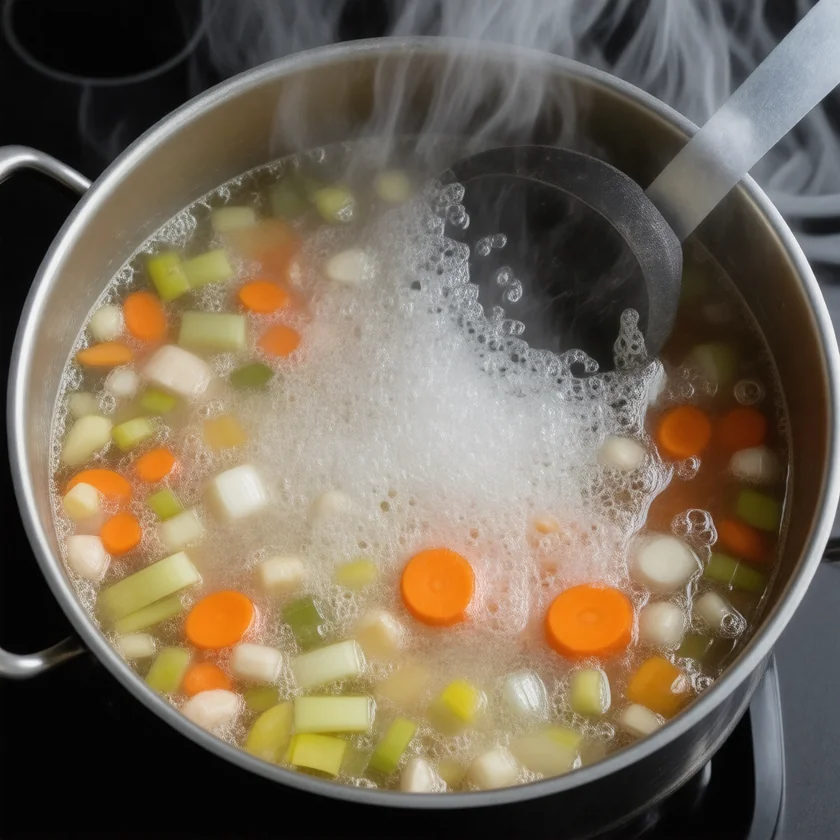
For people with irritable bowel syndrome, onion is one of the highest-fructan vegetables in the ordinary diet, and almost certainly the food hardest to leave out. It is in stock cubes, gravy, curry pastes, salad dressings, sausages, crisps, soups, marinades and almost every restaurant dish that tastes of anything. This page is the honest version of the onion story: why fructans do what they do, why there is no safe small portion of onion the way there is for many other high-FODMAP foods, why the widespread advice to "cook it and take the pieces out" does not work in the way people assume, and why onion-infused oil genuinely does. That last distinction turns on a single point of chemistry, it is the most useful thing on this page, and it is very frequently got wrong.
Table of Contents
- What FODMAPs Are
- Why Fructans Cause Symptoms
- Why Onion Specifically
- There Is No Safe Small Portion of Onion
- The Cooking-and-Removing Myth
- Onion-Infused Oil: Why It Works
- Where Onion Hides
- Onion Substitutes in Cooking
- The Three Phases of a Low-FODMAP Diet
- Reintroducing Onion and Why the Challenge Matters
- FODMAPs Are Not the Whole Story
- What the Evidence Actually Supports
- Key Research Papers
- Connections
- Featured Videos
What FODMAPs Are
FODMAP is an acronym coined by the Monash University group in Melbourne for Fermentable Oligosaccharides, Disaccharides, Monosaccharides and Polyols. It is a functional grouping, not a chemical family — these compounds have little in common structurally. What they share is behaviour: they are poorly absorbed in the small intestine, they are osmotically active, and they are rapidly fermented by colonic bacteria.
- Oligosaccharides — fructans (onion, garlic, wheat, rye) and galacto-oligosaccharides (legumes). Nobody absorbs these; we all lack the enzymes.
- Disaccharides — lactose, in people with low lactase activity.
- Monosaccharides — fructose in excess of glucose, as in honey, apples and mango.
- Polyols — sorbitol, mannitol, xylitol, maltitol; stone fruit, mushrooms, cauliflower and sugar-free products.
Gibson and Shepherd set out the framework and its rationale in 2010, and their 2012 paper made the broader case for food choice as a management strategy for functional gut symptoms. Onion sits in the first group, and within that group it is close to the top.
Why Fructans Cause Symptoms
Nothing about the mechanism requires anything to be wrong with you. Two ordinary physical processes are involved, and in a sensitive gut they produce pain.
Osmosis. Small, unabsorbed sugars can hold water in the gut. Magnetic resonance imaging (MRI) of 16 healthy volunteers who drank 40 g of glucose, fructose or inulin (a fructan) on separate days showed that "fructose but not inulin distends the small bowel with water"; inulin instead "distends the colon with gas more than fructose". So the small-bowel water effect belongs mainly to excess fructose, and fructans act mainly through fermentation in the colon.
Fermentation. When the fructans reach the colon, the bacteria ferment them, producing gas — hydrogen, carbon dioxide, and methane in some people. Gas takes up space, the bowel distends, and distension produces pain and bloating.
The crucial point is what happens next, because it is what separates irritable bowel syndrome (IBS) from ordinary digestion. Everybody produces gas from fructans. Most people do not notice. People with irritable bowel syndrome have visceral hypersensitivity — the nerves of the gut wall report normal distension as painful, and the brain's processing of those signals is altered too. The low-FODMAP diet does not fix that sensitivity. It reduces the stimulus reaching an over-reactive system.
An MRI study tested this directly. Twenty-nine adults with irritable bowel syndrome and 29 healthy controls drank 500 mL containing 40 g of glucose, fructose or inulin on three separate occasions. Fructose increased small-bowel water and inulin increased colonic volume and gas in both groups, and the two groups had similar MRI and breath hydrogen responses. Yet more of the patients reached the symptom threshold after inulin (13 of 29) or fructose (11 of 29) than after glucose (6 of 29). The authors concluded that "colonic hypersensitivity to distension, rather than excessive gas production, produces carbohydrate-related symptoms" in irritable bowel syndrome.
This framing matters emotionally as well as practically. You are not damaging your gut by eating onions and you are not allergic to them. Your gut is producing a normal amount of gas that your nervous system is reporting as pain. That is a real, physiological condition, and it also means the goal is finding your threshold rather than eliminating a poison.
Why Onion Specifically
Three things combine to make onion the standout trigger.
It is exceptionally high in fructans. Muir and colleagues measured total fructans in 60 vegetables and 43 fruits — part of the analytical work, alongside their high-performance liquid chromatography (HPLC) analysis of other short-chain carbohydrates, that underpins FODMAP food data. The vegetables with the highest fructan content were garlic, artichoke, shallots, leek bulb and onions (range, 1.2-17.4 g/100 g fresh weight), which puts onion among the highest-fructan vegetables.
It is eaten constantly. A food can be very high in FODMAPs and rarely matter if you eat it once a month. Onion is the base layer of most savoury cooking in most cuisines. The exposure is daily, often at every meal.
It is frequently invisible. Diced onion in a stew is obvious. Onion powder in a stock cube, a spice blend, a crisp seasoning or a restaurant sauce is not. Böhn and colleagues surveyed self-reported food-related symptoms in 197 people with irritable bowel syndrome: 84% reported symptoms from at least one of the foods surveyed, and more trigger foods went with more severe symptoms. The most common carbohydrate triggers they named were dairy products (49%), beans/lentils (36%), apple (28%), flour (24%) and plum (23%), and fried and fatty foods were reported by 52%.
Put together, onion becomes the classic case of a food that people react to and cannot identify, because the correlation between the meal and the symptoms is blurred by an unseen exposure. Many people arrive at a low-FODMAP diet having concluded they react to "everything", when in fact they react to something present in nearly everything.
There Is No Safe Small Portion of Onion
Most of the low-FODMAP approach works on portion size rather than prohibition. A small serve of avocado is fine and a large one is not; a quarter of a ripe banana is fine and a whole ripe one is not. Almost every food has a threshold serving below which it is considered low FODMAP.
Onion bulb is one of the few foods where no useful low-FODMAP serving size has been established. The fructan content is so high, and so evenly distributed through the bulb, that even the small quantities people think of as negligible — a tablespoon of diced onion, the onion in a spoonful of a sauce — can exceed the threshold. This is why the standard dietetic advice during the restriction phase is total avoidance of the bulb rather than portion control, and it is a genuine difference from how the rest of the diet works.
Two consequences worth internalising:
- "I only had a little bit" is not a defence with onion. With most foods it would be.
- All onion bulbs count. Brown, white, red, sweet, shallots, and the white bulb portions of spring onions and leeks are all high. Sweet onions are not lower in fructans just because they are lower in pungency — pungency tracks sulfur compounds, not carbohydrate, and the two are unrelated.
What is low: the green tops of spring onions and the green leaves of leeks, and chives. Those parts of the plant do not accumulate the storage fructans that the bulb does, because the bulb is the storage organ and the leaves are not. This is a real and useful loophole and it is the basis of most low-FODMAP allium cooking.
The Cooking-and-Removing Myth
This is the single most useful correction on the page, so it is worth being precise.
The advice circulates in several forms: "cook the onion whole and lift it out", "sauté the onion for flavour then fish out the pieces", "push the onion to the side of your plate", "use onion in the stock and strain it". The reasoning behind it sounds sensible: if the fructans are in the onion, removing the onion removes the fructans.
It does not work that way, because fructans are water-soluble.
The moment onion is cooked in a liquid, its fructans dissolve out of the tissue and into the liquid — the soup, the stock, the sauce, the braising liquid, the curry. Lifting the onion pieces out afterwards removes the fibre and the pulp, and leaves the fructans behind in exactly the part you are about to eat. A stock made by simmering onion and then straining it is, from a FODMAP perspective, close to onion water. Straining removes the visible evidence and keeps the cause.
The same applies on a plate: pushing sautéed onion to one side after it has been cooked in a sauce does very little, because the sauce has already taken on what it is going to take on.
Two nuances keep this honest rather than absolute:
- Discarded cooking water is genuinely discarded. If you boil onion and throw the water away, the fructans that leached into the water go with it. That is the reverse of the usual situation, where the cooking liquid is the meal. It is not a practical technique for onion — you would be left with washed-out onion tissue that still contains fructans — but it is why boiled-and-drained vegetables generally test lower than the same vegetables in a soup.
- A very brief contact in dry heat transfers less than a long simmer in liquid. An onion half seared for two minutes in a dry pan and removed is not the same exposure as an onion simmered for an hour in a stew. But "less" is not "low", and for a food with no established safe threshold this is not a reliable strategy.
Nothing here means the advice-givers are being dishonest. It is a genuinely counter-intuitive point: the thing you can see is not the thing that causes the symptom.
Onion-Infused Oil: Why It Works
The same chemistry that defeats the cook-and-remove approach is what makes onion-infused oil valid, and it comes down to one property.
Fructans are polar carbohydrates. They dissolve in water. They do not dissolve in oil.
Onion's aroma and flavour, by contrast, come largely from volatile sulfur compounds that are soluble in fat. So when you heat onion in oil and then remove every piece of the onion, the fat carries away the flavour and leaves the fructans behind in the discarded solids. You get the taste without the trigger. This is the standard, dietitian-endorsed technique on a low-FODMAP diet, and it is not a workaround of marginal validity — it follows directly from the solubility difference. The same logic applies to garlic-infused oil, which is if anything more widely used.
How it is made, with the safety point that matters:
- Olive oil or ghee is heated gently with sliced onion (or crushed garlic) until fragrant, before it browns to bitterness.
- Every solid piece is strained out. Any onion left in the oil is onion that gets eaten.
- Food-safety guidance is to refrigerate it and use it within a few days. This is the important part: onion and garlic are low-acid vegetables, and storing them submerged in oil at room temperature creates the oxygen-free, low-acid conditions in which Clostridium botulinum can grow. Home-made garlic-in-oil has caused documented botulism outbreaks. That is why the guidance is small batches, kept cold, and no home-infused oil left at room temperature.
- Commercially produced infused oils are formulated and acidified for shelf stability — a bought bottle is not the same product as a home-made one, and its label gives its storage conditions.
Two things infused oil does not do: it does not give you the sweetness and body that cooked onion contributes to a dish, and it does not replace onion's bulk. It gives you the aromatic top notes, which is most of what you miss.
Where Onion Hides
People fail elimination diets on hidden onion more than on any other single ingredient. The usual places:
- Stock cubes, bouillon powder, liquid stock and gravy granules — almost universally contain onion, and often onion powder, which is concentrated.
- "Natural flavouring", "vegetable powder", "spice blend", "seasoning" on an ingredient list — frequently includes onion or garlic powder without naming it separately.
- Crisps, savoury snacks and crackers — onion powder is a default seasoning ingredient far beyond the flavours that name it.
- Sausages, burgers, meatballs, pâté and most processed meat.
- Curry pastes, tomato pasta sauces, salsa, chutney, relish, ketchup and most bottled sauces.
- Salad dressings, mayonnaise-based sauces and marinades.
- Soups — nearly all of them, tinned, packet or fresh.
- Restaurant food, where the base of almost every savoury preparation is a sweated onion. Asking for a dish "without onion" usually gets the visible pieces removed and not the base it was built on.
Cooking from whole ingredients for a few weeks during a restriction phase is more work, and it is also the only way to know what has actually been eaten.
Onion Substitutes in Cooking
The goal is savoury depth without the bulb, and it is achievable.
- Green tops of spring onions — the closest direct substitute. The greens are the part used; the white bulbs are high in fructans.
- Green parts of leeks — the same principle; excellent softened in oil as a base.
- Chives — low FODMAP, fresh onion note, best added late.
- Onion- and garlic-infused oil — as above, made safely.
- Asafoetida (hing) — a resin used in Indian cooking specifically as an allium substitute, in Jain and some Hindu cooking traditions that exclude onion and garlic entirely. A pinch bloomed in hot oil gives a remarkably onion-like savouriness. Commercial asafoetida is commonly cut with wheat flour, which the label shows and which matters for anyone also cutting out gluten.
- Fennel bulb, celery and carrot — for the sweetness and body a sweated onion contributes. A classic Italian soffritto minus the onion still works.
- Cumin, coriander seed, smoked paprika, mustard, fresh ginger and black pepper — for aromatic complexity in place of allium pungency.
- Real umami sources — tomato paste cooked until it darkens, aged hard cheese, anchovy, dried seaweed, and slow-browned meat. Much of what onion contributes to a finished dish is savoury depth, and there is more than one route to it.
Indian cooking without onion or garlic is a fully developed cuisine, not an improvisation. It shows that a no-onion kitchen need not be a diminished one.
The Three Phases of a Low-FODMAP Diet
The low-FODMAP diet is a structured, time-limited diagnostic process. It is not a way of eating, and the most common way it goes wrong is that people stop after phase one and stay there for years. Whelan and colleagues' review sets out the full three-phase structure and the evidence for each part.
- Restriction — typically two to six weeks. All high-FODMAP foods are removed. This phase answers one question only: do FODMAPs matter for this person? If symptoms do not improve substantially in this window, FODMAPs are not the driver, and the structured approach ends the diet there rather than tightening it.
- Reintroduction (challenge) — each FODMAP subgroup is reintroduced one at a time, in increasing amounts, with a washout between challenges. Tuck and Barrett's paper on the challenge phase is the practical reference for how this is done. Fructans are usually challenged with a defined food, and onion is often used because it is the purest fructan challenge available.
- Personalisation — a long-term diet that restricts only the specific subgroups, at the specific doses, that actually caused problems. For most people this is far less restrictive than phase one.
Two things about the process:
- Doing it with a dietitian meaningfully improves the outcome. The British Dietetic Association's evidence-based guidelines for the dietary management of irritable bowel syndrome, published by McKenzie and colleagues, set out why: the diet is complex, easy to get wrong, and nutritionally risky if extended.
- Staying in phase one is a real harm, not a theoretical one. Staudacher and colleagues showed that fermentable carbohydrate restriction reduces luminal bifidobacteria, and Halmos and colleagues showed it alters the colonic luminal microenvironment. Long restriction starves the bacteria described on the prebiotic fructans page. Long-term unnecessary restriction also narrows the diet, risks nutritional gaps, and for some people slides into a disordered relationship with food.
Reintroducing Onion and Why the Challenge Matters
Onion is the challenge people most dread and most often skip. The case for doing it rests on three points.
Tolerance is often higher than expected. Sensitivity is a spectrum with a threshold, not a switch. Some people who react badly to a whole sautéed onion in a dish tolerate a small amount of onion in a shared sauce without trouble. Knowing one's own threshold can save years of unnecessary restriction.
Thresholds change. Irritable bowel syndrome symptom severity fluctuates with stress, sleep, illness, hormonal cycle and the state of the gut after an infection. A challenge that fails during a bad period may pass six months later. Retesting periodically is normal practice, not stubbornness.
The alternative is a permanently narrower life. Avoiding onion forever means avoiding most restaurants, most convenience food, and most cooking done by other people. If the truthful answer is that onion is not tolerated, that is worth knowing precisely so meals can be planned around it — and if some is tolerated, that is worth even more.
How the challenge is usually structured: a small measured amount on day one, a larger amount on day two, a larger amount again on day three, with symptoms recorded; then a washout of several days on a low-FODMAP baseline before the next subgroup. Dietetic protocols challenge one subgroup at a time and skip weeks that are unusually stressful, because the result would not be interpretable.
FODMAPs Are Not the Whole Story
Two important qualifications keep this in proportion.
Fructans may be responsible for symptoms people attribute to gluten. Skodje and colleagues ran a double-blind crossover challenge in people with self-reported non-coeliac gluten sensitivity, giving them fructan, gluten, or placebo. Fructan produced significantly more symptoms than placebo; gluten did not. Since wheat is a major fructan source as well as the gluten source, this suggests that a proportion of people who believe they react to gluten are in fact reacting to fructans — the same molecules that are in onions. For people who still have symptoms after cutting out wheat, that makes onion, another major fructan source, a plausible next suspect.
Irritable bowel syndrome has drivers other than diet. Visceral hypersensitivity, gut–brain axis signalling, post-infectious changes, altered motility, bile acid handling, stress and sleep all contribute. The American College of Gastroenterology's 2021 clinical guideline for irritable bowel syndrome, by Lacy and colleagues, recommends "a limited trial" of a low-FODMAP diet in patients with irritable bowel syndrome to improve global symptoms. Diet is one lever among several, and for some people it is not the main one.
When a properly executed restriction phase gives no improvement, the structured approach is to stop and look elsewhere rather than restrict further.
What the Evidence Actually Supports
The evidence for the low-FODMAP diet is good by the standards of dietary research and modest by the standards of drug trials, and both halves of that sentence are true.
In favour. Halmos and colleagues' 2014 controlled feeding trial is the foundational study: 30 participants with irritable bowel syndrome ate a low-FODMAP diet or a typical Australian diet for 21 days each, in a crossover design with almost all food provided, and reported substantially lower overall gastrointestinal symptom scores on the low-FODMAP arm: 22.8 mm against 44.9 mm on a 0- to 100-mm scale (P < .001). Because the food was supplied rather than self-selected, adherence was not a confounder.
In perspective. Böhn and colleagues randomised irritable bowel syndrome patients to a low-FODMAP diet or to traditional irritable bowel syndrome dietary advice — regular meals, avoiding large portions and known irritants — and found that both improved symptoms, with no significant difference between the two. In that trial of 75 patients, 19 (50%) in the low-FODMAP group and 17 (46%) in the traditional-advice group had a fall of 50 points or more in symptom severity score (P = .72). The traditional advice itself included reduced intake of gas-producing foods "such as beans, cabbage, and onions". This is an important result and it is often omitted. It suggests that structured dietary attention helps, and that the FODMAP framework is one effective way of delivering it rather than a uniquely effective one.
Diet against medicines. A 2024 Swedish trial (CARIBS) randomised adults with moderate-to-severe irritable bowel syndrome to a low-FODMAP diet plus traditional dietary advice, a fibre-optimised diet low in total carbohydrates and high in protein and fat, or optimised medicines chosen for the main symptom; 294 people were analysed. After 4 weeks, 73 of 96 (76%), 69 of 97 (71%) and 59 of 101 (58%) respectively had a fall of 50 or more in the IBS Severity Scoring System (IBS-SSS) score (p=0.023 between groups). Participants were not told the names of the diets, but the medicine arm was open-label. The authors wrote that "dietary interventions might be considered as an initial treatment" for irritable bowel syndrome.
The methodological problem. You cannot blind someone to what they are eating. Diet trials carry expectation effects that drug trials control for, and the low-FODMAP diet has been the subject of considerable enthusiasm, which raises expectation. This does not invalidate the findings; it caps the confidence that can be placed in the effect size.
The fair summary. A properly conducted low-FODMAP process helps a majority of people with irritable bowel syndrome to a meaningful degree, fructans are among the most commonly implicated subgroups, and onion is the highest-exposure fructan food in most diets. Restriction is a diagnostic step, not a destination, and the goal is to end up eating as widely as your symptoms allow — which for many people includes some onion.
Key Research Papers
- Halmos EP, Power VA, Shepherd SJ, Gibson PR, Muir JG. A diet low in FODMAPs reduces symptoms of irritable bowel syndrome. Gastroenterology. 2014;146(1):67-75.e5. — doi:10.1053/j.gastro.2013.09.046
- Böhn L, Störsrud S, Liljebo T, et al. Diet low in FODMAPs reduces symptoms of irritable bowel syndrome as well as traditional dietary advice: a randomized controlled trial. Gastroenterology. 2015;149(6):1399-1407.e2. — doi:10.1053/j.gastro.2015.07.054
- Muir JG, Shepherd SJ, Rosella O, Rose R, Barrett JS, Gibson PR. Fructan and free fructose content of common Australian vegetables and fruit. Journal of Agricultural and Food Chemistry. 2007;55(16):6619-6627. — doi:10.1021/jf070623x
- Muir JG, Rose R, Rosella O, et al. Measurement of short-chain carbohydrates in common Australian vegetables and fruits by high-performance liquid chromatography (HPLC). Journal of Agricultural and Food Chemistry. 2009;57(2):554-565. — doi:10.1021/jf802700e
- Gibson PR, Shepherd SJ. Evidence-based dietary management of functional gastrointestinal symptoms: the FODMAP approach. Journal of Gastroenterology and Hepatology. 2010;25(2):252-258. — doi:10.1111/j.1440-1746.2009.06149.x
- Gibson PR, Shepherd SJ. Food choice as a key management strategy for functional gastrointestinal symptoms. American Journal of Gastroenterology. 2012;107(5):657-666. — doi:10.1038/ajg.2012.49
- Whelan K, Martin LD, Staudacher HM, Lomer MCE. The low FODMAP diet in the management of irritable bowel syndrome: an evidence-based review of FODMAP restriction, reintroduction and personalisation in clinical practice. Journal of Human Nutrition and Dietetics. 2018;31(2):239-255. — doi:10.1111/jhn.12530
- Tuck C, Barrett J. Re-challenging FODMAPs: the low FODMAP diet phase two. Journal of Gastroenterology and Hepatology. 2017;32(Suppl 1):11-15. — doi:10.1111/jgh.13687
- Böhn L, Störsrud S, Törnblom H, Bengtsson U, Simrén M. Self-reported food-related gastrointestinal symptoms in IBS are common and associated with more severe symptoms and reduced quality of life. American Journal of Gastroenterology. 2013;108(5):634-641. — doi:10.1038/ajg.2013.105
- Murray K, Wilkinson-Smith V, Hoad C, et al. Differential effects of FODMAPs (fermentable oligo-, di-, mono-saccharides and polyols) on small and large intestinal contents in healthy subjects shown by MRI. American Journal of Gastroenterology. 2014;109(1):110-119. — doi:10.1038/ajg.2013.386
- Major G, Pritchard S, Murray K, et al. Colon Hypersensitivity to Distension, Rather Than Excessive Gas Production, Produces Carbohydrate-Related Symptoms in Individuals With Irritable Bowel Syndrome. Gastroenterology. 2017;152(1):124-133.e2. — doi:10.1053/j.gastro.2016.09.062
- Nybacka S, Törnblom H, Josefsson A, et al. A low FODMAP diet plus traditional dietary advice versus a low-carbohydrate diet versus pharmacological treatment in irritable bowel syndrome (CARIBS): a single-centre, single-blind, randomised controlled trial. The Lancet Gastroenterology & Hepatology. 2024;9(6):507-520. — doi:10.1016/S2468-1253(24)00045-1
- Staudacher HM, Lomer MCE, Anderson JL, et al. Fermentable carbohydrate restriction reduces luminal bifidobacteria and gastrointestinal symptoms in patients with irritable bowel syndrome. The Journal of Nutrition. 2012;142(8):1510-1518. — doi:10.3945/jn.112.159285
- Halmos EP, Christophersen CT, Bird AR, et al. Diets that differ in their FODMAP content alter the colonic luminal microenvironment. Gut. 2015;64(1):93-100. — doi:10.1136/gutjnl-2014-307264
- Skodje GI, Sarna VK, Minelle IH, et al. Fructan, rather than gluten, induces symptoms in patients with self-reported non-celiac gluten sensitivity. Gastroenterology. 2018;154(3):529-539.e2. — doi:10.1053/j.gastro.2017.10.040
- Lacy BE, Pimentel M, Brenner DM, et al. ACG clinical guideline: management of irritable bowel syndrome. American Journal of Gastroenterology. 2021;116(1):17-44. — doi:10.14309/ajg.0000000000001036
- McKenzie YA, Bowyer RK, Leach H, et al. British Dietetic Association systematic review and evidence-based practice guidelines for the dietary management of irritable bowel syndrome in adults (2016 update). Journal of Human Nutrition and Dietetics. 2016;29(5):549-575. — doi:10.1111/jhn.12385
- Biesiekierski JR, Rosella O, Rose R, et al. Quantification of fructans, galacto-oligosaccharides and other short-chain carbohydrates in processed grains and cereals. Journal of Human Nutrition and Dietetics. 2011;24(2):154-176. — doi:10.1111/j.1365-277X.2010.01139.x
PubMed Topic Searches
- PubMed: low FODMAP diet randomised trials
- PubMed: fructan challenge in IBS
- PubMed: FODMAP reintroduction and long-term use
External Authoritative Resources
- Monash University FODMAP program — the group that developed the diet; food composition data and the app
Connections
- Onions — the main topic page
- Onions — Benefits Deep Dive
- Onions: History and Origins
- Onion Prebiotic Fructans and Gut Bacteria — the benefit side of the same molecule
- Onion Quercetin and Heart Health
- Onion Organosulfur Compounds and the Tear Factor
- Irritable Bowel Syndrome (IBS)
- Small Intestinal Bacterial Overgrowth
- Crohn's Disease
- Gastroenterology
- Gut Health
- Garlic
- Leeks
- All Food Topics