Bell Pepper Carotenoids, Capsanthin, and Eye Health
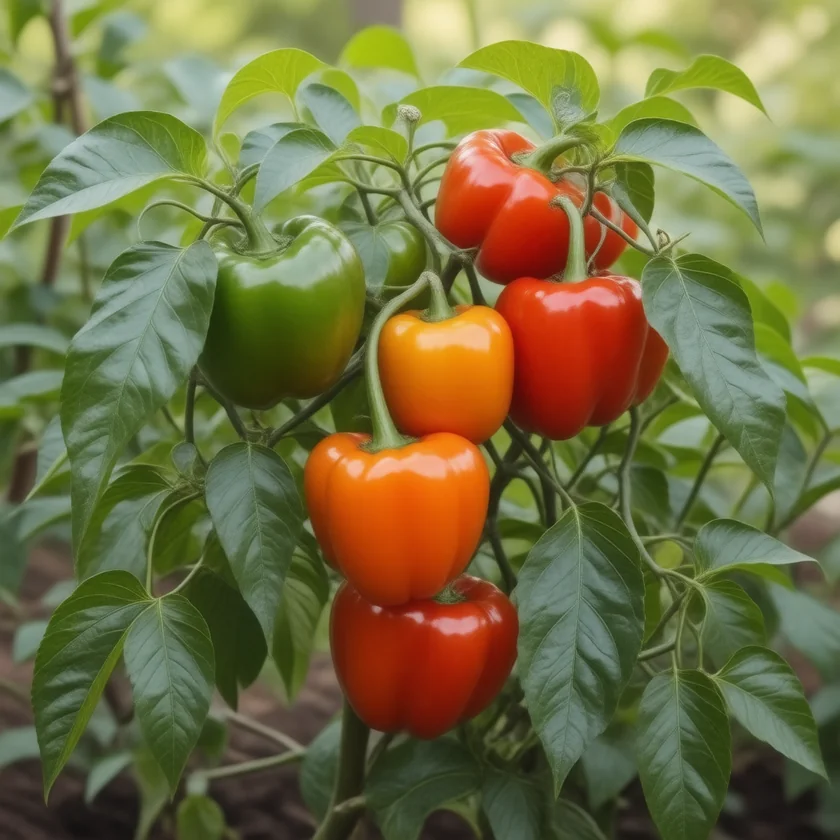
The colour of a bell pepper is a list of ingredients. Red comes mostly from capsanthin, a carotenoid almost unique to peppers and paprika; the orange and gold shades from beta-carotene, beta-cryptoxanthin, zeaxanthin and violaxanthin; and the green from chlorophyll masking a quite different carotenoid mix that is rich in lutein. Which pigments you get therefore depends on which colour you buy, and the differences are large: USDA's figures give red peppers 1,620 micrograms of beta-carotene per 100 g against 208 in green, while green peppers carry 341 micrograms of lutein plus zeaxanthin against only 51 in red. This article walks through what each pigment is, what ripening does to them, how much the body actually absorbs from a pepper (and how a little oil changes that), what the eye-health evidence really shows — including the large AREDS2 trial and its limits — and why "eat peppers for your eyes" is a reasonable habit but not a treatment.
Table of Contents
- The Pigments, Colour by Colour
- How Ripening Rewrites the Mix
- Capsanthin: The Red That Only Peppers Make
- How Much Gets Absorbed, and the Oil Rule
- Lutein, Zeaxanthin and the Macula
- What the Eye Trials Actually Found
- Beta-Carotene, Vitamin A and the Smoking Lesson
- Cooking, Storage and Practical Amounts
- Who Gets the Most From This
- Key Research Papers
- Connections
- Featured Videos
The Pigments, Colour by Colour
Carotenoids are fat-soluble pigments plants make to harvest light and to protect their tissues from it. Peppers make an unusually wide range. The USDA reference values for raw sweet peppers, per 100 g, show how sharply the mix changes with colour:
- Red: beta-carotene 1,620 µg; beta-cryptoxanthin 490 µg; lutein plus zeaxanthin 51 µg; alpha-carotene 20 µg. Total vitamin A activity 157 µg RAE — about 17% of the Daily Value.
- Green: beta-carotene 208 µg; beta-cryptoxanthin 7 µg; lutein plus zeaxanthin 341 µg; alpha-carotene 21 µg. Vitamin A activity 18 µg RAE.
- Yellow: beta-carotene 120 µg; vitamin A activity 10 µg RAE. (USDA's yellow entry does not list the xanthophylls separately.)
Capsanthin and its partner capsorubin do not appear in the USDA table because they have no vitamin A activity and are not routinely analysed, but they are the dominant pigments of a ripe red pepper. Sun and colleagues' 2007 retail comparison measured 8.0 micrograms of capsanthin per gram of fresh red pepper — more than the beta-carotene (5.4 µg/g) in the same sample — and found capsanthin undetectable in green peppers. The same study found the red pepper richest in the flavonoids quercetin (34 µg/g) and luteolin (11 µg/g), and the yellow pepper lowest in beta-carotene.
Orange peppers deserve their own line. Sommerburg and colleagues' 1998 survey of 33 fruits and vegetables, done specifically to find dietary sources of the two macular pigments, found that orange pepper had the highest proportion of zeaxanthin of any vegetable tested — 37% of its total carotenoids — while sweetcorn was the richest in lutein (60%). Perry, Rasmussen and Johnson's 2009 compositional tables likewise place orange peppers among the few common foods where zeaxanthin, the scarcer of the two macular pigments, is the main xanthophyll. Most foods deliver lutein with a little zeaxanthin; orange peppers are one of the few that reverse the ratio.
How Ripening Rewrites the Mix
A green pepper is unripe fruit whose carotenoids are the chloroplast set — lutein, violaxanthin, neoxanthin, some beta-carotene — the same pigments that are in every green leaf and are unmasked in autumn. As the fruit ripens, the chloroplasts become chromoplasts, chlorophyll is broken down, and a new set of genes switches on. Ha and colleagues (2007) followed carotenoid accumulation across seven ripening colour types and found that red peppers accumulate steadily rising total carotenoids through ripening, while non-red types accumulate less and in different proportions. The red colour depends on one enzyme, capsanthin-capsorubin synthase, which converts the orange antheraxanthin and violaxanthin into capsanthin and capsorubin. The same study made a nice discovery: two yellow varieties still carry the gene for that enzyme, but with mutations that break it, which is why they stop at yellow.
The practical consequences, confirmed by Howard and colleagues' maturity study in 2000, are that capsanthin and zeaxanthin rise as the pepper ripens while lutein falls. So the choice of colour is a genuine trade:
- Red for beta-carotene (vitamin A activity), beta-cryptoxanthin, capsanthin and the most vitamin C after yellow.
- Orange for zeaxanthin in particular.
- Green for lutein — nearly seven times the lutein-plus-zeaxanthin of red, by USDA's figures — at the cost of the red pigments and some vitamin C.
Mixed colours in the same dish is not a presentation trick; it is the way to get the whole set.
Capsanthin: The Red That Only Peppers Make
Capsanthin is an oxygenated carotenoid (a xanthophyll) found in quantity only in Capsicum — sweet peppers, chillies and the paprika made from them. It is a strong antioxidant in the test tube, and it is the pigment that makes paprika the food industry's natural red colourant. The interesting question for a person eating a pepper is whether any of it gets in.
It does, and the human data are old but clear. Oshima and colleagues (1997) gave four men capsanthin-rich paprika juice for a week and traced the pigment in their blood. Capsanthin, absent before the study, appeared in plasma, plateaued at 0.10–0.12 micromol/L within two days, and had gone by day 16 after they stopped. Its half-life was about 20 hours — against 222 hours for lycopene from tomato soup in the same men — so capsanthin is taken up readily but cleared quickly; it does not build up the way lycopene or lutein do. In plasma it rode mainly on LDL (44%) and HDL (43%). Nishino and colleagues (2015) gave five healthy volunteers 14 mg a day of a paprika carotenoid preparation for four weeks: plasma carotenoids rose 1.2-fold and red-cell carotenoids 2.2-fold, and capsanthin and its metabolite capsanthone were both detectable in red blood cells.
That is where the human evidence for capsanthin stops. It is absorbed, it circulates briefly, it reaches cells. Claims that go further — that capsanthin raises HDL, reduces body fat or protects the retina — come from animal and cell studies, and this page does not present them as effects in people. If you eat red peppers and paprika regularly you will carry a low, steady level of a pigment almost no other food supplies, which is a reasonable thing to want, and no more than that can be said with confidence today.
How Much Gets Absorbed, and the Oil Rule
Carotenoids are locked inside plant cells and dissolve only in fat. Two things therefore govern how much of a pepper's pigment reaches you: whether the cell walls have been broken (by chewing, chopping or cooking) and whether there is fat in the meal to carry the pigments into the micelles the gut absorbs from. Three human experiments make the point better than any mechanism:
- Brown and colleagues (2004) fed seven people the same vegetable salad three times with fat-free, reduced-fat (6 g oil) and full-fat (28 g oil) dressings, sampling blood hourly for 12 hours. With the fat-free dressing, the appearance of alpha-carotene, beta-carotene and lycopene in the blood was negligible. Reduced-fat dressing let some through; full-fat dressing let through the most.
- Unlu and colleagues (2005) added 150 g of avocado to salsa and to salad in two crossover studies of 11 people each. From the salsa, lycopene and beta-carotene absorption rose 4.4- and 2.6-fold; from the salad, alpha-carotene, beta-carotene and lutein rose 7.2-, 15.3- and 5.1-fold. Avocado oil did the same as the fruit.
- van het Hof and colleagues (1999) compared a high-vegetable diet (490 g a day for four weeks) with a low-vegetable diet plus purified beta-carotene and lutein. Plasma carotenoids and vitamin C rose on the vegetable diet, but the lutein response from vegetables was about two-thirds of that from the pure pigment and the beta-carotene response only about one-seventh — whole vegetables release their pigments incompletely.
For a bell pepper the rules that follow are simple. Eat it with fat: olive oil in the dressing, avocado in the salad, a little butter or oil in the pan, cheese or nuts on the plate. Fat-free dressing on a pepper salad throws most of the carotenoids away. Chop it finely or cook it when the carotenoids are the goal: cooking softens cell walls and improves carotenoid release even as it costs some vitamin C (the vitamin C article has the numbers). And do not confuse the label with the plate: USDA's 1,620 micrograms of beta-carotene per 100 g of red pepper is what is in the pepper, not what reaches you.
Lutein, Zeaxanthin and the Macula
The macula is the small central patch of the retina responsible for sharp, detailed vision, and it is yellow because it concentrates two carotenoids — lutein and zeaxanthin — to an extraordinary degree. They are the only carotenoids found there. They absorb blue light before it reaches the photoreceptors and quench the oxidative by-products of light absorption, which is the plausible mechanism behind decades of interest in whether eating more of them protects the eye as it ages.
Can food change the amount in the eye? Yes, in most people. Hammond and colleagues (1997) had volunteers add 60 g of spinach (about 10.8 mg lutein) and 150 g of sweetcorn to their daily diet for up to 15 weeks and measured macular pigment density. Eight of eleven "retinal responders" raised their serum lutein by about a third and their macular pigment by about 19% within four weeks; two raised their serum levels but not their macular pigment; one responded in neither. In a subject given only corn — a zeaxanthin source — serum zeaxanthin rose 70% and macular pigment 25%. Johnson and colleagues (2000) repeated the spinach-and-corn protocol in seven people and found serum and cheek-cell lutein rose, while the zeaxanthin response was weaker and shorter-lived. The pigments in food do reach the macula; the response varies from person to person; and it takes weeks, not days.
Where peppers fit: they are not the richest lutein source — the 60 g of spinach in Hammond's study carried about 10.8 mg, whereas 100 g of green pepper carries a third of a milligram of lutein plus zeaxanthin by USDA's figure. The pepper's distinctive contribution is zeaxanthin, the scarcer pigment, from orange peppers in particular. A realistic eye-focused pattern is leafy greens for lutein most days and orange peppers (with sweetcorn and egg yolks, the other good zeaxanthin foods) for the zeaxanthin side, always with some fat.
What the Eye Trials Actually Found
The evidence has three layers, and they say different things.
Observational studies are encouraging. In the Eye Disease Case-Control Study (Seddon and colleagues, 1994; 356 people with advanced macular degeneration and 520 controls), those in the top fifth of carotenoid intake had 43% lower odds of advanced AMD than those in the bottom fifth, and lutein and zeaxanthin — mainly from dark green leafy vegetables — showed the strongest association. Ma and colleagues' 2012 meta-analysis of six cohort studies found no association between dietary lutein and zeaxanthin and early AMD (relative risk 0.96), but a 26% lower risk of late AMD (RR 0.74) and a 32% lower risk of the neovascular "wet" form (RR 0.68). These are cohorts: people who eat a lot of leafy greens and coloured vegetables differ in many other ways.
The prevention trials are negative. The Cochrane review of antioxidant vitamins and minerals for preventing AMD in people who do not have it (Evans and Lawrenson, 2017) found that supplements do not prevent the disease from developing. Nobody without AMD should take eye vitamins in the expectation of avoiding it.
The progression trials are where the real result is, and it is a supplement result, not a food one. The Age-Related Eye Disease Study 2 (AREDS2, 2013) randomised 4,203 people aged 50 to 85 who already had intermediate AMD to lutein 10 mg plus zeaxanthin 2 mg, omega-3 fatty acids, both, or placebo, on top of the original AREDS antioxidant-and-zinc formula, for about five years. In the primary analysis, adding lutein and zeaxanthin did not significantly reduce progression to advanced AMD beyond the AREDS formula. Exploratory analyses (AREDS2 Report 3, 2014) found a 10% lower hazard of progression with lutein/zeaxanthin (hazard ratio 0.90, 95% CI 0.82–0.99), a larger effect against the formula containing beta-carotene, and the biggest benefit in people whose dietary intake of lutein and zeaxanthin was lowest. The 2023 Cochrane update (Evans and Lawrenson) pooled the trials in people with AMD and concluded that AREDS-type multivitamin formulas probably do slow progression to late AMD (odds ratio 0.72), with most of the evidence coming from AREDS itself. The ten-year follow-up (Chew and colleagues, 2022) confirmed that replacing beta-carotene with lutein/zeaxanthin was both safer and at least as effective, which is why the current AREDS2 formula contains no beta-carotene.
The honest summary for someone reading this about their own eyes: the supplement that slows established AMD is a specific high-dose formula, taken by people who already have intermediate disease; it contains 10 mg of lutein, which is roughly 25 times the lutein in a whole green pepper. A pepper is not that pill. What a diet rich in coloured vegetables and greens plausibly does — on cohort evidence and on the AREDS2 finding that the low-dietary-intake group benefited most — is keep a person out of the lowest-intake group where risk is highest. That is a good reason to eat them and a poor reason to expect them to treat anything.
Beta-Carotene, Vitamin A and the Smoking Lesson
Red peppers are a good beta-carotene source — 1,620 micrograms per 100 g, giving 157 micrograms of retinol activity equivalents, about 17% of the Daily Value for vitamin A. The body converts beta-carotene to vitamin A only as it needs it, so there is no vitamin A toxicity risk from food carotenoids, which is one reason coloured vegetables are the safer route to vitamin A than high-dose retinol supplements.
There is a second reason, and it is one of the most important cautionary tales in nutrition. The Alpha-Tocopherol, Beta-Carotene Cancer Prevention Study (1994) gave 29,133 male smokers 20 mg a day of beta-carotene, vitamin E, both or placebo for five to eight years, expecting fewer lung cancers because people who ate carotenoid-rich vegetables had fewer. Instead, the men taking beta-carotene had 18% more lung cancer. The AREDS2 ten-year follow-up found the same signal persisting in former smokers who had been assigned beta-carotene. High-dose isolated beta-carotene is harmful to smokers and former smokers; the vegetables that contain it, in the amounts vegetables contain, have never shown that harm. A red pepper carries about 1.6 mg of beta-carotene per 100 g — a twelfth of the ATBC dose — alongside a hundred other compounds, in a food that observational studies associate with less disease, not more. This is the clearest case on the site for the food over the extract.
Cooking, Storage and Practical Amounts
Carotenoids behave almost oppositely to vitamin C in the kitchen. They are stable to moderate heat, do not leach into water, and are more available after cooking because the cell walls that hold them have been softened. Hwang and colleagues' 2012 cooking study of red peppers found that stir-frying and roasting preserved total carotenoid content well while stripping little of the vitamin C, whereas boiling was the worst method on every measure. Roasting a red pepper until the skin blisters, peeling it and dressing it in olive oil is close to the ideal preparation for the pigments: cell walls broken, fat present, water-soluble losses small. Prolonged high heat and light exposure do degrade carotenoids and shift some into less active forms, so a slow-roasted pepper is not improved by being left under a heat lamp.
Storage is kind to them too: whole peppers hold their carotenoids well in the fridge for a week or more, and ripening on the counter continues to build capsanthin in a pepper that was picked partly coloured.
Practical amounts, in food terms:
- A whole raw red pepper of around 120 g gives roughly 1.9 mg of beta-carotene and around 190 micrograms RAE of vitamin A — about a fifth of the day's vitamin A — plus its capsanthin.
- A whole green pepper of around 120 g gives about 0.4 mg of lutein plus zeaxanthin, which is a useful contribution but a fraction of what a serving of cooked spinach or kale provides.
- One orange pepper is the pepper to choose when zeaxanthin is the goal; USDA does not list a separate orange entry, but the compositional surveys above place it among the top common zeaxanthin foods.
- Always with fat — a tablespoon of olive oil in the dressing, a quarter of an avocado, a handful of nuts or a little cheese is enough to change absorption from negligible to good.
Who Gets the Most From This
People who eat few coloured vegetables and greens. The AREDS2 exploratory analysis found the lutein/zeaxanthin benefit concentrated in those with the lowest dietary intake, and the cohort associations are between the top and bottom of the intake range. The person who gains most from adding peppers is the person starting from little.
People with a family history of macular degeneration, or early changes on an eye exam. Not because a pepper treats AMD — it does not — but because a diet rich in lutein and zeaxanthin foods is the one dietary factor with consistent cohort support, and it is free of the risks of the supplements. Anyone with intermediate AMD should discuss the actual AREDS2 formula with their ophthalmologist; that decision is about a specific pill, not about vegetables.
Smokers and former smokers. This is the group for whom food beta-carotene is the only sensible source. Red peppers, carrots and squash carry it in amounts never associated with harm; a 20 mg beta-carotene capsule is the thing to avoid.
People eating salads with fat-free dressing. The single easiest improvement on this page: put the oil back, and the carotenoids in the pepper stop passing straight through.
Who should be careful: essentially nobody, for the carotenoids themselves. Very high intakes of carotenoid-rich foods over months can tint the skin yellow-orange (carotenodermia), which is harmless and fades, and is far more often caused by carrot or pumpkin habits than by peppers. The pepper-specific cautions — oral allergy syndrome, the nightshade question, pesticide residues — are in the safety article.
Key Research Papers
Author names, titles and journals are plain text; only the PMID or DOI is a link. Every identifier below was checked against PubMed or Crossref before publication.
- Sun T, Xu Z, Wu CT, Janes M, Prinyawiwatkul W, No HK (2007). Antioxidant activities of different colored sweet bell peppers (Capsicum annuum L.). Journal of Food Science. — PubMed PMID: 17995862
- Howard LR, Talcott ST, Brenes CH, Villalon B (2000). Changes in phytochemical and antioxidant activity of selected pepper cultivars (Capsicum species) as influenced by maturity. Journal of Agricultural and Food Chemistry. — PubMed PMID: 10820084
- Ha SH, Kim JB, Park JS, Lee SW, Cho KJ (2007). A comparison of the carotenoid accumulation in Capsicum varieties that show different ripening colours: deletion of the capsanthin-capsorubin synthase gene is not a prerequisite for the formation of a yellow pepper. Journal of Experimental Botany. — PubMed PMID: 17728301
- Sommerburg O, Keunen JE, Bird AC, van Kuijk FJ (1998). Fruits and vegetables that are sources for lutein and zeaxanthin: the macular pigment in human eyes. British Journal of Ophthalmology. — PubMed PMID: 9828775
- Perry A, Rasmussen H, Johnson EJ (2009). Xanthophyll (lutein, zeaxanthin) content in fruits, vegetables and corn and egg products. Journal of Food Composition and Analysis. — doi:10.1016/j.jfca.2008.07.006
- Oshima S, Sakamoto H, Ishiguro Y, Terao J (1997). Accumulation and clearance of capsanthin in blood plasma after the ingestion of paprika juice in men. The Journal of Nutrition. — PubMed PMID: 9237940
- Nishino A, Ichihara T, Takaha T, et al. (2015). Accumulation of paprika carotenoids in human plasma and erythrocytes. Journal of Oleo Science. — PubMed PMID: 26369598
- Brown MJ, Ferruzzi MG, Nguyen ML, et al. (2004). Carotenoid bioavailability is higher from salads ingested with full-fat than with fat-reduced salad dressings as measured with electrochemical detection. The American Journal of Clinical Nutrition. — PubMed PMID: 15277161
- Unlu NZ, Bohn T, Clinton SK, Schwartz SJ (2005). Carotenoid absorption from salad and salsa by humans is enhanced by the addition of avocado or avocado oil. The Journal of Nutrition. — PubMed PMID: 15735074
- van het Hof KH, Tijburg LB, Pietrzik K, Weststrate JA (1999). Bioavailability of lutein from vegetables is 5 times higher than that of beta-carotene. The American Journal of Clinical Nutrition. — PubMed PMID: 10426704
- Hammond BR Jr, Johnson EJ, Russell RM, et al. (1997). Dietary modification of human macular pigment density. Investigative Ophthalmology & Visual Science. — PubMed PMID: 9286268
- Johnson EJ, Hammond BR, Yeum KJ, et al. (2000). Relation among serum and tissue concentrations of lutein and zeaxanthin and macular pigment density. The American Journal of Clinical Nutrition. — PubMed PMID: 10837298
- Seddon JM, Ajani UA, Sperduto RD, et al. (1994). Dietary carotenoids, vitamins A, C, and E, and advanced age-related macular degeneration. Eye Disease Case-Control Study Group. JAMA. — PubMed PMID: 7933422
- Ma L, Dou HL, Wu YQ, et al. (2012). Lutein and zeaxanthin intake and the risk of age-related macular degeneration: a systematic review and meta-analysis. British Journal of Nutrition. — PubMed PMID: 21899805
- Age-Related Eye Disease Study 2 (AREDS2) Research Group (2013). Lutein + zeaxanthin and omega-3 fatty acids for age-related macular degeneration: the Age-Related Eye Disease Study 2 (AREDS2) randomized clinical trial. JAMA. — PubMed PMID: 23644932
- Age-Related Eye Disease Study 2 (AREDS2) Research Group (2014). Secondary analyses of the effects of lutein/zeaxanthin on age-related macular degeneration progression: AREDS2 report No. 3. JAMA Ophthalmology. — PubMed PMID: 24310343
- Chew EY, Clemons TE, Agrón E, et al. (2022). Long-term outcomes of adding lutein/zeaxanthin and ω-3 fatty acids to the AREDS supplements on age-related macular degeneration progression: AREDS2 Report 28. JAMA Ophthalmology. — PubMed PMID: 35653117
- Evans JR, Lawrenson JG (2017). Antioxidant vitamin and mineral supplements for preventing age-related macular degeneration. Cochrane Database of Systematic Reviews. — PubMed PMID: 28756617
- Evans JR, Lawrenson JG (2023). Antioxidant vitamin and mineral supplements for slowing the progression of age-related macular degeneration. Cochrane Database of Systematic Reviews. — PubMed PMID: 37702300
- Alpha-Tocopherol, Beta Carotene Cancer Prevention Study Group (1994). The effect of vitamin E and beta carotene on the incidence of lung cancer and other cancers in male smokers. The New England Journal of Medicine. — PubMed PMID: 8127329
- Hwang IG, Shin YJ, Lee S, Lee J, Yoo SM (2012). Effects of different cooking methods on the antioxidant properties of red pepper (Capsicum annuum L.). Preventive Nutrition and Food Science. — PubMed PMID: 24471098
PubMed Topic Searches
Connections
- All Food
- Bell Peppers
- Bell Pepper Benefits: What the Evidence Actually Shows
- Bell Peppers: Nutrient Profile
- Bell Pepper Vitamin C: Red Versus Green
- Bell Peppers, Blood Sugar, Weight, and the Heart
- Bell Peppers: Nightshades, Allergy, Pesticides, and Safety
- Beta-Carotene
- Lutein
- Zeaxanthin
- Vitamin A
- Age-Related Macular Degeneration
- Spinach
- Carrots
- Avocado