Nuts and Seeds
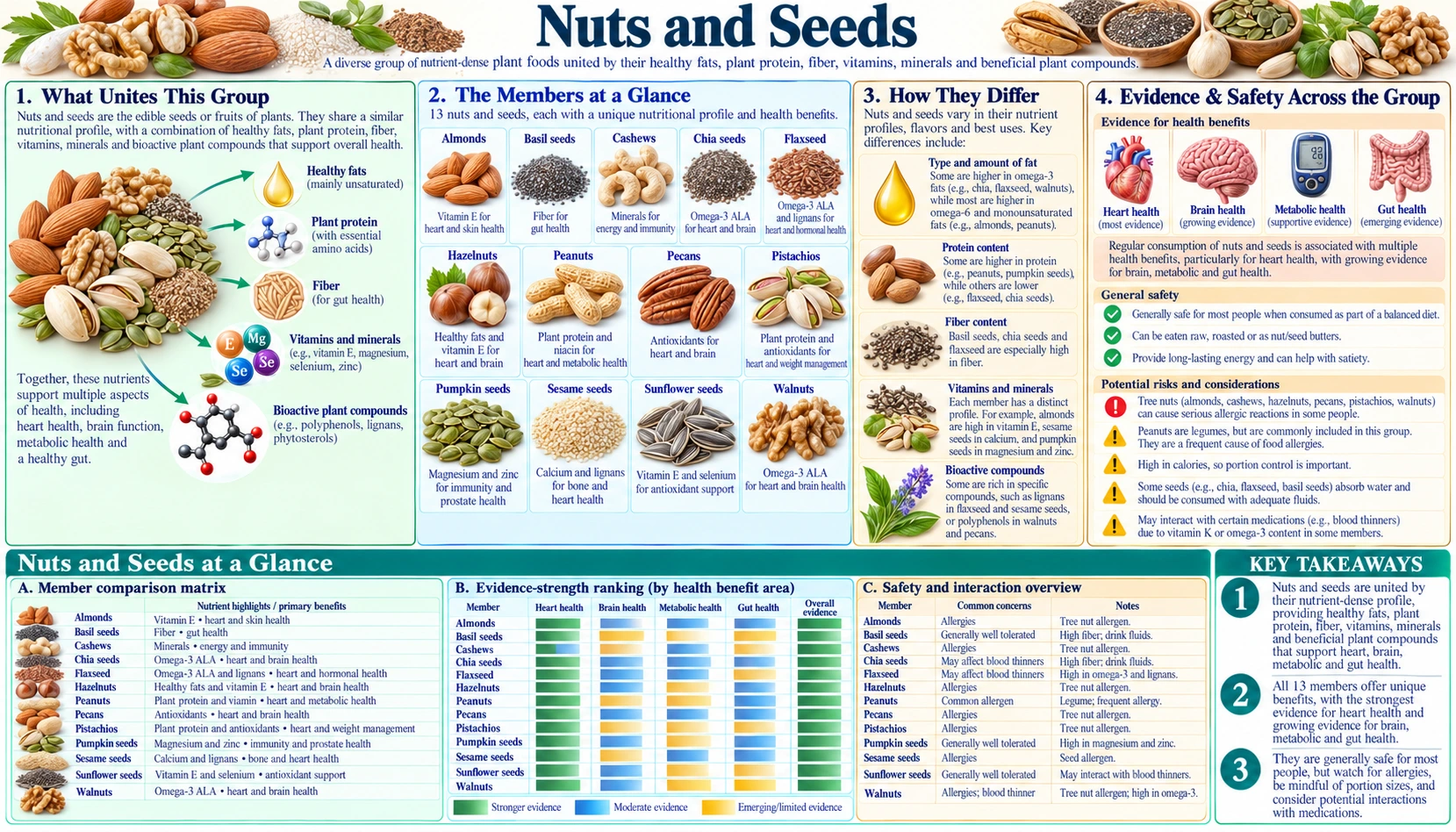
The Foods (13)
Walnuts
Persian walnuts eaten for nine millennia, rich in ALA omega-3 and polyphenols, studied for brain, heart and gut-microbiome health.
Read the deep dive →Chia Seeds
Tiny mint-family seeds once an Aztec and Maya staple, very high in fiber and plant omega-3; dry seeds can swell in the throat.
Read the deep dive →Pumpkin Seeds
Pepitas from pumpkins and squash, among the best whole-food magnesium sources, also giving zinc and iron; prostate evidence is small and mixed.
Read the deep dive →Almonds
Ancient Middle Eastern tree nut rich in vitamin E, magnesium and fiber, studied for heart health, blood sugar and weight; tree nut allergen.
Read the deep dive →Flaxseed
Seed of the linen plant, the richest plant source of ALA omega-3 and lignans, with well-documented effects on cholesterol and blood pressure.
Read the deep dive →Peanuts
A South American legume eaten like a nut, rich in protein and niacin; the page covers heart studies, aflatoxin and peanut allergy.
Read the deep dive →Pecans
The only major tree nut native to North America, high in oleic fat and showing the highest antioxidant capacity among common tree nuts.
Read the deep dive →Pistachios
Green desert-tree seeds with top tree-nut protein, high potassium, and eye-friendly lutein and zeaxanthin; studied for blood pressure and lipids.
Read the deep dive →Sesame Seeds
The oldest cultivated oilseed, remarkably dense in calcium, copper and unique sesamin lignans; also one of the world's major food allergens.
Read the deep dive →Sunflower Seeds
Seeds of a crop domesticated in North America, the richest common whole-food vitamin E source; sunflowers also take up soil cadmium.
Read the deep dive →Cashews
A Brazilian seed hanging beneath a false fruit, unusually rich in copper and magnesium; cashew allergy is among the more severe tree nut allergies.
Read the deep dive →Hazelnuts
European hazel kernels supplying a day's vitamin E per handful, the most folate of common tree nuts, and olive-oil-like oleic fat.
Read the deep dive →Basil Seeds
Sabja seeds from sweet basil that swell into a fiber gel; small studies on fullness and blood sugar, with choking risk when swallowed dry.
Read the deep dive →Dense sources of fat, minerals and fibre, eaten in small amounts. Soaking, roasting and rancidity all change what a nut delivers, and the pages say how.