Cooked vs Raw Tomato Bioavailability
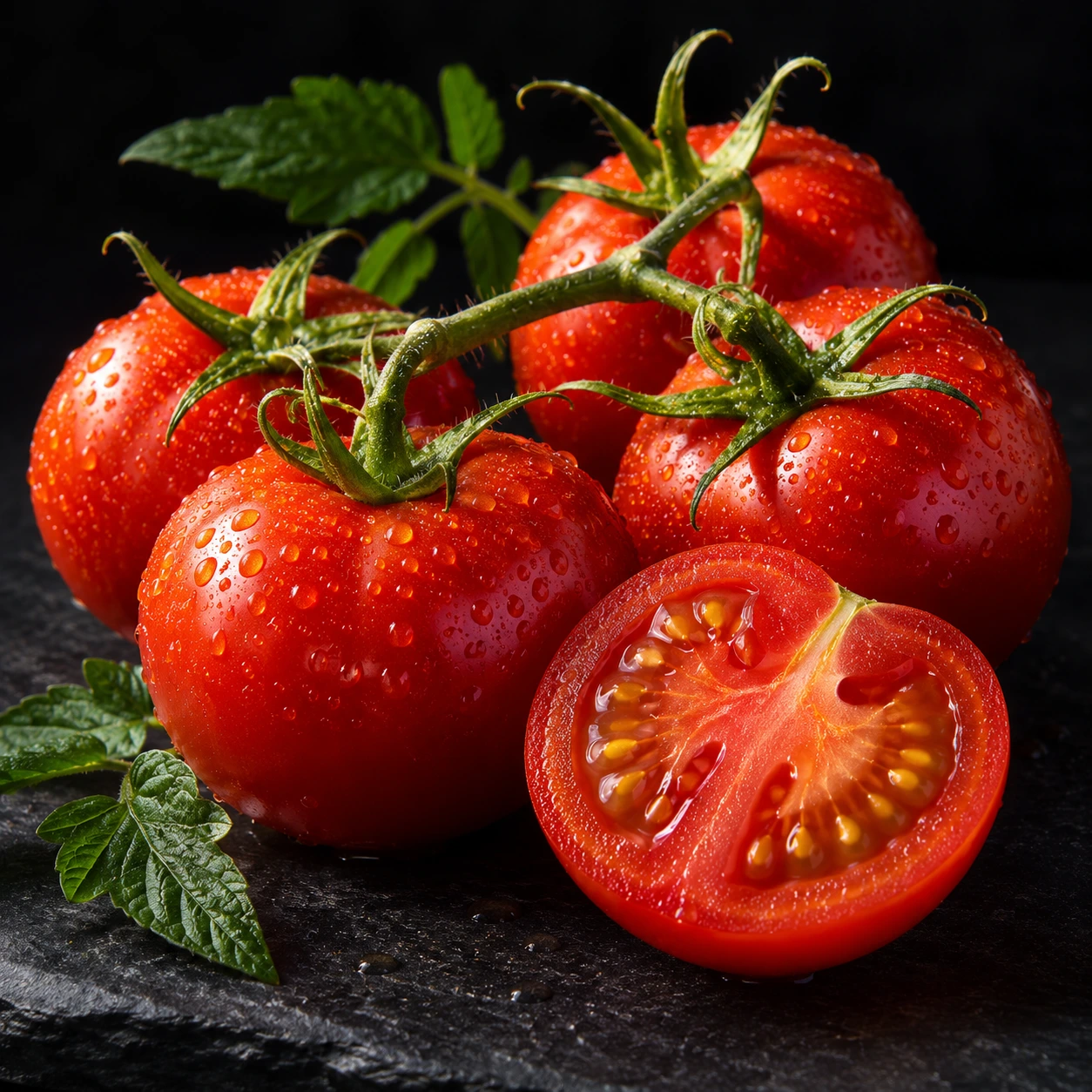
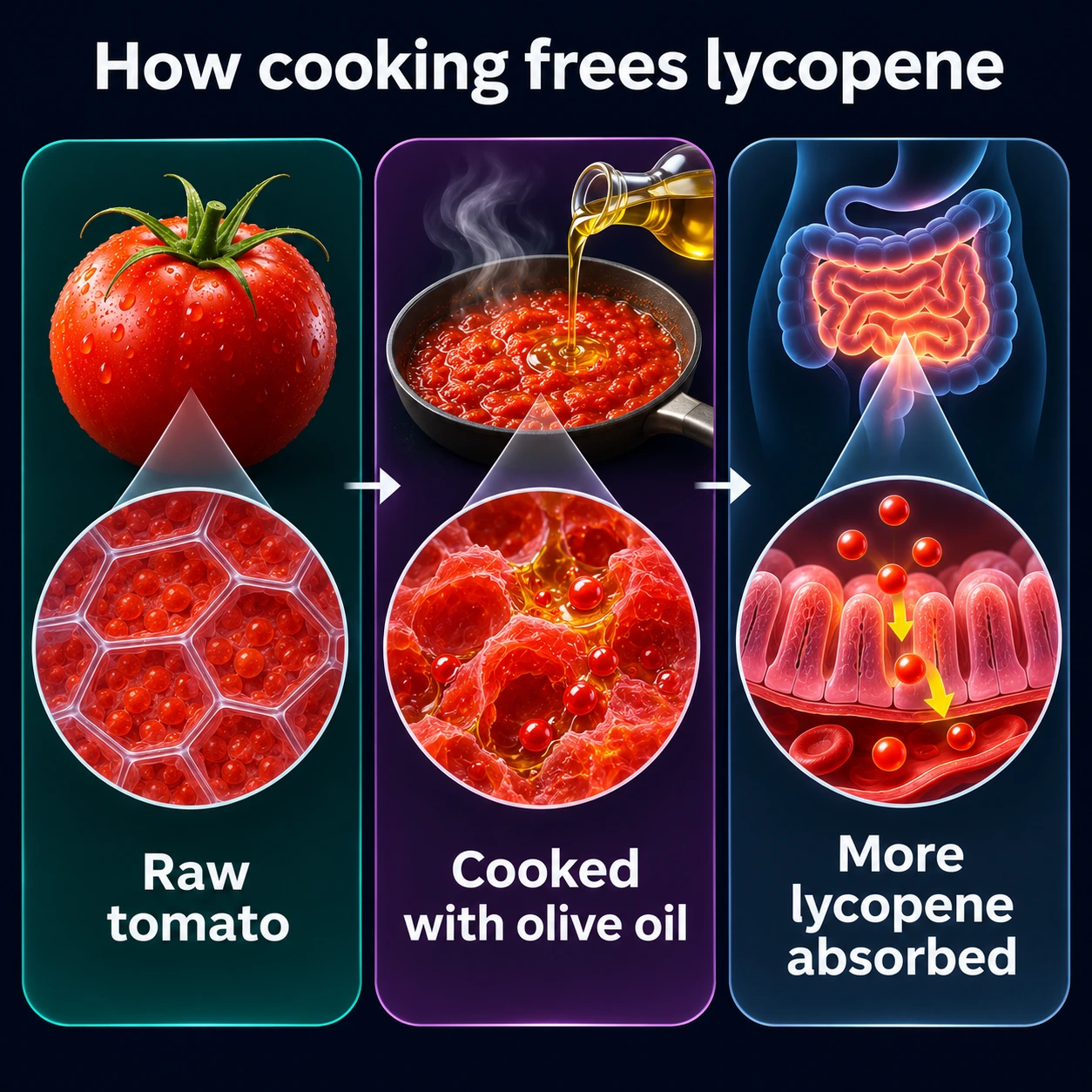
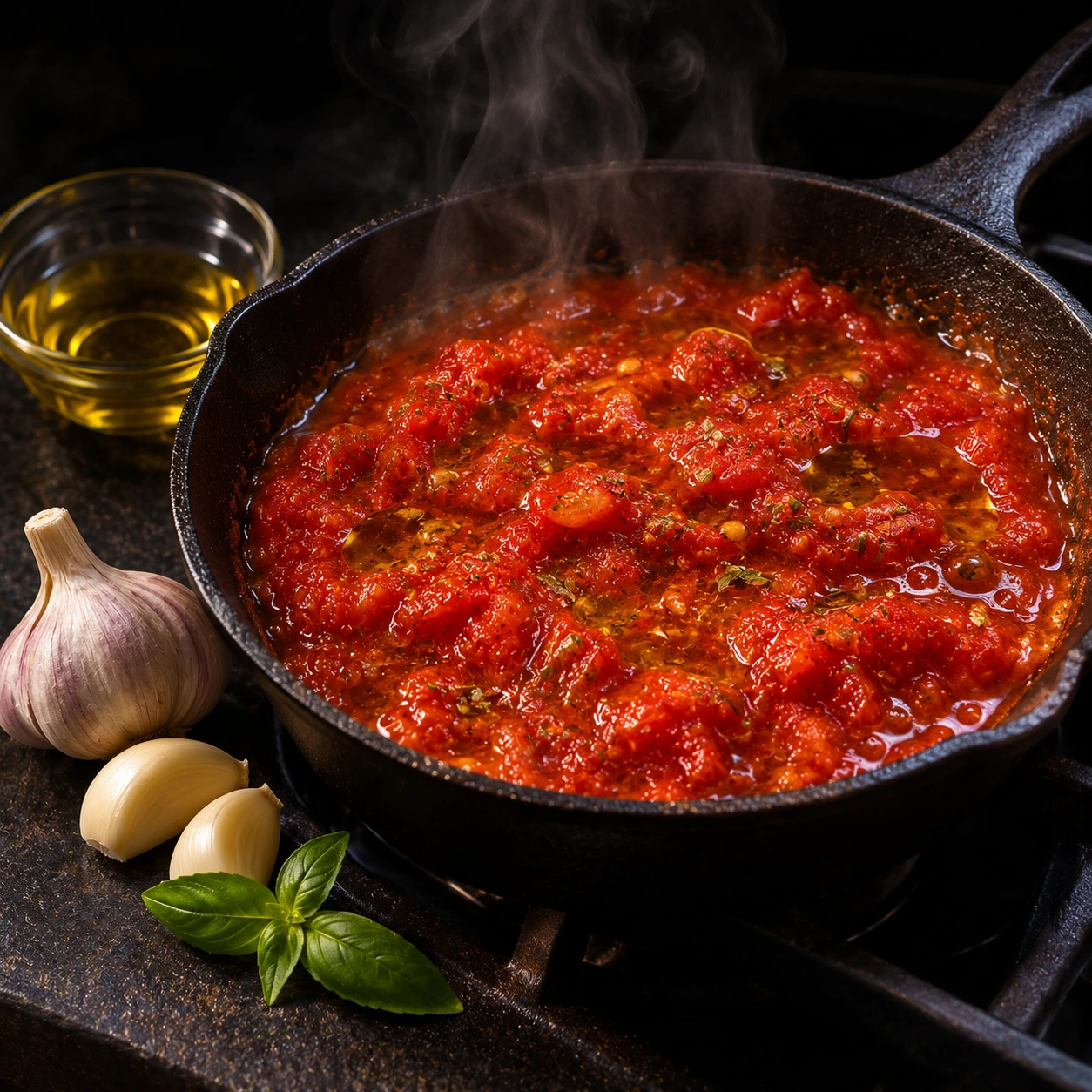
For most fruits and vegetables, cooking reduces nutritional value — heat-sensitive vitamins like vitamin C and folate degrade, and water-soluble polyphenols leach into cooking water. Tomatoes are a striking exception. The 1992 Stahl & Sies finding that blood lycopene rose only after tomato juice boiled with oil, not after unprocessed juice, and a 1997 follow-up in which tomato paste gave a 2.5-fold higher lycopene peak than fresh tomatoes, established that cooking is not merely tolerable for lycopene delivery — it is essential. The mechanism is thermal isomerization of the rigid all-trans lycopene molecule (the form present in raw tomato) to the bent 5-cis and 13-cis isomers (the forms absorbed efficiently across the intestinal epithelium and the forms that preferentially accumulate in human tissue). Add olive oil to dissolve and emulsify the lycopene in the chyme, mince the tomato pulp to disrupt the cellulose-protein matrix that traps lycopene in raw tissue, and the cooked-tomato-in-oil delivery format outperforms raw tomato by 3-4× in terms of plasma lycopene response. This is the mechanistic biology behind why Italian-American Sunday gravy, Greek psaria plaki and southern French ratatouille all converged on tomato cooked in olive oil centuries before the science existed; Spanish gazpacho reaches part of the same result without heat, as a raw, blended tomato soup dressed with olive oil.
Table of Contents
- The Stahl & Sies 1992 Discovery
- Cis-Trans Isomerization Chemistry
- Why Cis Isomers Accumulate in Human Tissue
- Cell Wall Disruption and Particle Size
- The Critical Role of Fat Co-Ingestion
- The Mediterranean Trio: Tomato + Olive Oil + Garlic
- Processing Method Comparison (Sauce, Paste, Juice, Sun-Dried)
- How Kitchen Preparation Affects Lycopene
- What Cooking Does Reduce (Vitamin C, Some Polyphenols)
- Key Research Papers
- Connections
- Featured Videos
The Stahl & Sies 1992 Discovery
Wilhelm Stahl and Helmut Sies, working at the Heinrich Heine University of Düsseldorf, published a paper in the Journal of Nutrition in 1992 that would become a foundational citation for tomato nutritional science. The experimental design was simple but pivotal. Healthy human subjects drank either unprocessed tomato juice or tomato juice that had been boiled for 1 hour with 1% corn oil, and blood (serum) lycopene was followed over the following days.
Serum lycopene rose only when the processed juice was drunk; the unprocessed juice produced no rise. Peak levels were always reached 24-48 hours after a dose, lycopene left the blood with a half-life of 2-3 days, and repeated doses raised blood levels further. Of the forms measured (all-trans, 9-cis and 13-cis lycopene), the authors reported that the cis isomers “seemed to be somewhat better absorbed” than the all-trans form.
The often-quoted 2.5-fold figure comes from a 1997 follow-up by the same group (Gärtner, Stahl and Sies, American Journal of Clinical Nutrition). Volunteers ate a single dose of 23 mg lycopene as either fresh tomatoes or tomato paste, each with 15 g corn oil. The paste gave 2.5-fold higher peak lycopene levels and a 3.8-fold larger total response (area under the curve) than the fresh tomatoes, even though the lycopene isomer pattern was the same in both foods.
The finding overturned the prior assumption that thermal processing of tomato (universal in canning, sauce, paste, ketchup, soup, and pizza preparation) was a nutritional negative driven by vitamin C degradation. For the principal phytochemical of nutritional interest in tomato — lycopene — thermal processing was not just neutral but actively beneficial. The cohort epidemiology showing the strongest prostate cancer protection from cooked tomato products (sauce, paste, soup, pizza) rather than raw tomato now had a mechanistic explanation.
Cis-Trans Isomerization Chemistry
Lycopene is an acyclic carotenoid with 11 conjugated double bonds along a 40-carbon chain. Each double bond can in principle exist in either cis (Z) or trans (E) configuration. In nature, the molecule is synthesized in the all-trans configuration, which is the lowest-energy thermodynamically stable form — the linear, fully-extended shape that gives raw tomatoes their characteristic red color.
Heat input above approximately 75°C provides enough energy to overcome the rotational barrier around the double bonds, allowing isomerization from the all-trans form to thermodynamically less stable but biologically more active cis forms. The most common cis isomers produced by typical tomato processing are 5-cis-lycopene, 9-cis-lycopene, and 13-cis-lycopene. The 5-cis form is the most thermodynamically stable cis-isomer and the most abundant in heat-processed tomato products and in human plasma.
The geometric difference between all-trans and the cis isomers is functionally important. The all-trans molecule is rigidly linear, approximately 31 nanometers long, and packs tightly into crystalline aggregates within the chromoplast of raw tomato cells. The cis isomers are bent (the 5-cis isomer has a kink at the 5-6 double bond, the 13-cis at the 13-14 bond), which prevents crystalline packing and dramatically improves dissolution into the mixed-micelle lipid carriers in the small intestine. The bent shape is also a better fit for the intestinal carotenoid transporter SR-BI (scavenger receptor class B type 1) and for the lipoprotein carriers (chylomicron, low-density lipoprotein, LDL) that deliver carotenoids to peripheral tissues.
Typical raw tomato lycopene composition: ~95% all-trans, ~5% cis isomers combined. Typical canned tomato sauce composition: ~70% all-trans, ~30% cis isomers. Typical commercially processed tomato paste: ~65% all-trans, ~35% cis. The shift from 5% to 30% cis content accompanying typical thermal processing is one proposed reason for the bioavailability gain, but not the only one: in the 1997 paste-versus-fresh trial the isomer pattern was the same in both foods, yet the paste still gave 2.5-fold higher peak lycopene, which points to release of lycopene from the food structure.
The most direct human test of the cis form itself is a 2015 crossover trial in 11 adults (Cooperstone and colleagues). Each drank juice delivering 10 mg lycopene, once from tangerine tomatoes (94% cis-lycopene) and once from red tomatoes (10% cis). Lycopene absorption was 8.5 times higher from the tangerine juice: about 48% of the dose was absorbed, against about 5% from the red juice, with large differences between people.
Why Cis Isomers Accumulate in Human Tissue
The tissue distribution of lycopene in humans tells the same story as the absorption data. Despite raw tomatoes containing >95% all-trans lycopene, human plasma, prostate, liver, adrenal, and skin tissue all contain predominantly cis-isomers — typically 60-80% cis-lycopene with corresponding 20-40% all-trans. A 1999 paper (Boileau and colleagues) summed up the observation as serum and tissue lycopene being “more than 50% cis-lycopene” while tomato foods contain mainly all-trans lycopene. In the same paper's animal study in ferrets, the lycopene dose and gut contents held 6.2-17.5% cis-lycopene, while the lymph that carries absorbed fat away from the gut held 77.4% cis-lycopene.
This cis-isomer enrichment in tissue happens through three concurrent mechanisms:
- Preferential absorption: at the intestinal epithelium, the cis-isomers cross the brush-border membrane via SR-BI and CD36 transporters more efficiently than the all-trans form.
- Endogenous isomerization: small amounts of all-trans lycopene that do enter circulation are isomerized to cis forms within tissues, likely catalyzed by free radicals and oxidative microenvironment.
- Preferential tissue retention: the bent cis isomers bind more readily to tissue lycopene-binding proteins (still incompletely characterized but functionally evident in tissue-distribution kinetics).
The functional consequence: the lycopene that matters biologically — the cis-isomer pool accumulated in prostate, liver, adrenal, and skin — is more efficiently established by dietary cooked-tomato sources that already contain a high cis-fraction at the moment of ingestion. Raw tomato can still build up tissue cis-isomers over time through endogenous isomerization, but at a substantially slower rate per gram of intake.
Cell Wall Disruption and Particle Size
Beyond the cis-trans isomerization mechanism, thermal processing also disrupts the structural barriers that physically trap lycopene in raw tomato tissue. Lycopene in fresh tomato is sequestered in chromoplast organelles within plant cells, bound to a protein-cellulose-pectin matrix that limits its release during digestion. Even thorough chewing leaves a substantial fraction of raw-tomato lycopene inaccessible to digestive enzymes — the lycopene crystals remain protected within intact plant cell wall fragments and pass through the gut largely unabsorbed.
Cooking softens the cellulose-pectin matrix, denatures the protein scaffolds that hold lycopene crystals in place, and releases lycopene into the soluble phase of the cooked tomato product. Mechanical processing (blending, milling, juicing, pressing) further reduces particle size, exposing more lycopene to the digestive milieu.
The particle-size effect is measurable. Tomato paste prepared with a finer particle size produces approximately 30-50% higher plasma lycopene response than the same paste prepared with coarser particle size, controlling for total lycopene content. This is why high-quality commercial tomato paste — produced with industrial homogenization to particle sizes well below typical home-prepared sauce — tends to outperform home-cooked sauce per gram of lycopene.
In kitchen terms, these findings point to three steps: (1) a longer cooking time (a slow simmer of 30-45 minutes or more rather than a quick sauté), (2) blending or pureeing at least part of the cooked sauce to reduce particle size, and (3) pressing it through a food mill or sieve to break cell-wall fragments and release additional lycopene. The classic Italian passato preparation accomplishes all three.
The Critical Role of Fat Co-Ingestion
Lycopene is highly lipophilic (essentially insoluble in water) and requires dietary fat for intestinal absorption. The absorption pathway: dietary triglyceride is hydrolyzed by pancreatic lipase to fatty acids and monoglycerides; these combine with bile salts and lycopene to form mixed micelles in the small-intestinal lumen; mixed micelles deliver their lycopene cargo to the intestinal enterocyte; lycopene crosses the apical membrane via SR-BI; cytosolic lycopene is packaged into chylomicrons (assembled in the enterocyte from triglyceride, phospholipid, cholesterol, and apolipoprotein B-48); chylomicrons enter the lymph, traverse the thoracic duct, enter the bloodstream, and deliver lycopene to peripheral tissue and the liver.
Every step of this pathway depends on dietary fat. In a 2004 trial (Brown and colleagues, 7 people), salads containing cherry tomatoes were eaten with dressings holding 0, 6 or 28 g of oil: with the fat-free dressing, lycopene appearance in the blood was negligible (“essentially no absorption”), and absorption rose with the 6 g dressing and rose further with the 28 g dressing. A 2000 review (van het Hof and colleagues) put the fat needed for carotenoid absorption at roughly 3-5 g per meal — about one teaspoon of olive oil (USDA lists 4.5 g per teaspoon and 13.5 g per tablespoon).
The fat dose-response is steep at the low end and flattens at moderate intake. The 2000 review describes the amount of fat needed as low, although the 2004 salad trial still found more absorption with 28 g than with 6 g of oil. The type of fat matters less than the absolute amount — olive oil, butter, avocado, full-fat dairy, and nuts all support lycopene absorption.
A 2005 study in the Journal of Nutrition (Unlu and colleagues, 11 people per study) showed the same thing with avocado and salsa: adding 150 g of avocado to tomato salsa gave 4.4 times the lycopene absorption (area under the curve) of the same salsa without avocado. The authors attributed the gain primarily to the fat in the avocado.
Cooked tomatoes show the same pattern. An Australian trial (Fielding and colleagues, 2005) gave healthy adults one meal a day of 470 g diced tomatoes for five days, cooked with or without 25 mL of extra-virgin olive oil. In the 11 people whose tomatoes were cooked in olive oil, plasma trans-lycopene rose 82% and cis-lycopene 40%; in the 12 people whose tomatoes were cooked without oil, trans-lycopene did not change and cis-lycopene rose 15%.
The Mediterranean Trio: Tomato + Olive Oil + Garlic
The dietary patterns most strongly associated with cardiovascular and cancer protection — traditional Italian, southern Spanish, southern French, Greek, and coastal Maghreb — converged centuries before the science on the same kitchen formula: cooked tomato + olive oil + garlic (sometimes with onion, herbs, or anchovy as accent). Modern bioavailability science has revealed why this combination is mechanistically synergistic:
- Cooked tomato provides the cis-isomer-enriched lycopene pool with particle size reduced by simmering and crushing.
- Olive oil provides the monounsaturated fat carrier that drives intestinal absorption and chylomicron loading. Olive oil also contributes oleocanthal (an anti-inflammatory phenolic) and squalene (a hydrocarbon precursor that supports tissue carotenoid retention).
- Garlic contributes diallyl disulfide and allicin, which have independent cardiovascular benefits, plus a synergistic effect on lycopene tissue uptake in cell-culture and animal models. The garlic-tomato combination also produces flavor synergy that improves dietary adherence.
The Italian Sunday gravy — tomato sauce simmered four to six hours with olive oil, garlic, onion, fresh basil, and a piece of pork shoulder or sausage for fat and flavor — is a near-optimal lycopene delivery vehicle. The long simmer drives isomerization and particle-size reduction; the added fat supports absorption; the savory matrix encourages consumption as the main vehicle of a meal rather than a garnish; and the cultural habit of weekly preparation builds the kind of consistent every-other-day intake that the cohort epidemiology indicates is protective.
See our Olive Oil page and Garlic page for more on the individual components.
Processing Method Comparison (Sauce, Paste, Juice, Sun-Dried)
Approximate lycopene content per 100 g and approximate bioavailability (plasma lycopene response per mg ingested):
- Raw red tomato: ~3 mg/100 g lycopene, ~10-15% relative bioavailability (the reference).
- Tomato juice (commercial, pasteurized): ~9 mg/100 g, ~20-25% relative bioavailability.
- Tomato sauce (canned): ~15 mg/100 g, ~25-35% relative bioavailability.
- Tomato paste (concentrated, canned or tube): ~30 mg/100 g, ~35-45% relative bioavailability — one of the most concentrated lycopene sources per gram.
- Ketchup: ~15 mg/100 g, ~25-30% relative bioavailability.
- Sun-dried tomato: ~45 mg/100 g (concentrated through water removal), ~25-30% relative bioavailability (heat exposure during drying contributes to isomerization).
- Tomato soup (canned): ~10 mg/100 g, ~25-30% bioavailability (slightly higher when consumed with bread and butter).
- Pizza marinara sauce: ~10-15 mg per slice, ~30-40% bioavailability (the high cheese fat content drives absorption).
The standout among everyday forms is tomato paste — concentrated by water removal and heat processing, it is one of the most concentrated lycopene sources per gram (sun-dried tomato, at ~45 mg/100 g in the list above, is higher still). A single tablespoon (15 g) of tomato paste contributes approximately 5 mg lycopene with reasonable absorption when added to an oil-containing dish. Tomato paste spread on toast with olive oil, stirred into soups and stews, or added by the spoonful to salad dressings are simple ways it ends up in meals.
How Kitchen Preparation Affects Lycopene
Kitchen practices that the bioavailability research points to:
- Long, slow cooking rather than quick-roasting. Sauces are commonly simmered for 30-60 minutes; the Italian Sunday-sauce 3-6 hour simmer extracts and isomerizes maximally.
- Added fat. The traditional 1-2 tablespoons of olive oil per cup of cooked tomato is well above the roughly 3-5 g of fat per meal that a 2000 review describes as needed. Without added fat, much of the lycopene passes through unabsorbed.
- Canned tomatoes for sauce. Commercial canning involves high-heat thermal processing that has already accomplished much of the cis-isomerization. Canned whole peeled tomatoes, such as the Italian San Marzano variety, are a common sauce base.
- Tomato paste is concentrated nutrition. A 6-oz can or a 4-oz tube provides 50-80 mg lycopene. People spread it on toast, add it to dressings or stir it into soups.
- Blending for finer particle size. A quick pass with an immersion blender or run through a food mill measurably improves lycopene release.
- Acid (lemon juice, vinegar, wine). Acid helps disrupt cell walls and improves polyphenol extraction, complementing the lycopene effect.
- Refrigerated cooked sauce. Cis-isomer content increases modestly with refrigerated storage as the sauce continues to equilibrate. Cooked sauce keeps 5-7 days refrigerated; freezes well for months.
- Raw tomato still carries nutrients — it provides vitamin C, folate, potassium, and small lycopene amounts. The cooking-is-better rule applies specifically to maximizing lycopene delivery, not to whether tomatoes are worth eating at all.
What Cooking Does Reduce (Vitamin C, Some Polyphenols)
For honesty's sake, cooking is not nutritionally costless even for tomatoes. The losses are real, just smaller than the lycopene gains:
- Vitamin C — thermally labile. A raw medium tomato provides ~17 mg vitamin C; an equivalent weight of cooked tomato sauce provides ~10-12 mg. Loss of ~30-40% over typical cooking. Not a major concern given that the entire 75-90 mg Recommended Dietary Allowance (RDA) can be met from many other foods (citrus, bell peppers, broccoli, strawberries).
- Folate — also heat-sensitive. Modest reduction with extended cooking.
- Chalcone and some flavonoid polyphenols — partially degraded by prolonged heat. The flavonol quercetin in tomato skin is reasonably heat-stable; the chalconaringenin in skin is more sensitive.
- Volatile flavor compounds — lost during prolonged cooking. The "fresh tomato" aroma compounds (cis-3-hexenal, cis-3-hexenol, beta-ionone) evaporate during simmering. This is a culinary loss, not a nutritional one.
Raw and cooked tomato therefore contribute different things: cooked tomato in oil is the form that drives the cancer-prevention, cardiovascular, and skin-photoprotection signals. The vitamin C contribution of raw tomato can be replaced from other sources; the lycopene contribution of cooked tomato cannot be matched by any other common food in the diet.
Key Research Papers
- Stahl W, Sies H (1992). Uptake of lycopene and its geometrical isomers is greater from heat-processed than from unprocessed tomato juice in humans. Journal of Nutrition. 1992;122(11):2161-6. — PubMed PMID: 1432255
- Gartner C, Stahl W, Sies H (1997). Lycopene is more bioavailable from tomato paste than from fresh tomatoes. American Journal of Clinical Nutrition. — PubMed PMID: 9209178
- Brown MJ et al. (2004). Carotenoid bioavailability is higher from salads ingested with full-fat than with fat-reduced salad dressings as measured with electrochemical detection. American Journal of Clinical Nutrition. — PubMed PMID: 15277161
- Unlu NZ et al. (2005). Carotenoid absorption from salad and salsa by humans is enhanced by the addition of avocado or avocado oil. Journal of Nutrition. — PubMed PMID: 15735074
- Boileau AC et al. (1999). Cis-lycopene is more bioavailable than trans-lycopene in vitro and in vivo in lymph-cannulated ferrets. Journal of Nutrition. — PubMed PMID: 10356083
- Schierle J et al. (1997). Content and isomeric ratio of lycopene in food and human blood plasma. Food Chemistry. 1997;59:459-465. — doi:10.1016/s0308-8146(96)00177-x
- Cooperstone JL et al. (2015). Enhanced bioavailability of lycopene when consumed as cis-isomers from tangerine compared to red tomato juice. Molecular Nutrition & Food Research. — PubMed PMID: 25620547
- Shi J, Le Maguer M (2000). Lycopene in tomatoes: chemical and physical properties affected by food processing. Critical Reviews in Food Science and Nutrition. 2000;40(1):1-42. — PubMed PMID: 10674200
- van het Hof KH et al. (2000). Dietary factors that affect the bioavailability of carotenoids. Journal of Nutrition. — PubMed PMID: 10702576
- Erdman JW Jr, Ford NA, Lindshield BL (2009). Are the health attributes of lycopene related to its antioxidant function? Archives of Biochemistry and Biophysics. 2009;483(2):229-35. — PubMed PMID: 18983972
- Tang G (2010). Bioconversion of dietary provitamin A carotenoids to vitamin A in humans. American Journal of Clinical Nutrition. — PubMed PMID: 20200262
- Fielding JM et al. (2005). Increases in plasma lycopene concentration after consumption of tomatoes cooked with olive oil. Asia Pacific Journal of Clinical Nutrition. — PubMed PMID: 15927929