Pulmonary Fibrosis
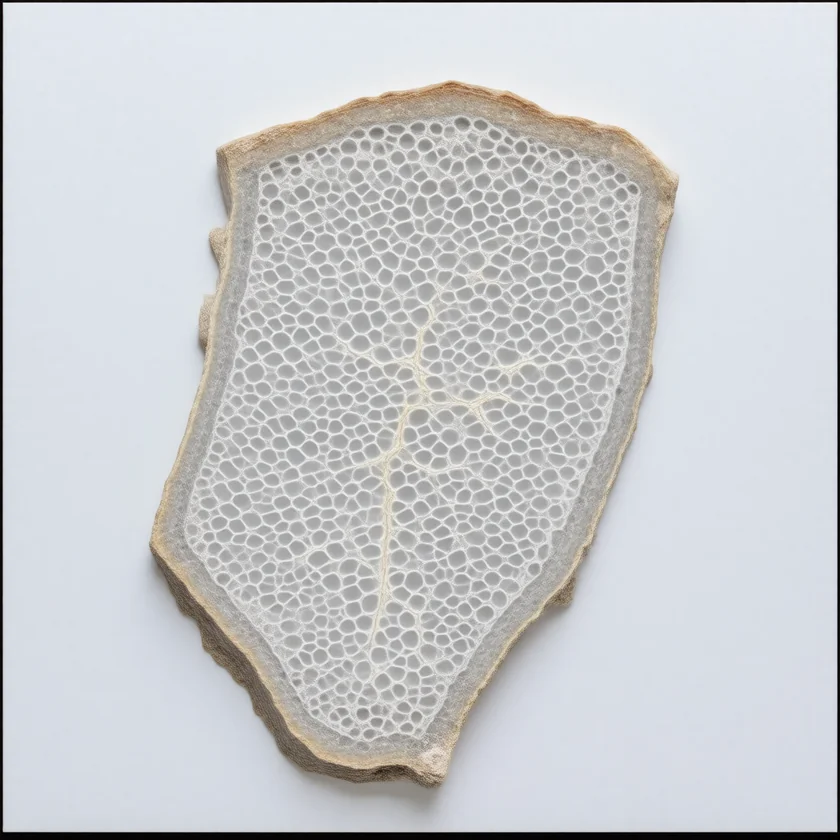
Pulmonary fibrosis means scarring of the lungs. Over time, the delicate tissue around the tiny air sacs becomes thick and stiff, and stiff, scarred lungs cannot move oxygen into the blood as easily — so breathing slowly becomes harder. This page explains, in plain language, what pulmonary fibrosis is, what causes it, how it is diagnosed, and what treatments can do. Put plainly, it is a serious condition, the scarring that has already formed cannot be undone, and for most people it tends to worsen over time. But there are real, proven treatments that can slow it down, ease symptoms, and help you live as fully as possible — and there are warning signs that call for prompt medical assessment.
Interactive Visualization Breathing & Gas Exchange — move the diaphragm yourself Fill the alveoli and watch oxygen diffuse into the blood while carbon dioxide leaves, with live pO₂/pCO₂ meters and an exercise mode. Launch →
Table of Contents
What Pulmonary Fibrosis Is
Deep inside your lungs are millions of tiny balloon-like air sacs called alveoli. Their walls are extremely thin on purpose — thin enough that, with every breath, oxygen can slip across them into your bloodstream and carbon dioxide can pass out. Healthy lungs are soft and stretchy, like a fresh sponge.
In pulmonary fibrosis, the tissue between and around these air sacs becomes scarred. "Fibrosis" simply means scar tissue. Scar tissue is thick, stiff, and dense — the opposite of the soft, springy tissue lungs need. As the walls thicken and stiffen, two things happen: the lungs cannot expand as fully (so each breath holds less air), and oxygen has a harder time crossing the thickened walls to reach the blood. The result is the slow, creeping breathlessness that defines this disease.
A few honest facts to understand from the start:
- The scarring is usually permanent. Once lung tissue turns to scar, today's medicines cannot turn it back into healthy lung. This is different from, say, a chest infection, where the lung heals and returns to normal.
- It is usually progressive, meaning it tends to get worse over time, though the speed varies enormously from person to person — some people decline slowly over many years, others more quickly.
- It is not a single disease. "Pulmonary fibrosis" is an umbrella term. There are many causes and types (covered below). They share the common thread of lung scarring but differ in cause, treatment, and outlook.
The most common specific type is idiopathic pulmonary fibrosis (IPF). "Idiopathic" is a medical word that means "we don't know the cause." IPF mainly affects older adults, and most of the dedicated research and the approved medicines discussed on this page were developed for IPF.
Causes & Types
Doctors group pulmonary fibrosis by what is driving the scarring. Finding the cause matters, because it can change the treatment.
Idiopathic pulmonary fibrosis (IPF) — cause unknown
This is the most common specific type, and by definition no clear cause is found. It is thought to involve repeated tiny injuries to the lung lining in genetically susceptible people, with the lung "over-healing" into scar instead of repairing normally. IPF is most common in older adults (usually over 60) and is more common in men and in current or former smokers.
Fibrosis with a known cause or association
In many people, a cause or strong association can be identified:
- Autoimmune and connective-tissue diseases. Conditions in which the immune system attacks the body's own tissues can also scar the lungs. Examples include rheumatoid arthritis, scleroderma (systemic sclerosis), polymyositis/dermatomyositis, and Sjögren's syndrome.
- Certain medications. A number of drugs can injure the lungs in susceptible people, including some chemotherapy agents (such as bleomycin and methotrexate), the heart-rhythm drug amiodarone, and some others. This is one reason your doctor reviews every medicine you take.
- Radiation. Radiation therapy to the chest (for example, for breast or lung cancer) can sometimes cause fibrosis in the treated area, months to years later.
- Long-term environmental and occupational exposures. Breathing in certain dusts and particles over years can scar the lungs — classically asbestos (asbestosis) and silica (silicosis), as well as coal dust and some metals.
- Hypersensitivity pneumonitis. In some people, repeatedly breathing in organic substances triggers an allergic-type lung inflammation that can progress to fibrosis. Common triggers include proteins from birds (feathers and droppings — sometimes called "bird fancier's lung") and molds. Identifying and removing the trigger is a key part of treatment.
Risk factors
Even when no single cause is found, several factors make fibrosis more likely:
- Smoking (current or past).
- Older age — most cases appear in later adulthood.
- Genetics — a minority of cases run in families, and certain inherited differences raise risk. Most cases, however, are not directly inherited.
- Gastroesophageal reflux (chronic acid reflux) is common in people with IPF and may play a contributing role.
Symptoms
Pulmonary fibrosis usually comes on gradually, and early on the signs can be easy to dismiss as "getting older" or "out of shape." The most common symptoms are:
- Shortness of breath that slowly worsens, especially with exertion. At first you might only notice it climbing stairs or walking uphill; over months to years it can appear with lighter activity, and eventually at rest.
- A persistent dry cough — usually without much phlegm — that does not go away and can be tiring and socially difficult.
- Fatigue — a deep, persistent tiredness, partly because the body is working harder to get enough oxygen.
- Unintended weight loss.
- Aching muscles and joints.
- Clubbing of the fingers — a gradual widening and rounding of the fingertips and nails. Many people do not notice it themselves; a doctor often spots it.
Because these symptoms creep up slowly and overlap with many other conditions (including asthma, chronic obstructive pulmonary disease (COPD), and heart problems), pulmonary fibrosis is sometimes diagnosed later than it could be. If breathlessness or a dry cough is steadily getting worse over weeks to months, that is worth taking to a doctor — see When to See a Doctor below.
Diagnosis
There is no single blood test that diagnoses pulmonary fibrosis. Instead, doctors put together several pieces of information, and because getting the diagnosis right can be genuinely difficult, the best centers use a multidisciplinary team — a lung specialist (pulmonologist), a chest radiologist, and often a pathologist — who review the case together.
- Listening to your lungs. A classic clue is fine crackling sounds at the lung bases through the stethoscope, often described as "Velcro-like" crackles because they sound like Velcro being pulled apart.
- High-resolution computed tomography (CT) scan of the chest (HRCT). This is the single most important test. It is a detailed computed tomography that shows the fine texture of the lungs. In IPF and related fibrosis it often reveals a characteristic pattern of scarring at the lung bases and edges (including a honeycomb-like appearance). A typical pattern on HRCT can sometimes confirm the diagnosis without surgery.
- Pulmonary (lung) function tests. You breathe into a machine. In fibrosis these typically show a restrictive pattern (the lungs hold less air than expected) and a reduced diffusing capacity of the lungs for carbon monoxide (DLCO) — a measure of how well oxygen crosses from the air sacs into the blood, which is often one of the earliest abnormalities.
- Blood tests. These do not diagnose fibrosis directly, but they help look for an underlying autoimmune or connective-tissue cause (such as rheumatoid arthritis or scleroderma), which changes treatment.
- Lung biopsy — sometimes. When the scans and other tests are not conclusive, a sample of lung tissue may be needed. This is not always required, and the decision weighs how much it would change treatment against the risks of the procedure.
A six-minute walk test (measuring how far you can walk and whether your oxygen drops) and a check of your blood oxygen level are also commonly used — both to confirm how the disease is affecting you and to track it over time.
Treatment
There is currently no cure for pulmonary fibrosis, and no medicine can turn scar tissue back into healthy lung. What treatment can do is meaningful: for the most common type (IPF) it can slow the disease down, and across all types it can ease symptoms, treat contributing problems, and protect the lung function you still have.
Antifibrotic medicines (for IPF)
The biggest advance has been two antifibrotic drugs proven in large trials to slow the decline in lung function in IPF:
- Pirfenidone — shown in the ASCEND trial to slow the loss of lung function.
- Nintedanib — shown in the INPULSIS trials to do the same.
It is important to understand what "slow the decline" honestly means. These drugs do not reverse damage or make you feel suddenly better; what they do is reduce how fast lung function drops over time. They can have side effects (pirfenidone commonly causes nausea, rash, and sun sensitivity; nintedanib commonly causes diarrhea). More recently, nintedanib has also been shown (in the INBUILD trial) to slow other types of progressive lung fibrosis beyond IPF, widening who may benefit.
A third kind of medicine, nerandomilast (a phosphodiesterase 4B inhibitor taken by mouth), was tested in the FIBRONEER-IPF trial of 1,177 people with IPF, 77.7% of whom were already taking nintedanib or pirfenidone. Over 52 weeks, forced vital capacity (the amount of air a person can blow out after a full breath) fell by 114.7 ml on 18 mg twice daily, by 138.6 ml on 9 mg twice daily and by 183.5 ml on placebo. Diarrhea was the most frequent side effect (41.3% on 18 mg and 31.1% on 9 mg, against 16.0% on placebo), and serious adverse events were balanced across the groups. That trial and a companion trial in progressive pulmonary fibrosis did not meet their key secondary endpoint, but a later analysis of the pooled data (mean follow-up 16.7 months) found a lower risk of death than on placebo with both doses (hazard ratio 0.57 on 18 mg twice daily and 0.67 on 9 mg twice daily). Nerandomilast received its first approval in the United States on 7 October 2025, for adults with IPF, and a U.S. approval for progressive pulmonary fibrosis followed on 19 December 2025.
A clear warning about an older approach
For years, some doctors treated IPF with a combination of a steroid (prednisone) plus an immune-suppressing drug (azathioprine) plus the antioxidant supplement N-acetylcysteine (NAC). A major trial (PANTHER-IPF) tested this three-drug combination against placebo and found it was harmful: at a planned interim analysis, the combination group had more deaths (8 versus 1) and hospitalizations (23 versus 7) than the placebo group, and the combination arm was stopped at a mean follow-up of 32 weeks. The harm was seen with the three-drug combination; the group given N-acetylcysteine alone was compared with placebo separately and was not part of that result. This is why the three-drug regimen is no longer recommended for IPF. (Note: immune-suppressing treatment is still appropriate for fibrosis driven by an autoimmune disease — the point is that it was the wrong tool for IPF specifically.)
Supportive care (for everyone)
These measures matter as much as the medicines, and some help quality of life and survival:
- Supplemental oxygen when blood-oxygen levels fall, to ease breathlessness, support activity, and protect the heart and other organs.
- Pulmonary rehabilitation — a supervised program of exercise, breathing techniques, and education. This is one of the most effective ways to improve daily breathlessness, stamina, and confidence.
- Vaccinations (such as influenza and pneumococcal) to prevent chest infections, which can be especially dangerous for scarred lungs.
- Treating contributing problems, such as acid reflux, and helping with cough and breathlessness.
- Treating the underlying cause when there is one — for example, immune-suppressing therapy for autoimmune-related fibrosis, or strictly avoiding the trigger (birds, mold) in hypersensitivity pneumonitis. In drug-induced cases, stopping the responsible medicine is essential.
Lung transplantation
For selected people — generally those who are otherwise reasonably well but whose lungs are failing despite treatment — a lung transplant can extend and improve life. It is a major operation with significant risks and lifelong medication, and not everyone is a candidate, but for the right person it is the one treatment that effectively replaces the scarred lungs. Because evaluation takes time, specialists often raise it earlier rather than later.
Methylene Blue and Vitamin B5 in Lung-Scarring Research
Searches of PubMed, Europe PMC and the ClinicalTrials.gov registry in November 2026 found no study in people of Methylene Blue or of vitamin B5 (pantothenic acid and its forms) as a treatment for pulmonary fibrosis, and no registered trial. What exists is animal research, summarised below.
Vitamin B5: two animal studies
- Dexpanthenol in rats (2013): dexpanthenol, the alcohol form of vitamin B5, was tested in 32 rats given bleomycin into the windpipe. Bleomycin is a cancer drug that can scar human lungs and is the standard way of producing lung fibrosis in animals. Dexpanthenol (500 mg per kg of body weight, injected into the abdomen) was started 1 hour before the bleomycin and continued for 14 days. It prevented the inflammation and collagen build-up that bleomycin caused and improved the antioxidant enzyme superoxide dismutase (Ermis 2013). Because it was started before the injury, the study tested prevention, not the reversal of scar tissue already formed.
- Pantethine in mice (2015): pantethine, the form of vitamin B5 made of two linked pantetheine molecules, was given by mouth to mice in which a scleroderma-like disease was produced with hypochlorous acid. The untreated mice developed skin and lung fibrosis; in mice given pantethine at the same time, these changes and markers of oxidative stress were normalised (Kavian 2015).
- A finding in the other direction (2016): the same research group reported that the enzyme vanin-1 breaks pantethine down into pantothenic acid and cystamine, which the authors describe as profibrotic and pro-oxidant. In people with diffuse systemic sclerosis, blood pantothenic acid was higher and rose with disease severity, and mice lacking vanin-1 were protected from fibrosis (Kavian 2016). In this research it is pantethine, not pantothenic acid, that was linked to less fibrosis.
Methylene Blue: no lung-scarring studies found
No study of Methylene Blue on pulmonary fibrosis, in people or animals, was found. Rat studies show less acute lung injury from causes such as sepsis and circulatory arrest, measured over hours to one day, before scar tissue forms. In a randomised trial of 122 hospital patients with COVID-19 lung failure in Iran, oral Methylene Blue raised oxygen saturation, with no significant difference in deaths or hospital stay; lung scarring was not measured (Sanei 2025). The studies are described on the Methylene Blue, COVID-19 and Lung Disease page.
Living With Pulmonary Fibrosis
A diagnosis of pulmonary fibrosis is frightening, and it is normal to feel grief, fear, and anger. Many people, though, live meaningfully for years, and there is a great deal you and your care team can do. Practical, evidence-based steps include:
- Pulmonary rehabilitation programs. Beyond the physical benefit, rehab connects people with staff and others who understand the disease.
- Staying active within limits. Gentle, regular activity helps keep muscles strong and supports mood, with pacing and rest when needed.
- Oxygen as prescribed — including portable oxygen — lets many people keep doing the things that matter to them. Needing oxygen is not "giving up"; it is a tool.
- Emotional support. Breathlessness and uncertainty take a toll. Counseling, and especially patient support groups (in person or online), help many people feel less alone.
- Specialist interstitial lung disease (ILD) centers. These centers diagnose fibrosis more accurately, manage antifibrotic therapy, and can discuss lung transplant and clinical trials — trials are how today's treatments came to exist, and they may offer access to tomorrow's.
- Advance-care planning. Thinking ahead about your wishes — and sharing them with loved ones and your doctors — is not pessimism; it is a way to keep control and reduce stress for everyone. Palliative care teams can help with symptoms and planning at any stage, alongside active treatment.
For broader background on this family of conditions, see our overview of Interstitial Lung Disease.
When to See a Doctor
Make a routine appointment if you have:
- Unexplained shortness of breath, especially when it is slowly getting worse with activity.
- A dry cough that lasts more than a few weeks without a clear cause.
- Either of the above together with risk factors — older age, smoking history, an autoimmune disease, or significant past exposure to asbestos, silica, birds, or mold.
Seek urgent or emergency care if you have:
- A sudden worsening of your breathing over hours or days. In pulmonary fibrosis this can signal an acute exacerbation — a rapid flare that is dangerous and needs prompt hospital assessment.
- Chest pain.
- Signs of dangerously low oxygen: blue or gray lips, face, or fingertips; new confusion or difficulty staying awake; or breathlessness so severe you cannot speak in full sentences. Call emergency services (911 in the US).
For people already diagnosed, care teams can set out in advance what to do if breathing suddenly gets worse; keeping their contact details and a medication list at hand saves time.
Key Research Papers
- Raghu G, Remy-Jardin M, Myers JL, et al. Diagnosis of Idiopathic Pulmonary Fibrosis. An Official ATS/ERS/JRS/ALAT Clinical Practice Guideline. American Journal of Respiratory and Critical Care Medicine. 2018;198(5):e44–e68. — The international guideline on how IPF is diagnosed, including the role of HRCT patterns and when a biopsy is needed. — doi:10.1164/rccm.201807-1255ST
- Raghu G, Remy-Jardin M, Richeldi L, et al. Idiopathic Pulmonary Fibrosis (an Update) and Progressive Pulmonary Fibrosis in Adults: An Official ATS/ERS/JRS/ALAT Clinical Practice Guideline. American Journal of Respiratory and Critical Care Medicine. 2022;205(9):e18–e47. — The current treatment guideline; introduces "progressive pulmonary fibrosis" for fibrosis of other causes that keeps worsening. — doi:10.1164/rccm.202202-0399ST
- King TE Jr, Bradford WZ, Castro-Bernardini S, et al. A Phase 3 Trial of Pirfenidone in Patients with Idiopathic Pulmonary Fibrosis (ASCEND). New England Journal of Medicine. 2014;370(22):2083–2092. — Landmark trial showing pirfenidone slows the decline in lung function in IPF. — doi:10.1056/NEJMoa1402582
- Richeldi L, du Bois RM, Raghu G, et al. Efficacy and Safety of Nintedanib in Idiopathic Pulmonary Fibrosis (INPULSIS). New England Journal of Medicine. 2014;370(22):2071–2082. — Twin trials showing nintedanib also slows lung-function decline in IPF. — doi:10.1056/NEJMoa1402584
- Flaherty KR, Wells AU, Cottin V, et al. Nintedanib in Progressive Fibrosing Interstitial Lung Diseases (INBUILD). New England Journal of Medicine. 2019;381(18):1718–1727. — Showed nintedanib slows progression in fibrotic lung diseases beyond IPF. — doi:10.1056/NEJMoa1908681
- Richeldi L, Azuma A, Cottin V, et al. Nerandomilast in Patients with Idiopathic Pulmonary Fibrosis (FIBRONEER-IPF). New England Journal of Medicine. 2025;392(22):2193–2202. — PubMed PMID: 40387033
- Oldham JM, Assassi S, Azuma A, et al. Effect of nerandomilast on survival in patients with pulmonary fibrosis. European Respiratory Journal. 2026. — PubMed PMID: 42532543
- Brown MB. Nerandomilast: First Approval. Drugs. 2026;86(4):557–563. — PubMed PMID: 41746571
- Idiopathic Pulmonary Fibrosis Clinical Research Network; Raghu G, Anstrom KJ, King TE Jr, et al. Prednisone, Azathioprine, and N-Acetylcysteine for Pulmonary Fibrosis (PANTHER-IPF). New England Journal of Medicine. 2012;366(21):1968–1977. — Found this once-common steroid/immunosuppressant/antioxidant combination increased deaths and hospitalizations in IPF; evidence against using it. — doi:10.1056/NEJMoa1113354
- Lederer DJ, Martinez FJ. Idiopathic Pulmonary Fibrosis. New England Journal of Medicine. 2018;378(19):1811–1823. — A clear, comprehensive review of IPF: biology, diagnosis, antifibrotic therapy, and prognosis. — doi:10.1056/NEJMra1705751
- Ermis H, Parlakpinar H, Gulbas G, et al. Protective effect of dexpanthenol on bleomycin-induced pulmonary fibrosis in rats. Naunyn-Schmiedeberg’s Archives of Pharmacology. 2013;386(12):1103–1110. — PubMed PMID: 23995256
- Kavian N, Marut W, Servettaz A, et al. Pantethine Prevents Murine Systemic Sclerosis Through the Inhibition of Microparticle Shedding. Arthritis & Rheumatology. 2015;67(7):1881–1890. — PubMed PMID: 25776044
- Kavian N, Mehlal S, Marut W, et al. Imbalance of the Vanin-1 Pathway in Systemic Sclerosis. Journal of Immunology. 2016;197(8):3326–3335. — PubMed PMID: 27647831
- Sanei ZS, Shahrahmani F, Khaleghi Manesh B, et al. Methylene blue for COVID-19 ARDS: insights from a randomized Clinical Trial. Naunyn-Schmiedeberg’s Archives of Pharmacology. 2025;398(2):1915–1924. — PubMed PMID: 39207597