Cushing's Syndrome: History and Discovery
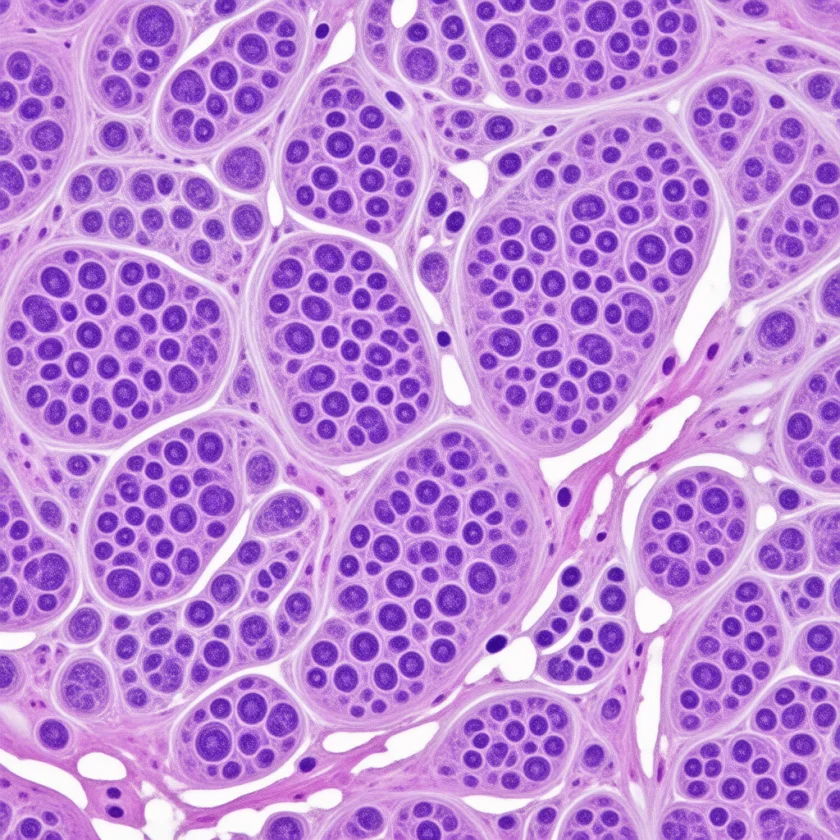
The story of Cushing's syndrome is a story of careful clinical observation outrunning the science that could explain it. In 1912 the American neurosurgeon Harvey Williams Cushing (1869–1939) gathered a handful of patients with a strange, disfiguring cluster of features — central obesity, a round flushed face, thinning skin, high blood pressure, and weakness — and recognised it as a single disorder. Twenty years later, in his landmark 1932 paper on “pituitary basophilism,” he made the daring claim that a tiny tumour in the pituitary gland could be the cause. He was working before anyone had isolated cortisol and before the hormone adrenocorticotropic hormone (ACTH) was understood; the biochemistry that would prove him right arrived only in the 1930s and 1940s. This page traces who described the disorder, who named it, and how the modern distinction between Cushing's disease and Cushing's syndrome came to be — sticking strictly to what the historical record actually supports.
Table of Contents
- Harvey Cushing, Father of Modern Neurosurgery
- Minnie G. and the First Description (1910–1912)
- Pituitary Basophilism: The 1932 Landmark
- How the Name Came to Be
- Cushing's Disease vs. Cushing's Syndrome
- Cortisol, Adrenocorticotropic Hormone, and the Hormone Science That Caught Up
- The Steroid Era and Iatrogenic Cushing's
- Diagnosis and Treatment Through the Century
- Legacy and Honest Limits of the Record
- Key Research Papers
- Connections
- Featured Videos
Harvey Cushing, Father of Modern Neurosurgery
Harvey Williams Cushing was born on 8 April 1869 in Cleveland, Ohio, into a family of physicians, and died on 7 October 1939 in New Haven, Connecticut. He is widely regarded as the father of modern neurosurgery: he developed meticulous operative techniques that dramatically lowered the appalling mortality of early brain surgery, pioneered the use of blood-pressure monitoring in the operating room, and built much of the discipline's foundation while at Johns Hopkins and later the Peter Bent Brigham Hospital in Boston. His name is attached to several lasting concepts in medicine, including the Cushing reflex (the rise in blood pressure with slowed heart rate seen in raised intracranial pressure) as well as the endocrine disorder discussed here.
Cushing's interest in the pituitary gland — a pea-sized structure at the base of the brain — ran through his whole career. Because he operated on pituitary tumours, he saw, catalogued, and photographed patients whose bodies had been transformed by disordered glandular function in an era when the very idea of “hormones” was new (the word itself was only coined in 1905). His genius in this story is not biochemical but observational: he saw a pattern in the patients in front of him and refused to let it go, even when he could not yet prove its cause.
Minnie G. and the First Description (1910–1912)
The trail begins with a single patient. In 1910 Cushing examined a 23-year-old woman recorded in his case books as Minnie G. (his Case XLV). She had a striking combination of painful obesity, absent menstrual periods (amenorrhoea), excessive body hair (hypertrichosis), and other changes that Cushing could not fit into any recognised disease. He described her condition as a “polyglandular syndrome,” openly speculating that it might be attributable to disordered pituitary, adrenal, pineal, or ovarian influences — an honest admission that he did not yet know which gland was at fault.
In 1912 Cushing published his book The Pituitary Body and its Disorders: Clinical States Produced by Disorders of the Hypophysis Cerebri (Philadelphia: J.B. Lippincott), a study built on case histories of dozens of patients with pituitary tumours. It is in this 1912 work that the clinical picture we now call Cushing's syndrome is first set out as a recognisable entity, and 1912 is therefore the date most commonly cited for the original description. At this stage, crucially, Cushing had described what the disorder looked like without having pinned down what caused it — a distinction worth keeping in mind, because the popular shorthand “Cushing discovered the disease in 1912” flattens a more careful, two-stage story.
Minnie G. herself lived for decades afterward, reportedly until 1958, and her last documented contact with Cushing came around 1932 — the very year he finally proposed the mechanism that explained her illness.
Pituitary Basophilism: The 1932 Landmark
The defining moment came two decades later. In 1932, at the age of 63 and near the end of his career, Cushing published “The basophil adenomas of the pituitary body and their clinical manifestations (pituitary basophilism)” in the Bulletin of the Johns Hopkins Hospital (volume 50, pages 137–195). In it he assembled a series of patients sharing the same clinical syndrome and advanced a bold hypothesis: that the disorder was caused by a small tumour (an adenoma) made of basophil cells — cells in the anterior pituitary that stain with basic dyes — which were driving the adrenal glands to overproduce.
It was, by the honest accounts of medical historians, a daring claim built on thin evidence. Cushing reported roughly a dozen cases, but only about three of them had a pituitary tumour actually confirmed at the time. The proposal was met with considerable scepticism and a rush by others to test it. Cushing turned out to be substantially correct: a subset of these patients did have adrenocorticotropic hormone-secreting basophil (or chromophobe) pituitary adenomas. It was in the wake of this 1932 paper that colleagues began attaching Cushing's name to the condition. The hypothesis — that a pituitary tumour could remotely command the adrenal glands — was, in its historical context, exactly that: a hypothesis later vindicated, not a fact Cushing demonstrated outright in 1932.
How the Name Came to Be
Cushing did not name the disorder after himself. The eponym appears to have entered the medical literature in 1932, the same year as Cushing's basophilism paper, in an article by the British physicians F.M.P. Bishop and R.G. Close titled “A case of basophil adenoma of the anterior lobe of the pituitary: Cushing's syndrome.” That title is one of the earliest documented uses of the term “Cushing's syndrome” in print.
The name was then popularised and given its modern meaning by the influential American endocrinologist Fuller Albright, who discussed the condition in his 1943 Harvey Lecture. Albright is credited with being among the first to frame the syndrome explicitly as a consequence of excess cortical hormone (cortisol) exposure — a conceptual leap that connected Cushing's anatomical, tumour-centred picture to the underlying hormonal excess. The shift from “a disease of a basophil pituitary tumour” to “a state of glucocorticoid excess” is what eventually made room for the broad, cause-agnostic definition of Cushing's syndrome used today.
A note on certainty: precise priority for medical eponyms is often contested, and historians differ on exactly who first put a given phrase in print. The points that are well supported are that Cushing himself used the descriptive term “pituitary basophilism,” that the eponym “Cushing's syndrome” was in use by the early-to-mid 1930s, and that Albright in the 1940s anchored it to cortisol excess. Any single “first to coin it” claim carries that uncertainty.
Cushing's Disease vs. Cushing's Syndrome
One distinction matters more than any other on this page, and it is a frequent source of confusion even among clinicians. Cushing's syndrome is the broad term: it refers to the whole clinical state of chronic cortisol excess, regardless of where the excess comes from. Cushing's disease is a narrower term reserved for one specific cause — hypercortisolism driven by an adrenocorticotropic hormone-secreting tumour of the pituitary gland, the very mechanism Cushing proposed in 1932. Put simply: Cushing's disease is one cause of Cushing's syndrome, but not the only one.
The causes of Cushing's syndrome are conventionally sorted into three groups. Adrenocorticotropic hormone-dependent causes include the pituitary adenoma of Cushing's disease (the most common endogenous cause, accounting for roughly 80% of spontaneous cases) and “ectopic” adrenocorticotropic hormone production by tumours elsewhere in the body, such as certain lung tumours. Adrenocorticotropic hormone-independent causes arise within the adrenal glands themselves — an adrenal adenoma or carcinoma that pumps out cortisol on its own. And the exogenous (or iatrogenic) form is caused not by any tumour at all but by taking glucocorticoid steroid medicines, which is in fact the single most common cause of Cushing's syndrome overall.
The reason the terminology matters is practical: the word chosen tells you where to look. “Cushing's disease” points the search toward the pituitary; “Cushing's syndrome” keeps the differential open to the adrenal glands, ectopic tumours, and the medicine cabinet. This site's main article on the condition is titled Cushing's Syndrome precisely because it covers the whole family of causes, not the pituitary subtype alone.
Cortisol, Adrenocorticotropic Hormone, and the Hormone Science That Caught Up
When Cushing wrote in 1912 and 1932, the chemistry that would explain his syndrome did not yet exist. Two strands of hormone science had to mature before “pituitary basophilism” could be rewritten as “adrenocorticotropic hormone-driven cortisol excess.”
The first strand was the isolation of the adrenal cortical hormones. Through the 1930s, the American biochemist Edward Calvin Kendall at the Mayo Clinic and the Swiss chemist Tadeusz Reichstein independently isolated a series of steroid compounds from the adrenal cortex. Kendall labelled several active fractions with letters; his Compound E was later renamed cortisone, and the closely related active hormone became known as cortisol (hydrocortisone, Kendall's Compound F). The clinical payoff came at the end of the decade: in 1948–1949 the rheumatologist Philip Showalter Hench, working with Kendall at Mayo, showed that cortisone dramatically relieved rheumatoid arthritis. For this body of work on “the hormones of the adrenal cortex, their structure and biological effects,” Kendall, Reichstein, and Hench shared the 1950 Nobel Prize in Physiology or Medicine.
The second strand was the pituitary hormone that drives the adrenal gland: adrenocorticotropic hormone, or ACTH. Recognised and progressively characterised through the 1930s and 1940s and structurally elucidated in the 1950s, adrenocorticotropic hormone supplied the missing link in Cushing's hypothesis — the chemical messenger by which a basophil pituitary tumour could, at a distance, command the adrenal cortex to flood the body with cortisol. Only once cortisol could be measured and adrenocorticotropic hormone understood did Cushing's anatomical insight become a testable, biochemically grounded diagnosis. The clinical understanding of the syndrome, in other words, was assembled backwards: the picture first, the tumour hypothesis second, and the hormones that tied them together last.
The Steroid Era and Iatrogenic Cushing's
The same discovery that won the 1950 Nobel Prize created an entirely new and now-dominant cause of Cushing's syndrome. Once cortisone and its synthetic descendants (prednisone, dexamethasone, and others) became widely available from the 1950s onward, they transformed the treatment of asthma, rheumatoid arthritis, inflammatory bowel disease, autoimmune conditions, and organ transplantation. But glucocorticoids given in sufficient dose and duration reproduce, almost feature for feature, the very syndrome Cushing had described: the rounded face, central weight gain, thin bruising skin, raised blood sugar, and bone loss.
This drug-induced, or iatrogenic, form is now the most common cause of Cushing's syndrome of any kind — a striking historical irony in which the cure derived from one part of the story became the leading source of another. It is also a reason the modern, cause-agnostic definition of “Cushing's syndrome” proved so useful: a definition built only around pituitary tumours would have had no room for the millions of patients who develop the same picture from prescribed steroids. The exogenous form is the clearest demonstration that the syndrome is fundamentally about cortisol-like hormone excess, whatever its source.
The steroid does not always come from a prescription. A 2026 case report describes a man in his 40s with rapid weight gain, fatigue, abdominal stretch marks (striae) and central (centripetal) obesity, whose blood cortisol and adrenocorticotropic hormone levels were suppressed. He had taken no prescribed glucocorticoid but had used a joint-pain supplement that the U.S. Food and Drug Administration (FDA) had recalled for undeclared dexamethasone. His symptoms started a few weeks after he stopped the supplement and gradually improved once he was given hydrocortisone for adrenal insufficiency caused by the outside glucocorticoid. More on such products: Hidden Steroids and Nonsteroidal Anti-Inflammatory Drugs in Joint-Pain Products.
Diagnosis and Treatment Through the Century
For Cushing's own patients there was no blood test for cortisol and no scan that could see a pituitary microadenoma. Diagnosis rested on the eye and the case history, and treatment of the pituitary form meant surgery on the gland itself — an operation Cushing, as a pituitary surgeon, was unusually equipped to attempt, though by routes and with tools far cruder than today's. Over the following decades, biochemical testing changed everything: the ability to measure cortisol in blood and urine, and later to use the dexamethasone-suppression test and adrenocorticotropic hormone measurement, made it possible to confirm cortisol excess and then to localise its source. In 2021 the Pituitary Society published an updated guideline, “Consensus on diagnosis and management of Cushing's disease,” drawn up at a workshop of more than 50 academic researchers and clinical experts who reviewed data from 2015 onward; it gives recommendations on laboratory tests, imaging and treatment options, with step-by-step algorithms for diagnosing Cushing's syndrome and managing Cushing's disease.
A 2000 historical review by Lindholm gives the dates for surgery. Krause, Schloffer, Cushing, Hirsch and others had introduced pituitary surgery early in the 20th century, but “it was not until 1933 that the first patient with Cushing's disease had neurosurgery performed,” and the operation did not gain wide acceptance until Guiot and Thibaut, and Hardy, pioneered transsphenoidal surgery. For many years adrenal surgery was the treatment for cortisol excess, but before replacement glucocorticoids were available it was, in the review's words, “an extremely perilous undertaking.” The same review notes that Cushing in 1912 assumed his famous patient had a disorder of several glands (polyglandular), and that the cause stayed disputed for almost 40 years.
Treatment evolved in parallel. The pituitary (transsphenoidal) approach — reaching the gland through the nose and sphenoid sinus, an approach Cushing himself had helped pioneer for pituitary tumours — was progressively refined over the twentieth century and, in its modern microsurgical and endoscopic forms, became the first-line treatment for Cushing's disease. For adrenal causes, surgical removal of the offending adrenal tumour or gland became standard. Medical therapies that block cortisol production or action, and radiotherapy for residual pituitary disease, filled out the modern toolkit. One newer cortisol-blocking tablet is osilodrostat, which inhibits the adrenal enzyme 11-beta-hydroxylase: in the LINC 3 phase III trial, 72 of 137 people with Cushing's disease (53%) kept a complete response (mean 24-hour urine free cortisol at or below the upper limit of normal) at week 24 without a dose increase after week 12, and the most common side effects were nausea (42%), headache (34%), fatigue (28%) and adrenal insufficiency (28%). The trial report states that osilodrostat is approved in Europe for endogenous Cushing's syndrome and in the USA for Cushing's disease. The throughline from Cushing to the present is direct: he identified the pituitary as a source of the disorder and operated on it, and pituitary surgery remains central to treating the disease that bears his name.
Legacy and Honest Limits of the Record
Cushing's achievement endures because it was a triumph of pattern recognition. He took a scattering of patients with a baffling, disfiguring illness and saw a single disorder where others saw isolated curiosities, then proposed a mechanism — a pituitary tumour acting on the adrenal glands — that he could not fully prove but that turned out to be right. The eponym is a fitting tribute to that clinical insight, even though the people who coined the name and the scientists who later supplied the biochemistry were not Cushing himself.
In the spirit of accuracy that this site insists on, a few honest caveats are worth stating plainly. Cushing described the syndrome (1912) and hypothesised its pituitary cause (1932); he did not isolate cortisol, did not discover adrenocorticotropic hormone, and did not coin the eponym. Dates such as 1910 (Minnie G.), 1912 (the book and original description), and 1932 (the basophilism paper and the appearance of the eponym) are well attested across history-of-medicine sources. Finer points — exactly who first printed the phrase “Cushing's syndrome,” or the precise patient counts in the 1932 series — carry the ordinary uncertainty of historical scholarship and are presented here with that uncertainty acknowledged rather than smoothed over.
For the present-day clinical picture — symptoms, causes, diagnosis, and treatment of cortisol excess — see this site's main Cushing's Syndrome article.
Key Research Papers
The references below combine Cushing's own landmark publications, peer-reviewed history-of-medicine articles, and authoritative clinical sources. Cushing's 1912 book and 1932 paper are named as historical primary sources. Where a stable identifier is available it is linked directly; otherwise a PubMed topic-search link is provided. Each link opens in a new tab.
- Cushing H. The Pituitary Body and its Disorders: Clinical States Produced by Disorders of the Hypophysis Cerebri. Philadelphia: J.B. Lippincott; 1912. (Historical primary source — original clinical description.)
- Cushing H. The basophil adenomas of the pituitary body and their clinical manifestations (pituitary basophilism). Bulletin of the Johns Hopkins Hospital. 1932;50:137-195. (Historical primary source.) Reprinted in Obesity Research. 1994;2(5):486-508 — PubMed PMID: 16353601; 1969 reprint, “The basophil adenomas of the pituitary body,” Annals of the Royal College of Surgeons of England. 1969;44(4):180-1 — PubMed PMID: 19310569
- Loriaux DL. Diagnosis and differential diagnosis of Cushing's syndrome. New England Journal of Medicine. 2017;376(15):1451-1459. — doi:10.1056/NEJMra1505550
- Lindholm J. Cushing's syndrome: historical aspects. Pituitary. 2000;3(2):97-104. — doi:10.1023/A:1009905808033 (PubMed PMID: 11141701)
- Gkalonakis I, Takatzoglou N, Georgountzos G, et al. Diving surgery for ACTH secreting pituitary adenomas: a retrospective single center cohort study. British Journal of Neurosurgery. 2026:1-11. (A 2026 study of a surgical technique in 37 patients, not a history.) — PubMed PMID: 42308111
- Kelsall A, Newell-Price J. Cushing's disease — from Minnie G to key issues in the early 21st century. Lancet Diabetes & Endocrinology. 2019;7(12):959-964. — PubMed PMID: 31601475
- The history of Cushing's disease and the eponym (Bishop and Close; Fuller Albright). — PubMed: history and eponym of Cushing's syndrome
- Albright F. Cushing's syndrome: its pathological physiology, its relationship to the adreno-genital syndrome, and its connection with the problem of the reaction of the body to injurious agents (Harvey Lecture, 1943). — PubMed: Albright Cushing's syndrome
- Hench PS, Kendall EC, Slocumb CH, Polley HF. The effect of a hormone of the adrenal cortex (17-hydroxy-11-dehydrocorticosterone; compound E) and of pituitary adrenocorticotropic hormone on rheumatoid arthritis. Proceedings of the Staff Meetings of the Mayo Clinic. 1949;24(8):181-197. — PubMed PMID: 18118071
- The Nobel Prize in Physiology or Medicine 1950 (Kendall, Reichstein, Hench) — adrenal cortex hormones. — NobelPrize.org: 1950 Prize summary
- Isolation and characterisation of cortisol and the adrenal cortical steroids (Kendall and Reichstein). — PubMed: history of cortisol and cortisone isolation
- Discovery and structure of adrenocorticotropic hormone (ACTH). — PubMed: history of ACTH discovery
- Nieman LK, Biller BMK, Findling JW, et al. The diagnosis of Cushing's syndrome: an Endocrine Society clinical practice guideline. Journal of Clinical Endocrinology & Metabolism. 2008;93(5):1526-1540. — doi:10.1210/jc.2008-0125
- Darapu H, Gokul S. Iatrogenic Cushing's syndrome from an adulterated glucocorticoid-containing supplement. BMJ Case Reports. 2026;19(10):e269314. (A 2026 case of a supplement containing hidden dexamethasone.) — PubMed PMID: 42833837
- Fleseriu M, Auchus R, Bancos I, et al. Consensus on diagnosis and management of Cushing's disease: a guideline update. Lancet Diabetes & Endocrinology. 2021;9(12):847-875. — PubMed PMID: 34687601
- Pivonello R, Fleseriu M, Newell-Price J, et al. Efficacy and safety of osilodrostat in patients with Cushing's disease (LINC 3): a multicentre phase III study with a double-blind, randomised withdrawal phase. Lancet Diabetes & Endocrinology. 2020;8(9):748-761. — PubMed PMID: 32730798
External Authoritative Resources
Connections
- Endocrinology
- Cushing's Syndrome (main article)
- All Conditions
- Addison's Disease (adrenal insufficiency)
- Adrenal Fatigue (Hypothalamic-Pituitary-Adrenal Axis Dysfunction)
- Pheochromocytoma
- Cortisol Test
- DHEA-S Test