E. coli Symptoms and Infections
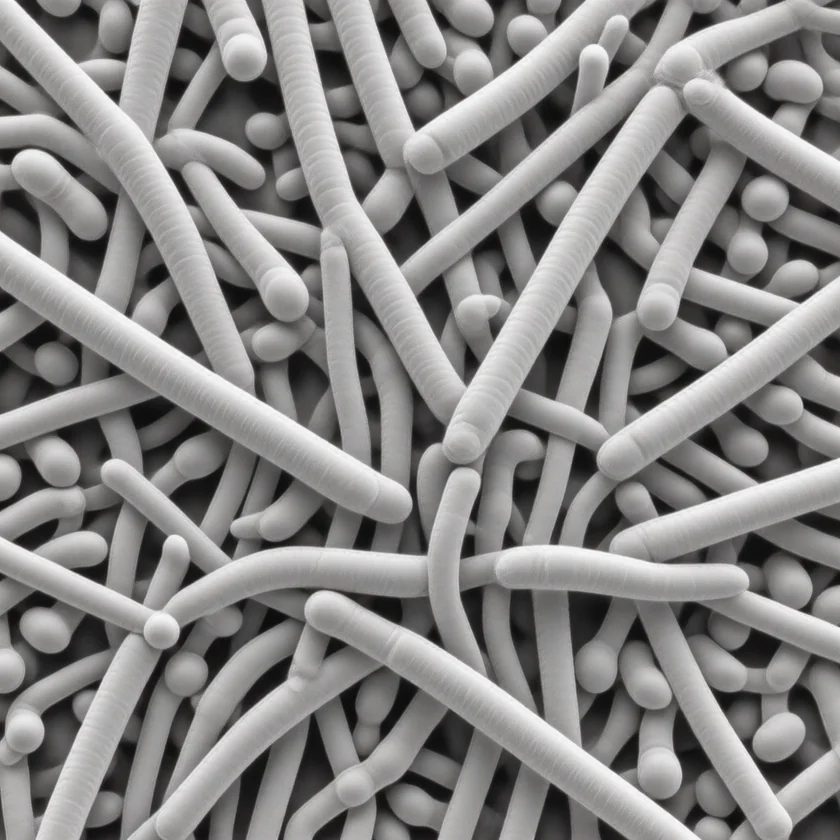
- E. coli: Helpful Resident vs. Dangerous Invader
- Urinary Tract Infections (UTIs)
- Intestinal Pathotypes Overview
- Shiga Toxin-Producing E. coli (STEC)
- Hemolytic Uremic Syndrome (HUS)
- Neonatal Meningitis
- Septicemia and Gram-Negative Sepsis
- Environmental Reservoirs and Transmission
- Key Research Papers
- Connections
- Featured Videos
E. coli: Helpful Resident vs. Dangerous Invader
Escherichia coli (E. coli) is one of the most abundant bacteria in your gut — most strains are harmless commensals that help digest food, produce vitamin K2, and crowd out genuinely dangerous pathogens. The average healthy adult carries roughly 10 billion E. coli in their colon at any given moment, and those bacteria never cause a moment of trouble.
The problem is that E. coli is also one of the most adaptable organisms on Earth. Over millions of years, certain lineages acquired weaponry — toxins, adhesion proteins, iron-stealing molecules — that allow them to escape the gut, invade tissues, or devastate the lining of the intestine itself. These dangerous variants are called pathotypes, meaning strains with a specific set of disease-causing tools.
The main pathotypes you need to know about:
- UPEC (Uropathogenic E. coli) — the #1 cause of urinary tract infections worldwide. Carries special hooks (fimbriae) that grip the lining of the bladder and urethra.
- STEC (Shiga Toxin-Producing E. coli) — the strain behind bloody diarrhea outbreaks and the life-threatening complication called HUS. The notorious O157:H7 belongs here.
- ETEC (Enterotoxigenic E. coli) — the most common cause of travelers' diarrhea worldwide. Produces toxins that flood the gut with fluid, causing the classic "Montezuma's revenge" watery diarrhea.
- EPEC (Enteropathogenic E. coli) — a major cause of persistent diarrhea in infants in low- and middle-income countries. It attaches to intestinal cells and physically destroys the tiny projections (microvilli) that absorb nutrients.
- EAEC (Enteroaggregative E. coli) — forms thick biofilm layers on the gut lining, associated with chronic diarrhea, poor growth in children, and travelers' diarrhea.
- EIEC (Enteroinvasive E. coli) — behaves like Shigella, actually invading intestinal cells and causing dysentery (bloody, mucusy diarrhea with fever).
- ExPEC (Extraintestinal Pathogenic E. coli) — an umbrella term for strains that escape the gut altogether and cause UTIs, kidney infections, bloodstream infections, and neonatal meningitis.
Understanding which pathotype is involved changes everything about treatment and prognosis — which is why doctors don't just call it "E. coli infection" and leave it at that.
Urinary Tract Infections (UTIs)
E. coli causes roughly 80–85% of all urinary tract infections, making it by far the most common bacterial infection in women. Globally, about 150 million UTIs are diagnosed every year, accounting for billions of dollars in healthcare costs and countless lost workdays and sleepless nights.
The culprit is UPEC (Uropathogenic E. coli). These strains carry an impressive toolkit that healthy gut E. coli simply lack:
- FimH (Type 1 fimbriae) — Think of these as microscopic Velcro hooks that grab onto mannose sugar molecules coating the bladder wall. Once attached, E. coli can resist being flushed out when you urinate.
- P-fimbriae (pap fimbriae) — A second type of hook that binds even deeper in the urinary tract, specifically to receptors on kidney cells. Strains with P-fimbriae are far more likely to cause kidney infections (pyelonephritis) than bladder infections (cystitis).
- Alpha-hemolysin (HlyA) — A toxin that punches holes in human cells, killing them and releasing nutrients the bacteria can use to fuel their growth. When E. coli releases hemolysin into kidney tissue, it causes the intense flank pain and inflammation of pyelonephritis.
- Siderophores (aerobactin, enterobactin) — Iron-stealing molecules. The human body deliberately locks iron away from bacteria as a defense. UPEC counters this with siderophores — molecular claws that strip iron from human proteins and bring it back to the bacteria.
- Capsule (K antigen) — A slimy coating that makes the bacteria harder for your immune system to recognize and destroy.
What a UTI feels like: The classic lower UTI (cystitis) produces a burning sensation when urinating, an urgent and frequent need to go even when the bladder is nearly empty, cloudy or foul-smelling urine, and pelvic pressure or discomfort. Some people notice pink or reddish urine from blood in the urine (hematuria) — alarming to see, but usually not dangerous in this context.
When the infection climbs to the kidneys (pyelonephritis), symptoms escalate sharply: high fever (often 38.5°C / 101.3°F or higher), shaking chills, nausea and vomiting, and significant pain in the flank — the area between your lower ribs and hip on one or both sides. This is a much more serious infection requiring prompt treatment.
Why women get UTIs so much more often than men: Anatomy is the main culprit. Women's urethras are about 4 cm long; men's are 20 cm. The shorter distance means E. coli from the perineum can reach the bladder far more easily. Sexual intercourse, spermicide use, and a new sexual partner all increase risk by introducing bacteria or disrupting the protective vaginal flora.
Recurrent UTIs — defined as three or more per year — affect roughly 25–30% of women who have had one UTI. UPEC can actually hide inside bladder cells in protective pods called intracellular bacterial communities (IBCs), sheltered from antibiotics and the immune system, then re-emerge weeks or months later to seed a new infection. This mechanism explains why some women seem to get UTI after UTI despite taking their antibiotics faithfully.
Intestinal Pathotypes Overview
When people talk about E. coli food poisoning, they're usually thinking of one strain — O157:H7 — but the intestinal E. coli family is far broader. Different pathotypes use completely different strategies to make you sick, and the distinction matters for treatment.
Here is a plain-language comparison of the major intestinal E. coli pathotypes:
-
STEC / EHEC (Shiga Toxin-Producing / Enterohemorrhagic)
Mechanism: Attaches to colon cells and injects Shiga toxins that destroy blood vessels.
Diarrhea type: Starts watery, turns bloody within 1–3 days. Severe abdominal cramps.
At risk: Anyone; children under 5 and the elderly are at highest risk for HUS.
Critical note: Do not give antibiotics — they may worsen HUS risk by releasing more toxin. -
ETEC (Enterotoxigenic)
Mechanism: Produces heat-labile (LT) and heat-stable (ST) toxins that force intestinal cells to pump fluid into the gut lumen.
Diarrhea type: Profuse, watery, "rice-water" diarrhea — no blood, no fever typically. Can cause severe dehydration.
At risk: Travelers to low-income countries; infants in those regions. Causes 280–400 million traveler's diarrhea episodes per year. -
EPEC (Enteropathogenic)
Mechanism: Injects proteins into intestinal cells that reshape the cell's internal skeleton, forming a pedestal that the bacterium sits on. Destroys the brush border (microvilli) needed for nutrient absorption.
Diarrhea type: Watery, prolonged — can last weeks. Leading cause of infant diarrhea mortality in sub-Saharan Africa and South Asia.
At risk: Infants under 2, especially in low-resource settings. -
EAEC (Enteroaggregative)
Mechanism: Stacks up in thick biofilm layers on the gut mucosa (described as "stacked bricks" under a microscope) and releases toxins that damage the gut lining. Triggers low-grade inflammation.
Diarrhea type: Persistent, often mucusy, watery diarrhea lasting more than 14 days. Associated with stunted growth in children.
At risk: Children in low-income settings; HIV-positive patients; travelers. Also implicated in the 2011 European sprout outbreak (an EAEC/STEC hybrid). -
EIEC (Enteroinvasive)
Mechanism: Invades and multiplies inside intestinal epithelial cells — essentially identical to Shigella behavior — spreading cell-to-cell.
Diarrhea type: Dysentery — bloody, mucusy diarrhea with high fever and tenesmus (painful urge to defecate with little output).
At risk: Travelers; outbreaks linked to contaminated cheese and imported food. -
DAEC (Diffusely Adherent)
Mechanism: Adheres in a scattered pattern across intestinal cells and causes finger-like extensions of the cell membrane to wrap around the bacteria.
Diarrhea type: Watery; less severe than other pathotypes. Some studies link it to urinary tract colonization.
At risk: Children 1–5 years old.
The key clinical takeaway: watery diarrhea after travel = think ETEC; bloody diarrhea with severe cramping but no high fever = think STEC; dysentery with fever = think EIEC. A stool culture or PCR panel (not standard in many clinics) is needed to confirm which pathotype you're dealing with.
Shiga Toxin-Producing E. coli (STEC) and O157:H7
Of all E. coli pathotypes, STEC O157:H7 is the most feared in wealthy countries — and for good reason. It produces two Shiga toxins (Stx1 and Stx2) that are among the most potent bacterial toxins known to medicine. A single molecule of Stx2 can inactivate thousands of ribosomes (the machinery cells use to make proteins), essentially shutting down any cell it enters.
How infection unfolds:
- Exposure — You ingest E. coli O157:H7 from contaminated food or water. The infectious dose is terrifyingly low: fewer than 100 organisms can cause disease. For comparison, Salmonella typically requires 1,000–10,000 organisms to cause infection. This means contaminated hamburger meat, raw produce, or even a small amount of lake water can transmit disease.
- Colonization — The bacteria pass through the stomach and colonize the large intestine, specifically the cecum and ascending colon. They inject proteins that destroy the microvilli on intestinal cells and form the same pedestals seen with EPEC.
- Watery diarrhea phase (days 1–3) — Most patients experience 1–3 days of watery, non-bloody diarrhea with significant abdominal cramping. The cramps are often described as the worst abdominal pain the person has ever felt — worse than typical food poisoning. Fever is characteristically absent or low-grade.
- Bloody diarrhea phase (days 2–5) — In about 90% of symptomatic cases, the diarrhea becomes visibly bloody. The Shiga toxins attack the blood vessels feeding the colon (hemorrhagic colitis), causing them to bleed into the bowel lumen. Stools may be almost entirely blood — described as "red currant jelly" in severe cases.
- Resolution or HUS (days 5–13) — Most adults recover within 7–10 days. But in 5–15% of infected children (and a smaller percentage of adults), the toxins breach the intestinal wall and enter the bloodstream, where they target a completely different organ system (see HUS section below).
Non-O157 STEC strains: O157:H7 gets all the press, but more than 100 other STEC serotypes cause human disease. The "Big Six" non-O157 serogroups — O26, O45, O103, O111, O121, O145 — are now required to be tested for in US ground beef because they collectively cause as many illnesses as O157:H7. Non-O157 STEC strains caused the massive 2011 outbreak in Germany linked to contaminated fenugreek sprouts, which killed 54 people and caused HUS in nearly 900.
The antibiotic prohibition: This is critically important. If you or your child has bloody diarrhea and an E. coli infection is suspected, do not take antibiotics unless a doctor has specifically ruled out STEC and confirmed a different cause. Antibiotics trigger stress responses in STEC bacteria that massively upregulate Shiga toxin production. Multiple studies have shown that antibiotic treatment in STEC infection significantly increases the risk of HUS. This is one of the few infections where the standard treatment for bacterial infection is actually harmful.
Hemolytic Uremic Syndrome (HUS)
Hemolytic Uremic Syndrome is the most feared complication of STEC infection — a simultaneous attack on three organ systems that can unfold within days of what started as ordinary food poisoning. It is the leading cause of acute kidney failure in children in the United States.
The clinical triad:
- Microangiopathic hemolytic anemia — Shiga toxins damage the tiny blood vessels (microvasculature) throughout the body. Inside these damaged vessels, red blood cells get shredded as they try to squeeze through — like a car tire torn apart by a pothole. The result is severe anemia, and if you look at a blood smear under a microscope, you see the characteristic helmet cells and schistocytes (fragmented red cell pieces).
- Thrombocytopenia — The damaged vessel walls trigger a chain reaction that consumes platelets (the blood cells that form clots). Platelet counts can drop from a normal 150,000–400,000 per microliter down to 20,000–50,000. This makes patients at risk for uncontrolled bleeding even as clots are forming in the microvasculature — a paradox called thrombotic microangiopathy.
- Acute kidney injury (AKI) — The kidneys are the primary target. The glomeruli — the delicate filtering units of the kidney — are especially vulnerable to Shiga toxin damage because their cells carry high levels of the receptor (Gb3) that toxin uses to enter cells. Glomerular endothelial cells swell and die, the filtering units become clogged with fibrin clots, and kidney function plummets. Up to 55–70% of children with HUS require dialysis during the acute phase.
Who gets HUS? Children under 5 are at highest risk — both for developing HUS after STEC infection and for the most severe outcomes. Adults over 65 are the second highest-risk group. HUS is rare in healthy adults aged 10–50. The reason children are so vulnerable is not fully understood, but may relate to higher Gb3 receptor expression in developing kidney tissue.
Progression and symptoms: HUS typically begins 5–10 days after diarrhea onset, often just as the diarrhea seems to be improving. Warning signs include: decreased urination (or no urine output), extreme pallor (anemia making skin ghostly white), unusual bruising or petechiae (pinpoint red spots from low platelets), irritability, and swelling (edema). In severe cases, neurological involvement — seizures, stroke-like symptoms, encephalopathy — occurs in about 25% of HUS patients and is associated with worse outcomes.
Outcomes: With modern supportive care, acute mortality from HUS is approximately 3–5%. However, long-term consequences are substantial. Studies with 20+ year follow-up show that 25–30% of survivors develop chronic kidney disease, hypertension requiring lifelong medication, or reduced kidney function. Roughly 3–5% eventually develop end-stage renal disease requiring dialysis or transplant. Neurological sequelae affect another 10–15% of survivors.
Treatment: There is no proven specific therapy that stops HUS once it begins. Management is supportive — careful fluid management, dialysis when needed, blood transfusions for severe anemia. Eculizumab (a complement inhibitor) has been used in severe neurological HUS with mixed results in observational studies but no definitive trial evidence. The best treatment remains prevention: not getting infected in the first place, and recognizing the warning signs early enough to get to a hospital before the kidneys fail completely.
Neonatal Meningitis
Bacterial meningitis in a newborn is a medical emergency with a mortality rate of 15–40% and a legacy of neurological damage in many survivors. E. coli is the second most common cause of neonatal meningitis (behind Group B Streptococcus), causing approximately 20–30% of cases — but it is associated with particularly poor outcomes compared to other causative organisms.
The K1 capsule — the master key to the brain: The vast majority of E. coli strains that cause neonatal meningitis carry a specific surface molecule called the K1 capsule. This capsule is made of polysialic acid — the same molecule found on human fetal brain tissue. Because human immune cells evolved not to attack fetal brain, they also largely fail to attack E. coli wearing this molecular disguise. It is, in effect, a stolen uniform that lets the bacteria evade newborn immune defenses.
Beyond immune evasion, polysialic acid also physically repels the complement proteins that normally punch holes in bacterial membranes. E. coli K1 survives in blood far longer than non-encapsulated strains, giving it the time needed to breach the blood-brain barrier in sufficient numbers to establish infection.
How E. coli reaches the brain: Newborns typically acquire E. coli from their mother's birth canal during delivery (vertical transmission) or from hospital environments in the days after birth (nosocomial transmission). The bacteria enter the bloodstream (bacteremia), and from there, they cross the blood-brain barrier — a normally tight seal between the circulatory system and the brain.
E. coli K1 crosses this barrier through a process that researchers are still working to fully understand. The bacteria appear to invade the cells lining brain blood vessels (brain microvascular endothelial cells), hijack the cell's own transport machinery, and essentially smuggle themselves to the other side — all without triggering enough alarm to stop the crossing before it happens.
Symptoms in newborns: Neonatal meningitis is deceptive because the classic signs of meningitis in older patients — stiff neck, severe headache — are absent or subtle in newborns. Instead, parents and clinicians watch for: fever (or paradoxically, low temperature in very premature babies), poor feeding or refusal to nurse, excessive crying or high-pitched cry, unusual lethargy or difficult to arouse, a bulging fontanelle (the soft spot on top of the head), and seizures. Seizures in the first week of life should always prompt evaluation for meningitis.
Outcomes: Mortality has improved dramatically with modern neonatal ICU care, but still runs 10–15% in developed countries. Of survivors, 30–50% have significant neurological sequelae: seizure disorders, hearing loss, cerebral palsy, intellectual disability, hydrocephalus. Long-term follow-up studies show that even "well" survivors of neonatal meningitis score lower on cognitive testing at school age compared to matched controls. E. coli meningitis has a worse prognosis than Group B Strep meningitis, partly because antibiotic resistance is more common among pathogenic E. coli strains.
Septicemia and Gram-Negative Sepsis
Sepsis — the body's catastrophic overreaction to infection — kills more Americans each year than breast cancer, prostate cancer, and AIDS combined. Escherichia coli is the leading cause of gram-negative bacterial sepsis worldwide, responsible for roughly 17% of all sepsis cases in clinical studies and a disproportionate share of sepsis deaths.
How E. coli causes sepsis: Sepsis begins when bacteria escape a local infection and enter the bloodstream. The most common portal of entry for E. coli is the urinary tract — about 25–35% of E. coli bloodstream infections (bacteremia) originate from a UTI that was untreated, undertreated, or occurred in a patient with structural problems that prevented normal urinary drainage. The gut wall, biliary tract (bile ducts and gallbladder), and lung are the next most common sources.
Once in the bloodstream, E. coli — like all gram-negative bacteria — carries a molecule in its outer membrane called lipopolysaccharide (LPS), also known as endotoxin. LPS is not a toxin in the conventional sense; it does not directly kill human cells. Instead, it is a powerful alarm signal that the immune system is wired to respond to with full-force emergency mobilization.
When immune cells detect LPS, they release a cascade of inflammatory molecules — cytokines including TNF-alpha, interleukin-1, interleukin-6, and dozens of others — that are designed to coordinate a rapid local defense. In sepsis, with bacteria throughout the bloodstream, this defense response goes systemic and out of proportion. The result is widespread blood vessel dilation (causing blood pressure to crash), increased vessel permeability (causing fluid to leak out of blood vessels into tissues), simultaneous activation of clotting and clot-dissolving pathways (causing both dangerous clots and dangerous bleeding), and direct injury to organs by inflammatory molecules themselves.
Clinical presentation of sepsis: The classical early signs are fever and elevated heart rate. But E. coli sepsis can also present with hypothermia (especially in the elderly and immunocompromised), confusion or altered mental status, fast breathing, and feeling severely unwell out of proportion to any obvious local infection. Septic shock — sepsis with blood pressure too low to maintain organ perfusion — develops in approximately 25–30% of patients with E. coli bacteremia and carries mortality rates of 30–40% even in modern ICUs.
Risk factors for E. coli bacteremia:
- Female sex (UTI as the source)
- Age over 65 (immune senescence, comorbidities, urinary retention in men from prostate enlargement)
- Diabetes (impairs immune function, increases UTI risk)
- Urinary catheterization (catheter-associated UTI is the most common hospital-acquired infection)
- Liver cirrhosis (reduces production of complement proteins that kill bacteria in blood)
- Chemotherapy or immunosuppressive drugs
- Recent antibiotic use (can select for resistant E. coli strains)
The resistance problem: E. coli bacteremia has become harder to treat because of rising antibiotic resistance. Extended-spectrum beta-lactamase (ESBL)-producing E. coli — strains that can destroy most penicillin- and cephalosporin-class antibiotics — now account for 20–30% of bloodstream infections in many hospital systems. When these strains cause sepsis, the antibiotics typically given empirically in the emergency department may not work, and by the time culture results come back (usually 48–72 hours), significant organ damage may have already occurred.
Environmental Reservoirs and Transmission
Understanding where dangerous E. coli comes from is essential for avoiding it — and for understanding why food safety rules exist.
Cattle as the primary reservoir for STEC: E. coli O157:H7 and other STEC strains colonize the gastrointestinal tracts of cattle, sheep, deer, and other ruminants without causing disease. These animals are asymptomatic carriers — the toxins that devastate human kidneys are harmless to cattle digestive systems because cattle do not have the Gb3 receptors that Shiga toxin uses to enter human cells. Cattle feedlots are particularly efficient reservoirs because animals in close confinement spread E. coli rapidly through contaminated water, feed, and feces.
Ground beef is the classic vehicle: During slaughter and processing, intestinal contents can contaminate meat. A single ground beef patty may contain meat from hundreds of individual animals, meaning contamination from one infected animal can be distributed throughout a large batch. The 1993 Jack in the Box outbreak — which infected over 700 people and killed 4 children — was the event that forced the US to establish specific STEC safety rules for ground beef and mandate cooking beef to 160°F (71°C) internal temperature.
The terrifyingly low infectious dose: Most food-borne pathogens need thousands or millions of organisms to establish infection. E. coli O157:H7 can cause disease with fewer than 100 organisms — possibly as few as 10 in vulnerable individuals. This means:
- Person-to-person spread via the fecal-oral route is easy — basic hand hygiene failures are sufficient
- Swimming in contaminated recreational water (lakes, pools with fecal contamination) is a real transmission route
- Produce contaminated with a tiny amount of cattle manure runoff can cause outbreak
- Contact with farm animals at petting zoos carries genuine risk — especially for children under 5
Produce contamination: The recurring E. coli outbreaks linked to spinach (2006), romaine lettuce (2018, 2019), and other leafy greens reflect the agricultural geography: fields near cattle operations can receive runoff carrying E. coli O157:H7. Unlike cooking meat, you cannot heat fresh produce to kill pathogens. This makes the initial contamination of produce far harder to mitigate than contamination in meat processing. The 2006 spinach outbreak — which infected people in 26 states, killing 3 and causing HUS in 31 — was traced to a single California farm where wild boar and cattle were present near the spinach fields.
Water as a transmission route: Contaminated drinking water, irrigation water, and recreational water all serve as E. coli vehicles. The 2000 Walkerton, Ontario tragedy — where contaminated municipal water killed 7 people and made 2,300 ill — was caused by cattle manure runoff entering a shallow well after heavy rain. E. coli can survive in soil and water for weeks to months under cool, moist conditions.
Cross-contamination in kitchens: Even when the original contamination is in raw meat, cross-contamination turns produce and other foods into secondary vehicles. A cutting board used for raw hamburger, then used for salad vegetables without washing, can transfer enough E. coli O157:H7 to cause HUS in a child. This is not theoretical — it is a documented cause of household outbreaks.
Key Research Papers
The following studies form the scientific foundation for understanding E. coli pathogenesis, epidemiology, and outcomes. All are real publications with verified PMIDs.
- Flores-Mireles AL et al. (2015). Urinary tract infections: epidemiology, mechanisms of infection and treatment options. Nature Reviews Microbiology — Search PubMed
- Croxen MA et al. (2013). Recent advances in understanding enteric pathogenic Escherichia coli. Clinical Microbiology Reviews — Search PubMed
- Kaper JB, Nataro JP, Mobley HL. (2004). Pathogenic Escherichia coli. Nature Reviews Microbiology — PubMed PMID: 15040260
- Garg AX et al. (2003). Long-term renal prognosis of diarrhea-associated hemolytic uremic syndrome. JAMA — Search PubMed
- Siegler RL. (1995). The hemolytic uremic syndrome. Pediatric Clinics of North America — Search PubMed
- Nguyen T et al. (2017). Neonatal bacterial meningitis: clinical features, clinical diagnosis, and management. Translational Pediatrics — Search PubMed
- Poolman JT, Wacker M. (2016). Extraintestinal pathogenic Escherichia coli, a common human pathogen: challenges for vaccine development and progress in the field. Journal of Infectious Diseases — PubMed PMID: 26333944
- Murray CJ et al. (2022). Global burden of bacterial antimicrobial resistance in 2019: a systematic analysis. The Lancet — Search PubMed
- Foxman B. (2014). Urinary tract infection syndromes: occurrence, recurrence, bacteriology, risk factors, and disease burden. Infectious Disease Clinics of North America — PubMed PMID: 24484571
- Zagaglia C et al. (2022). Pathogenicity determinants and virulence of E. coli K1 causing neonatal meningitis. Microorganisms — Search PubMed
PubMed Topic Searches
Connections
- All Bacteria
- E. coli UTI Symptoms — Detailed Guide
- Intestinal E. coli Infections and STEC
- E. coli Diagnosis: Cultures and Testing
- E. coli Treatment and Prevention Hub
- ESBL and Carbapenem Resistance
- Lab Tests — Complete Index
- Urinary Tract Infections (Disease)
- Sepsis — Causes and Management
- Meningitis — the general disease page: E. coli is the second most common cause in newborns, and the K1 capsule is what lets it cross into the meninges.
- Antibiotic Treatment
- Food Safety