Zeaxanthin for Skin & Brain
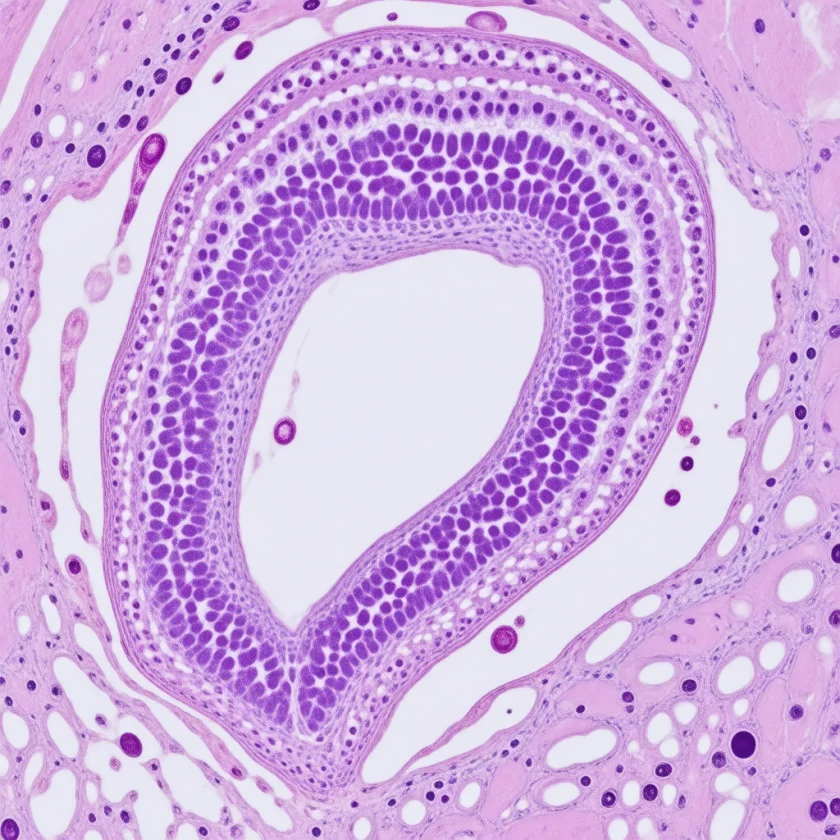


The eye is where zeaxanthin's evidence is strongest, but it is not the only place the body puts it. Carotenoids also deposit in the skin, where they contribute to the skin's own antioxidant defense, and in the brain, where lutein and zeaxanthin are among the dominant carotenoids in neural tissue. Both fields are genuinely interesting and both are, at this stage, more promising than proven. This page reviews the real human trials on skin photoprotection and on cognition — and is deliberately clear about where the science is still preliminary.
Table of Contents
- Zeaxanthin Beyond the Eye
- Carotenoids Accumulate in Skin
- Skin Photoprotection: What Trials Show
- Hydration, Elasticity and Appearance
- Honest Limits on Skin Claims
- The Brain Concentrates Lutein and Zeaxanthin
- Macular Pigment and Cognition
- The Cognitive Trials
- Early Life: Infant Eyes and Brain
- Honest Limits on Brain Claims
- Key Research Papers
- Connections
- Featured Videos
Zeaxanthin Beyond the Eye
Once absorbed, zeaxanthin and lutein circulate in the blood on lipoproteins and are taken up by tissues throughout the body. Two non-ocular sites stand out because the pigments accumulate there in meaningful amounts and because there is a plausible biological reason for a benefit: the skin, our largest organ and our first barrier against ultraviolet light, and the brain, where these carotenoids are selectively enriched in gray matter. In both places the underlying logic is the same as in the eye — carotenoids are lipid-soluble antioxidants and light/oxidative-stress buffers — but the strength of evidence is a step below the ocular data.
Carotenoids Accumulate in Skin
Dietary carotenoids, including zeaxanthin and lutein, deposit in the skin, and skin carotenoid levels can be measured non-invasively (for example by resonance Raman spectroscopy) as a marker of fruit-and-vegetable intake. Studies comparing skin and blood levels (Meinke 2010) confirm that what you eat reaches the dermis and epidermis. Reviews of carotenoids in eye and skin health (Roberts 2009) describe how these pigments join vitamin E and other lipophilic antioxidants in the skin's defense network against reactive oxygen species generated by sunlight.
Skin Photoprotection: What Trials Show
The idea that dietary carotenoids can raise the skin's resistance to ultraviolet (UV) damage has real, if modest, experimental support:
- Carotenoids reduce ultraviolet-induced redness. A placebo-controlled human study (Heinrich 2003) gave volunteers 24 mg a day of beta-carotene, 24 mg a day of a mix of beta-carotene, lutein and lycopene (8 mg each), or placebo for 12 weeks (12 people per group). The redness of the skin 24 hours after a dose of simulated sunlight was diminished in both carotenoid groups and was significantly lower than at the start after 12 weeks; the mix worked about as well as beta-carotene alone. Reviews by Stahl and Sies (2002) summarize the broader case that dietary carotenoids provide a measurable, systemic, but limited layer of photoprotection.
- Lutein and zeaxanthin specifically show effects. A double-blind, placebo-controlled study (Palombo 2007) using oral and/or topical lutein and zeaxanthin reported improvements in skin lipid peroxidation and photoprotective activity, with the combined oral-plus-topical approach performing best.
- A 2025 systematic review of oral photoprotection (Natarelli 2025) placed carotenoids among the dietary agents with the most supportive evidence, while emphasizing that the effect sizes are modest and that oral agents complement rather than replace sunscreen. The review covered 47 human studies; the strongest evidence was for polyphenols, carotenoids and Polypodium leucotomos (a fern extract), the weakest for isolated vitamins or coenzyme Q, and the authors noted that the studies were limited by small size and short duration.
The consistent theme is that dietary carotenoids give the skin a small internal buffer against ultraviolet oxidative stress — useful and real, but far weaker than a topical sunscreen with a proper sun protection factor (SPF).
Hydration, Elasticity and Appearance
Beyond sunburn thresholds, some small trials have looked at skin quality measures. The Palombo study (2007) reported improvements in skin hydration and elasticity as well as surface lipids with combined lutein/zeaxanthin treatment. A review of carotenoid skin-protective effects (Balic 2019) catalogs the mechanisms — antioxidant quenching, reduced lipid peroxidation, modulation of ultraviolet-induced inflammation — that could plausibly translate into better-appearing, better-protected skin over time.
These findings come from small studies, some with a topical component, so they are supportive rather than definitive. They fit with a diet rich in colorful carotenoid-bearing vegetables adding to the skin's overall antioxidant status; they do not show that a zeaxanthin pill is a proven anti-aging or anti-wrinkle treatment.
Honest Limits on Skin Claims
- Not a sunscreen. The photoprotection is systemic and modest; it does not approach the protection of a topical SPF product, and none of the studies above tested it as a replacement for sunscreen.
- Small studies. Much of the skin data comes from small trials, some combining oral and topical carotenoids, which makes it hard to attribute effects to dietary zeaxanthin alone.
- Carotenodermia is cosmetic. Very high carotenoid intake can give skin a harmless orange-yellow tint; it is not toxicity and reverses with reduced intake.
The Brain Concentrates Lutein and Zeaxanthin
One of the more surprising discoveries of the last two decades is that the human brain selectively accumulates carotenoids — and that lutein and zeaxanthin, not the more abundant beta-carotene, are among the dominant ones in neural tissue. Analyses of human brain samples have found that lutein in particular is preferentially concentrated relative to its share of blood carotenoids, suggesting the brain actively takes it up. Because the retina is developmentally an outgrowth of the brain and uses the same pigments, macular pigment can serve as a convenient, measurable window onto brain carotenoid status.
A caveat worth stating up front: within the brain, lutein is generally the dominant of the two, with zeaxanthin present in smaller amounts. So brain research is largely a lutein-and-zeaxanthin story in which zeaxanthin is the junior partner — the reverse of the situation at the foveal center. For a fuller treatment of the cognitive research, see our companion Lutein Benefits pages.
Zeaxanthin may still matter in the brain. Johnson's 2012 review describes brain tissue from people who had taken part in a population-based study of centenarians: the amount of zeaxanthin in the brain was significantly related to overall thinking ability, memory retention, verbal fluency and dementia severity measured before death, after adjustment for age, sex, education, high blood pressure and diabetes. Lutein was related to recall and verbal fluency, but those links weakened after the same adjustments; lutein levels were, however, significantly lower in people with mild cognitive impairment than in people with normal thinking. These are associations and do not prove that the carotenoids caused the differences.
Macular Pigment and Cognition
Because macular pigment reflects brain carotenoid status, researchers have asked whether people with denser macular pigment also perform better cognitively. Several observational studies say yes. Vishwanathan (2014) found that macular pigment optical density was related to cognitive function in older people; Renzi (2014) reported associations between macular pigment and cognition in both unimpaired and mildly cognitively impaired older adults; and Ajana (2018) and Kelly (2015) linked plasma lutein/zeaxanthin and macular pigment to cognitive performance. Johnson's 2012 review summarized the early evidence for a role of lutein and zeaxanthin in cognitive function in the elderly — epidemiologic studies, macula and brain measurements in non-human primates, brain tissue from a centenarian study and a 4-month supplementation trial in older women — and was later expanded into a lifespan review (Johnson 2014).
These are associations, and associations cannot prove that the carotenoids cause the better cognition — people who eat more leafy greens differ in many ways from those who do not. That is why the randomized trials matter.
The Cognitive Trials
A handful of randomized controlled trials have tested lutein and zeaxanthin supplementation on cognition, with modestly encouraging but not uniform results:
- Lindbergh 2018 — a randomized controlled trial gave 44 older adults (mean age 72) 12 mg a day of lutein and zeaxanthin or placebo for 1 year. The supplement appeared to buffer decline on a verbal learning task. The researchers had expected more efficient brain activity (less activation) on functional magnetic resonance imaging (fMRI), but the changes went the other way, toward an increased signal, which the authors read as better blood flow to the brain (cerebral perfusion).
- Power 2018 — in a double-blind, placebo-controlled trial, 91 healthy adults with low macular pigment took 10 mg lutein, 10 mg meso-zeaxanthin and 2 mg zeaxanthin a day, or placebo, for 12 months. Memory on a paired-associate learning test improved compared with placebo (p = 0.009), suggesting the people with the most to gain benefit most.
- Lopresti 2022 — a randomized, placebo-controlled study in 90 adults aged 40–75 with self-reported mild cognitive complaints gave 10 mg lutein and 2 mg zeaxanthin once a day, or placebo, for 6 months. Visual episodic memory (p = 0.005) and visual learning (p = 0.001) improved more than on placebo; there were no significant differences on the other cognitive tests or questionnaires, and no significant side effects were reported.
- Parekh 2024 — extending the question to the young, a randomized trial gave 60 children aged 5–12 gummies with 10 mg lutein and 2 mg zeaxanthin, or placebo, for 180 days. Macular pigment rose, and focus, episodic memory and learning, and visuospatial working memory were better than on placebo at days 90 and 180; no safety concerns were observed.
The overall picture is of small-to-moderate benefits in specific cognitive domains (memory, learning, attention, processing speed), most evident in people starting from low carotenoid status. It is a promising and internally consistent body of work — but the effects are modest, the trials are relatively small, and none show that zeaxanthin prevents dementia.
Early Life: Infant Eyes and Brain
Lutein and zeaxanthin are present in breast milk and accumulate in the developing retina and brain, which has prompted interest in their role in early neural development. Overviews of pediatric carotenoid biology (Gazzolo 2021) describe lutein's accumulation in maturing eyes and brain, and primate studies (Jeon 2018) show that dietary lutein is deposited across specific brain regions differently depending on feeding. In the primate study, infant rhesus monkeys were breastfed or given one of two formulas from birth to 6 months of age. Zeaxanthin was found in every brain region, but only in the breastfed infants; lutein was highest in the occipital cortex (the area that handles vision) whatever the diet; and formula with added carotenoids raised tissue lutein compared with unsupplemented formula but still left it well below breastfed levels. This is an animal study.
In premature infants, lutein and zeaxanthin have been studied for possible protection against retinopathy of prematurity (ROP, an eye disease of premature babies). A 2025 Cochrane review (Choo 2025) pooled 5 trials with 666 preterm infants, all run in Italy and the USA, that gave lutein and zeaxanthin together. Supplementation probably reduces ROP of stage 3 and above (risk ratio 0.49, 95% confidence interval 0.29 to 0.81; moderate-certainty evidence), but probably has little or no effect on ROP of any stage (risk ratio 0.90), and may have little or no effect on deaths during the neonatal intensive care stay, bleeding into the brain's ventricles (intraventricular haemorrhage) or necrotising enterocolitis (a serious bowel disease of premature babies). No adverse effects were reported in either group. The authors note that the pooled estimates may change with further rigorously conducted trials.
Honest Limits on Brain Claims
- Preliminary, not settled. Cognitive benefits are supported by several small randomized controlled trials (RCTs) and consistent observational data, but effect sizes are modest and long-term, dementia-relevant outcomes are unproven.
- Zeaxanthin is the minor brain carotenoid. Lutein is the predominant carotenoid in human brain tissue (Johnson 2014), and most brain and cognition work centers on it. The centenarian brain-tissue findings described above, where zeaxanthin kept its links to thinking and memory after adjustment, are associations; the trials do not show cognitive effects from zeaxanthin on its own.
- Combined supplements. Trials almost always give lutein and zeaxanthin together (sometimes with meso-zeaxanthin), so isolating zeaxanthin's contribution is not possible.
- No treatment claim. None of this supports using zeaxanthin to treat Alzheimer's disease or any dementia; see our Alzheimer's Disease page for evidence-based information.
Key Research Papers
- Roberts RL, Green J, Lewis B (2009). Lutein and zeaxanthin in eye and skin health. Clinics in Dermatology — PubMed PMID: 19168000
- Palombo P et al. (2007). Beneficial long-term effects of combined oral/topical antioxidant treatment with the carotenoids lutein and zeaxanthin on human skin. Skin Pharmacology and Physiology — PubMed PMID: 17446716
- Heinrich U et al. (2003). Supplementation with beta-carotene or a similar amount of mixed carotenoids protects humans from UV-induced erythema. Journal of Nutrition — PubMed PMID: 12514275
- Stahl W, Sies H (2002). Carotenoids and protection against solar UV radiation. Skin Pharmacology and Applied Skin Physiology — PubMed PMID: 12239422
- Meinke MC et al. (2010). Bioavailability of natural carotenoids in human skin compared to blood. European Journal of Pharmaceutics and Biopharmaceutics — PubMed PMID: 20558286
- Johnson EJ (2012). A possible role for lutein and zeaxanthin in cognitive function in the elderly. American Journal of Clinical Nutrition — PubMed PMID: 23053547
- Lindbergh CA et al. (2018). Lutein and zeaxanthin influence brain function in older adults: a randomized controlled trial. Journal of the International Neuropsychological Society — PubMed PMID: 28695791
- Power R et al. (2018). Supplemental retinal carotenoids enhance memory in healthy individuals with low levels of macular pigment: a randomized, double-blind, placebo-controlled trial. Journal of Alzheimer's Disease — PubMed PMID: 29332050
- Lopresti AL et al. (2022). The effects of lutein and zeaxanthin supplementation on cognitive function in adults with self-reported mild cognitive complaints. Frontiers in Nutrition — PubMed PMID: 35252311
- Vishwanathan R et al. (2014). Macular pigment optical density is related to cognitive function in older people. Age and Ageing — PubMed PMID: 24435852
- Gazzolo D et al. (2021). Early pediatric benefit of lutein for maturing eyes and brain — an overview. Nutrients — PubMed PMID: 34579116
- Choo YM et al. (2025). Lutein and zeaxanthin for reducing morbidity and mortality in preterm infants. Cochrane Database of Systematic Reviews — PubMed PMID: 40292760
- Jeon S, Ranard KM, Neuringer M, Johnson EE, Renner L, Kuchan MJ, Pereira SL, Johnson EJ, Erdman JW Jr (2018). Lutein Is Differentially Deposited across Brain Regions following Formula or Breast Feeding of Infant Rhesus Macaques. Journal of Nutrition 148(1):31-39 — PubMed PMID: 29378053
- Natarelli N, Aflatooni S, Stankiewicz K, Correa-Selm L, Sivamani RK (2025). Oral Supplements and Photoprotection: A Systematic Review. Journal of Medicinal Food 28(6):519-541 — PubMed PMID: 39804624
- Johnson EJ (2014). Role of lutein and zeaxanthin in visual and cognitive function throughout the lifespan. Nutrition Reviews 72(9):605-12 — PubMed PMID: 25109868
PubMed Topic Searches
- PubMed: Skin photoprotection
- PubMed: Carotenoids and UV erythema
- PubMed: L/Z and cognition
- PubMed: Macular pigment and brain
- PubMed: Brain carotenoid accumulation
External Resources
Connections
- Zeaxanthin (Main Page)
- Zeaxanthin Benefits Hub
- Zeaxanthin for Eye Health
- Zeaxanthin Food Sources
- Lutein (Brain-Dominant Partner)
- Lutein Benefits Hub
- Beta-Carotene
- Astaxanthin (Skin)
- Alzheimer's Disease
- All Neurology
- All Dermatology
- Vitamin C (Skin Antioxidant)
- Vitamin E (Skin Antioxidant)
- Eggs
- All Antioxidants