Zeaxanthin for Eye & Macular Health
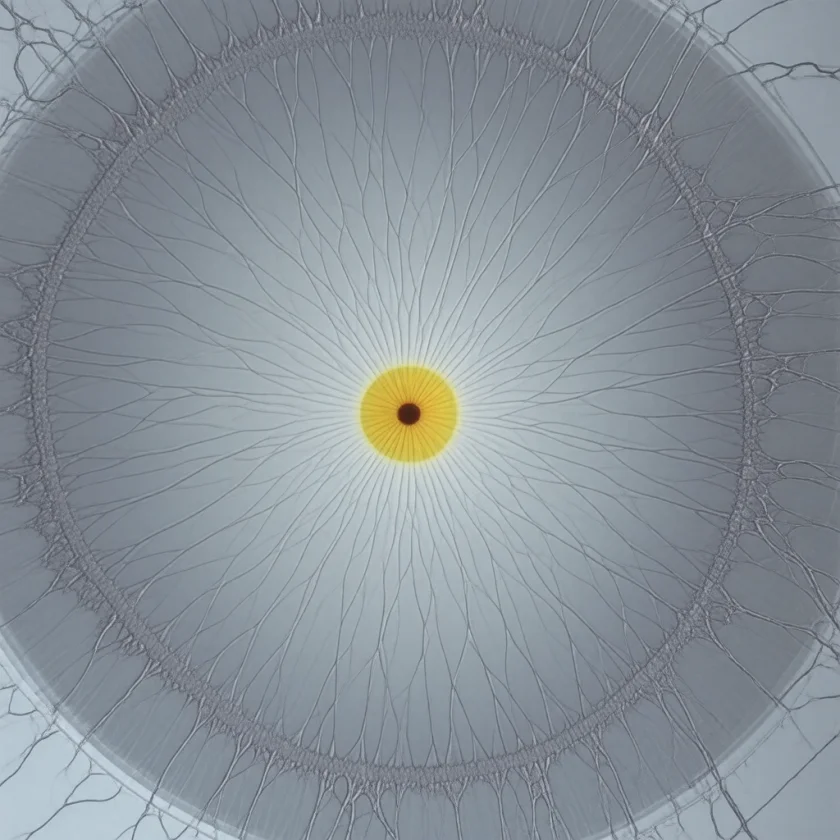
If zeaxanthin has a single job description, it is written on the retina. Of the roughly one thousand square millimeters of light-sensing tissue at the back of each eye, one tiny disc — the macula — produces the vision you use to read, recognize faces, and thread a needle. And of that macula, the innermost pinpoint, the foveola, is guarded not by lutein but overwhelmingly by zeaxanthin and its retinal cousin meso-zeaxanthin. This page explains what that yellow pigment does, what happens when it thins with age, and gives an honest reading of the AREDS2 trial — the study everyone cites and few describe accurately.
Table of Contents
- Zeaxanthin at the Center of Central Vision
- The Macular Pigment: A Yellow Screen
- Why Zeaxanthin Owns the Fovea
- Two Ways the Pigment Protects the Retina
- Age-Related Macular Degeneration
- The AREDS and AREDS2 Trials
- What AREDS2 Did — and Did Not — Prove
- Raising Your Macular Pigment
- Who Is Likely to Benefit
- Cautions and Honest Limits
- Key Research Papers
- Connections
- Featured Videos
Zeaxanthin at the Center of Central Vision
The macula is the small, pigmented central region of the retina about 5–6 mm across. At its heart is the fovea, a shallow pit packed with cone photoreceptors, and at the exact center of that pit is the foveola, where cone density peaks and where the finest visual detail is resolved. This is the tissue that determines whether you can read a book, drive at night, or see a grandchild's face clearly. It is also, by design, one of the most metabolically stressed and light-bombarded spots in the human body.
Evolution's answer to that stress is a yellow pigment concentrated precisely there. It is built from three dietary-derived carotenoids — lutein, zeaxanthin, and meso-zeaxanthin — and its yellow color is exactly complementary to the blue light that carries the most energy and does the most photochemical damage. Zeaxanthin is the carotenoid the retina places most densely at the very center, which is why it is inseparable from any serious discussion of central vision.
The Macular Pigment: A Yellow Screen
The "macular pigment" is simply the accumulated lutein, zeaxanthin, and meso-zeaxanthin sitting in the inner layers of the macula, in front of the photoreceptors they protect. Because it is yellow, it can be seen and measured. Ophthalmologists quantify it as macular pigment optical density (MPOD) — a number that reflects how much of this protective pigment a given person has laid down. MPOD varies widely between individuals, largely because it tracks lifetime dietary intake of lutein and zeaxanthin and the efficiency with which each person absorbs and deposits them.
MPOD is not fixed. Controlled studies show that lutein and zeaxanthin supplements raise MPOD over months; the effect of food alone is less clear. A 2021 systematic review and meta-analysis of 46 studies in 3,189 adults with healthy eyes found no statistically significant change in MPOD below 5 mg a day (studies that mostly tested dietary changes for 3–6 months), a pooled rise of 0.04 units at 5 to under 20 mg a day and a rise of 0.11 units at 20 mg a day or more, over 3–12 months (Wilson 2021). This matters because MPOD is the measurable bridge between what you eat and what sits in your retina — you can verify that dietary change actually reaches the target tissue.
Why Zeaxanthin Owns the Fovea
The three macular carotenoids are not evenly mixed. Careful mapping of donor retinas shows a striking spatial pattern:
- At the foveal center, zeaxanthin plus meso-zeaxanthin dominate, outnumbering lutein by roughly two to one: in donor retinas the lutein-to-zeaxanthin ratio averaged about 1:2.4 in the central 0–0.25 mm (Bone 1988).
- Moving outward into the parafovea and perifovea, the ratio flips and lutein becomes the majority carotenoid, at over 2:1 in the periphery (8.7–12.2 mm from the center) (Bone 1988). Relative to zeaxanthin, lutein rises and meso-zeaxanthin falls with distance from the fovea (Bone 1997).
Meso-zeaxanthin is the curious member of the trio. It is scarce in the diet, yet it is abundant at the very epicenter of the macula. The reason is that the retina manufactures it on site, converting lutein into meso-zeaxanthin through an isomerization step. So the central pigment is a blend of dietary zeaxanthin and locally made meso-zeaxanthin, both of which have the fully conjugated double-bond structure that makes them efficient blue-light absorbers and singlet-oxygen quenchers.
This central positioning is the reason zeaxanthin deserves attention in its own right. Lutein is the more abundant carotenoid in most diets and in the retina overall, but at the single most vision-critical point — the foveola — zeaxanthin and its derivative are the guardians on duty. The donor-retina mapping studies (Bone 1988; Bone 1997) show that the central pigment peak is built disproportionately from zeaxanthin and meso-zeaxanthin. Studies relating diet and serum levels to MPOD find positive but weak links (Bone 2000; Nolan 2007, 828 adults, r = 0.136 to 0.303); Nolan 2007 also found that in people at higher risk of age-related maculopathy — a family history, heavy smoking, age over 53 or a body mass index over 27 — MPOD did not track serum zeaxanthin, which the authors read as impaired retinal capture of zeaxanthin.
Two Ways the Pigment Protects the Retina
Zeaxanthin protects the macula through two complementary mechanisms:
- Optical filtering. The pigment absorbs short-wavelength blue light (peak absorbance near 460 nm) before it reaches the delicate photoreceptor outer segments and the retinal pigment epithelium beneath them. Blue photons carry the most energy in the visible spectrum and are the most efficient at driving damaging photochemical reactions, so filtering them at the front reduces the light-dose the vulnerable cells receive.
- Antioxidant quenching. The macula is a chemistry set primed for oxidative trouble: it is bathed in light, rich in oxygen, and packed with polyunsaturated fatty acids in photoreceptor membranes that oxidize easily. Zeaxanthin quenches singlet oxygen and scavenges free radicals, and laboratory work shows it helps limit the photo-oxidation of A2E and related bisretinoids — toxic byproducts of the visual cycle that accumulate in aging retinas (Arunkumar 2023).
These two mechanisms are the biological rationale for why higher macular pigment is associated with a healthier macula. They are well established at the level of physics and biochemistry. The harder question — whether raising the pigment changes clinical outcomes — is where careful reading of the trials becomes essential.
Age-Related Macular Degeneration
Age-related macular degeneration (AMD) is the leading cause of irreversible central vision loss in older adults in the developed world. It comes in two broad forms: the common "dry" form, marked by yellowish deposits called drusen and, in advanced cases, patches of dying tissue (geographic atrophy); and the less common but more sudden "wet" form, in which abnormal blood vessels leak beneath the retina. Both attack the macula, and therefore both threaten exactly the central, detail-resolving vision that zeaxanthin sits to protect.
The observational case for carotenoids is consistent: people with higher dietary intake of lutein and zeaxanthin, and higher MPOD, tend to have a lower prevalence of advanced age-related macular degeneration. A 2012 systematic review and meta-analysis of dietary intake and age-related macular degeneration risk (Ma 2012) found that higher lutein and zeaxanthin intake was associated with a reduced risk of late (advanced) age-related macular degeneration, though the association with early age-related macular degeneration was weaker. Observational associations, however, cannot by themselves prove that supplementation helps — which is why the randomized AREDS program was so important.
For a fuller clinical picture of the disease itself, see our Macular Degeneration page.
The AREDS and AREDS2 Trials
The Age-Related Eye Disease Study (AREDS), published in 2001, was a large randomized trial run by the U.S. National Eye Institute. It tested a specific antioxidant-plus-zinc formula (vitamin C, vitamin E, beta-carotene, zinc, and copper) in people who already had intermediate age-related macular degeneration or advanced age-related macular degeneration in one eye. The result was landmark: the formula reduced the risk of progression to advanced age-related macular degeneration by roughly a quarter over five years. It did not prevent age-related macular degeneration in people without it, and it did not restore lost vision — it slowed worsening in those already affected.
AREDS2, published in JAMA in 2013, was the sequel that brought zeaxanthin into the formula. It asked two main questions: could adding lutein (10 mg) plus zeaxanthin (2 mg), and/or omega-3 fatty acids, improve on the original formula — and could beta-carotene be safely removed? The motivation for that second question was real: beta-carotene had been shown in earlier trials to increase lung cancer risk in smokers and former smokers, making it a liability in an older population.
The findings, read carefully:
- Omega-3 fatty acids added no benefit for age-related macular degeneration progression.
- Adding lutein + zeaxanthin to the full original formula did not produce a large, statistically significant extra benefit in the primary overall analysis — an honest and often-omitted point.
- But lutein + zeaxanthin worked as a safe and effective substitute for beta-carotene. In the direct comparison, the lutein/zeaxanthin formulation performed at least as well as the beta-carotene one, without the lung-cancer signal.
- The benefit was concentrated in people with the lowest dietary intake. Participants who consumed the least lutein and zeaxanthin from food showed the clearest reduction in progression when supplemented — roughly a quarter lower risk in that subgroup.
Longer follow-up strengthened the case. The 10-year AREDS2 report (Chew 2022, Report 28) confirmed that replacing beta-carotene with lutein/zeaxanthin was both safer and modestly more effective over time, and it became the basis for today's standard "AREDS2 formula." More recent analysis (Keenan 2025) reported that the antioxidant plus lutein/zeaxanthin regimen slowed the spread of geographic atrophy toward the fovea — directly relevant to preserving central vision. In AREDS2 eyes whose geographic atrophy had not yet reached the center (in participants taking the antioxidant formula without beta-carotene), progression toward the center was 80.1 micrometres a year with lutein/zeaxanthin versus 114.4 micrometres a year without; the total area of atrophy did not grow more slowly (P = 0.64).
What AREDS2 Did — and Did Not — Prove
It is worth stating the honest boundaries of the evidence, because the AREDS2 formula is heavily marketed and easily oversold:
- What it supports: in people who already have intermediate age-related macular degeneration, or advanced age-related macular degeneration in one eye, an AREDS2-type formula containing lutein and zeaxanthin modestly slows progression to advanced disease and is safer than the old beta-carotene version. A Cochrane review (Evans 2023) concluded that antioxidant supplements probably slow progression in people with established age-related macular degeneration.
- What it does not support: AREDS2 was not a prevention trial in healthy eyes. There is no strong randomized evidence that these supplements prevent age-related macular degeneration from developing in people who do not have it, and no evidence that they reverse damage or improve already-lost vision. Marketing that implies "take this and you won't get macular degeneration" runs ahead of the data.
- Zeaxanthin was tested as part of a package, not in isolation. The trial cannot tell you how much of the benefit is zeaxanthin specifically versus lutein, zinc, or the antioxidant vitamins together.
The 2023 Cochrane review (Evans 2023) adds two numbers. People taking lutein/zeaxanthin may have a similar or slightly reduced risk of progressing to late age-related macular degeneration compared with control (risk ratio 0.94, 95% CI 0.87 to 1.01; low-certainty evidence, mostly from AREDS2, where almost all participants also took the original formula). In exploratory analyses of AREDS2, replacing beta-carotene with lutein/zeaxanthin gave a hazard ratio of 0.82 (95% CI 0.69 to 0.96) for progression to late disease.
In sum: in people with age-related macular degeneration, antioxidant supplements made progression to late disease less likely (odds ratio 0.72, moderate-certainty evidence), and people with intermediate disease have a higher chance of benefiting because their risk of progression is higher (Evans 2023). For healthy eyes, eating zeaxanthin-rich foods carries no known risk, but no randomized trial shows that it guarantees protection against future disease.
Raising Your Macular Pigment
Whether through food or supplements, macular pigment can be increased, and the increase is measurable as rising MPOD. For supplements, the evidence here is stronger and less controversial than the clinical-outcome evidence; for food alone it is less clear:
- Diet: a less clear effect. Dietary intake of lutein and zeaxanthin is positively, though weakly, linked to serum levels and MPOD (Bone 2000; Nolan 2007). In the 2021 meta-analysis, studies below 5 mg a day, mostly dietary interventions, showed no statistically significant change in MPOD (pooled mean difference 0.02, 95% CI −0.01 to 0.05), and the authors call the effect of dietary sources less clear (Wilson 2021). See our food sources page for the specific foods that deliver the most.
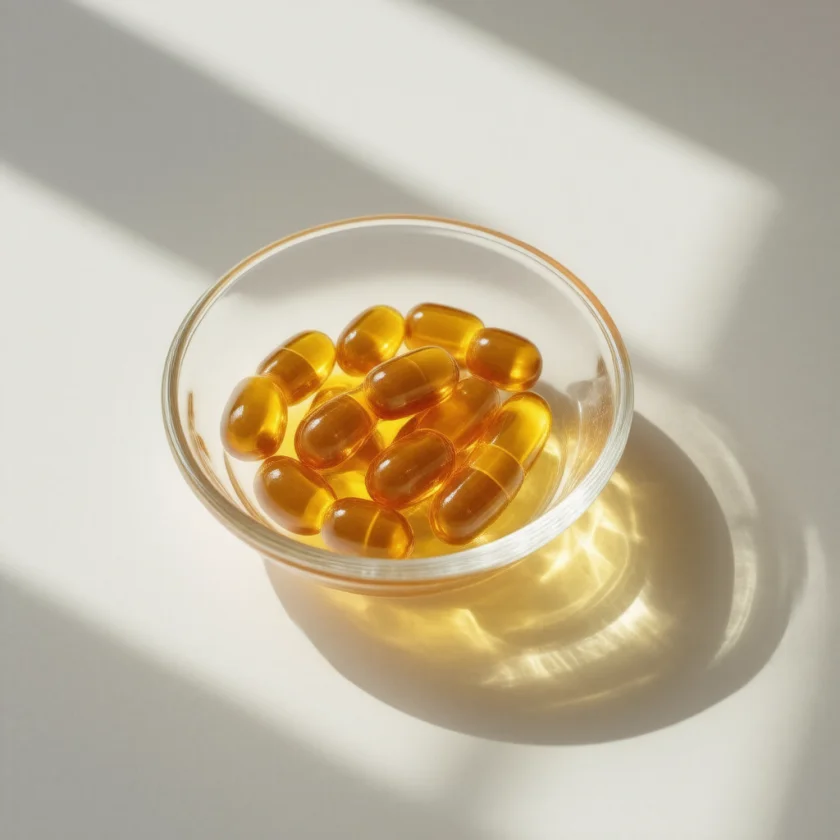
- Supplements work, and dose matters. The 2021 meta-analysis of MPOD-response studies (Wilson 2021) found MPOD rose by 0.04 units at 5 to under 20 mg a day and by 0.11 units at 20 mg a day or more, over 3–12 months in adults with healthy eyes. Trials pairing lutein, zeaxanthin, and meso-zeaxanthin (Ma 2016) show robust MPOD gains.
- Meso-zeaxanthin may matter for the central peak. Because the foveal center is built from zeaxanthin and meso-zeaxanthin, some formulations add meso-zeaxanthin directly rather than relying only on the retina's conversion of lutein (Scripsema 2015).
- Fat aids absorption. These are fat-soluble pigments; eating them with some dietary fat markedly improves uptake — the reason egg yolk is such an efficient delivery vehicle.
A 2024 network meta-analysis of 38 randomized trials (Hu 2024) found that every antioxidant supplement group studied raised macular pigment and contrast sensitivity at low spatial frequency. The lutein plus zeaxanthin combination shortened recovery time after exposure to bright light (photostress recovery), and lutein plus zeaxanthin plus fatty acids ranked best for macular pigment. The authors caution that the evidence is of low quality.
Who Is Likely to Benefit
Reading the evidence pragmatically, the people most likely to gain from deliberately increasing zeaxanthin intake are:
- Those with diagnosed intermediate or advanced age-related macular degeneration — the population in which AREDS2-type supplementation has randomized support. In the Cochrane review, people with intermediate disease had a higher chance of benefiting because their risk of progression is higher.
- People with low dietary carotenoid intake — the subgroup that benefited most in AREDS2. People whose diets are light on eggs, orange peppers, corn, and leafy greens have the most room to gain.
- People with a family history of age-related macular degeneration or other risk factors (smoking, light iris color, older age), for whom building macular pigment through diet is low-risk but not a proven shield.
- Those with naturally low MPOD, which can be measured, and which supplementation reliably raises.
Conversely, a healthy young adult with a colorful, vegetable-rich diet and normal MPOD has little to gain from high-dose supplements; the trial benefits were concentrated in people with existing disease or low dietary intake.
Cautions and Honest Limits
- Supplements are not a treatment for vision already lost. Zeaxanthin slows progression in the right population; it does not reverse damage. New or worsening central vision changes are signs that eye clinics treat as urgent.
- The beta-carotene history matters for smokers and former smokers. The whole reason lutein/zeaxanthin replaced beta-carotene in AREDS2 is that beta-carotene raised lung cancer risk in smokers. In AREDS2, more lung cancers occurred with beta-carotene than without it (23 [2.0%] versus 11 [0.9%]), mostly in former smokers, and at 10 years the odds ratio for lung cancer was 1.82 (95% CI 1.06 to 3.12) for beta-carotene versus 1.15 (not significant) for lutein/zeaxanthin. Zeaxanthin itself does not carry that signal; older age-related macular degeneration formulas that still contain high-dose beta-carotene do.
- Zeaxanthin is generally very safe. Dietary intake has an excellent safety record, and the doses used in AREDS2 (2 mg zeaxanthin, 10 mg lutein) were well tolerated. High-carotenoid intake can tint the skin harmlessly (carotenodermia), which is cosmetic and reversible.
- It is not a substitute for the whole formula or for medical care. AREDS2 benefit came from the full formulation plus zinc; wet age-related macular degeneration in particular is treated with anti-vascular endothelial growth factor (anti-VEGF) injections, not supplements.
- Most trials studied zeaxanthin with lutein. Claims about zeaxanthin in isolation carry that caveat.
Key Research Papers
- Age-Related Eye Disease Study 2 (AREDS2) Research Group (2013). Lutein + zeaxanthin and omega-3 fatty acids for age-related macular degeneration: the AREDS2 randomized clinical trial. JAMA — PubMed PMID: 23644932
- Chew EY et al. (2022). Long-term outcomes of adding lutein/zeaxanthin and ω-3 fatty acids to the AREDS supplements: AREDS2 Report 28. JAMA Ophthalmology — PubMed PMID: 35653117
- Keenan TDL et al. (2025). Oral antioxidant and lutein/zeaxanthin supplements slow geographic atrophy progression to the fovea in AMD. Ophthalmology — PubMed PMID: 39025435
- Evans JR, Lawrenson JG (2023). Antioxidant vitamin and mineral supplements for slowing the progression of age-related macular degeneration. Cochrane Database of Systematic Reviews — PubMed PMID: 37702300
- Agrón E et al. (2021). Dietary nutrient intake and progression to late age-related macular degeneration in AREDS 1 and 2. Ophthalmology — PubMed PMID: 32858063
- Ma L et al. (2012). Lutein and zeaxanthin intake and the risk of age-related macular degeneration: a systematic review and meta-analysis. British Journal of Nutrition — PubMed PMID: 21899805
- Wilson LM et al. (2021). The effect of lutein/zeaxanthin intake on human macular pigment optical density: a systematic review and meta-analysis. Advances in Nutrition — PubMed PMID: 34157098
- Ma L et al. (2016). Lutein, zeaxanthin and meso-zeaxanthin supplementation associated with macular pigment optical density. Nutrients — PubMed PMID: 27420092
- Scripsema NK et al. (2015). Lutein, zeaxanthin, and meso-zeaxanthin in the clinical management of eye disease. Journal of Ophthalmology — PubMed PMID: 26819755
- Bone RA et al. (2000). Lutein and zeaxanthin in the eyes, serum and diet of human subjects. Experimental Eye Research — PubMed PMID: 10973733
- Nolan JM et al. (2007). The relationships between macular pigment optical density and its constituent carotenoids in diet and serum. Investigative Ophthalmology & Visual Science — PubMed PMID: 17251452
- Bone RA, Landrum JT, Fernandez L, Tarsis SL (1988). Analysis of the macular pigment by HPLC: retinal distribution and age study. Investigative Ophthalmology & Visual Science — PubMed PMID: 3372161
- Bone RA, Landrum JT, Friedes LM, et al. (1997). Distribution of lutein and zeaxanthin stereoisomers in the human retina. Experimental Eye Research — PubMed PMID: 9176055
- Hu W, Seah V, Huang V, Kim JE (2024). Effect of Antioxidant Supplementation on Macular Pigment Optical Density and Visual Functions: A Systematic Review and Network Meta-Analysis of Randomized Controlled Trials. Advances in Nutrition — PubMed PMID: 38582248
- Arunkumar R et al. (2023). Macular pigment carotenoids and bisretinoid A2E. Advances in Experimental Medicine and Biology — PubMed PMID: 37440008
PubMed Topic Searches
- PubMed: Zeaxanthin foveal pigment
- PubMed: AREDS2 lutein/zeaxanthin
- PubMed: MPOD supplementation
- PubMed: Meso-zeaxanthin
- PubMed: L/Z and AMD risk
External Resources
Connections
- Zeaxanthin (Main Page)
- Zeaxanthin Benefits Hub
- Zeaxanthin & Blue Light
- Zeaxanthin Food Sources
- Lutein (Partner Carotenoid)
- Lutein Benefits Hub
- Macular Degeneration
- Cataracts
- Diabetic Retinopathy
- All Eye Conditions
- Vitamin A for Vision
- Zinc (AREDS Cofactor)
- Vitamin C (AREDS Antioxidant)
- Vitamin E (AREDS Antioxidant)
- Eggs