Methionine for Liver Health
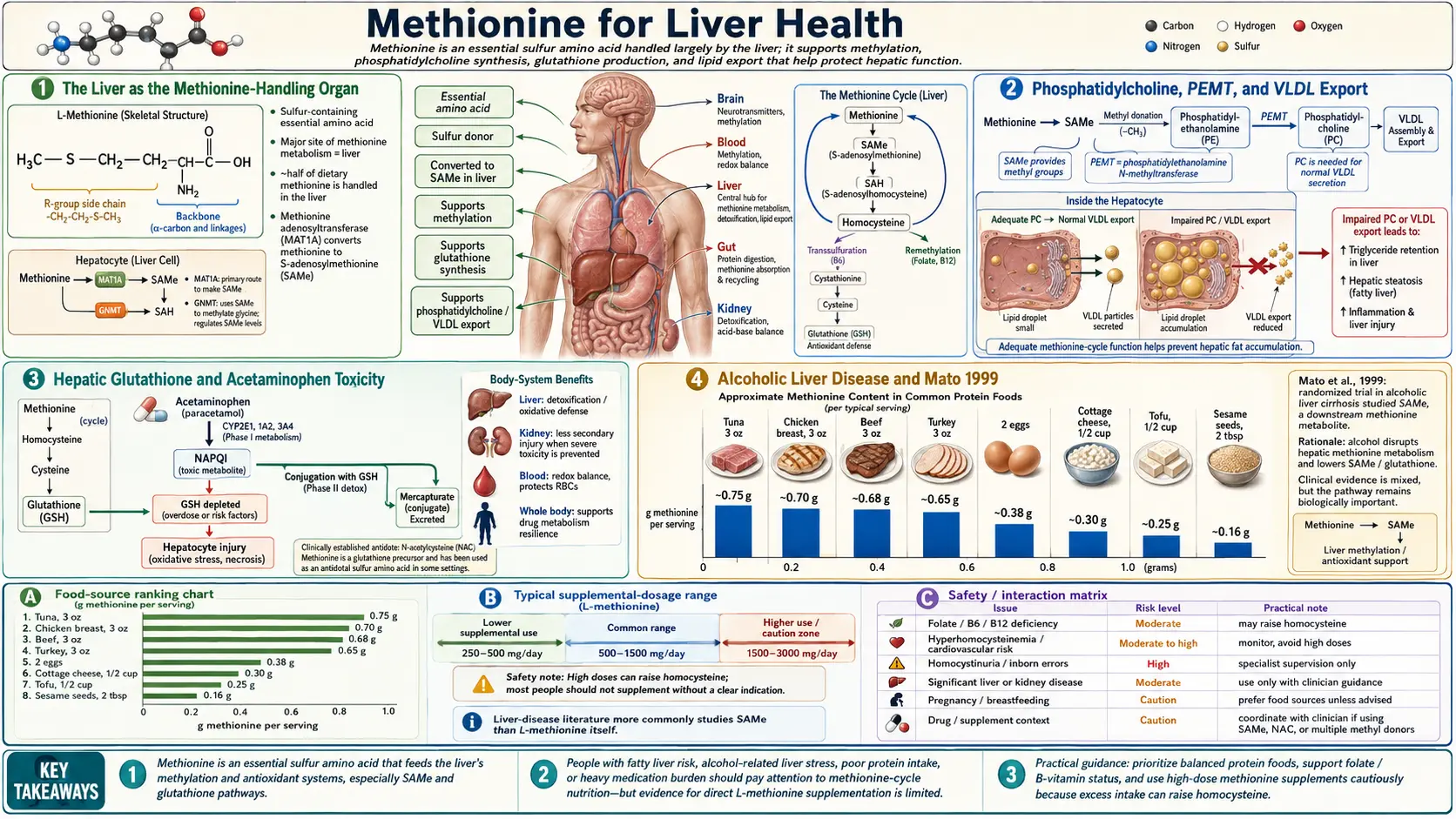
The liver is the single most methionine-dependent organ in the body. Approximately half of all ingested methionine is metabolized in the liver, and hepatic methionine adenosyltransferase (MAT1A, the liver-specific isoform) generates the S-adenosylmethionine (SAMe) used for phosphatidylcholine synthesis, glutathione production, bile acid conjugation, and the methylation of every hormone, drug, and xenobiotic the liver clears. Methionine and S-adenosylmethionine deficiency are central to the pathogenesis of alcoholic liver disease, non-alcoholic fatty liver disease (NAFLD), and intrahepatic cholestasis — and pharmaceutical-grade S-adenosylmethionine has been studied in formal clinical trials for each of these indications. The Mato 1999 trial in alcoholic cirrhosis showed an absolute reduction in death or liver transplant of 17 percentage points (29% vs 12%) in Child-Pugh A and B patients, a result that reached significance only after the 8 Child-Pugh C patients were set aside; trials of S-adenosylmethionine in intrahepatic cholestasis of pregnancy have given negative or mixed results, and a 2020 Cochrane review found insufficient evidence that it is effective; the methionine-choline-deficient diet remains the most widely used animal model of non-alcoholic steatohepatitis precisely because removing methionine and choline reliably reproduces the histology of human non-alcoholic steatohepatitis (NASH). This deep-dive walks through each clinical application, the underlying mechanisms, and the practical role of methionine and S-adenosylmethionine in modern hepatology and integrative liver care.
Table of Contents
- The Liver as the Methionine-Handling Organ
- Phosphatidylcholine, PEMT, and Very-Low-Density Lipoprotein Export
- Hepatic Glutathione and Acetaminophen Toxicity
- Alcoholic Liver Disease and Mato 1999
- The Methionine-Choline-Deficient (MCD) NASH Model
- Non-Alcoholic Fatty Liver Disease and Non-Alcoholic Steatohepatitis in Humans
- Intrahepatic Cholestasis of Pregnancy
- Drug-Induced Cholestasis and Total Parenteral Nutrition (TPN) Cholestasis
- The Methionine Restriction Longevity Counterpoint
- What Trials Used and What Practitioners Use
- Cautions and Drug Interactions
- Key Research Papers
- Connections
- Featured Videos
The Liver as the Methionine-Handling Organ
The liver receives essentially all dietary amino acids via the portal vein after intestinal absorption, and methionine is no exception. Approximately 48% of dietary methionine is metabolized in the first pass through the liver before reaching the systemic circulation, making hepatic methionine handling quantitatively dominant in whole-body methionine economy.
The liver-specific methionine adenosyltransferase isoform (MAT1A) is expressed at much higher levels in adult hepatocytes than the ubiquitous MAT2A isoform expressed elsewhere in the body. MAT1A has lower affinity for methionine but higher capacity, which is appropriate for the high-flux hepatic environment. Mature hepatocytes are S-adenosylmethionine-rich tissue — intracellular S-adenosylmethionine concentrations of 50-100 micromolar are routine, compared to 5-50 micromolar in most other tissues.
This dense hepatic S-adenosylmethionine pool serves three major hepatic functions:
- Phosphatidylcholine synthesis via PEMT for very-low-density lipoprotein (VLDL) packaging and bile membrane integrity
- Glutathione synthesis via the transsulfuration pathway (cysteine substrate supply)
- Methylation of xenobiotics, hormones, and bile acids for their inactivation and excretion
Loss of hepatic MAT1A activity (whether from chronic ethanol consumption, severe liver disease, or experimental knockout in animals) produces a recognizable hepatic phenotype: S-adenosylmethionine depletion, glutathione depletion, fatty liver, hepatocyte apoptosis, oxidative stress, and predisposition to fibrosis and hepatocellular carcinoma. The MAT1A-knockout mouse develops spontaneous fatty liver and hepatocellular carcinoma, providing genetic confirmation that methionine flux through the S-adenosylmethionine pool is hepatoprotective.
Phosphatidylcholine, PEMT, and Very-Low-Density Lipoprotein Export
One of the liver's defining metabolic responsibilities is to package triglycerides into very-low-density lipoprotein (VLDL) particles for export to peripheral tissues. Very-low-density lipoprotein assembly requires phosphatidylcholine (PC) as the outer monolayer phospholipid of the lipoprotein particle. When PC is in short supply, very-low-density lipoprotein assembly stalls, triglycerides accumulate within the hepatocyte cytoplasm as lipid droplets, and the histologic picture of hepatic steatosis develops.
The liver produces PC through two pathways:
- The CDP-choline pathway (Kennedy pathway) uses dietary choline. Choline is phosphorylated, activated to CDP-choline, and conjugated to diacylglycerol.
- The PEMT pathway (phosphatidylethanolamine N-methyltransferase) sequentially methylates phosphatidylethanolamine three times using S-adenosylmethionine as the methyl donor. PEMT is uniquely expressed at high levels in hepatocytes (it is the only mammalian methyltransferase that uses a phospholipid substrate) and produces approximately 30% of hepatic PC under typical dietary conditions.
The interconvertibility of these two pathways is critical. When dietary choline is adequate, the CDP-choline pathway dominates and the PEMT pathway is downregulated. When dietary choline is restricted, the PEMT pathway must scale up, increasing methionine demand for the S-adenosylmethionine consumed in the three methylation steps. When both methionine and choline are restricted simultaneously, neither pathway can produce adequate PC, VLDL assembly fails, and fatty liver develops rapidly — the mechanistic basis for the methionine-choline-deficient diet model discussed below.
PEMT-derived PC has a different fatty acid composition than CDP-choline-derived PC — specifically, PEMT-PC is enriched in long-chain polyunsaturated fatty acids (especially arachidonic acid and docosahexaenoic acid, DHA) in the sn-2 position. This compositional difference matters for very-low-density lipoprotein packaging because the most actively secreted very-low-density lipoprotein particles preferentially incorporate PEMT-PC. The PEMT-knockout mouse develops steatohepatitis on a choline-deficient background; the mouse cannot compensate for choline deficiency through PEMT and accumulates hepatic triglycerides.
Human PEMT polymorphisms have been documented and are associated with risk of non-alcoholic fatty liver disease in choline-marginal diets, particularly in postmenopausal women whose estrogen-mediated PEMT induction has fallen. The clinical implication is that adequate methionine intake helps protect against choline-marginal dietary patterns by maintaining functional PEMT activity.
Hepatic Glutathione and Acetaminophen Toxicity
Hepatic glutathione concentration is among the highest of any tissue in the body, reaching 5-10 millimolar in healthy hepatocytes — an order of magnitude above most other cell types. This high concentration is necessary because the liver is the primary site of xenobiotic metabolism, and glutathione conjugation is the dominant Phase II detoxification reaction for reactive electrophiles produced by Phase I cytochrome P450 oxidation.
The rate-limiting precursor for glutathione synthesis is cysteine, which the hepatocyte produces either by transsulfuration from methionine (the pathway described in our Methylation and S-adenosylmethionine deep-dive) or by direct uptake from circulation. Under conditions of methionine limitation, the transsulfuration pathway is impaired and hepatic glutathione synthesis is constrained.
The clinical relevance of this mechanism is most dramatic in acetaminophen (paracetamol) toxicity. Therapeutic acetaminophen doses are metabolized primarily by glucuronidation (Phase II) with a small fraction (5-15%) flowing through cytochrome P450 2E1 (CYP2E1) to produce N-acetyl-p-benzoquinone imine (NAPQI), a reactive electrophile that is normally inactivated by glutathione conjugation. At supratherapeutic doses, NAPQI production overwhelms glutathione supply, free NAPQI binds covalently to hepatocyte proteins, and centrilobular hepatic necrosis ensues. This is the most common cause of acute liver failure in the United States.
The antidote, N-acetylcysteine (NAC), works by directly supplying cysteine for emergency glutathione synthesis. N-acetylcysteine is the cysteine donor of choice for this purpose because it has better oral bioavailability than free cysteine and is not subject to first-pass hepatic catabolism. In any chronic clinical setting that depletes hepatic glutathione — ongoing acetaminophen use at the upper end of dosing, alcoholic liver disease, non-alcoholic fatty liver disease, certain chemotherapy regimens — adequate dietary methionine plus supplemental N-acetylcysteine (typical dose 600-1800 mg/day) provides combined upstream and direct substrate support for glutathione synthesis.
For the full discussion of glutathione and N-acetylcysteine, see our N-acetylcysteine & Glutathione page.
Alcoholic Liver Disease and Mato 1999
Chronic ethanol consumption causes profound disturbances of hepatic methionine and S-adenosylmethionine metabolism. The relevant mechanisms include:
- Reduced MAT1A activity — ethanol downregulates MAT1A expression and post-translationally inhibits the enzyme, reducing S-adenosylmethionine synthesis from methionine.
- Elevated S-adenosylhomocysteine (SAH) — ethanol metabolism produces acetaldehyde, which inhibits S-adenosylhomocysteine hydrolase (SAHH). SAH accumulates, the SAH/SAMe ratio rises, and the cellular methylation potential falls.
- Glutathione depletion — combined methionine flux impairment and direct oxidative stress from ethanol metabolism deplete hepatic glutathione.
- Mitochondrial dysfunction — the liver mitochondrial glutathione pool is particularly vulnerable because mitochondrial glutathione import depends on functional inner membrane carriers that are impaired in alcoholic liver disease.
- Reduced phosphatidylcholine — impaired PEMT activity (S-adenosylmethionine-dependent) plus reduced dietary choline contribute to hepatic steatosis and impaired membrane fluidity.
The clinical translation came in the form of the Mato 1999 multicenter European trial. Mato and colleagues randomized 123 patients with alcoholic cirrhosis (75 Child-Pugh A, 40 B and 8 C) to oral S-adenosylmethionine 1200 mg/day (62 patients) or placebo (61 patients) for 24 months. The primary endpoint was death or liver transplantation. Results:
- Overall mortality or transplant: S-adenosylmethionine 16% vs placebo 30% (p=0.077 in the full intent-to-treat analysis)
- In the Child-Pugh A and B subgroup (excluding the 8 most severe C patients): S-adenosylmethionine 12% vs placebo 29% (p=0.025); the statistically significant result came only from this subgroup analysis, not from the full trial
- No significant safety signal
The Mato trial is the main evidence for S-adenosylmethionine (available in intravenous and oral forms; sold in the US over the counter (OTC) as a supplement since 1999) in alcoholic liver disease. The effect size in the Child-Pugh A and B subgroup — an absolute mortality reduction of 17 percentage points over 24 months — would be considered substantial for any liver disease intervention. The trial has been criticized for the underpowering of the full intention-to-treat analysis, but the biological rationale (correcting the documented hepatic S-adenosylmethionine deficit) is strong and the safety profile is benign, so S-adenosylmethionine has been adopted into integrative-medicine and hepatology practice for alcoholic liver disease management.
A Cochrane review (Rambaldi and Gluud 2006) pooled nine randomized trials with 434 patients and found no significant effect of S-adenosylmethionine on death from any cause, liver-related death, death or liver transplantation, or complications; its analysis rested mostly on the Mato trial, the only one with adequate methods that clearly reported deaths and transplants. The authors could not find evidence supporting or refuting S-adenosylmethionine for alcohol-related liver disease and called for more long-term, high-quality trials. Cochrane withdrew that review in 2015 because it had been abandoned and not updated since 2008, with a new author team taking over the work. The European Association for the Study of the Liver (EASL) guidelines acknowledge S-adenosylmethionine as a reasonable adjunct in selected patients with alcoholic liver disease.
The Methionine-Choline-Deficient (MCD) NASH Model
The methionine-choline-deficient (MCD) diet is the most widely used and most reproducible rodent dietary model of non-alcoholic steatohepatitis (NASH). Feeding mice or rats a chow that lacks both methionine and choline produces, within 2-4 weeks, the full histologic spectrum of human non-alcoholic steatohepatitis:
- Macrovesicular and microvesicular steatosis (lipid droplet accumulation in hepatocytes)
- Hepatocyte ballooning
- Lobular inflammation with neutrophil and lymphocyte infiltration
- Mallory-Denk bodies
- Pericellular and perisinusoidal fibrosis with prolonged feeding (8-12 weeks)
The mechanism is the convergent failure of both phosphatidylcholine synthesis pathways. Without methionine, the S-adenosylmethionine supply for PEMT is exhausted within days. Without choline, the CDP-choline pathway has no substrate. With both pathways inoperative, hepatic PC drops, very-low-density lipoprotein assembly fails, triglycerides accumulate, and the secondary cascade of lipotoxicity, oxidative stress, and inflammation produces full-blown steatohepatitis.
The MCD model has the limitation that animals lose weight rather than gain it (the opposite of human non-alcoholic fatty liver disease, which is typically associated with obesity and insulin resistance). This has led to refinements such as the choline-deficient L-amino-acid-defined (CDAA) diet (which provides methionine but eliminates choline and uses purified amino acids), the high-fat MCD variant, and the "Western diet" with reduced choline. All produce variations on the same hepatic phenotype.
The translational message from MCD is unambiguous: simultaneously inadequate methionine and choline intake produces the histologic hallmarks of non-alcoholic steatohepatitis. Whether marginal dietary insufficiency of methionine and choline contributes to human non-alcoholic fatty liver disease in the typical clinical setting is the more nuanced question, addressed in the next section.
Non-Alcoholic Fatty Liver Disease and Non-Alcoholic Steatohepatitis in Humans
Non-alcoholic fatty liver disease (NAFLD) is now the most prevalent chronic liver disease worldwide, affecting approximately 25-30% of adults in developed countries. A subset of non-alcoholic fatty liver disease patients progress to non-alcoholic steatohepatitis (NASH) with active inflammation and risk of fibrosis, cirrhosis, and hepatocellular carcinoma. The principal drivers in humans are obesity, insulin resistance, type 2 diabetes, dyslipidemia, and high-fructose dietary patterns — not primarily methionine or choline deficiency.
However, the methionine and choline pathway intersects with human non-alcoholic fatty liver disease/non-alcoholic steatohepatitis in several clinically relevant ways:
- Choline inadequacy — the dietary reference intake for choline (550 mg/day for men, 425 mg/day for women) is not met by approximately 90% of US adults per NHANES data. Postmenopausal women, on whom estrogen-mediated PEMT induction is no longer available, are particularly vulnerable. Adequate methionine intake helps the liver compensate for marginal choline intake by maintaining PEMT capacity.
- PEMT polymorphisms — the PEMT rs7946 polymorphism (V175M) reduces enzyme activity and is associated with higher risk of non-alcoholic fatty liver disease on choline-marginal diets. Researchers have proposed that people who carry it need more dietary choline.
- S-adenosylmethionine trials in non-alcoholic fatty liver disease/non-alcoholic steatohepatitis — smaller human trials of S-adenosylmethionine in non-alcoholic fatty liver disease have generally shown improvement in transaminases and some imaging-based fibrosis markers but have not been definitive. The most rigorous S-adenosylmethionine-for-NAFLD trials are still in progress. The pre-existing availability of S-adenosylmethionine as an over-the-counter supplement complicates traditional pharmaceutical trial economics.
- Phosphatidylcholine supplementation — oral PC (lecithin-derived, soybean or sunflower-source) is sometimes used as adjunct in non-alcoholic fatty liver disease with mixed evidence. Polyenylphosphatidylcholine (PPC, a phospholipid preparation widely used in Russia, Germany, and Eastern Europe) has the longest clinical track record, primarily for alcoholic and toxic liver injury.
- Betaine supplementation — betaine (trimethylglycine, TMG) provides the alternative betaine-homocysteine methyltransferase (BHMT) remethylation pathway for homocysteine in liver and kidney. Small non-alcoholic fatty liver disease trials have used betaine 10-20 g/day with modest improvements in transaminases and imaging steatosis scores.
For clinical non-alcoholic fatty liver disease/non-alcoholic steatohepatitis management, the primary interventions remain weight loss, glycemic control, and treatment of associated metabolic syndrome features. Adequate dietary methionine and choline are supportive but are not standalone treatments for established disease. Patients on highly restricted vegan diets are at structural risk for both methionine inadequacy and choline inadequacy.
New names: in 2023 a consensus process led by three large international liver associations (236 panellists from 56 countries) renamed non-alcoholic fatty liver disease “metabolic dysfunction-associated steatotic liver disease” (MASLD), defined by liver fat plus at least 1 of 5 heart-and-metabolism risk factors; the term steatohepatitis was kept (Rinella 2023), and trials now use the name metabolic dysfunction-associated steatohepatitis (MASH). People with MASLD who drink more alcohol (140-350 g a week for women, 210-420 g a week for men) fall into a new category, MetALD.
A drug result for the scarred form: in the ESSENCE trial, a phase 3 randomized, double-blind, placebo-controlled trial of 1197 people with biopsy-proven MASH and moderate or advanced scarring (fibrosis stage 2 or 3), a planned analysis of the first 800 patients at 72 weeks found that weekly semaglutide 2.4 mg injections resolved steatohepatitis without worsening scarring in 62.9% versus 34.3% on placebo, and reduced scarring without worsening steatohepatitis in 36.8% versus 22.4%. Body weight fell 10.5% versus 2.0%, stomach and bowel side effects were more common with semaglutide, and the trial was funded by the drug's maker (Sanyal 2025).
Intrahepatic Cholestasis of Pregnancy
Intrahepatic cholestasis of pregnancy (ICP) is a reversible cholestatic disorder that develops in 0.5-2% of pregnancies, most commonly in the third trimester. It is characterized by intense maternal pruritus (particularly palmar and plantar), elevated serum bile acids, modest elevation of transaminases, and (in severe cases) increased fetal risk of preterm birth, meconium-stained amniotic fluid, and stillbirth. The condition resolves rapidly postpartum but recurs in approximately 60-70% of subsequent pregnancies.
The mechanism involves estrogen-induced impairment of hepatocyte canalicular bile acid transport (BSEP, the bile salt export pump, encoded by ABCB11) and impaired phospholipid efflux (MDR3, encoded by ABCB4). Genetic variants in BSEP and MDR3 predispose to recurrent ICP and to similar but more severe pediatric cholestatic syndromes (progressive familial intrahepatic cholestasis (PFIC) types 1-3).
The most widely used treatment is ursodeoxycholic acid (UDCA, ursodiol) at 10-15 mg/kg/day, which displaces hydrophobic bile acids. In the PITCHES trial (605 women at 33 maternity units in England and Wales, double-blind and placebo-controlled), UDCA did not reduce the combined outcome of the baby's death, preterm birth or neonatal unit admission: it occurred in 23% of infants on UDCA and 27% on placebo (adjusted risk ratio 0.85, 95% confidence interval 0.62-1.15) (Chappell 2019). A 2020 Cochrane review of 26 trials (2,007 women) found that UDCA probably gives a small reduction in itching — 7.64 points on a 100 mm scale — that may fall below what most pregnant women and clinicians would consider worthwhile (Walker 2020).
S-adenosylmethionine has been studied as monotherapy and as add-on to UDCA in controlled trials, with mixed results. The Ribalta 1991 trial in Santiago, Chile — randomized, double-blind and placebo-controlled, 18 women given 900 mg a day intravenously for 20 days — found no significant difference in itching or in bile salts, alanine aminotransferase (ALT), bilirubin or alkaline phosphatase, and its title reports “negative results”. The 2020 Cochrane review found insufficient evidence that S-adenosylmethionine, alone or in combination, is effective. A 2016 meta-analysis of five randomized trials (311 patients) found that UDCA lowered itching scores, total bile acids and ALT and was linked to fewer preterm deliveries than S-adenosylmethionine, and that the two drugs combined lowered bilirubin, aspartate aminotransferase (AST) and the preterm delivery rate compared with either drug alone (Zhang 2016). In trials and practice, S-adenosylmethionine has been given at 800-1000 mg/day orally (intravenous S-adenosylmethionine is used in severe cases in hospital settings).
The mechanistic rationale is that S-adenosylmethionine supports hepatic phosphatidylcholine synthesis (membrane fluidity required for canalicular function), supports hepatic glutathione (membrane protection from oxidative stress during cholestasis), and provides methyl groups for the synthesis of methylated bile acids that are less hepatotoxic than unconjugated species. Combined with UDCA's hydrophobic-bile-acid displacement, the two interventions are proposed to be synergistic.
Why bile acid levels matter: a 2019 pooled analysis (aggregate data on 5,557 pregnancies with cholestasis and individual data on 5,269) found that in single (not twin) pregnancies the risk of stillbirth depended on the highest bile acid level: 3 of 2,310 (0.13%) when bile acids stayed below 40 µmol/L, 4 of 1,412 (0.28%) at 40-99 µmol/L, and 18 of 524 (3.44%) at 100 µmol/L or more. The authors concluded that below 100 µmol/L the stillbirth risk is probably similar to that of pregnant women in general, provided bile acid testing is repeated until delivery (Ovadia 2019).
Drug-Induced Cholestasis and Total Parenteral Nutrition (TPN) Cholestasis
S-adenosylmethionine has been studied in two additional cholestatic indications:
- Drug-induced cholestasis — multiple medications (estrogens, anabolic steroids, oral contraceptives, certain antibiotics, ciclosporin) cause cholestatic liver injury through mechanisms that overlap with the ICP picture. Small S-adenosylmethionine trials have shown biochemical improvement in patients with cyclosporin-induced cholestasis after organ transplantation and in patients with estrogen-induced cholestasis. The clinical utility is most established in the post-transplant ciclosporin setting where the alternative is dose reduction or drug withdrawal, both of which compromise immunosuppression.
- Total parenteral nutrition (TPN) cholestasis — long-term TPN, particularly in pediatric patients on intestinal failure regimens, causes a progressive cholestatic liver injury that historically progressed to cirrhosis and need for combined liver-intestine transplantation. S-adenosylmethionine has been used as adjunct in TPN-associated liver disease with the rationale that bypassing the gastrointestinal (GI) tract bypasses the normal methionine-cycle bile-acid flux. Evidence is preliminary; more impactful interventions have been the switch from soy-based to fish-oil-based intravenous lipid emulsions and intestinal rehabilitation programs.
The Methionine Restriction Longevity Counterpoint
An honest discussion of methionine and hepatic health must address the apparently paradoxical observation that, in laboratory rodents, dietary methionine restriction (typically 0.17% methionine vs 0.86% control) extended life span by 30% in male Fischer 344 rats (Orentreich 1993) and has since been shown to extend lifespan in several stocks of rats and to increase maximal lifespan in mice (Miller 2005), with some life-extending benefit even when started in middle age. This is among the most robust dietary longevity interventions known in mammalian models.
The mechanism appears to involve:
- Improved hepatic insulin sensitivity — methionine restriction rapidly improves hepatic insulin signaling, reduces hepatic glucose output, and improves whole-body glucose tolerance even in obese mice.
- Reduced hepatic mitochondrial reactive oxygen species (ROS) production — methionine-restricted mitochondria produce less hydrogen peroxide at complex I, the principal site of age-related mitochondrial oxidative stress.
- Activation of fibroblast growth factor 21 (FGF21) secretion — the liver responds to amino acid restriction (particularly methionine restriction) by secreting FGF21, a metabolic hormone that promotes fat oxidation, improves insulin sensitivity, and may underlie some of the longevity effect.
- Reduced mechanistic target of rapamycin complex 1 (mTORC1) signaling — methionine and leucine are the two strongest activators of the mTORC1 nutrient-sensing complex. Methionine restriction reduces mTORC1 activity, mimicking some of the effects of caloric restriction or rapamycin.
- Changed transsulfuration flux — methionine restriction shifts the methionine cycle equilibrium and changes the SAH/SAMe ratio in ways that produce widespread epigenetic remodeling.
Whether methionine restriction extends healthspan in humans is unknown. Several small short-term human trials of methionine restriction (typically achieved through plant-protein-dominant vegan diets) show metabolic improvements: reduced fasting insulin, lower fasting glucose, improved lipid profile, lower plasma methionine and homocysteine, and increased FGF21. The trials have not been long enough or large enough to detect lifespan or cardiovascular endpoints.
The clinical implication for hepatic disease is nuanced. Methionine and S-adenosylmethionine are unambiguously hepatoprotective in the setting of an already-injured liver (alcoholic, cholestatic, non-alcoholic fatty liver disease with established steatohepatitis), and clinical trials have tested S-adenosylmethionine supplementation in these conditions, with mixed results. By contrast, in the otherwise healthy adult on a high-protein omnivorous diet, the longevity literature raises the question of whether chronic methionine excess (typical in modern Western diets, often 2-3 grams per day from animal-protein-heavy patterns) may be contributing to age-related metabolic decline. The honest answer is that this is not yet known with confidence, but the question is real, and for very-high-protein regimens (carnivore diets, ultra-high-protein bodybuilding regimens) the rodent longevity literature raises a concern that human trials have not answered.
A middle ground described in integrative practice, meant to respect both the hepatoprotective and the longevity literatures, is moderate dietary methionine (typical mixed-diet intake of 1.0-1.5 g/day for a 70 kg adult) with adequate B-vitamin cofactors, with S-adenosylmethionine used only for a specific liver condition.
What Trials Used and What Practitioners Use
For patients with active liver disease, the integrative-medicine approach combines methionine-pathway support with the underlying-disease management. The doses below are those used in the trials named on this page and those integrative practitioners describe; they are reported here, not prescribed:
- Alcoholic liver disease (active or recent) — stopping alcohol is the core of treatment. The Mato trial gave S-adenosylmethionine 1200 mg/day by mouth for 2 years. On top of abstinence, integrative practitioners describe S-adenosylmethionine 800-1200 mg/day (enteric-coated, divided dosing), thiamine 100 mg/day, folate 1 mg/day, N-acetylcysteine 600-1200 mg/day, and zinc 30 mg/day. Liver function tests, international normalized ratio (INR), albumin, and bilirubin are the blood tests used to follow the disease, and Child-Pugh B or C cirrhosis is usually managed by liver specialists (hepatologists).
- Non-alcoholic fatty liver disease without significant fibrosis — weight loss is the primary intervention. Adjuncts practitioners describe: choline from food (eggs, organ meats, fermented soy such as natto, miso and tempeh) or supplemental choline bitartrate 500-1000 mg/day in choline-restricted diets, adequate methionine via protein intake, S-adenosylmethionine 400-800 mg/day, betaine 1000-3000 mg/day, and N-acetylcysteine 600 mg/day. Vitamin E 400-800 international units (IU)/day has the strongest evidence base for non-alcoholic steatohepatitis in non-diabetic patients.
- Non-alcoholic steatohepatitis with fibrosis — managed by liver specialists, with pharmacologic agents including pioglitazone for biopsy-confirmed non-alcoholic steatohepatitis in selected patients, resmetirom, and other newer agents such as semaglutide (see the ESSENCE trial above). The supplement stack above remains supportive but is not a substitute for weight management and pharmacologic therapy where indicated.
- Intrahepatic cholestasis of pregnancy — UDCA 10-15 mg/kg/day is the most widely used drug, although the PITCHES trial found it did not reduce adverse outcomes for babies. S-adenosylmethionine 800-1000 mg/day has been added for severe or refractory cases; the 2020 Cochrane review found insufficient evidence that it is effective. The condition is managed by obstetric teams because of the stillbirth risk at high bile acid levels.
- Acetaminophen exposure or chronic high-dose use — practitioners describe N-acetylcysteine 600 mg twice daily for chronic use; for acute overdose, N-acetylcysteine is given by emergency-department protocol (within 8 hours of ingestion is optimal but can be effective up to 24-48 hours).
- Drug-induced hepatocellular injury — stopping the offending drug is the main treatment, with supportive care. N-acetylcysteine and S-adenosylmethionine are sometimes used.
- Chronic methionine pathway support (otherwise healthy patient with elevated homocysteine) — practitioners describe a methylated B-complex with methylfolate and methylcobalamin, B6 as pyridoxal 5'-phosphate (P5P), and betaine 500-1500 mg/day if homocysteine remains elevated, with homocysteine rechecked at 8-12 weeks.
For the related discussion of liver detoxification and conjugation pathways, see our Methionine for Detoxification deep-dive.
Cautions and Drug Interactions
- Active liver failure — in severe acute liver failure (international normalized ratio >1.5, encephalopathy), management is hospital-based and includes consideration of liver transplant. Supplement-based methionine-pathway support is adjunctive and does not replace hospital care or transplant evaluation.
- S-adenosylmethionine and bipolar disorder — like any antidepressant, S-adenosylmethionine can precipitate or worsen mania. This matters most for people with a personal or family history of bipolar disorder, including patients receiving S-adenosylmethionine for liver indications who may not be aware of its antidepressant activity.
- Methionine loading and homocysteine — very-high-dose methionine (such as the "methionine loading test" once used to diagnose cystathionine beta-synthase (CBS) deficiency) acutely raises homocysteine and is contraindicated in patients with severe vascular disease, recent stroke, or known severe CBS deficiency.
- Cysteine-derived hydrogen sulfide accumulation — in cystathionine gamma-lyase (CGL) deficiency or in some methylenetetrahydrofolate reductase (MTHFR)/CBS combinations, methionine flux can accumulate as cysteine and hydrogen sulfide. Rare scenario but specialist metabolic disease territory.
- Drug interactions — S-adenosylmethionine with selective serotonin reuptake inhibitors (SSRIs)/serotonin-norepinephrine reuptake inhibitors (SNRIs)/monoamine oxidase inhibitors (MAOIs) may theoretically increase serotonin syndrome risk; the combination is commonly used clinically (Papakostas augmentation paradigm) with monitoring. S-adenosylmethionine may reduce levodopa efficacy through peripheral catechol-O-methyltransferase (COMT) induction. N-acetylcysteine can mildly potentiate nitrate vasodilators.
- Lipotropic combination products — classical lipotropic formulas combining methionine, choline, inositol, and B-vitamins are widely available. Quality varies. Active liver disease can be present without symptoms and is found by liver blood tests.
Key Research Papers
- Mato JM et al. (1999). S-adenosylmethionine in alcoholic liver cirrhosis: a randomized, placebo-controlled, double-blind, multicenter clinical trial. Journal of Hepatology. — PubMed PMID: 10406187
- Lu SC, Mato JM (2012). S-adenosylmethionine in liver health, injury, and cancer. Physiological Reviews. — PubMed PMID: 23073625
- Mato JM, Martínez-Chantar ML, Lu SC (2008). Methionine metabolism and liver disease. Annual Review of Nutrition. — PubMed PMID: 18331185
- Vance DE (2014). Phospholipid methylation in mammals: from biochemistry to physiological function. Biochimica et Biophysica Acta;1838(6):1477-1487. — PubMed PMID: 24184426
- Anstee QM, Goldin RD (2006). Mouse models in non-alcoholic fatty liver disease and steatohepatitis research. International Journal of Experimental Pathology (MCD diet review). — PubMed PMID: 16436109
- Ribalta J et al. (1991). S-adenosyl-L-methionine in the treatment of patients with intrahepatic cholestasis of pregnancy: a randomized, double-blind, placebo-controlled study with negative results. Hepatology. — PubMed PMID: 2050326
- Zhang Y, Lu L, Victor DW, Xin Y, Xuan S (2016). Ursodeoxycholic Acid and S-adenosylmethionine for the Treatment of Intrahepatic Cholestasis of Pregnancy: A Meta-analysis. Hepatitis Monthly;16(8):e38558. — PubMed PMID: 27799965
- Anstee QM, Day CP (2012). S-adenosylmethionine (SAMe) therapy in liver disease: a review of current evidence and clinical utility. Journal of Hepatology. — PubMed PMID: 22659519
- Orentreich N et al. (1993). Low methionine ingestion by rats extends life span. Journal of Nutrition. — PubMed PMID: 8429371
- Miller RA et al. (2005). Methionine-deficient diet extends mouse lifespan, slows immune and lens aging, alters glucose, T4, IGF-I and insulin levels. Aging Cell. — PubMed PMID: 15924568
- Lieber CS (2002). S-adenosyl-L-methionine: its role in the treatment of liver disorders. American Journal of Clinical Nutrition. — PubMed PMID: 12418503
- Zeisel SH (2006). Choline: critical role during fetal development and dietary requirements in adults. Annual Review of Nutrition. — PubMed
- Rambaldi A, Gluud C (2006). S-adenosyl-L-methionine for alcoholic liver diseases. Cochrane Database of Systematic Reviews;(2):CD002235. — PubMed PMID: 16625556
- Rambaldi A, Gluud C (2015). WITHDRAWN: S-adenosyl-L-methionine for alcoholic liver diseases. Cochrane Database of Systematic Reviews;(11):CD002235. — PubMed PMID: 26560497
- Walker KF, Chappell LC, Hague WM, Middleton P, Thornton JG (2020). Pharmacological interventions for treating intrahepatic cholestasis of pregnancy. Cochrane Database of Systematic Reviews;7(7):CD000493. — PubMed PMID: 32716060
- Chappell LC, Bell JL, Smith A, et al.; PITCHES study group (2019). Ursodeoxycholic acid versus placebo in women with intrahepatic cholestasis of pregnancy (PITCHES): a randomised controlled trial. Lancet;394(10201):849-860. — PubMed PMID: 31378395
- Ovadia C, Seed PT, Sklavounos A, et al. (2019). Association of adverse perinatal outcomes of intrahepatic cholestasis of pregnancy with biochemical markers: results of aggregate and individual patient data meta-analyses. Lancet;393(10174):899-909. — PubMed PMID: 30773280
- Rinella ME, Lazarus JV, Ratziu V, et al.; NAFLD Nomenclature consensus group (2023). A multisociety Delphi consensus statement on new fatty liver disease nomenclature. Journal of Hepatology;79(6):1542-1556. — PubMed PMID: 37364790
- Sanyal AJ, Newsome PN, Kliers I, et al.; ESSENCE Study Group (2025). Phase 3 Trial of Semaglutide in Metabolic Dysfunction-Associated Steatohepatitis. New England Journal of Medicine;392(21):2089-2099. — PubMed PMID: 40305708
PubMed Topic Searches
Connections
- All Amino Acids
- Methionine Overview
- Methionine Benefits Hub
- Methylation and S-Adenosylmethionine
- Methionine for Detoxification
- Methionine for Hair and Nails
- Cysteine
- N-Acetylcysteine & Glutathione
- N-Acetylcysteine
- Homocysteine Lab Test
- Fatty Liver Disease
- Vitamin B12
- Vitamin B6
- Heavy Metals
- Organ Meats (Liver)
- Eggs (Choline + Methionine)
- Liver Disease — the general overview of hepatic disease, the clinical context for methionine and S-adenosylmethionine support.
- History
- Sources