Yoga
Yoga is a mind-body practice that combines physical postures, breathing techniques, and a quiet, attentive form of meditation. Over the past few decades it has moved from a niche pursuit into mainstream gyms, hospitals, and living rooms — and, importantly, into the medical literature, where it has been tested in hundreds of clinical trials. The honest picture that emerges from that research is neither the miracle cure some enthusiasts promise nor the empty stretching some skeptics assume. Yoga has reasonable, replicated evidence for helping with chronic low back pain and for supporting mood, and moderate evidence as an add-on for stress, anxiety, blood pressure, balance in older adults, and quality of life during chronic illness. In most of these areas it works about as well as other forms of exercise — not dramatically better — and many of its trials are small or hard to run with a proper comparison group. This page explains what yoga actually is, the plausible ways it may help your body and mind, what the evidence genuinely supports, and how to start safely.
Table of Contents
What Yoga Is
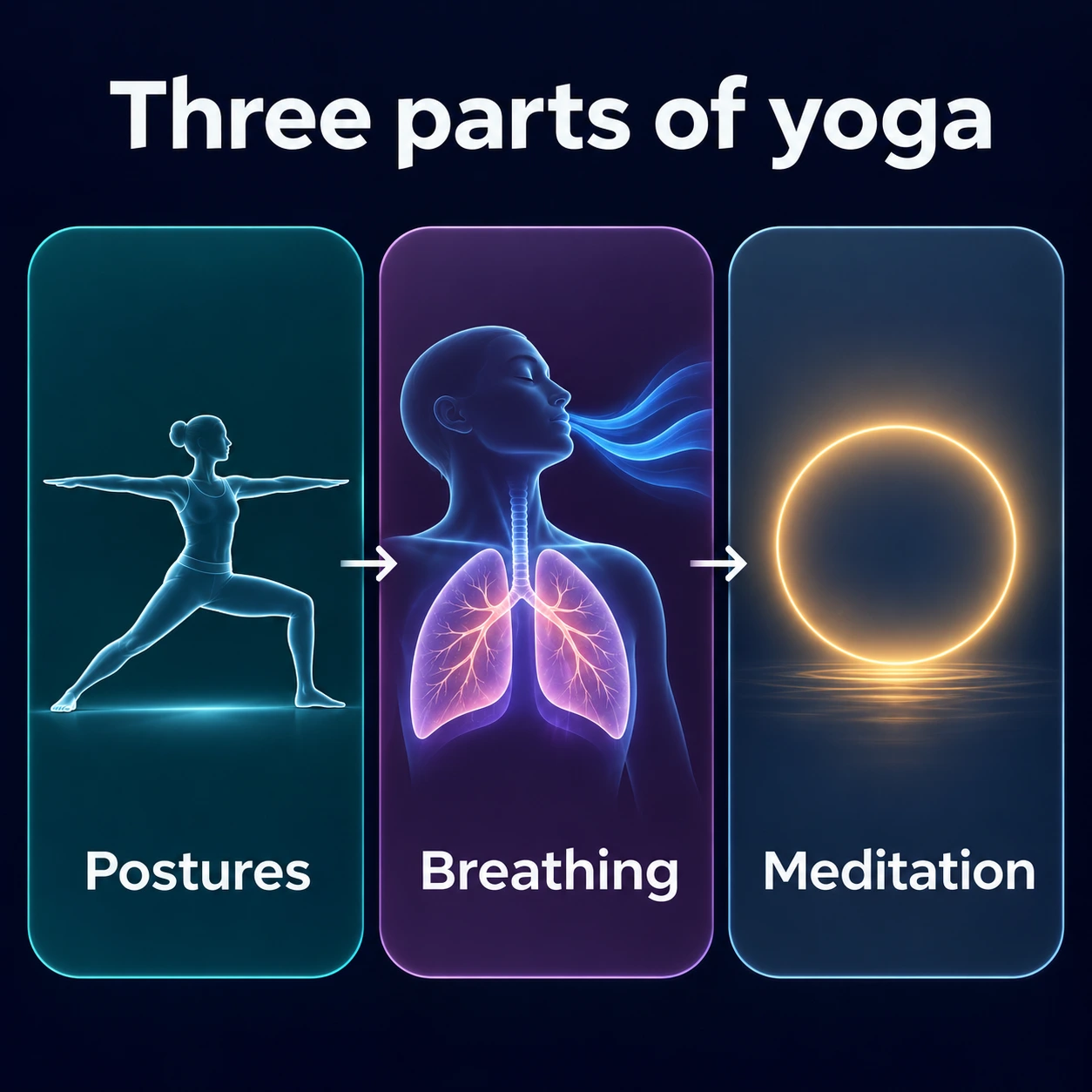
At its simplest, modern yoga is a structured practice with three main ingredients that can be blended in many proportions:
- Postures (asana) — the physical part most people picture: holding and moving through poses that stretch, strengthen, and challenge your balance. This is the component that has grown most in the West.
- Breathing (pranayama) — deliberately slowing, lengthening, and controlling the breath. Slow breathing is not decorative; it is one of the most direct levers people have on the nervous system, and it may account for a real share of yoga's calming effects.
- Meditation and focused attention — steadying the mind on the breath, on bodily sensations, or on stillness. Even in vigorous classes there is usually a quiet, meditative rest at the end (savasana).
Because those ingredients can be mixed so differently, "yoga" covers an enormous range. At one end are vigorous, athletic styles that flow continuously and raise your heart rate and build real strength. At the other end are gentle and restorative styles, where you hold a handful of supported, comfortable positions for several minutes each and the emphasis is on releasing tension and calming the body. A person recovering from illness, a competitive athlete, and someone easing chronic back pain might all "do yoga" and have almost nothing in common about how it looks.
It is fair to ask whether yoga is a religion. The clearest answer for a health context is this: yoga as practiced in clinics, studios, and this kind of research is a practice, not a faith. Its roots are genuinely in the philosophical traditions of ancient India, and those origins deserve honest acknowledgment rather than being erased. But the postures, breathing, and attention training used for health do not require any particular belief, and they are used by people of every religion and of none. You can practice yoga purely as a form of gentle exercise and stress relief without adopting any spiritual framework, and most clinical and fitness settings present it exactly that way.
One more useful distinction: yoga overlaps with, but is not the same as, plain stretching or plain meditation. Compared with stretching, it adds breath work, sustained attention, and often strength and balance challenges. Compared with sitting meditation, it adds the body. That combination — movement plus breath plus attention — is part of why researchers find it interesting, and part of why it is hard to study cleanly.
The Main Styles
Walking into a studio or scrolling a class app, the different style names can be baffling. Here is a plain-language guide to the most common ones, roughly from gentlest to most vigorous:
- Restorative and Yin — the slowest, most relaxing styles. You hold a few well-supported positions (often with props like bolsters and blankets) for minutes at a time. Excellent for stress, tension, sleep, and anyone easing in gently.
- Chair yoga — postures adapted to be done seated or holding a chair. Designed for older adults, people with limited mobility, and anyone who cannot get up and down from the floor easily. Genuinely useful, not a lesser version.
- Hatha — in common usage, a general, slower-paced class that holds basic postures with attention to breath. A very common starting point for beginners.
- Iyengar — precise and alignment-focused, using props (blocks, straps, blankets) heavily so that positions can be done safely and correctly. A good choice if you have an injury, are older, or simply want careful instruction.
- Vinyasa / Flow — postures linked into a continuous, flowing sequence timed to the breath. More aerobic and athletic; pace varies a lot by teacher.
- Ashtanga — a demanding, physically intense system that runs through a set sequence of poses. Best once you have some experience.
- Hot yoga (including Bikram-style) — classes done in a deliberately heated room. The heat adds cardiovascular and dehydration stress, so it is not the right entry point for beginners, older adults, or anyone with heart problems or blood-pressure concerns.
For most beginners — and for almost anyone using yoga for a health reason — a gentle Hatha, Iyengar, restorative, or chair class is the usual starting place teachers describe, with people moving on to something more vigorous once they know their body's response.
How It May Work
Yoga does not have one single mechanism; it plausibly helps through several overlapping pathways, some of them well understood and some still being worked out. Being honest, a lot of the "how" is reasonable physiology rather than settled proof.
Calming the nervous system
Your autonomic nervous system has two broad modes: a "fight-or-flight" branch (sympathetic) that revs you up, and a "rest-and-digest" branch (parasympathetic) that settles you down. The slow, controlled breathing at the heart of yoga appears to shift the balance toward the calming branch — increasing what researchers call vagal tone (activity of the vagus nerve, the main highway of the rest-and-digest system). This is a direct, measurable effect: slow breathing lowers heart rate and can lower blood pressure in the moment. Over time, regular practice may lower the resting stress level people carry around.
Turning down the stress response
Chronic stress keeps the body's hormonal stress system — the hypothalamic-pituitary-adrenal (HPA) axis, which produces cortisol — running hotter than normal. Several studies find that yoga can modestly reduce markers of that stress response, including cortisol and inflammatory signals, and improve people's subjective sense of stress. The effect is real but modest: it is generally in the same ballpark as other relaxation and exercise approaches.
Building strength, flexibility, and balance
Holding and moving through postures is genuine physical work. It builds muscular strength and endurance (especially in the core, hips, and shoulders), improves flexibility and range of motion, and — often underrated — trains balance. Balance and lower-body strength are exactly the abilities that fade with age and predict falls, which is why yoga has been studied specifically in older adults.
Interoception and the mind-body link
Yoga trains you to notice internal sensations — the pull of a stretch, the pace of your breath, where you are holding tension. This skill is called interoception, and better interoception is linked to better emotional regulation. There is also intriguing brain research: one small controlled study found that 12 weeks of yoga improved mood and anxiety more than a matched walking programme, and that rises in brain levels of gamma-aminobutyric acid (GABA), a calming brain chemical, tracked those improvements (see Key Research Papers). It is a single small study, but it fits the broader pattern of yoga nudging the body toward a calmer state.
Put together, these pathways explain why yoga tends to help conditions that sit at the intersection of body and mind — pain, stress, mood, blood pressure — and why its benefits often look a lot like the benefits of other exercise combined with the benefits of relaxation training.
What the Evidence Shows
Yoga has been studied in a large and growing body of clinical trials, and several conditions now have systematic reviews and meta-analyses (studies that pool many trials). Before the specifics, two honest caveats apply to almost all of this research:
- Blinding is hard. You cannot give someone a "fake" yoga class the way you can give a sugar pill. People know whether they are doing yoga, which means expectation and enthusiasm can inflate results, especially for subjective outcomes like pain and mood.
- Yoga is often as good as — not better than — other exercise. When trials compare yoga against another active form of movement (stretching, physical therapy, walking), yoga usually comes out roughly equal. Its advantage over doing nothing is clearer than its advantage over other exercise. That is still a genuinely useful finding: it means yoga is a legitimate, evidence-supported way to get the benefits of exercise in a form many people enjoy and stick with.
Chronic low back pain
This is yoga's best-supported use. A Cochrane systematic review — the gold standard of evidence summaries — concluded that yoga produces small-to-moderate improvements in back-related function compared with no exercise, at least in the short and intermediate term, and a small improvement in pain that fell below the threshold the authors had set for a clinically important change; the risk of side effects, mainly increased back pain, was 5 percentage points higher with yoga than with no exercise (see Key Research Papers). Crucially, when yoga was compared directly against other exercise, the two were similar. A well-known U.S. trial found yoga was noninferior to physical therapy for chronic low back pain — meaning it worked about as well — but yoga was not superior to an education book and newsletters for either function or pain; yoga and physical therapy participants were less likely than the education group to be using pain medication at 12 weeks. In short, for ongoing nonspecific low back pain the research places yoga on par with other structured exercise. It is a mainstream-endorsed option, and better than staying inactive.
Stress, anxiety, and depression
For mental health, yoga has moderate evidence as an adjunct — an add-on to usual care, not a replacement for treatment. Meta-analyses report that yoga can reduce symptoms of depression and anxiety, and lower perceived stress and stress-related physiology (see Key Research Papers). The effects are meaningful but the trials are often small and short, and the quality is variable. Yoga is best framed as a helpful complement alongside therapy, medication, or other support for anyone with significant depression or an anxiety disorder — not a standalone cure, and not a reason to stop prescribed treatment.
Blood pressure and cardiometabolic markers
Because slow breathing and relaxation lower blood pressure acutely, researchers have tested whether regular yoga helps hypertension and heart risk. Meta-analyses find modest reductions in blood pressure and improvements in several cardiovascular and metabolic risk factors — things like cholesterol, heart rate, and waist measurements — particularly in people who already have elevated risk (see Key Research Papers). The reductions are real but usually small; the trials studied yoga as a supportive lifestyle measure alongside diet, other exercise and medication, not as a substitute for blood-pressure treatment.
Balance, flexibility, and fall prevention in older adults
A systematic review focused on people aged 60 and over found that yoga-based exercise improved balance and mobility (see Key Research Papers). Since poor balance and weak legs are major drivers of falls — a leading cause of injury in older people — this is a practical benefit. Gentle, well-supervised, chair-inclusive yoga is one way older adults work on the strength, flexibility, and steadiness that help keep them independent and on their feet.
Quality of life in chronic illness
Across many chronic conditions — cancer, arthritis, chronic pain, and others — yoga is frequently studied as a way to improve overall quality of life, fatigue, sleep, and mood during treatment. A Cochrane review in women with breast cancer, for example, found that, compared with no therapy, yoga improved health-related quality of life and reduced fatigue and sleep disturbances, though it did not clearly reduce depression or anxiety (see Key Research Papers). The pattern here is consistent: yoga rarely changes the underlying disease, but it can genuinely help people feel and function better while living with it.
How People Get Started
Being flexible, thin, young, or spiritual is not a requirement for yoga — those are the biggest myths that keep people away. Teachers commonly describe a low-pressure way in:
- A gentle style first. Teachers usually point beginners to a Hatha, Iyengar, restorative, or chair class, and leave hot yoga and fast flow classes until a person knows how their body responds.
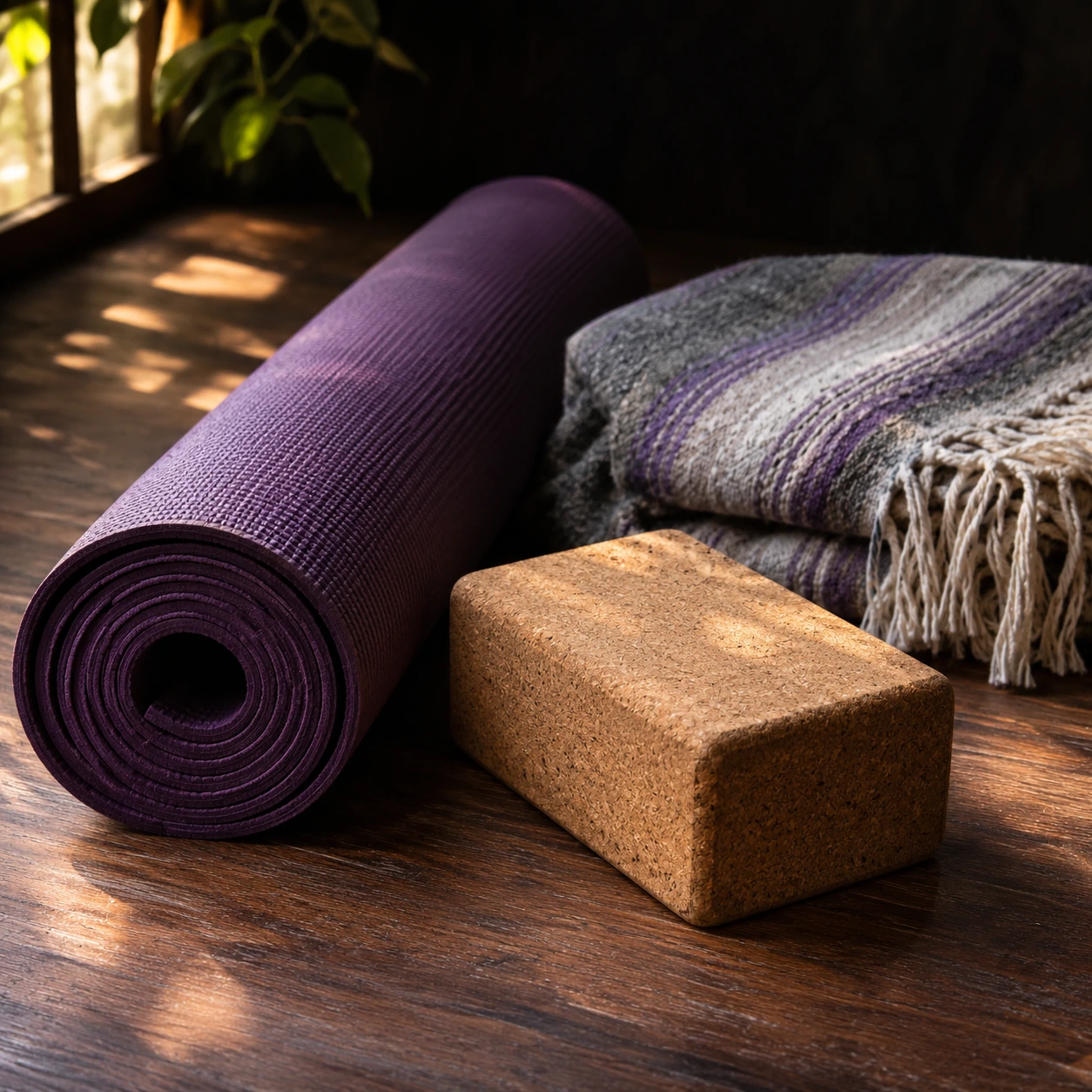
- Props. Blocks, straps, bolsters, and blankets are not signs of weakness — they let people do postures safely and correctly. A block under the hand or a strap around the foot means the pose meets the body where it is, instead of forcing it into a shape it is not ready for.
- A qualified teacher, at least at first. A well-trained instructor in an in-person or beginners' class watches alignment, offers modifications, and stops students from pushing into pain. Apps and videos have no one there to correct a beginner; many are labelled for beginners.
- Telling the teacher about the body. Teachers ask about injuries, pregnancy, high blood pressure, eye conditions, osteoporosis, recent surgery, and anything else relevant, and offer safer variations.
- Regular, easy sessions. Consistency matters far more than intensity. Teachers describe two or three gentle sessions a week, done comfortably over months, as doing more than occasional heroic classes. Yoga is a practice people settle into, not a workout they win.
- Pain as a signal. A mild stretch is normal; sharp, pinching, or joint pain is the signal teachers describe for backing off. "No pain, no gain" is a common route to injury in yoga.
Safety & Who the Research Raises Concerns For
For most people, yoga is generally safe — a systematic review of trials found it is about as safe as usual care or other exercise, with no signal of serious harm at the population level (see Key Research Papers). That said, "generally safe" is not "risk-free," and the injuries that do happen follow a clear pattern.
When injuries do happen, they are usually musculoskeletal strains from overdoing it rather than dramatic accidents. The most common trouble spots are:
- Wrists — from bearing weight on the hands in poses, especially when they already hurt.
- Neck — especially in headstands, shoulderstands, and other postures that load the neck. These advanced inversions cause a disproportionate share of the serious injuries, and beginners' classes usually leave them out.
- Lower back and hamstrings — from forcing forward bends or rounding the spine under load.
The through-line is simple: most yoga injuries come from pushing too hard into extreme positions, not from gentle practice. Staying within a comfortable range, using props, and skipping the most extreme postures removes most of the risk.
The research and teaching guidance raise specific concerns for some groups and certain postures:
- Pregnancy — yoga can be a lovely part of pregnancy, with modification. Prenatal classes leave out deep twists, strong core compression, lying flat on the back later in pregnancy, hot yoga, and anything that risks a fall.
- Glaucoma or eye problems, and inversions — head-down positions (inversions such as headstands, and even deep forward folds) raise pressure in the eyes and head. That is the concern for people with glaucoma or certain eye conditions, and head-down poses raise a similar concern for people with uncontrolled high blood pressure.
- Osteoporosis or fragile bones — forceful forward bends and deep spinal flexion can raise the risk of spinal fractures in weakened bone; gentle, alignment-focused, bone-safe classes leave these movements out.
- Uncontrolled high blood pressure or heart problems — hot yoga and strenuous, breath-holding, or heavily inverted practices put the most strain on the heart and blood pressure; gentle and restorative styles are usually well tolerated and may even help.
- Recent surgery, joint replacements, or significant injuries — poses may need adapting to the restrictions after surgery or injury.
Taken together, the research shows that with a gentle style, good instruction, props, and a willingness to modify, yoga is one of the safer forms of exercise available to a wide range of ages and abilities.
Honest Bottom Line & Common Myths
A few realistic expectations, and the myths worth retiring:
- "You have to be flexible to do yoga." Backwards. Flexibility is something yoga can build, not a prerequisite. Everyone starts stiff somewhere.
- "Yoga is a religion." Its roots are in Indian philosophy, and that heritage is worth respecting — but the postures, breathing, and attention used for health require no particular belief and are practiced by people of all faiths and none.
- "Yoga detoxes your body" or "melts fat." These are marketing claims, not physiology. Your liver and kidneys handle detoxification; no posture "wrings out toxins." Vigorous yoga burns calories like other moderate exercise, but yoga is not a special weight-loss shortcut.
- "It's better than other exercise." The evidence says it is usually about equal to other exercise, not superior. Its real edge is that many people find it calming, sustainable, and adaptable to almost any body — and the best exercise is the one you will actually keep doing.
The fair summary: yoga is a safe, flexible, evidence-supported mind-body practice that can genuinely help with chronic low back pain, stress, mood, blood pressure, balance, and quality of life — working roughly as well as other exercise, studied alongside (not instead of) medical care for serious conditions. Its benefits in the trials came from gentle, regular, well-taught practice over months rather than a quick fix.
Key Research Papers
- Wieland LS, Skoetz N, Pilkington K, Vempati R, D'Adamo CR, Berman BM. Yoga treatment for chronic non-specific low back pain. Cochrane Database of Systematic Reviews. 2017;1(1):CD010671. — The gold-standard review: yoga gives small-to-moderate improvements in back function versus no exercise, a small pain improvement below the authors' threshold for clinical importance, slightly more side effects (mainly back pain) than no exercise, and is similar to other exercise. — doi:10.1002/14651858.CD010671.pub2
- Saper RB, Lemaster C, Delitto A, et al. Yoga, Physical Therapy, or Education for Chronic Low Back Pain: A Randomized Noninferiority Trial. Annals of Internal Medicine. 2017;167(2):85–94. — In a diverse, mostly low-income U.S. population, yoga was noninferior to physical therapy for chronic low back pain; yoga was not superior to an education book for function or pain. — doi:10.7326/M16-2579
- Sherman KJ, Cherkin DC, Wellman RD, et al. A Randomized Trial Comparing Yoga, Stretching, and a Self-care Book for Chronic Low Back Pain. Archives of Internal Medicine. 2011;171(22):2019–2026. — Yoga and conventional stretching produced similar back-pain benefits, both better than a self-care book — a key illustration that yoga is comparable to other exercise. — doi:10.1001/archinternmed.2011.524
- Cramer H, Lauche R, Langhorst J, Dobos G. Yoga for depression: a systematic review and meta-analysis. Depression and Anxiety. 2013;30(11):1068–1083. — Pooled trials suggest yoga can reduce depressive symptoms, though the authors caution that study quality is limited. — doi:10.1002/da.22166
- Cramer H, Lauche R, Anheyer D, et al. Yoga for anxiety: A systematic review and meta-analysis of randomized controlled trials. Depression and Anxiety. 2018;35(9):830–843. — Evidence that yoga can be an effective short-term adjunct for anxiety symptoms, with effects clearer versus inactive comparisons. — doi:10.1002/da.22762
- Streeter CC, Whitfield TH, Owen L, et al. Effects of Yoga Versus Walking on Mood, Anxiety, and Brain GABA Levels: A Randomized Controlled MRS Study. Journal of Alternative and Complementary Medicine. 2010;16(11):1145–1152. — A small randomized study: 12 weeks of yoga improved mood and anxiety more than matched walking, and changes in the calming brain chemical GABA tracked the mood improvements — a plausible mechanism for its mood effects. — doi:10.1089/acm.2010.0007
- Pascoe MC, Thompson DR, Ski CF. Yoga, mindfulness-based stress reduction and stress-related physiological measures: A meta-analysis. Psychoneuroendocrinology. 2017;86:152–168. — Pooled evidence that yoga-based practices modestly lower measures of the body's stress response, such as cortisol and resting heart rate. — doi:10.1016/j.psyneuen.2017.08.008
- Cramer H, Sellin C, Schumann D, Dobos G. Yoga in Arterial Hypertension. Deutsches Ärzteblatt International. 2018;115(50):833–839. — A three-arm randomized trial of 75 people taking blood-pressure medication: only yoga without postures (breathing and meditation) lowered 24-hour systolic blood pressure versus a wait list (by 3.8 mmHg); diastolic pressure did not differ between groups. — doi:10.3238/arztebl.2018.0833
- Chu P, Gotink RA, Yeh GY, Goldie SJ, Hunink MG. The effectiveness of yoga in modifying risk factors for cardiovascular disease and metabolic syndrome: A systematic review and meta-analysis of randomized controlled trials. European Journal of Preventive Cardiology. 2016;23(3):291–307. — Yoga improved several cardiometabolic risk factors (blood pressure, lipids, body measures) compared with no exercise, similar to other exercise. — doi:10.1177/2047487314562741
- Youkhana S, Dean CM, Wolff M, Sherrington C, Tiedemann A. Yoga-based exercise improves balance and mobility in people aged 60 and over: a systematic review and meta-analysis. Age and Ageing. 2016;45(1):21–29. — In older adults, yoga improved balance and mobility — abilities directly tied to preventing falls. — doi:10.1093/ageing/afv175
- Cramer H, Lauche R, Klose P, Lange S, Langhorst J, Dobos GJ. Yoga for improving health-related quality of life, mental health and cancer-related symptoms in women diagnosed with breast cancer. Cochrane Database of Systematic Reviews. 2017;1(1):CD010802. — Versus no therapy, yoga improved quality of life and reduced fatigue and sleep disturbances in women with breast cancer, but did not clearly reduce depression or anxiety. — doi:10.1002/14651858.CD010802.pub2
- Cramer H, Ward L, Saper R, Fishbein D, Dobos G, Lauche R. The Safety of Yoga: A Systematic Review and Meta-Analysis of Randomized Controlled Trials. American Journal of Epidemiology. 2015;182(4):281–293. — Across trials, yoga was about as safe as usual care and other exercise, with no increase in serious adverse events. — doi:10.1093/aje/kwv071