Whole-Body and Localized Cryotherapy
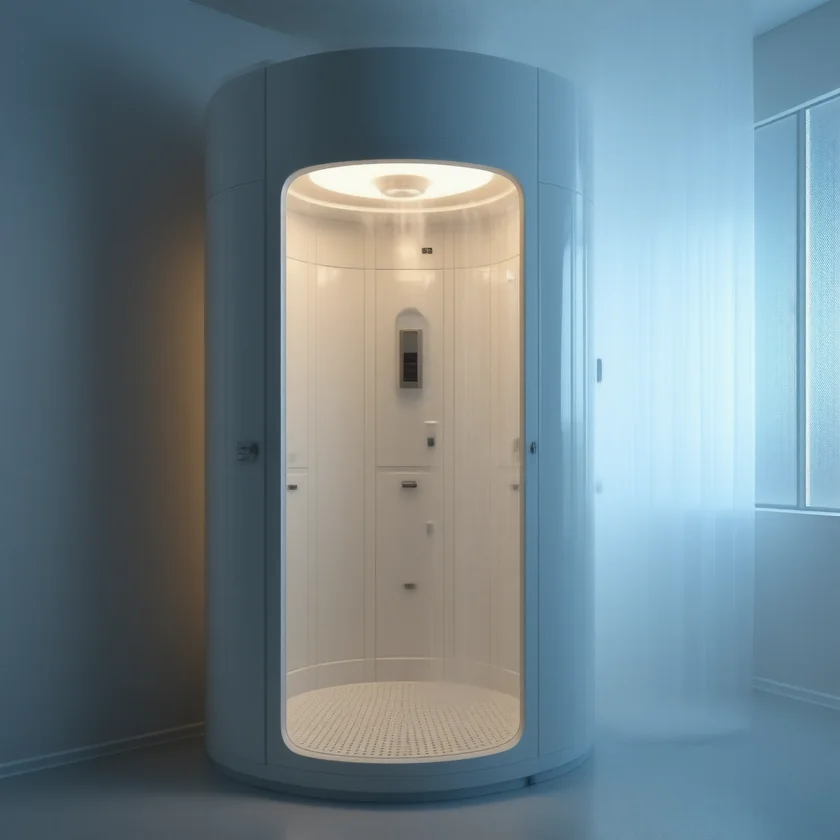
Whole-body cryotherapy (WBC) is the wellness practice of stepping into a chamber cooled to roughly −110 to −140 °C (−166 to −220 °F) for just two to three minutes. Athletes, spa-goers, and people with chronic pain use it hoping for faster recovery, less soreness, and pain relief. It looks futuristic and it feels dramatic — a wall of freezing fog, a shivering countdown, a rush of warmth when you step out. This page explains exactly what happens inside those chambers, what a session feels like, what it costs, and — most importantly — what the evidence honestly does and does not support. The short version: cryotherapy is not a fraud, but it is also not the metabolism-torching, toxin-flushing miracle the marketing describes. The real benefits are more modest and more specific than the ads suggest, and there is a genuine safety hazard with one common machine type, set out in the safety section below.
Table of Contents
- What Whole-Body Cryotherapy Is
- Two Machine Types: Nitrogen vs. Electric
- Localized Cryotherapy & Cryo Facials
- What a Session Actually Feels Like
- What It Costs
- Muscle Recovery & Soreness: The Evidence
- Arthritis & Inflammatory Pain
- Myth-Correction: Calories & "Detox"
- Cryotherapy vs. an Ice Bath
- Safety and the Nitrogen Hazard
- Whole-Body Cryotherapy and Depression Research
- Key Research Papers
- Connections
- Featured Videos
What Whole-Body Cryotherapy Is
Whole-body cryotherapy exposes your skin to extreme dry cold for a very short time. You strip down to underwear (plus dry socks, gloves, and slippers to protect the extremities, which chill fastest), step into a chamber, and stand in air chilled to somewhere between −110 and −140 °C. That is dramatically colder than any ice bath — but you stay in only two to three minutes, and because dry, still air conducts heat far more slowly than water, your core temperature barely changes. What actually happens is a rapid, intense cooling of the skin surface, which is the point: the sudden cold on the skin is what drives the body's response. The U.S. Food and Drug Administration's 2016 consumer update gives a wider range: vapors at minus 200 to minus 300 °F, typically for two to four minutes.
That response is the same cold-defense cascade covered in depth on the Pain & Arthritis page — the skin's blood vessels clamp down (vasoconstriction), cold-sensing nerves fire and can quiet pain signaling, and the body releases a surge of noradrenaline. When you step out and rewarm, blood rushes back to the surface. You can watch this constrict-then-flush cycle play out on our interactive cryotherapy cold-response animation. The key mental model: WBC is a brief, powerful skin event, not a deep-freeze of your whole body. That is why it is generally tolerated for a couple of minutes at temperatures that would be lethal for any longer.
Two Machine Types: Nitrogen vs. Electric
Not all "cryotherapy chambers" are the same machine, and the difference matters for both your experience and your safety.
Liquid-nitrogen "cryosaunas" (partial-body units)
The most common commercial unit is a single-person, open-topped cylinder often called a cryosauna. It is cooled by releasing evaporating liquid nitrogen as a cold gas around your body. Critically, in these units your head stays out the top — you stand on a platform and your shoulders and head remain above the rim, breathing room air. Because the cold gas only surrounds you from the neck down, this is technically partial-body cryotherapy, even though it is usually marketed as "whole body." The nitrogen gas that cools you is the same gas that carries the real hazard discussed in the safety section: nitrogen displaces oxygen, so a poorly ventilated room or a malfunctioning unit can create a suffocation risk.
Electric / refrigerated chambers (true whole-body)
The other type is a walk-in electric chamber — sometimes a series of connected rooms — cooled by refrigeration rather than nitrogen, much like a very cold walk-in freezer. Here you enter fully, head included, and breathe the chilled air, so it is genuinely whole-body. Because there is no nitrogen gas, electric chambers do not carry the oxygen-displacement asphyxiation risk. Not every enclosed chamber is electric, though: the U.S. Food and Drug Administration's 2016 consumer update also describes totally enclosed chambers for several people, head included, with the cold "generated by liquid nitrogen", and says that adding nitrogen vapors to a closed room lowers the amount of oxygen in the room. Electric chambers tend to be more expensive to install and run, which is part of why the cheaper nitrogen cryosauna became the dominant model in spas and gyms. Which type a session uses depends on the facility.
Localized Cryotherapy & Cryo Facials
You do not have to freeze your whole body to use cold therapeutically. Localized cryotherapy aims a stream of very cold air or nitrogen vapor at a single area — a sore knee, an inflamed shoulder, a strained tendon — usually for a few minutes with a handheld wand. The idea is the same as a targeted version of WBC: intense surface cooling to reduce local pain and swelling. For an acute injury, though, most of the everyday evidence still centers on ordinary ice and compression, which we cover on the Injury Icing page.
The most popular consumer version is the "cryo facial" — a cold nitrogen or chilled-air stream swept over the face and neck. Spas market it for tighter-looking skin, smaller-looking pores, reduced puffiness, and a temporary glow. The honest read: the visible effects are real but short-lived and superficial. Cold constricts surface blood vessels and reduces puffiness for a while, giving a fresher, less-swollen look for a few hours — the same reason people press a cold spoon or an ice cube under tired eyes. There is no good evidence that a cryo facial produces lasting changes in wrinkles, collagen, or skin health. That makes it a pleasant, temporary cosmetic pick-me-up rather than a skincare treatment.
What a Session Actually Feels Like
A first session can feel intimidating, so here is what actually happens, step by step, at a typical cryosauna:
- You dry off and dress down. Facilities ask for completely dry skin — any moisture (sweat, lotion, jewelry, damp underwear) can freeze against the skin and cause a cold burn. You wear dry underwear, plus the socks, slippers, and gloves the facility provides to protect fingers and toes.
- You step in and the fog rises. The nitrogen gas pours in as a visible white vapor. Your head stays above the rim in a cryosauna, so you keep breathing normal room air.
- The countdown — two to three minutes. The cold is intense and dry, quite different from the aching wet cold of an ice bath. Most people describe pins-and-needles, goosebumps, and a strong urge to keep moving. Staff usually have you turn slowly so the cold reaches you evenly. A person can ask to stop and step out at any point — there is no benefit to toughing out distress.
- The rewarm rush. Stepping out, blood floods back to your skin and many people feel a distinct warm, tingling, energized "rush" — the noradrenaline surge and the return of blood flow. Light movement (a few minutes on a bike or a brisk walk) is commonly encouraged afterward.
A whole visit, changing included, takes maybe 10–15 minutes. People often stack sessions — several times a week during heavy training, for example — though there is no established "correct" frequency, because the evidence is not strong enough to prescribe one.
What It Costs
WBC is an out-of-pocket wellness expense — it is essentially never covered by insurance, because it is not an approved medical treatment. A single session commonly runs about $30 to $80, with packages, memberships, and multi-session bundles bringing the per-session price down. Localized sessions and cryo facials are often priced similarly or a bit less. Over a month of frequent use, the cost adds up quickly.
It is worth weighing that against the alternative. Much of what WBC delivers — a cold-driven mood lift and reduced perceived soreness — is also available from a home cold plunge or cold shower for essentially nothing. Cryotherapy's genuine advantages are convenience, a dry rather than wet cold, and the very short exposure time; whether those are worth the price is a personal call, and worth making with clear eyes about how modest the proven benefits are.
Muscle Recovery & Soreness: The Evidence
The most common reason people try WBC is athletic recovery — less soreness and a quicker return to training after hard sessions. This is the best-studied use, and the honest grade is modest and mixed.
A Cochrane systematic review that specifically examined whole-body cryotherapy for muscle soreness and recovery after exercise found insufficient high-quality evidence to conclude that it works, and flagged that most trials were small, short, and at risk of bias, with little safety data (see Key Research Papers). Some individual studies do report that people feel less sore or perceive faster recovery after WBC, particularly following endurance or high-intensity exercise. But "people report feeling better" is a softer finding than "objective performance and muscle damage markers improved," and much of the perceived benefit may overlap with expectation and ritual — the same placebo caveat that dogs ice-bath recovery research.
The Cochrane numbers show how thin that base is. The 2015 review found 4 laboratory trials with 64 physically active people, mean age 23, all but four of them male. All four trials carried a high risk of bias, and the evidence for every outcome was graded "very low" quality. Soreness scores were lower after cryotherapy at 1 hour (standardized mean difference −0.77; 95% confidence interval −1.42 to −0.12; 20 people), but at 24, 48 and 72 hours the confidence intervals also took in no difference or a benefit for the comparison group. No trial actively watched for side effects, and the review found no evidence on women or elite athletes.
So a fair conclusion: for less next-day soreness, WBC is a plausible option that some athletes find helpful, but it is not proven to speed true physiological recovery, and it is an expensive way to chase a benefit you might get from cheaper cold immersion. One evidence-based caution carries over from cold-water immersion research: aggressive cold right after strength training may blunt some muscle-building adaptation, which matters most for people training for muscle size (hypertrophy).
Arthritis & Inflammatory Pain
The more interesting evidence for WBC comes from inflammatory rheumatic conditions. In small clinical studies, adding whole-body cryotherapy to standard care and physiotherapy has been associated with reduced pain and improved short-term function in rheumatoid arthritis and ankylosing spondylitis (see Key Research Papers). Patients often report they can move and exercise more comfortably in the hours after a session, which can make their physiotherapy more productive. Some studies have also explored WBC for fibromyalgia pain, with encouraging but preliminary results.
A 2025 meta-analysis pooled 5 studies and 310 people with ankylosing spondylitis. Whole-body cryotherapy significantly improved disease-activity scores, function and pain, but had no significant effect on C-reactive protein, a blood marker of inflammation. The authors say further research is needed on how well people tolerate it and on long-term benefit. The U.S. Food and Drug Administration's 2016 consumer update, written before that analysis and not naming ankylosing spondylitis, says the agency "does not have evidence that WBC effectively treats diseases or conditions like" fibromyalgia, rheumatoid arthritis and chronic pain, among others.
Two honest qualifiers keep this in proportion. First, these studies are generally small, short-term, and hard to blind — you always know whether you were just frozen — so the pain-relief signal, while real, is not on the same footing as a large drug trial. Second, and crucially, cryotherapy here is a symptom-easing add-on, not a disease-modifying treatment: it may make a person with rheumatoid arthritis feel better for a while, but it does nothing to slow the underlying joint damage the way proper medical therapy does. The mechanism behind this pain relief — cold quieting pain nerves and briefly reducing inflammatory signaling — is explained on the Pain & Arthritis page. The U.S. Food and Drug Administration's 2016 consumer update states a concern that patients who opt for it, "especially in place of treatment options with established safety and effectiveness", "may experience a lack of improvement or a worsening of their medical conditions."
Myth-Correction: Calories & "Detox"
This is the section the marketing does not want you to read. Two claims are made constantly about whole-body cryotherapy, and both are not supported by evidence.
Myth 1: "A session burns 500–800 calories." You will see this number all over cryotherapy advertising. It is not a measured fact. Yes, defending against cold makes your body spend a little extra energy (the noradrenaline surge and some brown-fat activation raise metabolism slightly), but a two-to-three-minute exposure simply cannot plausibly account for hundreds of calories, and the U.S. Food and Drug Administration's 2016 consumer update lists weight loss and increased metabolism among the claims promoted for WBC, says the agency's review of the literature "found very little evidence" about its safety or effectiveness for the conditions it is promoted for, and answers the question of what these temperatures do to metabolism with "We simply don't know" (see Key Research Papers). Any small calorie bump is trivial next to a normal workout, and the body tends to compensate anyway (by warming up afterward and, often, by making you hungrier). Cryotherapy is not a weight-loss or fat-burning tool.
Myth 2: "It flushes toxins from your body." This one has no mechanism behind it at all. There is no "toxin" that cold air draws out of your skin, and your liver and kidneys — not a freezing chamber — are what actually clear waste from your body. "Detox" is a marketing word here, not a physiological event. Cold constricts and then dilates your surface blood vessels; that is the entire vascular story, and it does not equal detoxification.
Being clear about these two myths is not anti-cryotherapy — it is what lets you judge the practice on its real merits (a short-lived mood lift, possible soreness and arthritis-pain relief) instead of its imaginary ones. The U.S. Food and Drug Administration's own consumer guidance is a good, plain-language reality check (U.S. Food and Drug Administration (FDA): Whole-Body Cryotherapy — A "Cool" Trend that Lacks Evidence, Poses Risks).
Cryotherapy vs. an Ice Bath
People use "cryotherapy" loosely to mean both stepping into a WBC chamber and sitting in an ice bath, but physically they are quite different, and the difference is not just temperature.
- The cold medium. WBC uses dry cold gas or refrigerated air; an ice bath uses cold water. Water conducts heat away roughly 20–25 times faster than air, so even though ice water (around 10–15 °C) is far warmer than a −120 °C chamber, it pulls heat out of you much more aggressively.
- Depth of cooling. Because of that, an ice bath would be expected to lower muscle and even core temperature more than a brief WBC session, which is described as mostly chilling the skin surface. A 2012 head-to-head experiment in 20 active men measured something closer to a tie. Comparing 4 minutes at −110 °C with 4 minutes in 8 °C water, the largest falls in muscle temperature were 1.6 vs 2.0 °C at 1 cm deep and 1.6 vs 1.7 °C at 3 cm, and in rectal (core) temperature 0.3 vs 0.4 °C. Average skin temperature fell more with WBC (12.1 vs 8.4 °C). The authors concluded that a single WBC exposure lowers muscle and core temperature "to a similar level" as cold water.
- Duration and comfort. WBC is over in 2–3 minutes and many find the dry cold more bearable; ice baths usually last several minutes and the wet, aching cold feels harsher to most people.
- Cost and access. An ice bath is nearly free at home; WBC requires paying a facility.
For the physiology, safety, and evidence around cold-water immersion specifically — ice baths, cold plunges, cold showers — see the dedicated Cold Exposure page. And if you are drawn to alternating hot and cold (the "contrast" approach used in sports recovery and spa circuits), the Contrast Therapy page compares that method head-to-head with cold-only protocols. None of these three is clearly superior for everyone; they are different tools with overlapping, mostly modest benefits.
Safety and the Nitrogen Hazard
Whole-body cryotherapy is generally safe for healthy people when a facility is run properly, but it is not risk-free, and one hazard deserves special emphasis here.
The nitrogen-asphyxiation risk. Liquid-nitrogen cryosaunas cool you with nitrogen gas, and nitrogen displaces oxygen from the air. In a well-designed unit your head stays above the vapor, breathing room air — but if a person were to lower fully into the nitrogen, if a unit malfunctioned, or if a small unventilated room filled with gas, the oxygen concentration around the airway can fall dangerously. Oxygen deprivation from an inert gas like nitrogen gives no sense of suffocation — there is no gasping or air-hunger warning — so a person can lose consciousness suddenly and without warning. This is not hypothetical: a widely reported death in a U.S. cryotherapy salon involved a worker using a nitrogen unit alone after hours. The hazard is highest for a person alone or unsupervised in a nitrogen cryosauna, in a poorly ventilated room, or with the head below the rim the unit is designed around.
The U.S. Food and Drug Administration's 2016 consumer update names asphyxiation, frostbite, burns and eye injury among the potential hazards. It also says the agency has not cleared or approved any of these devices "for medical treatment of any specific medical conditions."
Other real but usually manageable risks include cold burns and frostbite (from wet skin, jewelry, or staying in too long), fainting on stepping out, and cardiovascular strain from the sudden cold — which is why cryotherapy is listed as unsuitable for people with certain heart conditions, uncontrolled high blood pressure, Raynaud's and cold-triggered hives (cold urticaria). The sources read for this page contain no safety data on whole-body cryotherapy in pregnancy. The full list of the groups the research raises concerns for, along with a deeper treatment of the nitrogen hazard, lives on the Safety, Risks & Contraindications page.
A 2023 survey of college athletes gives a rough picture of everyday side effects. Of 457 athletes invited, 29 had used WBC at that university and qualified. Within an hour of a session, 27.6% reported a skin rash, 13.8% itching and 6.9% fatigue, while 58.6% reported nothing. With so few responses, these figures are rough.
Whole-Body Cryotherapy and Depression Research
A double-blind, sham-controlled trial in Poland enrolled 92 adults (aged 20–73) in a depressive episode who were taking medicine for it. They had 10 sessions either at −110 to −160 °C or, as the sham, at −50 °C; 30 and 26 people finished. Depression scores improved more with real cryotherapy on the Hamilton scale (interaction p=0.02) and the Beck scale (p=0.01), and quality of life and self-rated mood also improved. Sexual satisfaction, self-rated vitality and sleep did not change significantly. The authors describe it as a useful add-on to standard medicine.
The U.S. Food and Drug Administration's 2016 consumer update, which came before this trial, lists depression among the conditions WBC is promoted for and says the agency does not have evidence that it treats conditions such as anxiety and stress.
Key Research Papers
- Costello JT, Baker PR, Minett GM, Bieuzen F, Stewart IB, Bleakley C. Whole-body cryotherapy (extreme cold air exposure) for preventing and treating muscle soreness after exercise in adults. Cochrane Database Syst Rev. 2015;2015(9):CD010789. PubMed PMID: 26383887
- Costello JT, Culligan K, Selfe J, Donnelly AE. Muscle, skin and core temperature after -110°c cold air and 8°c water treatment. PLoS One. 2012;7(11):e48190. PubMed PMID: 23139763
- Rymaszewska J, Lion KM, Pawlik-Sobecka L, Pawłowski T, Szcześniak D, Trypka E, Rymaszewska JE, Zabłocka A, Stanczykiewicz B. Efficacy of the Whole-Body Cryotherapy as Add-on Therapy to Pharmacological Treatment of Depression-A Randomized Controlled Trial. Front Psychiatry. 2020;11:522. PubMed PMID: 32581890
- Saidane O, Bouden S, Ben Dhia S, Rouached L, Mahmoud I, Tekaya R, Ben Tekaya A, Dziri C, Abdelmoula L. Efficacy of Whole-Body Cryotherapy in Ankylosing Spondylitis: A Systematic Review with Meta-Analysis. Journal of Integrative and Complementary Medicine. 2025;32(2):134-142. doi:10.1177/27683605251385396
- Kelly EA, Seyed Forootan N, Checketts JX, Frank A, Tangen CL. Retrospective analysis of whole-body cryotherapy adverse effects in Division I collegiate athletes. Journal of Osteopathic Medicine. 2023;123(5):249-257. doi:10.1515/jom-2022-0156
PubMed Topic Searches
The links below run live topic searches on PubMed, the U.S. National Library of Medicine's database, so you can see the current published evidence for yourself rather than relying on a single cherry-picked study. Whole-body cryotherapy is a genuinely mixed evidence base — reading the reviews directly is the best antidote to the marketing.
- PubMed: whole-body cryotherapy and muscle recovery (reviews) — including the Cochrane review that found insufficient evidence for recovery benefit.
- PubMed: whole-body cryotherapy and rheumatoid arthritis — small trials of cryotherapy as an add-on for inflammatory joint pain.
- PubMed: whole-body cryotherapy and ankylosing spondylitis — pain and function outcomes alongside physiotherapy.
- PubMed: whole-body cryotherapy and fibromyalgia — preliminary studies on widespread-pain relief.
- PubMed: whole-body cryotherapy safety and adverse events — frostbite, cold burns, and nitrogen-related hazards.
- PubMed: cryotherapy, metabolism, and brown adipose tissue — the real (and modest) size of the metabolic effect behind the "calorie-burn" claims.
For a plain-language regulator's summary, the U.S. Food and Drug Administration consumer update is also worth reading: Whole-Body Cryotherapy (WBC): A "Cool" Trend that Lacks Evidence, Poses Risks.