Dorpat 1847: Buchheim's Laboratory and the Birth of Experimental Pharmacology
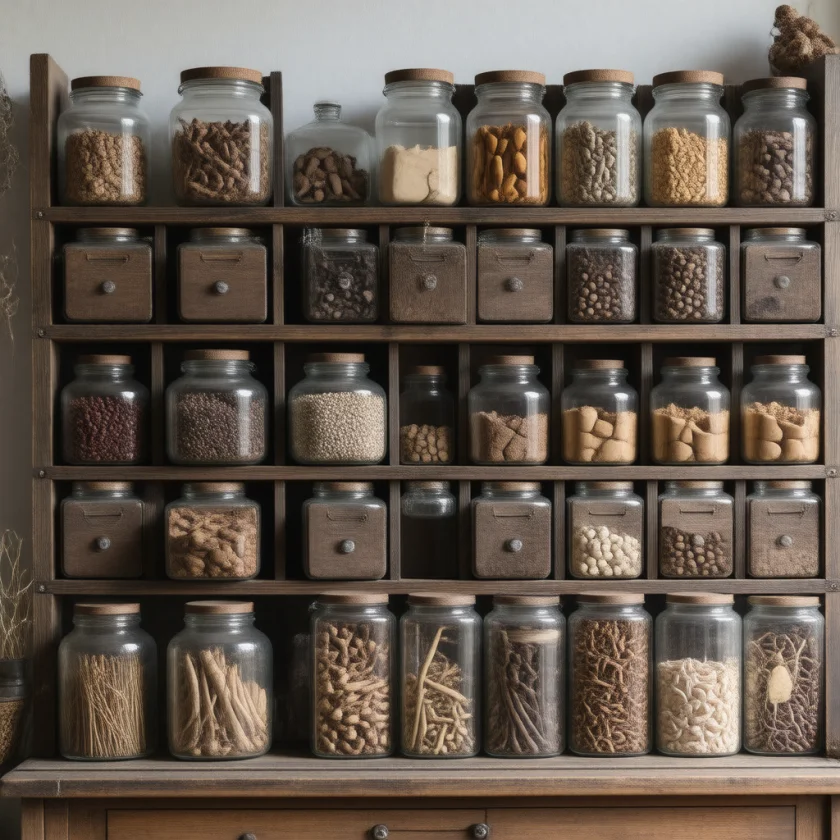
In 1847 a 27-year-old Saxon physician named Rudolf Buchheim (1820–1879) arrived at the Imperial University of Dorpat, a German-speaking university in the Baltic provinces of the Russian Empire — the town is Tartu in Estonia today. He came to teach materia medica, the old subject that described the remedies a doctor could prescribe. Over the next twenty years he turned that subject into something new: a science in which the action of a drug was tested on living animals and its substance was taken apart by chemical analysis. Historians of medicine call the laboratory he set up at Dorpat the first pharmacological laboratory in the world, and they date the birth of experimental pharmacology to it.
This page tells the story of that founding step: what materia medica looked like before Buchheim, the laboratory in his private house and the questions Tartu historians have since raised about that story, the purpose-built rooms of 1860 in the Old Anatomical Theatre, the method of joining animal experiment to chemistry, the “pharmacological groups” he used to sort drugs, the dissertations of his students, his textbooks, and the 1876 debate over whether pharmacology deserved institutes of its own. What the plants and natural substances he studied actually do is told on the companion page about muscarine, the fly agaric and the plant drugs; the two men’s lives are on the lives and careers page.
Table of Contents
- Materia Medica Before Buchheim
- A Laboratory in a Private House
- The Rooms in the Old Anatomical Theatre, 1860
- Animal Experiment and Chemical Analysis
- Pharmacological Groups
- Eighty to Ninety Dissertations
- Buchheim’s Textbooks
- The 1876 Debate: Did Pharmacology Need Its Own Institutes?
- Why a Small University Changed Medicine
- Key Research Papers
- Connections
- Featured Videos
1. Materia Medica Before Buchheim
For most of the history of medicine, knowledge about remedies was gathered in books of materia medica — Latin for “medical material.” The tradition runs back to the first-century Greek physician Dioscorides, whose catalogue of plants, minerals and animal products was copied and expanded for well over a thousand years. A materia medica text described where a remedy came from, what it looked like, how it was prepared, and which illnesses it was said to help. What it rarely described was how a remedy worked, because nobody had a way of finding out.
The properties written down for many drugs were inherited from earlier authors or reasoned from theory rather than measured. Philippu and Seifert, in their 2023 history of the Tartu department, describe Buchheim’s achievement as replacing these speculative drug properties with knowledge based on experiment. That was the gap he set out to close.
By the 1840s the raw materials for a change were already there. Chemists had begun pulling pure active substances out of medicinal plants: Friedrich Sertürner had isolated morphine from opium early in the century, and Pelletier and Caventou had extracted quinine from cinchona bark in 1820. In France, François Magendie and his pupil Claude Bernard were testing poisons and drugs on animals as part of experimental physiology. What did not yet exist was a university subject, with its own laboratory, whose whole purpose was to study how drugs act on the living body.
Buchheim’s own remit at Dorpat shows how mixed the subject was. According to the Neue Deutsche Biographie, he was appointed in 1847 as extraordinary (associate) professor of pharmacology — that is, materia medica — together with dietetics, the history of medicine and medical literature, and became ordinary (full) professor in 1849. He had been invited by the Dorpat professors E. A. Carus and Friedrich Bidder, according to the Tartu anatomist Maie Toomsalu.
He arrived already critical of the old catalogue. While still in Leipzig in the late 1840s he translated the English materia medica textbook of Jonathan Pereira into German, and, as Reznikov’s 2019 study of his career relates, he used the translation to drop drugs he judged useless and to add newer ones. The habit of asking whether a listed remedy actually did anything was there from the start.
2. A Laboratory in a Private House
The best-known part of the Dorpat story is the laboratory itself. In the account given by Philippu and Seifert (2023), Buchheim established “the first laboratory of pharmacology worldwide in the basement of his private house, having at hand only small financial resources but many gifted students.” Reznikov (2019) tells it in similar terms: a laboratory for pharmacological research in his apartment and at his own expense, which later became a structural unit of the university.
The Neue Deutsche Biographie describes the same arc from private beginnings to what it calls the famous pharmacological university institute, “the first real institute of its kind,” which became the model for the institutes founded after it. The history page of the pharmacology institute at the University of Freiburg likewise records that in 1847 Buchheim founded in Dorpat the first experimentally researching pharmacological institute in the world.
What Tartu historians have added
The house-laboratory story has been retold so often that it has taken on the shape of a legend: a lone professor with no facilities, doing science in his cellar. Maie Toomsalu, an anatomist at the University of Tartu, re-examined the story in a long illustrated biography published in 2023 for the journal Buchheim’s student Schmiedeberg helped to found. She notes that several articles have given the impression that there were no facilities at all, and that he therefore founded the laboratory in the basement of his dwelling, and she sets out to bring clarity to that point. She also traces where the laboratory was located after Buchheim moved house in 1852, until its new rooms were completed in 1860.
Among her sources are Schmiedeberg’s own recollections of his teacher, whose best-known form is his 1911 memoir, a 54-page essay on Buchheim’s life and his importance for the founding of scientific materia medica and pharmacology. For a reader the safest summary is this: the founding historians describe a laboratory begun privately in Buchheim’s home with very little money, and the historians working in Tartu itself have since refined where and how that work was housed. On the central point — that Dorpat under Buchheim was where pharmacology first became a laboratory science — the sources agree.
3. The Rooms in the Old Anatomical Theatre, 1860
Dorpat’s anatomy building, now known as the Old Anatomical Theatre, still stands on Toome Hill in Tartu. According to Toomsalu, purpose-built rooms for Buchheim’s laboratory were ready in 1860, when an annex to the anatomical theatre was completed. From then on pharmacology had a fixed place inside a university building, in the building of the anatomists and physiologists. Among Buchheim’s colleagues were the anatomist and physiologist Friedrich Bidder and the chemist Carl Schmidt.
Working conditions in the town
It is easy to forget how remote and poorly equipped this setting was by modern standards. Toomsalu gives some telling details:
- Electricity did not reach Dorpat until 1892 — more than a decade after Buchheim’s death.
- The railway arrived only in 1876, years after Buchheim had left.
- In winter, ice sometimes covered the inner walls of the Old Anatomical Theatre.
These were the conditions in which a new medical science was built. It was not a matter of costly apparatus. The tools were animals, glassware, balances, reagents for chemical analysis, and the time and attention of students who were writing doctoral theses on what they found.
4. Animal Experiment and Chemical Analysis
What made the Dorpat laboratory different was its method. Philippu and Seifert, and Toomsalu, both describe Buchheim as introducing animal experiments and chemical analysis together into the study of drugs. Each half of that pairing answered a different question.
The experiment: what does the drug do?
An animal experiment let the investigator watch a drug act. A measured amount was given, and the effects on the heart, the breathing, the gut, the muscles or the nervous system were observed and recorded. Instead of copying a remedy’s reputation from an older book, the pharmacologist could see whether the effect was there at all, how large it was, and how it changed with the amount given. This was the approach of the experimental physiologists of the time, applied systematically to remedies.
The chemistry: what is the drug, and what becomes of it?
Chemical analysis asked what the active substance in a remedy actually was, and what happened to it inside the body. Many traditional medicines were crude plant or animal materials — seeds, roots, oils, resins — containing many compounds at once. Chemistry made it possible to look for the particular constituent responsible for the effect, and to follow what the body did with it. Dorpat was well placed for this kind of work, with Carl Schmidt’s chemistry close at hand.
The two together
Joining the two turned materia medica from a list into a set of testable questions. A remedy was no longer simply “good for” a complaint; it was a substance with a measurable action, which could be compared with other substances and explained. Buchheim set out his thinking on the relationship between the two fields in a short 1872 essay in Virchows Archiv, “Die Heilmittellehre und die organische Chemie” (materia medica and organic chemistry), written after he had moved to Giessen. The title itself states the programme: the study of remedies was to be built on chemistry.
Later historians have treated this pairing as the founding idea of the discipline. The pharmacologist Ernst Muscholl’s 1995 memorial lecture in the British Journal of Pharmacology describes the evolution of experimental pharmacology as a biological science through the pioneering work of Buchheim and Schmiedeberg, and Gustav Kuschinsky had earlier written a history of Dorpat’s influence on the emergence of pharmacology as a distinct discipline.
5. Pharmacological Groups
Once drugs were studied by what they did rather than by where they came from, a new way of sorting them followed. Reznikov (2019) describes how Buchheim grouped drugs with many common features into “pharmacological groups,” each named after its most important and best-known member. A group was a family of substances that acted alike, gathered around one familiar example.
Buchheim’s own paper titles show the idea at work across two decades:
- The croton oil group — “Ueber die pharmakologische Gruppe des Crotonöls” (1857), on the group of croton oil, the seed oil of the croton plant long known as a strong purgative.
- The piperine group — “Ueber die pharmakologische Gruppe des Piperins” (1876), named after piperine, the pungent substance of black pepper.
- The atropine group — “Ueber die pharmakologische Gruppe des Atropins” (1876), named after atropine, the alkaloid of deadly nightshade (belladonna).
The principle is the one still used in pharmacology today. Students now learn about drug classes named after a leading member or a shared action, and the habit of thinking about a drug as one example of a family with a common mechanism goes back to this kind of classification. It was a break with the older arrangement of remedies by their natural source or by the complaint they were used for.
What these papers reported about croton oil, pepper and atropine — and about the other plant and natural substances Buchheim studied — is covered on the page about muscarine, the fly agaric and the plant drugs.
6. Eighty to Ninety Dissertations
The real output of the Dorpat laboratory was its students. Medical students at Dorpat wrote doctoral dissertations, and a large share of the pharmacology carried out there was done as thesis work under Buchheim’s direction. The sources count the result slightly differently:
- Philippu and Seifert (2023) give about 90 doctoral dissertations from Buchheim’s Dorpat years.
- Reznikov (2019) counts about 100 works in 1847–1867, including 80 doctoral theses.
- The Neue Deutsche Biographie speaks of more than 100 experimental works coming out of the institute.
Taken together, that is some 80 to 90 doctoral dissertations and about a hundred experimental studies from one small laboratory in twenty years. Each thesis was a small piece of experimental evidence about a drug or a poison, and together they built the first body of laboratory knowledge on which the new subject could stand.
The most famous student
The best-known of these students was Oswald Schmiedeberg (1838–1921), a forester’s son from Courland who had gone to school in Dorpat. He took his medical degree under Buchheim in 1866 with a thesis on the quantitative measurement of chloroform in the blood — a piece of exactly the chemical-and-experimental work the laboratory stood for. After Buchheim left for Giessen in 1867, Schmiedeberg took over the Dorpat institute, becoming full professor in 1871, and in 1872 he moved to the new university at Strasbourg. His story, and the worldwide school he trained there, are told on the lives and careers and Strasbourg school pages.
7. Buchheim’s Textbooks
Buchheim wrote for students as well as for other researchers.
The Pereira translation
His first major book work, done in Leipzig in the late 1840s, was the German edition of Jonathan Pereira’s English textbook of materia medica. As described above, it was not a plain translation: Buchheim cut drugs he considered useless and added newer ones. The sources give different dates for this edition, which is commonly placed in the mid-to-late 1840s.
The Lehrbuch der Arzneimittellehre
His own textbook, the Lehrbuch der Arzneimittellehre (textbook of materia medica), appeared in the 1850s; Philippu and Seifert date it to 1853–1856 and the Neue Deutsche Biographie to 1856. A third edition followed in 1878, the year before his death.
Essays on the place of the subject
Buchheim also wrote about the subject itself: the 1872 essay on materia medica and organic chemistry mentioned above, the 1876 essay on the tasks and position of pharmacology in the German universities (next section), and, in 1879, two short papers in Archiv der Pharmazie on the task of pharmacy at the universities and on systems of pharmacognosy, the study of crude drugs from plants and animals.
8. The 1876 Debate: Did Pharmacology Need Its Own Institutes?
By the 1870s the Dorpat model had begun to spread. Buchheim had his own institute at Giessen, Schmiedeberg was building one at Strasbourg, and in 1873 Schmiedeberg had co-founded the Archiv für experimentelle Pathologie und Pharmakologie. The question was whether every medical faculty needed a separate pharmacological institute, with its own professor, rooms and budget.
Not everyone thought so. According to the history of the Freiburg pharmacology institute, the surgeon Theodor Billroth, one of the most famous medical teachers of his day, argued in 1876 against setting up separate pharmacological institutes. Buchheim replied the same year with a long essay in the Archiv: “Ueber die Aufgaben und die Stellung der Pharmakologie an den deutschen Hochschulen” (on the tasks and the position of pharmacology in the German universities), running to eighteen pages in volume 5.
The title states his case: pharmacology had tasks of its own, distinct from those of clinical medicine, physiology or chemistry, and it therefore needed its own place in the universities. The debate is a documented academic disagreement between two respected figures, and history settled it in Buchheim’s direction. Independent pharmacology institutes became standard in the German-speaking universities, and then across much of the world, largely through the pupils trained at Dorpat and Strasbourg.
9. Why a Small University Changed Medicine
Dorpat was a small university on the edge of the German-speaking world, in a town without railway or electricity, and Buchheim began with little money. Yet the subject it produced is now taught in every medical school, and the drugs prescribed today are tested by methods that descend from his laboratory.
Philippu and Seifert draw a lesson from this. In their reading, Buchheim recognised that personal investment in gifted students, rather than large budgets, is what nurtures a scientific field. The conditions that mattered, they write, were “brilliant researchers with the right spirit and vision and academic freedom” — not a central location or a formal centre of excellence.
Several threads come together in that judgement:
- A clear method. Animal experiment joined to chemical analysis gave every student a way to produce real evidence about a drug.
- A steady stream of theses. Some 80 to 90 dissertations turned students into researchers and gave the new subject its first body of findings.
- A successor who spread it. Schmiedeberg carried the method to Strasbourg and trained the next generation of professors, as told on the Strasbourg school page.
- An argument made in public. Buchheim’s 1876 essay put the case for independent pharmacology institutes in print, in the field’s own journal.
Tartu remembers its founder: Toomsalu’s 2023 biography, written at the University of Tartu, is titled “Rudolf Richard Buchheim, the founder of pharmacology,” and it sums up how he is commemorated in different towns and countries. The wider story of the two men is gathered on the wing hub, Rudolf Buchheim & Oswald Schmiedeberg.
Key Research Papers
- Toomsalu M. Rudolf Richard Buchheim, the founder of pharmacology. Naunyn Schmiedebergs Arch Pharmacol. 2023;396(11):2793-2811. PubMed PMID: 37294428
- Philippu A, Seifert R. History of pharmacology: 1-the Department of Pharmacology of the University of Tartu (Dorpat): genealogy and biographies. Naunyn Schmiedebergs Arch Pharmacol. 2023;396(1):5-17. PubMed PMID: 36413339
- Scheindlin S. Our man in dorpat: Rudolf Buchheim and the birth of pharmacology. Mol Interv. 2010;10(6):331-5. PubMed PMID: 21263158
- Muscholl E. Second W.D.M. Paton Memorial Lecture. The evolution of experimental pharmacology as a biological science: the pioneering work of Buchheim and Schmiedeberg. Br J Pharmacol. 1995;116(4):2155-9. PubMed PMID: 8564242
- Kuschinsky G. The influence of Dorpat on the emergence of pharmacology as a distinct discipline. J Hist Med Allied Sci. 1968;23(3):258-71. PubMed PMID: 4875593
- Reznikov KM. Pharmacological vector of Rudolf Buchheim. Research Results in Pharmacology. 2019;5(1):103-116. DOI: 10.3897/rrpharmacology.5.32234
- Schmiedeberg O. Rudolf Buchheim, sein Leben und seine Bedeutung für die Begründung der wissenschaftlichen Arzneimittellehre und Pharmakologie. Archiv für Experimentelle Pathologie und Pharmakologie. 1911;67(1):1-54. DOI: 10.1007/bf02012802
- Buchheim R. Ueber die pharmakologische Gruppe des Crotonöls. Archiv für Pathologische Anatomie und Physiologie und für Klinische Medicin. 1857;12(1):1-26. DOI: 10.1007/bf01938745
- Buchheim R. Die Heilmittellehre und die organische Chemie. Archiv für Pathologische Anatomie und Physiologie und für Klinische Medicin. 1872;56(1-2):1-14. DOI: 10.1007/bf01981771
- Buchheim R. Ueber die Aufgaben und die Stellung der Pharmakologie an den deutschen Hochschulen. Archiv für Experimentelle Pathologie und Pharmakologie. 1876;5(4-5):261-278. DOI: 10.1007/bf01976918
- Buchheim R. Ueber die pharmakologische Gruppe des Piperins. Archiv für Experimentelle Pathologie und Pharmakologie. 1876;5(6):455-462. DOI: 10.1007/bf01976906
- Buchheim R. Ueber die pharmakologische Gruppe des Atropins. Archiv für Experimentelle Pathologie und Pharmakologie. 1876;5(6):463-472. DOI: 10.1007/bf01976907
PubMed Topic Searches
- Rudolf Buchheim
- Dorpat pharmacology history
- History of experimental pharmacology
- Oswald Schmiedeberg
Further Reading
- Buchheim R. Lehrbuch der Arzneimittellehre. Leipzig; 1853–1856 (3rd ed. 1878).
- Heischkel-Artelt E. Buchheim, Rudolf. Neue Deutsche Biographie 2 (1955). deutsche-biographie.de
Connections
- Rudolf Buchheim & Oswald Schmiedeberg: The Founders of Experimental Pharmacology
- Two Lives from Dorpat to Strasbourg
- Muscarine, the Fly Agaric and the Plant Drugs
- The Strasbourg School and the Legacy of Pharmacology
- Pharmacology (Notable Doctors)
- Dioscorides
- Friedrich Sertürner and Morphine
- Pelletier and Caventou: Quinine
- Claude Bernard
- Otto Loewi & Henry Dale
- Black Pepper (Piperine)
- Notable Doctors